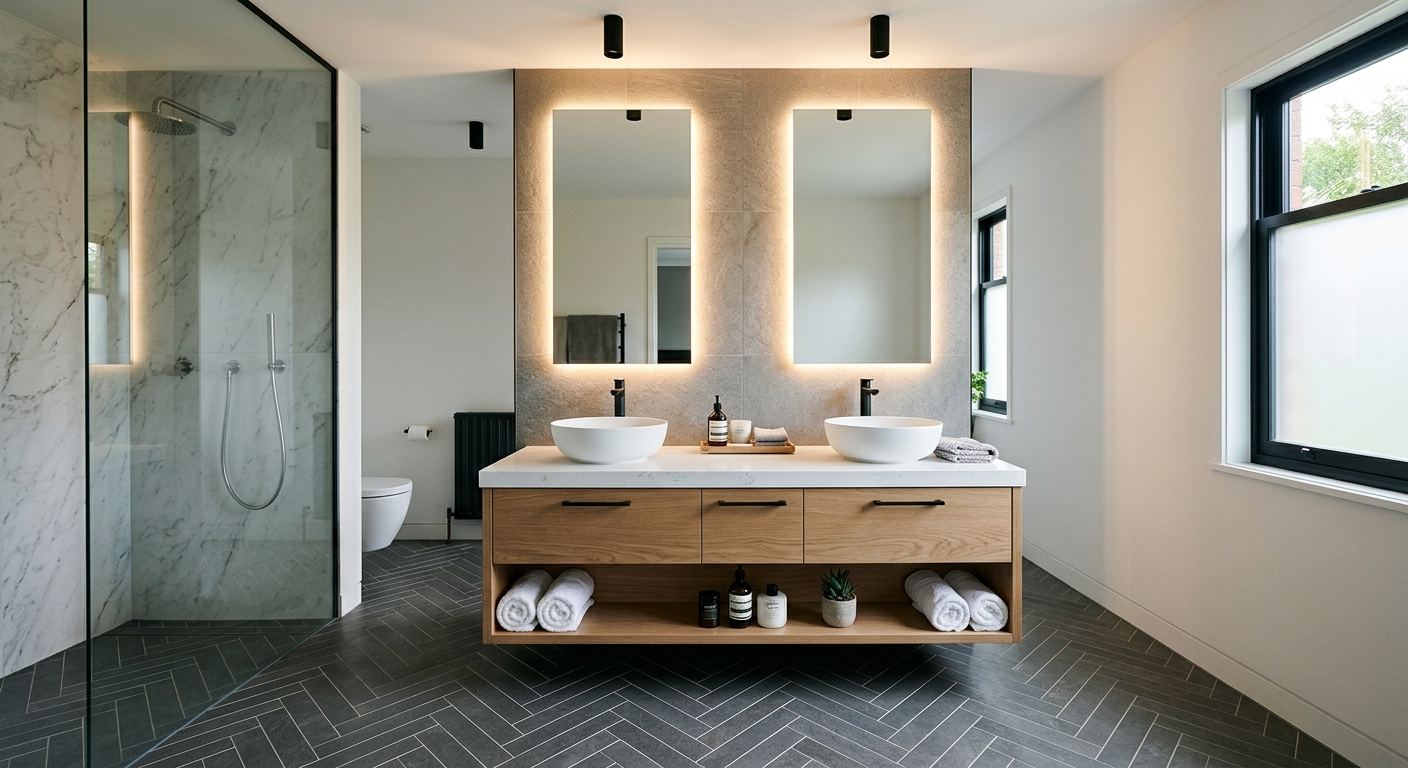
Bathroom renovation options and costs in Terrace Bay
Bathroom renovations in Terrace Bay usually start with a simple question: “What can I get for my budget?” The answer depends on how much of your existing plumbing, waterproofing and electrical we need to touch. With 80.4% of local homes built before 1981 (Statistics Canada, 2021 Census), many bathrooms were originally designed around older drain sizes, dated venting, and materials that don’t always match today’s Ontario Building Code expectations. That’s why even “refresh” projects can expand once we open walls—especially if we find galvanized supply lines or older flooring assemblies where asbestos may be present.
In Northwest Ontario, costs are shaped more by the regional labour market and the age of the housing stock than by climate alone. Moisture management matters year-round here (winter indoor humidity swings can be dramatic), but contractor availability and the need for code updates are what most often widen the price gap between quotes. Trades are also coordinated across a smaller labour pool, so full renos that require plumbing re-routing, vent stack corrections, and electrical upgrades tend to take longer—and cost more—than they would in a larger city.
For example, renos around James Bay Drive and the downtown core are frequently in demand because many older homes there have compact bathrooms that need thoughtful layout and careful ventilation upgrades. Once you know which option matches your goals, you can compare realistic price ranges in the table below.
| Renovation Scope |
What's Included |
Typical Duration |
Price Range |
| Cosmetic refresh (paint, fixtures, accessories only) |
New vanity or faucet (non-plumbing relocations), toilet refresh, lighting swap, accessory updates, paint, caulking, and basic deep clean |
2–5 days |
$3,000 – $7,000 |
| Mid-range full renovation (new tile, vanity, tub/shower, electrical) |
Tile floor + walls, new vanity and mirror, bathtub or tub surround, shower valve refresh, exhaust fan, GFCI protection (as required), and waterproofing system |
3–5 weeks |
$12,000 – $18,500 |
| High-end full renovation (custom tile, steam shower, heated floors) |
Custom shower/tub layout with premium tile, frameless glass (if shower), heated floor circuit, higher-tier fixtures, enhanced ventilation, and advanced waterproofing |
6–9 weeks |
$20,000 – $26,000 |
| Shower-only installation (convert tub to walk-in shower) |
Demo and disposal, new shower pan (tile or prefabricated), waterproofing, new glass/door, plumbing valve adjustments (if needed), and exhaust fan upgrade |
2–4 weeks |
$7,000 – $14,000 |
| Bathtub replacement or tub-liner install |
Replace tub and re-set surround/caulking, or install liner system, re-finish waterproof edges, and refresh drain trim/valve connections (as required) |
5–10 days |
$1,200 – $4,000 |
| Tile-only installation (floor + surround, existing layout kept) |
Tile removal (as needed), prep and leveling, waterproofing, tile install, grout sealing where applicable, and re-install of fixtures if not moved |
1–3 weeks |
$1,500 – $5,000 |
Prices are estimates only and vary by project scope, site access and material selection.
What affects the price of bathroom renovation in Terrace Bay
In Terrace Bay, it’s common to see bathroom renovation quotes for the “same” job vary by 30% to 50%. The reason usually isn’t the tile brand—it’s the amount of hidden work discovered behind walls and the coordination required between plumbing, electrical, and waterproofing trades. In Northwest Ontario, regional labour rates and the age of the local housing stock drive costs more than climate alone. Many homes were built mid‑century or earlier; in this area, those older assemblies often include undersized drains, older venting configurations, and plumbing runs that don’t line up neatly with modern fixture rough‑ins.
When we open walls, we sometimes find cast-iron or copper drain stacks that need upgrading, plus galvanized supply lines that affect pressure and long-term reliability. Ventilation is also a major driver: adding or improving an exhaust fan to properly control moisture typically triggers electrical scope. If asbestos-containing materials are discovered—commonly from older flooring tile systems or pipe wrap—abatement protocols can add $1,500 to $5,000+ even before full tile or fixture work starts. That’s why one quote might land near $12,000–$26,000 for a full bath while another climbs higher.
Concrete examples from Terrace Bay: (1) A compact bathroom in an older single-detached home can require re-framing around a vent line, adding labour and materials. (2) Choosing large-format porcelain can reduce grout lines (and help cleaning), but it increases prep/flatness requirements—meaning more subfloor work if the slab isn’t level. (3) Upgrading the exhaust fan without adding a dedicated circuit can slow the schedule if an electrician must return later, which also affects total labour cost. With 555 homeowner households in the city area (Statistics Canada, 2021 Census), there’s strong demand for practical, durable upgrades—so “value” decisions often revolve around waterproofing quality and code-compliant ventilation.
| Price Factor |
Why It Matters |
Cost Impact |
| Layout change — moving drain or supply lines requires rough-in work |
New rough-ins mean wall openings, patching, and inspections; it also affects how level the shower/tub can be set. |
Often increases total by $3,000–$8,000+ depending on distance and access |
| Tile selection — large-format porcelain vs. mosaic vs. ceramic |
Harder tiles demand better prep and more time to set, especially around niches and edges. |
Typical +$500–$3,500 |
| Fixture tier — builder-grade vs. mid-range vs. designer brands |
Better valves, finishes, and trim often cost more and may require different rough-in dimensions. |
Typical +$1,000–$6,000 |
| Subfloor condition — rot or unlevel concrete adds scope |
Unlevel surfaces cause lippage and failure points; rot needs repair before waterproofing. |
Typical +$800–$4,000+ |
| Electrical — adding GFCI outlets, exhaust fan, heated floor circuit |
Meets safety requirements and improves moisture control; can add new wiring and schedule coordination. |
Typical +$500–$3,500+ |
| Waterproofing method — membrane type and extent |
Shower failures are expensive; correct coverage protects framing and subfloor. |
Typical +$800–$3,000 |
| Older-home surprises — asbestos tile, cast-iron drains, galvanized pipes |
Discovery changes scope quickly and can trigger remediation and additional plumbing replacement. |
Typical +$1,500–$5,000+ (and more if extensive) |
| Bathroom size — sq ft drives tile and labour time directly |
More surface area means more tile, more thinset, more waterproofing, and longer install time. |
Typical +$500–$4,000 depending on size and detailing |
Permits & regulations in Ontario
In Ontario, not every bathroom upgrade needs a permit, but several common renovations do. As a rule of thumb in Terrace Bay, cosmetic updates rarely require a permit: swapping fixtures (like replacing a toilet, faucet, or vanity top), repainting, and retiling without moving plumbing are usually treated as non-structural finishing work. However, you should expect permits (and inspections) when the renovation changes the “systems,” not just the finish.
Typically requires a permit: relocating plumbing (moving a drain or supply line), changing the location of a toilet/shower/tub, adding an exhaust fan with new wiring or a new circuit, and making structural wall changes (opening walls, moving framing members, or modifying load paths). Electrical work must comply with Ontario code requirements and be performed by (or signed off by) a licensed electrician. Plumbing rough-ins that change connections usually require permit/inspection as well.
How to verify a contractor step-by-step: (1) Ask for their Ontario trade licence number and check it on the appropriate provincial licensing registry. (2) Request a current certificate of liability insurance showing adequate coverage for your job and dates of work. (3) Confirm Workers’ Compensation coverage (WSIB/WCB) and ask for a clearance letter or evidence of account status. (4) Keep copies of everything in writing with your contract—so if anything is questioned during inspection, you’ll have the proof.
Choosing tile, waterproofing and fixtures for your Terrace Bay bathroom
In Terrace Bay, your budget is mostly decided by three material choices: tile, waterproofing, and fixtures. First, tile selection. Ceramic is usually the entry-level option for floor and wall coverage, but it can be less forgiving in high-splash areas where grout gets hit by heavy moisture. Porcelain is typically stronger and better for floors because of its density and water resistance; it can also look cleaner because it’s available in larger formats and consistent finishes. If you want natural stone (marble, travertine, slate), expect a luxury look—but also more labour for layout, sealing, and careful subfloor prep to avoid cracking.
Second, waterproofing. Paint-on membranes can work for certain conditions, but in Ontario bathrooms with regular shower steam and winter drying cycles, you want a system that stays reliable at joints and corners. Bonded sheet membranes and fully integrated systems (including proper overlaps and drain details) generally perform better where movement or water exposure is high.
Third, fixture tier. Builder-grade fixtures can be cost-effective if the valve rough-in and ventilation are correct. Mid-range fixtures often improve day-to-day feel (valves, flow control, finish durability). Designer fixtures add cost but make sense when you’re also investing in a long-term waterproofing and ventilation plan—because that combination supports resale.
A practical dollar example: if you’re deciding between mid-range porcelain and ceramic tile-only, choosing porcelain might add a few hundred to a couple thousand dollars within the $1,500–$5,000 tile-only band. That extra is usually justified because porcelain reduces replacement risk and looks better longer—especially when you’re investing in a full shower waterproofing system that protects the subfloor.
| Material / Option |
Pros |
Cons |
Price Range |
| Ceramic tile (floor + walls) |
Good appearance at entry cost; widely available colours and sizes |
Often more prone to chipping under impact; may not be as durable as porcelain for floors |
$1,500 – $3,200 |
| Porcelain tile (floor + walls) |
Durable for floors; less porous; more consistent with larger formats |
Requires excellent prep for flatness; premium sizes can increase install complexity |
$2,500 – $5,000 |
| Natural stone (marble, travertine, slate) |
High-end look and unique variation; great for feature walls and accents |
Needs sealing and careful maintenance; higher material and labour risk if base isn’t perfect |
$4,000 – $8,500 |
| Frameless glass shower enclosure |
Modern appearance; maximizes light and makes small bathrooms feel larger |
Higher hardware and installation time; glass requires proper measurements and waterproofing detailing |
$1,200 – $3,800 |
| Prefab tub surround (acrylic) |
Fast install; smooth surface reduces grout maintenance; typically easier on tight timelines |
Limited style options; can look less “custom” than full tile |
$800 – $2,400 |
| Custom shower pan (tile or linear drain) |
Best water management; integrated slope and drainage; great for accessibility and design |
More labour and waterproofing detailing; higher cost than standard prefab bases |
$3,000 – $8,000 |
How to choose a bathroom renovation contractor in Terrace Bay
Choosing the right contractor in Terrace Bay comes down to verifying licensing and coverage, then comparing itemised proposals. First, confirm Ontario licensing: ask for the trade licence number(s) for plumbing/electrical scopes and check them against the provincial registry. Next, request a current certificate of liability insurance—make sure it lists your address/job site and has dates matching the renovation. For coverage of workers, verify WSIB/WCB status by asking for a clearance letter or proof of account; this matters if a worker is injured on your property.
Then get 2–3 quotes that are itemised (labour + materials breakdown), not just lump sums. A solid bathroom quote should clearly state what’s included: demolition, disposal, waterproofing materials, drywall backer board/underlayment, electrical scope, permit pull responsibility (if applicable), and whether an electrician is scheduled for rough-in and final connections.
Warranty also matters. Ask for (1) the workmanship warranty length and what it covers (often waterproofing-related components), (2) manufacturer warranties for tile, membrane, and fixtures, and (3) whether warranties are transferable to a new homeowner if you sell.
For payments, avoid large upfront deposits: keep it to 10% to 15% upfront for materials and mobilisation, then hold back a portion until the job is complete and defects are corrected. Finally, insist on a written schedule with a start date and a completion estimate so you’re not left waiting on delayed materials.
- Confirm Ontario trade licences relevant to your scope (plumbing/electrical) and match them to the quote tasks.
- Collect a certificate of liability insurance with your jobsite and active dates.
- Verify WSIB/WCB clearance letter or equivalent proof before work begins.
- Require an itemised quote separating labour, materials, disposal, and any permits.
- Check exclusions: asbestos testing/abatement allowance, subfloor repairs, and fixture reinstallation.
- Ask who pulls permits and who schedules inspections (if permit is required).
- Confirm waterproofing method in writing (membrane type, overlaps, and coverage areas).
- Ensure demolition and disposal are included (dump fees add up in regional hauling).
- Verify ventilation plan: exhaust fan model, ducting approach, and electrical connection.
- Get a detailed timeline with key milestones (rough-in, waterproofing cure time, tile install).
- Clarify warranty details: workmanship duration and manufacturer warranty documentation.
- Use a payment schedule tied to progress—keep 10–15% holdback until closeout.
Red flags to watch in Terrace Bay: contractors who won’t put permit responsibility in writing; quotes that exclude waterproofing specifications; no proof of WSIB/WCB or unclear liability coverage; “lowball” pricing that doesn’t include demolition/disposal; and refusal to provide a start date, finish date, or a workmanship warranty in plain terms.
Frequently asked questions — bathroom renovation in Terrace Bay
How long does a bathroom renovation take in Terrace Bay?
Most bathroom renos in Terrace Bay take anywhere from 2 weeks for a small, straightforward job (like tile-only or a tub liner) to 3–5 weeks for a mid-range full renovation. Conversions—such as turning a tub into a walk-in shower—often land around 2–4 weeks once waterproofing cure time and fixture lead times are accounted for. Full, higher-end projects with custom tile layouts, heated floors, and frameless glass typically stretch to 6–9 weeks. Timeline can extend when we uncover older-home surprises common in pre‑1981 stock (Statistics Canada, 2021 Census), such as needing plumbing rough-in adjustments, electrical upgrades, or remediation steps. Always ask your contractor for a written schedule with inspection and cure periods included.
Do I need a permit for a bathroom renovation in Ontario?
In Ontario, many cosmetic updates don’t need permits—swapping fixtures, repainting, and retiling without moving plumbing is usually treated as finishing work. You’ll typically need a permit when you relocate plumbing (moving drain or supply lines), add or change ventilation that requires new wiring, make structural wall changes, or perform plumbing rough-in changes. Electrical work must meet Ontario electrical safety requirements and be done or signed off by a licensed electrician. If asbestos-containing materials are uncovered during demolition in older homes, that may trigger additional regulated steps. A good contractor will tell you what requires a permit and how inspections will be handled. If your quote sits in the full-bath band (for example $12,000 – $26,000), ask whether permit pulls are included and who schedules them.
What's the best tile for a bathroom in Terrace Bay?
For Terrace Bay bathrooms, porcelain is often the best balance of durability and long-term looks, especially for floors and shower surrounds where moisture is constant. Ceramic can work well on a budget, but porcelain tends to be less porous and more forgiving for day-to-day impact—helpful in active households. If you want a luxury look, natural stone is beautiful, but it needs proper sealing and careful installation to prevent issues over time. Whichever you choose, the real key to preventing problems is the installation quality: correct substrate prep, proper thinset coverage, and a waterproofing system that protects corners and transitions. If you’re aiming for a tile-only project, you’ll usually see porcelain options land closer to the higher end of the $1,500 – $5,000 tile-only range. Pairing tile with excellent waterproofing and ventilation is what protects your subfloor.
Should I do a tub-to-shower conversion?
A tub-to-shower conversion is a great choice if you want easier day-to-day access, faster drying, and modern design—especially in older homes where bathrooms are frequently updated. In Terrace Bay, where winters can keep interior spaces cooler and moisture can linger, a well-designed shower with a properly sloped pan, integrated waterproofing, and a strong exhaust fan often performs better long-term than an older tub surround. Cost-wise, shower-only conversions commonly fall into the $3,000 – $8,000 to higher range depending on glass, drain type, and valve changes—so you’re typically investing more than a cosmetic refresh but less than a full bath. The biggest decision is whether your plumbing can be reused or if rough-in work is needed, because that’s usually what changes the price.
How do I prevent mold in a Terrace Bay bathroom?
Mold prevention in Terrace Bay is mainly about moisture control and system reliability, not just using a stronger paint. Start with ventilation: ensure your exhaust fan is properly sized and ducted and that electrical connections meet Ontario safety requirements. Next, waterproofing must be continuous in wet zones—shower floors, walls around the valve, and all corners/penetrations. If waterproofing coverage is rushed or transitions are sealed incorrectly, moisture can find its way into the wall assembly, especially in older homes where materials may be less uniform. Third, keep a consistent drying routine: run the fan during and after showers and wipe standing water off glass quickly. For older pre‑1981 homes, ask contractors about how they handle possible subfloor damage and remediation steps if something like aged flooring materials is disturbed.
What adds the most resale value in a bathroom reno?
In Terrace Bay and Northwest Ontario, the resale value comes from making the bathroom safer, drier, and easier to maintain—not just upgrading finishes. The biggest value drivers are: a compliant, well-ventilated layout; dependable waterproofing in wet areas; updated electrical safety (GFCI and properly wired exhaust fan/heated floor if chosen); and a functional fixture package (a quality vanity, modern shower/tub valve, and durable tile). Custom touches like frameless glass or heated floors can impress buyers, but they deliver real value when the “systems” are done right. If you’re choosing where to spend in a renovation, focus first on waterproofing and ventilation within the full-bath range (often $12,000 – $26,000), then upgrade finishes. With many homes built before 1981 (Statistics Canada, 2021 Census), buyers in this market notice whether the renovation addresses older plumbing and moisture risks, not just cosmetics.