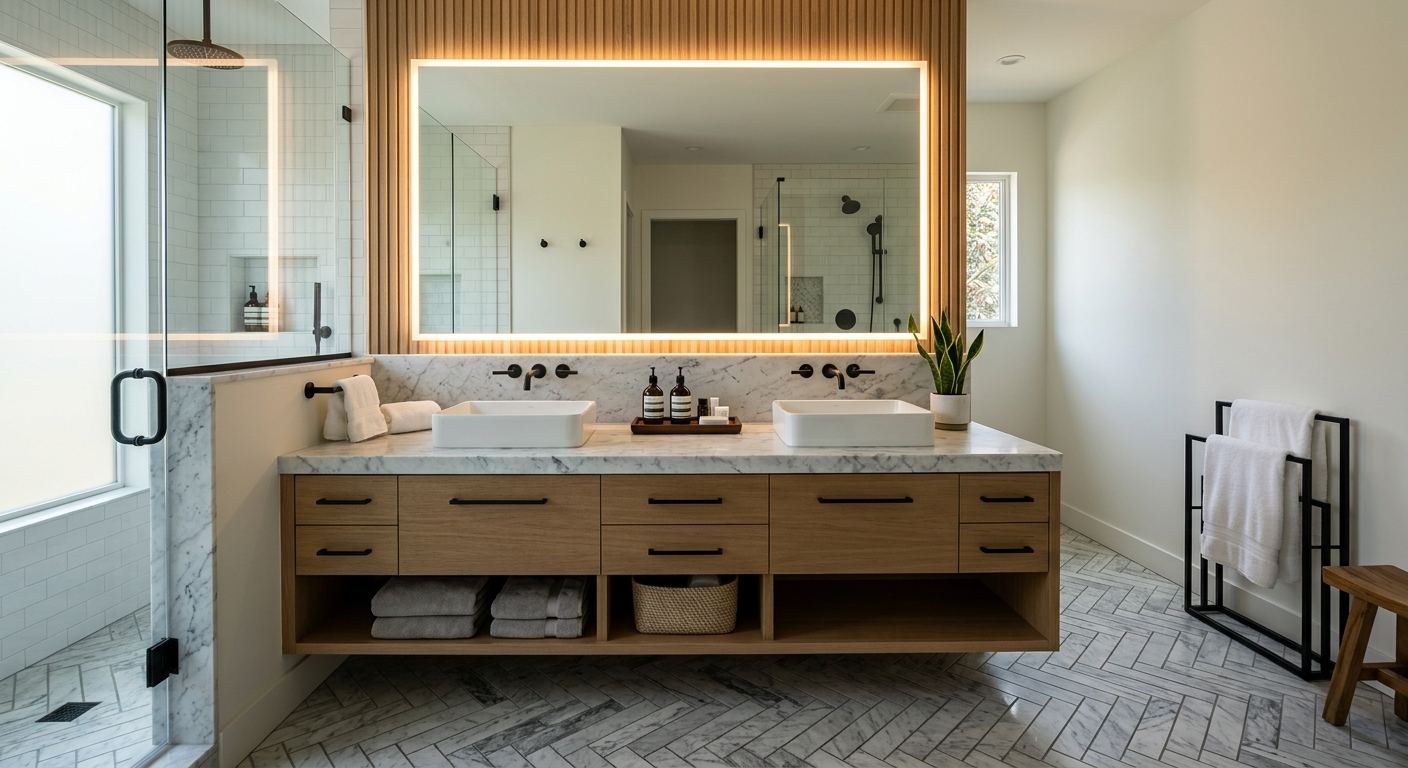
Bathroom renovation options and costs in St. Marys
Bathroom renovation in St. Marys usually starts with deciding how much of the wall, floor, plumbing and waterproofing you’re willing to open up. In a town where 54.2% of homes were built before 1981 (Statistics Canada, 2021 Census), many bathrooms still have dated drain/vent routes, older valve setups, and finishes that have been patched over time. That age factor matters because once tile lifts, contractors often find hidden scope—like uneven subfloors, deteriorated mortar beds, or ventilation that can’t keep up.
In the Stratford–Bruce Peninsula region, pricing is shaped less by weather extremes and more by local labour availability and the number of older homes needing “discovery work.” Many straightforward refreshes stay close to the lower end, but full remodels can move toward the upper end of the local mid-teens to low-thirties range when plumbing upgrades, venting corrections, or subfloor repairs become necessary. That’s especially common in neighbourhoods with a heavier older-housing mix, such as around Main Street and the older residential blocks near St. Marys Municipal Park.
The table below gives realistic St. Marys budgeting ranges for common scopes, so you can compare apples-to-apples when you request quotes and plan for contingencies.
| Renovation Scope |
What's Included |
Typical Duration |
Price Range |
| Cosmetic refresh (paint, fixtures, accessories only) |
Surface prep and paint, swap vanity top/vanity, replace toilet/vanity tap where already plumbed, accessories (towel bars, mirrors), deep clean and caulking touch-ups; keeps existing tile and waterproofing system intact |
2–4 days |
$3,000–$8,000 |
| Mid-range full renovation (new tile, vanity, tub/shower, electrical) |
Demo and haul-away, replace tub/shower or surrounds, new waterproofing for shower/tub area, new tile floor and walls (standard layout), vanity and toilet replacement, basic electrical updates (GFCI, exhaust fan upgrade), plumbing updates as required to pass inspection |
2–3 weeks |
$14,000–$24,000 |
| High-end full renovation (custom tile, steam shower, heated floors) |
Custom tile work, premium waterproofing and shower build, heated flooring electrical/circuiting, larger-format or intricate patterns, frameless glass where specified, higher-tier fixtures, possible venting/ducting correction, expanded electrical scope |
3–5 weeks |
$24,000–$35,000 |
| Shower-only installation (convert tub to walk-in shower) |
Remove tub, build new shower pan system and waterproofing, install walk-in shower plumbing rough-in adjustments as needed, new shower enclosure/door, new tile floor and shower surround, updated exhaust ventilation as required |
1.5–3 weeks |
$6,000–$12,000 |
| Bathtub replacement or tub-liner install |
Remove and install new tub (or install a liner system where suitable), reconnect plumbing and seal properly, touch-up waterproofing and caulking, minor surround repair; does not include major tile rebuild unless discovery requires it |
3–7 days |
$2,000–$5,000 |
| Tile-only installation (floor + surround, existing layout kept) |
Demo to tile line, re-set tile with appropriate backer system, waterproofing for wet areas, grout/seal, transitions and trim; keeps plumbing locations and bathroom footprint the same |
1–2 weeks |
$4,000–$12,000 |
Prices are estimates only and vary by project scope, site access and material selection.
What affects the price of bathroom renovation in St. Marys
In St. Marys and across the Stratford–Bruce Peninsula region, it’s common to see quotes for what looks like the “same” bathroom differ by 30–50%. The biggest drivers aren’t usually the season or the forecast—they’re local labour rates and what the contractor has to correct once demolition begins. With 69.8% of dwellings being single-detached homes, many bathrooms are inside older, self-contained layouts where opening walls exposes more hidden work than in stacked-construction buildings.
This region’s older housing stock often means hidden plumbing and ventilation issues: cast-iron or older drain materials that don’t align cleanly, copper runs that need rework to meet current connections, galvanized supply lines showing age, and exhaust ventilation that’s undersized for a shower area. Those discoveries can push a job from a straightforward “tile and fixtures” plan toward a full rebuild.
Asbestos discovery can be a major swing factor. If asbestos-containing materials are found in pre-1985 contexts (for example, certain vinyl floor tile or related compounds), abatement protocols can add $1,500–$5,000+ to the budget depending on extent and containment. That’s why a bathroom that might land near the $14,000–$24,000 band for a mid-range full renovation can end up closer to the $24,000–$35,000 band when additional rough-in corrections, subfloor repairs, or electrical remediation are required.
Two concrete examples I see often in St. Marys: (1) converting a tub to a shower frequently requires more drain slope/work than homeowners expect, adding labour for rough-in and waterproofing; (2) upgrading an exhaust fan usually looks small on paper but can add cost when new wiring routes or ducting runs must be opened up. Even tile selection can affect total cost: larger porcelain formats may require extra substrate preparation to avoid lippage and failures—especially on older, unlevel subfloors.
| Price Factor |
Why It Matters |
Cost Impact |
| Layout change — moving drain or supply lines requires rough-in work |
Shifting plumbing means opening walls/floors, moving rough-in piping, testing, and re-waterproofing wet-area surfaces |
Often adds $2,000–$8,000 |
| Tile selection — large-format porcelain vs. mosaic vs. ceramic |
Harder tiles require flatter substrates, more precise cutting, and longer installation time to keep lines straight |
Can swing $1,200–$6,000 |
| Fixture tier — builder-grade vs. mid-range vs. designer brands |
Higher-tier valves, toilets, and vanities cost more and sometimes have more involved installation requirements |
Typically $800–$4,000 difference |
| Subfloor condition — rot or unlevel concrete adds scope |
Rot requires replacement and additional labour; unlevel floors increase tile labour and can require self-levelling/patching |
Often adds $500–$4,500 |
| Electrical — adding GFCI outlets, exhaust fan, heated floor circuit |
New circuits and fan wiring must be installed to code and typically require electrical permit/inspection steps |
Can add $800–$5,000 |
| Waterproofing method — membrane type and extent |
Better systems (sheeting, proper detailing around changes of plane) reduce failure risk but require more prep and install time |
Typically $500–$3,500 |
| Older-home surprises — asbestos tile, cast-iron drains, galvanized pipes |
Hidden materials and worn lines can trigger abatement, re-piping, and additional inspections/testing |
Can add $1,500–$9,000+ |
| Bathroom size — sq ft drives tile and labour time directly |
More area increases material quantities (tile, membrane, thinset) and labour time for setting and grouting |
Often $2,000–$10,000+ difference |
Permits & regulations in Ontario
In Ontario, many bathroom updates are considered cosmetic and typically don’t require permits. Swapping a vanity, replacing a mirror, painting, changing accessories, or swapping fixtures where the existing supply and drain connections remain in the same locations usually falls into the “no-permit” category for homeowners—provided plumbing and electrical work is done properly and meets code.
Permits commonly are required when you change plumbing or electrical systems. For example, relocating or adding plumbing (moving a drain or supply line, changing the location of a toilet, or re-routing shower valves) usually requires the appropriate plumbing permits and inspections because rough-in work must be verified before the wall is closed. Adding or upgrading ventilation also often becomes permit-relevant when it involves new wiring, a new exhaust fan, or a circuit change. Electrical work must meet the Ontario Electrical Safety Code and must be performed by a licensed electrician or signed off appropriately for permit purposes.
For a St. Marys homeowner, verify the contractor’s credentials step-by-step: (1) request their Ontario trade licence details and confirm it using the appropriate Ontario online registry; (2) ask for a current certificate of insurance (liability coverage) and verify it covers bathroom renovation work; (3) confirm workers’ compensation (WSIB/WCB) coverage so you’re not responsible if someone is injured on site; (4) ask whether they pull permits for the work they’re doing and who schedules inspections; (5) get everything in writing so “permit pulled / permit not needed” isn’t left vague.
Choosing tile, waterproofing and fixtures for your St. Marys bathroom
In St. Marys bathrooms, three material decisions determine most of your budget outcome: tile choice, waterproofing approach, and fixture tier. Start with tile. Ceramic is typically the entry-level option—good value if your subfloor is sound and you’re aiming for a simple layout. Porcelain often costs more per square foot, but it’s usually harder-wearing and handles moisture better for floors and shower surrounds. Natural stone (marble, travertine, slate) can be stunning, yet it adds labour complexity because cuts, sealing, and layout tolerances are tighter.
Next is waterproofing. Ontario humidity doesn’t “cause” mould by itself; failure in the waterproofing system and poor detailing do. A paint-on membrane is sometimes fine for limited areas, but for shower/tub wet zones, many renovations do better with a bonded sheet membrane or a proper system build (including correct detailing at corners, transitions, and changes of plane). In practical terms, the right waterproofing can prevent moisture migration behind tile—saving you from expensive tear-outs later.
Finally, fixtures. Builder-grade fixtures keep initial costs down, while mid-range valves and toilets often offer better long-term performance (especially with cartridge quality and flush performance). Designer brands can be worth it when you care about finish durability and feel—chrome and matte finishes can look better longer if the product quality matches the installation quality.
Budget example: if your goal is a tub-to-shower conversion, upgrading to porcelain tile and a higher-end waterproofing system often costs an incremental $1,200–$3,500 over basic ceramic/limited waterproofing. That spend is usually justified because labour and tear-out risks are the real cost drivers when waterproofing fails, especially in older homes where the substrate may need extra prep.
| Material / Option |
Pros |
Cons |
Price Range |
| Ceramic tile (floor + walls) |
Lower material cost, widely available colours, straightforward for simple patterns |
Generally softer and can be less wear-resistant than porcelain for floors; more variation in long-term appearance if grout/maintenance isn’t managed |
$1,200–$4,500 |
| Porcelain tile (floor + walls) |
More durable for moisture and wear, consistent sizing for cleaner lines, strong choice for shower surrounds |
May require more labour if your subfloor needs flattening to avoid lippage |
$2,000–$6,000 |
| Natural stone (marble, travertine, slate) |
Luxury look and unique veining, great for statement niches and premium finishes |
Higher maintenance (sealing), more expensive cutting/layout, can be more challenging to install perfectly |
$4,000–$12,000 |
| Frameless glass shower enclosure |
Modern appearance, easier to clean than some curtains, makes smaller bathrooms feel larger |
Requires careful measuring/installation; door hardware and glass thickness affect cost |
$2,000–$7,000 |
| Prefab tub surround (acrylic) |
Fast install, fewer tile labour hours, good for keeping costs predictable |
Less “custom” look; joints require careful sealing; may not suit every layout/style |
$800–$3,000 |
| Custom shower pan (tile or linear drain) |
Improved design flexibility, sleeker look with linear drains, better integration with custom tile layouts when built correctly |
More labour and waterproofing detailing; linear drains add trim and slope requirements |
$2,500–$9,000 |
How to choose a bathroom renovation contractor in St. Marys
Choosing the right contractor in St. Marys comes down to proof of competence and clarity of scope. Start with Ontario licensing verification: ask for their trade licence details and confirm them through Ontario’s online registry. Next, check liability insurance by requesting a current certificate of insurance; you want coverage that matches the work being done and the timeframe of your project. Then verify WSIB/WCB coverage—this is critical so you’re not exposed if a worker is injured. If the contractor can’t provide clear documentation, that’s a stop sign.
For quotes, get 2–3 itemised written estimates rather than a single lump sum. A well-built bathroom quote breaks labour and materials out by categories (demo/disposal, waterproofing, tile setting, plumbing/electrical rough-in, trims/glass) and states what’s excluded. Pay attention to whether permits are included, who schedules inspections, and what happens if the contractor discovers subfloor rot or older pipe issues.
Warranty matters too. Confirm the workmanship warranty length and what it covers (especially waterproofing and tile set failures), plus any manufacturer warranties for fixtures. Ask whether the warranty is transferable to you as the homeowner. For payment schedule, never pay more than 10–15% upfront; insist on a holdback until the job is complete and punch list items are corrected. Finally, request a written start date and completion estimate—bathrooms in older St. Marys homes often take longer due to discovery work, so timelines should reflect that reality.
- Confirm Ontario trade licence details and match them to the scope (plumbing/electrical work must be handled appropriately).
- Request a current certificate of liability insurance and check coverage limits.
- Verify WSIB/WCB clearance before work starts.
- Get itemised labour/material breakdown (not just one line “bathroom renovation”).
- Ask whether permits and inspections are included, and who pulls them.
- Ensure disposal/haul-away is included in the written quote.
- Confirm waterproofing method and materials are listed (membrane type, detailing around transitions).
- Ask how they address subfloor prep and uneven substrates (level/patch/replace as needed).
- Clarify what is excluded: niche cut-outs, niche waterproofing, glass enclosure allowances, trim/caulking upgrades.
- Request workmanship warranty terms in writing (length and coverage).
- Use a staged payment schedule (max 10–15% upfront; holdback until final clean/punch list).
- Get a written schedule with milestones (demo complete, rough-in done, waterproofing verified, tile complete, final install).
Red flags I see in St. Marys bathroom jobs: (1) contractors who won’t put waterproofing details in the contract; (2) quotes that omit disposal/haul-away, then add charges after demo; (3) vague language like “permit as required” without specifying who pays and who schedules; (4) no proof of WSIB/WCB or liability insurance; and (5) asking for large upfront deposits beyond 15% with no holdback or warranty details.
Frequently asked questions — bathroom renovation in St. Marys
Is it worth renovating a bathroom before selling in St. Marys?
Often, yes—if the renovation fixes functional issues and modernizes what buyers notice first. In St. Marys, where many homes are in the older-stock category (54.2% built before 1981, Statistics Canada, 2021 Census), buyers frequently look for proof that wet-area waterproofing and venting are done correctly. A mid-range full renovation typically falls around $14,000–$24,000, and it can be a stronger value play than just re-painting if your current bathroom has dated surfaces, poor exhaust, or visible wear.
That said, don’t overspend on luxury finishes in a home where the overall market expects practical updates. Prioritize: a properly detailed shower system, reliable plumbing fixtures, good lighting, and a clean, neutral finish palette.
How do I plan a bathroom renovation on a tight budget in St. Marys?
Start with a scope-first plan and protect your budget from discovery costs. In older St. Marys homes, contractors commonly encounter subfloor unevenness, older drain materials, or ventilation that needs correction once walls open. Build a contingency into your plan and choose upgrades that reduce risk—especially waterproofing and ventilation—before you upgrade aesthetics.
On a tight budget, consider a cosmetic refresh if your shower waterproofing is sound and plumbing locations stay put; that scope often lands around $3,000–$8,000. If you need a full refresh of the wet area, focus on keeping the layout unchanged to avoid relocating drains/supplies. That’s typically how you avoid the biggest cost swings in the Stratford–Bruce Peninsula labour market.
What's the difference between a cosmetic and a full bathroom renovation?
A cosmetic renovation changes surfaces and visible components while leaving the waterproofing and plumbing rough-in largely intact. Think painting, replacing a vanity, changing mirrors and fixtures where connections don’t move, and refreshing caulking. These projects are usually faster and often don’t trigger the same permit workflow as projects that open walls for plumbing rough-in.
A full renovation typically includes demo to the substrate, a new waterproofing build for wet areas, replacement of tub/shower components, new tile (floor and surround), and often electrical updates like GFCI and exhaust fans. Full remodels commonly sit in the mid-teens to low-thirties locally—so it’s normal to see pricing around $14,000–$35,000 depending on layout changes, tile complexity, and any hidden conditions.
How do I choose the right contractor for my bathroom in St. Marys?
Choose based on verifiable licensing, insurance/coverage, and an itemised scope that addresses waterproofing and allowances. In Ontario, ensure the contractor can provide evidence of their Ontario trade licence, current liability insurance, and WSIB/WCB coverage. Then ask for 2–3 itemised written quotes separating labour and materials (tile, waterproofing, plumbing/electrical rough-in, disposal).
Look for clarity on exclusions: whether permits are included, whether disposal is included, and what happens if older homes reveal surprises like subfloor repairs or plumbing upgrades. A quality contractor will also provide a workmanship warranty and a written timeline with start and completion dates.
What's the most common mistake homeowners make in bathroom renovations?
The most common mistake is treating “tile and fixtures” as the whole job. In older St. Marys homes, once you demo, waterproofing prep, ventilation adequacy, subfloor condition, and plumbing alignment become the real determinants of long-term performance. If you under-spec waterproofing or skip ventilation upgrades, you can end up with moisture migration and future deterioration—even if the tile looks great initially.
Another frequent mistake is choosing based only on lowest price without checking scope details. A contractor can quote the bathroom within $14,000–$24,000 for one scope, but if they later find hidden drain/vent issues or require additional rough-in, the project can move closer to the upper end. Protect yourself with written itemisation and a clear plan for unknowns beneath tile and behind walls.
How long does tile installation take in a St. Marys bathroom?
Tile timelines depend on bathroom size, layout complexity, and how much prep your substrate needs. For a typical St. Marys reno where the layout stays similar, tile installation commonly takes about 5–10 working days, not including demo, waterproofing cure time, or trim/grout finishing. If your bathroom is older and the subfloor is unlevel or needs repairs, tile can take longer because the contractor must prep/flatten correctly to avoid lippage and cracking.
In many jobs, full tile work (floor + shower surround) lands inside a broader renovation window of around 2–3 weeks for a mid-range full renovation. If you’re doing custom patterns or larger-format porcelain, plan for extra set and cut time.