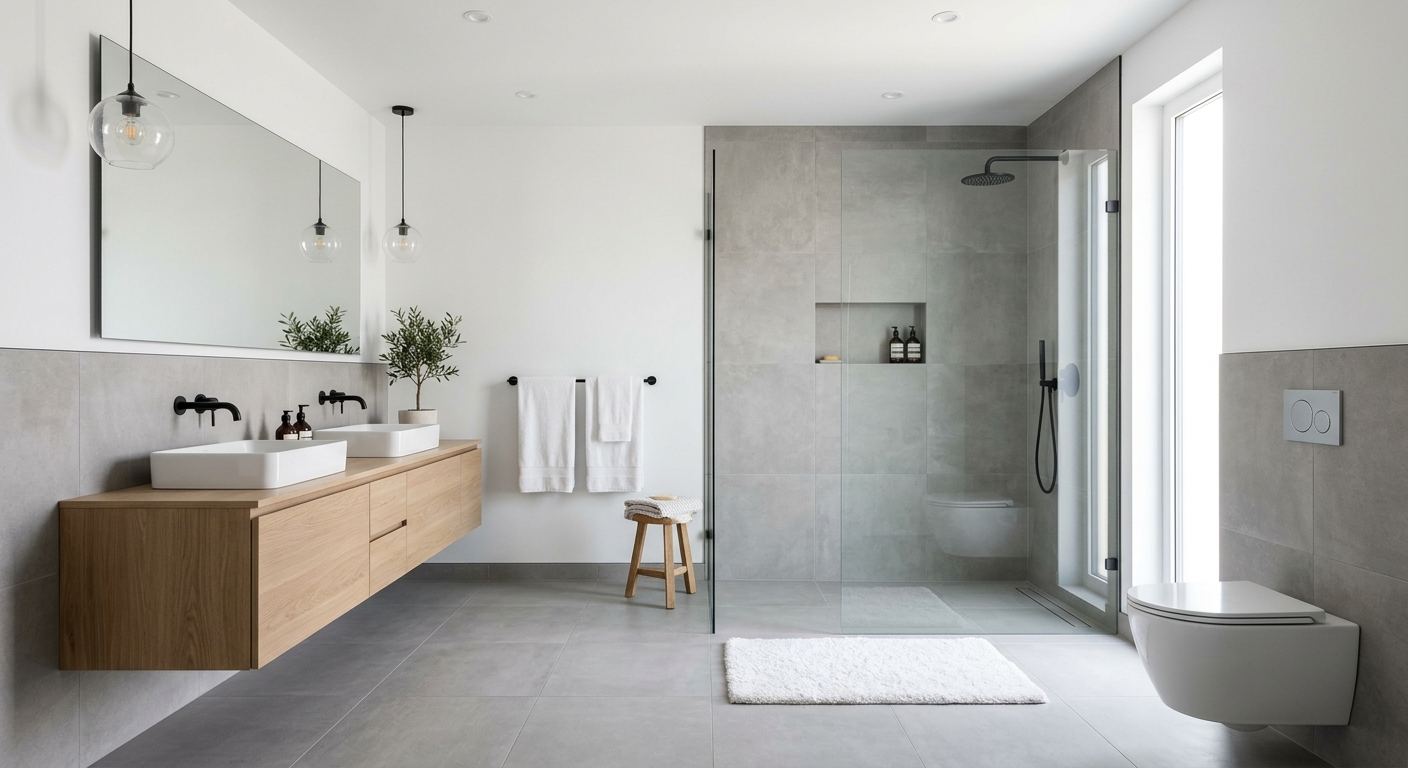
Bathroom renovation options and costs in Lansing-Westgate
Lansing-Westgate, Ontario is where you’ll see a lot of homes shaped by the 1960s–1980s building boom, and that older housing stock often comes with dated plumbing layouts and the kind of hidden conditions that change a quote after the walls come off. With a population of 16,164 in the area (Statistics Canada, 2021 Census), demand is steady for skilled trade crews in the Toronto economic region, especially in neighbourhood pockets where turn-over and rental refreshes are common. In practice, that means bathroom timelines and contractor availability can feel tight during peak renovation months, and labour is the main cost driver—not “weather” in the way people assume.
Toronto’s climate still matters indirectly: bathrooms here deal with frequent indoor humidity, and poor ventilation or waterproofing failures can show up faster. At the same time, the Toronto region’s pricing is shaped more by labour premiums and by the frequency of older homes that need venting, drainage upgrades, or new shut-offs to meet current Ontario code. It’s also not unusual to find asbestos-containing materials in older assemblies (for example, certain vinyl floor tiles and old drywall compounds), which can trigger abatement scope and add several thousand dollars.
In Lansing-Westgate, trades can be particularly in demand around the busier retail corridors and higher-activity rental streets near the downtown access routes, where property owners commonly refresh bathrooms between tenants. If you’re comparing options, the table below shows typical scopes and realistic cost bands you can use to sanity-check quotes.
| Renovation Scope |
What's Included |
Typical Duration |
Price Range |
| Cosmetic refresh (paint, fixtures, accessories only) |
New paint, toilet/vanity hardware swaps, light fixture change, accessories, caulking touch-ups; no plumbing relocation |
2–5 days |
$3,000 – $7,500 |
| Mid-range full renovation (new tile, vanity, tub/shower, electrical) |
Demo and rebuild; floor and wall tile; new vanity and countertop; tub or standard shower system; exhaust fan; GFCI where needed; basic waterproofing and reglazing as required |
2–4 weeks |
$12,000 – $20,500 |
| High-end full renovation (custom tile, steam shower, heated floors) |
Custom shower/tile work; heated floors; premium fixtures; enhanced waterproofing; improved ventilation; upgraded plumbing trim-in and electrical finishings |
4–8 weeks |
$20,500 – $30,000 |
| Shower-only installation (convert tub to walk-in shower) |
Convert layout to walk-in; new shower pan and waterproofing; glass enclosure (if selected); new valves/trim-in; tile surround; exhaust/fan upgrades if needed |
2–4 weeks |
$14,000 – $26,000 |
| Bathtub replacement or tub-liner install |
Replace tub with new unit and re-tile/silicone edges; or install a tub liner where existing tub condition allows; new fixtures and basic recaulk |
1–3 weeks |
$4,000 – $7,500 |
| Tile-only installation (floor + surround, existing layout kept) |
Tile removal and replacement as needed; floor and/or tub/shower surround tile; waterproofing upgrades (extent depends on substrate); grout sealing and finishing |
1–3 weeks |
$6,000 – $16,000 |
Prices are estimates only and vary by project scope, site access and material selection.
What affects the price of bathroom renovation in Lansing-Westgate
Even when homeowners ask for the “same” bathroom renovation, quotes across Toronto and Ontario can swing by 30–50% because the work is labour-intensive and highly dependent on what gets uncovered once walls and floors are opened. In the Toronto economic region, skilled trade rates tend to be higher, and the bathroom itself is often in an older home where bringing plumbing and venting up to current Ontario code isn’t optional—it’s part of getting the inspection to pass.
In Lansing-Westgate and nearby Toronto-area neighbourhoods, older post-war and 1960s–1980s homes may have cast-iron or undersized drain components, galvanized supply lines, or insufficient ventilation. Discovery of asbestos-containing materials in vinyl floor tile or older drywall compound (more common pre-1985) can require licensed abatement, which is why a project that looks like a mid-range renovation can drift upward. As a ballpark, hidden plumbing and vent corrections can add several thousand dollars, and asbestos-related abatement can add $1,500–$5,000+ depending on extent.
Concrete examples homeowners run into here: (1) if your shower valve needs to be relocated slightly, that usually means rough-in work and patching—labour climbs quickly; (2) if the subfloor is soft around the toilet flange or tile edges, it adds demo and rebuild time; (3) if you choose large-format porcelain, material may cost less per square foot than mosaic, but layout time and cutting/waste can raise labour. That’s how a bathroom that might fit within $12,000 – $20,500 can end up closer to the upper end when waterproofing and plumbing corrections expand.
| Price Factor |
Why It Matters |
Cost Impact |
| Layout change — moving drain or supply lines requires rough-in work |
New rough-in means opening walls/floors, patching, testing, and inspection readiness |
Often adds $2,000 – $7,500 |
| Tile selection — large-format porcelain vs. mosaic vs. ceramic |
Harder tile needs more precise setting and more labour for patterns, back-buttering, and waste |
Typically varies $1,000 – $6,000 |
| Fixture tier — builder-grade vs. mid-range vs. designer brands |
Trim-in parts, valves, and finish quality affect both install time and materials |
Commonly $500 – $4,500 difference |
| Subfloor condition — rot or unlevel concrete adds scope |
Subfloor repair extends demo and rebuild time and may require re-leveling |
Often adds $1,500 – $6,000 |
| Electrical — adding GFCI outlets, exhaust fan, heated floor circuit |
New circuits require licensed work and increases coordination time |
Usually $800 – $3,500+ |
| Waterproofing method — membrane type and extent |
Better systems reduce call-backs; they also add labour and materials now |
Typically $800 – $3,000 |
| Older-home surprises — asbestos tile, cast-iron drains, galvanized pipes |
Abatement and plumbing replacement add regulated work and extended timelines |
Can add $1,500 – $8,000+ |
| Bathroom size — sq ft drives tile and labour time directly |
More surface area means more tile, thinset, waterproofing, and setting time |
Varies widely with $2,000 – $10,000+ swing |
Permits & regulations in Ontario
In Ontario, cosmetic updates in a bathroom—like swapping fixtures, replacing a vanity, painting, or retiling without moving plumbing—often do not require a permit. However, permits are commonly triggered when you relocate plumbing (moving a drain or supply line), add or modify electrical circuits (for example, wiring a new exhaust fan or heated floor circuit), or make structural changes. When you do electrical work, it must meet Ontario electrical code requirements and be done or signed off by a licensed electrician. Plumbing rough-in changes also typically require permit/inspection sign-offs before covering walls and floors.
If you’re in Lansing-Westgate, the easiest way to reduce risk is to verify the contractor’s Ontario trade licence and insurance before work starts. Step one: request the exact licence details for the trade(s) involved (plumbing, electrical, and general contracting where applicable). Step two: ask for a certificate of liability insurance—your contractor should be able to provide a current certificate showing coverage in your project name or address. Step three: confirm coverage for workplace injuries through WSIB/WCB documentation (as applicable) and ask whether subcontractors are insured as well. Finally, ask how permits are handled: who pulls them, how the inspection schedule is managed, and whether disposal and dump fees are included. Reputable contractors won’t be vague here—they’ll show you paperwork or clarify in writing.
Choosing tile, waterproofing and fixtures for your Lansing-Westgate bathroom
In Lansing-Westgate, your bathroom budget is mostly shaped by three material decisions: tile choice, waterproofing method, and fixture tier. First, tile: ceramic is usually the entry-level path, but it’s more forgiving on cost while still demanding good prep and grout detailing. Porcelain is denser and often performs better for floors and wet areas, though it can increase installation complexity with larger formats and tougher cutting. Natural stone can look premium, but it often brings higher material and more labour for sealing, fitting, and layout discipline.
Second, waterproofing: paint-on membranes can work for certain scenarios, but Toronto-area bathroom longevity usually comes from a properly detailed system—especially in showers. Bonded sheet membranes and modern system kits (with correct overlaps and corners) help prevent mould and blistering in Ontario’s high indoor humidity conditions. Third, fixtures: builder-grade models keep upfront costs down, while mid-range and designer brands can improve comfort, resale appeal, and sometimes reduce service calls due to better valve and trim engineering.
A practical budgeting example: if you’re choosing between standard tub/shower surrounds and a full porcelain shower install, upgrading tile and waterproofing to a porcelain-heavy system can be worth it when you’re already opening walls. In many local renovations, the jump from a mid-range tile approach to a more labour-intensive finish can push a bathroom from the mid-band (around $12,000 – $20,500) closer to the high-end work (near $20,500 – $30,000)—but if you keep waterproofing and waterproof detailing solid, you avoid the costly “redo” that shows up later.
Pair these choices to your specific situation: smaller bathrooms benefit from efficient layouts and simpler tile lines; larger bathrooms can justify higher-end tile patterns only when the substrate and waterproofing are already planned correctly.
| Material / Option |
Pros |
Cons |
Price Range |
| Ceramic tile (floor + walls) |
Lower material cost; wide styles; good for budget-friendly refreshes with proper waterproofing |
More variation in quality; may chip with impact if softer; needs good grout maintenance |
$3,000 – $8,500 |
| Porcelain tile (floor + walls) |
Denser and more durable; handles wet areas well; ideal for larger formats and cleaner lines |
Harder to cut; may require more precise layout; waste control is important |
$5,000 – $12,000 |
| Natural stone (marble, travertine, slate) |
Luxury look; strong resale appeal when installed and sealed correctly |
Higher materials; sealing/maintenance; requires careful handling and substrate stability |
$8,000 – $18,000 |
| Frameless glass shower enclosure |
Modern look; easier cleaning; visually opens the bathroom |
Costly components; precise measurements required; can raise installation coordination time |
$1,800 – $6,500 |
| Prefab tub surround (acrylic) |
Fast install; consistent fit; typically lower labour than full custom tiling |
Limited style options; edges and transitions must be detailed carefully to prevent leaks |
$1,200 – $3,500 |
| Custom shower pan (tile or linear drain) |
Custom slope and premium drainage; cleaner look with linear drain options |
More labour and waterproofing detail; requires careful substrate and ordering |
$4,000 – $12,000 |
How to choose a bathroom renovation contractor in Lansing-Westgate
Choosing the right contractor in Lansing-Westgate starts with verifying Ontario credentials and insurance—not just years in business. Ask for proof of Ontario trade licence for the relevant work (plumbing/electrical as applicable) and confirm liability insurance is active for the duration of your project. Then check WSIB/WCB coverage: you want coverage for the contractor and to ensure subcontractors are properly covered too, so you’re not left exposed if there’s an injury on site. If a contractor can’t provide documents or only offers vague statements, that’s a red flag.
Next, get 2–3 itemised written quotes. You want a labour and materials breakdown, not a single lump sum. Scope clarity matters: confirm whether the permit is included (and who pulls it), whether disposal and dump fees are included, and how “allowances” for fixtures and tile are handled. A quote should also say what happens if asbestos or hidden plumbing issues are found—will the contractor absorb the discovery time, or will it be treated as a change order?
Review the warranty: ask for a workmanship warranty length and whether it’s backed in writing. Check product warranties too—some are tied to registration and may be transferable only if installed by specific channels. For payment schedule, never pay more than 10–15% upfront; insist on a holdback until completion and snagging. Finally, require a start date and completion estimate in writing so you can plan around tenant or family schedules.
- Request proof of Ontario trade licence(s) for plumbing/electrical components.
- Ask for certificate of liability insurance and verify it matches the project address.
- Confirm WSIB/WCB coverage and ensure subcontractors are insured.
- Get itemised quotes with labour + materials, including tile, waterproofing, and fixtures.
- Confirm what’s included in demo and disposal (dump fees, hauling, landfill costs).
- Ask whether permits and inspections are included; if not, who is responsible.
- Check waterproofing details (membrane type, coverage area, corners, and transitions).
- Verify rough-in assumptions: drain/vent changes and shut-offs if required.
- Require a written start date, milestones, and a completion estimate.
- Review warranty documents for workmanship and how claims are handled.
- Use a payment schedule with a small deposit (10–15%) and holdback on completion.
- Request references for similar Lansing-Westgate/Toronto-area bathrooms with tile showers.
Concrete red flags in Lansing-Westgate: (1) quotes that omit waterproofing type or waterproofing scope; (2) no mention of permits/inspections when plumbing moves or new exhaust/heated circuits are planned; (3) refusal to provide insurance/WSIB/WCB paperwork; (4) lump-sum pricing with no allowances or exclusions; and (5) payment terms asking for more than 10–15% upfront without a clear schedule.
Frequently asked questions — bathroom renovation in Lansing-Westgate
Can I live at home during a bathroom renovation in Lansing-Westgate?
Often, yes—especially if you’re doing a cosmetic refresh or limited tile work. In Lansing-Westgate, many homeowners choose to stay if the renovation is staged: demolition one area at a time, a temporary toilet setup, and tight scheduling so you’re not without key services for weeks. If you’re moving plumbing or converting a tub to a walk-in shower, you’ll typically have longer “dry” phases and may need to plan for a bathroom-out period. For a mid-range full renovation (commonly $12,000 – $20,500), it’s normal for your main bathroom to be unusable for portions of the job. Build your plan around access to water, a functioning toilet, and a protected work zone.
What's the best bathtub material for a Lansing-Westgate home?
For most Ontario homes, the “best” choice depends on how you want the bathroom to feel and how much longevity you want from the finish. Acrylic tubs are a common upgrade because they’re lighter and install quickly; they work well when paired with a proper surround and waterproofing detailing. Cast-iron tubs last decades but are heavier and can make demolition and floor prep more complex. If you’re considering a tub-liner, it can be a cost-effective approach, but it only works well when the existing tub surface is sound and stable. In Toronto-region budgets, tub replacement or tub-liner work is often in the $4,000 – $7,500 band—so the “best” value usually comes from matching the tub material to your shower strategy, waterproofing method, and whether you’re planning to redo tile at the same time.
Is it worth renovating a bathroom before selling in Lansing-Westgate?
In many Lansing-Westgate sales situations, a bathroom upgrade pays off when it fixes visible issues and improves functionality—clean tile work, good ventilation, and modern fixtures. The highest value usually comes from bathrooms that look dated or have early signs of moisture damage. However, you don’t want to overbuild for the neighbourhood if the rest of the home isn’t aligned. A cosmetic refresh can freshen appearance, but buyers notice when waterproofing, exhaust performance, or plumbing details are weak. A full renovation in the Toronto economic region often lands in the $12,000 – $20,500 range for mid-range work, and higher-end finishes can push beyond that. If your plumbing and venting are already sound, focusing on tile, ventilation, and fixtures tends to be the smartest pre-sale strategy.
How do I plan a bathroom renovation on a tight budget in Lansing-Westgate?
Plan to spend where it prevents problems. Start with a scope that keeps plumbing stable: avoid moving drains and supply lines unless you truly need a layout change. That alone helps keep costs down in the Toronto region, where labour premiums make rough-in work expensive. Choose durable mid-range tile (often porcelain) in a simpler pattern, and prioritize waterproofing quality even if fixtures are mid-tier. If you’re on a tight budget, consider a targeted approach: re-tile the wet areas, refresh the vanity and lighting, and replace key wear components like the exhaust fan. In many projects, you can keep a cosmetic refresh in the $3,000 – $7,500 band and “upgrade properly” around it. Ask contractors to show allowances and to separate must-haves from nice-to-haves, so your change order risk is controlled.
What's the difference between a cosmetic and a full bathroom renovation?
A cosmetic renovation focuses on surfaces and fixtures without changing the bathroom’s core systems. Typically that means paint, accessory upgrades, fixture swaps (like taps and shower trim), and sometimes retiling where plumbing locations and waterproofing layers are not being disturbed. A full renovation usually involves demo to the studs or near it, replacing the vanity, updating plumbing and possibly venting to current Ontario code standards, and installing a robust waterproofing system. In older Lansing-Westgate homes, “full” work is where hidden conditions are discovered—cast-iron or undersized drains, galvanized supply lines, or asbestos-containing materials in older assemblies—so scope can expand. That’s why realistic GTA full-reno budgets often sit above national averages, commonly in the $12,000 – $20,500 band for mid-range builds.
How do I choose the right contractor for my bathroom in Lansing-Westgate?
Choose a contractor who can prove licensing for the trades involved, provide liability insurance, and confirm WSIB/WCB coverage. Then insist on itemised written quotes that clearly separate labour and materials and define what’s included: permits, disposal, waterproofing scope, and whether allowances are included for tile/fixtures. In Ontario, you’ll want to see clarity on work that requires permits—like moving plumbing lines, changing electrical circuits for a new exhaust fan or heated floor, and any rough-in changes that need inspection. Look for a workmanship warranty in writing and a realistic schedule (start date and completion estimate). Payment matters too: a responsible contractor typically asks for only 10–15% upfront and holds back until completion. If the quote is vague, skips waterproofing details, or won’t share insurance documentation, keep looking.