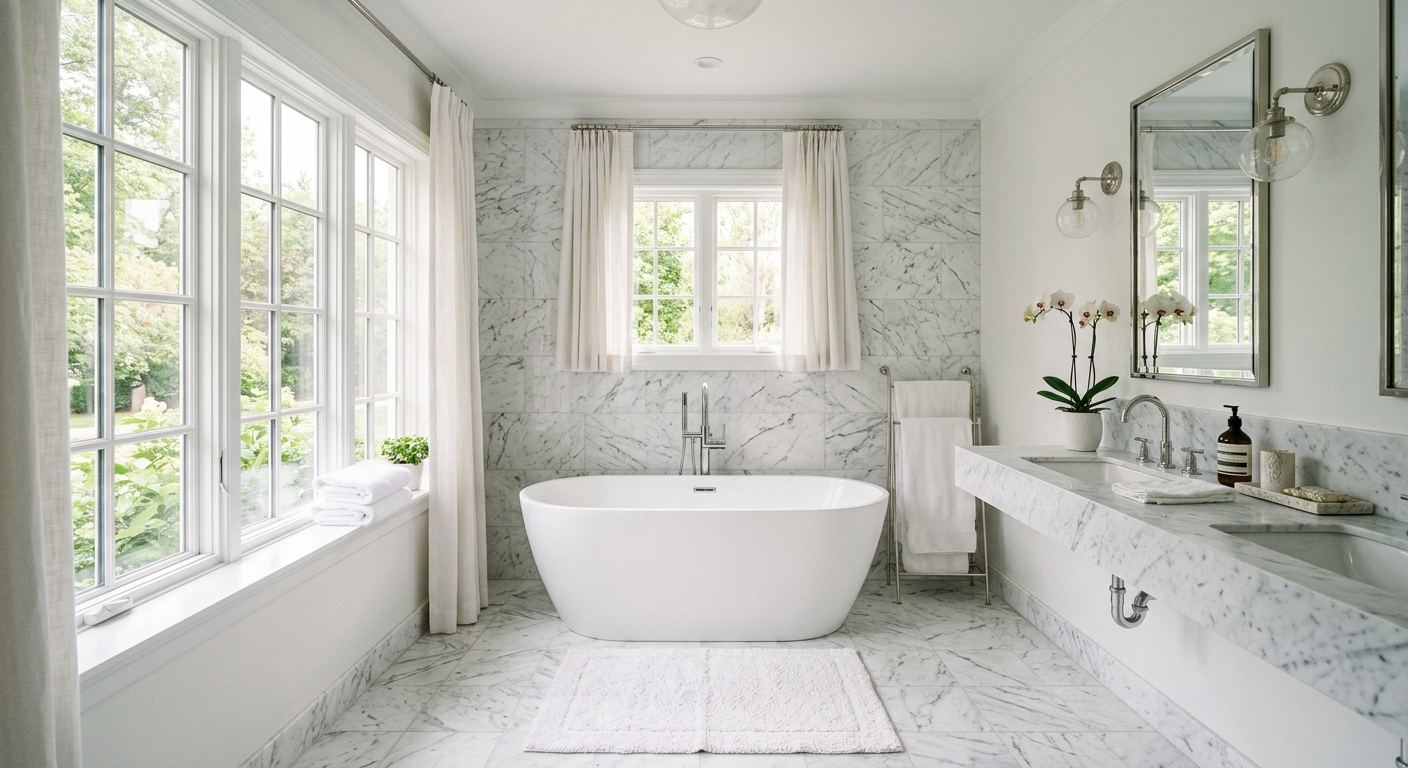
Bathroom renovation options and costs in College Park
Bathroom renovation options and costs in College Park depend less on weather swings and more on the realities of Ontario labour and the age of the homes in the Toronto area. In this area, many bathrooms sit in post-war or 1960s–1980s builds, which often means dated plumbing layouts, older drain stacks, and potential for asbestos-containing materials in floor tile or older drywall compounds. With College Park’s population at 4,072 (Statistics Canada, 2021 Census), you’ll typically find a tighter pool of local crews, so scheduling can influence pricing—especially when multiple bathrooms need service in the same season. Toronto’s market also brings trade-rate premiums: tiling, custom shower work, and plumbing vent corrections are labour-intensive, and skilled labour books up fast around major renovation periods.
That’s why “same bathroom, different quote” is common here. If the job is purely cosmetic, budgets stay closer to the low end of local ranges. If you’re moving drains, adding a new exhaust fan circuit, or uncovering cast-iron drainage, galvanized supply lines, or knob-and-tube remnants, contractors must expand scope. In College Park, you’ll often see higher demand for bathroom work in older pockets of the Toronto economic region—particularly around established residential corridors where many homes were built before modern ventilation and code-driven rough-in details.
To help you compare apples to apples, use the cost bands below as a realistic starting point before you pick finishes, confirm the scope, and price out any hidden conditions.
| Renovation Scope |
What's Included |
Typical Duration |
Price Range |
| Cosmetic refresh (paint, fixtures, accessories only) |
Paint, replace vanity top and/or vanity, toilet or faucet swap, lighting accessories, re-caulk, minor accessory updates (no plumbing relocation) |
3–7 days |
$3,000–$7,500 |
| Mid-range full renovation (new tile, vanity, tub/shower, electrical) |
Demo and rebuild, updated vanity, new tub/shower surround or surround tile, new exhaust fan, GFCI where needed, vanity lighting, basic waterproofing and tiling |
2–4 weeks |
$12,000–$20,500 |
| High-end full renovation (custom tile, steam shower, heated floors) |
Custom shower with premium tile layout, frameless glass, heated floors, upgraded valves, enhanced waterproofing and drainage details, higher-tier fixtures and lighting plan |
4–6 weeks |
$20,500–$30,000 |
| Shower-only installation (convert tub to walk-in shower) |
Convert tub to walk-in shower, new shower valve/trim, waterproofing, tile work, curb/linear drain option, exhaust fan check, plumbing vent/alignment if required |
2–3 weeks |
$10,000–$18,000 |
| Bathtub replacement or tub-liner install |
Remove and replace tub with matching surround changes, or install tub liner (limited scope), new caulking, select fixture swaps |
4–10 days |
$1,200–$3,500 |
| Tile-only installation (floor + surround, existing layout kept) |
Remove old finishes, install new floor + wall tile, grout/seal, waterproofing as required for wet areas, keep existing plumbing locations |
1–3 weeks |
$3,000–$10,000 |
Prices are estimates only and vary by project scope, site access and material selection.
What affects the price of bathroom renovation in College Park
Even when homeowners describe the “same” bathroom upgrade, quotes in the Toronto economic region can differ by 30–50% because labour rates are higher and bathroom work is labour-intensive once walls and floors are opened. In Ontario, the bigger driver is usually the age of the housing stock, not climate exposure. Older homes frequently hide issues like cast-iron or undersized drains that don’t meet today’s expectations, copper supply lines that require better shut-offs, and ventilation setups that aren’t strong enough for modern moisture loads. Those discoveries expand the scope beyond materials—so a renovation can move from a tile-only plan into a full mid-range job.
Toronto-area budgets also get affected by compliance surprises. In pre-1985 homes, asbestos-containing materials can show up in vinyl floor tile or old drywall compound. If asbestos is present, licensed abatement protocols apply and that can add roughly $1,500–$5,000+ depending on extent, containment needs, and disposal. On the electrical side, adding or upgrading an exhaust fan to meet safe wet-area operation can require circuit changes and inspections.
Here are a few concrete examples of how local conditions raise or lower cost in College Park: (1) Keeping the existing drain location often helps you stay within the tile installation band (typically $3,000–$10,000). (2) If the plumber needs to reconfigure drain or venting to modernize flow and connections, your budget can jump toward a mid-range full renovation (commonly $12,000–$20,500). (3) If you opt for large-format porcelain tile but your substrate is out of level, added prep can increase labour—especially when waterproofing layers must be corrected first.
For homeowners, the practical takeaway is that “small” changes—like moving a vanity or converting a tub to a walk-in—often trigger rough-in work, which is where Ontario labour makes the biggest difference, even though the climate isn’t the primary cost driver here.
| Price Factor |
Why It Matters |
Cost Impact |
| Layout change — moving drain or supply lines |
Triggers plumbing rough-in, patching, and potentially venting corrections |
Often adds several thousand dollars and extends timelines |
| Tile selection — large-format porcelain vs. mosaic vs. ceramic |
Material cost varies and installation tolerances are tighter for bigger panels |
Can swing total tile labour by 20–40% |
| Fixture tier — builder-grade vs. mid-range vs. designer brands |
Premium trim, valves, and finishes increase both material and install time |
Typically moves you up one “budget tier” |
| Subfloor condition — rot or unlevel concrete adds scope |
Requires replacement/leveling so tile stays flat and waterproofing performs |
May add prep costs and extra days |
| Electrical — adding GFCI outlets, exhaust fan, heated floor circuit |
Electrical upgrades must be properly designed and inspected |
Commonly adds noticeable labour/material line items |
| Waterproofing method — membrane type and extent |
Better systems reduce risk of moisture intrusion and costly repairs |
Small cost increase vs. large potential savings later |
| Older-home surprises — asbestos tile, cast-iron drains, galvanized pipes |
Can force abatement, pipe upgrades, and additional demo/restoration |
May add $1,500–$5,000+ for abatement plus plumbing rework |
| Bathroom size — sq ft drives tile and labour time directly |
More surface area increases tile quantities, cutting, and setting time |
Direct proportional increase to labour and materials |
Permits & regulations in Ontario
In Ontario, the permit picture depends on what you’re changing. Cosmetic updates—like swapping a vanity, replacing a toilet, painting, changing lighting fixtures, or retiling without moving plumbing—typically do not require a permit. However, if you relocate plumbing (for example, moving a drain or supply line), add a new exhaust fan with electrical work tied to wet-area requirements, or make structural wall changes, you’re in permit territory. Any electrical work must meet Ontario code requirements and be performed by (or signed off by) a licensed electrician.
Plumbing rough-in changes usually require a permit and inspections because inspectors must verify the rough plumbing before walls close. That’s also why your quote should be clear on whether permit application and scheduling are included in the contractor’s responsibilities.
For a homeowner in College Park, the verification steps are straightforward and worth doing before signing: (1) confirm the contractor’s Ontario trade licence and business registration details through the appropriate online registry sources; (2) request a current certificate of liability insurance and verify the coverage dates and jobsite address; (3) ask for proof of WSIB/WCB coverage or clearance letter—if required for your contractor type—so you’re not exposed if there’s an on-site injury; and (4) keep copies of all documents with your contract.
If a contractor can’t provide these items quickly (or wants you to pay large deposits before documentation is provided), that’s a sign to pause and keep shopping.
Choosing tile, waterproofing and fixtures for your College Park bathroom
When you’re budgeting in College Park, the materials decisions that actually change cost are tile complexity, waterproofing system choice, and fixture tier—more than the vanity style you can see in a showroom photo. First: tile choice. Ceramic tile is usually the entry point, but it can require more careful layout planning if you want clean lines and a premium look. Porcelain tile tends to be more durable for floors and wet areas, and it’s often a better value for resale durability in the Toronto market. Natural stone (marble, travertine, slate) can look exceptional, but it typically increases installation time and may require sealing and extra labour for fitting and finishing.
Second: waterproofing. In Ontario’s indoor humidity cycles, good waterproofing is what prevents mould and hidden failures—not grout colour. A paint-on membrane may work for certain situations, but bonded sheet membranes or a tested system (including a properly detailed shower pan and corners) typically offers more predictable performance. Third: fixtures. Builder-grade trim saves upfront but may not feel as robust day to day; mid-range often balances reliability with cost; designer brands can push budgets quickly, especially when paired with steam shower components.
One realistic dollar example: if you’re choosing between standard surround tile and a custom shower pan with a premium membrane and linear drain detailing, it’s common to see an increase of several thousand dollars—yet that’s exactly what reduces the risk of water reaching framing in older Toronto-area bathrooms. In other words, the “extra” is often justified where the risk is highest.
| Material / Option |
Pros |
Cons |
Price Range |
| Ceramic tile (floor + walls) |
Lower material cost, good for wall finishes, straightforward availability |
More care needed for long-term floor performance; can be less durable than porcelain |
$3,000–$7,500 |
| Porcelain tile (floor + walls) |
Higher durability for floors, consistent look, better moisture resistance |
More expensive tile; large-format installs require precise prep |
$6,000–$10,000 |
| Natural stone (marble, travertine, slate) |
Premium appearance, unique variations, strong curb appeal |
Higher labour and finishing time; sealing/maintenance considerations |
$9,000–$15,000 |
| Frameless glass shower enclosure |
Modern look, easy to clean, enhances perceived space |
Requires precise alignment and robust waterproofing detailing |
$2,500–$7,000 |
| Prefab tub surround (acrylic) |
Fast install, fewer tile cuts, good for budget-focused upgrades |
Less “designer” look than custom tile; limited design flexibility |
$1,500–$4,000 |
| Custom shower pan (tile or linear drain) |
Better drainage control, cleaner modern lines, supports premium waterproofing systems |
More labour and detailing; requires correct slope and membrane integration |
$4,000–$12,000 |
How to choose a bathroom renovation contractor in College Park
Start with verification, then move to proof. For Ontario work, confirm the contractor’s Ontario trade licence for the scope they’ll do (especially plumbing and electrical-related coordination), and request a certificate of liability insurance with dates and jobsite listed. For worker coverage, ask for proof of WSIB/WCB coverage or a clearance letter, and keep it in your renovation file. If you’re unsure which coverage applies, ask the contractor to specify what they carry for your project type and labour model.
Next, get 2–3 itemised written quotes—not just a lump sum. A strong bathroom quote breaks out labour and materials separately (demo, rough-in, waterproofing, tile setting, electrical items like GFCI/exhaust fan, and disposal). Read the scope line-by-line: what’s excluded (wall repairs, subfloor leveling, permit fees, or asbestos testing/abatement contingency)? Ask whether permit pulling is included, and whether bathroom demolition and construction disposal are covered.
Warranty matters too. Look for a workmanship warranty (commonly stated as a multi-year period), plus product/manufacturer warranties for tile, membranes, glass, and fixtures. Ask whether warranties are transferable to you if you sell your home—this can matter for resale. Payment scheduling should be conservative: don’t pay more than about 10–15% upfront, and hold back until major milestones are complete and verified. Finally, get a written start date and completion estimate, and ensure timelines reflect any permit or inspection requirements.
- Verify Ontario trade licence and the specific licence aligns with the work they’ll perform.
- Request a current liability insurance certificate and confirm it covers the renovation period.
- Confirm WSIB/WCB coverage (or clearance letter) before work starts.
- Get 2–3 itemised quotes with labour/material breakdown and clear allowances.
- Ask who pulls permits and schedule inspections if plumbing/electrical rough-in changes are included.
- Ensure the quote includes disposal and jobsite protection (floor protection, dust control).
- Confirm waterproofing scope: membrane type, coverage area, and how corners and transitions are detailed.
- Clarify tile prep responsibilities (subfloor leveling, underlayment, backer board if applicable).
- Ask how they handle hidden conditions (asbestos contingency, cast-iron drain replacement, galvanized supply upgrades).
- Review warranty length for workmanship and whether it’s in writing and transferable.
- Use a milestone payment schedule with a holdback until key inspections and final walkthrough.
- Check that the estimated duration accounts for cure/inspection time, not only build hours.
In College Park, concrete red flags include: quoting a “full renovation” without an inspection or review of existing plumbing/venting, refusing to provide licence/insurance/WSIB documentation, using vague scopes that don’t mention waterproofing and waterproofing detailing, requiring large upfront deposits beyond about 10–15%, and giving only a lump-sum price with no contingencies for typical older-home issues.
Frequently asked questions — bathroom renovation in College Park
How do I prevent mold in a College Park bathroom?
Mould prevention in College Park is mostly about stopping moisture from getting behind surfaces and giving vapour a clear path out. Use a properly detailed waterproofing system under tile (including corners, transitions, and the shower pan), and avoid “thin” installations that skip required membrane coverage. Pair that with a correctly sized and ducted exhaust fan, vented to the exterior (not into the attic). Keep ventilation running after showers, and use bathroom-rated caulk for changes of plane. In older Toronto-area homes, hidden water can be worsened by dated drains or inadequate slope—so fixing drainage and venting issues during renovation is often more effective than just improving paint. If you’re budgeting, a mid-range full renovation typically lands around $12,000–$20,500, where waterproofing and ventilation upgrades are usually built into the plan.
What adds the most resale value in a bathroom reno?
Resale value in Ontario tends to follow the combination of “looks good” plus “works reliably.” In College Park and the broader Toronto economic region, homeowners often see the biggest value jump from a functional layout upgrade (especially improving storage), modern lighting, and a clean, durable shower/tile system with a proper waterproofing build. Converting an aging tub to a walk-in shower can be a strong selling feature, particularly when done with a well-detailed pan and good glass enclosure. Upgrading ventilation and addressing plumbing venting/rough-in issues also matters because buyers notice signs of moisture risk. If your budget is practical, you can still make high-impact choices: for example, a tile-only scope may fit around $3,000–$10,000, while a full mid-range renovation commonly sits near $12,000–$20,500 and gives you the reliability and finish consistency that appeals to most buyers.
Can I keep my existing plumbing layout to save money?
Usually yes—and it’s one of the best ways to control cost in College Park. Keeping the existing drain and supply locations reduces the need for plumbing rough-in and often avoids additional permit complexity tied to relocating lines. That said, you still need to inspect what’s there once walls open. In older Toronto-area homes, supply lines may be galvanized or undersized, and drains may be cast-iron or configured in ways that require venting corrections. If the existing system is serviceable, you can often keep the layout and spend more on finishes and waterproofing. If the current layout has obvious slope problems or leaks, “saving money” by keeping it can lead to higher repair costs later. For many homeowners, staying layout-faithful helps keep you nearer the tile installation band of $3,000–$10,000 instead of pushing toward a broader full renovation budget.
How much does a walk-in shower cost in College Park?
A walk-in shower conversion in College Park is often priced based on whether you’re converting a tub, the drain/pan details, and the tile complexity. In the Toronto economic region, shower-only installation typically lands around $4,000–$12,000 for the shower component in many quotes, with many full conversions falling in the $10,000–$18,000 range once you add demo, waterproofing, tile, glass, and any plumbing alignment or venting corrections. The biggest swing factors are linear drains, custom shower pans, and frameless glass enclosures—plus whether older drainage needs upgrades once walls are opened. If your contractor finds cast-iron drains, undersized venting, or other older-home surprises, the scope can rise quickly even if the design looks “simple” on paper.
What's the ROI on a bathroom renovation?
ROI varies by neighbourhood, finish level, and whether you address functional issues. In Ontario, buyers generally pay more for bathrooms that feel dry, modern, and maintenance-friendly: good waterproofing, ventilation, and reliable plumbing connections drive more perceived value than cosmetic-only changes. If you’re working with an older Toronto-area home, repairing venting, improving drainage slope, and upgrading electrical safety features can protect the home from moisture-related problems that hurt resale confidence. Budget-wise, a mid-range full renovation around $12,000–$20,500 often offers a practical balance of cost and buyer appeal; a higher-end renovation around $20,500–$30,000 can pay off if the entire build quality feels cohesive (tile lines, glass, lighting, heated options) rather than just “more expensive materials.” The best way to maximize ROI is to match finish tier to your home’s age, layout, and condition—and avoid skipping waterproofing and permit-required work.
Do I need waterproofing behind the tile?
Yes—under a properly built tiled shower and wet-area walls, waterproofing behind the tile is generally non-negotiable in Ontario best practice. In College Park and the Toronto area, bathrooms experience repeated moisture exposure, and small failures can lead to mould or deterioration inside wall cavities. Waterproofing should be installed according to a tested system, covering the correct areas (especially around the shower/tub envelope, corners, and transitions) and integrating with the shower pan and drain detail. Paint-on options can be used in certain contexts, but many contractors prefer more robust membrane or bonded systems for predictable performance when detailing is done correctly. Don’t rely on grout alone—grout is not waterproofing. If your contractor offers “tile only” without a waterproofing plan, ask questions before you proceed, because the cost to redo a failed waterproofing job can quickly exceed your original renovation budget.