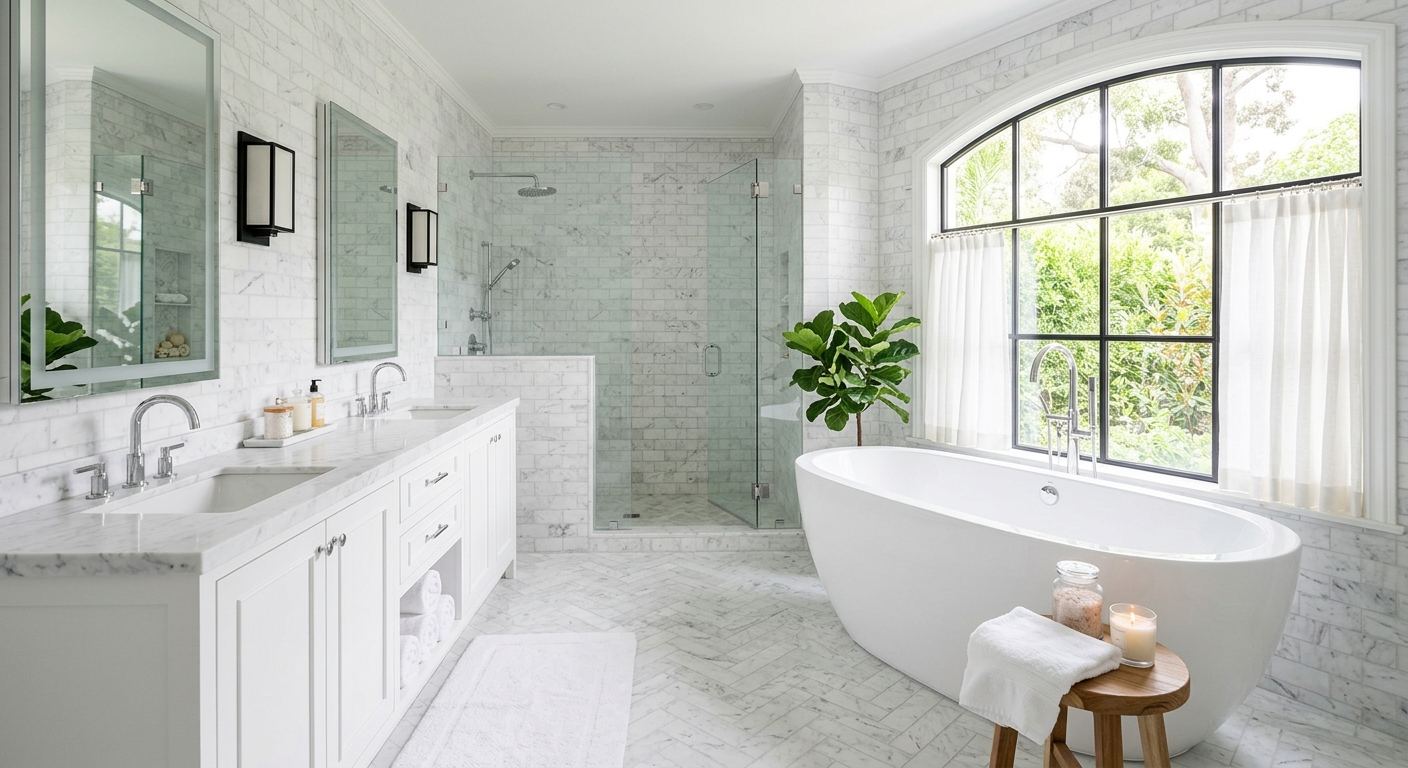
Bathroom renovation options and costs in Brantford
Brantford homeowners have a lot of choices when planning a bathroom renovation, but the final price usually comes down to scope once demolition starts. With 62.8% of local homes built before 1981, it’s common to encounter dated plumbing layouts, older drains, or hidden water-damage risk behind walls and subfloors. In 2021, Brantford counted 104,688 residents (Statistics Canada, 2021 Census), and with homeowner households making up 66.0% of all households, many projects are owner-driven and designed to last—so contractors often spend more time on waterproofing and mechanical upgrades than people expect.
In the Hamilton–Niagara Peninsula market, costs are shaped more by older housing stock and labour availability than by “extreme” weather. Ontario winters and humid summers increase moisture exposure in bathrooms, which makes correct ventilation and waterproofing non-negotiable. At the same time, opening walls in older homes may require drain-vent upgrades, replacing shutoffs, or correcting venting and traps to meet current expectations. In neighbourhoods with lots of older, detached housing—such as Hagersville-adjacent pockets and areas near the downtown core—trade demand tends to be steady, and estimates often reflect how quickly crews can access plumbing and finishing trades.
To make comparisons easier, here are common Brantford price ranges by renovation level. Use these as a starting point, then refine after a contractor confirms fixture locations, waterproofing approach, and whether any hidden repairs are needed.
| Renovation Scope |
What's Included |
Typical Duration |
Price Range |
| Cosmetic refresh (paint, fixtures, accessories only) |
Paint/trim touch-ups, vanity/lighting swap (no plumbing move), new toilet (if like-for-like), accessories (towel bars, mirrors), caulking/trim at wet edges |
2–4 days |
$4,500–$9,000 |
| Mid-range full renovation (new tile, vanity, tub/shower, electrical) |
Demolition, new vanity + toilet, tub/shower replacement or refreshed surround, wall and floor tile, surface waterproofing/membrane, exhaust fan, GFCI outlet upgrade, basic plumbing refresh and resealing |
2–3 weeks |
$12,000–$25,000 |
| High-end full renovation (custom tile, steam shower, heated floors) |
High-spec tile layout, custom shower/steam option, heated flooring circuit, upgraded lighting, premium fixtures, enhanced waterproofing system, more extensive plumbing/vent adjustments if needed |
3–5 weeks |
$25,000–$45,000 |
| Shower-only installation (convert tub to walk-in shower) |
Remove tub, install shower pan/base, tile walls and floor (or surround), new valve/trim, glass door, waterproofing upgrade, exhaust fan check and rework as required |
1.5–3 weeks |
$15,000–$28,000 |
| Bathtub replacement or tub-liner install |
Remove and set new tub and fittings (or liner system where appropriate), re-caulk, touch-up tile at edges, drain/overflow connection check, sealing and final trim |
5–10 days |
$1,500–$6,000 |
| Tile-only installation (floor + surround, existing layout kept) |
Tile floor, tile/tub surround or feature wall, prep and leveling, waterproofing at wet areas, grout/seal, minimal fixture touch-ups (no major plumbing relocation) |
1.5–3 weeks |
$3,000–$8,000 |
Prices are estimates only and vary by project scope, site access and material selection.
What affects the price of bathroom renovation in Brantford
If you’re comparing quotes in Brantford, it’s normal to see the same “bathroom refresh” land 30–50% apart across the Hamilton–Niagara Peninsula and Ontario. The difference usually isn’t the tile brand—it’s how much hidden work the contractor expects once walls are opened. Labour rates in the region and the age of nearby housing stock often matter more than weather alone. Brantford’s older homes (62.8% built before 1981) commonly hide cast-iron or older drain stacks, galvanized supply lines, and ventilation issues that don’t become obvious until demolition exposes joists, subfloor, and existing rough-ins.
It’s also why “simple” projects can become plumbing-and-finishing jobs. For example, swapping a vanity may require adjusting shutoffs or renewing supply flexes; converting a tub to a shower may require new valve rough-in positioning and correcting drain slope. Older bathrooms may also need additional venting to keep drains functioning properly and reduce odour/moisture. Another cost driver is asbestos discovery: if asbestos is found in pre-1985 vinyl floor tile or older drywall materials, abatement protocols apply and add budget—often in the $1,500–$5,000+ range depending on extent and containment.
Concrete examples I see locally: (1) a mid-range full renovation at around $12,000–$25,000 can creep upward when cast-iron lines require partial replacement and exhaust ducting is corrected; (2) a tile-only project targeted at $3,000–$8,000 can exceed expectations if the subfloor is out of level or damp, requiring prep and waterproofing upgrades.
Finally, size matters: the more square footage of tile and the longer the waterproofing and setting time, the more labour you pay—so two bathrooms with the same “style” can price very differently.
| Price Factor |
Why It Matters |
Cost Impact |
| Layout change — moving drain or supply lines requires rough-in work |
Repositioning plumbing means wall demolition, new lines, and testing/inspection steps |
Typically adds several thousand dollars; can swing total by 20%+ depending on access |
| Tile selection — large-format porcelain vs. mosaic vs. ceramic |
Harder tile needs better prep and more time; complex patterns increase cuts and labour |
Often shifts labour and materials noticeably within the tile and full-reno bands |
| Fixture tier — builder-grade vs. mid-range vs. designer brands |
Higher tiers cost more upfront and may require extra framing or matching trims |
Can add $1,000–$6,000+ depending on valves, shower systems and vanity |
| Subfloor condition — rot or unlevel concrete adds scope |
Uneven substrate can cause tile failure; damaged framing must be repaired before waterproofing |
Commonly adds time and materials; can be a major driver in older homes |
| Electrical — adding GFCI outlets, exhaust fan, heated floor circuit |
Bath electrical upgrades affect safety, comfort and code compliance |
Higher-end features can push costs toward upper full-reno ranges |
| Waterproofing method — membrane type and extent |
Better systems reduce failure risk; coverage details matter (corners, benches, transitions) |
Often a worthwhile cost increase to protect the whole assembly |
| Older-home surprises — asbestos tile, cast-iron drains, galvanized pipes |
Discovery triggers abatement and/or replacement, plus additional drying and refinishing |
Can add $1,500–$5,000+ for abatement alone; larger plumbing fixes add more |
| Bathroom size — sq ft drives tile and labour time directly |
More area means more setting time, curing time, grout/seal time and cleanup |
Two similar bathrooms can differ by multiple thousands based on area |
Permits & regulations in Ontario
In Ontario, the permitting requirement depends on what you change. Cosmetic updates—like swapping a vanity (without moving plumbing), replacing a toilet like-for-like, retiling within the existing footprint, repainting, and updating accessories—often do not require permits. However, if you relocate plumbing (moving drain or supply lines), replace or add an exhaust fan with new wiring or new circuit work, or make structural wall changes, you should expect permits and inspections.
Electrical work must meet Ontario code requirements and be completed by a licensed electrician. The same goes for any work that alters circuits feeding bathroom fixtures (for example, adding or upgrading GFCI protection, running a dedicated line for heated floors, or installing a new fan/light combination). Plumbing rough-in changes typically require permit steps because inspectors want to verify pressure testing and proper venting/drain connections before walls close.
Step-by-step in Brantford: (1) ask for the contractor’s Ontario trade licence number (and confirm it is active in the relevant provincial registry), (2) request a certificate of insurance showing liability coverage (and verify the effective dates), and (3) confirm WSIB/WCB coverage for their workers (or provide proof of coverage/clearance documentation). If the contractor can’t provide documentation quickly—especially before you pay a deposit—pause and ask for it in writing. This protects you if delays or damages occur during the demolition and waterproofing stages.
Choosing tile, waterproofing and fixtures for your Brantford bathroom
In Brantford, three decisions typically control your bathroom renovation budget more than the “look” you pick: tile choice, waterproofing method, and fixture tier. First, tile selection: ceramic is a great entry option and often works best for straightforward layouts. Porcelain is denser and more water-resistant, which is helpful in Ontario’s long humid stretches. Natural stone (marble, travertine, slate) creates a high-end feel, but installation and sealing requirements add complexity and maintenance considerations.
Second, waterproofing. Bathrooms in the Hamilton–Niagara Peninsula face moisture from showers, wet floors and steam from hot water, so mould prevention starts with the waterproofing assembly—not with paint alone. A paint-on membrane can work for limited applications, while a bonded sheet membrane or a modern system with proper overlapping at seams and corners is usually the safer choice for shower walls and floors. Getting the correct method for your shower details (curbs, benches, niche transitions) prevents water migration behind tile.
Third, fixtures. Builder-grade items keep initial cost down, but mid-range and designer tiers often improve longevity (valves, shower heads, and cartridge quality) and resale appeal. If your budget is closer to a tile-focused project, you may be better investing in porcelain tile and a robust waterproofing system rather than upgrading every fixture. For example, a mid-range full renovation in the $12,000–$25,000 band can justify spending more on a proper waterproofing system and porcelain tile if you’re keeping the layout, because it reduces the likelihood of expensive tear-outs later.
Match your budget to your risk points: in older Brantford homes, waterproofing and substrate prep protect the whole investment when demolition reveals surprises.
| Material / Option |
Pros |
Cons |
Price Range |
| Ceramic tile (floor + walls) |
Lower material cost, wide style selection, straightforward for simple patterns |
More likely to absorb moisture depending on grade; may not be ideal for every wet-floor application |
$3,000–$6,500 |
| Porcelain tile (floor + walls) |
Dense and durable, excellent for wet areas, holds up well to daily cleaning |
Can be heavier and requires careful cutting/installation; larger formats increase layout precision |
$5,000–$9,000 |
| Natural stone (marble, travertine, slate) |
Premium look and unique variation; high perceived value |
Higher installation complexity, sealing/maintenance requirements, and possible sensitivity to stains/etching |
$8,000–$15,000 |
| Frameless glass shower enclosure |
Modern appearance, makes bathrooms feel brighter, easier to keep clean than some curtain setups |
More expensive hardware; needs correct wall alignment and solid waterproofing behind attachment points |
$1,800–$5,500 |
| Prefab tub surround (acrylic) |
Fast installation, consistent surface, easier maintenance than grout-heavy tile walls |
Limited design customization; transitions still need careful sealing at corners/edges |
$1,500–$4,000 |
| Custom shower pan (tile or linear drain) |
Highest flexibility for layout and slope; linear drains look sleek and perform well |
More labour-intensive framing and waterproofing; must be executed precisely to avoid leaks |
$4,000–$12,000 |
How to choose a bathroom renovation contractor in Brantford
Choosing the right contractor is how you protect both your budget and the waterproofing assembly. In Ontario, verify licensing and coverage before work starts: ask for the contractor’s Ontario trade licence information (for the trades they provide), a certificate of liability insurance (confirm dates and coverage limits), and proof of WSIB/WCB coverage for their workers. If you can’t find the documentation, ask them to provide it by email in advance. Then treat these documents like part of the contract—use them to compare bids.
Next, request 2–3 itemised written quotes instead of lump sums. A good quote separates labour and materials (tile setting, waterproofing, demolition, electrical/heating components, plumbing rough-in, disposal). Read exclusions carefully: are permits included, is disposal and dumpster rental covered, and who replaces damaged drywall beyond the work area? Also confirm whether the estimate assumes “like-for-like” plumbing connections or includes allowance for older-home upgrades.
Warranty matters. Ask for the workmanship warranty length and what it covers (especially waterproofing and grout failure). Product warranties vary—confirm whether the manufacturer warranty is valid and whether it’s transferable to you. For payment, never pay more than 10–15% upfront; hold back a portion until the job is complete and final caulking, inspections (if any), and walkthroughs are done. Get a start date and completion estimate in writing so you can plan around demolition and tile curing time.
- Provide Ontario trade licence details for each trade involved (plumbing/electrical where applicable)
- Show current liability insurance certificate (effective dates) before any demolition
- Confirm WSIB/WCB clearance or proof of coverage for workers
- Use itemised quotes with labour vs. material breakdown (not just totals)
- Clarify what’s included: permits, disposal/dumpster, drywall patching, patch-and-paint
- Require a written scope for waterproofing method and shower/tub transition details
- Ask how they handle older-home surprises (asbestos chance, cast-iron drainage, subfloor replacement allowance)
- Confirm tile layout plan (pattern, lippage handling, bullnose/trim details) before ordering
- Ask for a workmanship warranty specifically covering water ingress/leaks
- Set a payment schedule capped at 10–15% upfront, with a holdback for completion
- Get a project timeline with milestones (demo, rough-in, waterproofing, tile, trim, final)
- Request references from recent Brantford area bathroom installs and, if possible, photos of similar scopes
In Brantford, common red flags I’ve seen include contractors who won’t provide licence/insurance/WSIB proof, quotes that omit waterproofing details (or treat it as optional), a payment request above 10–15% upfront without a clear deposit purpose, vague timelines (“about a month”) with no milestones, and change orders that aren’t documented in writing during demolition.
Frequently asked questions — bathroom renovation in Brantford
How long does a bathroom renovation take in Brantford?
Typical bathroom renovations in Brantford take about 2–3 weeks for a mid-range full renovation and closer to 3–5 weeks for higher-end projects with custom tile layouts, steam features, or heated flooring. Cosmetic refreshes can be only a few days, especially when plumbing isn’t moved. In older Brantford homes (62.8% built before 1981), schedules often stretch a bit if plumbers need to upgrade drains, vents, shutoffs, or traps once walls are open. Waiting on materials (tile, glass enclosures, specialty valves) is another common delay, so ordering early helps. If your project is converting a tub to a walk-in shower, expect extra time for waterproofing and pan prep before tiling starts.
Do I need a permit for a bathroom renovation in Ontario?
Often, cosmetic updates in Ontario don’t require a permit—like swapping a vanity, changing fixtures like-for-like, repainting, or retiling within the same layout. You generally should expect permits when you relocate plumbing (moving drain or supply lines), add or modify an exhaust fan with new wiring or a new circuit, or make structural changes. Electrical work must comply with Ontario code and must be done or signed off by a licensed electrician. Plumbing rough-in changes also typically require permit steps and inspections before walls close. A contractor should confirm what’s required in writing before demolition. If they can’t explain which parts trigger permits, ask directly or choose a contractor who can.
What's the best tile for a bathroom in Brantford?
For most Brantford homeowners, porcelain tile is a strong “best value” choice because it handles wet environments well and resists staining and wear under daily use. If you’re working with a limited budget, ceramic can be fine for many applications, but porcelain tends to be the safer bet for shower floors and high-moisture areas. Natural stone looks premium, but it can be more expensive to install and may require extra sealing and maintenance. Whatever you choose, the waterproofing system matters more than the marketing name on the box—especially in older homes where subfloor prep and membrane details determine long-term performance. If you’re building around a tile-only budget of $3,000–$8,000, consider prioritizing porcelain and correct waterproofing coverage rather than chasing the most expensive stone.
Should I do a tub-to-shower conversion?
A tub-to-shower conversion is worth considering if you want easier access, plan to age in place, or simply prefer a modern, quick-clean shower setup. In Brantford, it’s also a practical way to update waterproofing in a single wet zone, but it’s not “plug-and-play.” Conversions require correct shower pan slope, drain planning, valve rough-in location, and a sealed transition—plus sometimes plumbing upgrades if older drain stacks or vents don’t perform well. Budget varies depending on whether you keep finishes simple or add glass and custom tile. Many conversions land within the mid to upper project bands (often aligned with full renovation pricing), and you should plan for the possibility of additional plumbing discovery in older homes built before 1981.
How do I prevent mold in a Brantford bathroom?
Mould prevention starts with controlling water and drying speed. Choose a waterproofing method designed for shower wet areas (not just paint on tile), and ensure corners, seams, and transitions are sealed properly. Good ventilation is equally important in Brantford’s Ontario humidity patterns—make sure your exhaust fan is properly sized and vented, and that it runs long enough after showers. Avoid “cosmetic” caulking only: if a contractor doesn’t address waterproofing and grout joints, moisture can migrate behind tile over time. In older homes, hidden leaks or subfloor issues can contribute to persistent dampness, so a thorough inspection during demolition matters. A well-built shower assembly and properly functioning fan usually do more than any mould-killing product.
What adds the most resale value in a bathroom reno?
In Brantford, buyers typically notice changes that improve both appearance and functional durability. High-impact items include modern vanities and lighting, a clean and consistent tile finish, and a shower upgrade that feels current (often with quality glass and a properly built pan). Waterproofing done correctly is also a hidden value driver—no one wants to buy a bathroom they’ll need to redo for leaks. If your budget is in the mid-range band, many homeowners find the best resale-per-dollar by combining reliable waterproofing, durable porcelain tile, and updated fixtures rather than overspending on the most expensive finishes everywhere. For reference, projects often start around $12,000–$25,000 for a mid-range full reno, and that’s commonly where you get a noticeable “all-new” buyer impression without going fully custom.