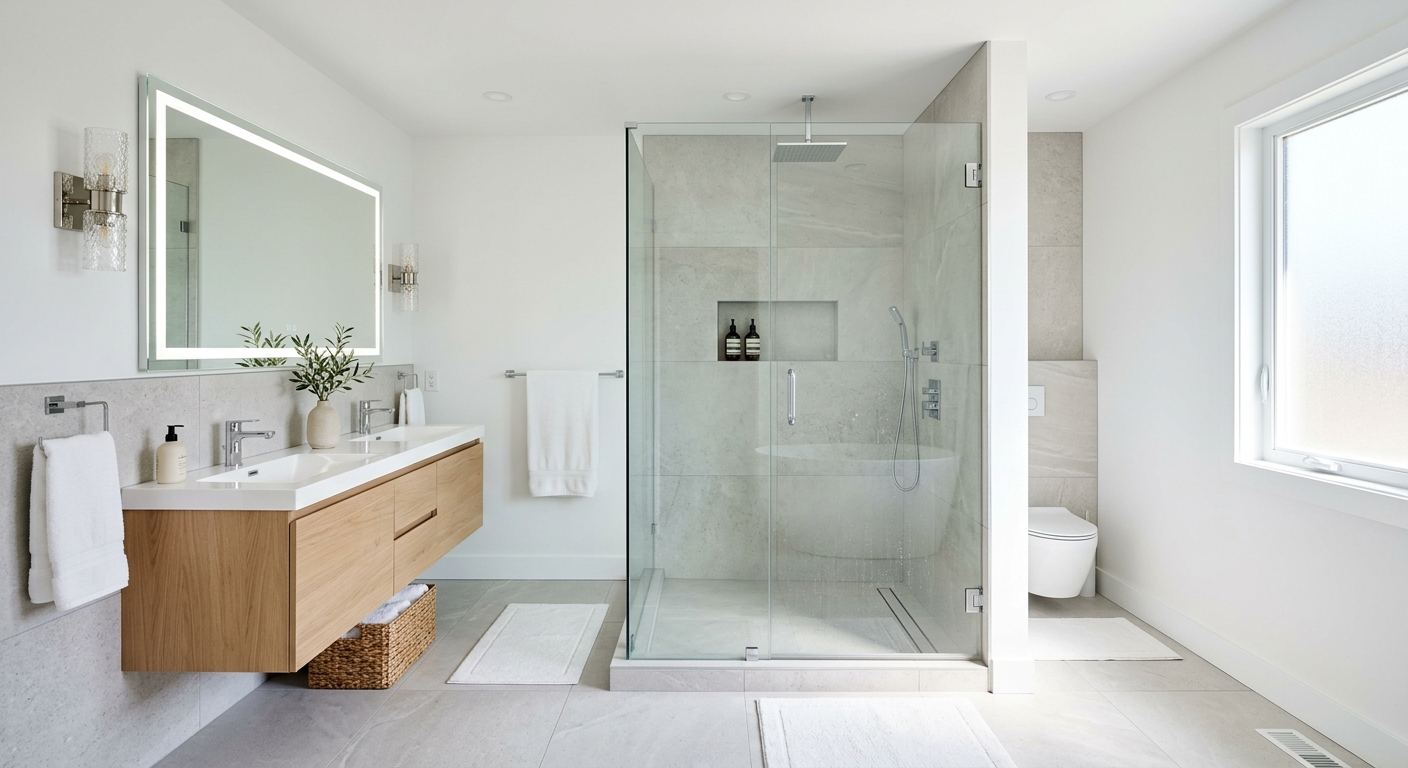
Bathroom renovation options and costs in Attawapiskat
Bathroom renovation in Attawapiskat usually starts with choosing how much change you want, because “same-looking bathroom” upgrades can involve very different levels of plumbing, electrical, and demolition work. With a small local population of 1,501 (Statistics Canada, 2021 Census), you typically have fewer contractors available nearby, so scheduling and material sourcing can affect timelines and final labour costs. Also, Attawapiskat homes often reflect older Ontario housing patterns seen across the Toronto economic region, where dated drain and supply layouts are common; that matters because once walls are opened, contractors frequently uncover cast-iron or ageing drainage components and the need for better venting to meet today’s Ontario requirements. In the Toronto economic region, pricing is driven more by labour rates and housing age than climate, but Ontario-style humidity still demands good ventilation and modern waterproofing details to keep grout lines and backer board from failing over time.
In practice, Toronto-area bathroom work is especially in demand in older established areas—when homeowners update post-war or 1960s–1980s bathrooms, the scope often expands to include drain reconfiguration, new shut-offs, and electrical upgrades (like GFCI protection and a properly ducted exhaust fan). Even a “mid-range refresh” can move into full-reno territory if the subfloor is uneven or if vinyl floor tile/disconnected compounds suggest asbestos requiring licensed abatement. The result is that you should budget with a realistic range, then select your scope before you compare quotes. Use the options below as a starting point, and match them to what your inspection finds.
| Renovation Scope |
What’s Included |
Typical Duration |
Price Range |
| Cosmetic refresh (paint, fixtures, accessories only) |
Paint, caulking refresh, toilet/vanity/lighting swap (no plumbing relocation), re-seat existing fittings, new mirrors, towel bars, basic accessories |
3–7 days |
$3,000–$7,000 |
| Mid-range full renovation (new tile, vanity, tub/shower, electrical) |
Demolition, new wall/floor tile, vanity replacement, bathtub or shower replacement, exhaust fan (new venting if needed), GFCI protection, standard waterproofing system |
2–3 weeks |
$12,000–$22,000 |
| High-end full renovation (custom tile, steam shower, heated floors) |
Custom shower/tile detailing, heated floors circuit, premium fixtures, stronger waterproofing coverage, upgraded plumbing components, more complex trim/stonework |
3–5 weeks |
$22,000–$30,000 |
| Shower-only installation (convert tub to walk-in shower) |
Remove tub, install shower pan/liner or tiled base, new valve/trim, glass enclosure, tile surround, ventilation updates if required |
1.5–3 weeks |
$8,000–$16,000 |
| Bathtub replacement or tub-liner install |
Swap existing tub for a new unit or install tub liner (where conditions allow), basic tile touch-up, new trim and caulking, confirm drainage connection |
3–10 days |
$1,200–$3,500 |
| Tile-only installation (floor + surround, existing layout kept) |
Remove and replace tile on floors and/or shower walls, waterproofing as needed to suit substrate, re-grout/silicone upgrades, minimal fixture relocation |
1–2.5 weeks |
$3,000–$10,000 |
Prices are estimates only and vary by project scope, site access and material selection.
What affects the price of bathroom renovation in Attawapiskat
In Attawapiskat and across Ontario, two quotes for the “same bathroom” can differ by 30–50% because contractors price the hidden work differently—especially rough-in plumbing, electrical scope, and waterproofing prep once the walls come off. In the Toronto economic region, bathroom renovations are labour-intensive and labour rates drive a big share of the cost. Climate matters less to scheduling than in-region trade availability and demand, but Ontario’s humidity still makes ventilation and moisture control non-negotiable. Older housing stock in the Toronto region commonly includes cast-iron or undersized drain components, ageing shut-offs, and sometimes insufficient venting; correcting those can add several thousand dollars in drain reconfiguration and vent corrections—pushing a project toward the upper end of the $12,000–$30,000 full-reno band.
Asbestos surprises can also change the price quickly. If asbestos-containing materials are found in pre-1985 floor tile, old drywall compounds, or mastic residue, abatement can add roughly $1,500–$5,000+ depending on access and extent. Here are a few practical examples that show how local conditions raise or lower cost: (1) If your shower valve is relocated because the existing rough-in is out of line, you pay for additional rough-in labour and patch repairs; that’s why “shower-only” can drift upward. (2) If the subfloor is soft or uneven, tile and membrane systems need extra prep to avoid failure—usually costing more than replacing tile alone. (3) If you upgrade to heated floors or switch from basic paint-on to a full membrane build-up, you’re paying more upfront, but it typically holds up better in Ontario’s damp, freeze-thaw-driven season swings.
| Price Factor |
Why It Matters |
Cost Impact |
| Layout change — moving drain or supply lines |
Requires plumbing rough-in, wall/chase cutting, pressure testing, and re-finishing |
Often +$2,000–$8,000 depending on how far lines move and how inaccessible they are |
| Tile selection — large-format porcelain vs. mosaic vs. ceramic |
More intricate cuts, higher waste, and more labour for smaller mosaics or complex patterns |
Often +$500–$3,000+ |
| Fixture tier — builder-grade vs. mid-range vs. designer brands |
Higher fixture costs plus potential upgrade parts (valves, trims, mounting kits) |
Often +$300–$5,000 |
| Subfloor condition — rot or unlevel concrete adds scope |
May need membrane-compatible underlayment, patching, or removal of compromised areas |
Often +$1,000–$4,000 |
| Electrical — adding GFCI outlets, exhaust fan, heated floor circuit |
Licensed work, new circuits, additional labour for wiring and safe sealing |
Often +$600–$4,000 |
| Waterproofing method — membrane type and extent |
Better systems require more prep and coverage; they reduce moisture and failure risk |
Often +$500–$2,500 |
| Older-home surprises — asbestos tile, cast-iron drains, galvanized pipes |
Triggers abatement, drain replacement, venting fixes, and sometimes additional shut-offs |
Often +$1,500–$10,000+ |
| Bathroom size — sq ft drives tile and labour time directly |
More surface area means more labour, thinset, grout, waterproofing materials |
Often +$1,000–$6,000 across small-to-large bathrooms |
Permits & regulations in Ontario
In Ontario, cosmetic updates typically do not require permits. Swapping fixtures (like a vanity, toilet, or mirror), repainting, and retiling without changing plumbing locations usually falls into the “finish work” category. However, permits and inspections are commonly required when you relocate plumbing (moving a drain or supply line), add or modify ventilation systems with new ducting and electrical work, or make structural changes (like altering load-bearing elements or changing wall framing). If you’re adding an exhaust fan and tying into an electrical circuit, that electrical portion must be done to Ontario electrical code and completed or signed off by a licensed electrician.
For plumbing, any rough-in changes generally require a permit and inspection—think moving valve locations, replacing drain runs, correcting venting, or adding shut-offs. Before approving a contractor for your Attawapiskat bathroom, verify their Ontario trade licence (for the relevant trade), confirm they carry liability insurance, and ask about WSIB/WCB coverage for their workers.
Step-by-step homeowner checks (what to look for): (1) Request a certificate of insurance (liability) and confirm the dates/coverage are current. (2) Ask for WSIB/WCB clearance or proof of coverage—don’t rely on verbal confirmation. (3) Verify their Ontario licence through the appropriate online registry for the trade they’re performing (plumbing/electrical/contracting). (4) Ensure the permit process is clear in the written quote: who pulls the permit, what inspections are included, and what happens if scope discovery changes the required work.
Choosing tile, waterproofing and fixtures for your Attawapiskat bathroom
In Attawapiskat, the biggest budget swings usually come from tile choice, waterproofing approach, and fixture tier. Start with tile: entry-level ceramic can be a cost-effective way to cover floors and walls, but it often has different performance characteristics and can require more careful selection for wet-area rating. Porcelain typically suits busy bathrooms better and is often more forgiving for durability, though material and labour both increase when you select larger formats or intricate layouts. Natural stone (marble, travertine, slate) looks premium, but it adds cost through material pricing and more specialized installation practices.
Next is waterproofing, which is critical in Ontario’s damp conditions. Paint-on membranes can be economical, but they’re only as good as the surface preparation and correct wet-area coverage. Bonded sheet membranes or a schluter-style system generally provide a more robust barrier and better crack isolation when installed properly—especially around corners, transitions, and niches. Finally, fixture tier affects both upfront price and long-term satisfaction: builder-grade fixtures are cheaper, while mid-range and designer lines often bring better valves, smoother finishes, and more consistent performance for hard water conditions common in many parts of Ontario’s broader region.
Here’s where the budget difference is justified: if you’re choosing heated floors, paying the premium—on the order of the higher end of the $12,000–$30,000 full-reno band—can be worth it because it pairs with a high-quality waterproofing build and shower/tub insulation details. If you’re just changing cosmetics, it’s usually not worth upgrading to natural stone or steam features, because those are labour-heavy and push you toward a full renovation scope rather than a refresh.
| Material / Option |
Pros |
Cons |
Price Range |
| Ceramic tile (floor + walls) |
Budget-friendly; wide colour options; straightforward installation when layouts are simple |
Less dense than porcelain; can be more sensitive to exact prep in wet areas |
$3,000–$6,500 |
| Porcelain tile (floor + walls) |
High durability; better water resistance; works well with large-format tiles |
More expensive material; requires precise subfloor for large formats |
$5,000–$9,500 |
| Natural stone (marble, travertine, slate) |
Luxe look; unique veining; high-end resale appeal |
Higher material and labour; needs sealing/maintenance; can be more prone to staining |
$8,000–$14,000 |
| Frameless glass shower enclosure |
Modern appearance; helps visually open the bathroom; easy cleaning |
Glass hardware and installation add cost; requires accurate framing/leveling |
$2,000–$5,000 |
| Prefab tub surround (acrylic) |
Fast install; fewer tile-labour risks; easier maintenance |
Less design flexibility; may not align with custom tile aesthetics |
$1,200–$3,000 |
| Custom shower pan (tile or linear drain) |
Creates a seamless, upscale shower; linear drains improve water direction; durable when done right |
More labour-intensive; requires perfect slope and waterproofing detailing |
$4,500–$12,000 |
How to choose a bathroom renovation contractor in Attawapiskat
Choosing the right bathroom renovation contractor in Attawapiskat starts with verification. Ask for proof of Ontario trade licensing for the scope they’re performing, a current certificate of liability insurance, and confirmation of WSIB/WCB coverage (or equivalent clearance documentation) for their workers. You can check licensing through the relevant Ontario online registry for the trade involved, and insurance through the certificate details your contractor provides—look for valid dates and proper coverage limits. For WSIB/WCB, request a clearance letter or proof of registration, and keep it on file for your records.
Then get 2–3 itemised written quotes. You want a breakdown that separates labour and materials—especially demo, rough-in (if any), waterproofing, tile labour, electrical changes, and disposal. Scope details matter: confirm whether the quote includes permit pulling (if required), whether plumbing and electrical rough-in inspections are accounted for, and whether waste/disposal is included or billed separately.
Finally, protect yourself with warranty and payment terms. Ask for a workmanship warranty length (often longer on tile/waterproofing systems), a clear statement of manufacturer warranties for fixtures and membranes, and whether warranties are transferable if you sell the home. Payment schedules should be conservative: never pay more than 10–15% upfront, and negotiate a holdback until completion and cleanup are done. Ask for a written start date and an estimated completion window so you can plan around the disruption of a bathroom reno.
- Confirm Ontario trade licence for the exact work (plumbing/electrical/contracting scope)
- Request liability insurance certificate and verify coverage dates
- Ask for WSIB/WCB clearance/proof in writing before work starts
- Get itemised quotes (labour vs materials; don’t accept a single lump sum)
- Clarify what’s included: demolition, disposal, patching, grout sealing, caulking
- Confirm permit responsibility and list which permits are required
- Ensure waterproofing method is specified (membrane type and coverage extent)
- Verify who supplies tile setting materials, backer board, membranes, and drain parts
- Ask about tile and shower pan slope verification and leak-testing process
- Require a detailed schedule: start date, milestones, and estimated completion
- Check warranty terms for workmanship and whether manufacturer warranties apply
- Use a conservative payment schedule with a holdback until final walkthrough
Red flags to watch in Attawapiskat: contractors who won’t provide licence/insurance/WSIB proof; quotes that omit disposal and waterproofing details; pressure to start without a written scope or schedule; vague warranty language (no workmanship duration or exclusions); and “too-good-to-be-true” pricing that doesn’t account for older-home plumbing surprises like venting, cast-iron drains, or potential asbestos abatement.
Frequently asked questions — bathroom renovation in Attawapiskat
What's the ROI on a bathroom renovation?
ROI on a bathroom renovation in Ontario is highly tied to quality, layout practicality, and how close you stay to the home’s existing plumbing/electrical positions. In general, a well-executed mid-range full renovation tends to return more value than cosmetic-only work because buyers notice finishes, waterproofing quality, and dependable fixtures. If your bathroom is dated or has recurring moisture issues, moving toward the lower-to-mid band of $12,000–$22,000 often performs better than overspending on very custom features in a small space. That said, ROI varies by neighbourhood demand and buyer preferences; in Attawapiskat, the key is choosing durable, properly waterproofed systems and avoiding shortcuts that can create leak risk. (Statistics Canada, 2021 Census) shows a small local population of 1,501, so demand can be niche—making workmanship and warranty documentation especially important.
Do I need waterproofing behind the tile?
Yes—proper waterproofing behind tile is one of the most important steps for a bathroom in Ontario, including Attawapiskat. Bathrooms see repeated moisture exposure, and grout is not a waterproofing system. Your contractor should waterproof the wet areas (shower/tub surround, floor-to-wall transitions, and key junctions) using a system appropriate for your substrate—often a membrane approach rather than relying on paint alone. When quotes differ, waterproofing is one of the first places to compare: ask what membrane type is included and whether it’s carried up to the correct height and into corners. If you’re planning a shower-only update, budgets can land in the $8,000–$16,000 range, but skipping waterproofing or using the wrong system is a false economy that can lead to mould and costly repairs.
How do I compare bathroom renovation quotes?
Compare quotes by scope, not by total price. Ask each contractor for an itemised breakdown that separates labour and materials, and specifically lists demo, waterproofing method, tile labour, subfloor prep, disposal, and any plumbing/electrical work. In older homes common across the Toronto economic region, small differences in plumbing assumptions can swing budgets by thousands—especially if cast-iron or galvanized components require upgrades, or if venting corrections become necessary. If one quote lands at the $12,000–$22,000 mid-range band and another is near the upper end, ask what drives the difference: custom tile layouts, heated floors, exhaust fan ducting, or more extensive rough-in work. Also confirm whether permits are included where required, and whether asbestos abatement contingencies are addressed (at least as a process if discovered).
Can I live at home during a bathroom renovation in Attawapiskat?
Often yes, but it depends on your shower/bath plan and the renovation sequence. For cosmetic refresh or tile-only work, many homeowners can remain in the home with limited disruption. For a full renovation (commonly 2–3 weeks in the mid-range), you may need to temporarily use another bathroom if your tub/shower area is out of service during demolition and waterproofing cure times. Planning matters: ask for a timeline that includes when waterproofing is installed, when tile is set, and when grout/caulk is finished. If your contractor can keep electrical and plumbing work scheduled early and maintain a working toilet location, you’ll generally have a smoother experience. In Attawapiskat and Ontario, ensure dust control and safe access, and don’t accept rushed waterproofing simply to reduce downtime—moisture failures can cost far more than the inconvenience of a proper schedule.
What's the best bathtub material for a Attawapiskat home?
For most Ontario homeowners, the “best” tub material is the one that matches your installation method, access, and long-term maintenance expectations. If you’re replacing a tub, acrylic tubs are common and typically cost within the $1,200–$3,500 band depending on style and trim—often offering good value and easier replacement logistics. Fibreglass/acrylic systems can be efficient if your surround is being updated, and they’re generally easier to work around during a renovation. If you’re considering a tub liner instead of a full replacement, it can work in certain conditions, but your contractor must confirm surface readiness and drainage details so the liner seals properly. In older housing stock, the most important factor is not only the tub material, but whether the drain connection and any venting needs are addressed during the renovation to meet Ontario plumbing expectations.
Is it worth renovating a bathroom before selling in Attawapiskat?
It can be worth it if your bathroom is visibly dated or if it has functional issues buyers will question—like inconsistent hot water supply, weak ventilation, cracked caulking, or a shower that feels unreliable. In Ontario, bathrooms are heavily evaluated during showings, and a properly waterproofed renovation typically improves perceived quality and reduces buyer anxiety about future repairs. A cosmetic refresh can help presentation, but it often doesn’t address underlying moisture and failure points, so ROI may be limited. If your plan is a full renovation, consider a mid-range scope (often within the $12,000–$22,000 window) rather than pushing into the highest-end $22,000–$30,000 territory unless the layout and finishes truly align with buyer expectations in your area. Keep documentation: warranties, waterproofing details, and inspection/permit records help justify the upgrade if questions come up. With Attawapiskat’s smaller population base of 1,501 (Statistics Canada, 2021 Census), credibility and clear paperwork can matter even more than “top tier” aesthetics.