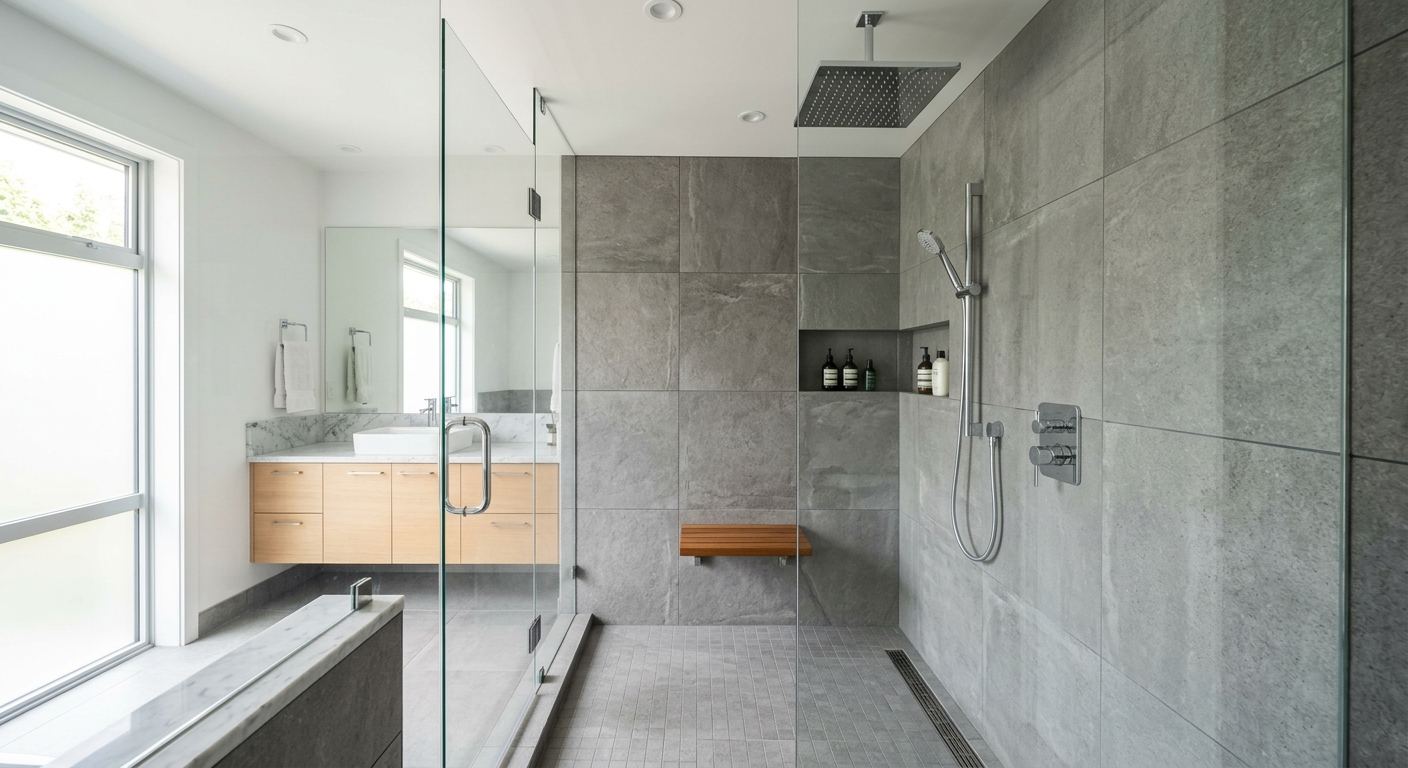
Bathroom renovation options and costs in Greater Napanee
Bathroom renovations in Greater Napanee typically start with what kind of change you want—cosmetic refresh versus a full redesign of the shower and waterproofing system. With 16,879 residents and a homeowner-heavy market (72.0% of households own, Statistics Canada, 2021 Census), many projects are in older, single-detached homes where the plumbing and venting details can be dated. In fact, 64.2% of homes were built before 1981, which often means the contractor is working around cast-iron or older copper drain stacks, older supply runs, and bathroom exhaust setups that don’t meet today’s moisture-removal expectations.
In the Kingston–Pembroke region, renovation costs are driven more by labour availability and the age of housing stock than by weather swings. Ontario winters can be harder on bathrooms that have weak ventilation or poor insulation, so contractors often prioritize vapour control, fan sizing, and clean waterproofing details during demolition. Also, in popular trade-demand pockets—often around Napanee’s older residential areas near the downtown and established neighbourhoods close to the waterfront—there’s a steady pull on crews, and timelines can move faster once demolition confirms the real scope.
Below are realistic renovation bands contractors commonly price in Greater Napanee. Use them as planning targets, then finalize with an itemised quote once we know whether your layout is staying put and what remedial work shows up behind the walls.
| Renovation Scope |
What's Included |
Typical Duration |
Price Range |
| Cosmetic refresh (paint, fixtures, accessories only) |
Paint, new vanity or tap/trim where plumbing stays the same, toilet accessories, towel bars, lighting refresh (no circuit changes) |
3–5 days |
$3,000–$7,000 |
| Mid-range full renovation (new tile, vanity, tub/shower, electrical) |
Demolition, subfloor/floor prep, waterproofing, new tile (floor + surround), new vanity + mirror, tub/shower or enclosure, exhaust fan upgrade, GFCI where needed, basic electrical update |
2–4 weeks |
$15,000–$24,000 |
| High-end full renovation (custom tile, steam shower, heated floors) |
Custom layout planning, premium tile package, upgraded waterproofing system, heated floor circuit, frameless glass, niche/bench, steam-ready electrical, higher-tier fixtures and trim, more detailed finish carpentry |
3–6 weeks |
$25,000–$32,000 |
| Shower-only installation (convert tub to walk-in shower) |
Remove tub, rough-in adjustments if needed, waterproofing and pan solution, new shower walls, glass door/enclosure, new valve trim, drain adjustments |
1–2.5 weeks |
$6,000–$12,000 |
| Bathtub replacement or tub-liner install |
Old tub removal and replacement (or liner system), re-seal, new access fittings, minor surface prep, faucet/trim hookups (no major relocation) |
3–7 days |
$1,200–$6,000 |
| Tile-only installation (floor + surround, existing layout kept) |
Tile removal (as required), floor prep, waterproofing corrections, new floor + shower surround tile, re-grouting and silicone details |
1–3 weeks |
$8,000–$16,000 |
Prices are estimates only and vary by project scope, site access and material selection.
What affects the price of bathroom renovation in Greater Napanee
In Greater Napanee, you can see the same “bathroom reno” land 30–50% apart from one contractor to another in Kingston–Pembroke and across Ontario because quotes often assume different levels of discovery. The moment demolition opens walls, the job becomes about what’s behind the finishes: drain condition, supply line type, venting performance, subfloor flatness, and how much waterproofing correction is truly required. Labour rates and crew availability still matter, but in this market the age of the housing stock is usually the bigger cost driver.
Older homes here (64.2% pre-1981, Statistics Canada, 2021 Census) commonly have hidden “scope multipliers.” For example, cast-iron drains or older copper stacks may require upgrading sections to stop slow leaks and to match modern drain slope. Supply lines can be galvanized, which sometimes means corrosion-related pressure issues become visible. Ventilation is another frequent surprise: some bathrooms rely on weak fan performance, so contractors budget for ducting and fan upgrades when they see inadequate airflow.
Another cost swing comes from potential asbestos-containing materials. If pre-1985 materials like vinyl floor tile or certain drywall compounds test positive, abatement triggers protocols and adds roughly $1,500–$5,000+ depending on containment scope and disposal. As a planning benchmark, mid-range full renovations often sit in the $15,000–$24,000 band when the layout stays similar, while fixture moves, waterproofing corrections beyond the obvious, or heavy tile complexity can push you toward the $25,000–$32,000 range.
Two concrete local examples we see: (1) converting a tub to a shower in an older single-detached home may require drain/vent adjustments, not just a new pan; (2) large-format tile on older subfloors can increase prep time—if the surface is out of plane, backer and flattening work adds hours before tile ever goes down.
| Price Factor |
Why It Matters |
Cost Impact |
| Layout change — moving drain or supply lines requires rough-in work |
Changes plumbing routing, subfloor opening, and sometimes venting tie-ins |
$2,500–$8,000 |
| Tile selection — large-format porcelain vs. mosaic vs. ceramic |
Large tiles require better flatness; mosaics increase labour for small pieces and trim |
$1,500–$6,000 |
| Fixture tier — builder-grade vs. mid-range vs. designer brands |
Higher-tier taps, valves, and vanities cost more and may include premium install hardware |
$800–$4,500 |
| Subfloor condition — rot or unlevel concrete adds scope |
Remediation and re-leveling extend labour and materials, especially before waterproofing |
$1,000–$7,000 |
| Electrical — adding GFCI outlets, exhaust fan, heated floor circuit |
May require new circuits, breaker changes, and permitted work |
$600–$5,500 |
| Waterproofing method — membrane type and extent |
Better systems cost more and require stricter installation sequencing |
$800–$4,000 |
| Older-home surprises — asbestos tile, cast-iron drains, galvanized pipes |
Testing, containment, disposal, and plumbing upgrades expand scope quickly |
$1,500–$12,000+ |
| Bathroom size — sq ft drives tile and labour time directly |
More surface area means more labour for demolition, tiling, waterproofing and finishing |
$1,000–$6,000 |
Permits & regulations in Ontario
In Ontario, many “face-lift” changes don’t require permits, but functional changes often do—especially in Greater Napanee where older bathrooms can trigger more work once walls are opened. Typically, cosmetic updates such as swapping a vanity, replacing a toilet or faucet/trim (without moving plumbing), repainting, replacing accessories, and retiling using the existing plumbing locations usually do not require a permit. Replacing an exhaust fan with a like-for-like unit may also be permit-light if no new circuit or wiring changes are required, but you should confirm the exact electrical scope with the electrician.
Work that does typically require permits/inspections includes: relocating plumbing (moving the drain or supply lines), adding or modifying electrical circuits for things like heated floors, new GFCI locations, or running wiring for an upgraded exhaust fan, and any structural wall changes. Any electrical work must be completed by (or signed off by) a licensed electrician and must meet Ontario electrical code requirements. Plumbing rough-in changes generally require a permit and inspection because pressure testing and final compliance are part of the process.
How to verify before you sign: (1) request the contractor’s Ontario trade licence details and confirm them through the appropriate online licence registry; (2) ask for a current certificate of liability insurance and ensure the coverage is adequate for renovation work; (3) confirm WSIB/WCB clearance—either the contractor provides proof they’re covered or provides a clearance document; (4) keep copies in your file and match the person/company name exactly on the quote.
Choosing tile, waterproofing and fixtures for your Greater Napanee bathroom
The biggest budget swings in a Greater Napanee bathroom usually come from three material decisions: tile choice, waterproofing system, and fixture tier. First, tile: entry-level ceramic can look great, but it often adds less cost in materials while still requiring careful installation. Porcelain is typically the better “value choice” for bathrooms because it’s denser and handles moisture and cleaning better. Natural stone (marble, travertine, slate) is luxury-priced and installation can be more complex—requires more prep, careful sealing, and stricter layout discipline to avoid lippage and uneven veining.
Second, waterproofing method matters for mould prevention in Ontario humidity. A paint-on membrane can work, but coverage and readiness of the substrate are everything. Bonded sheet membranes and systems that combine liquid and sheet components (plus correct overlaps at corners and transitions) reduce risk when showers are used daily in the winter months when ventilation is at its hardest. The right system also protects your subfloor and framing—critical in older homes where water intrusion can go unnoticed behind finishes.
Third, fixtures: builder-grade trims are the easiest on the budget, while mid-range and designer brands improve feel, finish consistency, and long-term durability. The trick is matching tier to your waterproofing and tile approach—otherwise you pay for upgrades you can’t fully show. For example, moving from basic tile to a better porcelain selection might cost a few thousand dollars, which is justified if it reduces maintenance and improves appearance for years. By contrast, paying for a premium natural stone layout without upgrading waterproofing scope (or without ensuring the subfloor is flat) usually isn’t the smartest ROI.
In the Kingston–Pembroke market, we see most homeowners get their best balance by pairing mid-range porcelain tile with a proven waterproofing package and choosing a mid-range vanity and shower valve that fits your timeline and resale goals.
| Material / Option |
Pros |
Cons |
Price Range |
| Ceramic tile (floor + walls) |
Entry price, wide style selection, good performance when installed correctly |
May be more prone to chipping; depends heavily on grout/maintenance |
$2,000–$6,000 |
| Porcelain tile (floor + walls) |
Denser and more moisture-tolerant; cleaner look options with less staining risk |
Heavier/denser tiles require careful handling and often better substrate prep |
$4,000–$10,000 |
| Natural stone (marble, travertine, slate) |
High-end appearance; unique character that boosts “premium” feel |
Needs sealing/maintenance; can vary in thickness and increases install complexity |
$7,000–$16,000 |
| Frameless glass shower enclosure |
Modern look; easier to wipe down; makes smaller bathrooms feel larger |
Glass + hardware cost; must be installed precisely to avoid leaks and alignment issues |
$1,800–$6,000 |
| Prefab tub surround (acrylic) |
Fast install; consistent waterproofing surface; good option when layout stays simple |
Limited design flexibility; seams/finish quality depend on prep and fit |
$900–$3,500 |
| Custom shower pan (tile or linear drain) |
Better drainage control; premium look; integrates threshold and slope properly |
More labour and stricter waterproofing; linear drains add detailing and material cost |
$2,500–$10,000 |
How to choose a bathroom renovation contractor in Greater Napanee
Choosing the right contractor in Greater Napanee starts with verification. Ask for proof of Ontario trade licensing (for the trades involved), current liability insurance, and WSIB/WCB coverage. To check: verify the licence through the appropriate online provincial registry using the contractor’s legal business name; review the certificate of insurance for the policy period and coverage amount; and confirm WSIB/WCB by requesting clearance documentation or proof of coverage that matches the quote and the worksite address. If they can’t provide these promptly, move on.
Next, get 2–3 itemised written quotes rather than a single lump sum. The best bathroom quotes break down labour vs. materials and show line items for demolition, waterproofing, tile supply and install, electrical scope, plumbing changes, venting/ducting (if any), permits (if applicable), and disposal. Pay close attention to what’s excluded: things like asbestos testing/abatement, floor flattening, subfloor replacement, glass enclosure allowances, and any additional electrical outlets for the mirror or exhaust fan.
Warranty matters too. Look for a workmanship warranty that clearly states coverage length and what it covers if waterproofing fails or finishes need repair. Product/manufacturer warranties should be in writing, and you want clarity on whether they’re transferable if you sell your home.
Payment schedules should be conservative: never more than 10–15% upfront, and keep a holdback until the job is complete and you’ve confirmed all caulking, grout, and waterproofing transitions are sealed and tested. Finally, insist on a written start date and an estimated completion window so you can plan around material lead times and inspection steps.
- Verify Ontario trade licence(s) and names on the quote match the business paperwork
- Request certificate of liability insurance and confirm coverage dates
- Confirm WSIB/WCB coverage with clearance documentation
- Get 2–3 itemised quotes with labour and materials separated
- Ensure the quote states whether permits are included or not, and who pulls them
- Confirm disposal/garbage removal is included (demo debris can add up)
- Look for explicit waterproofing scope: membrane type, coverage areas, and transition details
- Ask who supplies and installs the exhaust fan and whether ducting is addressed
- Confirm electrical scope: GFCI outlets, fan circuit, and heated floor allowance if applicable
- Ask how they protect floors and finishes during demolition to prevent extra damage
- Check schedule realism: demolition-to-waterproofing timeline and tile set time
- Review warranty length in writing for workmanship and finish components
Red flags I see in Greater Napanee include: quotes that are too vague (“we’ll handle it” without waterproofing and electrical line items), contractors asking for large upfront deposits, missing insurance/WSIB paperwork, no clear warranty terms for waterproofing and workmanship, and promises of “no surprises” despite older (pre-1981) homes where hidden plumbing and venting issues are common.
Frequently asked questions — bathroom renovation in Greater Napanee
How do I prevent mold in a Greater Napanee bathroom?
Mould prevention in Greater Napanee is mostly about controlling moisture at the source and installing the right barrier system. Start with ventilation: upgrade the exhaust fan to match bathroom size and run it long enough after showers. Then focus on waterproofing behind the tile—especially around the valve wall, corners, and niche areas—because Ontario’s winter indoor humidity can keep surfaces damp longer. In older homes (many built before 1981), hidden drain and venting issues can worsen moisture buildup, so we often include a scope check behind the walls during demo. Finally, choose grouts and sealants that are appropriate for wet areas and ensure caulking transitions are done cleanly. For budgeting, a mid-range full renovation typically lands in the $15,000–$24,000 range, and that includes the labour and materials needed for correct waterproofing.
What adds the most resale value in a bathroom reno?
For resale in Ontario (and specifically for the Greater Napanee homeowner market), value tends to come from improvements buyers can feel immediately: a clean, modern shower, a brighter layout, and finishes that look durable. Upgrading the shower to a well-waterproofed tiled walk-in or a higher-quality tub/shower combo usually outweighs minor cosmetic-only changes. Modern fixtures and reliable ventilation also help because buyers worry about leaks and moisture problems in older single-detached homes. If you’re choosing between tile upgrades and plumbing changes, prioritize waterproofing quality and ventilation first; those reduce future risk and callbacks. Budget-wise, many homeowners who want meaningful perceived value choose the mid-range full renovation band of $15,000–$24,000. If you go higher for custom tile, heated floors, or premium enclosures, costs often move into the $25,000–$32,000 range.
Can I keep my existing plumbing layout to save money?
Yes—keeping your plumbing layout is usually the best way to control cost in Greater Napanee. When you don’t move the drain or supply lines, you avoid a lot of rough-in labour, subfloor opening, and potential permit/inspection complexity that can appear when walls are reworked. In older homes in the Kingston–Pembroke region, the “hidden” factor is often the condition of drain stacks and supply lines revealed during demolition, so a layout-stays plan reduces the number of connections that might need replacement. That said, even with a kept layout, you may still need remedial work if ventilation is weak or the subfloor isn’t flat enough for tile and waterproofing. If you’re trying to stay within a predictable budget, a shower-only change (convert tub to walk-in) can be a cost-effective path—often $6,000–$12,000—as long as the rough-in doesn’t require major relocations.
How much does a walk-in shower cost in Greater Napanee?
A walk-in shower cost in Greater Napanee depends on whether you’re converting a tub and how much the contractor needs to adjust plumbing and waterproofing. If it’s a straightforward conversion—similar valve location, manageable access, and no major drain rework—many projects fit the shower installation band of $3,500–$12,000. In practice, conversions in older homes can land toward the upper side if cast-iron or copper drain sections need attention or if venting and moisture control require upgrades. Tile showers typically require more careful waterproofing and detailing around benches, niches, and linear drains, which affects labour and materials. To keep budgeting accurate, insist on an itemised quote that lists the pan/waterproofing approach and the glass enclosure allowance. That way you can compare apples to apples instead of relying on a broad lump sum.
What's the ROI on a bathroom renovation?
Bathroom ROI varies by condition of the existing bathroom and the level of finish you choose, but in Ontario the biggest ROI tends to come from reducing buyer “risk” (leaks, poor ventilation, outdated finishes) and improving functionality. In Greater Napanee’s owner-heavy market (72.0% of households own, Statistics Canada, 2021 Census), homeowners often prioritize durability and moisture control over purely cosmetic upgrades. A full renovation that includes correct waterproofing, updated electrical safety (like GFCI where needed), and a modern shower layout generally performs better at resale than a cosmetic refresh alone. If your renovation stays within a mid-range scope, the typical full renovation band is $15,000–$24,000; going high-end with heated floors and custom tile pushes you into $25,000–$32,000, which can pay off if the rest of the home feels similarly upgraded. The best approach is to match the renovation level to your home’s overall quality and the competitive expectations in Kingston–Pembroke area buyer markets.
Do I need waterproofing behind the tile?
In almost all tile shower and tub surround applications, yes—waterproofing behind the tile is essential, not optional. Ontario bathrooms see seasonal humidity swings and heavy winter bathroom use, so the wall assembly must be protected long-term. Waterproofing is what helps prevent water migration into framing and subfloor, where it can lead to mould, rot, and recurring grout or caulking failures. In older Greater Napanee homes (many built before 1981), the need is even more important because previous repairs may have incomplete layers, older membranes, or hidden issues that only show after demolition. When a contractor proposes “tile only” without a waterproofing plan, that’s a serious concern. A quality renovation quote will specify the waterproofing method and coverage areas (especially around the valve wall, corners, and transitions), and that scope usually aligns with mid-range full renovation budgeting of $15,000–$24,000.