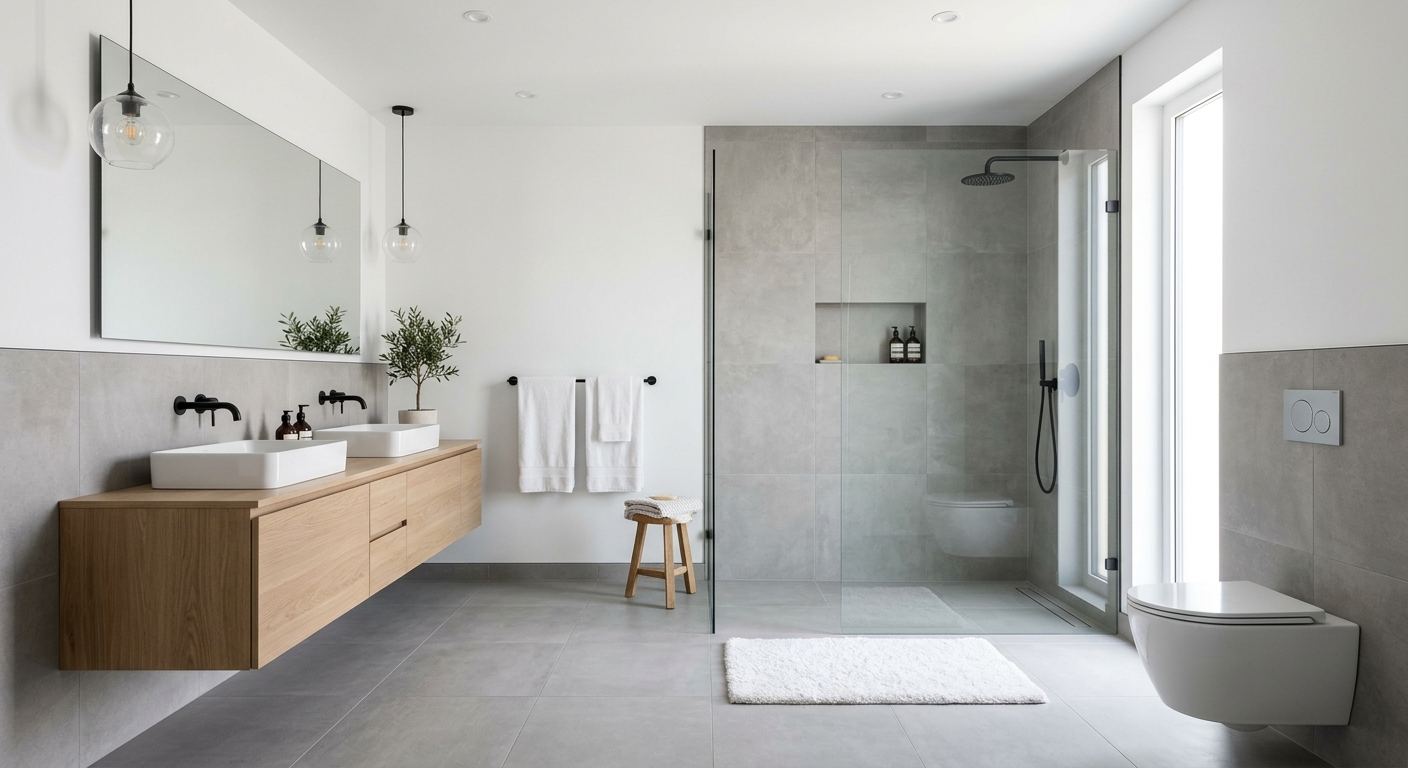
Bathroom renovation options and costs in Lawrence Park North
Lawrence Park North, Ontario is one of those neighbourhoods where bathroom renovations tend to start with a “simple” plan and then quietly expand once walls come down. With Lawrence Park North’s population at 14,607 (Statistics Canada, 2021 Census), you’ll also feel the GTA contractor demand—trade crews are busy and scheduling can be tight. A big cost driver here is housing age: many post-war and 1960s–1980s homes mean dated drain/venting layouts, older supply piping, and a higher chance of discovering aged finishes that don’t match modern waterproofing expectations. In some cases, floor tile and drywall may also include asbestos-containing materials, particularly in older construction.
Toronto’s market dynamics don’t hinge on winter “climate” the way some northern regions do; instead, pricing is shaped by labour rates and the complexity of bringing plumbing and ventilation up to Ontario code once access is gained. In Lawrence Park North and nearby pockets like Bayview Avenue and York Mills Road corridors, bathroom work is especially in demand because homeowners often renovate while staying in place—meaning clean work sites, careful scheduling, and faster turnaround matter. That’s why two quotes for similar bathrooms can land far apart, even before you choose tile or a shower system.
Below is a practical way to compare options—then use it as a reference when you review contractor line-items and confirm what’s included in each scope.
| Renovation Scope |
What's Included |
Typical Duration |
Price Range |
| Cosmetic refresh (paint, fixtures, accessories only) |
Paint, vanity and tap/fixture swaps (no plumbing relocation), toilet refresh (like-for-like), new mirror/light, re-caulking, accessories |
3–7 days |
$2,000–$6,000 |
| Mid-range full renovation (new tile, vanity, tub/shower, electrical) |
Remove and replace floor and wall tile, vanity and toilet, bathtub or tub/shower surround, upgrade exhaust fan, new GFCI outlet where required, basic plumbing fit-up (no major layout changes), waterproofing |
2–3 weeks |
$12,000–$22,000 |
| High-end full renovation (custom tile, steam shower, heated floors) |
Custom waterproofed shower system or steam shower, heated floors, high-end tile/grout details, designer fixtures, possible drain/venting corrections, upgraded electrical with exhaust/fan controls |
3–5 weeks |
$22,000–$30,000 |
| Shower-only installation (convert tub to walk-in shower) |
Remove tub, install walk-in shower base/pan, tile shower walls and floor, new valve/trim (as needed), waterproofing, new exhaust fan integration if upgrading |
1.5–3 weeks |
$8,000–$16,000 |
| Bathtub replacement or tub-liner install |
Swap tub for new unit and re-tile to match, or install tub liner system where existing surfaces are suitable, caulking and sealing, rework trim |
5–12 days |
$1,200–$4,500 |
| Tile-only installation (floor + surround, existing layout kept) |
Demo selected surfaces, tile floor and wall areas, waterproofing where required behind tile, reinstallation of fixtures/vanity as agreed, new caulking and grout |
1–2.5 weeks |
$7,000–$15,000 |
Prices are estimates only and vary by project scope, site access and material selection.
What affects the price of bathroom renovation in Lawrence Park North
In Toronto and across Ontario, it’s common to see the same bathroom renovation priced 30–50% differently between companies. The main reasons aren’t “mystery markups”—it’s labour-rate intensity in the GTA, the amount of tile labour once surfaces are opened, and how often older plumbing systems need corrections to satisfy current Ontario code. Lawrence Park North homes often sit on older post-war infrastructure, so once ceilings and walls are opened you may find drain stacks that aren’t sized correctly, venting that needs adjustment, or supply lines that are undersized or aged. Those scope expansions can shift a mid-range budget toward the high end of the GTA bands.
Discovery drives cost: asbestos-containing material found during demo (for example in older vinyl floor tile or dated drywall finishes) requires proper abatement protocols, and it can add roughly $1,500–$5,000+ depending on area and containment needs. Meanwhile, hidden wiring issues (including older knob-and-tube remnants) can trigger electrical updates before any new lighting or exhaust work begins. Even without “dramatic” surprises, tile choice and waterproofing scope can materially change labour time—especially for custom shower builds where waterproofing details are critical.
Concrete examples from Lawrence Park North: (1) If you keep the plumbing layout, you might stay closer to mid-range full renovation pricing around $12,000–$22,000; (2) if you move a drain for a linear drain or change valve locations, you can quickly add plumbing rough-in, vent correction, and additional tile patching, nudging the project toward $22,000–$30,000. (3) If the subfloor is unlevel or has rot from previous leaks, you may need underlayment and re-levelling before tile can be installed.
| Price Factor |
Why It Matters |
Cost Impact |
| Layout change — moving drain or supply lines requires rough-in work |
Rerouting plumbing means demo, rough-in carpentry, drain slope/venting corrections, and code inspections |
Adds ~20–40% to total renovation labour costs |
| Tile selection — large-format porcelain vs. mosaic vs. ceramic |
Harder materials require careful cutting, more tolerance checks, and longer waterproofing/tile curing coordination |
Commonly shifts tile labour by ~$1,000–$3,000+ |
| Fixture tier — builder-grade vs. mid-range vs. designer brands |
Higher tiers cost more and often need specialty trims/valves that change install time |
Usually adds ~$500–$4,000 depending on brand package |
| Subfloor condition — rot or unlevel concrete adds scope |
Uneven substrates increase failure risk for tile; repairs and re-levelling must be built in |
Often adds ~$1,000–$4,000+ |
| Electrical — adding GFCI outlets, exhaust fan, heated floor circuit |
Bathroom electrical must comply; new circuits and fan ducting increase labour and parts |
Typically adds ~$800–$3,500 |
| Waterproofing method — membrane type and extent |
More complete coverage and higher-performance membranes reduce mould risk and long-term callbacks |
Adds ~$400–$2,500 versus minimal systems |
| Older-home surprises — asbestos tile, cast-iron drains, galvanized pipes |
Abatement, drain replacement, and vent corrections add regulated labour and inspection steps |
Can add ~$1,500–$7,000+ |
| Bathroom size — sq ft drives tile and labour time directly |
More surface area equals more layout, waterproofing, tile setting, and grout/cure cycles |
Small bathrooms may land near low bands; larger ones push upper bands by ~$2,000–$6,000 |
Permits & regulations in Ontario
In Ontario, not every bathroom upgrade needs a permit. Cosmetic updates—like swapping a vanity, replacing fixtures (tap/trim) on existing supply connections, repainting, or retiling without moving plumbing—typically don’t trigger a permit on their own. However, permits are often required when you relocate plumbing (moving a drain or supply line), change the rough-in locations, add or modify mechanical ventilation in a way that affects wiring and ducting, or make structural changes that affect framing or walls supporting fixtures. Electrical work must meet Ontario code and be completed and/or signed off by a licensed electrician—especially when adding new circuits for exhaust fans, GFCI protection, or heated flooring.
For homeowner verification in Lawrence Park North, take these steps before signing:
- Ask for the contractor’s Ontario trade licence number (and verify it through the correct online registry for the trade).
- Request a certificate of insurance for liability and ensure it’s current for renovation work (not just general business).
- Confirm WSIB/WCB coverage where applicable to the trade, especially if they’ll have workers on site.
- If the scope includes electrical or plumbing rough-in changes, ask who holds the licence for that portion and whether permits/inspections are included in the quote.
- Get confirmation of permit responsibility in writing (who pulls it, who schedules inspections, and what’s the expected inspection sequence).
In short: if you keep plumbing “as-is,” you often avoid permit triggers; if you reroute drain/venting, move valves, add new circuits, or alter ventilation/structure, plan for permit and inspection steps.
Choosing tile, waterproofing and fixtures for your Lawrence Park North bathroom
In Lawrence Park North, three material decisions typically decide whether your bathroom lands closer to $12,000–$22,000 or climbs toward $22,000–$30,000: (1) tile choice, (2) waterproofing approach, and (3) fixture tier. Even though Toronto humidity isn’t “extreme,” bathrooms here do run hot-and-steam cycles, and poor waterproofing is one of the fastest ways to create mould and grout failure. That’s why the right system is less about looks and more about preventing moisture migration behind tile.
Tile choice affects both aesthetics and labour. Ceramic is a solid entry point but can be more prone to chipping on thicker traffic if you’re not careful. Porcelain is denser and handles wet-area requirements better, and it’s typically easier to maintain long term. Natural stone is beautiful, but it adds installation complexity because it’s more sensitive to flatness and may require additional sealing and careful grout selection.
Waterproofing is your insurance policy. A paint-on membrane is fine for light-duty areas; a bonded sheet membrane or a well-detailed system (including corners, seams, and transitions) is what I recommend for showers. In the Toronto market, many homeowners choose heated floors and a custom shower pan—those features are premium, but they only make sense when waterproofing and slope details are done correctly.
Fixture tier also ties to resale. Builder-grade fixtures can look fine, but designer trims and better-quality valves often reduce leaks and service calls. As a practical dollar example: upgrading from basic to mid-range tile and shower fixtures may add roughly $2,000–$5,000, but that’s often justified if you’re already doing full demolition and want fewer long-term maintenance headaches.
| Material / Option |
Pros |
Cons |
Price Range |
| Ceramic tile (floor + walls) |
Good entry-level choice, broad colour/style selection, predictable installation |
More variation in performance by product line; can be more likely to chip if not installed on a properly prepared surface |
$3,000–$7,500 |
| Porcelain tile (floor + walls) |
Denser and moisture-tolerant, holds up well in wet areas, often requires less upkeep |
Higher material and sometimes higher labour if large-format panels need additional layout precision |
$4,500–$10,000 |
| Natural stone (marble, travertine, slate) |
High-end appearance, premium feel, unique veining that boosts perceived value |
Installation is more sensitive to substrate flatness; sealing and stain management are usually required |
$8,000–$18,000 |
| Frameless glass shower enclosure |
Modern look, visually opens the bathroom, easy to clean when properly detailed |
More expensive than standard units; correct framing and waterproofing details are critical |
$4,000–$10,000 |
| Prefab tub surround (acrylic) |
Fast install, generally water-resistant, fewer grout joints |
More limited style flexibility; seams and fit must be done precisely to avoid leaks |
$1,200–$3,500 |
| Custom shower pan (tile or linear drain) |
Best long-term performance when properly waterproofed; modern linear drain options |
Highest labour time and detailing; requires careful slope, drain placement, and membrane work |
$6,000–$12,000 |
How to choose a bathroom renovation contractor in Lawrence Park North
Choosing the right contractor in Lawrence Park North means verifying licensing and insurance, then comparing quotes in a way that tells you who is doing the real work. In Ontario, electrical and any plumbing rough-in changes should be performed under the proper licensed trade coverage, and your contractor should be able to show proof before work starts. First, request certificates of insurance (liability) and confirm WSIB/WCB coverage where applicable so you’re not left holding the risk if a worker gets injured. If asbestos is a possible concern due to housing age, reputable contractors plan for compliant remediation and documentation rather than “covering it up.”
Next, get 2–3 itemised written quotes—labour and materials broken out, not a single lump sum. Pay attention to whether the quote includes permit pulls (where required), disposal/garbage removal, and whether waterproofing is specified by method and coverage. A good warranty should clearly state workmanship duration, and you should also know if product warranties are manufacturer-backed and whether they’re transferable to future owners. For payment, never pay more than about 10–15% upfront; use progress payments and hold back a meaningful amount until critical completion steps (like final inspection, caulking, and demo cleanup) are done.
Finally, insist on a start date and a completion estimate in writing. Bathroom renovations often pause for materials and inspections—those delays should be scheduled and explained upfront so you can plan your living arrangements.
- Ask for Ontario trade licence details and verify them before signing.
- Request certificate of liability insurance and confirm it’s active for the renovation scope.
- Confirm WSIB/WCB coverage (and that it applies to workers on your site).
- Require itemised quotes with labour and material categories (demo, framing, tile set, waterproofing, electrical).
- Check what’s excluded: moving plumbing, permit costs, heated floor components, and disposal/haul-away.
- Verify waterproofing method is named (membrane type and how far it’s applied).
- Ask who supplies and installs the exhaust fan (and whether ducting is verified).
- Confirm tile floor prep expectations: underlayment, re-levelling, and thinset requirements.
- Ensure waterproofing and tile curing times are included in the schedule.
- Get warranty terms in writing for workmanship (length) and products (manufacturer, coverage, transferability).
- Use a payment schedule with a holdback; keep upfront payments around 10–15% maximum.
- Require a timeline with milestones: demolition, rough-in, waterproofing inspection/verification, tiling, trim, and final walkthrough.
Red flags to watch for in Lawrence Park North: contractors who won’t list licensing/insurance details upfront; quotes that don’t specify waterproofing method or tile preparation; “all-in” lump sums without disposal/permit scope; pressure to pay large deposits early; and vague timelines that ignore inspections and curing periods.
Frequently asked questions — bathroom renovation in Lawrence Park North
What adds the most resale value in a bathroom reno?
In Lawrence Park North and the wider Toronto market, resale value typically comes from upgrades buyers can immediately see and trust: a clean, modern layout; durable surfaces; and a shower/wet-area finish that looks good and performs. The biggest value signals are new tile work with correct waterproofing, a fresh vanity and lighting package, and a well-fitted exhaust fan that reduces moisture. If you’re deciding between “prettier” finishes versus “better build,” prioritize the build—buyers notice cracks, soft grout, and poor caulking. A mid-range full renovation often sits around $12,000–$22,000, and that’s where many homeowners get the strongest balance of appearance and reliability for resale.
Can I keep my existing plumbing layout to save money?
Yes—keeping the plumbing layout is one of the most effective ways to control cost in Ontario bathrooms. When the drain and supply locations don’t move, you reduce rough-in demolition, drain reconfiguration, and the likelihood of venting corrections that older Toronto-area homes may need. It also limits the amount of tile patching if the contractor has to rework around moved valves. In practical terms, staying layout-friendly helps many projects stay closer to mid-range pricing (for example, $12,000–$22,000) rather than pushing toward the high end (like $22,000–$30,000). Make sure the quote still includes code-compliant shut-offs and any necessary ventilation upgrades.
How much does a walk-in shower cost in Lawrence Park North?
In Lawrence Park North, a walk-in shower typically costs more than a simple tub refresh because it involves demolition, waterproofing a full shower enclosure, and usually new valve trim and shower drain detailing. For most GTA conversions (tub to walk-in), homeowners commonly budget in the range of $8,000–$16,000, depending on whether you choose standard shower glass or move to a frameless enclosure, and whether you select a custom pan or linear drain. If asbestos abatement is required during demo (more likely in older housing), the total can jump—so it’s important to have a contingency line item and a clear scope of what happens if hidden materials are discovered.
What's the ROI on a bathroom renovation?
ROI is hard to promise because it depends on your local buyer pool, the condition of the rest of the home, and the finish level. In Toronto-area neighbourhoods like Lawrence Park North, bathrooms that are modern, clean, and moisture-secure tend to sell better and can improve perceived home value more consistently than cosmetic-only upgrades. That’s why a full renovation with proper waterproofing and durable materials usually offers the best return, compared to “sprucing up” failed surfaces. As a budgeting reference, a mid-range full renovation often falls around $12,000–$22,000. If you go high-end, you’re more likely to spend closer to $22,000–$30,000, where ROI can still be strong but the market is more sensitive to whether the design matches buyer expectations.
Do I need waterproofing behind the tile?
Yes—waterproofing behind the tile (and at all relevant seams/transitions) is the standard expectation for showers and wet areas in Ontario. The exact method depends on the system, but reputable contractors will specify a waterproofing approach and explain how it’s applied to prevent moisture from travelling behind the wall assembly. Paint-on products may be used in limited scenarios, but showers generally require a robust membrane method, correct thickness, and careful attention to corners, fasteners, and transitions around the drain and valve penetrations. This is particularly important in a Toronto home where bathrooms experience frequent humidity and temperature cycling. Skipping or thinning waterproofing often leads to mould, grout failure, and costly repairs later.
How do I compare bathroom renovation quotes?
Compare quotes by scope and line-items, not just the final number. For Lawrence Park North bathrooms, ask each contractor to break down labour and materials: demo and disposal, framing/repair, waterproofing method, tile installation (including prep/subfloor work), exhaust fan/electrical scope, and plumbing rough-in details. Confirm who pulls permits (if plumbing relocation, electrical circuit changes, or ventilation modifications are included) and what inspections are expected. Make sure each quote mentions allowances for fixtures and tile, and clarify what’s excluded: heated floors, glass enclosure type, subfloor re-levelling, and whether there’s a contingency for older-home surprises like cast-iron/copper drains or asbestos-containing materials. With that structure, you can see why one estimate in the $12,000–$22,000 range is realistic and another “similar” quote isn’t.