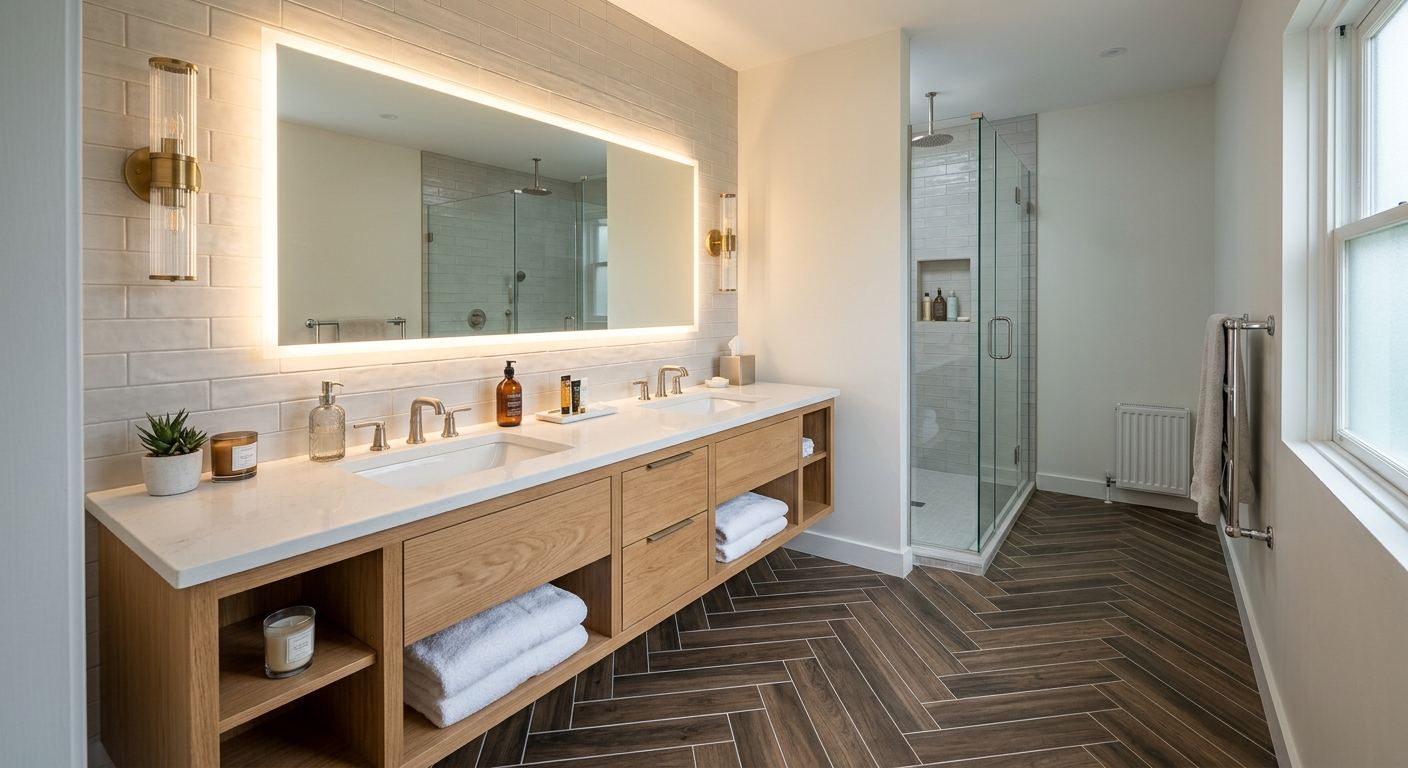
Bathroom renovation options and costs in Fenelon Falls
Bathroom renovation options and costs in Fenelon Falls can look surprisingly different from one homeowner to the next, even when the bathroom “style” seems similar. Fenelon Falls has a small population base (1,915 residents per the 2021 Census), so trades availability and scheduling can affect timelines and pricing. Just as important, many local homes reflect post-war and earlier build periods; in practice, that often means dated plumbing layouts and a higher chance of hidden materials in floors and walls. In older Ontario homes, it’s not unusual to run into cast-iron drain sections, undersized venting, galvanized supply lines, or remnants of asbestos-containing materials in older floor tile or drywall compounds—none of which show up until walls are opened.
In the Toronto economic region, bathroom renovation costs are driven more by labour rates and the age of the housing stock than by local climate extremes. The work is labour-intensive (tiling, waterproofing, custom shower builds, and detailed plumbing/vent corrections), and GTA trades typically charge a premium. If you’re working in or near areas with steady turnover of older homes—such as the older residential pockets around downtown Fenelon Falls—you’ll often find the same contractors have limited capacity, which can influence quote timing and installation scheduling.
Use the table below as a realistic starting point for comparing quotes, then align the scope to what you truly need: cosmetics, a full refresh, or a high-end rework that includes rerouting plumbing and upgrades to meet current Ontario expectations.
| Renovation Scope |
What's Included |
Typical Duration |
Price Range |
| Cosmetic refresh (paint, fixtures, accessories only) |
Paint, vanity swap, toilet replacement, tub/shower trim updates, new towel bars & mirror; no wall/floor opening |
3–7 days |
$3,500–$7,000 |
| Mid-range full renovation (new tile, vanity, tub/shower, electrical) |
Tile floor & surround, new vanity + mirror, updated exhaust fan, GFCI where required, tub resurfacing/replacement as needed, waterproofing, basic plumbing refresh |
2–3 weeks |
$12,000–$20,000 |
| High-end full renovation (custom tile, steam shower, heated floors) |
Custom shower or steam unit, premium tile, schluter-style bonding system or equivalent, heated floors wiring/circuit, higher-tier fixtures, venting/drain corrections if needed, niche/bench built |
3–5 weeks |
$22,000–$30,000 |
| Shower-only installation (convert tub to walk-in shower) |
Remove tub, waterproof shower walls/floor, new walk-in shower pan/linear drain options, glass door (if selected), plumbing adjustments, exhaust fan upgrade |
2–4 weeks |
$12,500–$23,000 |
| Bathtub replacement or tub-liner install |
Remove and set new tub (or install a liner where feasible), re-caulk/reseal, updated trim, confirm drain/overflow function, touch-up walls and replace worn sealants |
1–2 weeks |
$1,500–$4,000 |
| Tile-only installation (floor + surround, existing layout kept) |
Demo to expose surfaces, waterproofing for tile areas, new floor + wall tile, grout/seal, re-set fixtures onto updated tile; limited plumbing changes |
1–2 weeks |
$6,000–$14,000 |
Prices are estimates only and vary by project scope, site access and material selection.
What affects the price of bathroom renovation in Fenelon Falls
Two homeowners can receive quotes that differ by 30–50% for what looks like the same bathroom renovation—because in Ontario, the “hard cost” is less about climate and more about labour scheduling, trade availability, and what’s hidden once walls come down. In the Toronto economic region, skilled labour rates for plumbing, electrical, and tiling tend to be higher than national averages, and bathroom work is highly detail-driven. Tile installation and waterproofing sequencing can’t be rushed, and plumbing/vent corrections add time on top of materials.
Here’s the key point: older housing stock in the Toronto region frequently hides issues that inflate scope. A retrofit drain rework (for slope, connection type, or venting corrections), replacement of galvanized supply lines, or upgrading a failing exhaust/vent route can add several thousand dollars quickly. If asbestos-containing materials are discovered—commonly in pre-1985 floor tile or older drywall compounds—abatement protocols can add an additional $1,500–$5,000+ depending on containment needs and disposal requirements.
In Fenelon Falls, a typical example is when a “tile-only” quote turns into a waterproofing upgrade after discovering an unlevel subfloor or soft underlayment. Another common cost driver is electrical: upgrading an exhaust fan and adding a correctly protected circuit can be straightforward in modern homes, but can require more labour and material in older wiring runs. On the flip side, keeping your existing plumbing layout can keep you closer to a mid-range full renovation budget (for example, $12,000–$20,000) rather than pushing into the upper full-renovation range.
| Price Factor |
Why It Matters |
Cost Impact |
| Layout change — moving drain or supply lines requires rough-in work |
Opening walls/floors, rerouting piping, and redoing finishes increases labour and material |
Often $2,000–$8,000+ depending on distance and accessibility |
| Tile selection — large-format porcelain vs. mosaic vs. ceramic |
Harder materials require better substrates, more cutting time, and more precise setting |
Typically $1,000–$6,000 difference in installed cost |
| Fixture tier — builder-grade vs. mid-range vs. designer brands |
Supply lines, valves, and trim quality vary; premium finishes raise material costs |
Can swing $500–$4,000+ without changing labour much |
| Subfloor condition — rot or unlevel concrete adds scope |
Requires replacement/leveling before waterproofing and tile; prevents future failure |
Usually $1,000–$5,000+ |
| Electrical — adding GFCI outlets, exhaust fan, heated floor circuit |
May require new circuits, load calculations, correct protection, and safe routing |
Commonly $400–$3,500 (more for heated floors) |
| Waterproofing method — membrane type and extent |
Better systems increase longevity and reduce mould risk; timing affects schedule |
Typically $600–$4,000 depending on area coverage |
| Older-home surprises — asbestos tile, cast-iron drains, galvanized pipes |
Licensed abatement and replacement work expands scope and coordination |
Often $1,500–$10,000+ for full hidden-scope cases |
| Bathroom size — sq ft drives tile and labour time directly |
More surface area means more prep, waterproofing, thinset, and grouting time |
Can add 20%–60% to labour and tile costs for larger baths |
Permits & regulations in Ontario
In Ontario, cosmetic updates usually do not require permits. Swapping a vanity, replacing a toilet, changing the mirror, repainting, or retiling a bathroom while keeping the existing plumbing and electrical locations typically falls under renovation work that many homeowners complete without municipal permits—provided the work is done safely and to code. However, the moment you relocate plumbing (for example, moving a drain or moving a supply line), add or reposition fixtures, or make structural wall changes, you’re more likely looking at work that requires permits and inspections.
Electrical work is a clear line: if you’re adding circuits, installing new exhaust fan wiring, upgrading to or adding GFCI protection, or connecting heated floors, that must meet Ontario electrical code requirements and be completed by (or signed off by) a licensed electrician. Plumbing rough-in changes—especially any changes to venting, drain routing, shut-offs, or supply connections—typically require a permit and inspection because they affect safety and building performance.
How a homeowner in Fenelon Falls verifies a contractor step-by-step: (1) ask for the contractor’s Ontario trade licence information (and verify using the applicable provincial online registry), (2) request a certificate of insurance naming you as the certificate holder and confirming liability coverage limits, (3) ask for WSIB/WCB coverage details (or clearance letter where applicable), (4) ensure the quote matches the permit scope (ask whether the contractor will pull permits and schedule inspections), and (5) keep everything in writing—licence details, insurance dates, and the scope that triggers any permitting.
Choosing tile, waterproofing and fixtures for your Fenelon Falls bathroom
For most Fenelon Falls bathrooms, your budget is shaped by three material decisions: tile choice, waterproofing method, and fixture tier. First, tile selection drives both material cost and labour complexity. Ceramic is usually the most budget-friendly and works well for straightforward installations, but it’s more forgiving where you need simple cuts and modest durability expectations. Porcelain costs more but handles moisture and wear better, and larger formats often look cleaner—if your subfloor is flat. Natural stone (marble, travertine, slate) can be stunning, but it requires careful selection, sealing, and skilled finishing to prevent uneven absorption or maintenance surprises.
Second, waterproofing matters because Ontario bathrooms see frequent humidity from showers and wet seasons. A paint-on membrane can be an option for certain layouts, but many contractors prefer a bonded sheet membrane or a proven bonding system (often with a high-quality thinset and proper seam treatment) to create a robust barrier behind tile. The right system reduces risk of moisture migration and mould in hidden areas.
Third, fixture tier affects day-to-day performance and resale value. Builder-grade fixtures can work fine, but mid-range or designer options often offer smoother valve control and better finishes that hold up.
Budget example: if you’re choosing between ceramic and porcelain for a tub surround and floor, you might spend an extra $1,000–$3,000 on porcelain installed cost. That extra is often justified if you want larger-format tile, fewer replacements over time, and a more durable surface for a bathroom you’ll use daily.
| Material / Option |
Pros |
Cons |
Price Range |
| Ceramic tile (floor + walls) |
Budget-friendly, easy to maintain, broad style selection, good for simple layouts |
More variation in durability vs porcelain; can be more sensitive to chipping |
$3,000–$8,000 |
| Porcelain tile (floor + walls) |
Denser and more water-resistant, handles heavy use better, supports modern large formats |
Higher material cost; needs careful substrate prep and skilled cuts |
$5,000–$12,000 |
| Natural stone (marble, travertine, slate) |
Luxury look, unique veining, premium feel for high-end renovations |
Sealing/maintenance often required; can be more costly and labour-intensive |
$8,000–$18,000 |
| Frameless glass shower enclosure |
Modern appearance, visually enlarges space, durable hardware when installed correctly |
Cost rises quickly with custom sizing; requires perfect waterproofing alignment |
$1,800–$6,500 |
| Prefab tub surround (acrylic) |
Quicker install, fewer tile cuts, generally easier maintenance |
Less custom look than tile; edge details still need good sealing |
$600–$2,500 |
| Custom shower pan (tile or linear drain) |
Better long-term performance when detailed correctly; linear drain supports elegant modern look |
More labour and precise waterproofing steps; higher cost than prefab options |
$1,500–$7,500 |
How to choose a bathroom renovation contractor in Fenelon Falls
Start by verifying Ontario licensing and protections the right way. Ask your contractor for their Ontario trade licence details (and confirm them through the applicable provincial online registry), then request a certificate of insurance with liability coverage that covers renovation work. Next, confirm WSIB/WCB coverage: ask for the current clearance letter or proof of coverage so you’re not left holding the risk if a worker is injured on your project. If they can’t provide documentation promptly, treat that as a serious red flag.
Then get 2–3 itemised written quotes—labour and materials separated—rather than a lump-sum estimate. Good bathroom quotes list demo, framing/patching, waterproofing system, tile supply, thinset/grout, fixture supply allowances, electrical scope, plumbing scope, disposal, and whether permits are included. Read the exclusions carefully: for example, what’s included if asbestos or mould is discovered, whether subfloor leveling is assumed, and whether glass enclosure hardware is in the scope.
Warranty should be explicit: workmanship warranty length, product/manufacturer warranty details, and whether warranties transfer if you sell the home. For payment, never allow more than 10–15% upfront. Hold back a portion until the job is fully complete and any punch-list items are resolved. Finally, require a start date and a completion estimate in writing—especially important in Fenelon Falls, where scheduling gaps can widen if materials or inspections are delayed.
- Ask for licence info and confirm it via the provincial registry before signing.
- Request proof of liability insurance with adequate limits for renovation work.
- Verify WSIB/WCB coverage (or clearance letter) for worker protection.
- Get itemised labour/materials pricing (not one blended number).
- Ensure waterproofing method is named (membrane type and coverage extent).
- Confirm permit responsibility: who pulls it, who pays, and what inspections are expected.
- Confirm disposal/hauling is included or clearly priced.
- Ask about subfloor assessment and who pays if additional prep is needed.
- Verify fixture allowance amounts so you don’t get surprise upgrades.
- Check warranty terms in writing (workmanship and product coverage).
- Use a payment schedule that includes a holdback until punch-list completion.
- Require a written timeline with start date and completion target.
Common red flags in Fenelon Falls include: (1) quotes that omit waterproofing details or treat it as “optional,” (2) vague electrical/plumbing scopes with no mention of inspections, (3) pressure for large upfront deposits, (4) refusing to provide insurance/WSIB documentation, and (5) no clear written warranty terms. If you hear “don’t worry about permits” or “we’ll figure it out later,” keep looking.
Frequently asked questions — bathroom renovation in Fenelon Falls
Do I need a permit for a bathroom renovation in Ontario?
In Ontario, cosmetic work typically does not require a permit—things like swapping a vanity, repainting, replacing fixtures in the same locations, or retiling without changing plumbing/electrical usually fall under non-permit renovations. Permits are commonly required when you relocate plumbing (moving drain or supply lines), add new exhaust fan circuits, change electrical wiring beyond simple fixture swaps, or make structural changes. A practical approach in Fenelon Falls is to ask your contractor to list what triggers permits in your specific scope and whether they pull them for you. If your budget is aimed around a mid-range full renovation (roughly $12,000–$20,000), ensure the quote clearly identifies permitting and inspection responsibilities—because that’s where costs and timing can change.
What's the best tile for a bathroom in Fenelon Falls?
The “best” tile is the one that fits your use, your subfloor condition, and your tolerance for maintenance—not just the look. In Fenelon Falls bathrooms, porcelain is often the best balance: it’s denser, resists moisture well, and supports modern floor and wall layouts. Ceramic is a cost-effective choice when you want a lighter budget and a straightforward pattern, while natural stone can be beautiful but may require sealing and more careful installation detailing. The real success factor is waterproofing quality and substrate prep, especially in humid Ontario conditions. If you’re comparing options, a switch from ceramic to porcelain can be justified when it reduces replacement risk and supports larger-format tile, often aligning with budgets closer to $5,000–$12,000 for installed tile scopes depending on coverage.
Should I do a tub-to-shower conversion?
A tub-to-shower conversion is a smart option for many Fenelon Falls homeowners, particularly if you want easier daily use, improved safety, or you’re preparing the home for longer-term accessibility. Converting the tub usually becomes a mid-to-upper scope project because it involves removing the tub, building a properly waterproofed shower pan and walls, and often adjusting plumbing connections and venting details. It’s also more labour-intensive than people expect due to waterproofing sequencing and tiling precision around the new shower footprint. If your goal is a clear budget target, use a realistic shower installation range and plan for site conditions. For many full conversions, homeowners end up in the neighbourhood of $12,000–$23,000 depending on glass, drain type, and whether hidden issues are found.
How do I prevent mold in a Fenelon Falls bathroom?
Mould prevention comes down to moisture control and proper detailing—not just fan placement. In Fenelon Falls (and across Ontario), bathrooms experience repeated humidity spikes from showers and wet seasons. To reduce mould risk, insist on a complete waterproofing system behind tile (not just paint-on spot coverage), proper seam treatment, and correct slopes to drain. Make sure ventilation is adequate: an exhaust fan that actually vents outside, run long enough after showers, helps keep humidity down. Also address airflow around the room—if the bathroom feels “stuffy,” even good waterproofing won’t fix comfort issues. Finally, avoid gaps at caulk joints and ensure transitions (like between tile and fixtures) are sealed and checked. When scope surprises happen in older homes, correcting subfloor unevenness and sealing correctly can be the difference between a clean bathroom and recurrent moisture issues.
What adds the most resale value in a bathroom reno?
Resale value usually tracks with perceived quality, reliability, and long-term durability. The biggest “value drivers” are a clean, modern layout, quality waterproofing, and fixtures that look and function well. In older Ontario homes, bringing plumbing and venting up to current expectations can also be a selling point because it reduces buyer concerns around drainage performance and hidden deterioration. Heated floors, a well-detailed glass shower enclosure, and premium tile can push a renovation into the upper end, especially when the workmanship is consistent and the installation looks professional. A practical way to budget is to decide whether you’re doing a full renovation in the low-to-mid five-figure range (often $12,000–$20,000) or stretching toward higher-end finishes (up to about $22,000–$30,000). Buyers typically notice finishes, but they also pay attention to whether the bathroom feels dry, tight, and well-built.
Can I keep my existing plumbing layout to save money?
Yes—keeping your existing plumbing layout is one of the most reliable ways to manage cost in Fenelon Falls. When you don’t move drain or supply lines, you typically reduce demolition, rough-in work, and the risk of uncovering additional hidden issues while opening the walls or floor. Layout preservation also tends to reduce permit complexity and inspection coordination. That said, “keeping the layout” doesn’t mean ignoring problems: an older home may still have cast-iron drain sections, galvanized supply lines, or venting concerns that need upgrading even if the fixture positions don’t change. If you’re aiming to control cost, ask your contractor to inspect and explain what needs to be replaced versus what can be retained. In many cases, sticking to an existing arrangement helps keep a mid-range full renovation aligned with the $12,000–$20,000 band rather than pushing toward higher-end rerouting scopes.