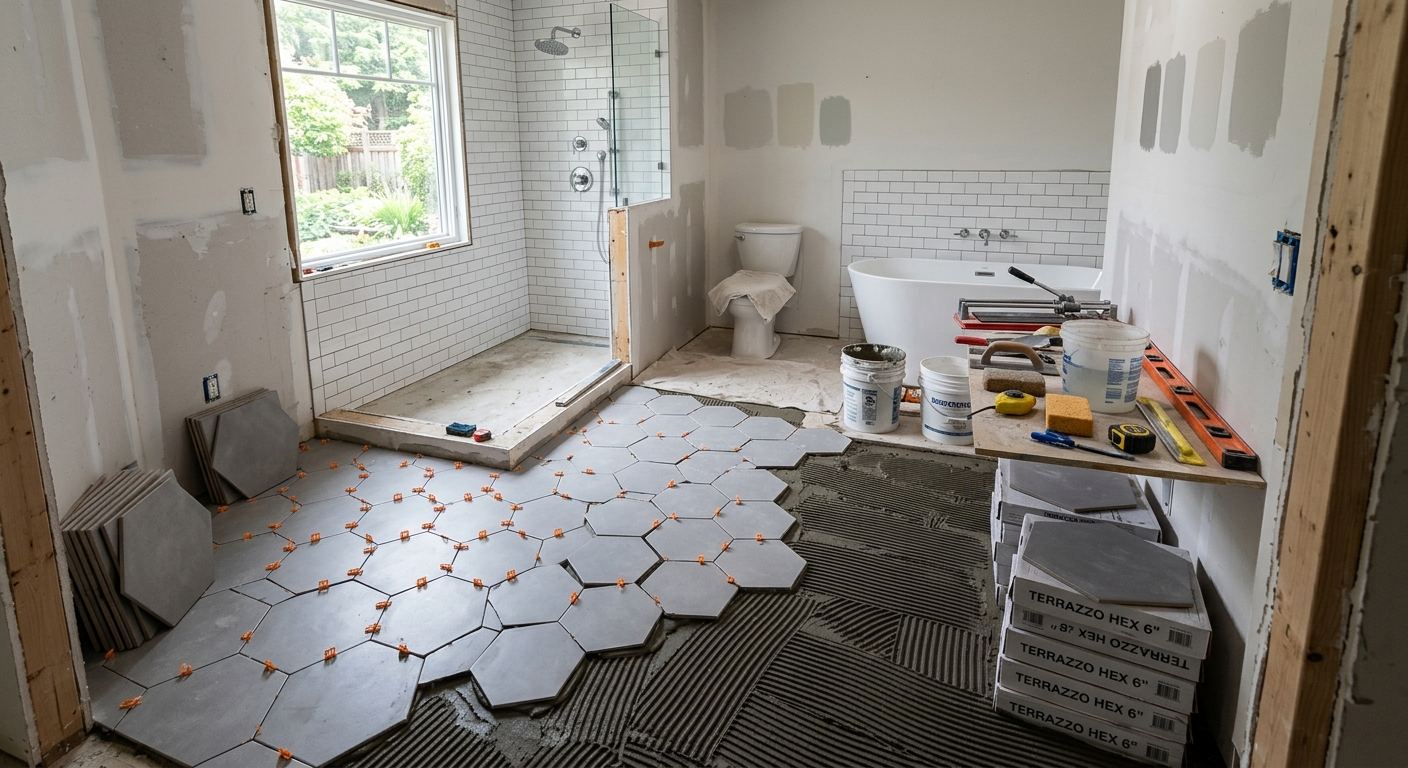
Bathroom renovation options and costs in South River
Renovating a bathroom in South River usually starts with choosing the level of change you want—because that decision drives everything from labour hours to how many hidden issues get uncovered. In South River, many homes are older; 77.1% of dwellings were built before 1981, which often means dated plumbing layouts and drains that don’t always look “straightforward” once walls are open. That age matters for budget planning, including the possibility of older floor or wall materials that may require extra handling during demolition. Also, with South River’s homeowner base—59.4% of households owning (Statistics Canada, 2021 Census)—more projects target long-term upgrades rather than quick cosmetic refreshes.
Cost in the Northeast economic context is influenced more by contractor availability and regional labour rates than by bathroom-specific weather impacts. South River’s project pricing tends to sit in the mid range of typical provincial outcomes because once you open up the bathroom, older infrastructure (venting, supply lines, drain stacks) can require added rough-in work and sometimes additional permits and inspections. Builders in demand tend to cluster around areas where families are actively improving older housing; in practice, that usually means higher scheduling demand around the busiest residential streets and older core neighbourhoods near the downtown/South River area.
To compare your choices clearly, here are the most common scopes homeowners ask for in South River, along with typical durations and realistic price bands—then you can match your plan to your budget before you request quotes.
| Renovation Scope |
What's Included |
Typical Duration |
Price Range |
| Cosmetic refresh (paint, fixtures, accessories only) |
New vanity top or vanity, toilet/faucet replacement (no plumbing moves), paint, fan cover swap (no new wiring), accessories, caulking, and deep clean |
3–7 days |
$3,500 – $8,000 |
| Mid-range full renovation (new tile, vanity, tub/shower, electrical) |
Demo and rebuild of the shower/tub surround and/or floor tile, new vanity, new tub or shower components, exhaust fan upgrade, basic electrical updates (GFCI, lighting), waterproofing, reinstallation of toilet and accessories |
2–3 weeks |
$15,000 – $25,000 |
| High-end full renovation (custom tile, steam shower, heated floors) |
Designer tile layout, premium waterproofing system, heated floor circuit, custom shower or steam shower components, upgraded plumbing/electrical finishes, upgraded trim, niche/shelves, and longer commissioning time |
3–5 weeks |
$25,000 – $35,000 |
| Shower-only installation (convert tub to walk-in shower) |
Remove tub, install shower base/pan, new waterproofing, new tile surround, frameless or standard glass (if selected), new valve trim, and drain rough-in where needed |
1.5–3 weeks |
$12,000 – $22,000 |
| Bathtub replacement or tub-liner install |
Remove and replace tub with new acrylic unit and fittings (or liner if permitted/feasible), new caulking and trim, minor surround refresh, and leak testing |
5–10 days |
$2,000 – $6,000 |
| Tile-only installation (floor + surround, existing layout kept) |
Surface prep, floor and wall tiling, grout/seal, waterproofing as required, minor trim updates, and reinstallation of existing fixtures (if they’re staying) |
1.5–3 weeks |
$7,000 – $18,000 |
Prices are estimates only and vary by project scope, site access and material selection.
What affects the price of bathroom renovation in South River
Even when homeowners in South River describe the “same bathroom,” quotes can land 30–50% apart. That gap usually comes from scope details contractors can’t see until demolition, plus differences in labour availability in the Northeast economic context and how trades price travel and scheduling. It’s less about climate inside the bathroom envelope and more about older housing systems that require more time to open, diagnose, and make code-compliant.
In this region, older homes—77.1% built before 1981—often hide issues that inflate costs: cast-iron or older drain stacks, galvanized supply lines, and venting that doesn’t perform like newer systems. Once we open up walls and floors, discovery costs add up quickly. For example, if vinyl floor tile or old drywall compound contains asbestos (commonly tied to pre-1985 materials), abatement may be required and can add roughly $1,500 – $5,000+ depending on extent and access. Similarly, insufficient ventilation typically forces us to install or upgrade an exhaust fan and wiring, which nudges projects toward the full-reno price band of $15,000 – $35,000.
Two practical examples I see in South River: (1) keeping the layout lowers cost because drain/supply rough-in stays put—if you instead move the toilet or shower valve, the budget can climb because of added rough-in labour and patching. (2) choosing larger-format porcelain can reduce grout lines but often increases prep demands (flatness and substrate labour). Those choices can be the difference between a more “tile-forward” project and a true mid-range full renovation.
| Price Factor |
Why It Matters |
Cost Impact |
| Layout change — moving drain or supply lines requires rough-in work |
New locations mean opening walls, updating plumbing runs, and patching/finishing around altered framing |
Often adds $3,000–$10,000 |
| Tile selection — large-format porcelain vs. mosaic vs. ceramic |
Harder materials need better prep and faster-setting specialty labour; complex patterns increase cutting and labour time |
Typically varies by $2,000–$8,000 |
| Fixture tier — builder-grade vs. mid-range vs. designer brands |
Premium faucets, toilets, shower valves, and trim can change both material price and install time/adjustment |
Often adds $800–$6,000 |
| Subfloor condition — rot or unlevel concrete adds scope |
Rot requires removal/replacement; uneven substrates need extra prep to prevent tile failure |
Usually adds $1,500–$7,000 |
| Electrical — adding GFCI outlets, exhaust fan, heated floor circuit |
New circuits and upgraded protection drive licensed electrical scope and inspection requirements |
Often adds $1,000–$6,500 |
| Waterproofing method — membrane type and extent |
Better systems require more careful installation and sealing details around seams, niches, and transitions |
Varies by $800–$4,500 |
| Older-home surprises — asbestos tile, cast-iron drains, galvanized pipes |
Abatement/extra disposal and plumbing upgrades increase both materials and labour hours |
Can add $1,500–$12,000+ |
| Bathroom size — sq ft drives tile and labour time directly |
More area means more tile, more thinset/grout, longer prep, and extended cure/quality checks |
Often changes totals by $3,000–$10,000 |
Permits & regulations in Ontario
In Ontario, cosmetic updates usually don’t require permits. For most South River homeowners, swapping a vanity and faucet, repainting, replacing accessories, and retiling with the same footprint typically falls under work that doesn’t alter plumbing locations or building structure. However, permits become more likely when you change the bathroom’s systems or structure: relocating plumbing (moving a drain or supply line), adding or relocating an exhaust fan that involves new wiring/circuit changes, making structural changes to framing, or altering wet-area layouts in a way that affects venting and rough-in work.
Electrical work must meet provincial code requirements and must be done or signed off by a licensed electrician. Plumbing rough-in changes generally require a permit and inspection, because the pressure test, drainage/waste connections, and venting need verification. If your project includes a heated floor, new outlets (GFCI protection), or any changes to how power is routed to bathroom fixtures, plan on those code steps being part of the scope.
How to verify a contractor in South River step-by-step: (1) check the contractor’s Ontario trade licence (and class, when applicable) using the provincial registry tools, (2) ask for a Certificate of Insurance and confirm it’s active with liability coverage, (3) request WSIB/WCB clearance evidence where applicable for the contractor’s workers, (4) keep copies of everything for your records, and (5) confirm who pulls permits—your quote should specify whether permit fees and inspections are included or an allowance.
Choosing tile, waterproofing and fixtures for your South River bathroom
In South River, three material decisions typically determine whether your renovation feels “premium” or “problem-prone”: tile choice, waterproofing method, and fixture tier. These aren’t just aesthetic—they influence installation complexity, cure times, and how well the bathroom resists moisture under Ontario’s typical indoor humidity cycles.
First, tile: ceramic is usually the entry-level path, but it can still perform well if the substrate is flat and waterproofing is correct. Porcelain generally offers better durability and moisture resistance for floors and wet areas. Natural stone (marble, travertine, slate) looks high-end but can be more expensive in tile selection and may require more careful sealing and installation attention.
Second, waterproofing: paint-on membranes can work in some scenarios, but bonded sheet membranes or a properly installed system (including detailed sealing at corners, seams, and penetrations) often provides more consistent performance. In Ontario bathrooms, the goal is preventing water migration behind walls—because that’s what leads to mould and failures over time.
Third, fixtures: builder-grade can lower upfront costs, while mid-range and designer brands improve finish quality and often reduce future service issues. If your budget is tight, prioritize a reliable shower valve, solid exhaust fan performance, and correct waterproofing; splurging on decorative hardware while skimping on prep can be a false economy. For example, upgrading from ceramic to porcelain may add a few thousand dollars, but it can be justified when your layout includes a lot of wet-area tile and you expect long-term use. If you’re already in the full-renovation band of $15,000 – $25,000, a focused tile upgrade usually makes more sense than paying extra for a steam feature you may not use.
| Material / Option |
Pros |
Cons |
Price Range |
| Ceramic tile (floor + walls) |
Good value, lots of styles, generally easier to source; works well with proper waterproofing |
Less forgiving on substrates; can chip if heavy impacts occur |
$35 – $60 / sq ft (installed varies by scope) |
| Porcelain tile (floor + walls) |
Dense and water-resistant, strong for floors, holds up well in wet areas; more options for modern looks |
More demanding installation (flatness and prep); higher material cost |
$55 – $90 / sq ft (installed varies by scope) |
| Natural stone (marble, travertine, slate) |
Luxury look, distinct variation, can elevate resale appeal |
Needs sealing/maintenance; can be more complex to install and level; higher risk of staining |
$90 – $140 / sq ft (installed varies by scope) |
| Frameless glass shower enclosure |
Modern appearance, visually expands the bathroom, durable glass when installed correctly |
Higher hardware cost; requires accurate framing and waterproofing details |
$2,500 – $6,500 |
| Prefab tub surround (acrylic) |
Fast install, consistent finish, fewer grout seams, good for budget-focused projects |
Limited design flexibility; can be less “custom” looking than tile |
$800 – $2,500 |
| Custom shower pan (tile or linear drain) |
Premium drainage design, better long-term water management, cleaner look with linear drains |
More labour and waterproofing time; higher install skill requirements |
$3,000 – $10,000 |
How to choose a bathroom renovation contractor in South River
Choosing the right contractor in South River is about verifying coverage and confirming scope details before you spend a dollar. Start with licensing and insurance: ask for your contractor’s Ontario trade licence information (and any relevant endorsements), then request a Certificate of Insurance showing active general liability. Next, confirm WSIB/WCB coverage for workers—your contractor should be able to provide clearance evidence or proof. If they can’t, that’s a red flag for both compliance and risk on your project.
For pricing, insist on 2–3 itemised written quotes. You want a labour and materials breakdown, not just a single lump-sum number. A good quote clarifies waterproofing type, tile supply allowance, electrical items (GFCI, fan, lighting), disposal, and whether permit fees and inspections are included. Bathroom renovations often uncover surprises once walls are opened; solid contractors price “unknowns” realistically and explain what’s included versus excluded.
Warranty matters, too. Ask for workmanship warranty length (often covering leaks, tile failures from installation defects, and sealant performance) and note whether the product/manufacturer warranty is transferable. Payment schedule should be controlled: never pay more than 10–15% upfront; keep a holdback until key completion points are met. Finally, timelines should be written with a start date and estimated completion—especially important for tile cure and waterproofing cure cycles.
- Verify Ontario trade licence details and confirm the correct scope for the work you’re doing.
- Request an up-to-date Certificate of Insurance and confirm liability limits.
- Ask for WSIB/WCB clearance proof for workers performing the renovation.
- Get at least 2–3 itemised quotes with labour vs. materials lines.
- Confirm waterproofing system name/type and who supplies it.
- Clarify what’s excluded: subfloor repairs, drywall patching, or disposal charges.
- Confirm whether permit pulling, inspections, and any related fees are included.
- Ask about tile substrate prep requirements (flattening/underlayment) and included labour.
- Review the scope for electrical specifics: exhaust fan, GFCI, lighting, and heated floor (if any).
- Make sure the quote includes leak testing and grout/sealant finishing details.
- Confirm warranty terms in writing (workmanship + product) and whether transfer applies.
- Agree on a payment schedule with a holdback until punch-list completion.
Common red flags in South River bathroom work include: contractors offering only lump-sum pricing without explaining waterproofing or electrical scope; unclear exclusions for demolition/disposal; requests for large upfront payments beyond 10–15%; vague timelines that ignore tile and membrane cure periods; and a refusal to provide insurance, licence details, or WSIB/WCB coverage documentation.
Frequently asked questions — bathroom renovation in South River
What's the difference between a cosmetic and a full bathroom renovation?
In South River, a cosmetic renovation typically keeps the plumbing and major layout the same. It’s usually limited to surface work like repainting, replacing fixtures that don’t require moving supply/drain lines (for example, faucet/vanity hardware), swapping accessories, and sometimes retiling without changing the footprint. A full renovation goes further: demolition, new waterproofing, new shower/tub components, often updated exhaust ventilation and electrical (commonly including GFCI protection), and potentially plumbing rough-in if you’re changing valve locations. Because 77.1% of homes were built before 1981, “cosmetic” projects sometimes become more involved once walls are opened.
How do I choose the right contractor for my bathroom in South River?
Start by verifying compliance: ask for the contractor’s Ontario trade licence details (where relevant), a current Certificate of Insurance, and WSIB/WCB clearance proof for workers. Then request 2–3 itemised written quotes so you can compare labour and materials—especially waterproofing type, exhaust fan scope, and electrical items. In South River projects, make sure the quote states what’s included for demolition, disposal, and any permit steps if plumbing is moved. Finally, check warranty terms: workmanship warranty length and product/manufacturer warranty details should be in writing. If the quote only provides a lump sum with vague exclusions, treat it as a risk.
What's the most common mistake homeowners make in bathroom renovations?
The most common mistake I see is choosing finishes first and under-planning waterproofing, ventilation, and substrate prep. Homeowners pick the tile look they love, but if the floor isn’t level or the wrong waterproofing method is used, grout lines and wet-area seams can fail—leading to mould and costly repairs. Another frequent issue is assuming the layout can’t change the price: moving a drain or supply line can quickly push you from a mid-range plan toward the higher end of full renovation pricing. In Ontario homes—especially where many are older—hidden plumbing and venting details can also force scope expansion.
How long does tile installation take in a South River bathroom?
Tile timelines depend on bathroom size and how much prep is required. For a typical South River bathroom where the layout is staying the same, tile installation often takes about 1.5–3 weeks as part of a broader renovation. The schedule includes surface prep, waterproofing coverage as needed, dry layout/testing, cut-and-set work, grouting, and curing/finish time. If you’re going from a tub to a walk-in shower or adding a linear drain, the tile scope expands and cure steps can extend the overall timeline. Even in “tile-only” projects, plan for multiple workdays rather than expecting same-week completion.
How much does a bathroom renovation cost in South River?
For South River homeowners, full bathroom renovation budgets commonly fall in the $15,000 – $35,000 range, depending on fixture tier, tile complexity, and how much plumbing/electrical work is needed. If you’re converting a tub to a walk-in shower, budgets often land in the $12,000 – $22,000 range because of drain rough-in, new waterproofing, and shower base work. Cosmetic refreshes are usually much lower, while tile-only projects can still add up quickly if the substrate needs prep and waterproofing. Because many homes were built before 1981, allow for older-home surprises that can increase scope.
How long does a bathroom renovation take in South River?
A cosmetic refresh can take about 3–7 days, while a mid-range full renovation typically takes about 2–3 weeks. Higher-end full renovations with custom tile layouts, steam shower components, and heated floors commonly take around 3–5 weeks. In older South River homes, once demolition begins it’s not uncommon for additional time to be required for plumbing upgrades, ventilation improvements, or subfloor repairs—especially if materials and infrastructure are dated. The fastest way to avoid delays is to ensure selections (tile, vanity, fixtures, glass) are finalized early and that permits/inspections (when required for plumbing or electrical scope) are scheduled without surprises.