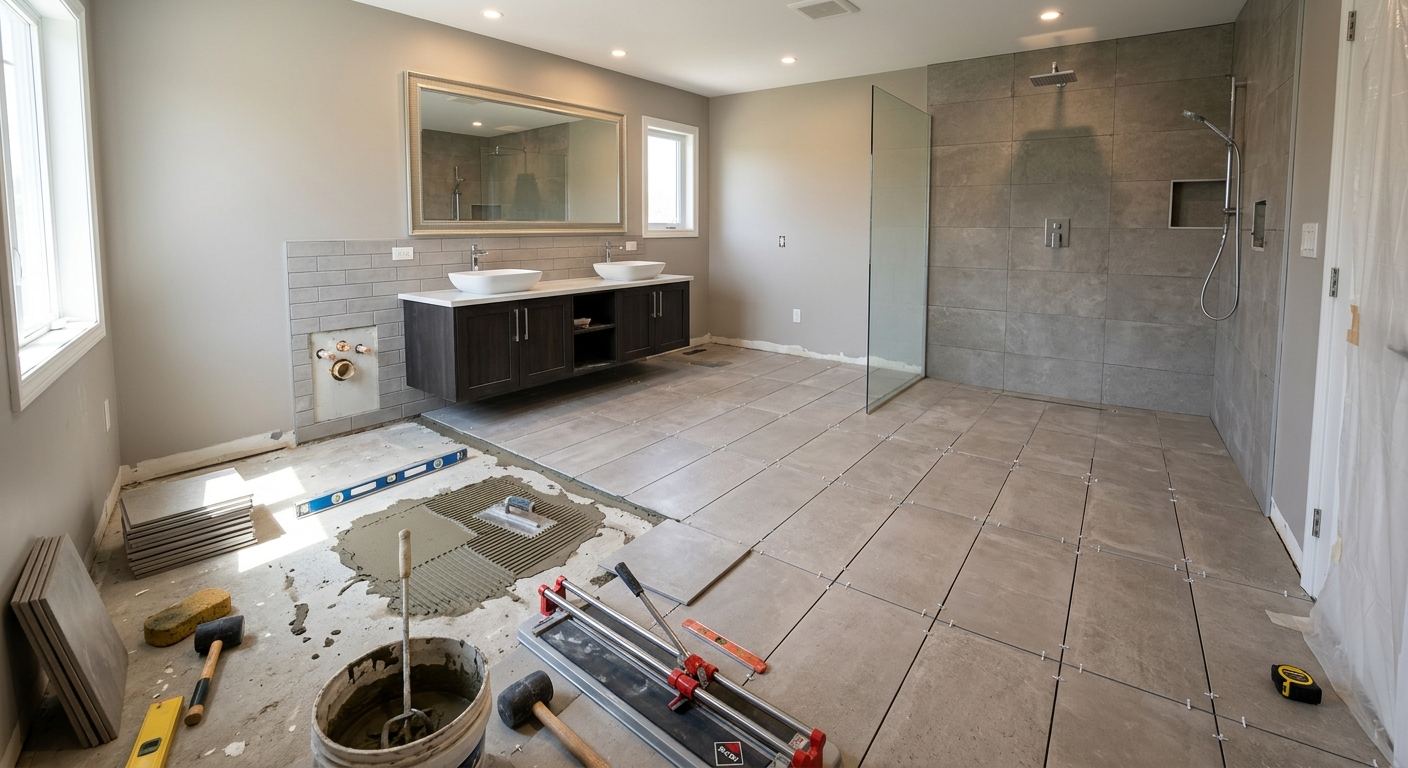
Bathroom renovation options and costs in Westmount
Bathroom renovations in Westmount typically fall into a few clear tiers, and your starting point matters as much as the finishes. Westmount’s housing stock is smaller and often older than many parts of the GTA—around 4,010 residents in 2021, which aligns with the area’s mix of established neighbourhoods where dated plumbing and ventilation details still show up behind tile and drywall (Statistics Canada, 2021 Census). In many nearby Toronto-area homes, pre-1980 layouts are more likely to include cast-iron drain sections, undersized venting, or outdated wiring pathways, and that’s where scope commonly expands. On top of that, older floor tile and some drywall products from the 1970s–1980s can involve asbestos-containing materials, which may require licensed abatement if discovered during demo.
Toronto-area pricing is driven less by climate and more by labour availability and the age of the housing stock. Skilled bathroom crews command a premium in the Toronto economic region, especially for tiling, waterproofing, and custom shower plumbing. Even if the bathroom isn’t larger than average, the time to open walls, correct rough-in issues, and restore waterproofing is what moves budgets into the mid-to-high range. In practical terms, a bathroom in demand area like the Westmount neighbourhood core—where homes are older and renovations are frequent—often sees faster contractor response, but also tougher scheduling and higher labour rates once plumbing corrections are needed.
To help you compare apples-to-apples, here are common Westmount scopes and realistic price bands before you request a detailed, itemised quote.
| Renovation Scope |
What's Included |
Typical Duration |
Price Range |
| Cosmetic refresh (paint, fixtures, accessories only) |
New vanity top or vanity, toilet/trim swap, faucet swap, paint, accessory install; no changes to plumbing rough-in, no new tile work |
3–6 days |
$3,000–$6,500 |
| Mid-range full renovation (new tile, vanity, tub/shower, electrical) |
Demo and disposal, waterproofing, floor and wall tile, new vanity, new tub/shower surround, updated exhaust fan (if needed), GFCI/AFCI-ready receptacle work, basic plumbing refresh |
2–3 weeks |
$12,000–$20,000 |
| High-end full renovation (custom tile, steam shower, heated floors) |
Higher-end tile, custom shower with niche/linear drain options, heated floor circuit, upgraded plumbing/valves, enhanced waterproofing system, designer fixtures |
3–5 weeks |
$20,000–$30,000 |
| Shower-only installation (convert tub to walk-in shower) |
Remove tub, build shower base, waterproofing, install tile shower walls/door or glass, relocate plumbing as required, exhaust fan upgrades |
1.5–3 weeks |
$6,500–$14,000 |
| Bathtub replacement or tub-liner install |
Replace tub and fixtures (or install liner where applicable), re-seal, minor wall refinishing, assess drain condition; typically no major layout shift |
5–10 days |
$1,200–$4,000 |
| Tile-only installation (floor + surround, existing layout kept) |
Tile floor and tub/shower surround, underlayment checks, waterproofing where required by your system, matching grout/trim, re-grout/caulk as needed |
1.5–3 weeks |
$5,000–$12,000 |
Prices are estimates only and vary by project scope, site access and material selection.
What affects the price of bathroom renovation in Westmount
In the Toronto region, two quotes for “the same” bathroom can diverge by 30–50% because bathroom work is labour-intensive and scope expands quickly once walls open. In Westmount, the biggest drivers are regional labour rates and the age of the housing stock—not the weather. Ontario winters mainly influence exterior work and moisture management, but inside the bathroom, costs swing based on whether contractors need to reconfigure drain/venting, adjust supply lines, and add proper waterproofing details.
Older Toronto-area homes commonly hide cast-iron or otherwise dated drain stacks, galvanized supply lines, and ventilation that doesn’t meet modern expectations. When discovery happens, the job becomes rough-in plus finishing, not just finish work. For example, correcting drain/vent issues or adding shut-offs can push a mid-range project toward the higher end of the full-renovation bands (from roughly $12,000 toward $20,000+). If asbestos-containing materials are uncovered in vinyl floor tile or related materials during demo, abatement requirements can add $1,500–$5,000+ before tile and fixtures even begin.
Concrete Westmount examples: (1) keeping the existing tub footprint usually lowers price because it limits drain relocation and reduces demo; (2) switching from ceramic tile to large-format porcelain can increase labour because of layout planning and tile setting demands, even if the material cost looks similar at first glance; and (3) upgrading an exhaust fan with a new circuit can raise electrical scope—especially if an older panel or wiring pathway is involved. These realities are why a “simple” shower conversion can start near the shower installation band (about $4,000–$12,000) but end higher when waterproofing and plumbing correction are required.
| Price Factor |
Why It Matters |
Cost Impact |
| Layout change — moving drain or supply lines requires rough-in work |
Rerouting impacts demo, subfloor access, venting checks, and finishing delays |
Often +$2,000–$8,000 depending on distance and wall access |
| Tile selection — large-format porcelain vs. mosaic vs. ceramic |
Material choice changes cutting, pattern matching, and setting time |
Typically +$1,000–$6,000 for labour/material differences |
| Fixture tier — builder-grade vs. mid-range vs. designer brands |
Premium valves, toilets, and vanities can also affect trim installation time |
Can add +$500–$5,000+ |
| Subfloor condition — rot or unlevel concrete adds scope |
Fixing substrate is required before tile and waterproofing can be trusted |
Often +$1,000–$7,000 |
| Electrical — adding GFCI outlets, exhaust fan, heated floor circuit |
Licensed work and new runs increase time and inspection needs |
Typically +$800–$4,500 |
| Waterproofing method — membrane type and extent |
Better systems require correct prep, overlap, and cure times |
Often +$500–$3,500 (but can prevent costly rework) |
| Older-home surprises — asbestos tile, cast-iron drains, galvanized pipes |
Abatement, replacement, and code upgrades expand scope and scheduling |
Can add +$1,500–$10,000+ |
| Bathroom size — sq ft drives tile and labour time directly |
More area equals more setting, grouting, waterproofing, and material handling |
Small baths can be 20–35% cheaper than larger layouts |
Permits & regulations in Ontario
In Ontario, many “cosmetic” bathroom updates generally don’t require permits, but anything that changes plumbing systems, adds electrical circuits, or affects structural components can. As a rule of thumb in Westmount: swapping a vanity, replacing a faucet or toilet, retiling using the existing shower/tub footprint, or repainting—without changing rough-in plumbing—typically falls under work that homeowners can coordinate with contractors without pulling a permit for each fixture swap. However, relocating plumbing (moving a drain or supply lines), adding or relocating an exhaust fan with new wiring, or modifying walls in a way that affects framing or load-bearing elements usually requires permits and inspections.
Electrical work must meet provincial electrical code and be performed by a licensed electrician for anything beyond simple like-for-like swaps. Plumbing rough-in changes typically require a permit and inspection because inspectors verify venting/drain connections and correct shut-offs.
Before work starts, you can verify your contractor in a practical, step-by-step way:
- Check the Ontario contractor’s licence/registration details in the appropriate online registry for their trade category (as applicable), and confirm it matches the scope (plumbing, electrical where applicable, and general contracting).
- Ask for a certificate of insurance and ensure liability coverage is current; request a copy and confirm the effective dates.
- Verify WSIB/WCB coverage for workers (not just the business name). Request proof and confirm the coverage is active.
- Request a written scope that clearly states who pulls permits (if required), and confirm inspection responsibility.
- For any older-home surprises, ask how the contractor handles discoveries like asbestos and whether abatement is by a licensed, insured specialist.
Good contractors won’t treat permits as “optional”; they’ll treat them as part of protecting you and the workmanship.
Choosing tile, waterproofing and fixtures for your Westmount bathroom
Your material choices in Westmount usually determine whether you land in the mid-range full-renovation band or push toward the higher-end numbers. Start with tile: ceramic is an entry point and can work well for smaller areas, but porcelain handles moisture and frequent cleaning better, which matters for Ontario humidity and daily bathroom cycles. Natural stone (marble, travertine, slate) looks luxurious, yet it can require more maintenance and careful sealing planning, and installation costs can rise because of layout and substrate demands.
Second is waterproofing—this is where Ontario moisture management becomes critical. A paint-on membrane can be fine for certain systems when installed over properly prepared surfaces, but bonded sheet membranes and robust, system-based approaches (including reputable corner/detail kits) often provide higher confidence for shower walls and floors. The “right” system is the one matched to your substrate and your tile plan, not the one with the lowest material sticker price.
Third is fixture tier. Builder-grade fixtures can keep you closer to a $12,000–$20,000 renovation budget when paired with reliable waterproofing and straightforward layouts. If you upgrade to designer-grade valves, a steam shower, or heated floors, you may justify moving toward the $20,000–$30,000 range—especially when those choices also improve daily comfort and resale appeal.
Example: if you’re deciding between standard ceramic and porcelain tile, spending an extra amount on porcelain is often justified because it typically costs more per square foot but reduces the risk of surface wear and improves longevity. Similarly, paying for a correct waterproofing system is usually smarter than saving on membrane details—because replacing a failed shower system is far more expensive than getting it right during installation.
| Material / Option |
Pros |
Cons |
Price Range |
| Ceramic tile (floor + walls) |
Good value, wide variety of colours/patterns, easier to source |
Can be less durable than porcelain in high-use areas; more attention needed for slip resistance |
$3,000–$8,000 |
| Porcelain tile (floor + walls) |
More moisture- and wear-resistant, great for modern large-format looks |
Larger formats increase layout/cutting complexity; costs rise with premium slabs/patterns |
$5,000–$12,000 |
| Natural stone (marble, travertine, slate) |
High-end appearance, unique veining, premium feel |
Sealing/maintenance requirements; higher installation labour due to tolerance and fit |
$8,000–$20,000 |
| Frameless glass shower enclosure |
Cleaner look, visually opens the bathroom, easier cleaning lines |
More expensive hardware and careful installation needed; hinges/trackless systems require precision |
$2,000–$6,500 |
| Prefab tub surround (acrylic) |
Faster install, consistent fit, lower labour than full tile surrounds |
Limited design flexibility; long-term look depends on proper sealing at transitions |
$1,200–$3,500 |
| Custom shower pan (tile or linear drain) |
Modern, seamless look; linear drains improve water management when built correctly |
More waterproofing and framing time; higher material and labour |
$4,000–$12,000 |
How to choose a bathroom renovation contractor in Westmount
Choosing the right contractor in Westmount is mostly about verifying coverage and clarity before you sign, because hidden conditions are common in older GTA homes. First, confirm Ontario licensing/registration as applicable for the trade they’ll perform (and verify the right people are doing electrical/plumbing rough-in). Ask for liability insurance—an active certificate of insurance with adequate limits for residential work. Next, verify WSIB/WCB clearance: request proof of coverage and make sure it covers the workers who will be on-site.
Then get 2–3 itemised written quotes. You want a labour and materials breakdown, not one lump sum. Itemisation should separate demo/disposal, framing/substrate prep, waterproofing system, tile setting and grouting, electrical scope (exhaust fan, GFCI, heated floor circuit if included), and plumbing rough-in/fixture install. Read the scope for exclusions and logistics: is permit pulling included, who schedules inspections, and does the quote include disposal and protective measures for hallways and stairs?
Warranty matters too. Look for a workmanship warranty (often 1–2 years for typical trades, longer if they’re confident in the waterproofing system) and confirm manufacturer warranties for products. Ask whether the warranty is transferable if you sell the home.
For payment, plan for a schedule where you never pay more than 10–15% upfront; hold back a portion until the job is complete and verified. Finally, request start date and completion timeline in writing—bathrooms can stretch due to curing times and scheduling of licensed trades.
- Confirm Ontario trade licence/registration and that subcontractors are properly licensed for their scope.
- Request current certificate of insurance (liability) and verify effective dates.
- Verify WSIB/WCB clearance for workers; request proof before demolition.
- Use itemised quotes with labour/material line items, including waterproofing and disposal.
- Ask what’s excluded (e.g., drywall patching, subfloor corrections, permit fees, fixture supply).
- Confirm whether permits and inspections are included for plumbing/electrical changes.
- Ask which waterproofing method is specified (membrane type and where it’s applied).
- Confirm tile prep requirements (lippage mitigation, substrate requirements, backer/underlayment plan).
- Request a detailed schedule that includes cure times for membranes and grout.
- Get a written change-order process so surprises are priced transparently.
- Check warranty terms: workmanship coverage length and what voids it.
- Clarify payment timing; do not allow large upfront deposits beyond 10–15%.
Concrete red flags in Westmount: (1) a quote that’s not itemised and can’t explain waterproofing and rough-in scope; (2) “no permits needed” language even when plumbing/electrical relocation is proposed; (3) contractors who won’t provide insurance and WSIB/WCB proof; (4) vague schedules with no start date or estimated completion window; and (5) pushing for large upfront payments or refusing a reasonable holdback until final inspection and cleanup.
Frequently asked questions — bathroom renovation in Westmount
Can I live at home during a bathroom renovation in Westmount?
Often you can, but it depends on how disruptive your scope is. A cosmetic refresh is usually the least disruptive, while a mid-range full renovation that involves demo, new waterproofing, and plumbing/electrical rough-in is harder to navigate day-to-day. In Westmount and the broader Toronto region, many homeowners choose to live in the home by setting up a temporary routine: protect the rest of the house, use a secondary bathroom if available, and schedule demolition early so the dust footprint is shorter. If you’re converting a tub to a shower, expect downtime in phases and plan for access limitations. For budgeting, many full renovations land in the $12,000–$20,000 range, and the schedule variability is the real reason people may not want to “stay through” the longest tile and cure periods.
What's the best bathtub material for a Westmount home?
The “best” bathtub material depends on what you’re prioritising—longevity, weight/installation ease, or comfort. In Westmount’s older home setups, a like-for-like replacement often simplifies plumbing transitions and reduces rough-in surprises. Acrylic tubs are common because they’re relatively lightweight and can be cost-effective; they typically perform well if installed on a properly prepared base. Cast iron is durable but heavier and can require more careful handling, which increases labour time. Fibreglass/enamel options exist, but quality varies by brand. If your contractor finds older drain conditions or venting issues, the most important factor becomes getting the plumbing corrected while the walls are open. In many cases, bathtub replacement budgets sit around $1,200–$3,500, but add-ons like new shut-offs or drain corrections can increase the final number.
Is it worth renovating a bathroom before selling in Westmount?
It can be worth it, especially if your bathroom is outdated or showing wear that affects buyer confidence. In Westmount, many buyers are sensitive to waterproofing quality, ventilation performance, and modern layout functionality because repairs discovered after closing can be expensive. A well-executed renovation with dependable waterproofing and a tidy finish can help you stand out, and durable materials (like properly installed porcelain tile and a correctly selected membrane system) usually hold up better to inspection and daily use. However, avoid over-upgrading beyond the home’s market fit. If you’re aiming for an efficient improvement, a cosmetic-to-mid scope that updates fixtures and finishes without relocating plumbing can be a smarter pre-sale strategy. If you’re going full renovation, local GTA budgets often start around $12,000 and can reach $30,000+ for higher-end choices—make sure your finish decisions align with how your home is positioned.
How do I plan a bathroom renovation on a tight budget in Westmount?
Start by protecting the parts of the job that drive labour hours: avoid layout changes unless necessary. Keeping the existing tub/shower footprint usually reduces drain and supply rerouting, which is a major cost driver in the Toronto region. Choose tile strategically—porcelain for high-use areas and a simpler pattern can offer better longevity without paying for full luxury stone. Spend on the waterproofing system and substrate prep, because it’s the foundation for long-term performance; cutting corners there is what leads to expensive callbacks. Consider a mid-range full renovation that targets the essentials: new vanity, updated electrical like an exhaust fan, and tile where it’s most visible, which often falls into the $12,000–$20,000 band. If you need lower cost, a cosmetic refresh can be a short-term option, but it’s not the same as correcting ventilation, dated plumbing, or waterproofing risks.
What's the difference between a cosmetic and a full bathroom renovation?
A cosmetic refresh typically changes visible finishes and fixtures without altering plumbing rough-in or structural elements. Think painting, swapping a vanity or toilet, updating accessories, and possibly minor re-caulking or a straightforward refresh where the waterproofing remains untouched. A full bathroom renovation involves demolition, opening walls and floors, removing and replacing tile and waterproofing assemblies, and often updating electrical and plumbing to match current Ontario requirements. That’s why full renovations in the Toronto economic region commonly sit in the low-to-mid five figures—roughly $12,000–$30,000 depending on finishes and whether plumbing/venting upgrades are required. In older Westmount-area homes, “full” can also include addressing hidden conditions like cast-iron drains or galvanized supply lines, and potentially asbestos-containing materials if discovered during demo.
How do I choose the right contractor for my bathroom in Westmount?
Choose based on verification and clarity, not just price. In Ontario, confirm the contractor’s licensing/registration as applicable for their scope, and request proof of liability insurance plus WSIB/WCB coverage for workers—ask for documents before work begins. Get 2–3 itemised written quotes so you can compare labour and materials line by line (waterproofing method, tile prep, disposal, permit pull responsibility, and electrical scope). Ensure the scope is specific about what’s included and what’s excluded—especially disposal, patching, and whether permits/inspections are included when plumbing or electrical changes are planned. Ask about warranty: workmanship coverage length and what’s covered, plus product manufacturer warranties. Finally, confirm a realistic payment schedule (10–15% upfront max) and a written start/completion timeline. A responsible team will protect you even when older-home surprises show up—because that’s common in Westmount.