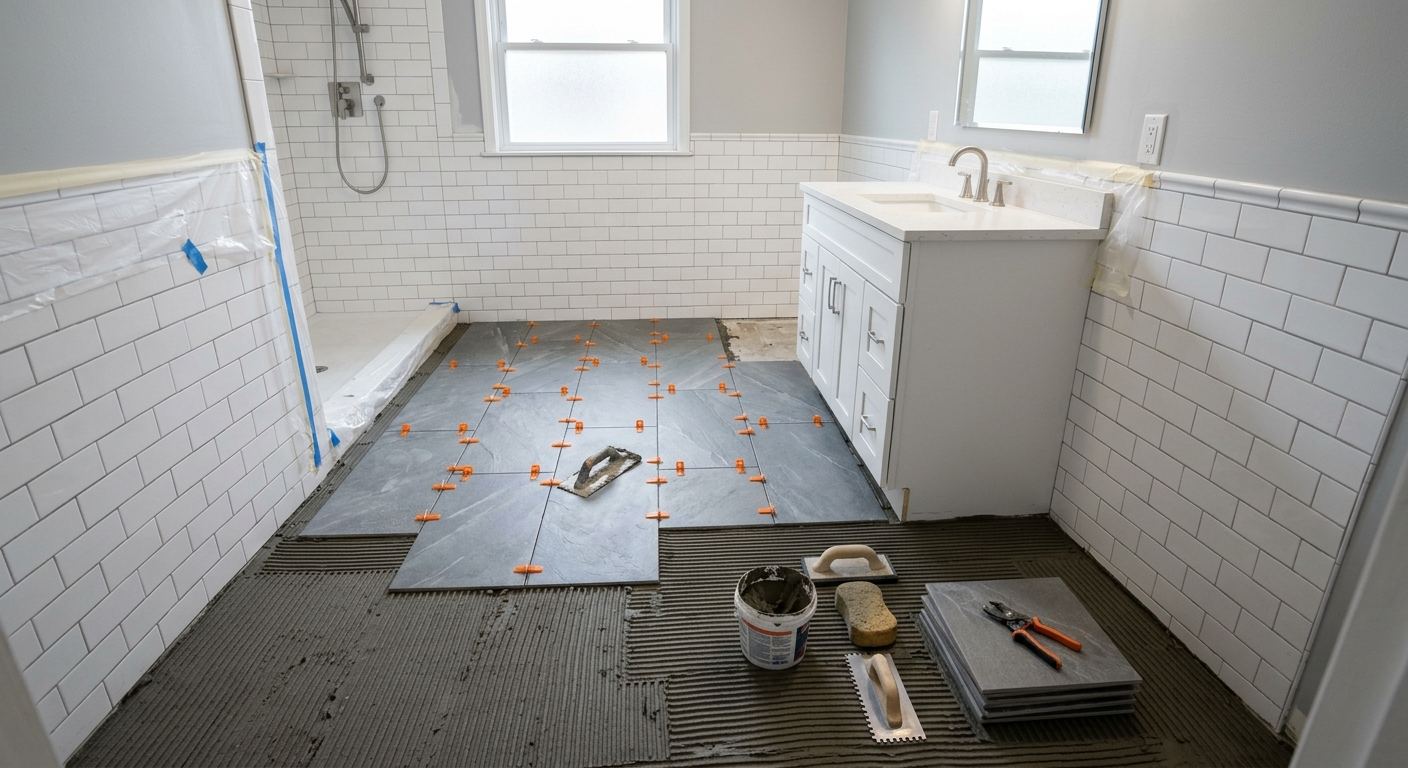
Bathroom renovation options and costs in Yonge-St.Clair
In Yonge-St.Clair, bathroom renovations are priced less by weather swings and more by the realities of Toronto’s older housing stock and the labour intensity of the work. About 12,528 people call this area home (Statistics Canada, 2021 Census), and the surrounding Toronto market includes many post-war and 1960s–1980s homes where plumbing layouts can be dated. In practice, that means some projects must address cast-iron or undersized drains, adjust venting, correct supply lines, and sometimes add new shut-offs to meet current Ontario code. Once walls are opened, it’s also not unusual to find asbestos-containing materials in older floor tile or related finishes, which triggers licensed abatement and expands timelines.
Toronto’s renovation market also creates a practical cost effect: skilled trades command premium hourly rates, and bathroom work is highly specialized (tiling, custom showers, waterproofing, and complex plumbing). Availability can tighten around peak season, and that “schedule premium” shows up in labour-heavy scopes like full tile and shower conversions. If your bathroom is in the Yonge–Eglinton or nearby midtown corridor, we often see strong demand because many condominiums and older townhomes are within reach of transit and parking constraints—both of which influence site access and disposal costs.
Below are realistic price bands for common options, so you can compare quotes apples-to-apples before site conditions change the final number.
| Renovation Scope |
What's Included |
Typical Duration |
Price Range |
| Cosmetic refresh (paint, fixtures, accessories only) |
Paint; replace vanity top or vanity; swap toilet/faucets; new lighting trims; accessories (towel bar, mirror); caulking and minor re-leveling as needed |
3–7 days |
$2,500–$6,000 |
| Mid-range full renovation (new tile, vanity, tub/shower, electrical) |
Demo and disposal; waterproofing; floor and wall tile; new vanity and toilet; tub/shower surround; exhaust fan (ducted); GFCI where required; basic plumbing and electrical updates |
3–5 weeks |
$12,000–$20,000 |
| High-end full renovation (custom tile, steam shower, heated floors) |
Full gut; custom waterproofing system; heated floor circuit; premium tile layout (features, niches); steam shower (or high-end shower system); designer vanity and hardware; expanded electrical scope; coordinated plumbing upgrades |
5–8 weeks |
$22,000–$30,000 |
| Shower-only installation (convert tub to walk-in shower) |
Remove tub; rough-in adjustments; new shower pan/liner; tile surround; glass or bypass door; exhaust fan check/update; new valve trim and handheld or rain set |
2–4 weeks |
$8,000–$16,000 |
| Bathtub replacement or tub-liner install |
Remove existing tub (or prep for liner); new tub/trim; reseal waterproofing transition; wall re-caulking or partial retiling as needed; plumbing hookups |
1–2 weeks |
$1,200–$3,500 |
| Tile-only installation (floor + surround, existing layout kept) |
Tile demo and install; grout and sealing; new waterproofing for tile areas; curb/benchtop tile as specified; existing fixtures remain unless their removal is required |
2–4 weeks |
$3,000–$10,000 |
Prices are estimates only and vary by project scope, site access and material selection.
What affects the price of bathroom renovation in Yonge-St.Clair
Even when two homeowners in the Toronto economic region describe “the same bathroom,” quotes can diverge by 30–50%. The biggest driver is labour rate: GTA trades bill a premium, and bathrooms are labour-intensive because waterproofing, tiling, plumbing rough-ins, and detail work can’t be rushed. The second driver is the age of the housing stock around Yonge-St.Clair. Older homes commonly have hidden conditions—cast-iron or undersized drain stacks, galvanized supply lines, or ventilation that needs correction—which can add several thousand dollars in drain reconfiguration, vent corrections, and new shut-offs before tile ever goes on the wall.
Asbestos is another cost accelerant. If asbestos-containing material is discovered (often in older floor tile or related drywall compounds), abatement adds both direct costs and time, typically adding about $1,500–$5,000+ depending on extent and containment requirements. You’ll also feel scope changes when bathrooms require more opening than expected to reach plumbing vents and cleanouts.
Concrete examples: converting a tub to a walk-in shower usually means moving valves or changing the drain drop—this pushes the job toward the mid-to-upper local shower installation range and can overlap with full renovation budgets when additional rough-in is needed. Conversely, a tile-only scope that keeps the existing tub/shower valve locations and toilet position can stay closer to the lower end of the local tile installation band ($3,000–$10,000). The same “room size” can also swing cost—two bathrooms with identical dimensions can have different tile labour due to niche count, slope corrections, or subfloor that needs flattening.
| Price Factor |
Why It Matters |
Cost Impact |
| Layout change — moving drain or supply lines requires rough-in work |
New or relocated plumbing means cutting, patching, testing, and sometimes vent corrections |
Often +$3,000–$10,000 |
| Tile selection — large-format porcelain vs. mosaic vs. ceramic |
Material fragility, cutting complexity, and labour time increase with harder layouts and larger panels |
Often +$1,000–$6,000 |
| Fixture tier — builder-grade vs. mid-range vs. designer brands |
Higher-end valves, toilets, mirrors, and hardware add product cost and sometimes install complexity |
Often +$800–$4,500 |
| Subfloor condition — rot or unlevel concrete adds scope |
Repairs and underlayment level are required for flat tile planes and correct waterproofing performance |
Often +$500–$4,000 |
| Electrical — adding GFCI outlets, exhaust fan, heated floor circuit |
Wiring, permits/inspection, and circuit upgrades add labour and materials |
Often +$1,000–$5,500 |
| Waterproofing method — membrane type and extent |
Correct coverage and system build (bonds/overlaps) reduces risk of leaks and mould |
Often +$600–$3,000 |
| Older-home surprises — asbestos tile, cast-iron drains, galvanized pipes |
Discovery triggers abatement, drain reconfiguration, or supply line upgrades |
Often +$1,500–$8,000+ |
| Bathroom size — sq ft drives tile and labour time directly |
More square footage means more tile cuts, more membrane area, and longer waterproofing/tile installation |
Often +$1,500–$7,000 |
Permits & regulations in Ontario
In Ontario, most cosmetic updates don’t require permits—think swapping a vanity, replacing a toilet, repainting, or even retiling with no changes to plumbing/electrical locations. However, permits typically come into play when you relocate plumbing or electrical components. In practical terms for Yonge-St.Clair homeowners, you should expect permits and inspections when you:
- Move a toilet drain, change the tub/shower drain location, or reroute supply lines (plumbing rough-in).
- Add or relocate an exhaust fan with new ducting, and especially when new electrical circuits are created or altered.
- Make structural or wall changes that affect framing or require inspections (for example, opening walls for new plumbing/venting).
Electrical work must meet Ontario code requirements and be performed by a licensed electrician or handled through an appropriately licensed process with sign-off. Plumbing rough-ins that change the system generally require a permit and inspection before walls are closed.
To verify a contractor, start with their Ontario trade licence (ask for their licence number and confirm it via the appropriate online provincial registry), then request a certificate of insurance showing liability coverage and ask whether their team carries WSIB/WCB coverage. Finally, request a clearance letter or documentation that proves coverage is in place for workers on your site. If the contractor can’t provide clear, current documents before they price the work, that’s a warning sign.
Choosing tile, waterproofing and fixtures for your Yonge-St.Clair bathroom
In Yonge-St.Clair, your bathroom budget is largely determined by three material decisions: tile choice, waterproofing method, and fixture tier. First, tile: ceramic is usually the entry-level option and can be a good fit when your layout is simple. Porcelain is tougher and handles heavier traffic and moisture better, which matters in Toronto bathrooms where ventilation is often inconsistent. Natural stone (marble, travertine, slate) looks exceptional but typically requires more careful sealing and can be more labour-intensive to cut and install—especially with complex niches and thresholds.
Second, waterproofing: paint-on membranes can work in the right assembly, but for most full renos we favour a proven system like a bonded sheet membrane or a schluter-style approach for reliability at corners and seams. The goal is simple—prevent leaks behind tile. Ontario bathrooms experience recurring humidity from daily showers and variable ventilation, so the waterproofing system must be continuous and correctly detailed around the valve and drain.
Third, fixtures: builder-grade taps and toilets cost less upfront, while mid-range and designer brands often offer better finishes and smoother valve control, which can improve daily use and resale appeal. As a dollar example, upgrading to porcelain tile and a higher-end valve trim may cost a few thousand dollars more within a mid-range renovation budget, but it’s usually justified when you’re already doing a full waterproofing and tile installation. If you’re only doing a cosmetic refresh, those upgrades won’t deliver much value compared to improving ventilation or addressing the real leak risks.
| Material / Option |
Pros |
Cons |
Price Range |
| Ceramic tile (floor + walls) |
Entry-level cost; wide design selection; easy to work with on straightforward layouts |
More prone to chipping than porcelain; sealing requirements can be more noticeable depending on product |
$3,000–$7,000 |
| Porcelain tile (floor + walls) |
Low water absorption; durable for bathrooms; better for larger format panels and modern looks |
More expensive tile material; requires proper substrate prep to avoid lippage |
$5,500–$10,000 |
| Natural stone (marble, travertine, slate) |
Premium, high-end appearance; unique veining and texture |
Higher material and labour; requires ongoing sealing and careful maintenance |
$8,000–$18,000 |
| Frameless glass shower enclosure |
Brightens the space; clean lines; durable modern look with less visual clutter |
Cost can rise with custom measurements; installation requires precise pan alignment |
$4,000–$12,000 |
| Prefab tub surround (acrylic) |
Faster install; good water resistance; simpler than full tile walls |
Less design flexibility; can look “builder” compared to tile; seams must be detailed correctly |
$1,200–$3,500 |
| Custom shower pan (tile or linear drain) |
Improved aesthetics and drainage; linear drain supports a seamless, modern slope |
More labour-intensive; requires excellent waterproofing detailing; higher risk if substrate isn’t prepped properly |
$4,500–$12,500 |
How to choose a bathroom renovation contractor in Yonge-St.Clair
Choosing the right contractor in Yonge-St.Clair comes down to verification, clarity, and jobsite discipline. Start by confirming Ontario licensing and coverage before you discuss “nice-to-have” upgrades. You want proof of liability insurance (certificate of insurance should list your address or provide enough documentation that it can be verified), and proof of WSIB/WCB coverage for their workers. Ask for the certificate, then check the status and coverage details rather than accepting a verbal “we’re covered.” If a contractor doesn’t have documentation readily available, they’re often cutting corners—or outsourcing without proper coverage.
Next, request 2–3 itemised written quotes. A good bathroom quote separates labour and materials (demo/disposal, waterproofing system, tile labour, plumbing rough-in, electrical work, glass enclosure, and fixtures). Avoid lump sums that don’t explain what’s included. Read the scope carefully: is permit pulling included or billed separately? Is demolition and disposal included? Are specialty items like heated floor mats, niche framing, and linear drains included with exact brands and models?
Warranty matters. Ask for workmanship warranty length (often longer than product-only warranty) and whether the manufacturer warranty is transferable if you sell the home. Payment schedule should be conservative: never pay more than 10–15% upfront, and hold back a portion until the job is complete and deficiencies are addressed. Finally, get start date and completion estimate in writing, including lead-time assumptions for tile, glass, and custom fixtures.
- Provide Ontario trade licence number and confirm it online.
- Show liability insurance certificate with your jobsite listed/identifiable.
- Provide WSIB/WCB coverage evidence for workers on your project.
- Submit itemised quotes: labour vs materials with line items.
- List exact product brands/models for vanity, toilet, valve trim, and fan.
- Clarify waterproofing method and required surface prep steps.
- Confirm who pulls permits (and whether costs are included).
- Confirm disposal and drywall/tile debris removal are included.
- Ask how they handle asbestos discovery in older homes (plan and process).
- Request written warranty details: workmanship + manufacturer coverage.
- Use a payment schedule with small upfront deposit and a completion holdback.
- Get a written timeline with key milestones (demo, rough-in, waterproofing, tile, trim).
In Yonge-St.Clair, a few red flags show up repeatedly: (1) quotes that don’t specify waterproofing system type or coverage, (2) refusal to provide licence/insurance/WSIB documentation, (3) “too-good-to-be-true” pricing for tile-heavy work without describing subfloor prep, (4) pressure for large upfront payments beyond 10–15%, and (5) no written scope for permits, disposal, and electrical/plumbing rough-in responsibilities.
Frequently asked questions — bathroom renovation in Yonge-St.Clair
How much does a walk-in shower cost in Yonge-St.Clair?
A walk-in shower in Yonge-St.Clair usually lands in the mid range because it’s not just the glass—it’s the plumbing rough-in, shower pan or membrane system, waterproofing, and tile. If you’re converting from a tub, many homeowners see pricing around $8,000–$16,000 depending on whether the drain/valve locations change, the tile complexity, and whether you’re adding a niche or linear drain. In older Toronto homes, hidden drain or vent issues can push the scope higher, especially if cast-iron or undersized lines need upgrading for current Ontario code. If you keep the existing valve and drain positions, the job often comes in closer to the lower end.
What's the ROI on a bathroom renovation?
Bathroom renovations are one of the more resale-relevant home upgrades in Ontario, but ROI depends heavily on how much you change plumbing layout, the quality of waterproofing, and whether your finishes match the home’s overall value. A “safe” renovation strategy is to focus spending on waterproofing, ventilation, and durable tile/fixtures rather than only cosmetic upgrades. In the Toronto market, a full renovation budget often sits in the low-to-mid five figures (commonly $12,000–$30,000 overall depending on scope). That said, the highest ROI typically comes when the project addresses functional issues (poor ventilation, leaking grout, aging drains) and avoids over-customizing. If you’re doing a shower conversion, expect that the labour-intensive parts (tile + plumbing + waterproofing) are what protect both resale value and long-term performance.
Do I need waterproofing behind the tile?
Yes—if you want a durable bathroom in Ontario, waterproofing behind the tile is effectively non-negotiable for wet areas like shower walls and tub surrounds. In Yonge-St.Clair projects, the real risk isn’t the tile itself; it’s water that can migrate through grout cracks or weak points around the valve body, corners, and transitions. A proper waterproofing system (paint-on membrane with correct details, bonded sheet membrane, or an engineered system approach) should be continuous and carried up to the correct height/coverage where water contacts tile. Because Toronto bathrooms see frequent humidity from everyday use, skipping waterproofing is a fast route to mouldy drywall and hidden subfloor damage—often far more expensive than doing it right the first time.
How do I compare bathroom renovation quotes?
To compare quotes in Yonge-St.Clair, you need like-for-like scope. Ask each contractor for an itemised breakdown of labour and materials: demo/disposal, waterproofing system type, tile area and layout allowances, plumbing rough-in scope, electrical work (including exhaust fan and GFCI where required), and the exact fixtures/models. Watch for quotes that only state a total and don’t explain what’s excluded—especially permits, disposal, and any potential substrate repair. Also compare timelines and allowances for hidden conditions common in older Toronto homes. A quote that looks cheaper than the typical full renovation band ($12,000–$30,000) can become more expensive if it assumes minimal repairs or ignores possible drain/vent or asbestos abatement scope.
Can I live at home during a bathroom renovation in Yonge-St.Clair?
Often, yes, but it depends on the sequence of work and your bathroom layout. Many homeowners choose to live at home during a cosmetic refresh or tile-only schedule, because the core plumbing can sometimes remain functional while work progresses. For a full gut or a tub-to-shower conversion, living on-site is harder because demolition, rough-in, and waterproofing require days when the bathroom is out of service. You can reduce disruption with a clear plan: establish an alternative bathing setup, agree on dust control, and confirm when plumbing will be capped and tested. In older Yonge-St.Clair homes, unexpected issues (like asbestos-containing materials or drain corrections) can extend the “out of service” window, so build buffer time into your decision.
What's the best bathtub material for a Yonge-St.Clair home?
The “best” bathtub material depends on how you use the space and what you’re replacing. In many Toronto renovations, homeowners choose acrylic tubs because they’re lighter for install, easier to access and replace, and they integrate smoothly with modern surrounds. If you want maximum rigidity and long-term feel, cast iron is durable but heavier and may require more careful install planning. For cost-conscious projects, tub replacement often starts around $1,200–$3,500, but your final price can shift with surround retiling and plumbing updates. If your goal is quicker maintenance and fewer tile disruptions, a tub-liner style approach may be considered—though it still needs a properly prepared, sound surface to avoid future adhesion problems.