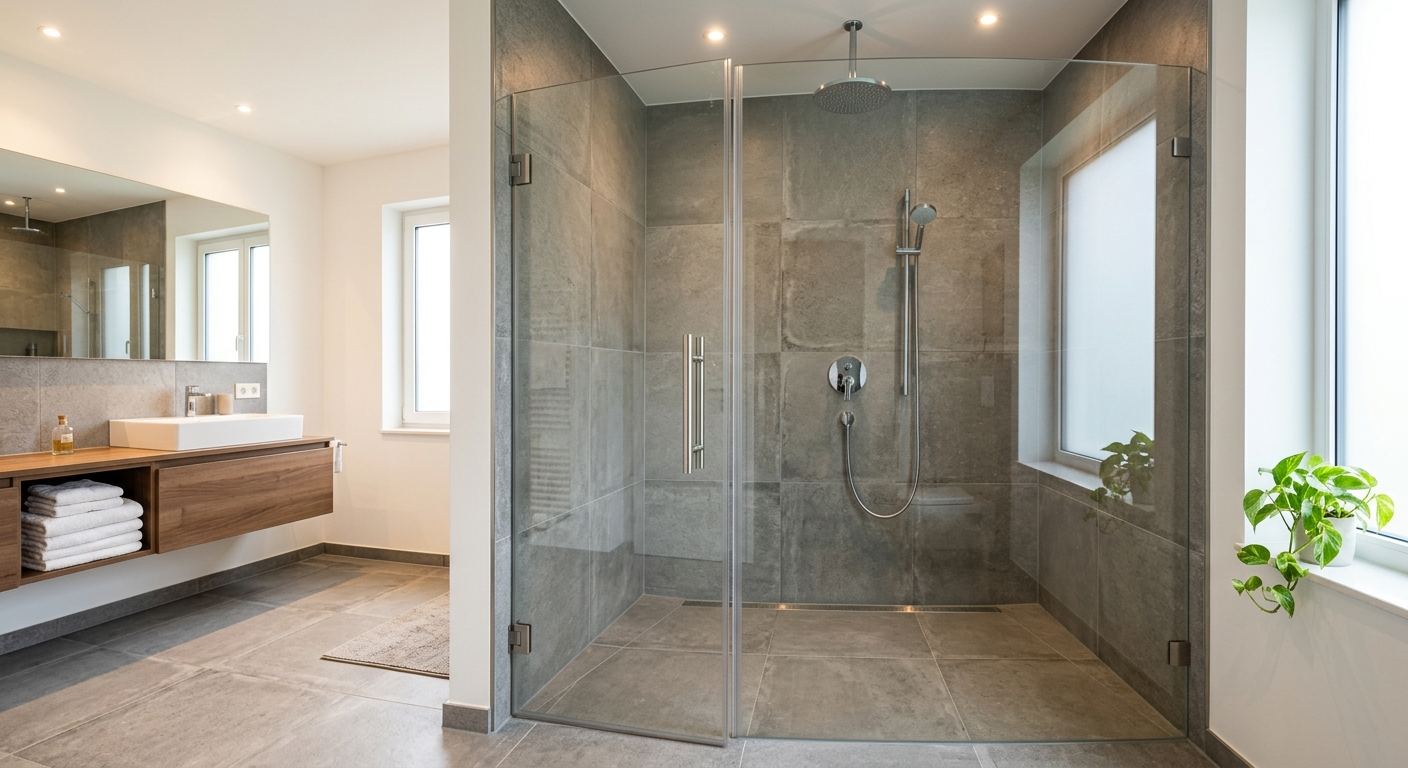
Bathroom renovation options and costs in Casselman
Casselman homeowners typically approach bathroom renovations with one of three goals: freshen the look, modernize the systems, or go all-in on a full rebuild. With 28.8% of local homes built before 1981, many projects start with dated plumbing layouts and older drain materials that can require upgrades once walls and floors open up. That older housing stock is also why discovery of hidden issues (undersized venting, aging supply lines, or occasional asbestos-containing materials in pre-1985 finishes) is a common reason Ottawa-region quotes use contingencies rather than a single “per square foot” number.
In the Ottawa economic region, labour availability and regional trade rates are major cost drivers—more than weather itself. Even though Ottawa has cold winters, bathroom renos aren’t mainly priced for climate exposure; they’re priced for how many trades are involved and how long the job takes once demolition, rough-in, waterproofing, tile setting, and finishing are on the schedule. In areas where demand stays high, such as around the Main Street corridor and the surrounding neighbourhoods in Casselman, trades can book out faster, which can influence scheduling costs and lead times for materials like tile and glass.
The sections below compare common scopes so you can budget realistically before you meet contractors. Use this as a starting point, then confirm allowances with itemized quotes.
| Renovation Scope |
What's Included |
Typical Duration |
Price Range |
| Cosmetic refresh (paint, fixtures, accessories only) |
New vanity/fixture swap (no plumbing relocation), paint, caulking, mirror/light refresh, toilet seat swap, accessories |
3–7 days |
$3,000–$8,000 |
| Mid-range full renovation (new tile, vanity, tub/shower, electrical) |
Demolition, updated vanity, new tub + surround or wall tile, ventilation fan upgrade, GFCI where required, subfloor checks, proper waterproofing, new trim |
2–4 weeks |
$18,000–$30,000 |
| High-end full renovation (custom tile, steam shower, heated floors) |
Full gut, designer tile layout, custom shower/steam system, heated floor circuit, premium waterproofing system, higher-end fixtures, upgraded electrical/lighting plan |
4–8 weeks |
$32,000–$45,000 |
| Shower-only installation (convert tub to walk-in shower) |
Demo tub, modify drain configuration as needed, new shower pan/membrane, tile walls/bench (if selected), new valve/trim, exhaust fan/lighting updates |
2–5 weeks |
$9,000–$18,000 |
| Bathtub replacement or tub-liner install |
Replace tub and re-grout/caulk, or install tub liner where conditions allow; minor surround touches; leak testing |
3–10 days |
$2,500–$6,500 |
| Tile-only installation (floor + surround, existing layout kept) |
Remove existing tile, prep and flatten surfaces, waterproofing upgrade for tile areas, install new tile floor and tub/shower surround, re-install fixtures if reused |
1–3 weeks |
$7,000–$20,000 |
Prices are estimates only and vary by project scope, site access and material selection.
What affects the price of bathroom renovation in Casselman
In Casselman and across the Ottawa economic region, two quotes for the “same” bathroom can differ by 30–50% because scope is rarely identical once demolition starts. The biggest influences are regional labour rates and the age of the housing stock, not climate alone. Trades in the Ottawa area commonly bill in the $85–$150 per hour range for full-service firms, and a typical renovation pulls multiple trades—demolition, plumbing, electrical, tiling, drywall and finishing. Once you add tile-heavy waterproofing and rework to correct joist or subfloor issues, labour time becomes the real driver.
Older homes are where scope expands. In pre-1980 buildings—28.8% locally—contractors often uncover cast-iron or galvanized drain stacks, undersized vents, and non-compliant traps. That means adding venting and upgrading drainage rather than simply swapping fixtures. Discovery of asbestos in floor tile or older drywall compounds can also trigger abatement protocols, which is why you may see a budget jump by $1,500–$5,000+ before finishes even begin.
Concrete examples in Casselman: if you keep your tub-to-shower conversion “in place,” you may land closer to the mid-range full renovation band (around $18,000–$30,000)—but if you also move the drain and add new electrical for lighting/heated floors, it can quickly push into upper-tier budgets (often $32,000–$45,000). Conversely, if your subfloor is solid and wiring is already GFCI-protected, a shower-only project can be more straightforward and come in lower than a gut job.
| Price Factor |
Why It Matters |
Cost Impact |
| Layout change — moving drain or supply lines |
Requires rough-in plumbing work, possible framing changes, and additional waterproofing transitions |
Often adds $2,000–$8,000+ |
| Tile selection — large-format porcelain vs. mosaic vs. ceramic |
Larger formats need flatter substrates and more precise setting; mosaics increase labour and grout lines |
Often adds $1,000–$7,000+ |
| Fixture tier — builder-grade vs. mid-range vs. designer brands |
Higher tiers cost more, and they can require specific valve bodies, trim, and supports |
Often adds $500–$5,000+ |
| Subfloor condition — rot or unlevel concrete adds scope |
Remediation and flattening affect waterproofing performance and tile longevity |
Often adds $1,500–$6,000+ |
| Electrical — adding GFCI outlets, exhaust fan, heated floor circuit |
May require new circuits, proper ventilation controls, and code-compliant connections |
Often adds $800–$4,500+ |
| Waterproofing method — membrane type and extent |
Coverage strategy, sheet vs. paint-on, and attention at seams/penetrations affects leak risk |
Often adds $600–$3,500+ |
| Older-home surprises — asbestos tile, cast-iron drains, galvanized pipes |
Abatement, disposal, and system upgrades add time, materials, and inspections |
Often adds $1,500–$10,000+ |
| Bathroom size — sq ft drives tile and labour time directly |
More surface area means more prep, more waterproofing, and more tile setting days |
Often shifts total by $2,000–$12,000+ |
Permits & regulations in Ontario
In Ontario, many bathroom updates are considered cosmetic and typically do not require permits. Examples that usually fall under “no permit” work include swapping a vanity, replacing a mirror or light fixture, repainting, installing accessories, and retiling without changing plumbing locations or altering structural walls. If you’re simply refreshing finishes—think paint, tub surround replacement in the same footprint, or replacing the toilet/vanity as-for-like—permits are often not triggered.
Work that does typically require permits and inspections includes moving plumbing rough-ins (such as relocating the drain or changing supply line locations), adding or modifying ventilation that requires electrical work tied into a new circuit, and any structural wall changes that alter framing. Electrical work must comply with Ontario electrical code and be performed by (or signed off by) a licensed electrician. For plumbing rough-in changes, contractors generally need a permit before the underground/hidden work is closed in, then an inspection before walls/floors are finished.
To verify your contractor in Casselman, start by confirming their Ontario trade licence status (ask for their licence details or use the appropriate online registry search). Next, request a certificate of insurance showing general liability and—if applicable—coverage for the relevant trades. Finally, verify WSIB/WCB clearance by asking for proof/letter of compliance so you’re not left holding costs if a subcontractor has an injury claim. Always keep copies with your contract paperwork.
Choosing tile, waterproofing and fixtures for your Casselman bathroom
In Casselman, budgeting starts with three material decisions that directly affect both cost and long-term performance: tile choice, waterproofing method, and fixture tier. First, tile: entry-level ceramic is usually the lowest material cost, but it can be more brittle and may demand careful substrate prep in older homes where floors can be slightly uneven. Mid-range porcelain offers better water resistance and consistency, and it typically costs more in material and sometimes in labour due to heavier weights and stricter flatness requirements. Natural stone (marble, travertine, slate) can look high-end, but it adds complexity—cutting, sealing, and layout planning drive up labour and maintenance.
Second, waterproofing: in Ontario’s humid indoor conditions and with winter temperature swings, the “right” system is the one that matches your shower build. Paint-on membranes can work, but they’re sensitive to surface prep and workmanship. Bonded sheet membranes and modern systems (including properly installed corner/seam treatments) generally provide more predictable results. Third, fixtures: builder-grade faucets and trims reduce upfront costs, while mid-range and designer brands often improve reliability (valves, cartridge quality) and resale appeal.
Where does the price difference make sense? If you’re upgrading from a typical tub surround into a fully tiled shower, paying for a proven waterproofing system and a solid porcelain layout can be justified because it protects the most expensive part to repair later—hidden leaks behind tile. If you swap only the vanity and keep the existing shower walls, it’s often better not to overspend on luxury tile patterns.
| Material / Option |
Pros |
Cons |
Price Range |
| Ceramic tile (floor + walls) |
Budget-friendly, wide design selection, good look for refresh projects |
Can chip; may be less forgiving if substrate isn’t very flat |
$5,000–$15,000 |
| Porcelain tile (floor + walls) |
More water resistant, durable for high-use bathrooms, consistent sizing |
Heavier tile; substrate flattening can add labour |
$8,000–$22,000 |
| Natural stone (marble, travertine, slate) |
Luxury appearance, unique veining and texture |
More expensive materials, sealing/maintenance, more cutting and layout time |
$15,000–$30,000 |
| Frameless glass shower enclosure |
Brightens the space, modern look, durable hardware when installed correctly |
Requires precise plumbing and tile alignment; higher glass cost |
$3,500–$9,500 |
| Prefab tub surround (acrylic) |
Fast install, easier maintenance, can reduce tile labour time |
More limited design options; edges and joints must be sealed perfectly |
$1,200–$4,000 |
| Custom shower pan (tile or linear drain) |
Better flow and modern look; ideal for custom layouts and accessibility |
More waterproofing and slope-building work; requires skilled execution |
$4,500–$14,000 |
How to choose a bathroom renovation contractor in Casselman
Choosing the right contractor in Casselman is mostly about proof: Ontario licensing, insurance, and coverage for workers. Start by asking for their Ontario trade licence details (and confirmation they’re permitted to do the specific scope you’re hiring them for). Request a certificate of insurance and verify the coverage is active and adequate for the project size. For worker protection, ask for WSIB/WCB clearance (or an equivalent proof of coverage) and keep it with your contract documents—don’t rely on verbal assurances.
Next, get 2–3 itemised written quotes. You want the labour and materials breakdown separated (demo, plumbing rough-in, electrical, waterproofing, tile labour, drywall, finishing), not a single lump sum. Read the scope carefully for exclusions: is disposal included? Are permits included in the price, or are they charged separately? What’s the allowance for tile, fixtures, and shower glass? Confirm the schedule too—get a start date and a completion estimate in writing.
On warranty, request two warranties: workmanship (typically stated as a term and what it covers) and product/manufacturer warranty for fixtures and waterproofing systems. Ask whether the warranty is transferable if you sell the home. For payment, never pay more than 10–15% upfront; plan a holdback until substantial completion and punch-list items are done.
- Use itemised quotes (labour vs materials), not “all-in” amounts only.
- Confirm who pulls permits and whether permit fees are included.
- Ask what happens if hidden asbestos is found (abatement protocol and budget handling).
- Require proof of Ontario trade licence for the work being done.
- Verify general liability insurance is current before work starts.
- Request WSIB/WCB clearance documentation for workers/subcontractors.
- Confirm waterproofing brand/system and installation method in writing.
- Clarify disposal and dump fees (included or extra).
- Get a detailed demolition plan and protection for floors/adjacent rooms.
- Ask how they handle subfloor flattening and repairs before tile.
- Review warranty terms for workmanship and product components separately.
- Agree on a payment schedule with a holdback until punch-list completion.
Red flags to watch for in Casselman: a contractor who won’t provide a written scope, no proof of insurance/licensing, quotes that exclude disposal but then bill “extras” later, insisting on large upfront payments, or offering waterproofing/tile claims without specifying the membrane system and installation steps.
Frequently asked questions — bathroom renovation in Casselman
Should I do a tub-to-shower conversion?
If mobility is a concern, or you’re refreshing an older bath, a tub-to-shower conversion is often a smart move in Casselman. It can modernize the look, improve daily usability, and—when done with the right waterproofing and slope—reduce the risk of tub-edge leaks. Cost-wise, conversion budgets often land in the shower installation range; many homeowners find results closer to $9,000–$18,000 when the layout stays largely similar. If your home was built before 1981 (28.8% locally), allow extra time for drain/vent upgrades if the existing trap/venting isn’t compliant once the walls come open.
How do I prevent mold in a Casselman bathroom?
Mold prevention in Ontario is about controlling moisture at the source. Start with an exhaust fan that vents properly (not just a recirculating fan), and ensure the fan has a sensible duct route for your bathroom layout. Use proper waterproofing behind tile and at all penetrations, because leaks behind finishes are the hardest to detect. Choose grout and sealant systems suited for wet areas, and keep caulk lines maintained around the tub/shower interface. During renovations in Casselman, I recommend planning for a full waterproofing strategy rather than “touch-up” approaches—especially in older homes where hidden plumbing issues can turn into persistent dampness. Also, consider heated floors if your bathroom stays cold; it helps reduce condensation.
What adds the most resale value in a bathroom reno?
In the Ottawa region, resale value usually tracks with visible updates plus the “invisible” improvements that buyers worry about: safe electrical, reliable ventilation, and plumbing that won’t leak. High-impact items typically include a modern vanity and lighting, updated shower/tub surfaces with durable tile, a clean glass enclosure, and good-quality fixtures. Waterproofing upgrades and a properly installed exhaust fan matter just as much as finishes. If your budget is modest, you can still make a resale-friendly change—cosmetic refresh work can be a lower-cost option (often $3,000–$8,000)—but buyers will usually pay attention to the shower and fan more than the paint colour. For best returns, many homeowners select a mid-range full renovation scope (often $18,000–$30,000) that balances modern look with systems upgrades.
Can I keep my existing plumbing layout to save money?
Yes—keeping the existing plumbing layout is one of the most reliable ways to save money in Casselman. When you don’t move the drain and supply lines, you reduce rough-in labour, framing changes, and the number of waterproofing “transitions” that must be perfectly sealed. That’s why many homeowners choose tile-only or shower-only updates that stay within the current tub/shower footprint. If your current plumbing is aging—common in older housing stock—you may still need venting and trap upgrades after discovery, but you’ll avoid the extra cost of relocating lines. In practice, a bathroom staying in its original layout often aligns with the mid-range renovation band ($18,000–$30,000) more than a full gut with moved plumbing.
How much does a walk-in shower cost in Casselman?
A walk-in shower cost depends on whether you’re installing a shower in the existing tub footprint or making a wider layout change, plus your tile and glass choices. For many Casselman homeowners converting a tub to a walk-in shower, budgets commonly start around $9,000–$18,000 when the scope is straightforward and waterproofing is done correctly. If you choose higher-end tile, a linear drain, heated options, or you uncover older plumbing/drain vent issues during demolition, the project can trend upward. Homes built before 1981 may be more likely to require plumbing and venting upgrades once walls open, which is another reason pricing is rarely a fixed number.
What's the ROI on a bathroom renovation?
ROI varies by how your reno matches buyer expectations in your local market and how complete the work is (systems plus finishes). In general, bathrooms that look modern, have strong ventilation, and include safe electrical and dependable waterproofing tend to perform better than “surface only” refreshes. If you’re spending for resale, prioritize the parts buyers check closely: shower/tile condition, fan performance, and whether the job appears done to code. A refresh can be lower cost (often $3,000–$8,000), but it won’t replace major system concerns buyers may notice. If you’re doing a full upgrade with proper waterproofing and electrical/plumbing updates, the typical investment range often sits around $18,000–$30,000, and buyers usually value that more than cosmetic changes alone—especially in a community where a meaningful share of housing stock is older (Statistics Canada, 2021 Census).