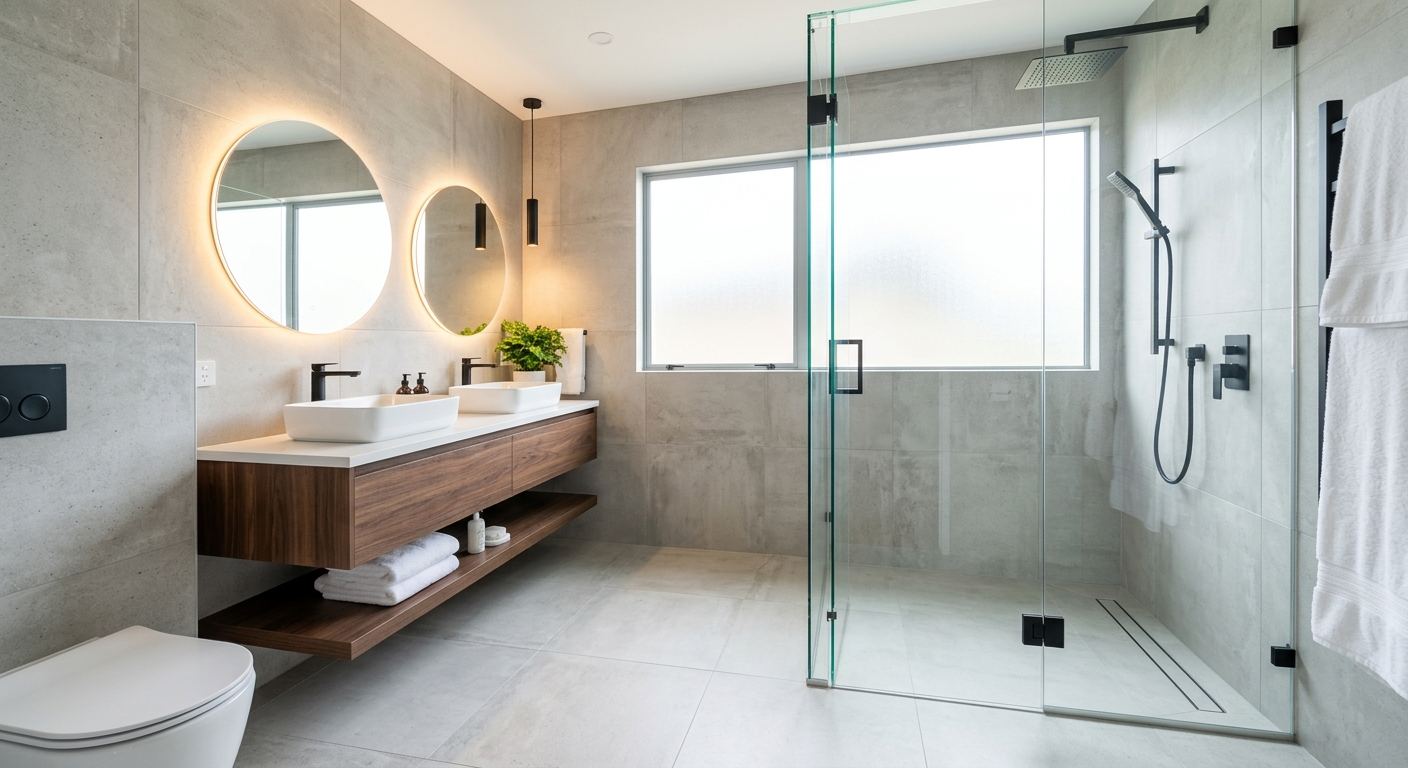
Bathroom renovation options and costs in Bolton
Bolton homeowners renovating bathrooms typically land in different price tiers based on how much of the plumbing, electrical and finishes you change. With a population of 26,795 in Bolton (Statistics Canada, 2021 Census), the local demand for trades is steady—especially in older pockets near the downtown core and along the commuter corridors where many homes date back to the post-war to 1970s–1980s eras. In the GTA, that housing age matters more than climate: older drain stacks, venting and supply lines can be undersized or corroded, and it’s not uncommon to find asbestos-containing materials during demo (often in older floor tile systems and some drywall compounds). Toronto’s market conditions—high skilled-trade availability pressure and premium labour rates—also push budgets higher than the national average, even though the local weather doesn’t “cause” bathroom moisture problems the way you might see in harsher coastal climates.
In practical terms, a “similar-looking” bathroom reno can vary widely depending on whether the contractor must reconfigure drains/vents to meet current Ontario requirements, correct ventilation, or add new electrical protection (like GFCI). If your bathroom is near a high-demand renovation pocket in Bolton—commonly homes around the Bolton town centre and adjacent residential streets—contractors often have more booked lead times, and that can affect scheduling and pricing for tile, custom shower work and plumbing-heavy scope. Use the table below to map your project goals to a realistic GTA budget range, then review the cost drivers in the next section.
| Renovation Scope |
What's Included |
Typical Duration |
Price Range |
| Cosmetic refresh (paint, fixtures, accessories only) |
Paint, replace toilet/vanity faucets, towel bars, mirrors, select lighting swaps, re-seal where needed (no plumbing relocation) |
2–5 days |
$2,000–$6,000 |
| Mid-range full renovation (new tile, vanity, tub/shower, electrical) |
Demo and disposal, tub/shower replacement or reglazing (when feasible), new vanity + toilet, tile floor and surround, waterproofing, exhaust fan upgrade, basic electrical updates, patch/prime/paint |
2–3 weeks |
$12,000–$20,000 |
| High-end full renovation (custom tile, steam shower, heated floors) |
Custom shower (linear drain where desired), high-end tile/trim, heated floor wiring, improved ventilation with ducting, upgraded plumbing valves, premium fixtures and finishes, extended waterproofing and detailing |
3–5 weeks |
$20,000–$30,000 |
| Shower-only installation (convert tub to walk-in shower) |
Remove tub, install walk-in shower base/pan, new tile surround, curb/threshold detailing, valve changes if required, plumbing rework to drainage, exhaust fan and sealing |
1.5–3 weeks |
$4,500–$12,000 |
| Bathtub replacement or tub-liner install |
Replace tub with a new unit and reconnect plumbing, or install a tub liner system where appropriate; re-seal joints, update shower trim, minor wall repair and caulking |
3–7 days |
$1,200–$3,500 |
| Tile-only installation (floor + surround, existing layout kept) |
Tile removal and prep, waterproofing where applicable, floor tile + shower surround tiling, grout/seal, transition trims; keep vanity and plumbing locations unchanged |
1.5–3 weeks |
$3,500–$10,500 |
Prices are estimates only and vary by project scope, site access and material selection.
What affects the price of bathroom renovation in Bolton
In Bolton, you can see the same “style” bathroom reno quote differ by 30–50% across Toronto and Ontario because the big cost drivers are labour rates and the condition/age of the home—not day-to-day climate. Skilled trades in the Toronto economic region typically charge a premium hourly rate, and bathroom work is labour-intensive: tiling, waterproofing detailing, custom shower work, and careful plumbing/venting coordination all add up quickly. In older post-war and 1960s–1980s neighbourhoods, it’s common to uncover drains, vents or supply lines that don’t match current requirements; once walls are opened, drain reconfiguration, vent corrections, and new shut-offs can add several thousand dollars in scope.
Hidden conditions also explain why asbestos-related finds can swing budgets. In pre-1985 homes, discovery of asbestos-containing materials in vinyl floor tile or older drywall compounds triggers licensed abatement and adds roughly $1,500–$5,000+ depending on extent and containment. Two concrete Bolton examples we often see: (1) replacing a tub with a walk-in shower that needs a different drain slope can require additional subfloor prep and more plumbing labour; (2) upgrading an exhaust fan (especially ducting to a proper termination) often increases electrical scope and ceiling work. If you’re targeting the mid-range full renovation band of $12,000–$20,000, these factors are usually already included in a realistic plan; if you try to hold to the lower end without allowance, surprises tend to push you toward the upper band of $20,000–$30,000.
Even where climate isn’t the root cause, moisture management still matters. Ontario homes go through freeze-thaw cycles that can stress building assemblies over time, so proper waterproofing and ventilation are non-negotiable—another reason contractors price bathroom work as “high-care” labour rather than a simple finish update.
| Price Factor |
Why It Matters |
Cost Impact |
| Layout change — moving drain or supply lines requires rough-in work |
Changing valve locations or drain runs adds demolition, rough plumbing, testing and patching |
$2,000–$8,000 |
| Tile selection — large-format porcelain vs. mosaic vs. ceramic |
Larger formats can reduce seams but demand flatter substrate; mosaics increase labour hours |
$500–$3,500 |
| Fixture tier — builder-grade vs. mid-range vs. designer brands |
Higher tiers cost more and may require additional trim, valves or specialty installation |
$800–$4,500 |
| Subfloor condition — rot or unlevel concrete adds scope |
Correcting soft wood, replacing subfloor layers, or leveling concrete adds labour and materials |
$500–$3,000 |
| Electrical — adding GFCI outlets, exhaust fan, heated floor circuit |
New circuits require licensed electrical work, code-compliant routing and permits when applicable |
$300–$3,500 |
| Waterproofing method — membrane type and extent |
Full shower systems (ledges, corners, transitions) are labour-heavy but prevent long-term failures |
$600–$3,200 |
| Older-home surprises — asbestos tile, cast-iron drains, galvanized pipes |
Abatement, drain replacement, vent corrections and supply upgrades expand time and licensed trades |
$1,500–$10,000+ |
| Bathroom size — sq ft drives tile and labour time directly |
More floor/wall area means more thinset, tile cuts, waterproofing and installation time |
$1,000–$6,000 |
Permits & regulations in Ontario
In Ontario, what you can change without a permit usually comes down to whether you’re making “building system” changes versus finish-only updates. In general, cosmetic updates—like swapping a vanity, replacing fixtures, painting, changing mirrors or accessories, and retiling without moving plumbing—typically do not require permits. If you relocate plumbing (moving a drain or supply line), add or reconfigure a shower/tub arrangement, install a new exhaust fan that requires new ducting or a new electrical circuit, or make structural wall changes, those projects commonly require a permit and inspections.
Electrical work must meet provincial electrical code and be completed by (or signed off by) a licensed electrician. Plumbing rough-in changes often need permit/inspection to confirm proper rough work before walls close. For bathrooms, ventilation and moisture control are treated seriously because hidden failures can become expensive.
For homeowners in Bolton, verify your contractor’s Ontario trade licence and liability coverage before work begins. Step-by-step, do this: (1) ask for a copy of their current licence and confirm it matches the scope (plumbing, electrical, general contracting where applicable); (2) request a certificate of insurance showing liability coverage and confirm the dates cover your project; (3) confirm WSIB/WCB coverage where applicable by asking for proof of coverage or clearance documentation; (4) ensure subcontractors are listed and insured for their parts of the job. If a contractor can’t provide documents quickly, that’s usually a sign to pause—bathroom renovations depend on trades working safely and on schedule.
Choosing tile, waterproofing and fixtures for your Bolton bathroom
In Bolton, your budget is largely shaped by three material decisions: tile choice, waterproofing method, and fixture tier. First, tile choice drives both material cost and installation complexity. Entry-level ceramic is often the lowest material price, but it can be less forgiving on substrate issues and may require more careful layout to keep cuts tidy. Porcelain is denser and typically offers better stain resistance and durability; it’s a smart mid-range option when you want long-term value and fewer worries with cleaning. Natural stone (marble, travertine, slate) looks premium, but installation is more technical, requires proper sealing/maintenance, and can increase labour time for layout and finishing.
Second, waterproofing is where bathrooms win or fail long-term—especially in Ontario’s humidity swings and the freeze-thaw stress on building assemblies. A paint-on membrane can work in limited scenarios, but a bonded sheet membrane or a proven system (installed correctly with proper overlaps at corners and transitions) tends to be more reliable for full wet areas. Getting this right is often the difference between a renovation that lasts 10+ years and one that develops grout staining or membrane issues.
Third, fixture tier affects both upfront cost and resale impression. Builder-grade fixtures keep budgets in check, while mid-range and designer brands cost more but often deliver smoother valves, better finishes and more reliable performance. For example, if you upgrade to porcelain and modern waterproofing to target a mid-range full renovation budget of $12,000–$20,000, that extra spend is usually justified versus trying to “save” by going ceramic and cheaper waterproofing and then paying more later to correct failures. If you’re aiming for a high-end finish with heated floors, budgets commonly move toward $20,000–$30,000.
| Material / Option |
Pros |
Cons |
Price Range |
| Ceramic tile (floor + walls) |
Good entry price, wide style selection, familiar installation methods |
Less durable than porcelain in some real-world wear, can show staining sooner; requires careful substrate prep |
$3,000–$7,000 |
| Porcelain tile (floor + walls) |
Highly durable and water resistant, cleaner look with modern large-format options, great for longevity |
More expensive tile selection; large-format needs flatter substrate to avoid lippage |
$5,000–$10,000 |
| Natural stone (marble, travertine, slate) |
High-end appearance, unique character, strong resale appeal |
Requires sealing/ongoing maintenance; some stones are softer or harder to finish consistently |
$8,000–$18,000 |
| Frameless glass shower enclosure |
Modern, open look; easy cleaning; boosts perceived bathroom value |
Higher material cost; needs precise measurement and solid wall backing |
$2,000–$6,500 |
| Prefab tub surround (acrylic) |
Fast install, consistent finish, fewer grout joints in the wet area |
Limited style options; edges and transitions must be detailed properly to prevent water intrusion |
$1,200–$3,800 |
| Custom shower pan (tile or linear drain) |
Best for wet-area performance; linear drains improve flow and aesthetics |
More labour and detailing; requires correct slope and waterproofing system |
$4,500–$12,000 |
How to choose a bathroom renovation contractor in Bolton
Choosing the right contractor in Bolton comes down to verification and clarity. First, confirm Ontario licensing and coverage: ask for their Ontario trade licence (for the scope they’re performing), proof of liability insurance (with coverage dates matching your schedule), and WSIB/WCB clearance or proof of coverage where applicable. How to check: (1) request certificates directly before signing; (2) ensure named insureds and project dates are correct; (3) verify that subcontractors (plumbing/electrical where used) also have their own coverage.
Next, get 2–3 itemised written quotes. Don’t accept a single “lump sum” number—ask for labour and materials breakdown for demo/disposal, waterproofing, tile installation, fixture supply, plumbing/electrical rough-in, and finish work. Read the scope carefully: what’s excluded (old subfloor repairs, permit fees, toilet/vent upgrades, asbestos abatement if found)? Is permit pull included or billed separately? Is disposal included, and what’s the allowance for tile that needs replacement due to hidden damage? For warranty, confirm workmanship warranty length, manufacturer warranty details on major products, and whether warranty transfers if you sell your home.
Payment schedule matters too. Never pay more than 10–15% upfront; hold back a portion until the job is complete and defects are corrected. Finally, get a start date and completion estimate in writing—bathrooms run on sequencing, and delays in waterproofing/tile cure times can extend timelines.
- Provide an itemised labour/materials quote, not a lump sum.
- List who does plumbing and electrical work (and include licence/insurance details).
- Confirm permit responsibility in writing (pull + inspections) for plumbing/electrical changes.
- Include disposal costs for demo and packaging.
- Specify the waterproofing system (membrane type, coverage scope, corner/transition treatment).
- Detail what happens if asbestos is discovered during demo.
- Show a clear tile scope: substrate prep, backer requirements, grout type and sealing.
- Confirm heated floor expectations (subfloor prep, insulation layer, thermostat and wiring circuit).
- Require a written schedule with cure times and inspection checkpoints.
- Agree on warranty terms for workmanship and major products, and confirm transferability.
- Keep upfront payment at 10–15% max; hold back until punch list is done.
- Provide references from similar GTA bathroom scopes, including older-home upgrades.
Red flags in Bolton include: (1) contractors who won’t itemise quotes or won’t explain allowances; (2) vague waterproofing descriptions (“we’ll seal it” with no system details); (3) asking for large upfront deposits beyond 10–15%; (4) refusing to provide proof of licence, liability insurance and WSIB/WCB coverage; and (5) no written warranty terms or a rushed timeline with no cure/inspection plan.
Frequently asked questions — bathroom renovation in Bolton
What's the best bathtub material for a Bolton home?
For many Bolton homes, the best choice is either a durable acrylic tub or a high-quality acrylic/engineered composite unit, because they’re lighter than cast iron and install cleanly with modern plumbing connections. Fibreglass can be cost-effective, but thickness and reinforcement matter for long-term comfort. If your renovation includes plumbing rough-in or reconfiguring valves and drains (common in older 1960s–1980s layouts), material selection matters less than correct installation and sealing at the rim and joints. A tub replacement typically falls in the $1,200–$3,500 band, but if hidden issues show up, the “tub-only” expectation can expand once walls are opened. In Ontario, focus on proper ventilation and waterproofing transitions so you don’t trade tub comfort for moisture issues.
Is it worth renovating a bathroom before selling in Bolton?
Often yes—if you target the areas buyers notice: a clean, modern vanity, a properly finished shower/tub surround, good ventilation, and updated fixtures. In Bolton and the wider GTA, bathrooms are high-impact rooms, but a full high-end rebuild isn’t always recouped dollar-for-dollar. A smart strategy is to renovate what’s failing: leaks, weak exhaust performance, outdated finishes, or awkward access. If your home is dated, a mid-range full renovation (often $12,000–$20,000) can modernise the space without going extreme. However, if you plan to sell quickly and your structure is unknown, insist on a transparent scope so you’re not over-investing in tile or custom glass if hidden subfloor or drain upgrades are coming anyway. If asbestos or drain corrosion is discovered, discuss what’s essential for safety and compliance versus what can be deferred.
How do I plan a bathroom renovation on a tight budget in Bolton?
Start by separating “must-do” work from “nice-to-have” upgrades. On a tight budget in Bolton, you’ll usually get the best value by keeping the layout (so you don’t move drains/supplies) and focusing spend on tile in the wet zone, a reliable exhaust fan upgrade, and a durable vanity/toilet. If you can keep plumbing in place, a cosmetic refresh or selective fixture upgrades can be very cost-effective; for example, cosmetic refreshes often fit roughly in the $2,000–$6,000 range, while tile-only projects can align with the $3,500–$10,500 band when the layout stays the same. The biggest budget killers are surprises like cast-iron drain segments, undersized venting, galvanized supply lines, or asbestos findings. To manage that risk, ask for an allowance for older-home conditions and insist on an itemised quote that spells out waterproofing and disposal. A little planning up front helps you avoid paying twice.
What's the difference between a cosmetic and a full bathroom renovation?
A cosmetic renovation focuses on finishes and fixture swaps without changing the plumbing or major wet-area structure. That usually means painting, replacing a vanity or faucet trim, swapping lighting, updating mirrors, and sometimes retiling where plumbing isn’t relocated. In contrast, a full renovation typically includes demo to the studs, new waterproofing, tile work throughout the wet area, upgraded ventilation and electrical protection where needed, and replacement or reconfiguration of tubs/showers/valves and sometimes drain/vent corrections to meet current expectations in Ontario. Cosmetic projects often sit closer to $2,000–$6,000, while mid-range full renovations commonly land around $12,000–$20,000. The key difference is that full renos expose hidden conditions—subfloor, drains, wiring and ventilation—so they’re the jobs where realistic allowances matter most.
How do I choose the right contractor for my bathroom in Bolton?
In Bolton, choose a contractor who can prove coverage and who provides an itemised scope you can actually compare. Verify Ontario trade licence documentation for the work they’ll do, request liability insurance certificates, and confirm WSIB/WCB clearance or proof of coverage where applicable. Then get 2–3 written quotes that separate labour and materials—include disposal, permit responsibility (if plumbing/electrical changes are involved), and what’s excluded. Ask for their waterproofing method and what they do around corners, niches and transitions; the cheapest “sealant-only” approach is often where moisture problems start. Confirm warranty length for workmanship and product warranties, and clarify whether warranties are transferable. Finally, be cautious with payment timing—avoid paying more than 10–15% upfront. A reputable team can explain a bathroom renovation process clearly, not just quote a number.
What's the most common mistake homeowners make in bathroom renovations?
The most common mistake in Bolton—and across the Toronto region—is underestimating hidden scope once walls and floors come off. Homeowners may plan around a tile/fixture budget, but older plumbing layouts can require venting corrections, drain reconfiguration, and shut-off upgrades; older wiring remnants can also create electrical upgrade needs. In some pre-1985 homes, contractors may uncover asbestos-containing materials in older floor systems, which triggers abatement protocols and pushes costs up. The second most common issue is rushing waterproofing and tile details—cutting corners on membrane coverage, transitions or cure times can lead to mouldy grout lines and costly redo work. If you’re targeting a mid-range full renovation around $12,000–$20,000, make sure your quote explicitly accounts for waterproofing and allowances for older-home surprises. It’s better to plan for the real scope than to find out after the demo is already done.