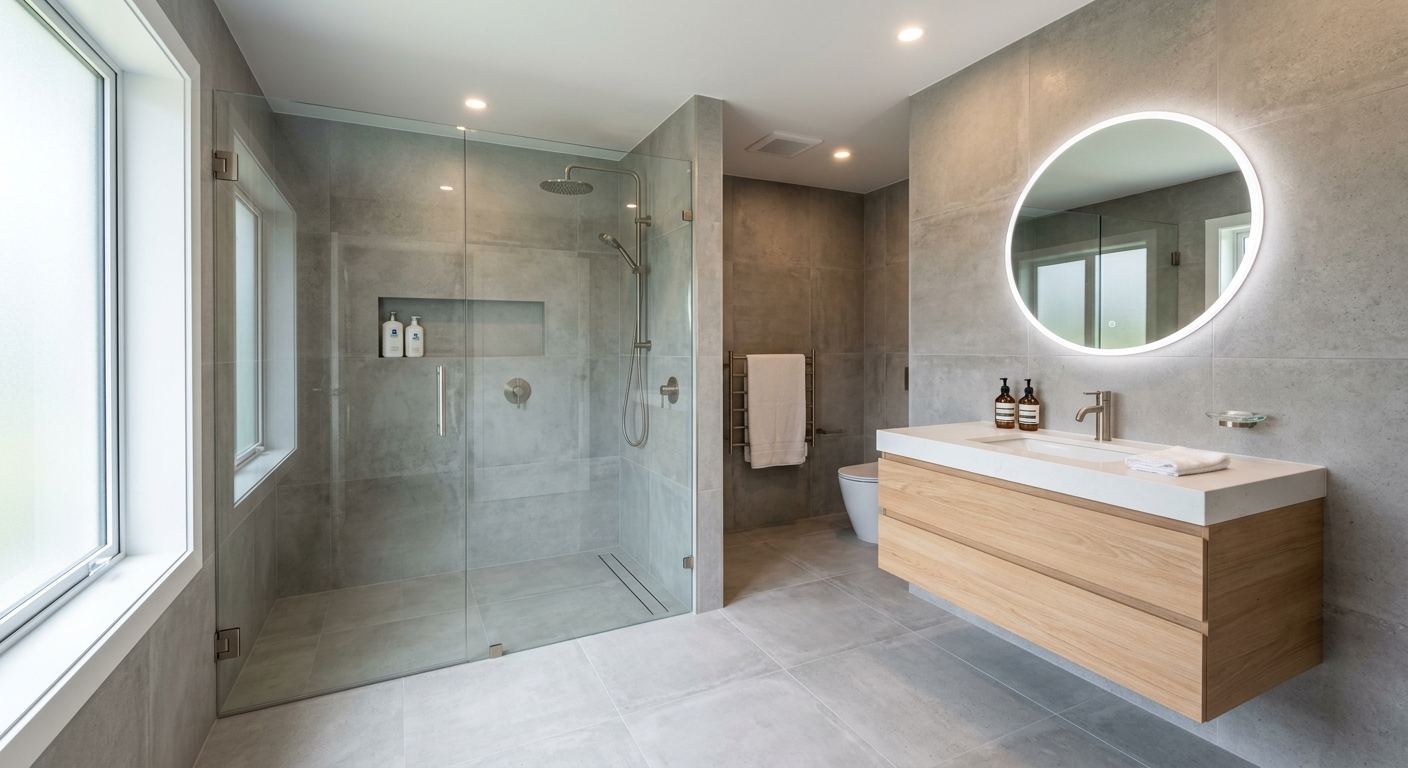
Bathroom renovation options and costs in Centennial Scarborough
Centennial Scarborough homeowners typically choose between cosmetic updates and full bathroom renovations based on how old their homes are and how much they want to change the layout. In this area, the housing base is well-established, and many properties align with older, post-war and 1960s–1980s eras where plumbing layouts can be dated, drain sizing may be undersized, and floor tile or drywall materials can include asbestos risk. With a population of 13,362 (Statistics Canada, 2021 Census), local contractors have steady demand, particularly around mature pocket neighbourhoods where repeat buyer renovations and move-in updates keep trade crews booked.
In the Toronto economic region, pricing is driven far more by labour rates and the likelihood of hidden conditions than by climate cycles themselves. Even though Scarborough’s humidity is a factor for ventilation and waterproofing, costs mostly rise when walls and floors come open: you may need drain reconfiguration and vent corrections to meet current Ontario plumbing expectations, plus upgraded shut-offs or supply line replacements. That’s why a “simple” mid-range refresh can quickly shift into a full renovation once tile is removed and the subfloor is assessed.
Trade demand is especially strong in the Guildwood and West Hill-adjacent areas, where many homes are older and buyers commonly prioritize bathroom upgrades during resale turnover. With that in mind, the following table compares realistic scopes and price bands for common options, so you can align your budget before you get multiple quotes.
| Renovation Scope |
What's Included |
Typical Duration |
Price Range |
| Cosmetic refresh (paint, fixtures, accessories only) |
Paint, replace vanity top or vanity (if plumbing stays), toilet swap (same rough-in), new faucets, lighting fixtures, mirror, towel bars, re-caulk, and minor caulk/trim touch-ups |
3–7 days |
$3,000 – $7,000 |
| Mid-range full renovation (new tile, vanity, tub/shower, electrical) |
Demo and disposal, waterproofing, floor + wall tile, new vanity and toilet, tub surround or replacement, exhaust fan upgrade, GFCI protection where needed, basic electrical upgrades, plumbing refresh (shut-offs/supply checks) |
2–4 weeks |
$12,000 – $20,000 |
| High-end full renovation (custom tile, steam shower, heated floors) |
Custom tilework (premium porcelain/large format), steam-ready shower/tub plan, heated floor wiring and thermostat, enhanced waterproofing and detailing, higher-end fixtures, upgraded ventilation, potential plumbing vent/drain updates if discovered |
4–6 weeks |
$20,000 – $30,000 |
| Shower-only installation (convert tub to walk-in shower) |
Tub removal, new waterproofed shower base, shower valve/trim replacement, glass enclosure allowance, tile floor + walls, updated drain connection planning |
2–3 weeks |
$14,000 – $24,000 |
| Bathtub replacement or tub-liner install |
Remove and replace tub OR install tub liner system (as suitable), new caulking and sealing, faucet/trim updates if required, spot tile/trim repairs, wall flashing checks |
1–2 weeks |
$1,800 – $5,000 |
| Tile-only installation (floor + surround, existing layout kept) |
Tile removal (as needed), prep and substrate smoothing, waterproofing for tiled surfaces, installation of floor + wall tile, grout/seal, final caulking, disposal (typically included) |
1–3 weeks |
$3,500 – $12,000 |
Prices are estimates only and vary by project scope, site access and material selection.
What affects the price of bathroom renovation in Centennial Scarborough
In Centennial Scarborough and across the Toronto economic region, you can see quotes for what sounds like the “same bathroom” vary by 30–50%. The main driver is labour: GTA skilled trades charge a premium, and bathroom renovations are labour-intensive due to waterproofing, tiling, custom shower detailing and careful plumbing fit-up. The second driver is housing age—Toronto-area properties often include older post-war and 1960s–1980s builds where drain stacks, supply lines, and ventilation are not always aligned with what’s expected during today’s rough-in and inspection work.
Climate plays a smaller cost role than market labour, but it does affect scope. Ontario humidity makes ventilation performance critical, and contractors typically prioritize exhaust fan upgrades and proper waterproofing transitions to prevent early grout failure and mould. The biggest cost swings come when older plumbing or concealed conditions are discovered: cast-iron or undersized drains may require replacement or reconfiguration, galvanized supply lines may need updates, and bathroom venting can require corrections. If asbestos-containing materials are discovered—most often associated with older floor tile or related materials—licensed abatement protocols can add roughly $1,500 – $5,000+ to the project budget.
Two examples homeowners often see in Scarborough: (1) keeping the existing tub footprint can keep you closer to the $12,000 – $20,000 mid-range renovation band; (2) changing the shower drain location or venting strategy can push labour hours and rough-in plumbing into the upper end near $20,000 – $30,000. Subfloor condition is another variable—unlevel or soft areas add prep and waterproofing coverage requirements, increasing both time and material.
| Price Factor |
Why It Matters |
Cost Impact |
| Layout change — moving drain or supply lines requires rough-in work |
Work expands from finishes into concealed plumbing, venting, and possible inspection steps |
$2,000 – $8,000+ |
| Tile selection — large-format porcelain vs. mosaic vs. ceramic |
Harder materials and larger tiles require higher-skilled cutting and substrate prep |
$1,000 – $6,000 |
| Fixture tier — builder-grade vs. mid-range vs. designer brands |
Higher tiers cost more and often have more complex trims and finishes |
$500 – $3,500 |
| Subfloor condition — rot or unlevel concrete adds scope |
May require removal, rebuild, and extended waterproofing and setting time |
$800 – $4,000+ |
| Electrical — adding GFCI outlets, exhaust fan, heated floor circuit |
Needs licensed electrical work, new circuits, and safe fan/vent wiring |
$700 – $4,500 |
| Waterproofing method — membrane type and extent |
Better systems require more prep and correct overlap/detailing |
$300 – $2,500 |
| Older-home surprises — asbestos tile, cast-iron drains, galvanized pipes |
Triggers abatement, drain replacement, or supply line upgrades |
$1,500 – $10,000+ |
| Bathroom size — sq ft drives tile and labour time directly |
More square footage increases tile quantities, setting time, and waterproofing area |
$1,000 – $6,000 |
Permits & regulations in Ontario
In Ontario, many bathroom upgrades fall under “cosmetic” work and typically do not require permits. Swapping fixtures without changing locations—such as replacing a vanity, toilet, mirror, lighting, and paint—or retiling without moving plumbing is usually handled as a renovation of finishes. However, permits are commonly required when you relocate plumbing (moving a drain or supply line), add or significantly alter ventilation (especially running new ducting), or make structural changes (removing load-bearing portions of walls, modifying framing, or altering openings).
Electrical work is another key boundary. If you’re adding circuits, upgrading an exhaust fan wiring connection, adding GFCI protection, or running any new electrical for heated floors, the work must meet Ontario electrical code and be done or signed off by a licensed electrician. Plumbing rough-in changes usually require a permit and inspection before walls are closed.
For Centennial Scarborough homeowners, the simplest verification routine is: (1) ask the contractor for their current Ontario trade licence/registration details and confirm the number online in the appropriate provincial registry; (2) request a certificate of insurance showing liability coverage and confirm the effective dates; (3) ask whether they carry WSIB/WCB coverage—then confirm via their WSIB letter/clearance documentation (or equivalent proof) provided with the quote. Ensure these documents match the legal entity name on the contract.
Choosing tile, waterproofing and fixtures for your Centennial Scarborough bathroom
For Centennial Scarborough budgets, the fastest way to stay on track is to make three material decisions early: tile type, waterproofing system, and fixture tier. Tile choice affects not only product price but also installation complexity. Entry-level ceramic tile is usually straightforward, while porcelain is denser and typically performs better in high-traffic wet areas; premium stone (marble, travertine, slate) looks luxurious but demands careful substrate prep, sealing, and skilled handling. In a GTA bathroom, that skill gap matters because Toronto projects often involve older subfloors—any unevenness increases labour for flattening and reduces long-term grout durability.
Waterproofing is where mould prevention starts. Ontario’s indoor humidity and temperature swings mean water management must be consistent: paint-on membranes can be suitable in limited, low-risk areas, but bonded sheet membranes or fully detailed systems (including proper corner treatment and overlap) generally offer stronger protection for showers. For many renovations, selecting the right waterproofing method is the difference between a shower that stays solid for years and one that develops slow failures at seams.
Finally, fixture tier influences both cost and resale. Builder-grade fixtures can fit well within a mid-range $12,000 – $20,000 renovation, while designer collections may push the project toward the upper local band near $20,000 – $30,000—especially when combined with premium tile and higher-end glass. For example, paying an extra $1,500 – $3,500 for heated floors and a higher-grade waterproofing/detailing package is often justified when you’re converting from tub to shower or when you plan to stay in the home longer. If you’re budgeting tightly, you can keep fixture spend moderate and prioritize the waterproofing and tile installation quality.
| Material / Option |
Pros |
Cons |
Price Range |
| Ceramic tile (floor + walls) |
Affordable, broad design variety, good for many bathrooms when installed correctly |
More variation in durability vs. porcelain; may require careful selection for slip resistance |
$3,000 – $7,500 |
| Porcelain tile (floor + walls) |
Denser and more water-resistant, often better for wet zones and busy households |
Heavier and may cost more; large-format porcelain increases precision setting time |
$5,000 – $12,000 |
| Natural stone (marble, travertine, slate) |
High-end look and depth; unique veining |
Needs sealing and careful maintenance; can chip or crack if substrate prep isn’t right |
$8,000 – $18,000 |
| Frameless glass shower enclosure |
Bright, modern look; easy to clean; visually expands the space |
More expensive than standard doors; requires precise framing and waterproofing detailing |
$2,500 – $7,500 |
| Prefab tub surround (acrylic) |
Fast installation, fewer grout joints, good consistency for waterproofing |
Less custom look than tile; limited design variety depending on system |
$1,200 – $3,500 |
| Custom shower pan (tile or linear drain) |
Top-tier waterproofing potential; clean lines and better drainage; supports premium tile styling |
Labour-intensive; requires skilled slope and detailing around seams and curb/threshold |
$4,000 – $12,000 |
How to choose a bathroom renovation contractor in Centennial Scarborough
Choosing a contractor in Centennial Scarborough is mostly about verifying credentials and aligning scope details so you’re not surprised by hidden-condition costs. Start with Ontario licensing and proof of coverage: ask for documentation of their Ontario trade licence/registration (as applicable), a certificate of liability insurance, and evidence of WSIB/WCB coverage for their workers. When you receive documents, check the legal name on the contract matches the certificate holder, confirm dates are current, and ensure the policy includes renovation work (not just general commercial coverage).
Next, require 2–3 itemised written quotes—not lump sums. A proper bathroom quote lists labour and materials separately and clearly notes allowances (tile, glass, fixtures), disposal, and whether permits are included. Read the exclusions: ask who pays for additional plumbing work if drain reconfiguration is required, whether asbestos discovery triggers separate abatement pricing, and if the price includes patching and painting after tile is complete.
Warranty matters too. Ask for workmanship warranty length (typically stated in years), product/manufacturer warranty terms, and whether warranties transfer to the homeowner if you sell. For payment, never pay more than about 10–15% upfront; use a holdback to protect completion quality. Timeline should be in writing: request a stated start date and a completion estimate, plus how schedule delays are handled.
- Confirm Ontario trade licence/registration details before signing.
- Request certificate of liability insurance and verify effective dates and scope.
- Ask for WSIB/WCB clearance (or equivalent) and confirm it covers workers on the job.
- Get at least 2–3 itemised quotes with labour + materials line items and named product allowances.
- Require a written scope list of what’s included and what’s excluded (demo, disposal, patching, painting).
- Clarify whether permits are included and who pulls them.
- Ask who handles additional plumbing changes if venting/drains don’t pass inspection.
- Confirm waterproofing system type (membrane) and whether corners and transitions are detailed.
- Require the subcontractor list (tile, plumbing, electrical) and who is accountable for coordination.
- Ask for workmanship warranty length and what it covers (cracks, leaks, failed waterproofing).
- Set a payment schedule that keeps holdback until tile grouting, caulking and final walkthrough are done.
- Get a written timeline including start date, milestones, and how delays are communicated.
In Centennial Scarborough, common red flags include: quotes that omit waterproofing details (they’ll often understate leak risk), a reluctance to provide insurance/WSIB clearance, no written scope or exclusions list, a payment request of large upfront deposits (well above 10–15%), and timelines that don’t account for demolition-to-inspection sequencing when rough-in changes are needed.
Frequently asked questions — bathroom renovation in Centennial Scarborough
Do I need a permit for a bathroom renovation in Ontario?
In Ontario, cosmetic work usually doesn’t require a permit—things like swapping a vanity, toilet, mirror, lights, paint, and even retiling without relocating plumbing are generally treated as finish upgrades. You’re more likely to need permits when you relocate plumbing (moving drain/supply lines), change bathroom venting/exhaust routing with new ducting, or do structural wall changes. If you add or rework electrical circuits—such as wiring a new exhaust fan, adding a GFCI outlet, or installing heated floors—licensed electrical work and code compliance apply, and permits/inspections may be required depending on the scope. In Centennial Scarborough, older homes can also trigger extra scope (like venting/drain upgrades), which often increases the likelihood of permitting. A reputable contractor should tell you up front and include permit handling in the written scope.
What's the best tile for a bathroom in Centennial Scarborough?
The “best” tile depends on how you use the space, but for most Centennial Scarborough bathrooms, porcelain is a strong choice because it’s dense and typically performs well in wet areas with correct waterproofing. Ceramic tile can work beautifully for budgets, especially within a tile-focused scope, but it requires smart selection for slip resistance and correct installation prep. If you want a higher-end look, natural stone adds luxury yet demands proper sealing and expert substrate preparation to avoid early issues. In practical budgeting, porcelain plus dependable installation often fits well inside the mid-range renovation band of $12,000 – $20,000 when paired with a sensible fixture package. Where homeowners get into trouble is when they save on waterproofing or grout line detailing—then the mould risk rises regardless of tile brand.
Should I do a tub-to-shower conversion?
A tub-to-shower conversion is often worth it in Centennial Scarborough if you want easier daily use, plan to age in place, or you’re chasing a cleaner, more modern layout. It’s also a layout opportunity: you can modernize valve placement, improve drainage strategy (especially if your current tub drain is older), and select a waterproofed shower pan with a linear drain option. Budget-wise, this scope commonly sits in the upper local range; many homeowners see it within the $14,000 – $24,000 zone depending on glass enclosure, tile complexity, and whether plumbing/venting updates are needed. If your existing rough-in can be kept with minimal drain changes, costs can be more controlled. If you discover older undersized drains, you may need reconfiguration and permits, which is where realistic quotes differ from optimistic ones.
How do I prevent mold in a Centennial Scarborough bathroom?
Mould prevention is mostly about stopping water from getting behind the finishes and managing humidity. In Ontario’s bathroom environment—especially where showers are used often—mould risk drops when you use a proper waterproofing system, ensure correct slope to the drain, and detail corners and transitions with the right membrane approach. Exhaust ventilation is equally important: a correctly sized and ducted fan reduces lingering humidity that feeds mould. On older Scarborough homes, watch for moisture-prone situations once walls open, such as poor caulking at tub/shower junctions, unsealed substrate edges, or outdated ventilation. If asbestos-containing materials are discovered during demo in older assemblies, the right abatement steps must be followed so that dust and contaminated materials are handled legally. Done right, mould prevention is usually built into the process, not added after.
What adds the most resale value in a bathroom reno?
For resale in the Toronto area, buyers typically value a bathroom that feels “new” and works reliably. The highest return usually comes from addressing visible wear and the systems behind it: updated waterproofing and tile, fresh fixtures, modern lighting, and dependable ventilation. Layout improvements can also matter—especially switching to a walk-in shower or creating a more functional vanity arrangement. Heated floors are a premium feature that some buyers love, but they’re most compelling when paired with quality waterproofing and a coherent design. Most homeowners land in the mid-range renovation band of $12,000 – $20,000 for a full refresh that includes tile, vanity, tub/shower updates, and electrical/vent improvements. Projects that climb toward $20,000 – $30,000 typically do so when finishes are upgraded substantially and when plumbing/venting work increases scope.
Can I keep my existing plumbing layout to save money?
Yes—keeping your existing plumbing layout is one of the most effective ways to control cost in Centennial Scarborough. When you don’t move drain or supply lines, you usually avoid the labour-intensive rough-in changes that can include drain reconfiguration, vent corrections, shut-off upgrades, and permit/inspection steps. That’s where quotes often narrow because the scope stays in finishes and replacement parts rather than hidden system work. Staying in the same footprint can help you target the mid-range $12,000 – $20,000 band for a full renovation. You can still improve the look by replacing fixtures, upgrading the exhaust fan, and retiling with a proper waterproofing system. Just note: even if the layout stays, contractors may still recommend plumbing checks—older copper, galvanized supply lines, or cast-iron drain sections can affect budget if issues show up during demo.