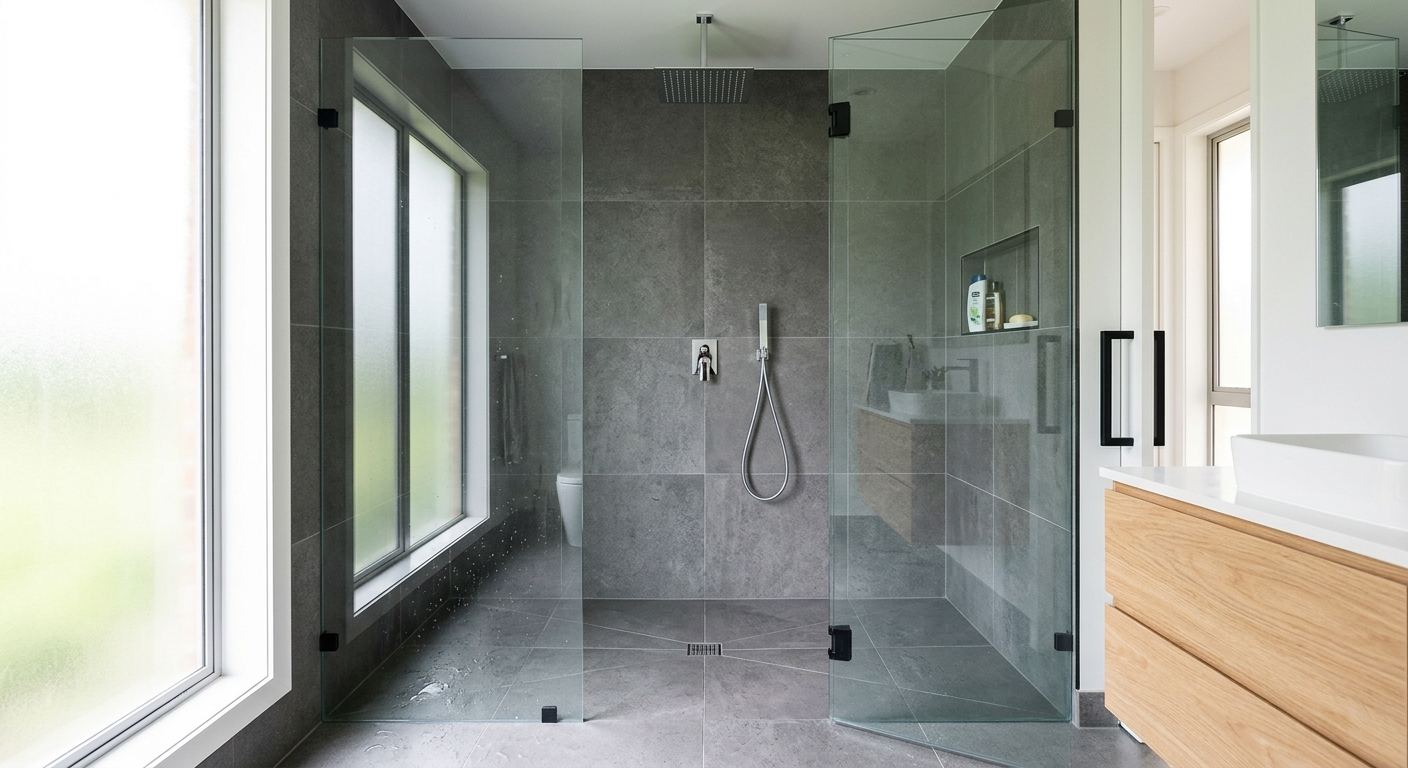
Bathroom renovation options and costs in Humber Heights-Westmount
Humber Heights-Westmount is a great place to plan a bathroom upgrade, but costs can swing noticeably based on how much you change. With a 2021 population of 10,948 in the neighbourhood profile area (Statistics Canada, 2021 Census), local demand is steady enough that reputable crews—especially for tile and plumbing—tend to book out. More importantly, Toronto’s housing stock means many homes here were built before today’s standard shower waterproofing and venting expectations, and older post-war and 1960s–1980s layouts can hide dated plumbing routes and floor finishes that may include asbestos-containing materials. When crews open walls and floors, discovery is a common reason GTA budgets rise above national averages.
In Toronto’s market, pricing is driven less by climate extremes and more by labour intensity and the premium hourly rates for skilled trades. Work is labour-heavy once you’re dealing with custom slopes, drain relocations, or bringing plumbing and venting up to current Ontario code. You’ll also see added scope from older drain stacks and galvanized supply lines, plus electrical upgrades like new GFCI protection and exhaust fan wiring. If you want your reno timed well, it helps to start early in the spring or summer when trade availability improves around Humber Heights-Westmount—particularly in pockets near local retail corridors where multi-unit turnover increases renovation demand.
Below are realistic budget ranges for common options, so you can compare contractor quotes apples-to-apples as you move into selecting your scope.
| Renovation Scope |
What's Included |
Typical Duration |
Price Range |
| Cosmetic refresh (paint, fixtures, accessories only) |
Paint, light fixture/vanity top swap (no plumbing relocation), tap/handle replacement, towel bars, mirrors, toilet seat or cartridge, accessories; patching as needed for surfaces only |
3–5 days |
$2,000–$6,000 |
| Mid-range full renovation (new tile, vanity, tub/shower, electrical) |
Remove existing finishes, new vanity and toilet, tub or reglaze/tub replacement, shower surround tile, standard waterproofing, exhaust fan with new wiring where required, updated GFCI protection, new lighting, basic plumbing corrections |
10–18 days |
$12,000–$20,000 |
| High-end full renovation (custom tile, steam shower, heated floors) |
Custom tiled shower or steam-ready layout, premium tile/large-format installation, bonded waterproofing system, heated floor circuit, designer fixtures, potential drain/vent rework, upgraded exhaust/lighting and electrical plan |
18–30 days |
$20,000–$30,000 |
| Shower-only installation (convert tub to walk-in shower) |
Demo tub, new walk-in shower base (custom pan or linear drain), full waterproofing, tile surround, new shower valve/trim, updated plumbing rough-in as needed, exhaust fan check/update |
8–14 days |
$8,000–$16,000 |
| Bathtub replacement or tub-liner install |
Replace tub and reconnect fixtures, new caulking/sealing, water-test, or install a tub-liner system where layout permits; includes basic surface prep and finish trim |
4–8 days |
$1,200–$5,000 |
| Tile-only installation (floor + surround, existing layout kept) |
Tile removal and re-setting, waterproofing upgrade to meet proper bathroom standards, new floor tile and shower/tub surround tile while keeping plumbing locations unchanged; new trim/silicone |
7–14 days |
$6,000–$14,000 |
Prices are estimates only and vary by project scope, site access and material selection.
What affects the price of bathroom renovation in Humber Heights-Westmount
In Humber Heights-Westmount and across the Toronto economic region, you can see the same bathroom reno come in 30–50% apart because the drivers are labour rates, trade scheduling, and the “hidden conditions” uncovered once surfaces come off—more than outdoor weather. Skilled tilers and plumbers in the GTA price higher than many other parts of Ontario due to demand and the time it takes to do it right. For homes in the broader Toronto area, older post-war and 1960s–1980s builds often require plumbing and venting brought up to current Ontario code when you relocate fixtures or replace valves. That’s why a mid-range full renovation can land anywhere from the lower end of the local $12,000–$20,000 band and push toward $20,000–$30,000 once drain reconfiguration or electrical work is added.
Older housing here can hide cast-iron or undersized drains that don’t meet today’s expectations, as well as galvanized supply lines that need proper shut-offs or replacement sections. Ventilation is another frequent inflation point: if you’re installing a stronger exhaust fan or duct routing changes, the electrical and ducting scope can rise quickly. In pre-1985 homes, discovery of asbestos-containing materials in vinyl floor tile or older drywall compound may trigger licensed abatement—commonly adding $1,500–$5,000+ depending on material quantity and containment needs.
In practice, I see costs rise when owners request a drain relocation for a linear shower, when subfloors are uneven, and when large-format porcelain requires extra framing/leveling. Costs can be controlled when the layout stays put and you choose tile sizes that match the existing wall and floor conditions without additional build-up.
| Price Factor |
Why It Matters |
Cost Impact |
| Layout change — moving drain or supply lines requires rough-in work |
Plumbing access, new rough-in, and code-compliant venting can change the scope fast |
$2,000–$8,000 |
| Tile selection — large-format porcelain vs. mosaic vs. ceramic |
Harder products require more planning, more cuts, and tighter prep for lippage and flatness |
$1,500–$6,000 |
| Fixture tier — builder-grade vs. mid-range vs. designer brands |
Premium trims, valves, and vanity hardware cost more and can take longer to install |
$500–$4,500 |
| Subfloor condition — rot or unlevel concrete adds scope |
Repairs, underlayment changes, and leveling compound increase labour and material |
$800–$5,000 |
| Electrical — adding GFCI outlets, exhaust fan, heated floor circuit |
Code-required circuits, new wiring runs, and permitted sign-off add cost |
$600–$3,500 |
| Waterproofing method — membrane type and extent |
Higher-performance systems cost more but reduce mould risk and failure callbacks |
$800–$2,800 |
| Older-home surprises — asbestos tile, cast-iron drains, galvanized pipes |
Unexpected removals and upgrades are where budgets change most |
$1,500–$10,000+ |
| Bathroom size — sq ft drives tile and labour time directly |
More surface area means more labour time, thinset/boards, and careful waterproofing |
$1,000–$6,000 |
Permits & regulations in Ontario
In Ontario, the permit need depends on what you change—not that you’re updating a bathroom. Cosmetic updates usually do not require permits: swapping a vanity, changing a toilet, replacing fixtures on existing shut-offs, painting, retiling with the same layout, or replacing an exhaust fan with a like-for-like unit typically falls into “finish” work. What changes the permit picture is moving plumbing and electrical, altering structural elements, or doing any rough-in that impacts inspection requirements.
In the Humber Heights-Westmount area, the work that typically DOES require permits includes: relocating or rerouting drain and supply lines (moving a toilet, changing a vanity location, converting a tub to a new shower drain location), adding new circuits or changing electrical scope for an exhaust fan, heated floors, or new receptacles, and any structural wall changes that affect framing or openings. Plumbing rough-in changes and electrical modifications are usually inspected at key stages (rough-in and completion), and electrical work must meet Ontario code and be performed by a licensed electrician or signed off appropriately.
Step-by-step, homeowners should verify three things before signing: (1) Ontario trade licence—ask for the contractor’s licence details and confirm through the applicable online registry/search, then match it to the company name on the quote; (2) liability insurance—request a current certificate of insurance and ensure the scope includes renovation work; (3) WSIB/WCB coverage—ask for proof that their workers are covered (or that subcontractors provide their own coverage). When possible, request a clearance letter or equivalent documentation before start date. This protects you if there’s an injury or damage during demo, waterproofing prep, or electrical tie-ins.
Choosing tile, waterproofing and fixtures for your Humber Heights-Westmount bathroom
In Humber Heights-Westmount, three decisions determine both how your bathroom performs and how close you stay to your budget: tile choice, waterproofing method, and fixture tier. Toronto’s humidity and temperature swings mean bathrooms see condensation and repeated wetting cycles. Choosing the wrong materials or skimping on waterproofing is how you end up with grout discolouration, soft tile edges, and mouldy corners.
First: tile choice. Entry-level ceramic is often the most budget-friendly, but it may be less forgiving on uneven floors. Mid-range porcelain—especially with tighter calibre control—usually gives a cleaner finish for most homeowners. Natural stone (marble, travertine, slate) looks premium, but it demands extra sealing and careful tile setting; it’s also slower to install when detailing corners and edges. Second: waterproofing. A paint-on membrane can help for certain surface prep stages, but a bonded sheet membrane or a modern waterproofing system done wall-to-floor with proper overlaps is typically the better insurance policy in a shower. Third: fixture tier. Builder-grade products can work well, but mid-range or designer valves and trim can improve daily function (water pressure balance, smooth operation) and often support better resale presentation.
For example, if you’re choosing between a standard ceramic shower surround and a porcelain surround, the upgrade is often justified when your goal is a longer-lasting, easier-to-clean finish—particularly when you’re already in the $12,000–$20,000 mid-range renovation tier. But spending heavily on luxury stone when your plumbing layout is limited can be a mismatch; keeping the layout steady and investing in waterproofing and ventilation usually gives better results than chasing the most expensive tile.
| Material / Option |
Pros |
Cons |
Price Range |
| Ceramic tile (floor + walls) |
Lower material cost, good variety of styles, widely available labour support in the GTA |
May chip more easily; quality can vary; flatter substrates improve results |
$3,000–$8,000 |
| Porcelain tile (floor + walls) |
Denser and more water-resistant, cleaner look with large-format options, better long-term wear |
More cost per tile; larger slabs require extra subfloor flatness and careful layout |
$5,000–$12,000 |
| Natural stone (marble, travertine, slate) |
High-end appearance and unique veining, great for feature walls |
Needs sealing/maintenance; some stones are harder to fabricate; installation time is higher |
$8,000–$18,000 |
| Frameless glass shower enclosure |
Modern look, light feel, pairs well with tiled showers, usually easier to clean |
Higher material cost; requires precise opening measurements and installation |
$2,500–$6,500 |
| Prefab tub surround (acrylic) |
Fast install, smooth surface, less labour than full tile on walls |
Limited styles; can look less premium than full tile; may be less ideal for complex niches |
$1,200–$3,500 |
| Custom shower pan (tile or linear drain) |
Improved water control and accessibility; cleaner line when using linear drains |
Labour-intensive waterproofing and slope work; drain rough-in may require changes |
$4,000–$12,000 |
How to choose a bathroom renovation contractor in Humber Heights-Westmount
Choosing a contractor in Humber Heights-Westmount is about proof, not promises. Start with Ontario licensing and coverage. Ask for their Ontario trade licence details and confirm they match the company on the quote. Next, request proof of liability insurance—ideally a certificate showing renovation coverage amounts appropriate for occupied homes. For workplace protection, verify WSIB/WCB coverage (or that any subcontractors provide their own). It’s especially important in bathroom renos because demo, tile setting, waterproofing prep, and electrical tie-ins are where accidents and damage can happen.
Then get 2–3 itemised written quotes. You want a breakdown that separates labour from materials (tile setting, waterproofing, plumbing rough-in, electrical, disposal) rather than a single lump sum. Read the exclusions carefully: what’s not included for permits, what happens if asbestos-containing materials are found, and whether disposal and drywall patching are included. Confirm the permit pull responsibility—many contractors include it, but some pass it to the homeowner. Also confirm whether dust protection, protection of floors/trim, and site cleanup are part of the scope.
Warranty matters twice: workmanship warranty for the waterproofing and tile system (not just “parts”), and product/manufacturer warranty for valves, fixtures, glass, and heated floors. Ask whether warranties are transferable if you sell the home. For payment, never sign up for heavy upfront deposits; aim for 10–15% upfront max, and keep a holdback until the job is completed and punch-listed. Get a start date and a completion estimate in writing, with key milestones for demo, rough-ins, waterproofing inspection steps, and final trim.
- Verify Ontario trade licence details and that they match the quoted company name.
- Request certificate of liability insurance before signing.
- Confirm WSIB/WCB coverage (and subcontractor coverage if applicable).
- Insist on an itemised quote: labour + materials + allowances + disposal.
- Clarify what triggers extra cost (permit changes, asbestos discovery, subfloor repairs).
- Check whether waterproofing materials and methods are specified by brand/system.
- Ask who is responsible for permit applications and inspection scheduling.
- Confirm electrical scope is covered by a licensed electrician and includes required sign-off.
- Ask for a timeline with milestones (demo, rough-in, waterproofing, tiling, trim).
- Confirm warranty length for workmanship and whether it covers waterproofing failures.
- Agree on payment schedule with holdback until final walkthrough.
- Request photo examples of similar Humber Heights-Westmount bathroom conversions (tub-to-shower and linear drains).
Red flags I often see in the Humber Heights-Westmount market: contractors who won’t provide insurance/licence proof in writing, only quote “tiles included” without specifying waterproofing system and installation method, vague scopes that omit disposal and electrical scope, pressure tactics for large upfront payments, and no clear warranty terms for waterproofing and labour.
Frequently asked questions — bathroom renovation in Humber Heights-Westmount
How do I compare bathroom renovation quotes?
In Humber Heights-Westmount, the easiest way is to compare scope line-by-line, not just the bottom-line number. Ask each contractor to itemise labour and materials: demo, waterproofing, tile installation, plumbing rough-in (if any), electrical (GFCI, exhaust fan, heated floor circuit), disposal, and permit responsibilities. Make sure allowances are consistent for fixtures (toilet, vanity, taps), and confirm the tile type and size so you’re not comparing ceramic to porcelain without realifying it. If one quote sits closer to a $12,000–$20,000 mid-range band and another is closer to $20,000–$30,000, look for the “why” such as drain/vent corrections, electrical upgrades, or waterproofing system upgrades. Also ask what happens if pre-1985 materials contain asbestos and how that changes the budget.
Can I live at home during a bathroom renovation in Humber Heights-Westmount?
Often, yes—depending on your setup and the renovation scope. For a cosmetic refresh or tile-only work where plumbing isn’t moved, many homeowners can stay home with careful scheduling and dust control. However, a full renovation or tub-to-shower conversion usually requires shutting down water to complete plumbing rough-ins and setting waterproofing. In practice, you’ll typically have the bathroom unusable while the shower/tub surround and waterproofing are installed and cured, and you may need a temporary toilet arrangement. Because Toronto-area jobs can uncover older plumbing routes and venting issues, timelines can stretch. If your home has a second bathroom or a convenient powder room, you’ll have an easier time. For projects in the $12,000–$20,000 range, plan for at least part of the work period without a functional shower and be ready for short shutdown windows during electrical tie-ins and inspections.
What's the best bathtub material for a Humber Heights-Westmount home?
The “best” depends on your priorities: longevity, heat retention, and how much you’re changing in the reno. Acrylic tubs are common because they’re lighter and often quicker to replace; they can be a cost-effective choice if you’re staying within the renovation path. Cast-iron tubs hold heat well and last a long time, but replacement and installation can be more labour-intensive in many GTA homes. If you’re keeping your existing tub shell and just want a budget-friendly improvement, a tub-liner system can work, but you must ensure the surface prep is done properly to avoid adhesion issues. In Humber Heights-Westmount, older homes sometimes have supply/valve conditions that affect compatibility, so confirm shut-off access and sealing details early. If you’re comparing budgets, bathtub replacement typically lands around $1,200–$3,500 for straightforward swaps, while conversions or more extensive plumbing corrections can push into higher renovation tiers.
Is it worth renovating a bathroom before selling in Humber Heights-Westmount?
Usually, a bathroom reno is worth it when you improve function and address visible moisture or dated finishes—especially where buyers will notice tile cracking, weak ventilation, or outdated layouts. In Humber Heights-Westmount and the wider Toronto area, many homes were built in eras with plumbing and venting assumptions that don’t match today’s comfort expectations, and buyers may want modern shower waterproofing and better exhaust performance. That said, overspending on ultra-luxury materials when your layout is limited can be a poor trade-off. A practical approach is to invest in waterproofing quality, ventilation upgrades, and mid-tier fixtures that look current. If you’re targeting a faster resale lift, a mid-range refresh plus new tile can fit into the $12,000–$20,000 band, while keeping layout changes minimal helps control costs. If you’re already dealing with hidden conditions (like asbestos-containing materials or drain reconfiguration), your best value is often from making the whole system “sound,” not just updating surfaces.
How do I plan a bathroom renovation on a tight budget in Humber Heights-Westmount?
On a tight budget in Ontario, you plan by protecting the two big cost drivers: labour time and hidden-condition scope. First, keep the layout where possible. Avoid moving drains and supply lines unless you truly need a different toilet/vanity location or converting a tub to a shower with a new drain. Second, prioritise waterproofing and ventilation—this prevents costly callbacks and mould issues later. Third, choose tile wisely: porcelain in a medium finish can be a strong value, and large-format tiles can be worth it only if the subfloor is properly levelled. Fourth, select a fixture tier that gives the look you want without designer premiums everywhere. A cosmetic refresh can be a good starter project, but for functional upgrades, many homeowners land in the $12,000–$20,000 mid-range renovation band by focusing on new tile, a vanity, and necessary electrical like GFCI and an upgraded exhaust fan. Finally, build a contingency for older-home discoveries; pre-1985 materials may require abatement if asbestos-containing materials are found.
What's the difference between a cosmetic and a full bathroom renovation?
A cosmetic renovation mainly changes surfaces and visible fixtures without major plumbing or electrical alterations. Think paint, swapping a vanity top, replacing a toilet or taps on existing shut-offs, updating mirrors and accessories, and sometimes retiling if plumbing locations remain untouched. A full renovation typically removes significant wall and floor finishes, upgrades waterproofing, and replaces multiple systems—often including shower/tub assembly, new tile installation, exhaust fan and electrical updates, and sometimes plumbing rework to meet current Ontario code. In Humber Heights-Westmount, the “full” label often implies you’re paying for labour-intensive work like waterproofing membranes, tile setting, and addressing older drain/vent arrangements. That’s why cosmetic refresh budgets can start lower, while full renovations commonly sit in the $12,000–$30,000 range depending on finish level and whether drain reconfiguration or higher-end features (heated floors, steam-ready layouts) are included.