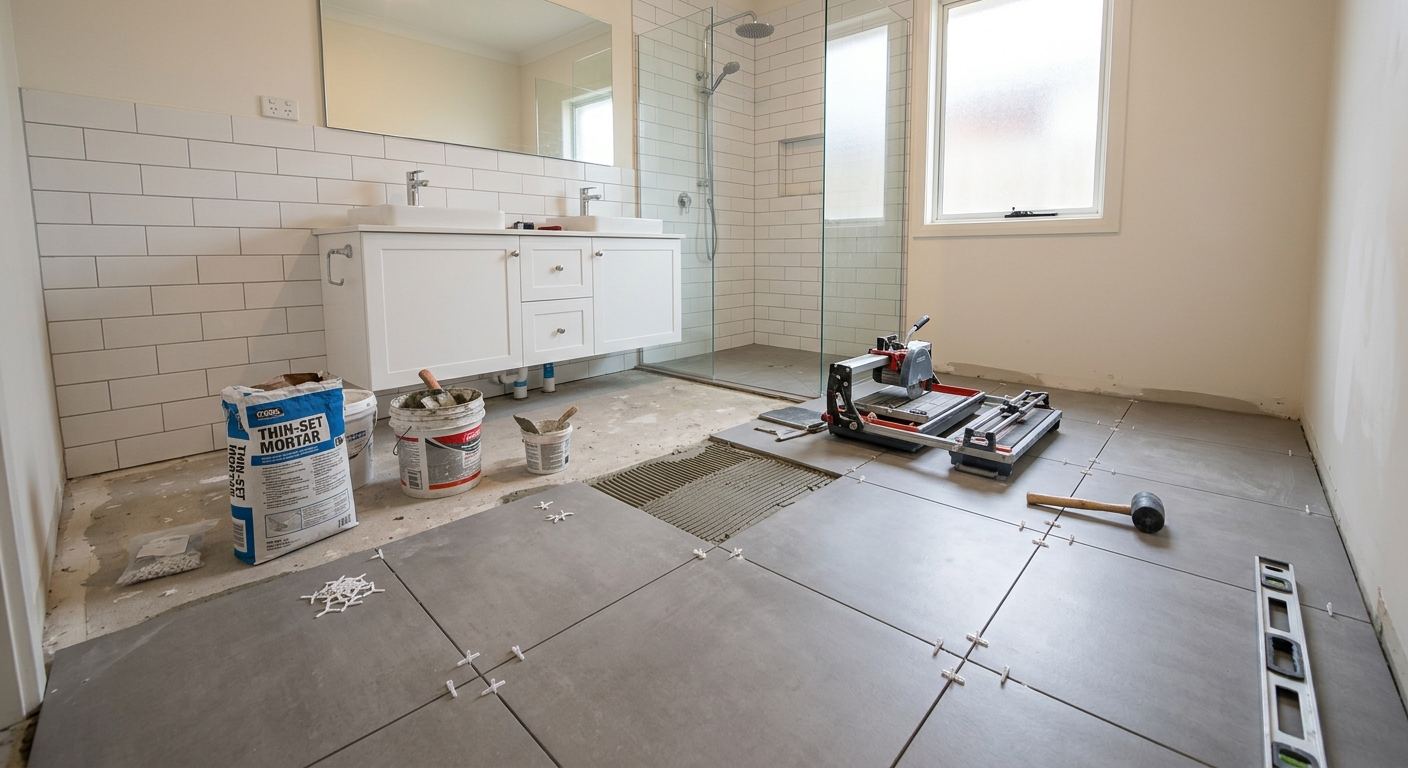
Bathroom renovation options and costs in Tobermory
Tobermory homeowners typically have a few clear bathroom paths, but the final cost depends on how much you change once the walls are open. With a population of 1,427 (Statistics Canada, 2021 Census), the local contractor pool is smaller than the GTA’s core, so scheduling can swing when multiple projects land at once. Just as important is the housing profile across the Toronto economic region: many homes that were built earlier have older plumbing layouts and dated venting, and that’s where budgets start to diverge. In practice, you can see dated drain stacks, galvanized supply lines, and—when floor coverings or tile are disturbed—unexpected asbestos-containing materials in certain pre-1985 assemblies.
Even though Tobermory’s bathroom “climate risk” is more about indoor humidity management than extreme freeze-thaw, Ontario’s damp winters and shoulder-season moisture still punish weak waterproofing. In the Toronto economic region, bathroom renovations are priced mainly by labour rates and the age of the housing stock—not by the weather itself. That labour intensity is especially noticeable for tiling, custom showers, and complex plumbing layouts, where several trades may need to coordinate. If you’re near the Harbour area (a common location for cottages and year-round homes), you’ll often see higher demand for fast turnarounds, because access and scheduling matter.
Below is a practical comparison of common scopes and what they usually cost in Tobermory, so you can line up your expectations before you review quotes.
| Renovation Scope |
What's Included |
Typical Duration |
Price Range |
| Cosmetic refresh (paint, fixtures, accessories only) |
Paint, fan check, replace vanity light or mirror, swap toilet/vanity faucet, recaulk, new towel bars/TP holder; no tile removal |
3–7 days |
$1,500–$4,000 |
| Mid-range full renovation (new tile, vanity, tub/shower, electrical) |
Demolition, new tub/shower surround tile, vanity and toilet, vent fan upgrade, basic electrical updates (GFCI where required), waterproofing and tile install |
3–5 weeks |
$14,000–$22,000 |
| High-end full renovation (custom tile, steam shower, heated floors) |
Custom shower system (tile/linear drain), premium tile and fixtures, heated floor circuit, steam-ready ventilation plan, extended waterproofing details |
5–8 weeks |
$23,000–$30,000 |
| Shower-only installation (convert tub to walk-in shower) |
Remove tub, rough-in adjustments, new shower pan base, custom glass enclosure, tile surround, new valve trim, disposal of debris |
2–4 weeks |
$9,000–$14,000 |
| Bathtub replacement or tub-liner install |
Remove and replace tub (or liner system), reglaze/caulk details, re-tile limited areas as needed, reconnect plumbing, leak test |
1–2 weeks |
$2,000–$5,000 |
| Tile-only installation (floor + surround, existing layout kept) |
Floor and wall tile only, include prep and waterproofing where required; no plumbing relocation; includes grouting and sealing if applicable |
1–3 weeks |
$6,500–$12,000 |
Prices are estimates only and vary by project scope, site access and material selection.
What affects the price of bathroom renovation in Tobermory
Even when two homeowners request the “same” bathroom renovation, Toronto-region quotes can swing by 30–50% because labour rates, trade coordination, and the hidden condition of older homes often change the true scope. In Tobermory, the big drivers still mirror the broader Toronto economic region: skilled labour is premium, and bathroom work is inherently labour-intensive—especially tiling, waterproofing, custom showers, and any plumbing updates. The climate doesn’t usually dictate the cost the way it might for exterior envelopes; instead, indoor humidity control and waterproofing quality determine whether repairs show up later.
Older homes in the region frequently hide cast-iron or undersized drain runs that need upgrading, plus galvanized supply lines and ventilation that no longer meets modern expectations. When vents are corrected or drains are reconfigured, you can add several thousand dollars for drain rework, vent corrections, and new shut-offs. Discovery of asbestos-containing materials—such as in older floor tile or related compounds—can trigger licensed abatement and typically pushes budgets up by about $1,500–$5,000+ depending on how extensive the affected area is.
Concrete Tobermory examples: (1) If your tub-to-shower conversion requires moving the drain location slightly to maintain proper slope, the shower installation can drift toward the higher end of the $4,000–$12,000 shower band; (2) If you’re keeping the layout but upgrading from basic ceramic to porcelain and adding heated-floor prep, you’ll often see tile scope move from the mid range toward the upper $3,000–$10,000 band; and (3) If you’re replacing electrical and adding a new exhaust fan duct route, the electrical component can become a meaningful add-on even for a “mid-range” full renovation.
That’s why a “mid-range full renovation” can land around the $12,000–$30,000 range, but the difference between quotes is usually scope reality—not cosmetic preference alone.
| Price Factor |
Why It Matters |
Cost Impact |
| Layout change — moving drain or supply lines |
Requires rough-in work, possible demolition, patching, and code-appropriate venting/drain slope |
Often adds several thousand dollars |
| Tile selection — large-format porcelain vs. mosaic vs. ceramic |
Higher-end materials may need better substrate and more precise cuts; mosaic adds labour |
Can shift tile labour cost meaningfully (thousands) |
| Fixture tier — builder-grade vs. mid-range vs. designer brands |
Valve trims, toilets, and vanities vary in install complexity and replacement cost if adjustments are needed |
Variable; designer tiers can add thousands |
| Subfloor condition — rot or unlevel concrete adds scope |
Unlevel bases increase prep, membrane needs, and time for underlayment and mortar beds |
Common add-on that can grow quickly |
| Electrical — adding GFCI outlets, exhaust fan, heated floor circuit |
May require new circuits, fan duct planning, and licensed electrical work |
Typically increases costs for labour + materials |
| Waterproofing method — membrane type and extent |
Better systems cost more but reduce call-backs from leaks and mould |
Usually increases upfront spend, reduces risk |
| Older-home surprises — asbestos tile, cast-iron drains, galvanized pipes |
Requires abatement, plumbing replacement, or upgraded drainage/venting |
Often adds $1,500–$5,000+ and more |
| Bathroom size — sq ft drives tile and labour time directly |
Larger floor area means more tile, thinset, waterproofing coverage, and labour hours |
Smaller bathrooms may land closer to the low end |
Permits & regulations in Ontario
In Ontario, cosmetic updates—like swapping a vanity, changing a mirror, replacing a toilet, painting, or retiling without moving plumbing—typically don’t require a permit. However, permits become likely when you change the “systems” behind the wall. The work that commonly does require a permit includes relocating plumbing (moving a drain or supply lines), making structural wall changes, and installing or changing electrical that involves new circuits or major upgrades (like adding or moving bathroom GFCI outlets, adding a new exhaust fan circuit, or wiring heated floors). Plumbing rough-in changes usually trigger permit and inspection steps as well, because the inspector verifies proper venting, drainage slope, and pressure/leak testing.
Any electrical work must meet Ontario code and be performed by (or signed off by) a licensed electrician. To verify your contractor in Tobermory, start by confirming the trade licence for the relevant scope (plumbing and electrical involvement, and whether they hold proper credentials for their portion). Next, ask for a current certificate of insurance and verify coverage amounts and that bathroom renovation activities are included—don’t rely on a verbal statement. For workers’ protection, check proof of WSIB/WCB coverage (ask for the clearance letter or equivalent proof commonly provided by contractors in Ontario).
Finally, before demolition, confirm in writing what permits the contractor will pull (if any), who schedules inspections, and what documentation you’ll receive. It’s a small step that prevents delays and makes cost estimates more reliable.
Choosing tile, waterproofing and fixtures for your Tobermory bathroom
In Tobermory, three material decisions usually determine whether your bathroom renovation lands closer to a $12,000–$22,000 “mid-range full renovation” or climbs toward the high end of $23,000–$30,000. First is tile choice. Ceramic tile is often the entry point, but it can be less resilient for wet-floor use than porcelain, and it may chip sooner in high-traffic bathrooms. Porcelain provides better water resistance and durability, but it’s heavier and demands careful subfloor prep for straight lines. Natural stone (marble, travertine, slate) looks luxurious, but it’s more sensitive to sealing and requires extra care in installation details.
Second is waterproofing method. For Ontario bathrooms, mould prevention starts before grout. A paint-on membrane can work for certain limited applications, but a bonded sheet membrane (or a proven system like a schluter-style approach) is usually better for full shower walls and floors where water exposure is constant. The third decision is fixtures: builder-grade saves up front, but mid-range or designer valves and shower trims often provide smoother performance and better finishes that hold up to humidity and frequent use.
Here’s where budgeting gets real: upgrading to heated floors can be a “justified” spend if you’re already within a full renovation scope, because wiring, substrate prep, and waterproofing happen at the same time. If your bathroom is close to $14,000–$22,000 already, adding heated floors might move you toward the upper part of that range; if you’re only doing a cosmetic refresh, heated floors typically don’t make sense because you’d be paying for access without the full system upgrades.
Make those calls together—tile and waterproofing choices should match—so your investment in a dry, mould-resistant bathroom is consistent for Ontario’s damp indoor conditions.
| Material / Option |
Pros |
Cons |
Price Range |
| Ceramic tile (floor + walls) |
Good value, many styles, easier to source locally, solid for walls when installed correctly |
Can be less durable than porcelain for wet floors; may require more careful selection for water exposure |
$3,000–$7,000 |
| Porcelain tile (floor + walls) |
High durability and water resistance, consistent colour, better for floor installations |
Heavier and may increase installation time; larger formats require excellent substrate flatness |
$5,000–$10,000 |
| Natural stone (marble, travertine, slate) |
High-end look, unique veining, premium curb appeal and resale value perception |
More expensive; needs sealing and careful grout/caulk detailing to resist staining and moisture |
$8,000–$15,000 |
| Frameless glass shower enclosure |
Bright, modern look; helps visually open the bathroom; easy to maintain |
Costlier hardware; requires precise alignment and solid waterproofing behind tile |
$2,500–$6,500 |
| Prefab tub surround (acrylic) |
Fast installation; good for simpler updates; less tile labour |
Limited design flexibility; can look less “custom”; seams still require careful finishing |
$1,200–$3,500 |
| Custom shower pan (tile or linear drain) |
Premium drainage design; seamless look; best when you want a modern, curbless feel |
Most labour-intensive; requires strict waterproofing and plumbing coordination |
$4,000–$12,000 |
How to choose a bathroom renovation contractor in Tobermory
Start by verifying Ontario licensing and coverage the right way—before you sign anything. For the scope that involves plumbing or electrical changes, confirm the contractor is properly licensed for their trade portion, and request their certificate of insurance with liability coverage that matches renovation project risks. For workers’ protection, ask for WSIB/WCB clearance or proof of coverage and confirm it’s current. Don’t accept “we’re covered” without documents you can read.
Next, get 2–3 itemised written quotes. You want labour and materials clearly broken out (tile labour vs. thinset/membrane vs. fixture supply, disposal and prep, and any rough-in changes). Avoid quotes that only present a single lump sum with vague wording; bathroom projects often expand after discovery, and itemisation makes changes easier to price fairly. Read the scope line-by-line for inclusions and exclusions: permit pull included or not, drywall patching included or not, old fixture disposal included, and whether waterproofing is a full system or “spot” coating.
Then evaluate warranty. Look for a workmanship warranty length and whether it covers leaks and failed waterproofing details. Product warranties are separate and may not transfer if the buyer sells the home, so ask what’s transferable and what proof is required. For payment schedule, never pay more than about 10–15% upfront—then pay in milestones. Hold back funds until the job is complete, cleanup is done, and you’ve completed final walkthroughs. Finally, get a written start date and completion estimate with a clear timeline and expected lead times for tile, glass, and fixtures.
- Provide proof of Ontario trade licence(s) relevant to your scope
- Show current certificate of liability insurance (and the date it expires)
- Confirm WSIB/WCB coverage with clearance/proof
- Use itemised quotes (labour vs. materials vs. disposal)
- State who pulls permits (if required) and whether inspections are included
- List waterproofing products and coverage method (membrane system details)
- Confirm tile layout approach (level base prep, tile-thickness notes)
- Include shower valve brand/model and warranty terms
- Specify what’s excluded (e.g., subfloor repairs, asbestos abatement, structural changes)
- Agree on a realistic schedule and lead times for glass and vanities
- Keep the payment plan conservative (10–15% max upfront) with milestone holdbacks
- Get workmanship warranty in writing and ask what “call-back” covers
In Tobermory, red flags I’ve seen include contractors who: refuse to provide insurance/WSIB proof, give only lump-sum pricing with no waterproofing details, rush payment without a written milestone schedule, omit demolition/disposal costs and later bill for “extras,” or promise tile waterproofing “guarantees” without naming the actual system used.
Frequently asked questions — bathroom renovation in Tobermory
What's the most common mistake homeowners make in bathroom renovations?
The most common mistake I see in Tobermory is choosing finishes before the “wet-area system” is locked in—especially tile layout, waterproofing method, and whether plumbing will move. Homeowners often pick a dream tile or vanity and then find the drain location, shower valve height, or waterproofing plan doesn’t suit the final layout. That’s when labour expands and your budget can drift toward the higher end of the bathroom renovation band (often near the $12,000–$30,000 full-reno range in the Toronto economic region). In older homes, another frequent issue is underestimating hidden conditions like dated drains, ventilation gaps, or asbestos-containing materials, which can add time and licensed abatement costs.
How long does tile installation take in a Tobermory bathroom?
In Tobermory, tile installation typically takes about 1–3 weeks depending on bathroom size, tile type, and whether the layout is staying put. Ceramic tile on a simple floor and standard surround usually goes faster; porcelain and large-format tile require more careful substrate prep and alignment. If you’re doing a full shower build with waterproofing details and a linear drain, it can stretch the timeline within the overall renovation window, because membrane work, curing times, and drying conditions must be respected. In a mid-range full renovation (often in the $14,000–$22,000 neighbourhood), tile work commonly forms the core of the schedule once demolition is complete.
How much does a bathroom renovation cost in Tobermory?
For Tobermory, a realistic full bathroom renovation budget generally falls in the $12,000–$30,000 band for the Toronto economic region tier, depending on scope and finish level. A cosmetic refresh is usually far lower, while mid-range full renovations that include new tile, a vanity, and tub/shower typically land around $14,000–$22,000. If you’re moving into high-end territory—custom tile shower, heated floors, and more extensive upgrades—costs can push toward the upper end near $23,000–$30,000. The biggest variable isn’t climate; it’s labour-intensive tiling, waterproofing, and any plumbing/electrical changes required to meet Ontario expectations and address older-home conditions.
How long does a bathroom renovation take in Tobermory?
Typical timelines in Tobermory are about 3–5 weeks for a mid-range full renovation and 5–8 weeks for a higher-end custom shower or steam-ready setup. Shower-only conversions often land in the 2–4 week window, while smaller bathtub replacement projects can be about 1–2 weeks if parts and rough-in work are straightforward. Delays usually come from lead times (glass, specialty tile, vanities), and from discovery issues in older homes—like subfloor repairs, drainage/venting corrections, or asbestos abatement. Because Tobermory has a smaller contractor pool (population 1,427; Statistics Canada, 2021 Census), scheduling coordination matters, and weather impacts the drying/curing windows for certain prep and waterproofing steps.
Do I need a permit for a bathroom renovation in Ontario?
Often, cosmetic work doesn’t need a permit in Ontario—like replacing a vanity, swapping fixtures, repainting, and retiling without relocating plumbing. You’ll more likely need a permit when you change plumbing (moving drain or supply lines), make structural wall changes, or add/modify electrical circuits—such as new exhaust fan wiring, GFCI outlet additions, or heated floor circuits. Licensed electrical and plumbing work must be done to Ontario code requirements, and inspectors typically verify rough-in changes where permits apply. For your Tobermory project, ask your contractor to clearly list which tasks require permits, then confirm who pulls them and whether inspections are included before demolition starts.
What's the best tile for a bathroom in Tobermory?
For most Tobermory bathrooms, porcelain tile is the best “balance” choice: it’s more water-resistant and durable than entry-level ceramic for wet areas and it performs well with proper waterproofing and grout detailing. Ceramic can still work well, especially on walls, if you select the right water-rated products and install it over a properly prepared surface. Natural stone is beautiful but typically costs more and needs careful sealing and maintenance. The “best” option also depends on your shower system: if you’re doing a custom shower pan with a linear drain, you’ll benefit from porcelain matched to a robust waterproofing membrane, because Ontario’s indoor humidity makes leak prevention and mould resistance the real priority.