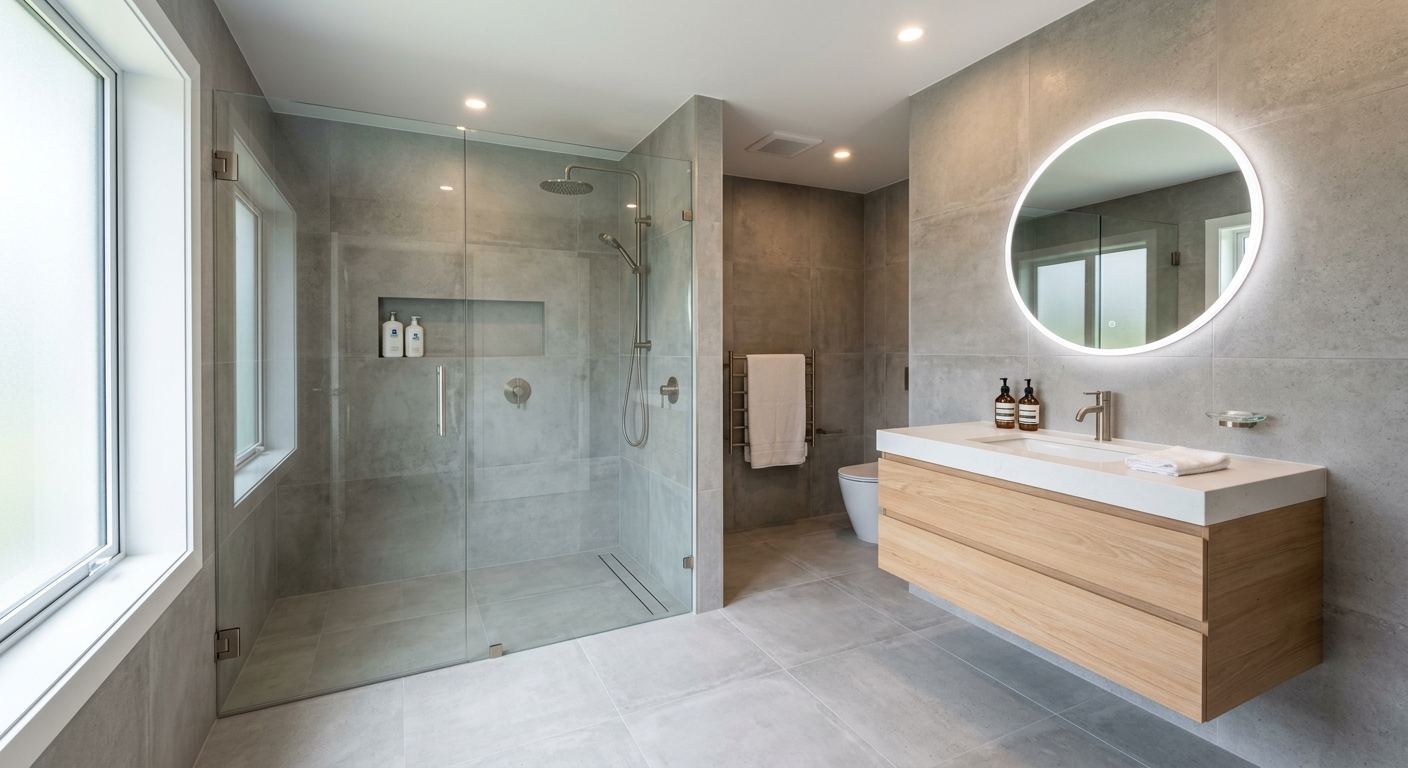
Bathroom renovation options and costs in Ottawa
Bathroom renovation in Ottawa typically follows three paths: a quick refresh, a mid-range family update, or a full “gut-to-studs” rebuild. Because 44.2% of Ottawa homes were built before 1981, many projects start with plumbing and venting layouts that are dated—sometimes requiring upgrades to meet current Ontario Building Code expectations. That older housing stock also increases the chance of encountering asbestos-containing materials in floor tile, mastics, or pipe wrap in pre-1985 builds, which can expand scope before you ever pick paint colour. Ottawa’s winters don’t usually drive bathroom renovation costs directly, but they do affect drying times, scheduling, and how quickly ventilation systems can be tested and verified—especially when bathrooms are opened up and air movement matters. Labour availability in a high-demand city also matters; trades get booked faster around busy renovation months, and full-service firms commonly run closer to the top of their hourly bands ($85–$150/hour), which is why the same bathroom can price 30–50% apart from contractor to contractor. In Ottawa, areas with lots of older single-detached homes—like Nepean and parts of Orleans—see especially steady demand for plumbing upgrades, ventilation improvements, and tile work.
Use the table below as your Ottawa budgeting backbone, then read the factors section to understand why contractors may add contingencies in older homes.
| Renovation Scope |
What's Included |
Typical Duration |
Price Range |
| Cosmetic refresh (paint, fixtures, accessories only) |
Paint, caulking, mirror swap, towel bar/accessories, toilet/vanity top replacement (no layout change), light finish touch-ups |
3–7 days |
$3,000 – $8,500 |
| Mid-range full renovation (new tile, vanity, tub/shower, electrical) |
Demolition and disposal, tub/shower or surround retile, vanity and mirror, updated lighting (often with GFCI where required), drywall patching, basic waterproofing, exhaust fan upgrade if needed |
2–3 weeks |
$15,000 – $28,000 |
| High-end full renovation (custom tile, steam shower, heated floors) |
Full gut, custom waterproofing system, heated floor prep and electric circuit, premium tile (large-format), designer fixtures, possible steam shower plumbing/electrical coordination, upgraded exhaust/venting |
4–6 weeks |
$30,000 – $45,000 |
| Shower-only installation (convert tub to walk-in shower) |
Remove tub, rough-in adjustments as needed, walk-in shower base, tile surround, new controls, waterproofing, updated drain tie-in, ventilation/electrical updates if required |
2–4 weeks |
$10,500 – $24,000 |
| Bathtub replacement or tub-liner install |
Remove and replace tub (or install tub liner where feasible), new seal/caulking, retile limited areas, plumbing hookup, leak testing |
1–2 weeks |
$2,000 – $6,000 |
| Tile-only installation (floor + surround, existing layout kept) |
Remove existing finishes as needed for tile, install floor tile and wall surround, waterproofing where the scope allows, grout/seal, re-set fixtures if included |
1–3 weeks |
$5,000 – $25,000 |
Prices are estimates only and vary by project scope, site access and material selection.
What affects the price of bathroom renovation in Ottawa
In Ottawa, two contractors can quote the same bathroom and still land 30–50% apart because bathroom renos are labour-heavy and scope can expand fast once walls come down. In this region, the biggest drivers are regional labour rates and the age of the housing stock—not the weather alone. Ottawa’s housing mix means many renovations start in homes where drains may be aging (cast-iron or galvanized systems), vents can be undersized, and trap/vent configurations may not align with what modern plumbing practice expects. When discovery happens, the job stops being “tile-and-paint” and becomes “service + waterproofing + rebuild,” which is why local firms often price with contingencies. For example, if a contractor finds asbestos-containing materials during demolition (commonly in older vinyl floor tile, drywall compound, or mastics), abatement protocols can add about $1,500–$5,000+ before you can set any finishes.
Concrete examples I see in Ottawa: (1) A modest tub-to-shower conversion can move in price if the drain needs rework for proper slope and tie-in, pushing labour time beyond a typical shower installation. (2) Large-format porcelain (or a lot of accent cuts) can raise the tile-only scope because prep and layout become more sensitive, and skilled labour matters. (3) If you want to stay in the mid-range band, keeping the current layout often protects the budget; if you chase a high-end look with heated floors and steam shower controls, you’ll usually move toward the top of the $30,000–$45,000 high-end band.
Lastly, older-home discoveries aren’t guaranteed, but because 44.2% of homes were built before 1981, it’s common enough that you should expect questions about plumbing, venting, and electrical upgrades. Those hidden conditions can make a “simple refresh” behave like a full renovation.
| Price Factor |
Why It Matters |
Cost Impact |
| Layout change — moving drain or supply lines requires rough-in work |
Requires opening walls/floor, plumbing rough-in, and potential venting updates |
+ $3,000 – $10,000 |
| Tile selection — large-format porcelain vs. mosaic vs. ceramic |
Higher material cost, plus stricter substrate flatness and more complex cuts |
+ $1,500 – $8,000 |
| Fixture tier — builder-grade vs. mid-range vs. designer brands |
Upgrades affect supply line compatibility and add installation time for trims/valves |
+ $800 – $6,000 |
| Subfloor condition — rot or unlevel concrete adds scope |
May require subfloor repair, leveling, or additional backer and waterproofing steps |
+ $1,000 – $7,000 |
| Electrical — adding GFCI outlets, exhaust fan, heated floor circuit |
Licensed electrical work and safe circuit routing can be required after opening walls |
+ $800 – $5,500 |
| Waterproofing method — membrane type and extent |
Right system reduces rework risk; larger coverage increases labour and materials |
+ $1,200 – $6,000 |
| Older-home surprises — asbestos tile, cast-iron drains, galvanized pipes |
May trigger abatement, drain replacement, or code-compliant trap/vent changes |
+ $1,500 – $12,000+ |
| Bathroom size — sq ft drives tile and labour time directly |
More surface area increases demo, setting, grouting, and waterproofing time |
+ $1,000 – $8,000 |
Permits & regulations in Ontario
In Ontario, many “face-lift” bathroom updates don’t require a building permit. Typically, cosmetic work such as swapping a vanity, replacing a toilet, repainting, replacing a mirror, and retiling within the existing plumbing footprint usually falls into the category of finishing work. Where permits are commonly triggered is when you relocate plumbing—moving a drain or supply lines—or when you make changes that affect the building’s structural walls or require major modifications to electrical systems. Adding or upgrading bathroom exhaust fans usually requires electrical work, and that electrical portion must meet Ontario electrical code requirements and be done by (or signed off by) a licensed electrician.
For Ottawa homeowners, here’s the practical approach:
- Ask what changes require permits: If the plan includes moving drains/supplies, changing venting, adding new circuits, or altering load-bearing/structural walls, expect permits and inspections.
- Verify the contractor’s Ontario trade licence: Request their licence number and proof of registration where applicable, then confirm it using the online registry tools referenced by the trade association.
- Confirm liability insurance: Ask for a current Certificate of Insurance showing limits and dates.
- Check WSIB/WCB coverage: Obtain a clearance letter or proof of account status so you’re not exposed if a worker is injured.
- Put it in writing: Your contract should state who pulls permits (and whether the cost is included) and which inspections are expected.
This verification step matters because older Ottawa homes often need plumbing/venting brought forward and electrical upgrades like GFCI and proper bathroom lighting controls, both of which are higher-risk work than fixtures-only refreshes.
Choosing tile, waterproofing and fixtures for your Ottawa bathroom
In Ottawa, your budget usually “locks in” based on three material decisions: tile choice, waterproofing method, and fixture tier. First, tile: ceramic is the entry-level option for floors and walls, but it can be more forgiving on budget while still looking clean with good layout. Porcelain typically offers better water resistance and durability for high-use bathrooms; it’s a common mid-range upgrade that pairs well with modern, straight-lined vanities. Natural stone (marble, travertine, slate) looks premium, but it demands sealing and careful installation to manage variations—plus installation complexity rises quickly.
Second, waterproofing. Ottawa humidity and the reality of winter indoor use mean you need a system that actually prevents moisture migration where it matters: shower walls, floors, and transitions. Paint-on products can work in light-duty applications, but for full showers you’ll typically do better with a bonded sheet membrane system or a schluter-style compatible approach where the system is detailed around corners, niches, and the drain/curb. The right method isn’t just about mould prevention—it’s about avoiding the expensive tear-out that happens when water finds weak points.
Third, fixtures. Builder-grade valves and trim can keep your project closer to the low-to-mid range; mid-range or designer fixtures can add cost, but they’re justified when you’re improving function (better pressure balance, modern valve design, more reliable shower components) or when resale appeal matters in a neighbourhood with older stock. As a dollar example: moving from a basic tile set to a porcelain + upgraded waterproofing package often nudges you toward the mid-range $15,000–$28,000 band, but it can still be cheaper than “fixing later” after leaks. If you’re aiming for the high-end $30,000–$45,000 band, the heated floor and premium enclosure materials are where the budget difference becomes most tangible.
| Material / Option |
Pros |
Cons |
Price Range |
| Ceramic tile (floor + walls) |
Cost-effective, wide range of styles and colours, good for wall finishes |
Not as durable as porcelain in some uses; may require careful selection for floor slip and water resistance |
$5,000 – $14,000 |
| Porcelain tile (floor + walls) |
More durable, better water resistance, holds up well in busy bathrooms |
Higher material cost; large-format requires flatter prep and more precise layout |
$8,000 – $20,000 |
| Natural stone (marble, travertine, slate) |
High-end look, unique character, strong curb appeal |
More expensive; sealing/maintenance; variation can increase install time |
$15,000 – $25,000 |
| Frameless glass shower enclosure |
Modern appearance, visually “opens” the space, easy to clean with proper hardware |
Premium hardware costs; measurements must be exact; may need extra wall prep |
$3,000 – $8,000 |
| Prefab tub surround (acrylic) |
Faster install, good water performance when installed correctly, often budget-friendly |
Fewer design options than tile; can limit future re-styling |
$800 – $2,500 |
| Custom shower pan (tile or linear drain) |
Best-looking, more custom slopes and drainage; linear drains add a premium finish |
More labour and detailed waterproofing; drain coordination can add time |
$5,000 – $15,000 |
How to choose a bathroom renovation contractor in Ottawa
Choosing the right contractor in Ottawa starts with proof, not promises. First, confirm Ontario trade licensing where applicable: ask for the licence number and verify it through the relevant online registry. Next, request liability insurance documentation (a current Certificate of Insurance) and confirm it matches your renovation scope. For workers’ coverage, get WSIB/WCB proof—many contractors provide a clearance letter or account confirmation—so you’re not taking on liability if an employee is injured.
Then, compare like-for-like pricing. Ask for 2–3 itemised written quotes that separate labour from materials and list key inclusions (demo, disposal, waterproofing system, tile backer, ventilation changes, rough-in allowance). A lump sum can hide how much is “allowance” versus guaranteed work. Read scope details carefully: is the permit pull included? Is debris disposal included? Are you paying for extra plumbing repairs if old drain stacks are discovered? If you’re comparing within the $15,000–$28,000 mid-range band, the quote should say what waterproofing and electrical upgrades are included—not just “electrical work.”
Also confirm warranty terms. Look for a clear workmanship warranty (often 1–3 years for many finishing scopes, longer when systems require it) and understand manufacturer warranties for tile, membranes, and fixtures. Ask whether warranties are transferable if you sell the home.
Payment schedule matters: never pay more than 10–15% upfront. Use milestone payments tied to inspection points (demo completion, rough-in verified, waterproofing protected, then final finish). Get the start date and an estimated completion timeline in writing.
- Verify Ontario licence number and trade registration details.
- Request Certificate of Insurance and confirm active dates/coverage limits.
- Get WSIB/WCB clearance proof in writing.
- Request 2–3 itemised quotes (labour vs materials, not “all-in” only).
- Confirm who pulls permits and whether permit fees are included.
- Clarify disposal: demo debris hauling and landfill fees.
- Ask what waterproofing system is being used (brand/membrane details).
- Confirm tile prep requirements: substrate flatness, backer, and leveling allowances.
- Detail electrical scope: GFCI, exhaust fan, lighting, and heated floor circuit if included.
- Ask about plumbing contingencies for older homes (cast-iron drains/venting issues).
- Get warranty length and whether it covers labour and materials separately.
- Set payment milestones and keep a holdback until final walkthrough.
Red flags I see often in Ottawa: (1) quotes without waterproofing specifics, only “tiling” language; (2) inability to provide insurance and WSIB/WCB proof; (3) vague timelines with no start/completion dates; (4) no written scope on disposal and permit responsibility; (5) pushing high upfront payments (well beyond 10–15%).
Frequently asked questions — bathroom renovation in Ottawa
Do I need a permit for a bathroom renovation in Ontario?
In Ontario, cosmetic bathroom work usually does not require a permit. That typically includes swapping fixtures like a vanity or toilet, repainting, and retiling within the same layout footprint. Where permits commonly come in is when you change plumbing locations (moving a drain or supply line), alter venting, add or modify circuits (for example, adding heated floors or new exhaust fan wiring), or make structural changes. In Ottawa—especially in older homes where many fixtures sit on older plumbing layouts—permit triggers can appear once trades open walls and floors. A reputable contractor will tell you up front what requires inspection and who pulls the permit. If your quote is in the mid-range $15,000–$28,000 band, make sure the scope clearly states whether plumbing/electrical changes and permit steps are included.
What's the best tile for a bathroom in Ottawa?
For most Ottawa homeowners, porcelain is the “best balance” because it handles moisture better than typical ceramic and stays durable through frequent use. If you’re building a clean, modern look, porcelain also supports larger-format tiles, which can make small bathrooms feel bigger. Ceramic can work well for budget-conscious projects, especially if your main focus is a refresh or wall finishes. Natural stone looks luxurious, but it usually costs more and needs sealing and careful installation to manage variation. The bigger decision isn’t just the tile name—it’s the install quality: correct substrate prep and a waterproofing system that matches the shower details. If you’re budgeting closer to the $5,000–$25,000 tile installation range, ask your contractor to show how they’ll prep the floor and waterproof the wet areas.
Should I do a tub-to-shower conversion?
A tub-to-shower conversion is often worth considering in Ottawa if you want easier daily access and less maintenance than a full tub surround. Converting is also a smart resale move for many buyers who prefer walk-in showers. That said, it can become more invasive than expected in older homes, because drains, venting, and trap setups may need adjustments once the tub is removed. That’s why you’ll see Ottawa projects quoted anywhere from roughly $10,500 to $24,000 depending on whether rough-in changes are required and how premium the enclosure/tile work is. If your current plumbing layout is straightforward, you can often keep the project in a more predictable mid-range track; if the drain tie-in needs rework, the budget can climb quickly. The best approach is to treat it as a scope discovery job, not just a “swap.”
How do I prevent mold in a Ottawa bathroom?
Mould prevention in Ottawa is mainly about controlling moisture at the source. Start with the basics: a properly sized and vented exhaust fan that vents to the exterior (not into the attic/space), and a bathroom that’s run during and after showers. Then focus on the wet-area build: correct waterproofing on shower walls/floors and meticulous sealing at transitions—especially around niches, corners, and the tub/shower junction if you keep a tub. Poor waterproofing is the most common reason bathrooms need tear-outs later. Also make sure your ventilation can actually run during the cold season; older homes may need electrical updates like GFCI and circuit adjustments before the fan can be upgraded safely. If you’re planning a renovation, budget for the waterproofing system first—tile is the visible part, but the membrane details do the heavy lifting.
What adds the most resale value in a bathroom reno?
In Ottawa, the resale value is usually driven by upgrades that both modernize the look and reduce future repair risk. A well-executed tile and waterproofing system, an updated vanity and lighting, and reliable ventilation improvements typically pay off more than cosmetic paint alone. Buyers also like functional shower setups—especially when a tub-to-shower conversion is done cleanly with a modern enclosure and good drainage. Electrical safety upgrades (like GFCI protection and properly placed lighting) matter, particularly in older homes. If you’re deciding between a cosmetic refresh and a mid-range full renovation, the mid-range work (often falling into the $15,000–$28,000 band) tends to deliver more lasting buyer confidence because it addresses the systems that often age first. For higher-end homes, heated floors and premium shower features can push you toward the $30,000–$45,000 band, but only if the build quality matches the finish level.
Can I keep my existing plumbing layout to save money?
Yes—keeping the existing plumbing layout is one of the best ways to control cost in Ottawa, particularly in homes built before 1981 where drains and vents may be older and sometimes require upgrades when walls are opened. If the vanity location, toilet position, and shower/tub footprint stay the same, you can typically reduce the amount of rough-in work and minimize demolition and repair drywall. That’s why many homeowners choose a mid-range renovation scope rather than a layout change: you can redirect budget into nicer tile and fixtures instead of opening multiple walls. However, if your contractor finds issues with trap/venting, galvanized supply lines, or drainage condition after demolition, they may still recommend changes for safety and code compliance. The key is to ask for a written plan and allowances so “layout kept” is reflected in the quote.