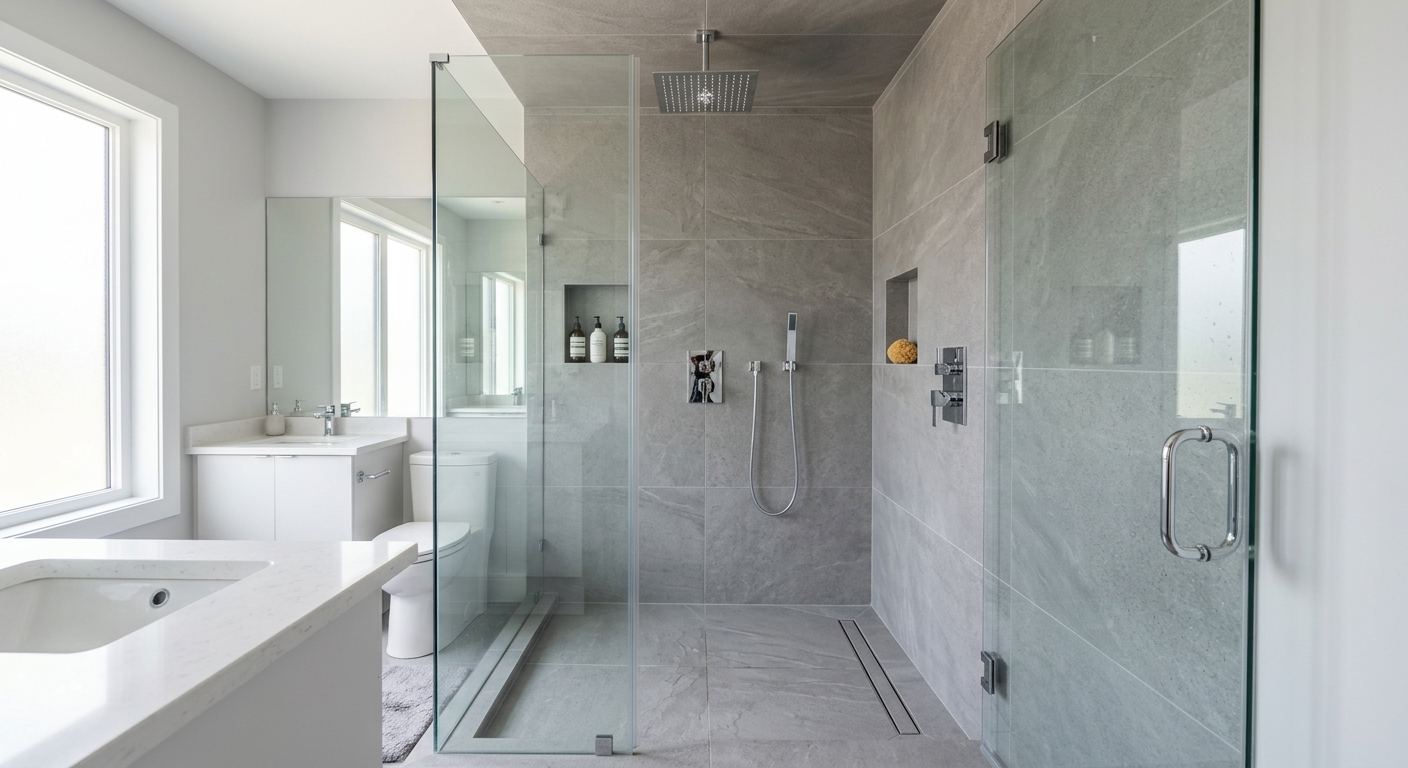
Bathroom renovation options and costs in Simcoe
Simcoe homeowners typically explore a few bathroom renovation paths—ranging from a cosmetic refresh to a full gut—because the “right” choice depends on what’s hidden behind the tile. In Simcoe, the housing stock is shaped by long-established neighbourhoods across the area; a big reason pricing swings is that older homes often carry dated plumbing layouts and flooring assemblies. In fact, the broader Hamilton–Niagara Peninsula market reflects older housing patterns that can include pre-1980 construction, where cast-iron drain sections, older supply lines, and floor finishes increase the chance of surprises once demolition starts. (Statistics Canada, 2021 Census)
Local pricing is also driven by labour availability and the way trades manage jobsite risk. In Simcoe and nearby Hamilton–Niagara Peninsula communities, contractors often see “simple” bathrooms expand into plumbing-and-finishing work after opening walls—especially where shutoffs, traps, vents, or drain connections need upgrading to meet current standards. Climate matters too, but here it’s less about extreme weather and more about steady humidity management: good ventilation and durable waterproofing reduce callbacks for mouldy grout and soft subfloors. The trades’ workflow is busiest around active family areas such as the west end and older residential pockets closer to downtown, where multiple renovations overlap seasonally. With that in mind, the comparison table below outlines typical scope, duration, and price bands you can use to sanity-check quotes before you book a site visit.
| Renovation Scope |
What's Included |
Typical Duration |
Price Range |
| Cosmetic refresh (paint, fixtures, accessories only) |
New vanity or updated fixtures (tap/hand shower), toilet swap if needed, paint, recaulk, towel bars/accessories; no plumbing relocation; existing tile/surround generally kept |
3–7 days |
$4,500 – $8,500 |
| Mid-range full renovation (new tile, vanity, tub/shower, electrical) |
Demo and disposal, waterproofing, new floor tile and surround, tub-to-shower conversion or updated tub/shower, new vanity and toilet, exhaust fan, GFCI where required, minor plumbing refresh (shutoffs/traps/vents as discovered) |
2–3 weeks |
$12,000 – $25,000 |
| High-end full renovation (custom tile, steam shower, heated floors) |
Design-level tile layout, heated floor circuit, premium valve/trim, custom shower system (or steam-ready setup), enhanced waterproofing and linear drain option, upgraded electrical and lighting, coordinated plumbing rough-in upgrades |
3–5 weeks |
$25,000 – $40,000 |
| Shower-only installation (convert tub to walk-in shower) |
Remove tub, install walk-in shower base/pan, waterproofing, tile surround, new valve trim, glass or curtain-ready framing, exhaust fan assessment, plumbing adjustments to drain height/venting as required |
1.5–2.5 weeks |
$6,000 – $12,500 |
| Bathtub replacement or tub-liner install |
Tub swap (or liner where suitable), plumbing reconnects, new caulking and sealing, localized surround updates, re-tiling at least to tub flange height, leak testing |
5–10 days |
$1,500 – $6,000 |
| Tile-only installation (floor + surround, existing layout kept) |
Tile removal (selective), prep and leveling, waterproofing where required for wet areas, floor and surround tiling with trims; existing fixtures reused where possible |
1–2 weeks |
$3,000 – $8,000 |
Prices are estimates only and vary by project scope, site access and material selection.
What affects the price of bathroom renovation in Simcoe
In Simcoe, you can see the same bathroom-reno concept priced differently across the Hamilton–Niagara Peninsula and the broader Ontario market—often by 30–50%—because quotes aren’t only about finishing. The biggest swing factors are regional labour rates and the age of local housing stock, which influence what contractors uncover once walls open. In older homes, plumbers may need to upgrade cast-iron or copper drain sections, replace galvanized supply lines, improve venting, or correct trap/pipe distances. Those upgrades don’t show up in a “design-only” estimate, so they land as scope change after demolition starts.
Asbestos discovery is another cost driver in pre-1985 materials. If asbestos-containing vinyl floor tile, mastic, or related drywall compound is suspected, abatement protocols apply and can add real budget. Depending on conditions and extent, that kind of work commonly lands in the $1,500–$5,000+ range or more. Ventilation upgrades also matter: many basements and older bathrooms in Simcoe rely on weak exhaust paths, and improving the exhaust fan and ducting prevents moisture damage that later means more repairs.
Concrete examples you’ll notice in local pricing: (1) converting a tub to a walk-in shower often costs more than a basic fixture swap because of drain height and waterproofing detail—typical “shower installation” work is in the $3,000–$8,000 band, but full conversions can push higher when plumbing is upgraded; (2) tile projects with large-format porcelain can cost more in prep and labour, even when the footprint is the same; (3) if the bathroom includes an electrical add-on like a properly positioned exhaust fan, expect a cost step-up aligned with the full renovation band of $12,000–$30,000 when multiple trades are coordinated.
| Price Factor |
Why It Matters |
Cost Impact |
| Layout change — moving drain or supply lines |
Requires rough-in plumbing work, potential joist access, and may trigger permit and inspection steps |
Can add $2,000 – $8,000+ depending on how far lines must be moved |
| Tile selection — large-format porcelain vs. mosaic vs. ceramic |
Large-format requires flatter substrates and more precise setting; mosaics can increase labour time for detailing |
Often shifts costs by $1,000 – $4,000 within the same bathroom size |
| Fixture tier — builder-grade vs. mid-range vs. designer brands |
Better valves/trim, more finishing options, and sometimes rough-in compatibility affect both pricing and installation time |
Typically $500 – $3,500 swing for common fixture sets |
| Subfloor condition — rot or unlevel concrete adds scope |
Soft wood, failed membrane, or out-of-level surfaces require rebuild, cement board adjustments, or extra waterproofing |
Often $1,000 – $6,000+ if structural repairs are needed |
| Electrical — adding GFCI outlets, exhaust fan, heated floor circuit |
Bathroom-specific safety requirements and new circuit runs affect labour and parts |
Commonly $700 – $4,000 depending on scope |
| Waterproofing method — membrane type and extent |
Better systems reduce failures; extended coverage for niches, benches, or full steam-ready walls increases material and labour |
Usually $600 – $3,500 difference compared with minimal methods |
| Older-home surprises — asbestos tile, cast-iron drains, galvanized pipes |
Discovery triggers abatement, plumbing replacement, and more leak-testing and documentation |
Often $1,500 – $8,000+ depending on what’s found |
| Bathroom size — sq ft drives tile and labour time directly |
More square footage increases tile setting time, thinset, membranes, and finish detail |
For many renovations, size-related swings land in the $500 – $5,000 range |
Permits & regulations in Ontario
In Ontario, cosmetic updates in a Simcoe bathroom—like swapping a vanity, replacing fixtures, repainting, or retiling the same surfaces without moving plumbing—often do not require a permit. However, the moment you relocate plumbing (moving a drain or changing the supply locations), add or modify exhaust ventilation with new wiring, or alter structural elements, permits and inspections become part of the process. Electrical work must also meet provincial code and be performed by a licensed electrician, with the required sign-off or documentation kept for your records.
Here’s the practical way to think about “usually does not” versus “usually does”: typically not required—fixture swaps that reuse existing rough-ins, paint, caulking, and tile refresh where you keep the same footprint and no hidden systems are rerouted. Typically does require a permit—plumbing rough-in changes, adding new circuits or significant upgrades (like a heated floor circuit), moving electrical boxes for the vanity/light, or any work that changes how the wet area is serviced and protected.
To verify a contractor before they start, ask for three things and confirm them in writing: (1) your contractor’s Ontario trade licence details (match the licensed business name to their paperwork); (2) liability insurance—request a certificate of insurance showing coverage limits appropriate for renovation; and (3) WSIB/WCB coverage, or clearance letter where applicable. In Simcoe, a reputable bathroom contractor will provide these documents up front and align them with the scope so you can document your due diligence before demo begins.
Choosing tile, waterproofing and fixtures for your Simcoe bathroom
For a Simcoe bathroom renovation, three material decisions usually determine your real budget more than “style”: tile choice, waterproofing method, and fixture tier. First, tile: entry-level ceramic is cost-friendly on paper, but it can be more prone to chipping and can require careful subfloor prep for flatness. Mid-range porcelain typically costs more per tile but is denser, works well in wet zones, and tolerates heavy use better. Natural stone (marble, travertine, slate) looks premium, yet it demands more specialized handling and sealing routines—so the installation complexity and labour steps are usually higher.
Second, waterproofing. Ontario humidity doesn’t forgive shortcuts. A paint-on membrane may work for limited scenarios, but many homeowners get the best long-term result from a bonded sheet membrane or a proven wet-area system that ties into edges, niches, and drains correctly. Third, fixtures. Builder-grade units can be fine, but mid-range valves and better trim often seal more reliably and feel smoother. Designer brands can increase both material cost and compatibility planning with rough-ins.
In the Hamilton–Niagara Peninsula market, it’s common to see a budget that splits like this: if you spend extra on waterproofing and the “wet-wall system,” you may keep fixtures mid-range to stay within a $12,000–$30,000 full-reno band. For example, upgrading from basic ceramic to porcelain might add a few thousand dollars in materials and setting, but that’s justified if it reduces future replacement risk and supports a cleaner layout with fewer cut pieces. Conversely, paying a premium for stone in a small bathroom where labour detail is minimal may not give you proportionate ROI—especially if you’re constrained by the plumbing condition behind the walls.
| Material / Option |
Pros |
Cons |
Price Range |
| Ceramic tile (floor + walls) |
Budget-friendly; wide colour/size selection; good for standard wet-area installations when substrate is sound |
Generally less durable than porcelain; may chip under heavier impact; requires good prep to avoid cracking |
$3,000 – $6,000 |
| Porcelain tile (floor + walls) |
Denser and more durable; handles humidity and daily wear well; strong choice for modern large-format patterns |
Higher material cost; can demand flatter substrates and more precise layout |
$5,000 – $9,000 |
| Natural stone (marble, travertine, slate) |
High-end look; unique veining; excellent premium finish when sealed and detailed properly |
Extra labour for fabrication/detail; needs sealing/maintenance; can be more expensive to replace if damaged |
$8,000 – $15,000 |
| Frameless glass shower enclosure |
Clean, modern appearance; makes bathrooms feel larger; durable when properly installed and sealed |
Costs more than framed units; requires accurate measurements; hardware compatibility matters |
$1,800 – $5,000 |
| Prefab tub surround (acrylic) |
Fast installation; fewer tile labour hours; easy cleaning; good for controlled waterproofing systems |
Less design flexibility; can look less “custom” than full tile; may not match premium tile aesthetics |
$800 – $2,500 |
| Custom shower pan (tile or linear drain) |
Best integration with your tile layout; linear drains help with water management; supports premium custom builds |
More trades coordination; heavier waterproofing detailing; requires correct slope and membrane integration |
$3,000 – $10,000 |
How to choose a bathroom renovation contractor in Simcoe
Choosing the right bathroom contractor in Simcoe comes down to proving three things before money changes hands: competence (licensing and coverage), clarity (itemised scope), and follow-through (warranty and schedule). Start with Ontario trade verification: ask for the contractor’s licence details, then confirm the licensed business name matches their documents. Next, review liability insurance—request a certificate showing current coverage. Finally, verify WSIB/WCB coverage: obtain the clearance letter (or coverage details) so you’re not left responsible if a worker is injured. A reputable contractor will provide these without pressure and will align them with the scope you agreed to.
Then get 2–3 itemised written quotes. You want labour and materials broken out (especially tile labour, waterproofing method, demolition/disposal, and plumbing/electrical allowances), not just a lump sum. Read the exclusions carefully: ask whether permits are pulled (and by whom), whether disposal is included, and what happens if asbestos or hidden water damage is discovered. Warranty matters too—confirm workmanship warranty length and whether it’s transferable if you sell the home. Payment should follow a responsible schedule: typically keep upfront deposits around 10–15%, then hold back a portion until completion and any punch-list corrections are done. Lastly, ask for a start date and a realistic completion estimate in writing, including key dependencies like glass enclosure lead times and tile curing/set times.
- Verify Ontario licence details and that the company name matches their paperwork
- Request a certificate of liability insurance and confirm coverage is active
- Confirm WSIB/WCB clearance or coverage in writing before demo
- Insist on itemised quotes: labour vs materials; demolition/disposal line items
- Confirm what waterproofing system is being used (membrane type and coverage extent)
- Ask whether permits are included, and which permits are expected for your scope
- Clarify exclusions: grout replacements, subfloor repairs, vent/shutoff upgrades, asbestos contingency
- Get a written timeline with start date, milestones, and completion target
- Ask who coordinates tile scheduling, glass delivery, and inspections
- Review the warranty: workmanship length, product warranty, and transferability
- Use a payment schedule with limited upfront payment and a holdback until punch-list sign-off
- Require leak testing documentation after plumbing reconnects
Red flags in Simcoe bathroom renovations include: contractors who won’t provide insurance/licence documents before you sign, quotes that omit waterproofing specifics, “lump sum only” pricing with vague exclusions, unusually low bids that don’t reflect older-home plumbing risk, and crews that demand large upfront payments without a written schedule.
Frequently asked questions — bathroom renovation in Simcoe
What's the ROI on a bathroom renovation?
In Ontario, a bathroom update can deliver solid resale value because bathrooms are high-impact rooms for buyers, but ROI depends on whether you’re fixing functional issues or only changing finishes. In Simcoe, ROI is typically strongest when the renovation improves reliability (proper ventilation, correct waterproofing, and safe electrical like GFCI and a correctly placed exhaust fan), and when the work matches the home’s condition behind the walls. If you’re dealing with older plumbing runs, investing in rough-in upgrades can protect you from costly callbacks and strengthen buyer confidence. As a budgeting reference, many homeowners aim for a mid-range full renovation around $12,000–$25,000, which often allows you to address both finishes and hidden moisture risks. Cosmetic refreshes are usually faster, but they tend to have less impact if the underlying venting or drainage is dated.
Do I need waterproofing behind the tile?
Yes—when you’re tiling a wet area in Ontario, proper waterproofing behind tile is considered the standard. In Simcoe bathrooms, humidity and temperature swings can stress grout lines and make small leaks more serious, especially in older construction where subfloors may be uneven or previously repaired. If you’re installing new tile, a waterproofing system should be used on wet-wall surfaces and at relevant transitions (around tub/shower, shower niches/benches, and the floor where applicable). Paint-on membranes can be limited in certain scenarios; bonded sheet systems or well-installed liquid membranes are often chosen based on the shower configuration and how the contractor can achieve continuous coverage at seams and corners. A good contractor will explain the membrane type, how it ties into the drain system, and how they’ll test for leaks before closing walls.
How do I compare bathroom renovation quotes?
To compare quotes fairly in Simcoe, insist on apples-to-apples scope. Request itemised labour and materials breakdowns for demolition/disposal, waterproofing method, tile labour, and any plumbing/electrical allowances. Clarify whether permits are included and what trade work triggers inspections. Then compare exclusions: do they allow for older-home surprises like cast-iron drain replacement, vent or shutoff updates, or potential asbestos abatement if suspected materials are found? It’s normal for one quote to be higher because it includes more realistic plumbing contingency—especially in the Hamilton–Niagara Peninsula market where discovery work can add scope. Also compare timeline realism: a quote for a full reno in the $12,000–$30,000 band should not promise the same finish timeline as a cosmetic refresh. Finally, verify warranty terms and payment schedule; the cheapest quote often has the tightest coverage.
Can I live at home during a bathroom renovation in Simcoe?
Sometimes, but it depends on your bathroom layout and the sequence of work. If you’re doing a cosmetic refresh or tile-only installation with minimal plumbing disruptions, living at home is more feasible. For a mid-range full renovation that includes demo, waterproofing, and plumbing/electrical work, many homeowners arrange temporary access (for example, using a basement bathroom or a nearby alternate shower) because the main bathroom won’t be usable during critical steps like plumbing reconnects and curing. In Simcoe, older-home renovations can also involve unexpected repairs that extend timelines, so plan for flexibility. If you’re aiming for a conversion or substantial changes, such as a tub-to-walk-in shower, expect at least disruption windows and confirm how the contractor will protect areas from dust and water damage. A reputable contractor will provide a written schedule and staging plan so you can decide whether to stay or relocate temporarily.
What's the best bathtub material for a Simcoe home?
The “best” tub material depends on your tolerance for maintenance, insulation, and how the tub will be installed into the existing surround. For most Simcoe homeowners renovating within a typical band, the decision often comes down to how you want the tub to handle day-to-day use and how easy it is to integrate with waterproofing. Acrylic tubs are common because they’re lightweight for installation and can be cost-effective. Cast iron is durable but heavier and may complicate removal if the subfloor and framing are older. If your goal is value and minimal downtime, many contractors consider acrylic a practical choice, especially when replacement is part of a broader renovation budget like $1,500–$6,000 for tub replacement or liner-style upgrades. However, if your concern is long-term performance and sound control, you should discuss insulation and surround waterproofing details rather than choosing material alone.
Is it worth renovating a bathroom before selling in Simcoe?
Often, yes—if the renovation targets issues that buyers notice quickly: moisture control, a functional layout, clean tile work, and updated fixtures. In Simcoe, bathrooms in older homes may have dated ventilation, weak exhaust performance, or subtle subfloor movement that becomes obvious only after you open walls. In those cases, renovating before selling can reduce buyer negotiation risk. That said, you don’t always need a full high-end rebuild. If the plumbing is sound and you’re mostly updating surfaces, a cosmetic refresh may satisfy buyers, but it’s usually not enough if waterproofing or electrical safety is questionable. For many sellers, a mid-range full renovation around $12,000–$25,000 can be a balanced approach: it’s substantial enough to feel modern, and it allows time and budget to address waterproofing and ventilation. Always align the renovation level with your buyer pool and the general age/condition of homes in your neighbourhood, and keep an eye on permits and warranties so buyers feel confident.