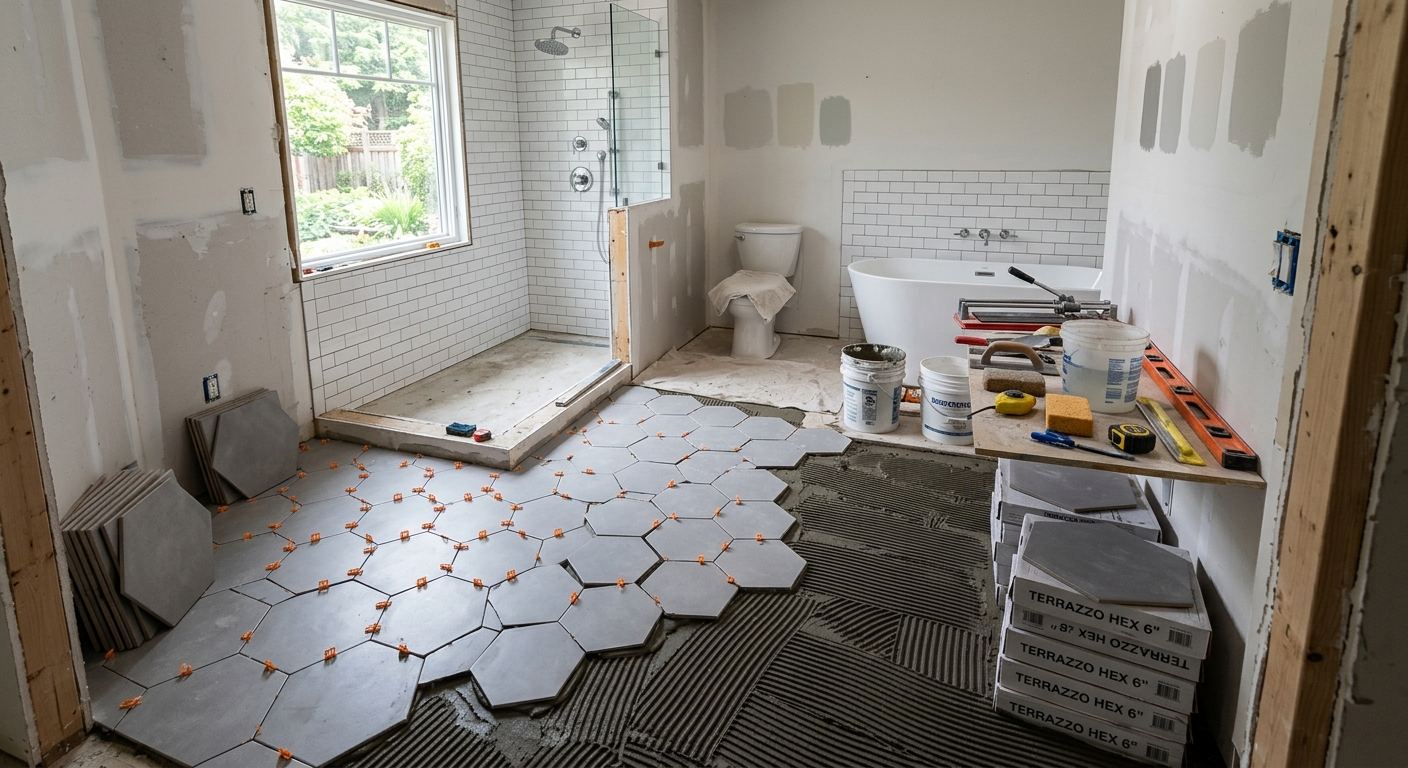
Bathroom renovation options and costs in Canossa
Canossa, Alberta bathrooms vary a lot because most homes were built over different eras, and the local housing stock is often older: with a 2021 population of 3,211 (Statistics Canada, 2021 Census), the area has a steady mix of long-time residents and renovated properties rather than frequent new builds. In the Calgary economic region, many washrooms reflect dated layouts and older plumbing/venting runs, which is why “cosmetic” projects sometimes expand once walls or floors come up. In many older Calgary-area homes, contractors also see signs of asbestos risk in certain pre-1985 finishes (for example, some vinyl flooring or old tile materials), and that can add time and professional abatement to protect occupants.
Cost in Canossa is shaped less by outdoor conditions and more by the Calgary labour market and the age/condition of the existing bathroom. Even in winter, Alberta crews plan around drying times for membranes, setting materials, and cement-board/stucco repairs. Where supply lines, cast-iron or older drain stacks, and venting are hidden behind walls, labour time increases and coordination between plumbers and electricians becomes more critical. In practice, the “simple refresh” becomes a full remodel once subfloor repairs, waterproofing upgrades, or electrical changes surface. Trade demand is especially noticeable around more established residential pockets such as the Canossa area near the local residential corridors, where contractors schedule bathroom work in back-to-back blocks to manage labour and equipment mobilization.
Use the table below as a budgeting starting point, then confirm scope in writing before you sign.
| Renovation Scope |
What's Included |
Typical Duration |
Price Range |
| Cosmetic refresh (paint, fixtures, accessories only) |
New paint, replace taps and toilet (if desired), vanity surface/lighting refresh, accessories, caulking touch-ups |
3–7 days |
$3,500–$7,000 |
| Mid-range full renovation (new tile, vanity, tub/shower, electrical) |
Demo and rebuild, tub/shower surround or tiled shower area, new vanity and mirror, exhaust fan upgrade (where needed), new GFCI outlet(s), standard waterproofing, updated trim |
2–4 weeks |
$15,000–$22,500 |
| High-end full renovation (custom tile, steam shower, heated floors) |
Higher-end tile layout, custom shower/steam-ready plumbing, heated floor wiring + control, premium fixtures, upgraded ventilation, extended waterproofing and detailing |
4–7 weeks |
$25,000–$35,000 |
| Shower-only installation (convert tub to walk-in shower) |
Remove tub, install walk-in shower base or tiled pan, new valve trim, glass (if selected), waterproofing and tile, sealing, exhaust fan check |
1–3 weeks |
$12,000–$18,000 |
| Bathtub replacement or tub-liner install |
Replace tub (or install liner where condition allows), new drain/overflow hookups, re-seal, matching surround updates, basic wall touch-ups |
2–6 days |
$1,500–$3,500 |
| Tile-only installation (floor + surround, existing layout kept) |
Tile removal and re-set, floor + wall tile, proper backer prep, grout/sealing, waterproofing refresh to match substrate, updated caulking |
1–2 weeks |
$3,000–$12,000 |
Prices are estimates only and vary by project scope, site access and material selection.
What affects the price of bathroom renovation in Canossa
Homeowners in Canossa often see quotes for the “same” bathroom that vary by 30–50% across the Calgary area because labour rates, scheduling, and hidden scope management differ more than the weather does. In this region, bathroom pricing is driven primarily by trade costs and the age of the housing stock. Older Calgary-area homes frequently hide issues such as cast-iron or older drain stacks needing replacement, galvanized supply lines that don’t match modern valves, and ventilation that’s too weak for today’s exhaust fan sizes—so a refresh can turn into rough-in work once demolition starts.
Here’s why the scope can expand fast: if asbestos-containing materials are discovered in older flooring/tile or associated finishes, abatement triggers safety procedures and adds meaningful cost—commonly $1,500–$5,000+ depending on extent and containment requirements. For example, a mid-range full renovation that starts around the low $15,000s can climb toward the $22,500+ range when plumbing venting upgrades and subfloor repairs become necessary. By contrast, a tile-only job may stay closer to the $3,000–$12,000 band if the substrate is solid and waterproofing details are straightforward.
Two concrete Canossa scenarios that raise cost: (1) a toilet or vanity location shift means drain/supply rough-in and leak-testing coordination; (2) floors that are unlevel or show rot after removal can add backer prep and extra labour before tile goes down. Scenarios that can lower cost include keeping the existing layout, choosing standard-size porcelain tile instead of complex mosaic patterns, and selecting a package that bundles electrical/exhaust work with the main schedule so trades don’t overlap inefficiently.
Bottom line: even in a small community like Canossa (2021 population 3,211; Statistics Canada, 2021 Census), budgeting accurately means planning for concealed repairs common to older homes in the Calgary economic region, not assuming the bathroom is “new-build clean.”
| Price Factor |
Why It Matters |
Cost Impact |
| Layout change — moving drain or supply lines requires rough-in work |
Requires demolition, pipe routing, new connections, and pressure/leak testing |
Often adds $2,000–$7,000 |
| Tile selection — large-format porcelain vs. mosaic vs. ceramic |
Harder installs, more cuts/waste, and higher labour time for patterns |
Typically $500–$6,000 difference |
| Fixture tier — builder-grade vs. mid-range vs. designer brands |
More expensive valves, trim, and finishes; sometimes higher install tolerances |
Often $1,000–$5,500 |
| Subfloor condition — rot or unlevel concrete adds scope |
Backer replacement, leveling, moisture mitigation and re-prep for waterproofing |
Commonly $1,000–$4,500+ |
| Electrical — adding GFCI outlets, exhaust fan, heated floor circuit |
Licensed work, permitted connections, and correct circuit protection |
Usually $800–$3,500 |
| Waterproofing method — membrane type and extent |
Better systems reduce failure risk; detailing around niches/curbs matters |
Typically $500–$3,000 |
| Older-home surprises — asbestos tile, cast-iron drains, galvanized pipes |
Abatement protocols, pipe replacement, disposal, and added inspections |
Often $1,500–$8,000+ |
| Bathroom size — sq ft drives tile and labour time directly |
More material and longer tile setting, grouting and waterproofing |
Varies, frequently $1,000–$6,000+ |
Permits & regulations in Alberta
In Alberta, many straightforward cosmetic updates in a Canossa bathroom do not require a permit—think swapping a vanity, changing lighting fixtures, repainting, replacing a toilet, or doing retiling that does not move plumbing routes. The permit triggers usually happen when you change the plumbing or electrical scope, or when structural elements are involved.
Typically DOES require a permit/inspection: relocating plumbing (moving drain or supply lines), installing or changing a new exhaust fan location that requires new wiring/circuit work, adding heated-floor electrical components (new circuit connection), changing/adding GFCI protection where new wiring is run, and any structural wall changes or opening of assemblies that affect load-bearing or moisture barriers. In most cases, any plumbing rough-in changes (new drain runs, valve relocations, altering the venting plan, or major supply modifications) will need a permit and inspection.
Typically does NOT require a permit: fixture swaps where supply/drain connections remain in the same locations (e.g., replacing a vanity top, mirror, tap trim, toilet with matching rough-in), replacing an exhaust fan with an equivalent unit using existing wiring, and tile replacement where you’re not moving plumbing or altering electrical.
To verify a contractor for Canossa projects, ask for: (1) Alberta trade licence details (for the appropriate trade—especially for electrical and plumbing-related work); (2) a certificate of insurance showing liability coverage; and (3) WSIB/WCB coverage proof or a clearance-style letter if applicable. You can cross-check licence status through Alberta’s online public registries, then confirm dates match the proposed start window. Always require the permit responsibility to be stated clearly in the contract scope so you know who is pulling it and when inspections are scheduled.
Choosing tile, waterproofing and fixtures for your Canossa bathroom
In a Canossa bathroom renovation, three material decisions drive both cost and long-term performance: tile choice, waterproofing method, and fixture tier. First, tile: entry-level ceramic can look great, but it’s typically more forgiving on price than performance demands—porcelain is usually the better value for floors and wet zones because of lower water absorption and more durability under Alberta’s year-round use. Natural stone (marble, travertine, slate) can be stunning, but it requires more labour for calibration and extra care for sealing, which can push budgets quickly.
Second, waterproofing: for bathrooms in Alberta’s climate, the key is not “more product,” it’s correct system + correct detailing. Paint-on membranes can work in limited scenarios, but bonded sheet membranes and engineered systems (including correctly installed compatible systems for corners/penetrations) tend to reduce risk where moisture exposure is highest—especially around tub edges, shower benches, and curb transitions. Done well, waterproofing is what prevents the mould problems homeowners dread, even when humidity spikes.
Third, fixtures: builder-grade valves and trims are often easier on the budget upfront, while mid-range or designer brands can improve flow control, finish durability, and perceived value at resale. A practical budget example: moving from standard ceramic to porcelain tile plus a more robust waterproofing system can add a few thousand dollars, but it’s often a smarter spend than upgrading only fixtures if the wall/tile substrate and sealing are the weak link.
Match your budget to your situation: keep the layout if you can, invest in waterproofing, and pick a tile system that fits the install complexity your contractor is proposing.
| Material / Option |
Pros |
Cons |
Price Range |
| Ceramic tile (floor + walls) |
Lower cost, wide style range, easy matching |
May be less ideal for high-wet floors compared to porcelain; more careful selection needed |
$3,000–$7,500 |
| Porcelain tile (floor + walls) |
Durable in wet areas, lower water absorption, good longevity |
Can cost more per sq ft; heavier tile means precise prep |
$6,000–$12,000 |
| Natural stone (marble, travertine, slate) |
High-end look, unique veining, premium feel |
Sealing/maintenance, calibration and waste can raise labour and material cost |
$10,000–$20,000 |
| Frameless glass shower enclosure |
Modern appearance, easier visual “space,” durable hardware |
Costs more; needs precise waterproofing edges and shimming |
$2,500–$6,000 |
| Prefab tub surround (acrylic) |
Fast install, consistent fit, easier cleaning |
Less custom look; sealing details still critical at seams and corners |
$1,000–$3,000 |
| Custom shower pan (tile or linear drain) |
Custom slope and drain placement, modern linear drain options |
More labour; requires excellent waterproofing and detailed membrane integration |
$4,000–$12,000 |
How to choose a bathroom renovation contractor in Canossa
Start with licensing and coverage verification. In Alberta, the installer or trade doing electrical and any plumbing rough-in changes must be appropriately qualified and permitted; you should request licence details and confirm they align with the work described. Ask for a certificate of insurance (liability coverage) and proof of WSIB/WCB coverage for the trades involved. Where possible, verify licence status through Alberta’s online registries, then look at the insurance certificate’s policy effective dates—make sure it covers the project period, not just the quote day.
Then get 2–3 itemised written quotes. You want labour and materials broken out (tile, backer board, membrane, shower base/pan components, electrical allowances, disposal) rather than a single lump sum. Read the exclusions carefully: what’s not included (subfloor repairs, permit pulling, asbestos abatement contingency, niche cuts, glass enclosure, shower valve upgrade, or disposal)? Clarify disposal: demolition waste handling is often a line item.
For warranty, ask for both workmanship and product warranties. Confirm workmanship warranty length, what it covers (re-sealing, membrane failures, grout haze/remediation), and whether the warranty is transferable to future homeowners.
Payment schedule matters: don’t allow large deposits. A good rule is no more than 10–15% upfront, with the remainder tied to milestones, and a holdback until final walk-through and punch-list completion. Also require a start date and realistic completion estimate in writing, including key lead times for tile, glass, and fixtures.
- Ask for Alberta licence/qualification details that match the scope (electrical, plumbing rough-in, and any structural changes).
- Request liability insurance plus WSIB/WCB proof or clearance letter; confirm policy dates cover your project.
- Get at least 2–3 quotes that are itemised (labour vs materials vs allowances).
- Confirm who pulls permits and who pays inspection fees.
- Verify disposal is included (or priced separately) for demo materials and packaging.
- Ask how they handle hidden-scope (subfloor rot, blocked vents, asbestos discovery) and what contingency line exists.
- Confirm the waterproofing system name and installation method (membrane type, coverage on seams/penetrations).
- Request the exact warranty terms in writing (workmanship and product).
- Require a payment schedule with milestone tie-in and a reasonable holdback.
- Check schedule realism: tile lead times, glass fabrication, and inspection timing.
- Ensure caulking and finishing details are specified (tub-to-tile transitions, grout type, silicon colour match).
- Ask for a site protection plan (plastic sheeting, dust control) and how they clean during daily work.
Concrete red flags to watch for in Canossa: quotes with no waterproofing specifics, a “lump sum only” offer with no allowance breakdown, vague exclusions around permits/disposal, willingness to take large upfront deposits (beyond 10–15%), and no written warranty or unclear responsibility for defects after completion.
Frequently asked questions — bathroom renovation in Canossa
Do I need waterproofing behind the tile?
Yes—almost always in a Canossa bathroom. If you’re retiling a shower surround, tub deck, or any wet-zone walls/floor, waterproofing is what protects framing and substrate from long-term moisture. In Alberta’s homes, humidity from showers plus temperature changes can stress poorly detailed systems, and grout alone is not a waterproof barrier. Many contractors include a membrane system as part of a mid-range renovation budget (often within the $15,000–$22,500 band), but the real difference is whether the contractor details corners, seams, and penetrations correctly. If you’re doing tile-only work (commonly quoted in the $3,000–$12,000 range), ask specifically what waterproofing method is proposed and whether the membrane extends to the required height/areas.
How do I compare bathroom renovation quotes?
Compare quotes like-for-like, not by the total number. In Canossa, the biggest quote swings usually come from hidden scope assumptions and what’s included in waterproofing, electrical, and plumbing rough-in. Ask each contractor to provide itemised line entries: demolition, substrate prep, waterproofing system type, tile coverage method, fixture allowance, glass allowance, and disposal. Confirm permit responsibility and whether inspections are included. If one quote is much lower, it may be assuming minimal repairs or a simpler waterproofing plan, which can lead to change orders. For budgeting, a cosmetic refresh can start around the low $5,000s, while a mid-range full renovation often lands in the $15,000–$22,500 range depending on fixture and tile choices.
Can I live at home during a bathroom renovation in Canossa?
Many homeowners can stay in their home, especially for cosmetic updates or tub/to-tub tiling, but full remodels are more disruptive. If your bathroom will be out of service, you’ll want a temporary plan for bathing and toilet access—commonly using a second bathroom (if you have one) or an alternative routine during the 2–4 week mid-range window. In Canossa and the broader Calgary region, contractors often schedule work to minimize dust exposure and protect floors during demo, but you still may have parts of the house affected by access needs and drying times for membranes. If you’re converting to a shower-only setup (often $12,000–$18,000), expect a tighter schedule and longer “no-use” periods for waterproofing curing and glass installation. Ask your contractor for a phased plan and daily site cleanup routine.
What's the best bathtub material for a Canossa home?
The “best” choice depends on how you plan to use the tub and what your existing plumbing/wall condition looks like. For many Canossa homes, a new acrylic tub can be a cost-effective replacement and is relatively straightforward to install when plumbing locations remain unchanged. A tub-liner approach can work when the existing tub surface is sound and properly prepared, but if the tub framing or surrounding walls are compromised, a full replacement is usually more reliable. If you’re aiming for a more premium, long-term feel, you can choose higher-end fixtures and finishes—but keep in mind the biggest performance drivers are waterproofing and proper sealing at transitions. Your contractor can suggest the right route based on whether demolition would reveal subfloor rot or older drain conditions.
Is it worth renovating a bathroom before selling in Canossa?
Often, yes—especially if the bathroom is outdated, poorly vented, or shows moisture wear. However, the best ROI usually comes from addressing problems buyers can see (finishes, grout condition, fixture wear) and the problems buyers can’t (ventilation, waterproofing integrity, and subfloor stability). In a small community like Canossa (population 3,211; Statistics Canada, 2021 Census), your buyer pool may prefer clean, modern, easy-to-maintain spaces. If you only do cosmetic updates, you’ll likely land closer to the cosmetic refresh band (roughly $3,500–$7,000), but if the project uncovers older plumbing/venting needs or subfloor repairs, it may move into mid-range territory ($15,000–$22,500). A good strategy is to renovate enough to remove moisture risk and update core surfaces without overspending on ultra-luxury features that may not match the rest of the home.
How do I plan a bathroom renovation on a tight budget in Canossa?
Start by keeping the layout where possible. In the Calgary region, moving drains/supplies usually increases scope and labour, which can push you beyond your initial plan. Aim to choose one “upgrade focus” (tile waterproofing quality or a better vanity/lighting) rather than upgrading everything at once. If you want a clean look for less, consider tile-only work (often $3,000–$12,000) with a specified waterproofing method and careful substrate prep, or a cosmetic refresh if plumbing locations are staying the same. Build contingency for hidden-scope common in older homes—especially for subfloor repairs and potential older-material concerns like asbestos in certain finishes. Finally, negotiate allowances: set realistic limits for fixtures and glass, request itemised quotes, and avoid large upfront deposits so you can adjust choices once demolition confirms the true condition.