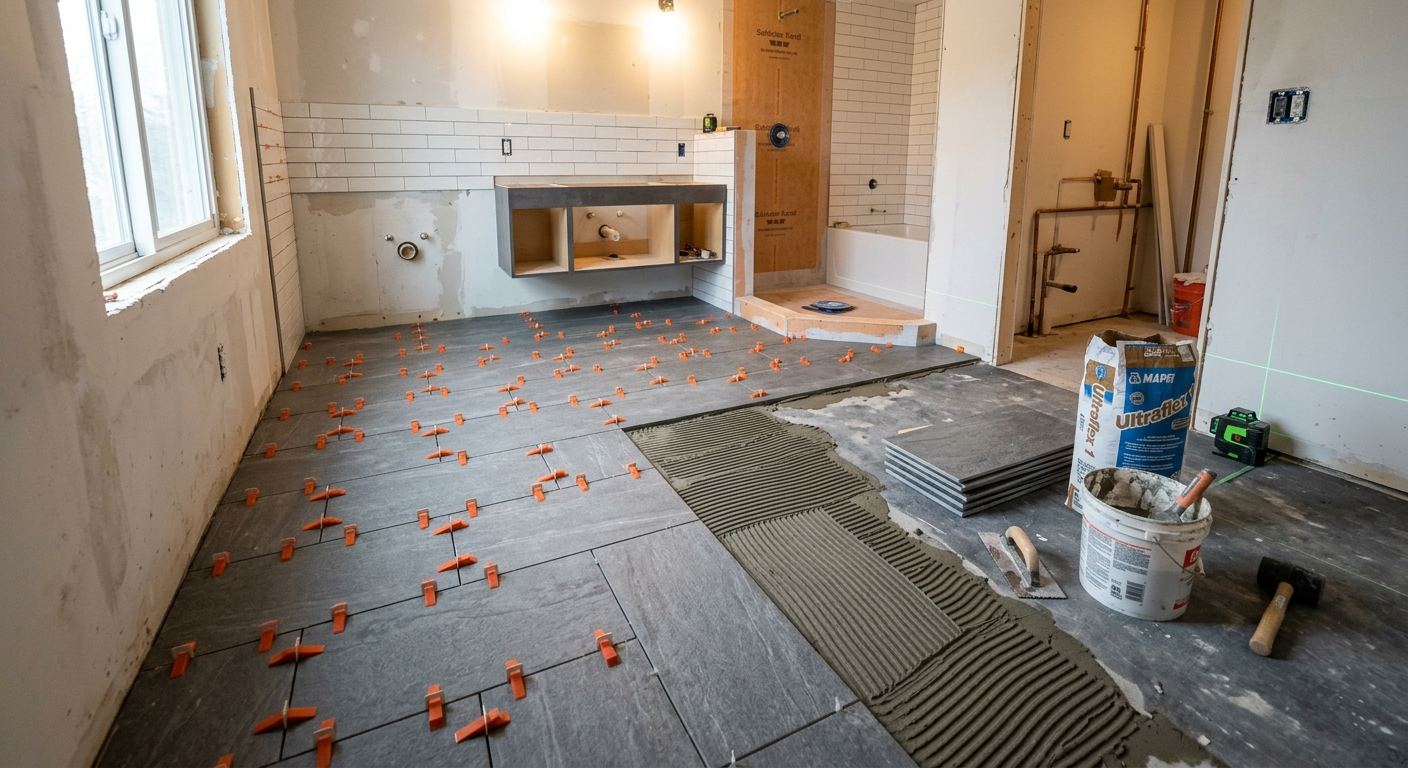
Bathroom renovation options and costs in Hudson
Hudson, Alberta may be a small community, but bathroom renos here still follow the same pricing pressures as the broader Calgary economic region. With a population of 2,012 (Statistics Canada, 2021 Census), most projects are driven by the age of the housing stock—meaning many bathrooms sit in older layouts with dated drain configurations and ventilation that never got updated. In the Calgary region, older homes also raise the odds of hidden-scope issues once walls and floors come up, and that’s where contractors see budget drift. Calgary-area trade partners commonly report that concealed repairs and trade coordination can turn a “refresh” into a deeper remodel once demolition starts.
Even though Alberta’s weather isn’t the main cost driver compared to labour and housing condition, moisture control still matters. In practice, bathroom ventilation performance, waterproofing details, and drying time affect how quickly a job can progress—especially when timelines overlap with other trades. That’s also why labour availability in the Calgary market can shape your schedule and, indirectly, your final price.
Locally in Hudson, renovations are especially in demand in the older built-up pockets where homeowners often update plumbing fixtures and finishes while keeping the footprint. If your bathroom is similar, start budgeting assuming an occupied home, older subfloor conditions, and possible venting or supply-line upgrades. From there, use the scope comparison below to choose the right band before you request itemised quotes.
| Renovation Scope |
What's Included |
Typical Duration |
Price Range |
| Cosmetic refresh (paint, fixtures, accessories only) |
Paint, new vanity top or vanity swap (if no plumbing relocation), taps, toilet replacement, mirror, towel bars, and accessories; limited caulking and re-grouting |
1–3 days |
$3,000–$7,000 |
| Mid-range full renovation (new tile, vanity, tub/shower, electrical) |
Demolition; new tile floor and tub/shower surround; new vanity and lighting; new exhaust fan (ducted if needed); waterproofing; basic electrical upgrades (GFCI); bathtub and/or shower valve changes within the same zone |
10–16 days |
$15,000–$22,000 |
| High-end full renovation (custom tile, steam shower, heated floors) |
Full tear-out; premium tile (larger formats or custom patterns); heated floor system; custom shower/steam components; upgraded waterproofing and waterproofing details; designer lighting; extended electrical (dedicated circuits) |
18–28 days |
$23,000–$30,000 |
| Shower-only installation (convert tub to walk-in shower) |
Convert tub to tiled walk-in; new shower valve/trim; new waterproofed shower pan area; niche (optional); glass or curtain option; plumbing modifications to suit the conversion |
10–18 days |
$8,000–$15,000 |
| Bathtub replacement or tub-liner install |
Remove existing tub (or prep for liner); replace tub and trim; recaulk and reseal; minor plumbing changes as needed; sealing and finishing |
2–7 days |
$500–$3,000 |
| Tile-only installation (floor + surround, existing layout kept) |
Tile floor and/or tub surround; surface prep; waterproofing as required for wet areas; grouting, finishing trims |
7–14 days |
$3,000–$12,000 |
Prices are estimates only and vary by project scope, site access and material selection.
What affects the price of bathroom renovation in Hudson
In Hudson and across the Calgary economic region, it’s common to see quotes for the “same” bathroom land 30–50% apart. The reason is usually not climate—it’s local labour rates plus the age and condition of the housing stock. Many older Calgary-area bathrooms have hidden plumbing and venting constraints, and once a contractor starts demolition they may find work that isn’t obvious at quote stage: upgrades to drain stacks, supply-line corrections, missing or underperforming ventilation, and subfloor repairs. Those hidden items are exactly what push projects from basic updates into full renovations that better match the $15,000–$30,000 band.
Another cost accelerant is discovery of asbestos in older floor tile or drywall compound (commonly seen in pre-1985 homes). If abatement is required, it can add about $1,500–$5,000+ depending on what’s present, the containment needed, and disposal requirements. Similarly, older electrical setups can force more than “just swap a light”—for example, adding properly located GFCI protection and upgrading bathroom circuits.
Two quick examples that often play out in Hudson: (1) keeping the same tub footprint usually supports a tighter budget and can keep you closer to mid-range tile and fixture pricing; (2) moving the drain location or swapping to a curbless walk-in shower typically triggers more rough-in work, longer install times, and higher total costs. If you’re considering a shower-only conversion, it frequently starts in the $8,000–$15,000 range, but hidden subfloor and waterproofing details can widen that band.
| Price Factor |
Why It Matters |
Cost Impact |
| Layout change — moving drain or supply lines requires rough-in work |
Changes plumbing pathways and may require new venting/stack tie-ins |
Often +$3,000–$8,000 depending on access and distance |
| Tile selection — large-format porcelain vs. mosaic vs. ceramic |
Harder cuts, more pattern planning, and more labour time for detail work |
Usually +$1,000–$5,000 from material and labour differences |
| Fixture tier — builder-grade vs. mid-range vs. designer brands |
Higher-end valves, trims, and lighting drive material costs |
Often +$500–$4,000+ across common fixture sets |
| Subfloor condition — rot or unlevel concrete adds scope |
Requires patching, reinforcement, or underlayment and additional waterproof prep |
Commonly +$1,000–$6,000 based on extent |
| Electrical — adding GFCI outlets, exhaust fan, heated floor circuit |
May require new runs and proper permitting/inspection steps |
Often +$800–$3,500 |
| Waterproofing method — membrane type and extent |
Better systems add material and labour but reduce call-backs |
Typically +$600–$3,000 compared to minimal approaches |
| Older-home surprises — asbestos tile, cast-iron drains, galvanized pipes |
Triggers abatement, replacement, and extended demo/rebuild time |
Often +$1,500–$5,000+ for asbestos scenarios; more for plumbing replacements |
| Bathroom size — sq ft drives tile and labour time directly |
More surface area means more tile, more prep, more grout lines and labour days |
Usually changes costs by several thousand dollars as size increases |
Permits & regulations in Alberta
In Alberta, many “cosmetic-only” bathroom updates in Hudson typically do not need a permit—think swapping fixtures like a vanity (without moving plumbing), replacing a toilet, repainting, or installing new accessories. Where permits commonly come into play is when you relocate plumbing, change the structure of the wet area, or add electrical work that extends beyond simple like-for-like swaps. In practice, permits are most often required for plumbing rough-in changes (moving a drain or supply line, changing wet wall locations, or substantial vent-related corrections) and for electrical work that adds new circuits or new loads—especially exhaust fan upgrades and heated floor circuits.
Electrical must also meet Canadian electrical code requirements, and the work must be completed by a licensed electrician or signed off by one. For plumbing, any rough-in changes are typically inspected, and the contractor should coordinate inspection scheduling so you’re not left waiting on approvals.
Step-by-step for Hudson homeowners: first, ask the contractor for their Alberta trade licence details and confirm they match the trade they’re performing. Next, request a current Certificate of Insurance (liability) and verify the coverage amount is appropriate for renovation work. Then confirm their WCB/WSIB coverage status—either through documentation they provide or a clear statement you can follow up on. For anything involving wet-area plumbing or electrical, insist on written scope that clearly states what’s permitted and what inspections are included, before work begins.
Choosing tile, waterproofing and fixtures for your Hudson bathroom
In Hudson, three material decisions usually determine whether you land closer to a $15,000–$22,000 mid-range reno or push toward the $23,000–$30,000 high-end band: tile choice, waterproofing method, and fixture tier. Tile isn’t just a finish—it’s labour time. Ceramic tile is typically the most budget-friendly option, while porcelain handles moisture and wear better, often with less risk of chipping and staining over time. Natural stone looks premium, but it can require extra care and more involved installation to keep finishes consistent.
Waterproofing is the “quiet” budget item that prevents mould and failures. In Alberta’s climate, the bathroom still experiences heavy daily humidity, so you want a waterproofing system designed for wet areas. A paint-on membrane may be fine for limited surfaces when installed to manufacturer instructions, but bonded sheet membrane systems (or a proven system built with a compatible system approach) generally provide more robust protection. The right choice reduces the chance of moisture migration and costly rework later.
Fixtures control comfort and resale perception. Builder-grade taps and shower trims are usually the lowest-cost; mid-range upgrades offer better valves and finishes; designer brands can add real cost. The cost difference is often justified when it improves valve performance (hot/cold stability), finish longevity, and matching hardware quality.
Here’s a practical dollar example: if upgrading tile from ceramic to porcelain adds roughly $2,000–$4,000 in materials and installation complexity for a typical bathroom area, that increase is usually justified when you’re already paying for full tile demo and want longer service life. But if you’re keeping the existing layout and only doing light tile scope, spending heavily on stone may not deliver proportional value.
| Material / Option |
Pros |
Cons |
Price Range |
| Ceramic tile (floor + walls) |
Budget-friendly, wide colour selection, good for non-extreme wear |
More prone to chipping; grout maintenance is critical in wet areas |
$3,000–$7,000 |
| Porcelain tile (floor + walls) |
Higher durability and moisture resistance, better for consistent finish with modern large formats |
Can be more expensive and requires precise layout/cuts |
$6,000–$12,000 |
| Natural stone (marble, travertine, slate) |
Luxury look, unique veining, strong perceived value |
Sealing and maintenance requirements; installation is more technical and can run higher labour |
$10,000–$18,000 |
| Frameless glass shower enclosure |
Modern appearance, visually expands the space, easier to keep clean than framed options |
Higher material cost; requires accurate measurements and solid framing/support |
$2,000–$6,000 |
| Prefab tub surround (acrylic) |
Fast install, fewer tile labour hours, easy cleaning and consistent surfaces |
Less design flexibility; can look less high-end than full tile |
$500–$3,000 |
| Custom shower pan (tile or linear drain) |
Best drainage and modern look; tile pan integrates with waterproofing for a cohesive system |
More labour and waterproofing steps; linear drains add detailing and cost |
$3,500–$10,000 |
How to choose a bathroom renovation contractor in Hudson
Choosing the right contractor for a Hudson bathroom renovation comes down to verification, clarity, and control of risk. Start by confirming Alberta licensing for the trades involved—especially electrical and plumbing scopes. Ask for their liability insurance certificate and verify the coverage is active for renovation activities. For workers’ compensation, ensure they have WCB/WSIB coverage in place; you should receive documentation or a clear confirmation you can follow up on, rather than a verbal assurance.
Next, request 2–3 itemised written quotes that separate labour and materials. A solid quote should list demolition, plumbing/electrical rough-in, waterproofing method, tile supply allowances, glass/shower components, fixtures, and disposal. Avoid lump sums with vague “miscellaneous” allowances—those often hide the real cost after demolition.
Read exclusions carefully: ask whether permits are included, who pulls them, and what’s covered for inspections. Also confirm whether disposal and recycling are included, and what happens if asbestos or hidden subfloor damage is discovered mid-project.
Warranty matters too: look for a workmanship warranty (not just product warranty). Confirm the length, what it covers, and whether it’s transferable if you sell the home. For payment schedules, never pay more than 10–15% upfront; keep a holdback until the job is complete and you’ve confirmed functionality—especially water tests, exhaust fan operation, and caulking/finish sealing. Finally, get start date and completion estimate in writing, including key milestones so you’re not guessing during tile and waterproofing curing windows.
- Confirm each trade licence relevant to the scope (electrical, plumbing, and specialty work).
- Request a current Certificate of Liability Insurance and verify dates/coverage.
- Verify WCB/WSIB coverage documentation (not just “we’re insured”).
- Get 2–3 itemised quotes with labour vs. materials allowances.
- Ask for the waterproofing method and membrane system details in writing.
- Confirm whether permits and inspections are included for plumbing/electrical changes.
- Clarify disposal: demolition debris removal and proper disposal location requirements.
- Ask what’s excluded (e.g., subfloor repairs, venting upgrades, asbestos abatement).
- Review product lists: exact fixture brands/models and tile grade/sizes.
- Check warranty length for workmanship and whether it covers leaks or failed waterproofing.
- Use a payment schedule with a holdback until punch-list items are done.
- Get a written timeline that accounts for curing time before final tiling/finishing.
Red flags to watch for in Hudson: (1) no proof of Alberta trade licensing for electrical/plumbing scopes, (2) quotes that don’t specify waterproofing method or tile prep expectations, (3) heavy upfront payments without a defined holdback, (4) a lump-sum “demo and rebuild” price with vague exclusions for permits or disposal, and (5) refusal to provide itemised labour/material breakdowns or warranty terms in writing.
Frequently asked questions — bathroom renovation in Hudson
How long does tile installation take in a Hudson bathroom?
Tile installation timing in Hudson usually depends on how much demolition and prep you need, plus the complexity of your layout. For many mid-range renos, tile floors and tub/shower surrounds often take about 7–12 working days within a 10–16 day overall schedule. The waterproofing step and cure time also affect sequencing, since tile should only proceed when the membrane system is ready. If you’re working with larger-format porcelain, expect extra time for planning and precision cuts around valves and niches. If your contractor is finding subfloor unlevelness, that prep can add days because the surface must be corrected before tiling to avoid cracked grout lines.
How much does a bathroom renovation cost in Hudson?
In Hudson, total pricing is typically shaped by housing condition and the need for hidden-scope repairs rather than weather. As a practical budgeting baseline in the Calgary economic region, a cosmetic refresh can start around the low end (think a few thousand dollars) but deeper upgrades generally land in the $15,000–$22,000 range for mid-range full renovations and can reach $23,000–$30,000 for high-end finishes like heated floors and custom shower work. If you’re converting a tub to a walk-in shower, shower-only projects commonly start around $8,000–$15,000 depending on plumbing changes and enclosure choices. The most reliable way to budget is to ask for itemised quotes and include contingency for plumbing/venting corrections that older homes often need.
How long does a bathroom renovation take in Hudson?
Timelines for bathroom renovations in Hudson are commonly shortest for cosmetic refreshes (about 1–3 days) and longer for full remodels. A mid-range full renovation often takes roughly 10–16 days, while higher-end projects with heated floors, custom tile patterns, or steam/shower upgrades can run about 18–28 days. The schedule usually stretches when trades coordinate permits and rough-ins (electrical and plumbing) and when waterproofing cure times add calendar days. If asbestos abatement or subfloor repairs are discovered after demolition, expect additional delays because those steps require containment, proper removal, and inspection/approval before work can resume.
Do I need a permit for a bathroom renovation in Alberta?
Often, cosmetic updates in Alberta don’t require permits—like swapping a vanity within the same plumbing location, repainting, or replacing fixtures without changing the plumbing or structure. However, permits are typically required when you relocate plumbing (moving drain or supply lines), add or change exhaust fan wiring/circuits, install heated floor circuits, or make structural/wet-area changes that impact how the shower or tub area is built and waterproofed. Electrical work must meet the provincial electrical requirements and be performed or signed off by a licensed electrician. Before work starts in Hudson, confirm in writing what permits are included, who pulls them, and when inspections occur so your timeline and budget stay predictable.
What's the best tile for a bathroom in Hudson?
“Best” depends on your budget and how you’re using the space, but in Hudson bathrooms, porcelain is often the sweet spot for durability in wet environments. Ceramic can work well for entry-level projects, especially when the waterproofing system and installation quality are strong. Porcelain typically offers better moisture performance and durability for floors and shower surrounds, particularly when you choose reputable grades and proper thin-set practices. Natural stone looks high-end but requires more attention to sealing and maintenance, and installation can be more technical. Whichever tile you pick, the waterproofing method and correct prep are what prevent mould and failures—tile alone can’t compensate for an incompatible or poorly installed membrane system.
Should I do a tub-to-shower conversion?
A tub-to-shower conversion is often worth it in Hudson homes if you want easier day-to-day access, a faster cleaning routine, or you’re trying to modernize the bathroom layout. Budget-wise, shower-only conversions commonly fall in the $8,000–$15,000 range, but they can move higher if your project needs plumbing relocation, ventilation improvements, or subfloor repairs. The decision is less about trend and more about your plumbing footprint and waterproofing build. If the walls have older wiring or you suspect older materials that might include asbestos in floor tile or drywall compound, plan for potential discovery and abatement protocols before finalising the scope.