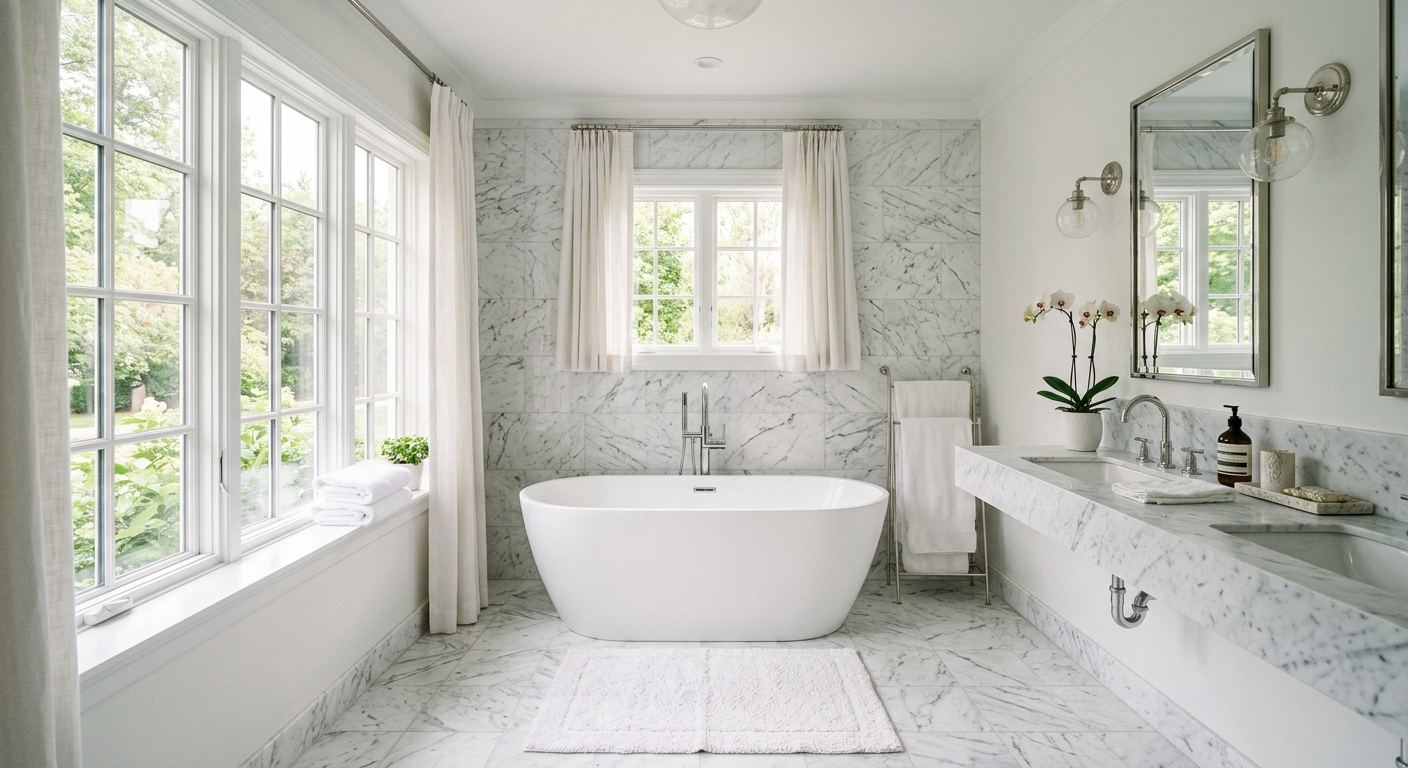
Bathroom renovation options and costs in Carter Crest
Bathroom renovation options in Carter Crest, Alberta usually start with one simple question: do you want a refresh, or do you want to open up the walls and redo the systems? With Carter Crest’s population at 1,716 (Statistics Canada, 2021 Census), the local renovation market is smaller than Calgary, so trades often coordinate from the wider Calgary area—meaning availability and scheduling can affect overall timelines and price. Also, many homes in the Calgary economic region include older builds where dated plumbing layouts and drain configurations are common, and some floor finishes can contain materials that require special handling once demolition begins. In the Calgary area, contractors frequently see “hidden scope” after walls are opened—upgrades to venting, drain stacks, subfloor repairs, and sometimes discovery of asbestos-containing floor tile or drywall compound in pre-1985 homes.
That’s why even if the look you want is similar—new vanity, updated shower, fresh tile—the real cost can swing as trades measure, open, and confirm what’s behind the finish. Climate is less of a driver of labour price than age and condition of the housing stock, but it still matters for durability: Alberta’s freeze–thaw cycles and winter indoor conditions make proper waterproofing and ventilation non-negotiable. In Carter Crest, where demand is especially steady in nearby pockets of the Calgary orbit like the community-serving trade routes out toward Southwest Calgary and the broader Calgary edge, bathroom installers are used to batching tile, plumbing, and electrical work to reduce downtime.
Below is a practical comparison of common bathroom renovation scopes and typical ranges so you can budget confidently before you request quotes. Use it as your starting point, not a final number.
| Renovation Scope |
What's Included |
Typical Duration |
Price Range |
| Cosmetic refresh (paint, fixtures, accessories only) |
Paint, caulking, toilet/vanity faucet swaps (no plumbing relocation), towel bars, mirror/lighting refresh |
2–5 days |
$2,000–$7,000 |
| Mid-range full renovation (new tile, vanity, tub/shower, electrical) |
Demo and disposal, waterproofing, new floor tile and surround, new vanity and mirror/lighting, tub or standard shower + exhaust fan wiring, basic electrical updates |
2–4 weeks |
$15,000–$24,000 |
| High-end full renovation (custom tile, steam shower, heated floors) |
Full demo, upgraded membrane or bonded system, custom shower details, heated floor circuit and controls, frameless glass, upgraded lighting/ventilation, designer-grade fixtures |
3–6 weeks |
$24,000–$30,000+ |
| Shower-only installation (convert tub to walk-in shower) |
Convert rough-in as needed, new shower base/pan, tile surround, frameless or semi-frameless glass, vent/exhaust fan integration if required |
1.5–3 weeks |
$8,000–$15,000 |
| Bathtub replacement or tub-liner install |
Replace existing tub with new unit and hardware (or install liner where applicable), re-caulk, new trim, basic plumbing connect |
3–7 days |
$500–$3,000 |
| Tile-only installation (floor + surround, existing layout kept) |
Remove existing tile as required, install tile and grout, waterproofing prep, re-grout/trim updates; keeps plumbing positions unchanged |
1–3 weeks |
$3,000–$12,000 |
Prices are estimates only and vary by project scope, site access and material selection.
What affects the price of bathroom renovation in Carter Crest
Across Calgary and the wider Alberta market, the same “standard” bathroom can come back with quotes that differ by 30–50%. The biggest reason isn’t usually climate—it’s local labour rates and the age/condition of the housing stock. Many Carter Crest homes sit in the Calgary economic region’s older inventory, where concealed drains, venting paths, and supply lines may not meet today’s expectations. When contractors discover cast-iron or older drain stacks, galvanized supply lines, insufficient subfloor support, or ventilation that needs improvement, scope expands quickly—so the labour hours rise alongside plumbing and waterproofing materials.
Two more common budget drivers are electrical and hidden contaminants. If pre-1985 materials are present (for example, asbestos-containing floor tile or drywall compound), proper abatement protocols can be triggered after demolition, adding roughly $1,500–$5,000+ depending on area and containment requirements. Ventilation upgrades also add cost because the contractor may need new ducting runs and a new fan circuit.
Concrete examples from projects in the Calgary orbit: (1) moving the vanity or toilet slightly can require rough-in changes—often pushing a “tile-only” plan toward a mid-range renovation band (for many homes, that’s where budgets start around the mid five figures and climb from there). (2) Choosing large-format porcelain is sometimes cheaper per square foot than mosaic, but labour can rise if the subfloor isn’t flat enough—fixing unlevel substrates before tile prevents cracked grout and callbacks. Depending on the final build, homeowners often end up planning for ranges like $15,000–$24,000 for a mid-range full reno or $24,000–$30,000+ for upgrades like heated floors and steam-ready detailing.
| Price Factor |
Why It Matters |
Cost Impact |
| Layout change — moving drain or supply lines requires rough-in work |
Requires opening walls/floors, altering rough-in, and re-testing |
Typically adds $2,000–$8,000 depending on how far fixtures move |
| Tile selection — large-format porcelain vs. mosaic vs. ceramic |
Different cutting waste rates and setting complexity |
Often shifts labour/material budget by $1,000–$6,000 |
| Fixture tier — builder-grade vs. mid-range vs. designer brands |
Higher-end fixtures cost more and may require more precise installation |
Commonly adds $500–$4,000+ |
| Subfloor condition — rot or unlevel concrete adds scope |
Tile needs a stable, properly prepared substrate |
Repairs can add $1,000–$5,000 (sometimes more) |
| Electrical — adding GFCI outlets, exhaust fan, heated floor circuit |
Licensed electrical work + proper circuit planning |
Often adds $600–$3,500 |
| Waterproofing method — membrane type and extent |
Controls moisture failure risk under freeze–thaw seasonal stress |
Upgrades can add $800–$3,500 |
| Older-home surprises — asbestos tile, cast-iron drains, galvanized pipes |
Abatement, disposal, and pipe upgrades increase labour and materials |
Can add $1,500–$5,000+ for asbestos scenarios; plumbing upgrades vary |
| Bathroom size — sq ft drives tile and labour time directly |
More coverage means more time, materials, and waste |
Smaller baths may land near $15,000–$20,000; larger projects push higher within bands |
Permits & regulations in Alberta
In Alberta, many “cosmetic” bathroom updates are straightforward from a permit standpoint—swapping fixtures, replacing a vanity, painting, or retiling without moving plumbing typically does not require a permit. However, once you change systems, permits and inspections usually come into play. Relocating plumbing (for example, moving a shower drain, toilet flange, or water supply lines), installing or altering exhaust ventilation with new ducting, and making structural changes to walls all typically require permitting and inspection.
Electrical work is a key checkpoint: any work that adds circuits (like wiring a new exhaust fan, upgrading lighting, or installing heated flooring) must be performed by—or at minimum signed off by—a licensed electrician, and it must meet provincial electrical code requirements. Plumbing rough-in changes generally require a permit and inspection after rough-in and before final closure.
Here’s how a homeowner in Carter Crest can verify a contractor step-by-step. First, ask for their Alberta trade licence details and confirm the licence number through the appropriate online registry tools used for licensing verification. Second, request a current certificate of insurance (liability) showing it covers renovation work and the active policy dates. Third, ask about workers’ compensation coverage (WSIB/WCB) and request the applicable clearance letter or documentation. Lastly, confirm who is pulling permits on your behalf and whether the contractor includes permit fees and inspection coordination—or if you pay separately.
Choosing tile, waterproofing and fixtures for your Carter Crest bathroom
In Carter Crest, your bathroom budget will be driven by three decisions: tile choice, waterproofing method, and fixture tier. Start with tile. Ceramic is a solid entry option for floors and walls, but it’s typically less dense and can be more stain-prone than porcelain—meaning you’ll want good sealing and careful grout selection. Porcelain is often the best balance of durability and appearance for Calgary-area humidity swings and day-to-day cleaning. If you’re considering natural stone like marble, travertine, or slate, plan for higher material costs and more involved installation and maintenance—especially around wet zones.
Next is waterproofing, which is where Alberta bathrooms win or fail long-term. A paint-on membrane can work for smaller, straightforward walls when installed correctly, but bonded sheet membranes or a reliable system that includes proper overlap, corner details, and a tested approach generally offers stronger protection in wet areas. For shower assemblies, selecting the right system (and following the manufacturer’s wet-area rules) is what helps prevent mould and tile movement. Finally, fixture tier matters for both comfort and resale: builder-grade can look fine but may have shorter service intervals, while mid-range and designer brands often bring better valves, finishes, and warranties.
Where the price difference is justified: if you’re already in the $15,000–$24,000 mid-range renovation band, spending an extra $800–$3,500 on an upgraded waterproofing approach and correct substrate prep can prevent expensive redo work. If you stay in a refresh-style approach, keep your changes limited so you’re not paying full demo costs.
| Material / Option |
Pros |
Cons |
Price Range |
| Ceramic tile (floor + walls) |
Good value, wide style selection, familiar installation methods |
Typically more porous; requires consistent grout maintenance |
$3,000–$7,000 |
| Porcelain tile (floor + walls) |
More durable and water-resistant, better for busy households |
Can cost more; large formats require flatter substrates |
$5,000–$12,000 |
| Natural stone (marble, travertine, slate) |
Premium look; unique patterning |
More maintenance; needs sealing and careful wet-zone detailing |
$8,000–$20,000+ |
| Frameless glass shower enclosure |
Modern appearance, easier cleaning, good durability |
More expensive hardware; requires precise installation |
$2,000–$6,500 |
| Prefab tub surround (acrylic) |
Quicker install, fewer tile joints, budget-friendly |
Less custom design flexibility; may not suit every layout |
$500–$2,000 |
| Custom shower pan (tile or linear drain) |
High-end finish; linear drains improve accessibility and style |
More labour and detailing; higher waterproofing requirements |
$3,000–$12,000 |
How to choose a bathroom renovation contractor in Carter Crest
Choosing the right contractor in Carter Crest starts with verification and transparency. First, confirm Alberta licensing: ask for their trade licence number and the name of the trade(s) they’re licensed to perform (plumbing, gasfitting if applicable, and electrical through licensed electricians). Next, check liability insurance—request a certificate of insurance and ensure it’s current for the renovation period. For workers’ protection, ask about WSIB/WCB coverage and get the clearance documentation they provide for their payroll status and workers’ comp coverage.
Then get 2–3 itemised written quotes. You want a labour and materials breakdown (not a one-line “bathroom renovation” number). Confirm what’s included: is disposal and debris removal included, does the quote include permit pulling and inspection scheduling, and are adjustments included if hidden scope is discovered? Scope clarity matters because older homes in the Calgary region can hide cast-iron/copper or venting issues that expand work once walls open.
Finally, focus on warranty and payment terms. Look for a workmanship warranty (often in the range of one to several years depending on the scope) and verify whether it’s transferrable if you sell your home. For payment, never pay more than about 10–15% upfront; hold back a portion until completion and key walkthrough items are finished. Insist on a written start date and completion estimate, including how schedule is handled if materials are delayed.
- Provide Alberta trade licence numbers and confirm matching trades for your scope (plumbing vs electrical vs general contracting).
- Show current liability insurance certificates with renovation coverage and policy dates.
- Provide WSIB/WCB clearance documentation for workers.
- Use itemised quotes: demolition, rough-in, waterproofing, tile setting, grout/sealants, fixtures, glass, disposal, and trim.
- Specify who pulls permits and whether permit fees are included.
- List exclusions clearly (e.g., subfloor repairs, asbestos discovery, changing joists, duct revisions).
- Confirm disposal: whether it includes hauling and landfill fees.
- Detail waterproofing method by product/system name and scope (walls only vs full wet-area coverage).
- Confirm tile prep standards: mortar bed/leveling requirements and substrate preparation responsibility.
- Ask about warranty length for workmanship and whether it’s tied to specific systems (membrane, drain assemblies, glass).
- Agree on payment schedule with a meaningful holdback until punch list completion.
- Get a written timeline with start date, milestone dates, and contingency for backordered fixtures.
Red flags to watch for in Carter Crest: contractors who won’t provide written scope and permit responsibility; quotes that treat waterproofing as “optional” or vague (“tile-ready walls” without prep details); asking for large deposits beyond 10–15% upfront; refusing itemised pricing for labour vs materials; or promising a timeline without acknowledging lead times for tile, glass enclosures, or speciality valves/heated-floor components.
Frequently asked questions — bathroom renovation in Carter Crest
What adds the most resale value in a bathroom reno?
In Alberta (including Carter Crest), resale value typically tracks durability and perceived “newness” more than flashy upgrades. The highest-impact improvements are a properly waterproofed shower with modern tile detailing, clean and functional lighting (including an appropriately sized exhaust fan), and updated fixtures that feel solid. If your existing layout is workable, keeping plumbing locations often protects your budget and avoids costly rough-in work. In practical terms, many homeowners who target a mid-range full renovation—often around $15,000–$24,000—see the strongest value because they combine new finishes with system upgrades like ventilation and refreshed electrical. Going fully custom can look amazing, but the return depends on matching what local buyers expect: good waterproofing, quality tile work, and an overall tidy, moisture-safe finish.
Can I keep my existing plumbing layout to save money?
Yes—keeping your plumbing layout is one of the most reliable ways to control cost in Carter Crest. If you move only surface components (vanity, mirror, fixtures) and keep the shower/toilet locations the same, you usually avoid the biggest expense driver: rough-in changes. That means less wall and floor demolition, fewer unknowns in the drain/venting pathway, and typically fewer permits tied to moving plumbing. It also helps avoid surprises with older drain stacks or supply lines that can show up once you relocate. A “tile-only + fixture refresh” approach can stay within the lower bands, often aligning with the $3,000–$12,000 tile installation range if the substrate is sound. If your plan requires moving drains or supplies, expect it to push you toward full renovation pricing, commonly in the $15,000–$30,000 neighbourhood depending on finishes.
How much does a walk-in shower cost in Carter Crest?
For a walk-in shower conversion (typically converting a tub to a shower), costs in Carter Crest usually land in the same Calgary-region bands contractors report, because the drivers are labour coordination, rough-in complexity, and waterproofing details—not weather alone. Many projects fall around $8,000–$15,000 when you’re keeping the bathroom layout mostly consistent and using standard shower components. Your final number shifts based on glass type (standard vs frameless), tile complexity, and whether you uncover hidden issues like subfloor soft spots or older plumbing that needs venting/supply upgrades. If your shower design includes a premium custom pan or linear drain and heated or upgraded ventilation, it can trend higher. The best way to pin it down is to ensure your quote includes the waterproofing system, glass enclosure allowance, and any rough-in adjustments.
What's the ROI on a bathroom renovation?
ROI depends on your home’s condition, your neighbourhood’s buyer expectations, and how much of the “bathroom pain” you fix—moisture risk, outdated finishes, poor ventilation, or inefficient layouts. In Carter Crest and the broader Calgary area, buyers often pay attention to whether the shower and wet areas have been properly waterproofed and whether updates look clean and modern. If your reno addresses the systems (venting, waterproofing, electrical safety like GFCI where needed) while keeping your layout reasonable, you’re more likely to recoup value. Budgets in the mid-range full renovation band—commonly $15,000–$24,000—often make sense for ROI because they’re large enough to feel like a meaningful upgrade without immediately jumping into the highest custom tiers. Keep in mind that ROI isn’t just dollars; it’s also the reduced risk of future leaks and the buyer confidence that comes with modern installation methods.
Do I need waterproofing behind the tile?
Yes—waterproofing behind the tile is essential for showers and wet-wall areas, especially in Alberta bathrooms where moisture management affects long-term durability. In a proper installation, waterproofing isn’t just a “nice-to-have”; it’s the barrier that protects framing, subfloor, and adjacent finishes from hidden moisture migration. Many failures come from incomplete coverage at corners, poorly sealed penetrations, or using an inadequate system for the assembly. Your contractor should specify the waterproofing method and coverage plan—paint-on membranes, bonded sheet membranes, or a compatible system—by product name and installation details. If you’re budgeting, waterproofing costs can shift your total project, but it’s a core part of moving you into a real renovation range rather than a surface-only refresh. For example, mid-range projects often budget for full wet-area waterproofing within the overall $15,000–$24,000 scope.
How do I compare bathroom renovation quotes?
Compare quotes like-for-like, item by item, and don’t be swayed by the lowest total number alone. In Carter Crest, the biggest quote differences often come from how much “hidden scope” each contractor includes, and whether waterproofing, disposal, electrical permits, and substrate repairs are actually priced in. Start by checking that all quotes include: demo and disposal, the waterproofing system (with method and coverage), tile installation prep requirements, ventilation exhaust fan integration, and electrical/permitting responsibilities. Then look at what’s excluded—especially older-home surprises like potential asbestos abatement, cast-iron drain upgrades, or subfloor replacement. A good comparison will show labour vs materials and align the product tiers. If one quote lands near $15,000–$24,000 and another is significantly higher, find out whether the scope includes higher-end tile, heated floors, custom glass, or extra rough-in work.