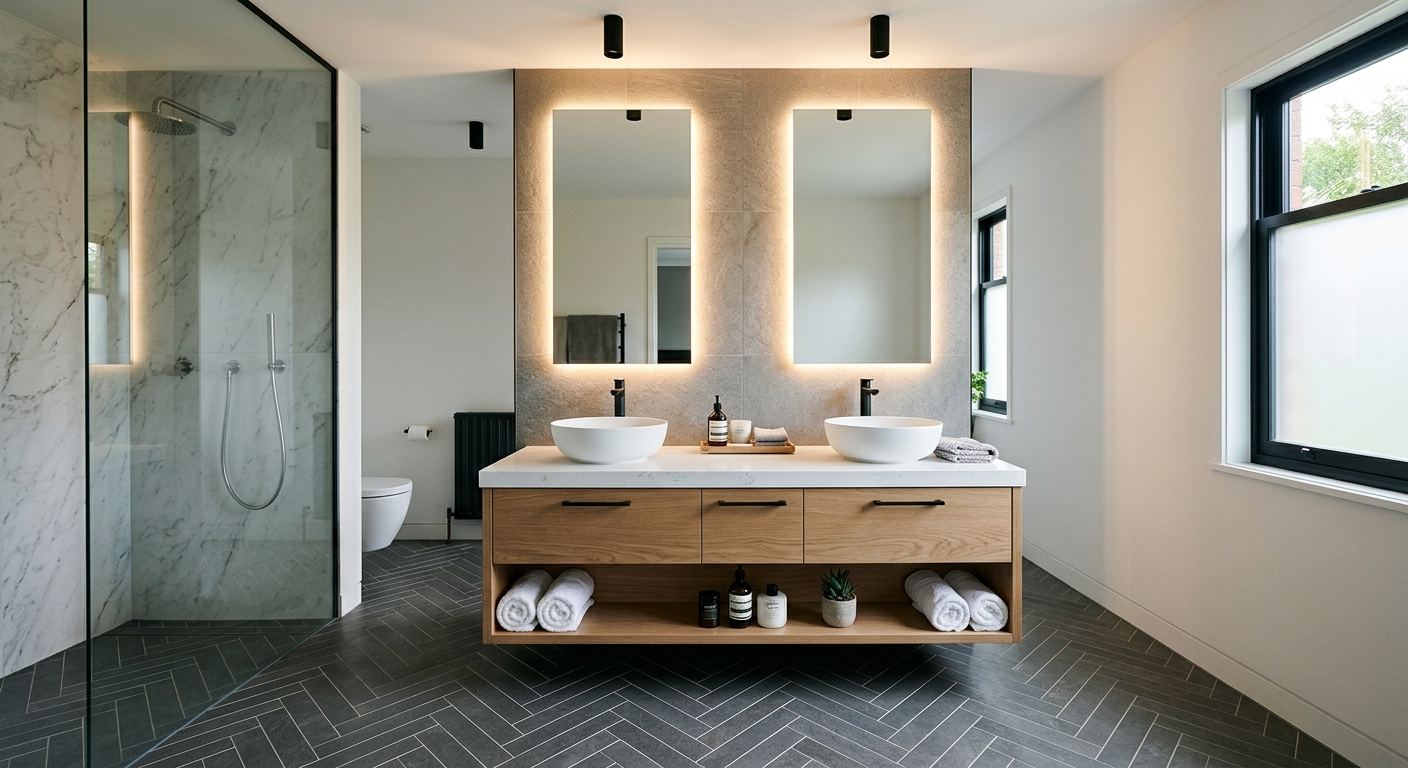
Bathroom renovation options and costs in Lamont
Bathroom renovations in Lamont usually start with one of three paths: a cosmetic refresh, a mid-range full renovation, or a high-end gut with premium finishes. With 53.7% of homes in the area built before 1981 (Statistics Canada, 2021 Census), many bathrooms reflect older layouts and materials—so even “straightforward” upgrades can uncover dated plumbing arrangements, cast-iron or copper drain runs, and sometimes asbestos in older floor tile or drywall compounds during demolition. For that reason, the quotes you receive can swing widely depending on what the contractor expects to find behind the walls.
In the Camrose–Drumheller economic region, costs are shaped less by local climate extremes and more by labour availability and the age of the housing stock. Edmonton and Calgary mid-market pricing effectively sets the rhythm for contractors’ rates that Lamont homeowners see, so full bathroom renovations commonly land in the $14,000–$30,000 band when the footprint stays the same. If you add a custom tiled shower, heated floors, or upgrade electrical and ventilation to address older systems, projects often move toward the $26,000–$45,000 range mentioned in broader Canadian guidance.
Trade demand is especially noticeable in and around the Lamont core and the surrounding service area, where crews can cluster bathroom work to reduce travel time. That can help with scheduling, but not necessarily with “cheap” pricing—older-home discoveries and licensed-trade labour still drive the final number. Use the table below as your starting point for comparing quotes line-by-line.
| Renovation Scope |
What's Included |
Typical Duration |
Price Range |
| Cosmetic refresh (paint, fixtures, accessories only) |
Paint, vanity refresh or swap, toilet swap, new mirror/light, caulking, accessories; no plumbing relocation |
3–7 days |
$3,000–$7,000 |
| Mid-range full renovation (new tile, vanity, tub/shower, electrical) |
Remove existing finishes, new vanity and fixtures, tub or alcove surround, bathroom exhaust fan, updated electrical for lighting/GFCI, tile floor + wall surround (same layout) |
2–3 weeks |
$14,000–$30,000 |
| High-end full renovation (custom tile, steam shower, heated floors) |
Full gut, custom tiled shower/steam-ready option, heated floor circuit, higher-end fixtures and waterproofing system, upgraded ventilation ducting, additional electrical circuits as required |
4–6 weeks |
$26,000–$45,000 |
| Shower-only installation (convert tub to walk-in shower) |
Remove tub, install walk-in shower base/pan or tiled pan, new glass or curtain option, new valve/controls as needed, waterproofing, tile surround |
1.5–3 weeks |
$10,000–$18,000 |
| Bathtub replacement or tub-liner install |
Replace alcove tub and re-seal/re-tile edges; optional liner where tub condition supports it; labour to protect adjacent finishes |
5–10 days |
$1,500–$8,000 |
| Tile-only installation (floor + surround, existing layout kept) |
Tile removal as required, tile floor and wall surround, grout/seal system, waterproofing layer appropriate for wet areas |
1–2.5 weeks |
$3,000–$12,000 |
Prices are estimates only and vary by project scope, site access and material selection.
What affects the price of bathroom renovation in Lamont
Even when two contractors quote the “same” bathroom job in Lamont, the total can differ by 30–50% across the Camrose–Drumheller region and Alberta because labour rates, trade scheduling, and hidden-condition risks vary. In practical terms, the age of the local housing stock tends to matter more than the weather itself. In Lamont, with a material share of older homes (53.7% built before 1981, Statistics Canada, 2021 Census), older plumbing runs, legacy venting, and electrical setups are common. Those issues can push a refresh toward a partial gut. That’s why you may hear “it depends what we find behind the tile.”
Older homes in the region often hide cast-iron or older copper drain stacks that need upgrading, galvanized supply lines that don’t perform like modern systems, and insufficient ventilation ducting. When contractors address those during a renovation, the job can move from a tile-focused scope toward full bathroom renovation pricing in the $14,000–$30,000 range. In pre-1985 builds, discovering asbestos in vinyl floor tile or drywall compounds triggers testing, abatement planning, and disposal coordination—often adding $1,500–$5,000+ depending on extent and access. This is a key reason quotes don’t converge to a single number.
Concrete examples that raise cost in Lamont include replacing a non-code exhaust fan with a ducted unit, correcting a subfloor that is out of level before installing tile, and adding a GFCI-protected circuit for bathroom receptacles. Examples that can lower cost: keeping the existing plumbing footprint, choosing a consistent tile format that reduces cutting, and confirming the subfloor condition early to avoid rework. The best way to control your budget is to plan for a contingency while you still have options—especially if you’re considering work that could otherwise sit in the $26,000–$45,000 higher-end band.
| Price Factor |
Why It Matters |
Cost Impact |
| Layout change — moving drain or supply lines requires rough-in work |
Requires demolition, framing access, licensed plumbing rough-in, and re-venting adjustments |
Often adds thousands; commonly pushes projects toward full-reno pricing bands |
| Tile selection — large-format porcelain vs. mosaic vs. ceramic |
Harder tiles need more skilled cutting, additional setting time, and stricter substrate prep |
Can swing the tile portion by several thousand |
| Fixture tier — builder-grade vs. mid-range vs. designer brands |
Higher-end fixtures cost more and may require additional matching trim/valves |
Typically a few hundred to several thousand |
| Subfloor condition — rot or unlevel concrete adds scope |
Tile systems fail without a stable, correctly prepared substrate |
May add structural repairs and extra waterproofing labour |
| Electrical — adding GFCI outlets, exhaust fan, heated floor circuit |
Licensed work, new wiring runs, and code-compliant protection/controls |
Usually noticeable cost increase when upgrades are required |
| Waterproofing method — membrane type and extent |
Correct waterproofing reduces risk of mould and costly tear-outs later |
Material + labour increase, but prevents far larger failures |
| Older-home surprises — asbestos tile, cast-iron drains, galvanized pipes |
Testing/abatement, replacements, extra disposal, schedule delays |
Commonly the biggest wildcard; can add $1,500–$5,000+ |
| Bathroom size — sq ft drives tile and labour time directly |
More wall and floor area increases setting time, thinset/grout use, and measurement work |
Directly changes labour hours and material quantities |
Permits & regulations in Alberta
In Alberta, many cosmetic bathroom updates in Lamont can be done without a permit—especially when you keep the layout and avoid structural and system changes. Typically, swapping fixtures like a toilet, vanity, mirror, or lighting trim, repainting, and doing retiling where plumbing does not move usually fall into “no permit required” territory for most homeowners. However, permits become relevant when you relocate plumbing, change ventilation with new electrical circuits, or alter structural elements.
Work that typically DOES require a permit includes: moving a drain or supply line (plumbing rough-in), making changes to load-bearing or structural wall framing, adding or upgrading an exhaust fan that involves electrical work and ducting changes, and any new or modified electrical circuits beyond simple like-for-like replacement. Electrical work must meet Alberta electrical requirements and be completed or signed off by a licensed electrician. Plumbing rough-in changes typically require a permit and inspection to confirm pressure/leak testing and proper rough-in installation.
How to verify before you sign: (1) ask for the contractor’s Alberta trade licence number and confirm it through the province’s online registry; (2) request a certificate of insurance showing liability coverage and ensure the policy is active for the renovation period; (3) ask for proof of WSIB/WCB coverage (or a clearance document where applicable) and verify the clearance is current. For transparency, request these documents during your quote stage so you’re not stuck after work starts.
Choosing tile, waterproofing and fixtures for your Lamont bathroom
For Lamont bathrooms, the budget usually turns on three material decisions: tile choice, waterproofing system, and fixture tier. First, tile selection: ceramic is a cost-effective entry option for floors and wall surrounds, while porcelain typically performs better in a wet environment and resists moisture more reliably. Natural stone (marble, travertine, slate) can look premium, but it adds higher material cost and more specialized finishing/sealing, plus extra labour for careful layout and sealing routines.
Second, waterproofing: a proper membrane system is what prevents moisture-related problems. In Alberta’s indoor humidity cycles, the bathroom dries—until it doesn’t. A paint-on membrane can be fine for some applications, but the most dependable results usually come from a bonded sheet membrane or a tested system installed with the right overlap and curing time. The correct approach around niches, seams, and the shower pan is what protects your investment and reduces mould risk.
Third, fixtures: builder-grade fixtures keep the price down, mid-range offers better valves and finishing, and designer lines can raise both hardware cost and labour if they require additional trim/valve matching. If your budget is tight, it’s often smarter to spend where performance matters: a reliable shower valve, proper waterproofing, and ventilation. For example, choosing porcelain instead of ceramic might add some upfront tile cost, but it’s often justified by fewer issues over time and less risk of tile and grout wear in a frequently used family bathroom.
In the Camrose–Drumheller market, you’ll see heated floors and custom shower elements move a project toward the higher full-reno band, while keeping the footprint and selecting durable finishes can keep you closer to the $14,000–$30,000 range for many mid-range full renovations.
| Material / Option |
Pros |
Cons |
Price Range |
| Ceramic tile (floor + walls) |
Budget-friendly, wide style selection, good for standard wet-area surrounds |
More variability in wear; may be less forgiving than porcelain in high-traffic moisture exposure |
$3,000–$7,500 |
| Porcelain tile (floor + walls) |
Denser and typically more moisture/impact resistant; holds up well with proper installation |
Can cost more per sq ft; may require more skilled cutting/layout work |
$5,000–$12,000 |
| Natural stone (marble, travertine, slate) |
Luxury look and unique variation; strong resale appeal when paired well |
Requires sealing/maintenance; higher labour for install and finishing |
$9,000–$18,000 |
| Frameless glass shower enclosure |
Modern appearance, easier to clean, durable hardware with proper installation |
Higher material cost; precise measurement/leveling required |
$1,800–$6,000 |
| Prefab tub surround (acrylic) |
Fast installation, fewer tile labour hours, consistent surface finish |
Less customization; seams still require careful sealing |
$900–$2,800 |
| Custom shower pan (tile or linear drain) |
Better custom feel, potential for curbless options, improved drainage with linear designs |
More labour and waterproofing complexity; requires excellent prep |
$5,000–$15,000 |
How to choose a bathroom renovation contractor in Lamont
Choosing the right contractor in Lamont is mostly about proof and clarity. Start by verifying Alberta licensing: ask for the trade licence number relevant to the scope (plumbing/electrical as applicable) and confirm it through the provincial online registry. Next, request liability insurance and check the certificate dates cover your project timeline. Also confirm WSIB/WCB coverage (or a clearance letter where applicable). A reputable contractor should provide these without resistance.
Then get 2–3 itemised written quotes. You want a labour and materials breakdown, not a single lump-sum number. Make sure the scope is explicit: what tile removal includes, whether disposal is in the price, whether permits are pulled by the contractor, and what waterproofing method is being used. Also ask about exclusions like hidden damage, asbestos testing/abatement, and substrate repairs.
Warranty matters. Look for a workmanship warranty length (and what it covers), and understand product/manufacturer warranties for tile systems, valves, fans, and any shower enclosure. Confirm whether warranties are transferable if you sell your home. Payment scheduling should be conservative—never more than about 10–15% upfront—and you should negotiate a holdback until completion and final touch-ups. Finally, get a written start date and a realistic completion estimate in the contract, along with what happens if materials are delayed.
- Verify Alberta licence numbers for the trades involved and match them to the quote scope.
- Review a current certificate of liability insurance with coverage dates.
- Confirm WSIB/WCB coverage status with proof/clearance documentation.
- Demand an itemised quote: labour line items, material allowances, and disposal/haul-away.
- Check waterproofing specification (membrane type and where it’s applied).
- Ask whether they include permit pulling and inspection scheduling where required.
- Confirm the exhaust fan plan (ducted vs. recirculating) and electrical protection (GFCI where needed).
- Clarify asbestos risk handling: do they test, and who pays for abatement if found?
- Request a demolition plan (how they protect adjacent rooms and manage dust).
- Get tile thickness/setting system details (thinset type, substrate prep expectations).
- Review warranty terms in writing (workmanship + product coverage, transferability).
- Use a payment schedule with a holdback and milestone-based invoicing.
In Lamont, red flags to watch for include: a quote that doesn’t clearly state waterproofing and ventilation scope, refusing to provide insurance/WSIB documents, vague “includes everything” language with no disposal or permit detail, insisting on large upfront payments, and a contract with no workmanship warranty or unclear change-order process.
Frequently asked questions — bathroom renovation in Lamont
Do I need a permit for a bathroom renovation in Alberta?
In Alberta, many bathroom updates in Lamont are treated as cosmetic and often don’t require a permit—think swapping a vanity, toilet, mirror, repainting, or retiling where you don’t move plumbing or structural elements. Permits are typically needed when you relocate plumbing (moving drain or supply lines), add or change ventilation that involves new electrical circuits, or do structural wall changes. Electrical work must comply with Alberta requirements and be completed or signed off by a licensed electrician. Plumbing rough-in changes usually require a permit and inspection. Before hiring, ask your contractor to specify what parts need permits and to show their licence documentation and insurance so you’re not left holding compliance issues.
What's the best tile for a bathroom in Lamont?
For most Lamont homeowners, porcelain tile is often the best balance of durability and performance. It’s denser and more moisture-resistant than basic ceramic, and it holds up well when the substrate is properly prepped and the shower is waterproofed correctly. If you want a lower-cost approach, ceramic can still work—especially for wall surrounds—but you’ll want the installer to be meticulous with layout, grout joints, and waterproofing. If you’re considering natural stone, it’s beautiful, but it requires extra sealing/maintenance and skilled installation. In cost terms, many tile-only scopes land in the $3,000–$12,000 band depending on tile size and complexity, and premium stone options can push higher.
Should I do a tub-to-shower conversion?
A tub-to-shower conversion can be a great choice in Lamont if you want easier accessibility, faster daily cleaning, or better water control with a modern shower valve and enclosure. It also pairs well with upgrading waterproofing and ventilation at the same time—important in older homes where ventilation may be inadequate. The trade-off is that conversions frequently require plumbing rough-in changes, which can add cost versus simply replacing a tub or retiling around it. If you’re budgeting, shower-only installations in this market commonly fall around the $10,000–$18,000 range depending on how much plumbing and tile work is needed. In homes built before 1981 (Statistics Canada, 2021 Census), expect more possible surprises like old drains or supply lines.
How do I prevent mold in a Lamont bathroom?
Mould prevention is mostly about three things: preventing water intrusion, improving drying, and eliminating condensation risk. First, use the right waterproofing system for wet areas—especially at shower pans, niches, and seams. Second, make sure you have a properly vented exhaust fan (ducted to the exterior where required) and that the electrical work supports safe operation, including GFCI protection where applicable. Third, keep humidity under control with reasonable bathroom fan run times after showers and prompt towel removal. In older Lamont housing, dated ventilation and questionable shower waterproofing are common drivers of moisture problems. Choosing correct waterproofing and doing a thorough substrate prep is usually more effective than “mopping harder” after the fact.
What adds the most resale value in a bathroom reno?
In Lamont and the broader Camrose–Drumheller area, the items that tend to add the most resale value are the ones buyers notice and that reduce maintenance risk: a modern, clean-looking shower/tub system; quality waterproofing; updated vanity and lighting; and good ventilation. Buyers also value safety updates like updated electrical and proper GFCI-protected bathroom receptacles, particularly in older homes. From a budget perspective, many full bathroom renos land in the $14,000–$30,000 range when you keep the layout, while high-end custom shower and heated-floor projects can move toward the $26,000–$45,000 band. The biggest “value multiplier” is staying consistent with the bathroom footprint unless you’re truly improving functionality—layout changes can inflate labour and rough-in scope.
Can I keep my existing plumbing layout to save money?
Yes—keeping your existing plumbing layout is one of the most reliable ways to control bathroom renovation costs in Lamont. When you don’t move drain or supply lines, you avoid much of the rough-in work, reducing demolition, labour hours, and permit/inspection complexity. It can also help keep you closer to the mid-range full renovation pricing band (often $14,000–$30,000 for many same-layout projects). That said, older homes built before 1981 (Statistics Canada, 2021 Census) can still have hidden issues like cast-iron drains, galvanized supply lines, or undersized venting. Keeping layout doesn’t eliminate surprises, but it usually prevents the renovation from turning into a full re-engineering of the wall and floor systems.