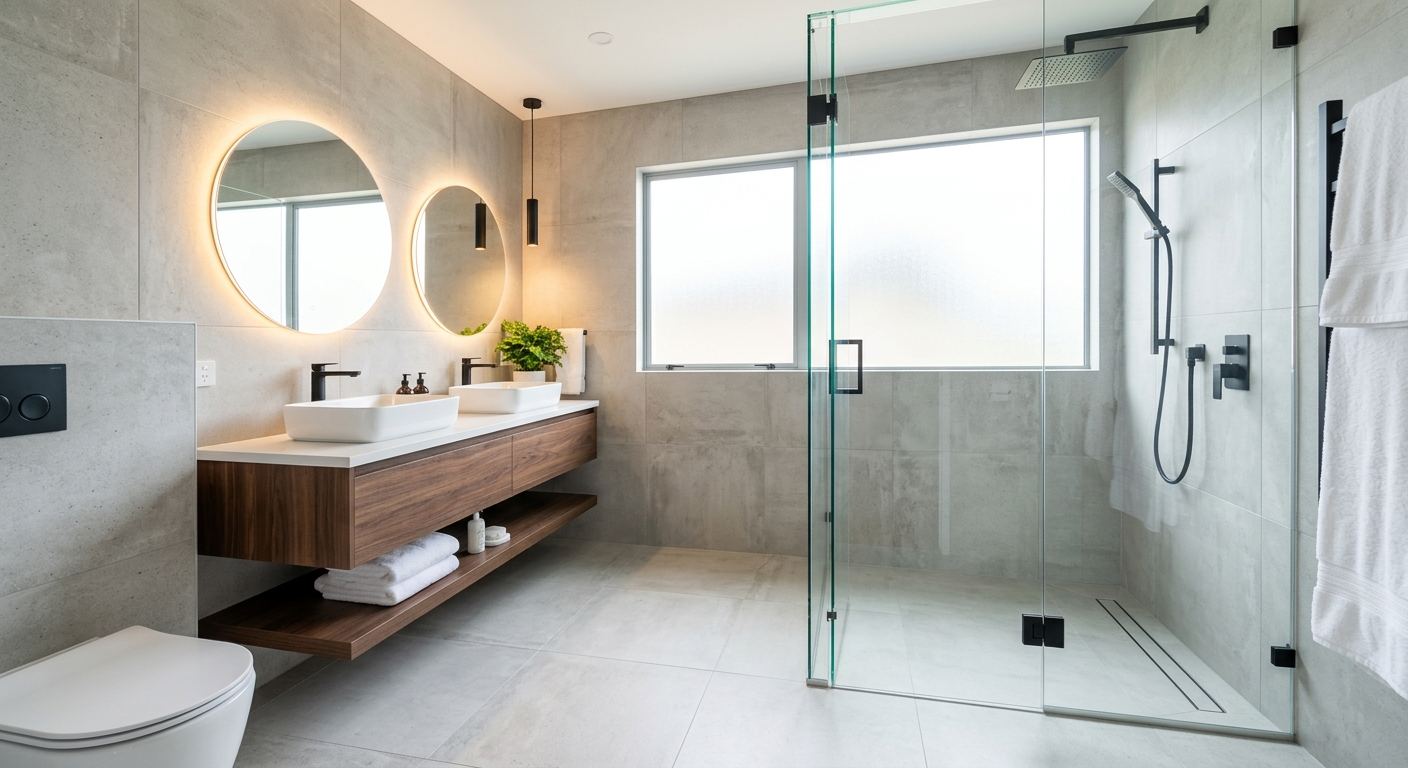
Bathroom renovation options and costs in Canmore
Bathroom renovations in Canmore are a bit different than in many other Alberta communities. With a population of 15,990 (Statistics Canada, 2021 Census) and 4,505 homeowner households (Statistics Canada, 2021 Census), demand stays steady—especially in established neighbourhoods like Three Sisters where older homes and chalet-style layouts often need updates. Cost is also influenced by the local housing age: 11.6% of homes were built before widespread modern plumbing and venting practices. That matters because dated layouts can mean hidden galvanized or older copper supply lines, undersized venting, and drainage components that become costly when we remove finished surfaces. In a worst-case scenario, asbestos-containing materials can show up in flooring or older drywall compounds, requiring careful handling and adding time and trades coordination.
In the Banff–Jasper–Rocky Mountain House region, pricing is shaped more by labour intensity and job complexity than by winter temperatures. The real swings come from what’s behind the walls: plumbing/venting upgrades, relocation of fixtures, electrical fan and receptacle work, and permit/inspection timelines. Because Canmore has a smaller local contractor pool than Calgary, availability can tighten during peak season, which can affect scheduling and overall labour labour-hours. The good news is that you can control cost by choosing the scope you truly need—cosmetic versus mid-range versus high-end—and matching the tile and waterproofing strategy to your budget.
Below is a practical comparison of common renovation paths to help you line up your expectations before you request a quote.
| Renovation Scope |
What's Included |
Typical Duration |
Price Range |
| Cosmetic refresh (paint, fixtures, accessories only) |
Repaint, swap vanity top or vanity if staying in the same footprint, replace toilet/faucets/shower head (no plumbing relocation), new lighting if wiring exists, accessories |
3–7 days |
$3,000–$7,500 |
| Mid-range full renovation (new tile, vanity, tub/shower, electrical) |
Demo and rebuild within existing rough-in locations; tile floor + surround, new vanity, tub-to-shower or tub/shower refresh, updated exhaust fan with new wiring, GFCI where required, waterproofing, new fixtures |
2–3 weeks |
$14,000–$22,000 |
| High-end full renovation (custom tile, steam shower, heated floors) |
Full gut; custom tile detailing, advanced waterproofing, heated floor circuit, upgraded shower system/controls, frameless glass (where applicable), premium vanity and fixtures, expanded electrical scope |
3–5 weeks |
$22,000–$28,000 |
| Shower-only installation (convert tub to walk-in shower) |
Remove tub, install shower base/pan and waterproofing, tile walls and floor, new shower valve/trim, glass enclosure (optional), exhaust fan assessment, electrical updates as needed |
2–3 weeks |
$7,000–$14,000 |
| Bathtub replacement or tub-liner install |
Remove and replace tub with new unit, recaulk/replace trim, minor plumbing tie-ins if compatible; or liner install where permitted and existing surfaces are sound |
2–5 days |
$1,200–$4,500 |
| Tile-only installation (floor + surround, existing layout kept) |
Demo tile only, prep and flatten as needed, install waterproofing for wet areas, install floor + wall tile to existing locations, fresh grout and caulking |
7–14 days |
$2,500–$12,000 |
Prices are estimates only and vary by project scope, site access and material selection.
What affects the price of bathroom renovation in Canmore
In the Banff–Jasper–Rocky Mountain House region, two quotes for the “same” bathroom can differ by 30–50% because labour time grows fast when we uncover older systems. Labour is typically the largest swing factor here; materials are important, but trades hours, permit/inspection steps, and rework for hidden conditions drive the gap. In Canmore specifically, many homes have dated plumbing and ventilation runs. Even if your tile and finishes are mid-market, an older drain stack, galvanized supply lines, or undersized venting can force rough-in changes that pull in plumbers, electricians, and sometimes remediation work.
Older housing stock can also trigger safety and compliance costs. For example, when asbestos-containing materials are discovered in vinyl floor tile or older joint compound (more common in homes built before modern building standards), budgets can increase by $1,500–$5,000+ depending on scope, containment requirements, and disposal. That’s why the regional bathroom renovation price bands can land at either end: a mid-range full renovation commonly sits in the $14,000–$22,000 zone, but once rough-in changes and electrical upgrades stack up, a project often trends toward $22,000–$28,000.
Concrete Canmore examples I see often: (1) a small “layout change” like moving a vanity 12–18 inches can mean new supply runs and valve placement, adding labour and opening wall space; (2) subfloor that’s out of plane can require extended prep and additional membrane thickness before tile goes down; (3) a reused exhaust fan housing with unknown duct routing may add time for ducting fixes rather than simply swapping the fan.
Climate matters less than most people think—our renovation costs are usually driven by what the bathroom needs once it’s opened and measured for waterproofing and venting capacity, not by freezing outdoor temperatures.
| Price Factor |
Why It Matters |
Cost Impact |
| Layout change — moving drain or supply lines requires rough-in work |
New plumbing rough-ins, patching, and potential venting fixes increase trades hours |
Often +$3,000–$8,000 |
| Tile selection — large-format porcelain vs. mosaic vs. ceramic |
Larger tile demands flatter substrates and more careful cuts; mosaics increase labour density |
Often +$500–$4,500 |
| Fixture tier — builder-grade vs. mid-range vs. designer brands |
Higher tiers cost more and may require specific trim valves, cartridges, or specialty parts |
Often +$800–$5,000 |
| Subfloor condition — rot or unlevel concrete adds scope |
Extra prep, underlayment, or repairs are needed before waterproofing and tile |
Often +$500–$3,500 |
| Electrical — adding GFCI outlets, exhaust fan, heated floor circuit |
New circuits add electrician time, materials, and sometimes panel work |
Often +$700–$4,000 |
| Waterproofing method — membrane type and extent |
Better systems reduce failure risk but can add material and labour for correct detailing |
Often +$400–$2,500 |
| Older-home surprises — asbestos tile, cast-iron drains, galvanized pipes |
Abatement, disposal, and replacement rough-in work can expand the schedule and cost |
Often +$1,500–$10,000+ |
| Bathroom size — sq ft drives tile and labour time directly |
More square footage means more waterproofing, tile setting, and grouting time |
Often +$1,000–$6,000 |
Permits & regulations in Alberta
In Alberta, many bathroom updates are considered cosmetic and typically do not require permits—think swapping in a new vanity, changing faucets/trim, repainting, replacing a toilet where the supply connection stays the same, or redoing tile and finishes without moving plumbing. As a rule of thumb for Canmore homeowners: if you’re not changing the plumbing layout, not cutting/altering structural wall locations, and not adding new electrical circuits, you’re usually in the low-permit zone.
Work that does typically require permits includes: relocating plumbing (moving a drain or water supply rough-in), adding or re-routing an exhaust fan with new wiring/circuit work, changing where electrical outlets will be located, and any wall modifications that affect framing or require inspection. Electrical must also meet the Canadian Electrical Code and be completed or signed off by a licensed electrician. Plumbing rough-in changes generally require a permit and inspection before walls are closed.
How to verify a contractor in steps: (1) confirm Alberta trade licensing for the scope they’re claiming (ask for licence information and check their details in Alberta’s online registry), (2) request a certificate of insurance showing general liability and ask whether they carry coverage for the project value, (3) confirm WSIB/WCB coverage—either through proof of clearance or a current account status letter—and (4) ensure any subcontractors (electricians/plumbers) are also licensed and insured for their portion. This protects you if something goes wrong during demo, waterproofing, or inspections in Canmore.
Choosing tile, waterproofing and fixtures for your Canmore bathroom
In Canmore, your renovation budget usually breaks into three material decisions: tile type, waterproofing system, and fixture tier. Tile choice sets the labour intensity because it determines how difficult the installation is and how much substrate prep is needed. For entry-level ceramic (floor + walls), you’ll generally find more options at a lower cost, but it can look less consistent and may be more forgiving in some applications. Porcelain is denser and often better suited for wet-room floors and high-traffic bathrooms, though you’ll pay more for the tile itself. Natural stone (marble, travertine, slate) is the luxury route—beautiful, but it demands careful selection, sealing, and meticulous setting so you avoid staining and unevenness.
Second, waterproofing is what prevents long-term mould risk. Choose the right method for your shower and tub surround, not just the “brand.” In Alberta’s indoor humidity cycles, a correct waterproofing approach matters more than climate slogans. Paint-on membranes are workable in some scenarios, but bonded sheet membranes or a schluter-style system with proper detailing can provide stronger, more consistent protection when installed correctly at corners, transitions, and curbs.
Third, fixture tier affects both first cost and resale perception. Builder-grade fixtures keep budgets in the lower end of the $14,000–$22,000 band for mid-range full renovations, while mid-range/designer fixtures can push you toward the higher end—especially when you’re also upgrading valve trims and shower controls. For example, moving from standard tub/shower trim to a more complete mid-range shower package might add $800–$2,500, but the upgrade is usually justified if you’re already investing in a full waterproofing and tile rebuild. If you’re only doing a cosmetic refresh, the same spend often isn’t worth it.
| Material / Option |
Pros |
Cons |
Price Range |
| Ceramic tile (floor + walls) |
More affordable; wide variety of colours/patterns; good for keeping budgets predictable |
Generally less dense than porcelain; can show wear faster in some applications |
$2,500–$7,000 |
| Porcelain tile (floor + walls) |
Durable for wet floors; more consistent look; handles busy households well |
Higher tile/material cost; may require more careful substrate prep |
$5,000–$12,000 |
| Natural stone (marble, travertine, slate) |
Premium appearance; unique character; strong resale appeal when executed well |
Higher cost; needs sealing/maintenance; can be more sensitive to grout/stain choices |
$8,000–$18,000 |
| Frameless glass shower enclosure |
Modern look; easier to keep clean; improves perceived bathroom size |
Costs add up quickly; requires precise opening and alignment |
$2,000–$5,500 |
| Prefab tub surround (acrylic) |
Fast install; less tile labour; good for rental-like durability |
Fewer design options; can look less custom; seam/fit matters |
$800–$3,000 |
| Custom shower pan (tile or linear drain) |
Great drainage design; clean aesthetics with linear drain; excellent for accessibility |
More detailed waterproofing and slope work; higher install time |
$3,500–$14,000 |
How to choose a bathroom renovation contractor in Canmore
Choosing the right bathroom contractor in Canmore starts with verification. In Alberta, confirm their trade licensing for the scope they’re performing and request proof of liability insurance for the project value. For coverage, ask for current WSIB/WCB documentation—either proof of clearance or an up-to-date account status letter—so you’re not exposed if a worker is injured on your site. Don’t rely on verbal confirmation; ask for documents before work begins.
Next, get 2–3 itemised written quotes. A good quote lists labour and materials separately and breaks down tasks like demolition, waterproofing, tile setting, plumbing rough-in, electrical/fan work, insulation/venting corrections, and disposal. It should also clearly state whether permits are included, which inspections are covered, and what’s excluded (for example: subfloor repairs, asbestos testing/abatement, or panel upgrades). Avoid lump sums that hide scope changes.
Warranty matters. Ask for the workmanship warranty length (often 1–5 years depending on the company and scope) and whether it’s transferable if you sell. Also note the product/manufacturer warranties for tile installation materials and fixtures. Finally, agree on a sensible payment schedule: never pay more than 10–15% upfront, and use a holdback until key milestones and final completion are met. Get the start date and estimated completion window in writing, including what happens if hidden conditions extend the schedule.
- Provide Alberta licence details for each trade performing work (or named subcontractors)
- Show a current certificate of insurance and confirm it includes your project address
- Provide WSIB/WCB clearance or current coverage documentation
- Quote is itemised (labour vs materials) and shows allowance amounts clearly
- Scope includes permits/inspections (or clearly states who pulls permits)
- Disposal and dumpster costs are specified
- Waterproofing method is named (membrane type) and includes corner/transition detailing
- Tile prep requirements are stated (flattening, patching, substrate testing)
- Timeline includes demo-to-waterproofing-to-tile milestones
- Warranty terms for workmanship and products are in writing
- Payment schedule stays at 10–15% upfront and uses progressive holds
- Communication plan is defined (site lead contact and expected check-ins)
Red flags I look for in Canmore: (1) quotes that don’t mention waterproofing details, (2) “one-size-fits-all” timelines that ignore hidden-condition contingency, (3) no proof of insurance/WSIB/WCB coverage, (4) refusal to provide an itemised breakdown or to list exclusions (like electrical fan ducting or subfloor repairs), and (5) pressure to pay a large deposit before demolition or before you’ve approved final finishes.
Frequently asked questions — bathroom renovation in Canmore
What's the difference between a cosmetic and a full bathroom renovation?
In Canmore and across Alberta, a cosmetic renovation usually keeps the plumbing and electrical locations where they are. That means you’re typically repainting, swapping fixtures (like faucets, toilet trim, shower head), replacing a vanity top, and refreshing lighting or accessories—without moving drains/supplies or adding new circuits. A full renovation generally means demo to the studs/drywall where needed, new waterproofing, tile changes, and often upgraded ventilation and electrical. Costs reflect that difference: a full renovation in this region commonly lands around the $14,000–$28,000 band, while cosmetic refresh projects are usually far lower because they avoid the trades time of rough-in work. In older Canmore homes (including some built before modern plumbing/venting practices), “cosmetic” can quickly expand if we uncover hidden leaks or failed subfloor conditions during tile removal.
How do I choose the right contractor for my bathroom in Canmore?
Start by verifying licensing and coverage before you compare prices. Ask for proof of Alberta trade licensing for their scope, a certificate of insurance, and WSIB/WCB documentation (clearance or current account status). Then get 2–3 written quotes that are itemised—labour and materials separated—so you can see what’s included for waterproofing, tile prep, permits, and disposal. In Canmore, also ask how they handle older-home surprises like cast-iron drains, galvanized supply lines, or possible asbestos-containing materials. A reputable contractor will explain contingencies and communicate how inspections and rough-in changes affect the schedule. If a quote only lists finishes but not electrical fan requirements, GFCI expectations, or waterproofing method, it’s not a complete comparison.
What's the most common mistake homeowners make in bathroom renovations?
The most common mistake I see in Canmore is underestimating what’s behind the finishes before demolition starts—especially on older homes. Homeowners sometimes pick high-end tile or fixtures, but then discover that the subfloor is uneven, the venting needs upgrading, or supply/drain lines are outdated once we remove the old tile. That can make a project jump from a targeted $14,000–$22,000 scope into higher-cost territory because the labour for rough-in and remediation isn’t optional. Another frequent issue is choosing a waterproofing approach based on look or price, rather than correct membrane type and detailing for your shower/tub layout. The fix is to require an itemised quote and ask specifically what happens if asbestos or asbestos-risk materials are found, and how the contractor plans for permits and inspections.
How long does tile installation take in a Canmore bathroom?
Tile timelines in Canmore depend mostly on the bathroom size and how much prep is required. For a typical tile-only scope where layout stays the same, plan for about 7–14 days from start of prep to completion, assuming materials arrive on time and the substrate is suitable. In full renovations, tile installation usually takes place after demolition, waterproofing, and any electrical/plumbing rough-in work—so tile setting is only one part of a multi-week schedule. If you need significant flattening/repair, it can add days because waterproofing and tile can’t be rushed without risking failure. A good contractor will build your schedule around cure times for membranes/setting materials and align it with inspections where permits are required.
How much does a bathroom renovation cost in Canmore?
For Canmore homeowners, a full bathroom renovation in this region is commonly budgeted at $14,000–$28,000. Cosmetic refresh projects are typically lower because they avoid plumbing and electrical relocation—often just a few thousand dollars depending on how many fixtures and finishes you change. Shower-only conversions (like converting a tub to a walk-in) often fall into the $3,500–$14,000 range depending on tile complexity and whether venting/electrical upgrades are needed. If you’re replacing a tub or using a tub-liner, those scopes are frequently in the $1,200–$4,500 band. Your final number should be tied to an itemised quote that accounts for permits, waterproofing method, and any older-home surprises common in pre-modern plumbing/venting layouts.
How long does a bathroom renovation take in Canmore?
Most Canmore bathroom renovations take about 2–5 weeks, depending on whether it’s cosmetic, mid-range full, or high-end with heated floors and custom shower work. Cosmetic refreshes are often completed in roughly 3–7 days because the scope avoids rough-in trades. Mid-range full renovations typically land around 2–3 weeks, while high-end full renovations with expanded electrical and more complex tile detailing can run 3–5 weeks. The schedule is more influenced by trades availability and hidden-condition discoveries than by weather. In older homes, uncovering issues like outdated plumbing, subfloor repairs, or ventilation shortcomings can extend the timeline because permits/inspections may be needed before walls are closed. Get your start date and completion estimate in writing so you can plan around the disruption.