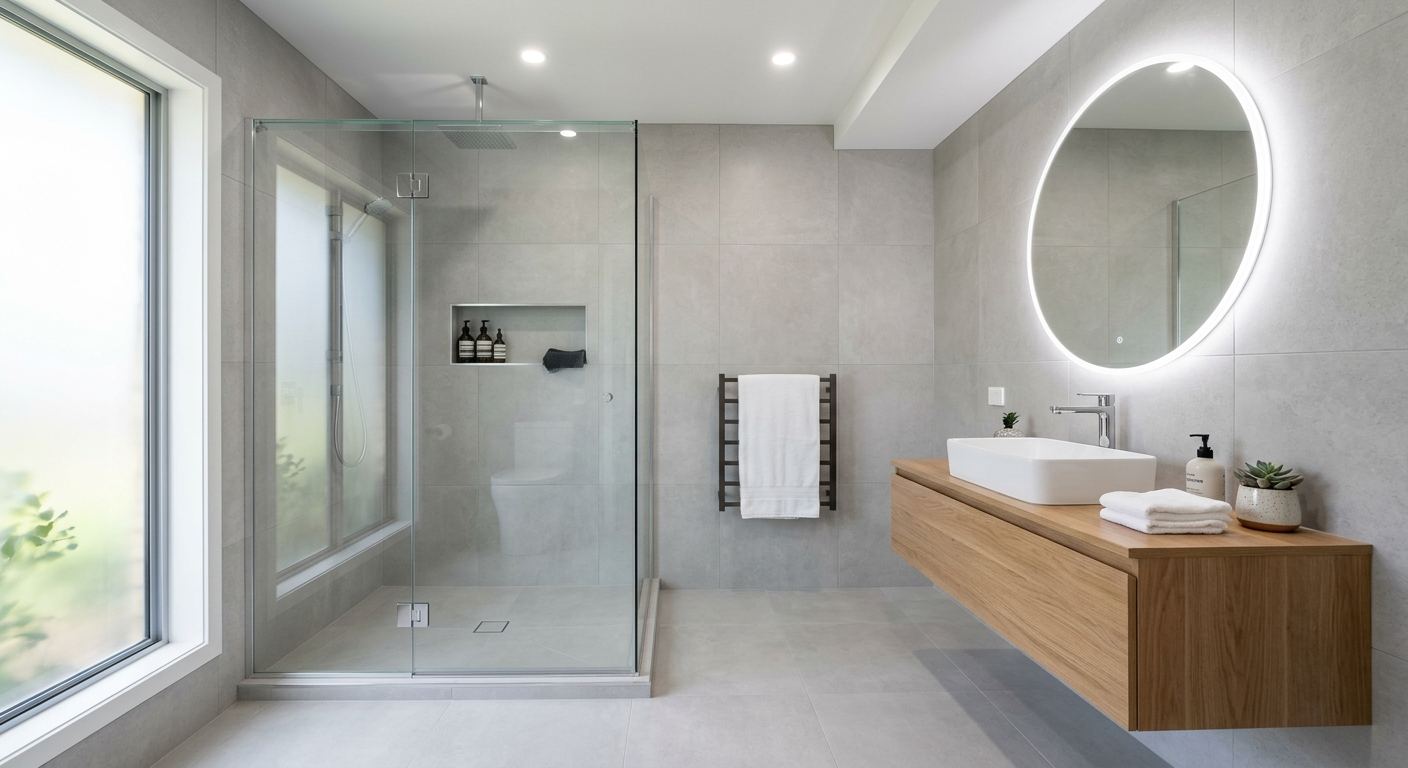
Bathroom renovation options and costs in Kenilworth
Kenilworth homeowners usually start by asking the same question: “What will this cost in our town?” With a population of 2,489 (Statistics Canada, 2021 Census), the local renovation market is smaller and you’ll feel it in scheduling, lead times, and how quickly trades can mobilize. In the Calgary economic region, pricing is driven more by local labour rates and what’s behind the walls than by Alberta’s weather alone. Many older houses around the Calgary corridor were built with plumbing layouts that aren’t ideal for modern fixtures—plus potential hidden scope such as dated venting, cast-iron drain sections, and, in pre-1985 finishes, asbestos risks in some floor tile or older drywall compounds. That’s why a “simple refresh” can turn into a mid-range full renovation once walls open.
Contractors also get pulled between callouts—service work, drain issues, and foundation-related moisture repairs—so labour can spike when demand is high. The upside for Kenilworth: once materials are confirmed, most bathroom builds are straightforward logistically, especially for homes clustered near the busier access routes toward Calgary. For example, in the Calgary-related growth belt feeding into Kenilworth (often where trades route between rural addresses and Calgary subdivisions), contractors tend to be especially in demand for tile, shower waterproofing, and drain upgrades.
Below are realistic budget ranges by scope. Use them to compare contractor quotes and decide where you want to spend—and where contingency planning matters most—before you lock in finishes.
| Renovation Scope |
What's Included |
Typical Duration |
Price Range |
| Cosmetic refresh (paint, fixtures, accessories only) |
Paint, vanity or faucet swaps, toilet/aerator/trim replacements, mirrors, lighting swaps (no new circuits), re-caulking |
3–7 days |
$3,000–$7,000 |
| Mid-range full renovation (new tile, vanity, tub/shower, electrical) |
Demo & haul-away, tub-to-shower or tub/shower refresh, new surround and floor tile, vanity + sink, new exhaust fan, updated lighting, basic plumbing re-seating (minor rough-in if needed) |
2–4 weeks |
$15,000–$22,500 |
| High-end full renovation (custom tile, steam shower, heated floors) |
Custom shower pan, premium tile layout, heated floor system, upgraded lighting plan, steam-ready plumbing/electrical, higher-end fixtures, extra waterproofing and niche/bench builds |
4–7 weeks |
$22,500–$30,000 |
| Shower-only installation (convert tub to walk-in shower) |
Remove tub, new shower base/pan, waterproofing, glass or curtain setup, new valve trim, tile surround, ventilation upgrades if required |
1.5–3 weeks |
$8,000–$15,000 |
| Bathtub replacement or tub-liner install |
Remove and replace tub (or liner), new trim, re-seal waterproof joints, test for leaks, re-install surround/caulking |
5–10 days |
$500–$3,000 |
| Tile-only installation (floor + surround, existing layout kept) |
Tile removal/reinstall as needed, substrate prep, waterproofing where applicable, tile floor + wall surround, grout/caulking, edge finishing |
1.5–3.5 weeks |
$3,000–$12,000 |
Prices are estimates only and vary by project scope, site access and material selection.
What affects the price of bathroom renovation in Kenilworth
Even when two Kenilworth homeowners want the “same” bathroom—same size, same tile look, same fixtures—quotes can land 30–50% apart in the Calgary region. The main driver is not Alberta’s climate; it’s labour rates and what gets discovered after demo. In older homes across the Calgary economic region, plumbers and tile setters often encounter cast-iron or copper drain sections that need upgrading, galvanized supply lines that may be corroded, and ventilation setups that don’t move moisture effectively. When those issues surface, scope expands quickly from a cosmetic refresh into a mid-range full renovation.
Hidden surprises also include asbestos. In pre-1985 homes, asbestos may be present in some vinyl floor tile or older drywall compounds; if encountered, contractors must follow abatement protocols, which can add $1,500–$5,000+ to the budget depending on the area and containment requirements. That’s one reason “quick” schedules rarely hold once walls are opened. You may also see cost swings from electrical timing—adding a GFCI where required, upgrading an exhaust fan, or creating a new circuit for a heated floor can’t happen without coordinated electrician availability.
Concrete examples from Kenilworth-area jobs: (1) Keeping the existing tub valve position can keep a shower conversion closer to the lower end of shower installs (think $8,000–$15,000), while moving the valve often triggers extra rough-in and re-tiling. (2) If the subfloor is unlevel or soft, tile and waterproofing labour rises because proper substrate correction is non-negotiable—this is why tile-only budgets can jump toward the upper end of $3,000–$12,000.
Finally, shower enclosures, floor plan tightness, and whether your renovation is near peak trade demand affect how fast crews can return. In short: assume an older home renovation in Kenilworth will include concealed repairs, not just visible finish changes.
| Price Factor |
Why It Matters |
Cost Impact |
| Layout change — moving drain or supply lines |
Requires rough-in work, sometimes joist adjustments, and more demolition/rebuild |
Can add $3,000–$8,000+ |
| Tile selection — large-format porcelain vs. mosaic vs. ceramic |
Harder materials and complex patterns increase prep, cutting, and labour time |
Typically adds $500–$4,000 |
| Fixture tier — builder-grade vs. mid-range vs. designer brands |
Valves, trims, vanities, and toilets vary widely in cost and sometimes in installation complexity |
Varies $1,000–$6,000 |
| Subfloor condition — rot or unlevel concrete adds scope |
Correcting structure is essential for crack-free tile and long-term waterproofing |
Often adds $1,500–$7,000 |
| Electrical — adding GFCI outlets, exhaust fan, heated floor circuit |
New circuits require licensed work and coordination with waterproofing schedule |
Usually adds $800–$4,500 |
| Waterproofing method — membrane type and extent |
Better systems prevent mould and failures; more coverage increases material and labour |
Typically adds $600–$3,500 |
| Older-home surprises — asbestos tile, cast-iron drains, galvanized pipes |
Abatement, plumbing upgrades, and containment can expand the job mid-stream |
Can add $1,500–$10,000+ |
| Bathroom size — sq ft drives tile and labour time directly |
Tile area, grouting time, thinset quantities, and install time scale with size |
Often shifts $2,000–$6,000 |
Permits & regulations in Alberta
In Alberta, cosmetic bathroom updates usually don’t require a permit. That typically includes swapping fixtures like faucets, toilets, vanities, light fixtures (without adding new circuits), replacing trim, painting, and re-caulking. If your contractor is simply re-surfacing with tile while keeping plumbing locations the same, permits may still be a question—especially where new waterproofing details or substrate work change what’s behind the walls, but the key trigger is usually plumbing/electrical scope rather than tile itself.
What typically does require permits and inspections in Kenilworth/Alberta projects: relocating plumbing (moving drain or supply lines), opening walls for rough-in changes, and adding or modifying electrical components such as exhaust fan circuits, heated floor circuits, or additional GFCI-protected outlets. If any structural wall changes are made, that’s also typically permitable work. Electrical work must meet provincial code and be completed by a licensed electrician (or signed off through proper channels).
How to verify a contractor step-by-step before you sign:
- Ask for their Alberta trade licence number (and confirm it’s active via the relevant online registry listing for that trade).
- Request a certificate of insurance showing general liability and ensure the policy is current for the project dates.
- Confirm WSIB/WCB coverage for workers (and ask for the clearance letter or proof of account coverage).
- Get proof of electrician/plumber permits or subcontractor licence details if they’re not the prime trade.
- Make sure the contract states who pulls permits (and whether it’s included in the quoted price).
This upfront verification prevents delays if inspectors require corrections after rough-in.
Choosing tile, waterproofing and fixtures for your Kenilworth bathroom
For a Kenilworth bathroom renovation, three decisions do most of the heavy lifting on both performance and budget: tile choice, waterproofing method, and fixture tier. Start with tile: ceramic is the entry point, but it’s more forgiving to budget and can be adequate for many wall applications; porcelain is denser and commonly preferred for floors because it resists wear and moisture better; natural stone (marble, travertine, slate) can look spectacular, but it typically needs more careful installation, sealing, and layout planning.
Next is waterproofing. In Alberta’s indoor humidity cycle—showers create short spikes in moisture—good waterproofing is what prevents mould and failed tile assemblies. A reliable approach is a bonded sheet membrane or a high-quality system designed for wet areas, not just paint-on “waterproofing” alone. If a contractor uses a paint-on membrane, confirm it’s the right product for the substrate and the shower/tub use-case, including proper detailing at corners, transitions, and niches. The key is whether they’re building a continuous barrier to the drain and up the walls to the correct height.
Finally, fixture tier affects comfort and longevity. Builder-grade fixtures often cost less but can feel less precise; mid-range balances price and performance; designer fixtures can justify the spend with better valve control, finishes, and warranty coverage. In Kenilworth homes, where resale expectations are tied to “turnkey readiness,” upgrading the shower valve and ventilation can be a smarter ROI than upgrading every accessory.
Example: If you upgrade from ceramic tile to porcelain tile on a typical tub/shower surround and floor, the material and labour difference might add a few thousand dollars—however, it’s usually justified because porcelain reduces the risk of premature wear and improves long-term appearance. If your waterproofing method is already strong, you don’t have to chase premium stone to get a high-end look; smart porcelain + excellent layout and grout selection often performs better for the money.
| Material / Option |
Pros |
Cons |
Price Range |
| Ceramic tile (floor + walls) |
Lower cost, good for walls, widely available colours/sizes |
Less durable than porcelain for floors in high-traffic use |
$3,000–$7,500 |
| Porcelain tile (floor + walls) |
More durable for floors, better moisture and wear resistance, cleaner long-term |
Can be pricier and heavier; layout and cutting require precision |
$6,000–$12,000 |
| Natural stone (marble, travertine, slate) |
Luxury look, unique variation, premium feel |
Sealing/maintenance, can be uneven; higher install labour |
$9,000–$18,000 |
| Frameless glass shower enclosure |
Brightens the bathroom, modern appearance, easier wipe-down |
More expensive, requires precise measurements and sturdy installation |
$1,500–$4,000 |
| Prefab tub surround (acrylic) |
Fast install, easy maintenance, predictable performance |
Less “custom” look; limited patterns and premium options |
$500–$1,800 |
| Custom shower pan (tile or linear drain) |
Great drainage, custom slope and layout, modern linear aesthetic |
More labour and waterproofing detailing; requires careful substrate |
$2,500–$7,500 |
How to choose a bathroom renovation contractor in Kenilworth
Choosing the right contractor in Kenilworth is mostly about verifying capability and reducing surprises. Start by checking Alberta licensing: confirm the contractor’s trade licence for the work they claim (or verify that the subcontractors—like electricians and plumbers—are properly licensed). Next, verify liability insurance and WSIB/WCB coverage. You want proof that covers injuries on site and your project responsibility exposure. Ask for the certificate of insurance and a WSIB/WCB clearance letter or proof of account coverage before the job begins.
Then get 2–3 itemised written quotes. “Itemised” matters: insist on a line-by-line labour and materials breakdown (demo, plumbing changes, rough-in, waterproofing, tile setting, electrical, disposal), not a single lump sum with vague allowances. Make sure the quote specifies what’s excluded: demolition dust control, subfloor repairs, permit pulling, disposal/hauling, and any temporary protection for flooring and entries.
Warranty is another filter. Look for a workmanship warranty length (often best when tied to moisture-critical work like waterproofing and tile) and ask how long product warranties last for valves, glass, and heated floor systems. Also ask whether warranties are transferable if you sell your home.
Payment schedules should be disciplined. A fair rule of thumb: never pay more than 10–15% upfront, and hold back a portion until the job is complete and deficiencies are addressed. Finally, request start date and completion estimate in writing so scheduling changes don’t become budget creep.
- Confirm Alberta trade licence number(s) and scope of work covered.
- Ask for certificate of insurance and verify it includes renovation work.
- Request WSIB/WCB proof or clearance letter for the workers assigned.
- Get itemised quotes (labour + materials), with allowances clearly labelled.
- Confirm who pulls permits and whether permit fees are included.
- Clarify disposal and demolition haul-away: “included” vs “extra.”
- Require a waterproofing spec: membrane type, thickness/brand, and detailing.
- Ask how they handle subfloor correction and what’s covered in that line item.
- Verify electrical scope: exhaust fan, GFCI, heated floor circuit (if any).
- Confirm caulking/grout type and where expansion joints are used.
- Get a written change-order process with labour rates for “extras.”
- Review warranty terms for both workmanship and products; ask if transferable.
Red flags I commonly see with bathroom contractors around Kenilworth: no itemised scope, vague waterproofing language (“we waterproof”), refusal to provide insurance/licence/WSIB proof, asking for large upfront payments (well beyond 10–15%), and quoting the project as a “quick refresh” without acknowledging older-home plumbing/venting and subfloor risks.
Frequently asked questions — bathroom renovation in Kenilworth
How much does a walk-in shower cost in Kenilworth?
A walk-in shower conversion in Kenilworth typically starts around the lower end of shower installation pricing—many homeowners budget for $8,000–$15,000 when the existing valve location is staying close to where it is. The final number depends on glass vs. curtain, the shower pan build (tile with a proper slope and drain vs. a simpler base), and whether electrical/ventilation upgrades are needed. In older homes in the Calgary economic region, concealed issues like subfloor softness, limited ventilation, or older drain work can expand the scope after demo. If you keep the layout mostly intact, costs usually come in lower; if moving drains/supplies or upgrading wiring is required, plan for the higher end.
What's the ROI on a bathroom renovation?
Bathroom ROI isn’t one universal percentage because it depends on how “turnkey” the renovation feels to buyers and whether the layout and water systems are upgraded. In practical terms for Kenilworth/Calgary-area homes, buyers pay for a reliable waterproofed shower, clean tile lines, good ventilation, and fixtures that look current. If you’re deciding between cosmetic upgrades and deeper work, the hidden-scope pieces—like fixing venting, upgrading aged plumbing lines, and improving waterproofing—often protect the long-term value more than swapping finishes alone. A common approach is to target mid-range full renovations (often $15,000–$22,500), then choose finishes that look premium without overspending on unnecessary “luxury overkill.”
Do I need waterproofing behind the tile?
Yes, in a properly built Alberta shower/tub area you should expect waterproofing behind the tile system. Tile and grout are not waterproof themselves; the waterproofing layer is what prevents moisture movement into framing and subfloor assemblies—especially important when your bathroom experiences repeated wet-season humidity cycles from showers. A contractor should specify the waterproofing method (sheet membrane or a compatible membrane system) and show how it’s detailed at corners, niches, and transitions to the drain. In older Kenilworth homes, I also pay attention to substrate readiness: if the substrate is cracked, soft, or unlevel, waterproofing won’t perform as intended unless corrected first.
How do I compare bathroom renovation quotes?
Compare quotes by scope and allowances, not just the bottom-line number. Ask each contractor to provide itemised labour and materials, with clear allowances for tile, fixtures, glass, and disposal. Confirm what’s included for permit pulling, whether demolition is part of the price, and what happens if asbestos is discovered. Also verify the waterproofing specification, electrical scope (GFCI, exhaust fan, heated floor circuit), and whether subfloor repairs are “included” or “extra.” If one quote shows $3,000–$12,000 for tile-only but the other assumes existing surfaces are perfect, the differences may explain the gap. Finally, check warranty terms and the payment schedule—lowest price with high upfront payment is often the costliest later.
Can I live at home during a bathroom renovation in Kenilworth?
Often yes, but it depends on the scope and which bathroom is being renovated. If you have a second full bathroom, a cosmetic refresh or tile-only project can usually be managed while staying in the home. For a full renovation—especially one involving shower/tub removal, plumbing rough-in, and electrical—living on-site is possible only if you can set up a temporary wash solution and protect the rest of the home from dust and debris. In older Kenilworth houses, demolition can expose hidden plumbing/venting needs, which can extend timelines, so confirm start and completion estimates in writing. If there’s no second bathroom, many homeowners choose partial phasing (finish one zone at a time) or plan a short move-out window during the waterproofing and tile setting period.
What's the best bathtub material for a Kenilworth home?
“Best” usually means the material that matches your budget, the existing surround condition, and how much you want to maintain. For many Kenilworth bathrooms, acrylic tub liners or prefab surrounds can be the most practical when the tub shell is still structurally sound, with typical bathtub replacement or liner work in the $500–$3,000 range. If you’re replacing the whole unit, acrylic tubs are popular because they’re lighter and can reduce installation stress on older framing, while still offering good insulation and easy cleaning. Cast iron is extremely durable, but replacement cost is often higher and it requires careful handling. If your goal is long-term leak prevention, also prioritize proper caulking, waterproofing details at the wall interface, and ventilation improvements so moisture doesn’t linger behind the surround.