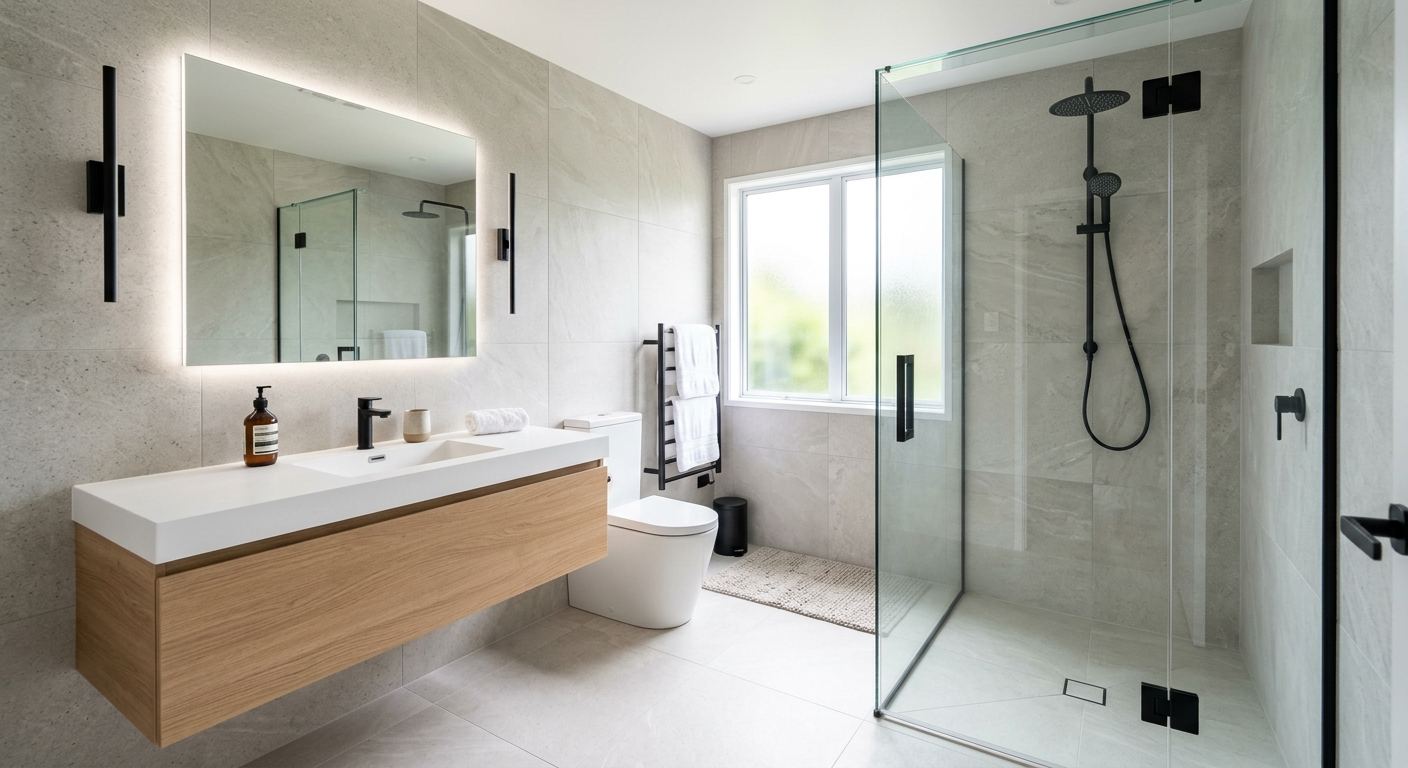
Bathroom renovation options and costs in Killarney
Killarney, Alberta has a mix of long-established homes where bathrooms are often original or near-original, which is why renovation decisions in this neighbourhood commonly start with “how much is hidden?” Around the Calgary economic region, Killarney’s community sits within a broader housing market shaped by older stock; with Killarney’s population at 3,990 (Statistics Canada, 2021 Census), contractor capacity is tight enough that scheduling and material availability can affect timelines and labour rates. In older homes, dated rough-ins (drain slopes, supply pressure, and venting) can show up only after demolition, and that’s where cost swings happen.
In Calgary-area renovations, climate is more about moisture management than freeze-thaw, so the real driver is waterproofing discipline and ventilation performance. Bathrooms that haven’t had modern exhaust capacity tend to trap humid air in cold seasons, increasing the risk of grout failure and sub-surface rot—especially when ceilings are insulated unevenly. Contractors in areas like South Calgary’s and surrounding inner-city communities (including Killarney) often report hidden-scope adds: plumbing and venting upgrades, subfloor repairs, and occasional discovery of asbestos-containing materials in older finishes.
That’s why the “right” option is usually the one that matches your current condition, not just the look you want. Use the table below to compare realistic scopes—from a cosmetic refresh to a full remodel—before you start collecting quotes.
| Renovation Scope |
What's Included |
Typical Duration |
Price Range |
| Cosmetic refresh (paint, fixtures, accessories only) |
Paint, replace vanity or toilet only (no plumbing relocations), swap light/fan accessories if existing circuits allow, install new hardware, accessories, and caulk/touch-up |
3–7 days |
$3,500–$8,000 |
| Mid-range full renovation (new tile, vanity, tub/shower, electrical) |
Demo and rebuild with new wall/floor tile, vanity, tub/shower surround, new exhaust fan (vented), updated electrical (GFCI where required), basic plumbing tune-up, waterproofing upgrades |
2–4 weeks |
$15,000–$22,500 |
| High-end full renovation (custom tile, steam shower, heated floors) |
Designer tile layout (custom angles), steam shower or upscale shower system, heated floor circuit and insulation, premium fixtures, upgraded ventilation strategy, improved waterproofing and niche/grab bar planning |
4–7 weeks |
$22,500–$30,000 |
| Shower-only installation (convert tub to walk-in shower) |
Remove existing tub, build new shower pan, tile walls/floor, new glass enclosure, relocate drain if needed, new waterproofing, new vent fan or tie-in if upgrading |
2–3 weeks |
$8,000–$15,000 |
| Bathtub replacement or tub-liner install |
Replace tub with standard unit and reconnect plumbing OR install tub-liner system, new sealing/trim, re-caulk and patch adjacent finishes |
1–3 weeks |
$500–$3,000 |
| Tile-only installation (floor + surround, existing layout kept) |
Tile removal and re-set (to the extent needed to achieve proper prep), waterproofing where required for wet areas, new grout/caulk lines, keep fixtures and plumbing locations unchanged |
1.5–3 weeks |
$3,000–$12,000 |
Prices are estimates only and vary by project scope, site access and material selection.
What affects the price of bathroom renovation in Killarney
In Killarney, you can get quotes that differ by 30–50% for what sounds like the same bathroom. The reason is usually not “Calgary weather”—it’s the mix of regional labour rates and the age/condition of the housing stock. In the Calgary economic region, older homes often hide issues that only appear once walls are open: cast-iron or corroded drain stacks, galvanized supply lines, venting that doesn’t meet modern performance, and subfloor that’s been slowly moving or settling. Those hidden repairs turn a “mid-range” plan into a higher-scope remodel, and that’s why your contingency matters even if you’re targeting a budget renovation.
For example, upgrading concealed plumbing rough-in and improving wet-area ventilation can push a project from the low end toward mid-range pricing (often where full renovations commonly start around the mid-five figures). Likewise, adding heated floors and premium tile detailing can move a bathroom toward the high-end band—particularly when electrical upgrades require circuit coordination and extra labour.
Concrete Killarney examples I see often: (1) a shower conversion where the drain needs re-slope or a new vent tie-in, adding days of rough-in and patching; (2) older flooring where vinyl floor tile (pre-1985 homes are the common concern) leads to asbestos testing and, if confirmed, abatement—typically increasing the budget by about $1,500–$5,000+; and (3) bathrooms with inadequate exhaust that show early grout failure, meaning more prep and more waterproofing replacement than the homeowner expected.
| Price Factor |
Why It Matters |
Cost Impact |
| Layout change — moving drain or supply lines requires rough-in work |
Relocation forces demolition, new pipe runs, and re-venting or tie-ins |
+10% to +30% typical |
| Tile selection — large-format porcelain vs. mosaic vs. ceramic |
Harder tiles demand better prep and different setting techniques |
+5% to +25% |
| Fixture tier — builder-grade vs. mid-range vs. designer brands |
Premium valves, faucets, and trims increase materials and sometimes trim/valve compatibility work |
+5% to +20% |
| Subfloor condition — rot or unlevel concrete adds scope |
Water damage can require full sections of repair and additional waterproofing prep |
+10% to +40% |
| Electrical — adding GFCI outlets, exhaust fan, heated floor circuit |
New circuits require licensed electrician work and coordination with trades |
+5% to +25% |
| Waterproofing method — membrane type and extent |
Better systems cost more but reduce call-backs and future moisture problems |
+3% to +15% |
| Older-home surprises — asbestos tile, cast-iron drains, galvanized pipes |
Discovery changes scope, adds testing/abatement and replacement time |
+ $1,500 to $5,000+ (sometimes more) |
| Bathroom size — sq ft drives tile and labour time directly |
More coverage means more labour, more backer prep, and more curing time |
+8% to +35% |
Permits & regulations in Alberta
In Alberta, many “freshen-up” bathroom updates typically do not require permits. Cosmetic work such as swapping a vanity, replacing a toilet or faucet, painting, installing accessories, or retiling in the same footprint (without changing plumbing routes) usually falls under straightforward homeowner-renovation scope. However, permits often are required when you change the building services or the structure. In practical terms for Killarney renovations, this includes relocating plumbing—moving a drain or supply line—adding or changing an exhaust fan where new wiring or new ducting is introduced, and any electrical additions that extend beyond like-for-like fixture swaps.
Electrical work must meet Alberta’s code requirements and be performed by, or at minimum signed off by, a licensed electrician. Plumbing rough-in changes and any work that alters venting or pipe routing typically triggers permit/inspection requirements. Structural wall changes (removing a wall section, altering load paths) also falls into the “permit likely” category.
To verify a contractor before signing: (1) confirm their Alberta trade licence by checking the relevant provincial registry listing, (2) request a certificate of insurance (liability) showing current coverage, and (3) ask for proof of coverage/clearance related to workplace injury protection (WSIB/WCB). Then keep copies in your project folder and ensure the insurance names match the company doing the work—not just a subcontractor they plan to send later.
Choosing tile, waterproofing and fixtures for your Killarney bathroom
Your bathroom budget in Killarney usually rises or stabilises based on three material decisions: tile choice, waterproofing system, and fixture tier. First, tile. Entry-level ceramic can be more budget-friendly, but it’s typically softer and can be more finicky to install cleanly with consistent lippage control. Porcelain tile is denser and more forgiving for floors in high-moisture areas, and it’s a common mid-range sweet spot. Natural stone (marble, travertine, slate) looks premium, but it requires more careful selection and sealing, and it can increase labour time during layout and finishing.
Second, waterproofing. In Alberta bathroom conditions, the goal is to stop moisture migration behind tile and into framing. A paint-on membrane can work for some scenarios, but bonded sheet membranes or purpose-built tile waterproofing assemblies generally provide more robust performance when installed correctly across seams, corners, and transitions. Third, fixtures. Builder-grade valves and trims reduce upfront cost, but designer brands often justify the spend through better finishes, smoother operation, and better long-term wear—useful for resale appeal in a market where buyers notice function and finish.
Here’s a dollar reality check: upgrading from a mid-range tile and standard shower assembly to a higher-spec tile layout plus upgraded waterproofing and heated-floor prep often moves you into the territory of a mid-range full renovation (frequently around $15,000–$22,500), while high-end choices like heated floors and premium shower systems can land toward $22,500–$30,000. If you’re converting a tub to a shower, the material spend matters—but the waterproofing and drainage details matter more for avoiding future mould and grout failure.
| Material / Option |
Pros |
Cons |
Price Range |
| Ceramic tile (floor + walls) |
Good entry-level cost, wide colour/style selection, easy to match décor |
Can be more prone to chipping; may need careful subfloor prep for flatness |
$3,000–$7,500 |
| Porcelain tile (floor + walls) |
More durable for floors, better moisture resistance, cleaner look in larger formats |
Can cost more in tile and may require higher-precision installation |
$6,000–$12,000 |
| Natural stone (marble, travertine, slate) |
Luxury look, unique veining and depth, strong curb appeal |
Requires sealing/maintenance; installation and grading take more labour time |
$10,000–$18,000 |
| Frameless glass shower enclosure |
Modern, bright look; easier to clean lines; premium visual impact |
Higher material cost; requires precise framing/leveling to avoid door issues |
$2,000–$6,500 |
| Prefab tub surround (acrylic) |
Fast install, lower labour, consistent waterproofing design when properly set |
Fewer design choices; can look less “custom-tile” if you’re aiming high-end |
$500–$3,000 |
| Custom shower pan (tile or linear drain) |
Modern drainage with linear look; supports fully custom tile detailing and layout |
More detailing and waterproofing steps; drain alignment must be exact |
$1,500–$7,500 |
How to choose a bathroom renovation contractor in Killarney
Choosing the right contractor for a bathroom renovation in Killarney starts with verification, not promises. Confirm Alberta trade licensing (for the trade(s) they claim to do), and always request liability insurance documentation. For workplace safety coverage, ask for proof of WSIB/WCB coverage (or appropriate clearance if they’re structured that way). Then match the documents to the legal business name that will be on your contract—this is where many homeowners get burned.
Next, get 2–3 itemised written quotes instead of a single lump sum. You want the quote to separate labour and materials and name key inclusions: tile prep, waterproofing scope, insulation changes, exhaust fan type/ducting plan, electrical upgrades, and plumbing rough-in allowances. Scope clarity matters because “not included” items are where change orders balloon. Ask if permit pulling is included (and who does it), whether disposal and site cleanup are included, and what happens if asbestos or additional repairs are discovered during demolition.
Warranty is non-negotiable. Look for a workmanship warranty (how many years) and make sure product/manufacturer warranties are documented. Confirm whether warranties are transferable to future owners if you sell. For payment schedule, avoid large deposits—typically keep upfront payments around 10–15% and use holdback until key milestones are complete. Finally, ask for an exact start date and a completion estimate in writing, with seasonal reality considered for curing times of membranes, thinsets, and grouts.
- Provide an Alberta trade licence number (and match it to the company name on the contract).
- Show current liability insurance certificate (not expired).
- Confirm WSIB/WCB coverage or valid clearance documentation.
- Use itemised quotes (labour vs materials) rather than one total.
- List what’s included for demolition, haul-away, and final cleanup.
- Spell out waterproofing type, coverage areas, and seam treatment.
- Confirm ventilation plan: fan size, duct routing, and electrical tie-in.
- Ask who supplies and verifies GFCI protection where needed.
- Clarify disposal of tile, drywall, and any regulated materials if discovered.
- Get a warranty document in writing for workmanship and key systems.
- Agree on a payment schedule with a holdback until punch-list completion.
- Get start date and completion estimate in writing, including curing/dry times.
Red flags I’d watch for in Killarney: contractors who won’t provide licensing/insurance documents, quotes that omit waterproofing details or ventilation, “cash discount only” payment demands, vague scope language like “allowances as needed” with no defined ranges, and crews that start without a clear schedule or without a process for handling hidden-scope discoveries (plumbing/vent upgrades, subfloor repair, or asbestos testing/abatement).
Frequently asked questions — bathroom renovation in Killarney
What's the most common mistake homeowners make in bathroom renovations?
In Killarney (and across the Calgary economic region), the most common mistake is budgeting only for what you can see—tile, fixtures, and a “nice-looking” layout—then running out of money once walls are open. Older bathrooms often hide issues like poor venting, worn seals, unlevel subfloor, and older drain/supply configurations that require rough-in upgrades. Another frequent error is choosing tile and fixtures without confirming waterproofing and waterproofing transitions (corners, niches, curb details). When that’s missed, call-backs and rework costs can erase any savings. If you’re aiming for a mid-range full renovation, use realistic bands like $15,000 – $22,500 and build contingency for concealed repairs.
How long does tile installation take in a Killarney bathroom?
Tile installation time in Killarney typically depends on tile type, layout complexity, and how much prep is needed (surface flatness, membrane setup, and curing times). For a tile-only scope—especially floor plus a full surround—most projects land around 1.5–3 weeks of on-site tile work and associated prep. Porcelain or large-format tile can take longer for layout and leveling, while smaller mosaic patterns can increase setting time but may hide minor inconsistencies. In older homes, extra time is commonly needed for subfloor correction or waterproofing remediation before tile goes down. Don’t forget cure and re-grout time—those steps affect the schedule even when the tile setting itself feels quick.
How much does a bathroom renovation cost in Killarney?
A realistic budget in Killarney usually starts with the project’s scope: cosmetic refreshes can be relatively modest, while full renovations climb quickly once plumbing, waterproofing, and electrical are included. In the Calgary economic region, many homeowners plan around the common full-renovation bands of $15,000 – $30,000 depending on finishes and whether you’re changing the layout. If your goal is a shower-only conversion (tub to walk-in), budgeting around $8,000 – $15,000 is typical because drainage and waterproofing details drive labour. Tile-only work often sits around $3,000 – $12,000. Final pricing depends on concealed conditions common to older housing stock.
How long does a bathroom renovation take in Killarney?
Timelines in Killarney generally fall into predictable buckets because bathroom work is trade-coordinated and waterproofing has to cure properly. A cosmetic refresh is often 3–7 days. Mid-range full renovations commonly take about 2–4 weeks, while high-end builds with custom tile, steam shower elements, and heated floors can run 4–7 weeks. Shower-only conversions are usually around 2–3 weeks. Delays most often come from hidden-scope findings (subfloor repair, plumbing upgrades) or material lead times for glass enclosures and specialty tile. If your contractor provides a start date, completion estimate, and a clear schedule that includes curing and inspections, you’ll be better protected against “timeline drift.”
Do I need a permit for a bathroom renovation in Alberta?
In Alberta, many cosmetic bathroom updates typically do not require permits—like swapping a vanity, replacing fixtures in the same location, painting, and retiling without moving plumbing. However, permits are commonly required when you relocate plumbing (moving drain or supply lines), add/alter venting, or make electrical changes that aren’t like-for-like. Exhaust fan upgrades and any new circuits generally trigger code-compliant electrical requirements by a licensed electrician. Plumbing rough-in changes and structural wall changes also commonly require permits and inspections. For Killarney homeowners, the best step is to ask your contractor what permits apply before work begins and confirm who is pulling them. If a contractor won’t clarify permits, that’s a major planning risk.
What's the best tile for a bathroom in Killarney?
“Best” depends on your budget and whether you prioritise durability, maintenance, or design impact. For most Killarney bathrooms, porcelain tile is often the most balanced option because it’s denser and performs well under wet-area use, and it’s available in modern looks (including large formats). Ceramic can work for entry-level budgets, but it may be less durable for floors in heavy-use households. Natural stone looks luxurious, but it demands extra sealing/maintenance and careful installation planning. Whatever you choose, the tile itself isn’t the only factor—the waterproofing system and correct detailing are what prevent moisture-related problems. If you’re budgeting around $15,000 – $22,500 for a mid-range renovation, porcelain with a strong waterproofing assembly is usually the best value-to-longevity combination.