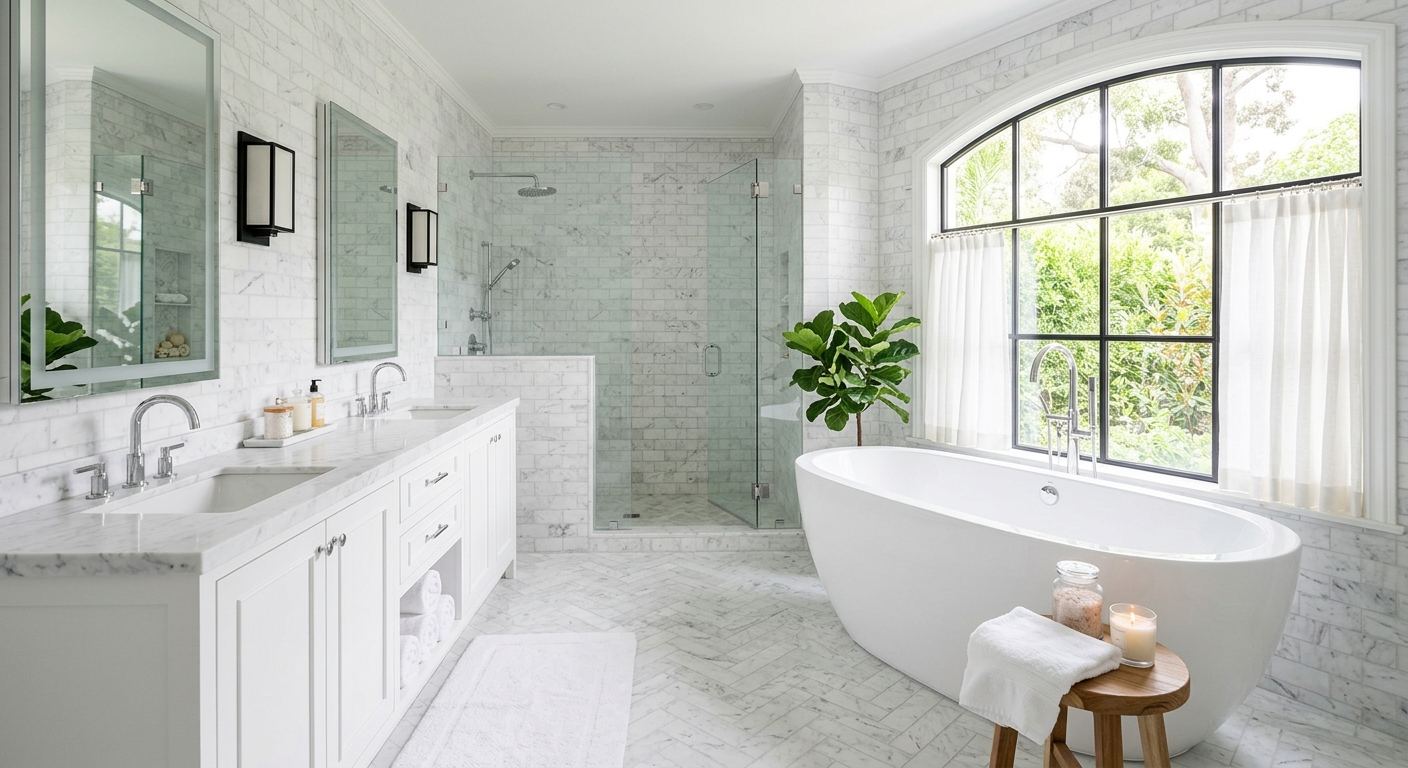
Bathroom renovation options and costs in Sandstone Valley
Bathroom renovation in Sandstone Valley, Alberta, typically starts with a simple decision: are you refreshing what you have, or rebuilding what’s behind the walls? Sandstone Valley sits within a Calgary-area housing mix, and the age of the local stock matters. With a population of 5,795 (Statistics Canada, 2021 Census), most renos here happen in established neighbourhoods where original plumbing layouts may be dated, including cast-iron or older venting runs. In homes built before 1980, dated materials can increase the chance of concealed issues—sometimes even asbestos-containing floor tile or older drywall compounds—once demolition begins.
Cost is also shaped by Calgary’s labour-driven market. In this region, quotes for the “same” bathroom can vary because trades coordination, rough-in complexity, and fixture/tile lead times often swing more than weather. Alberta winters and freeze-thaw aren’t what inflate bathroom pricing day-to-day, but they can affect subfloor drying, caulking set times, and the speed trades can work if humidity control is poor. Contractors also stay busiest in high-turnover pockets like newer-plan areas near the commercial corridor off Veterans Boulevard and adjacent Calgary-commuter routes, where multiple small bathrooms get remodeled each season.
If you’re trying to budget for Sandstone Valley, use these realistic starting bands as a comparison baseline, then plan for hidden-scope contingencies as needed before you review a detailed quote.
| Renovation Scope |
What's Included |
Typical Duration |
Price Range |
| Cosmetic refresh (paint, fixtures, accessories only) |
Paint, mirror/lighting swap, vanity tapware, toilet seat or full toilet (if same footprint), towel bars, caulking and minor trim touch-ups; no plumbing relocation; no tile removal beyond small areas |
2–5 days |
$2,000–$6,000 |
| Mid-range full renovation (new tile, vanity, tub/shower, electrical) |
Demo and disposal, new vanity and toilet, tub-to-shower or tub/shower refresh, new tile floor and surround, waterproofing system, exhaust fan upgrade, GFCI where required, basic electrical updates, plumbing refresh (as needed), new trim and hardware |
2–4 weeks |
$15,000–$22,500 |
| High-end full renovation (custom tile, steam shower, heated floors) |
Full gut, premium tile layout (feature walls, niches), custom waterproofing build, steam shower components, heated floor system, designer fixtures, upgraded lighting, upgraded ventilation, plumbing relocation if required, extensive electrical and substrate repairs |
4–7 weeks |
$25,000–$35,000 |
| Shower-only installation (convert tub to walk-in shower) |
Demo tub removal, shower pan and waterproofing, walk-in glass (or partial enclosure), new valve and controls, new tile floor/surround, drain/vent adjustments if required, exhaust fan tie-in as needed |
1–3 weeks |
$10,000–$16,500 |
| Bathtub replacement or tub-liner install |
Option A: remove and replace tub with new tub, plumbing reconnection, re-caulk and reseal, minor wall repair. Option B: tub-liner installation over prepared surface; liner hardware and sealing |
3–7 days |
$1,500–$3,500 |
| Tile-only installation (floor + surround, existing layout kept) |
Tile tear-out limited to tile areas, substrate assessment and patching, floor and wall tiling, waterproofing where appropriate for tiled surfaces, reinstallation of fixtures where they remain in place |
1–2.5 weeks |
$5,000–$12,000 |
Prices are estimates only and vary by project scope, site access and material selection.
What affects the price of bathroom renovation in Sandstone Valley
If two homeowners in the Calgary economic region ask for the “same” bathroom renovation, it’s common to see quotes swing 30–50%. That difference is usually not weather—it’s local labour rates, trade availability, and the hidden condition of older homes. In Sandstone Valley and nearby communities, many bathrooms sit in houses where the drainage stack is older (cast iron) or venting is dated, and supply lines can be galvanized or otherwise hard to work with once walls open. When contractors price, they’re pricing risk and sequencing: demolition, rough-in trades, inspections, waterproofing inspection-ready prep, then tile and trim.
Age of housing stock is the big driver. Pre-1985 homes can trigger discovery of asbestos in vinyl floor tile or older drywall/compound; once that happens, abatement protocols and specialized handling can add $1,500–$5,000+ to the budget depending on scope and materials. Ventilation is another typical inflation item: if the exhaust fan ducting doesn’t perform to current expectations, you may need route changes that touch framing and electrical.
Concrete Sandstone Valley examples: (1) keeping the existing footprint usually keeps rough-in simple, which helps you stay closer to a mid-range band around $15,000–$22,500; (2) moving the vanity or toilet often means more labour for drain/supply rough-in and additional patching before tile; (3) upgrading to heated floors or a steam shower can push a bathroom toward the high-end range, often $25,000–$35,000, not because tile costs more alone, but because electrical, substrate prep, and waterproofing requirements expand.
| Price Factor |
Why It Matters |
Cost Impact |
| Layout change — moving drain or supply lines requires rough-in work |
Changing plumbing locations means demolition beyond tile, new rough-in, possible venting updates, and more repair work before finishes |
$3,000–$8,000 |
| Tile selection — large-format porcelain vs. mosaic vs. ceramic |
Harder materials require better substrate prep and more skilled layout to prevent lippage and cracking |
$1,500–$6,000 |
| Fixture tier — builder-grade vs. mid-range vs. designer brands |
Higher tiers cost more for the faucet/valve, trim, mirrors and lighting; they also tend to require more precise install |
$1,000–$7,500 |
| Subfloor condition — rot or unlevel concrete adds scope |
Unlevel surfaces lead to tile failure risk, so you may need rebuild/leveling, moisture treatment, and additional waterproofing layers |
$1,200–$5,500 |
| Electrical — adding GFCI outlets, exhaust fan, heated floor circuit |
More circuits and ventilation upgrades mean licensed electrical work, new wiring runs, and inspection |
$900–$4,500 |
| Waterproofing method — membrane type and extent |
Correct system selection (and full coverage) affects durability; poor waterproofing leads to costly call-backs |
$600–$3,000 |
| Older-home surprises — asbestos tile, cast-iron drains, galvanized pipes |
Discovery can trigger abatement, schedule delays, disposal complexity, and additional plumbing replacement |
$1,500–$8,000+ |
| Bathroom size — sq ft drives tile and labour time directly |
More surface area increases tile quantities, cuts, thinset time, waterproofing coverage and drying/curing cycles |
$2,000–$9,000 |
Permits & regulations in Alberta
In Alberta, not every bathroom update requires a permit, and that matters for both your schedule and your peace of mind. In general, cosmetic work—like swapping fixtures (toilets, vanities, showerheads), retiling limited areas without changing plumbing, replacing a mirror/lighting, and painting—often does not require a permit by itself. Where permits typically do come into play is when you relocate plumbing, add ventilation with new electrical circuits, or change structural elements.
Work that commonly DOES require a permit/inspection includes: moving a drain or supply line (new rough-in), replacing or adding dedicated exhaust fan wiring where it involves new circuits, and any electrical modifications that require a licensed electrician to connect and/or sign off. If the reno includes major wall changes (structural framing alterations, moving walls, or changing an opening), expect permits and inspections to be part of the process. Also, if older materials are suspected (for example, asbestos-containing vinyl tile), abatement rules and appropriate licensed practices may be required.
How to verify before work starts in Sandstone Valley: Step 1—request the contractor’s Alberta trade licence information (and ensure the right scope applies). Step 2—ask for a current certificate of insurance (liability coverage) and confirm coverage dates match your project. Step 3—request proof of workers’ compensation coverage (WSIB/WCB—often shown on the certificate of clearance/coverage documentation). Where to look: the contractor’s online registry listing (licence), the certificate of insurance they email you, and any clearance letter or coverage statement provided at onboarding. Then keep copies with your contract and change-order records.
Choosing tile, waterproofing and fixtures for your Sandstone Valley bathroom
For bathroom renovations in Sandstone Valley, Alberta, the budget is mainly controlled by three material decisions: tile choice, waterproofing method, and fixture tier. Start with tile. Entry-level ceramic is often fine for a budget refresh, but it’s more susceptible to staining and can be less durable in heavy traffic. Mid-range porcelain typically offers better water absorption performance and strength for floors and tub surrounds, which is why many Calgary-area renos land there for value. Natural stone (marble, travertine, slate) looks high-end, but it demands careful selection, sealing, and installation planning.
Next is waterproofing, which is the real mould-prevention system—especially important in Alberta homes where bathrooms can be humid after long showers. Paint-on membranes can work when specified correctly, but for tiled wet areas many homeowners are better served by bonded sheet membranes or modern membrane systems designed to integrate with tile assemblies. The right system reduces the risk of water migration behind tile and helps avoid problems that can emerge after winter heating cycles and bathroom fan over/underuse.
Third is fixture tier. Builder-grade fixtures save money upfront, while mid-range and designer brands can improve long-term function and finish quality. Here’s a practical dollar example: if you’re comparing mid-range porcelain tile plus a robust waterproofing build versus “cheap tile + basic waterproofing,” the tile-only delta might look small, but the waterproofing and substrate prep often decide whether a bathroom stays problem-free for years. That’s why many homeowners aiming near the mid-range renovation band choose porcelain and a tested waterproofing assembly, keeping the total project closer to $15,000–$22,500 instead of letting upgrades snowball.
| Material / Option |
Pros |
Cons |
Price Range |
| Ceramic tile (floor + walls) |
Budget-friendly, good visual options, easier to find matching trim and grout colours |
More variable durability; may require more careful grout maintenance; not as strong as porcelain for some floor uses |
$3,000–$7,500 |
| Porcelain tile (floor + walls) |
Denser and more water-resistant, holds up well in wet zones, wider colour/finish range and consistent sizing |
Higher material cost; large-format pieces demand precise substrate and labour skill |
$6,000–$12,000 |
| Natural stone (marble, travertine, slate) |
Premium look, unique veining, strong curb appeal |
Needs sealing/maintenance; can be costlier to install and may require special underlayment and careful wet-area selection |
$10,000–$20,000 |
| Frameless glass shower enclosure |
Modern appearance, easy wipe-down, helps make smaller bathrooms feel larger |
Can be expensive; needs careful measurements and strong waterproofing at anchoring points |
$2,500–$6,500 |
| Prefab tub surround (acrylic) |
Fast install, consistent fit, low maintenance, good for budget timelines |
Fewer design options than tile; seams must be sealed well; not as customizable as full tile builds |
$800–$2,500 |
| Custom shower pan (tile or linear drain) |
Top-tier look, improved floor drainage, clean lines and accessibility options with the right slope |
More skilled waterproofing and substrate prep required; linear drains can add complexity to rough-in |
$3,500–$10,000 |
How to choose a bathroom renovation contractor in Sandstone Valley
Choosing the right contractor in Sandstone Valley starts with verifying credentials and then forcing clarity into the quote. For Alberta licensing, ask for the contractor’s Alberta trade licence details relevant to the work they’re doing (and confirm they match your scope). For liability, request a certificate of insurance showing current general liability coverage; for workers’ compensation, request proof of WSIB/WCB coverage (often via clearance documentation). Don’t accept “we’re covered” in a verbal answer—ask for the documents and keep copies.
Next, request 2–3 itemised written quotes. You want a breakdown that separates labour from materials and lists major line items (demo/disposal, plumbing rough-in, waterproofing, tile set, electrical upgrades, glass enclosure, fixtures). Avoid lump-sum quotes that don’t explain what’s excluded. Check whether permit pulls are included, whether asbestos/older-material handling is addressed if discovered, and whether disposal and dump fees are covered.
Warranty matters in bathroom renos. Ask for the workmanship warranty length (and what it covers), the manufacturer’s warranty for products (and whether it’s tied to original installation), and whether warranties transfer to future owners. For payment schedule, a good rule is never more than 10–15% upfront; hold back a portion until completion and punch-list items are done. Finally, insist on the start date and an estimated completion window in writing, including how changes affect timeline.
- Ask for Alberta trade licence details that match your specific scope (plumbing/electrical impacts should involve licensed trades).
- Request liability insurance certificate and verify dates cover your project start and end.
- Provide WSIB/WCB clearance documentation (not just a verbal statement).
- Get 2–3 itemised quotes with a labour/materials split and named products or equivalent specs.
- Confirm whether permits and inspections are included or billed separately.
- Clarify disposal: demo debris removal and dump fees included?
- Ask what’s excluded: subfloor replacement, behind-wall repairs, drywall patching, niche framing, glass sealing.
- Ensure waterproofing method is specified (membrane type, coverage area, transition details).
- Confirm tile installation details: substrate requirements, minimum thinset coverage, grout specification.
- Ask about scheduling and trade coordination plan (especially for plumbing/electrical rough-in).
- Require warranty terms in writing, including workmanship and product warranty conditions.
- Set a payment schedule with a holdback until punch-list completion.
Specific red flags to watch for: vague line items like “repairs as needed” without allowance terms, no insurance/WSIB/WCB documents on request, missing permit responsibility clarification, overly aggressive upfront payment demands, and a warranty that’s limited to “materials only” with no workmanship coverage.
Frequently asked questions — bathroom renovation in Sandstone Valley
Can I live at home during a bathroom renovation in Sandstone Valley?
Yes, many Sandstone Valley homeowners do stay at home, but it depends on the scope and whether you can keep a functional bathroom option. With a cosmetic refresh, you may only be without the bathroom for short periods while paint cures or fixtures are reset. For a mid-range full renovation, expect more disruption because demolition, rough-in, waterproofing, and tile setting can take weeks—typically you’ll want a workable alternate bathroom plan for parts of the project. If you’re converting a tub to a walk-in shower, the tub may be removed early, so you should plan for daily access elsewhere. A contractor should lay out staging so dust containment is managed and schedule impacts are transparent in writing. If hidden-scope work is discovered in older homes, your “living at home” plan should include contingency days.
What's the best bathtub material for a Sandstone Valley home?
The “best” bathtub material is usually the one that matches your existing setup, budget, and desired maintenance level. In many Calgary-area renovations, homeowners choose either an acrylic replacement tub for easier installation and good finish consistency, or a tub-liner approach when they want to minimize demo and keep costs controlled. If your project is leaning toward the lower band for fixture replacement, bathtub replacement work often starts around $1,500–$3,500, depending on access and whether plumbing reconnects are simple. If you frequently have to deal with hard-water residue, acrylic and well-sealed surrounds can reduce maintenance compared with poor-quality finishes. For durability, make sure the installer addresses subfloor flatness and waterproofing at transitions—bathtub failures often come from movement and poor sealing, not only the tub material.
Is it worth renovating a bathroom before selling in Sandstone Valley?
Often, yes—especially if the bathroom is dated, shows wear, or has functional issues like weak ventilation, cracking caulk, or leaking around fixtures. In older Sandstone Valley homes, buyers notice bathroom problems quickly, and cosmetic-only changes can be a faster path to improvement if plumbing locations stay the same. However, be strategic: an expensive upgrade won’t always outperform a well-executed mid-range renovation. Many sellers aim for a renovation that lands near the mid-range band (commonly $15,000–$22,500) because it modernizes fixtures and tile without overshooting. The key is to balance what you improve (waterproofing, ventilation, finish quality) against what you change (layout relocation). If you can refresh without moving plumbing, you reduce risk and schedule delays—which is a strong advantage when you’re trying to list.
How do I plan a bathroom renovation on a tight budget in Sandstone Valley?
On a tight budget in Sandstone Valley, the most effective approach is to keep the layout and focus on high-impact, lower-risk improvements. Start by choosing either a cosmetic refresh or a scoped renovation that avoids plumbing relocation. If you already have a tub/shower working properly, consider repainting, replacing the vanity and lighting, and refreshing caulking—this can often fall into the low ranges like $2,000–$6,000 depending on what’s replaced. When you want tile, prioritize what matters: tile floor first, then tile the tub surround if needed, rather than rebuilding every surface. Always allocate contingency for older-home surprises: in Calgary-area housing, hidden plumbing/venting issues and older-material concerns can expand scope once walls open. Ask for an itemised quote with a defined “must-haves” list and a clear allowance for discovery work so you can make decisions without guessing mid-demolition.
What's the difference between a cosmetic and a full bathroom renovation?
A cosmetic renovation changes the visible surfaces and fixtures while usually keeping plumbing and significant structure in place. That means paint, lighting, mirrors, hardware, and sometimes vanity or toilet swaps, with limited tile touch-ups. A full renovation generally involves a gut or near-gut process: demolition, substrate repair, new waterproofing assembly, new tile for floors and wet walls, plumbing rough-in (often upgraded), electrical updates, and reinstallation of fixtures and accessories. In Sandstone Valley, the difference is important for cost predictability—cosmetic work can often be completed faster and with fewer permit triggers, while full renovations are where hidden-scope issues show up in older homes. If your goal is to stay near the lower end, a cosmetic refresh may be the better fit; if you’re dealing with leaks or dated venting, expect your budget to move toward mid-range totals like $15,000–$22,500 or more.
How do I choose the right contractor for my bathroom in Sandstone Valley?
Choose a contractor by verifying credentials and forcing transparency in the quote. First, confirm Alberta trade licensing relevant to their scope, request a certificate of insurance (liability) with the correct dates, and get WSIB/WCB coverage documentation—ask for copies before signing anything. Second, request 2–3 itemised written quotes that separate labour and materials and name the products or specify equivalents. Ensure the scope clearly states what’s included: permits (if needed), disposal/dump fees, waterproofing method, and what repairs are excluded. Third, check warranty terms in writing: workmanship coverage length, manufacturer warranties for tile and fixtures, and whether warranties transfer if you sell. Finally, keep an eye on payment—avoid paying more than 10–15% upfront and insist on a holdback until completion and punch-list sign-off. In a market like Sandstone Valley, these steps protect you from schedule surprises and late discovery costs common in older housing stock.