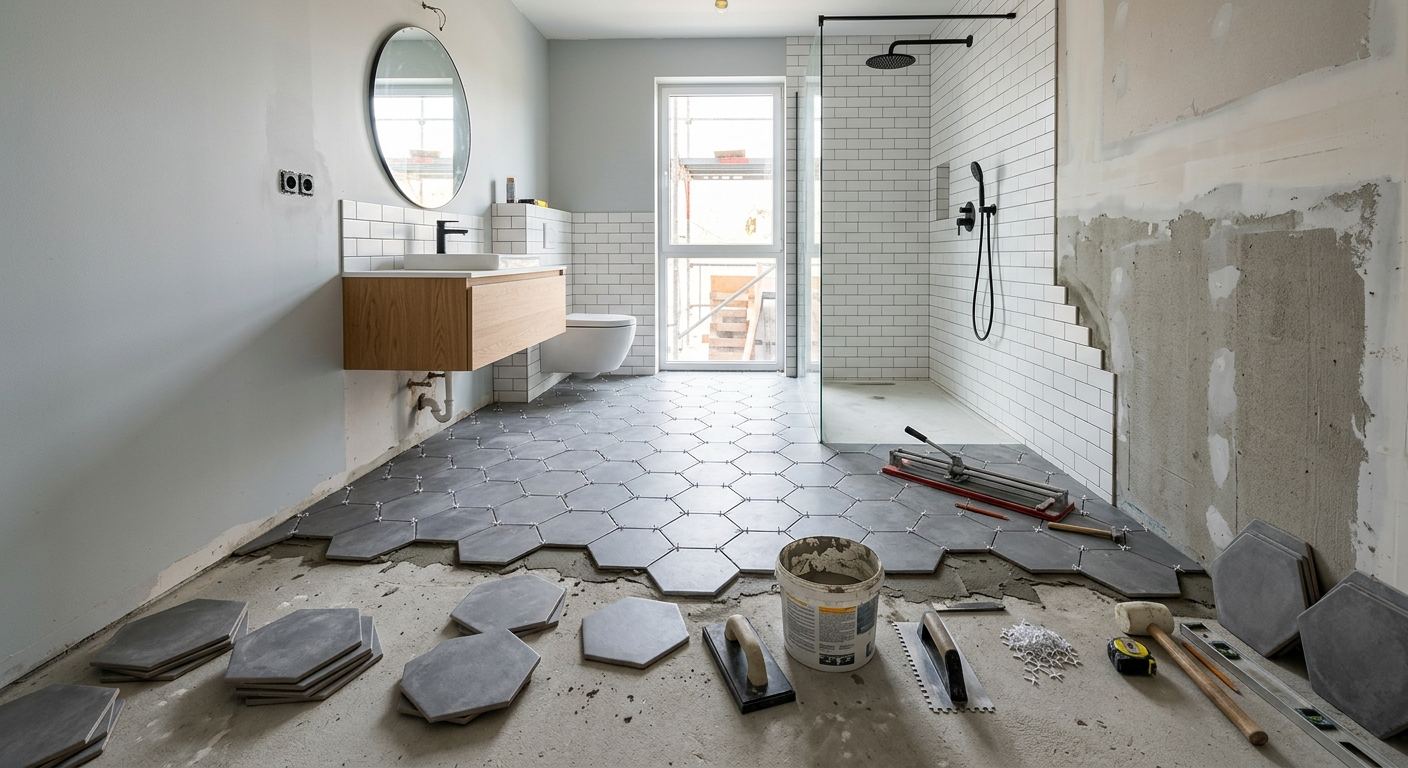
Bathroom renovation options and costs in Leduc
Leduc homeowners have a few common bathroom renovation paths, and the right one usually depends on age of the home and what you’re willing to open up. In Leduc and the Edmonton economic region, many properties were built before 1981 (26.6% of dwellings), and that’s important because older layouts often hide dated drain/vent piping, galvanized supply lines, and inconsistent exhaust ventilation behind the walls. In 2021, Leduc had 34,094 people and 9,490 homeowner households (73.2% of households own), which supports steady demand for full bathroom work from homeowners who plan renovations as part of staying long-term. That local ownership profile matters because contractors here see more “upgrade-focused” projects than quick flips.
Cost in the Edmonton region is driven more by labour rates and the need to bring systems up to current code than by weather alone. Unlike markets where freeze-thaw surprises can dominate schedules, Leduc projects are mainly shaped by what’s discovered during demolition: undersized vents, legacy wiring, or, in some older homes, materials that trigger specialized abatement. Oil-and-gas competition helps keep skilled trades in-demand, so trades availability and installation labour can represent about a third or more of your total bathroom budget. You’ll also notice higher attention to waterproofing quality and tile setting because Edmonton-area service crews work often with older subfloors and uneven bases that require leveling and full membrane coverage.
In Leduc, crews are especially busy around older neighbourhood pockets near the downtown core and along the older housing stock corridors where many homes were staged with the original 1970s–early 1980s plumbing layouts. From there, the price differences become easier to compare—starting with the table below.
| Renovation Scope |
What's Included |
Typical Duration |
Price Range |
| Cosmetic refresh (paint, fixtures, accessories only) |
New vanity top or vanity (if layout stays), toilet swap, faucet swap, mirror, lighting refresh, paint, re-caulk, no wall opening beyond minor patching |
3–7 days |
$3,000–$7,000 |
| Mid-range full renovation (new tile, vanity, tub/shower, electrical) |
Remove and replace tile floor/walls, new vanity, tub/shower or surround, updated exhaust fan, GFCI outlet work (as required), new trims/valves (where applicable), water-resistant backer/membrane prep |
2–4 weeks |
$18,000–$28,000 |
| High-end full renovation (custom tile, steam shower, heated floors) |
Custom tile layout, premium plumbing fixtures, steam-ready shower design (or equivalent), heated flooring circuit, upgraded lighting and fan, higher-end glass/doors, advanced waterproofing build-up |
4–6 weeks |
$28,000–$45,000 |
| Shower-only installation (convert tub to walk-in shower) |
Demo tub area, new walk-in shower pan system, tile surround, glass door or curtain frame, plumbing rough-in and valve upgrade, exhaust fan check/update |
2–3 weeks |
$8,000–$15,000 |
| Bathtub replacement or tub-liner install |
Replace tub and re-seal, new tub surround components as needed OR install tub liner (where conditions allow), recaulk/trim, connect plumbing and test for leaks |
1–2 weeks |
$3,000–$12,000 |
| Tile-only installation (floor + surround, existing layout kept) |
Remove existing tile and underlayment, tile floor and wall surround, new grout/caulk, waterproofing prep, no plumbing relocation |
1–3 weeks |
$6,000–$20,000 |
Prices are estimates only and vary by project scope, site access and material selection.
What affects the price of bathroom renovation in Leduc
It’s common to see the same bathroom renovation idea come back with quotes that differ by 30–50% across the Edmonton region, and it usually isn’t because the tile is “that different.” The biggest drivers are regional labour rates and what the existing home hides once walls open. In Leduc, many homes date back decades (26.6% built before 1981), which is why you can end up paying for plumbing rough-in changes even when you didn’t plan to move the shower or vanity. Older supply and drain assemblies may require replacement to achieve proper slope, venting and leak-proof connections, and legacy wiring or incomplete exhaust venting can force additional electrical and mechanical scope.
As for asbestos: if asbestos-containing materials are discovered in older floor tile, vinyl floor systems, or certain older drywall compounds, abatement becomes specialized work. That typically adds real budget—often in the range of $1,500–$5,000+ depending on extent, containment needs and disposal. You’ll feel those costs whether you’re aiming at a mid-range full renovation around the $18,000–$28,000 band or planning a higher-end build.
Two practical local examples I see often in Leduc: (1) converting a tub to a walk-in shower can look “simple” until the old tub drain location doesn’t align with a modern shower pan and valve requirements—then the rough-in work expands; and (2) large-format porcelain tile looks great, but it demands a flatter substrate—if the subfloor is unlevel or cracked, labour for flattening and proper waterproofing rises quickly. On the other hand, if you keep layout and swap finishes only, you can often stay closer to the lower end of the cost spectrum (for example, cosmetic refresh budgets starting around $3,000–$7,000).
| Price Factor |
Why It Matters |
Cost Impact |
| Layout change — moving drain or supply lines |
Requires demolition, plumbing rough-in and testing; may also affect venting and framing |
$2,000–$7,000+ |
| Tile selection — large-format porcelain vs. mosaic vs. ceramic |
Different substrate requirements, cut complexity, and higher labour/time for mosaics or complex patterns |
$800–$5,000 |
| Fixture tier — builder-grade vs. mid-range vs. designer brands |
Higher-end fixtures often require longer lead times and more precise installation/trim |
$500–$4,000 |
| Subfloor condition — rot or unlevel concrete adds scope |
May require structural repairs, self-levelling/underlayment, and rework of waterproofing layers |
$1,000–$6,000+ |
| Electrical — adding GFCI outlets, exhaust fan, heated floor circuit |
Licensed work, permits/inspections (where required), new wiring runs and circuit upgrades |
$600–$4,500 |
| Waterproofing method — membrane type and extent |
Better systems cost more but reduce failure risk; extent depends on how much wall is tiled and layout |
$400–$2,500 |
| Older-home surprises — asbestos tile, cast-iron drains, galvanized pipes |
Triggers abatement protocols, specialized disposal, and possible drain/supply replacement |
$1,500–$10,000+ |
| Bathroom size — sq ft drives tile and labour time directly |
More surface area increases tile setting, waterproofing, mixing/cutting time and drying cycles |
$1,000–$8,000 |
Permits & regulations in Alberta
In Alberta, not every bathroom touch-up needs a permit. Typically, cosmetic updates—like swapping a vanity or vanity top, replacing a toilet, updating faucets/trim, painting, or retiling without moving plumbing—often don’t require a permit because you’re not changing the mechanical or structural elements. However, permits become more likely when you change the plumbing or ventilation pathways. For example, moving a drain or supply line (even a few inches), converting a tub to a walk-in shower with new rough-in, adding or relocating an exhaust fan, or making structural wall changes generally requires permits and inspections.
Electrical work must meet Alberta electrical code requirements and must be done or signed off by a licensed electrician. If you add heated flooring, install new lighting, or run new circuits for a bathroom exhaust fan or additional outlets, that’s typically regulated work. Any plumbing rough-in changes generally require a permit and inspection before walls are closed.
For Leduc homeowners, a safe verification process is simple and worth doing early:
- Ask for the contractor’s Alberta trade licence details (and confirm they’re eligible for the work they quote).
- Request a certificate of insurance (liability) showing active coverage and matching business name.
- Ask for WSIB/WCB coverage information (or clearance letter as applicable) before work starts.
- Verify dates and contact details on the insurance certificate; don’t rely on a screenshot alone.
- Get the permit responsibility in writing: whether the contractor pulls the permit and coordinates inspections.
When quotes are close, the contractor who can clearly document licensing, insurance and who does permits is often the one who avoids expensive delays later.
Choosing tile, waterproofing and fixtures for your Leduc bathroom
In Leduc, your bathroom budget usually comes down to three material decisions: tile choice, waterproofing approach, and fixture tier. Tile isn’t just “a finish”—it affects how long the job takes and how much underlayment and membrane build-up you need. Ceramic tile is typically entry-level and can be more forgiving for straightforward installs, but it may be less durable than porcelain in high-moisture areas over time. Porcelain tile is often the best balance for most Leduc homeowners because it handles moisture and wear well and is available in many looks (including wood and stone mimics). Natural stone (marble, travertine, slate) can be beautiful, but it can increase labour due to heavier slabs, sealing needs, and higher risk of layout challenges.
Second, waterproofing is where bathroom failures are prevented. Paint-on membranes can work in limited applications, but many Edmonton-area installers prefer bonded sheet membranes or engineered systems (including modern schluter-style approaches) when walls and floors are fully tiled. Alberta bathrooms still experience recurring humidity because showers and baths create localized wetting; proper membrane selection and full coverage are what keep grout lines and framing safe. If you skip steps to save money, you usually pay later through soft spots, cracking and mould-prone areas behind tile.
Third, fixture tier impacts both budget and resale. Builder-grade fixtures cost less and can look great, but mid-range or designer brands often offer better valve performance, smoother finishes, and more durable trims. If your goal is value, spend where it matters most: a mid-range tile plus a proven waterproofing system often beats “cheap tile” paired with corners cut on membranes.
For a concrete example: upgrading from ceramic to porcelain can add material and labour—often a few thousand dollars depending on size and layout—but it’s frequently justified because porcelain’s durability and moisture performance reduce long-term risk. Meanwhile, heated floors are a noticeable comfort upgrade; they’re usually an investment only if your family uses the bathroom often, since they add electrical scope on top of the renovation baseline.
| Material / Option |
Pros |
Cons |
Price Range |
| Ceramic tile (floor + walls) |
Lower material cost; wide colour options; good for simple layouts |
Less durable than porcelain in some cases; more movement sensitivity |
$2,000–$6,000 |
| Porcelain tile (floor + walls) |
Highly moisture-resistant; durable; many modern looks including stone/wood |
Can be heavier and more expensive; requires proper flattening for large formats |
$4,000–$10,000 |
| Natural stone (marble, travertine, slate) |
Premium look; unique veining and depth |
Sealing/maintenance; higher labour for cut/layout; more prone to staining if not maintained |
$8,000–$18,000 |
| Frameless glass shower enclosure |
Modern, light look; durable hardware options; easy to clean |
Higher cost; requires precise measurements and proper framing |
$2,000–$6,000 |
| Prefab tub surround (acrylic) |
Faster install; consistent finish; good for tight timelines |
Less custom than tile; can show seams; limited design flexibility |
$900–$2,800 |
| Custom shower pan (tile or linear drain) |
Best long-term performance; clean aesthetic; linear drain improves water direction |
More labour and waterproofing detailing; schedule depends on drying time |
$3,000–$10,000 |
How to choose a bathroom renovation contractor in Leduc
When you’re hiring a bathroom contractor in Leduc, licensing and coverage are not “paperwork”—they’re how you protect yourself if something goes wrong. First, verify the Alberta trade licence relevant to the work they’re proposing (especially plumbing and electrical-related scope). Second, request liability insurance and confirm it’s active, includes your job location (or general coverage for your type of work), and lists a real business name you can match to the quote. Third, confirm WSIB/WCB coverage: ask for a clearance letter or proof of registration so you’re not left exposed if a worker is injured on site.
Next, get 2–3 itemised written quotes (not lump sums). A solid quote breaks out labour and materials separately for demo, plumbing rough-in, electrical changes, waterproofing, tile labour, fixtures, glass, disposal, and any permit/inspection costs. Then read exclusions carefully: Are permits included? Who is responsible for scheduling inspections? Is waste disposal included? Are patching and painting included after tile? Ask who supplies and guarantees the waterproofing system and what product is used.
Warranty matters in bathroom renovations: look for a workmanship warranty length, and confirm whether product/manufacturer warranty is separate. Also confirm if warranties are transferable if you sell your home. For payment scheduling, avoid large upfront payments—typically keep deposits around 10–15% and use a holdback until the job is complete and final punch list is addressed. Finally, get the start date, milestones and completion estimate in writing so you’re not guessing mid-project.
- Confirm relevant Alberta trade licence(s) for the scope you’re paying for.
- Get a current certificate of liability insurance and verify coverage is active.
- Request WSIB/WCB proof or clearance letter before any work begins.
- Use itemised quotes with labour and materials broken out by line item.
- Confirm whether permits are pulled and who schedules inspections.
- Verify disposal/haul-away is included or priced separately.
- Ask what waterproofing system is used and where it will be applied.
- Confirm tile prep requirements (flattening, backer, underlayment).
- Require a documented work timeline with start and completion dates.
- Get a written warranty for workmanship and clarify duration (and what voids it).
- Review the payment schedule; keep upfront to 10–15% and hold back until close-out.
- Ask who handles damage to surrounding areas during demo and how it’s repaired.
Red flags I see in Leduc bathroom projects: (1) quotes that avoid stating who pulls permits and what’s included; (2) refusal to provide insurance or WSIB/WCB documentation; (3) “cheap” waterproofing promises without naming the membrane system; (4) no written tile prep or substrate plan; and (5) payment demands that front-load most of the cost before any major work is done.
Frequently asked questions — bathroom renovation in Leduc
How much does a walk-in shower cost in Leduc?
A walk-in shower in Leduc typically lands in the $4,000–$15,000 range depending on whether it’s a straightforward install or a tub-to-shower conversion. If you’re converting a tub to a walk-in (new pan system, plumbing adjustments, and usually a glass door), most homeowners budget toward the upper half of the band. In older homes (many built before 1981), opening the wall can reveal dated venting, undersized drainage, or legacy wiring for the exhaust fan—those upgrades can add cost even if the shower footprint stays similar (Statistics Canada, 2021 Census). For budgeting, ask your contractor whether the quote includes waterproofing, disposal, glass enclosure, and any necessary rough-in changes, so you can compare apples to apples.
What's the ROI on a bathroom renovation?
Bathroom renos can improve day-to-day comfort and resale appeal in Leduc, but the return depends heavily on how much you change. Cosmetic refreshes (paint, fixtures, accessories only) usually give enjoyment and can help listings feel updated, but the ROI is typically less than a full renovation because buyers expect modern tile, ventilation, and leak-proof detailing. A mid-range full renovation often lines up with budgets around $18,000–$28,000, and that’s where you’re most likely to hit the “buyers want it move-in ready” zone. High-end upgrades—like steam shower features and heated floors—can be meaningful to some buyers, but they don’t always translate dollar-for-dollar in every sale. In Leduc’s market, where many homeowners plan to stay long-term, ROI also shows up as reduced maintenance risk from proper waterproofing and code-compliant ventilation.
Do I need waterproofing behind the tile?
In most Leduc bathroom projects, yes—you should waterproof behind the tile, not just “water-resistant” drywall. Tile systems fail when water migrates through grout and into the substrate. Proper waterproofing includes sealing the entire wet area to protect framing and subfloor components. Many contractors use bonded sheet membranes or engineered membrane systems for floors and shower walls; this is especially important around shower pans, seams, and transitions (like where walls meet the floor or bench). If you’re converting a tub to a walk-in shower, waterproofing becomes even more critical because you’re building a new pan/linear drain system and detailing becomes more complex. Don’t skip it to save money—repairs after a leak typically cost far more than the membrane itself.
How do I compare bathroom renovation quotes?
Comparing bathroom renovation quotes in Leduc is easiest when they’re itemised and you can see what’s included. First, confirm the scope: is the quote a full demo and rebuild, a tile-only job, or a cosmetic refresh? Second, match like-for-like materials: tile type (ceramic vs. porcelain), glass enclosure type (framed vs. frameless), and fixture tier should be named. Third, check allowances and exclusions: permits, disposal/haul-away, heated floor circuits, exhaust fan upgrades, and waterproofing membrane type should be explicit. A common issue is two quotes both quote “tile and waterproofing,” but one doesn’t include substrate flattening or electrical for a fan—then your budget jumps after demolition. Finally, use local budget anchors: a full renovation baseline often starts well above cosmetic-only pricing, with full bath ranges such as $12,000–$35,000 depending on scope and materials.
Can I live at home during a bathroom renovation in Leduc?
Often, yes—but it depends on whether you have another bathroom and how invasive the work is. For cosmetic refreshes, many homeowners stay home because the job is quicker and usually doesn’t require opening plumbing walls. For mid-range or high-end full renovations, crews commonly take 2–6 weeks and you may have days without a functional shower or tub, especially if plumbing rough-in and tile waterproofing are underway. If you have one bathroom in the home, consider setting up a temporary routine (or using a neighbour/family arrangement) until the wet wall and pan are fully tiled and sealed. Leduc winters also make it important to manage drying times and ventilation during tile curing. Ask your contractor how they plan the sequence: demo first, rough-in next, waterproofing, then tile, and when the bathroom becomes usable.
What's the best bathtub material for a Leduc home?
The “best” bathtub material is usually the one that fits your installation method and durability goals. Common options are acrylic tubs, which are typically easier to install and often work well in renovation conversions; they’re also generally lighter than some alternatives, reducing complexity when replacing an existing tub. If your contractor can reuse existing framing and the tub deck details are sound, an acrylic replacement is usually a practical value choice. For liner installs, the condition of the existing tub surface matters—if it’s badly worn or uneven, a liner may not bond reliably. In older Leduc homes (especially those built before 1981), you may also want to ensure the drain connection and trap assembly are upgraded appropriately during replacement to avoid slow leaks. For budgeting, bathtub replacement projects often fall within $3,000–$12,000 depending on whether it’s simple swap vs. deeper plumbing changes.