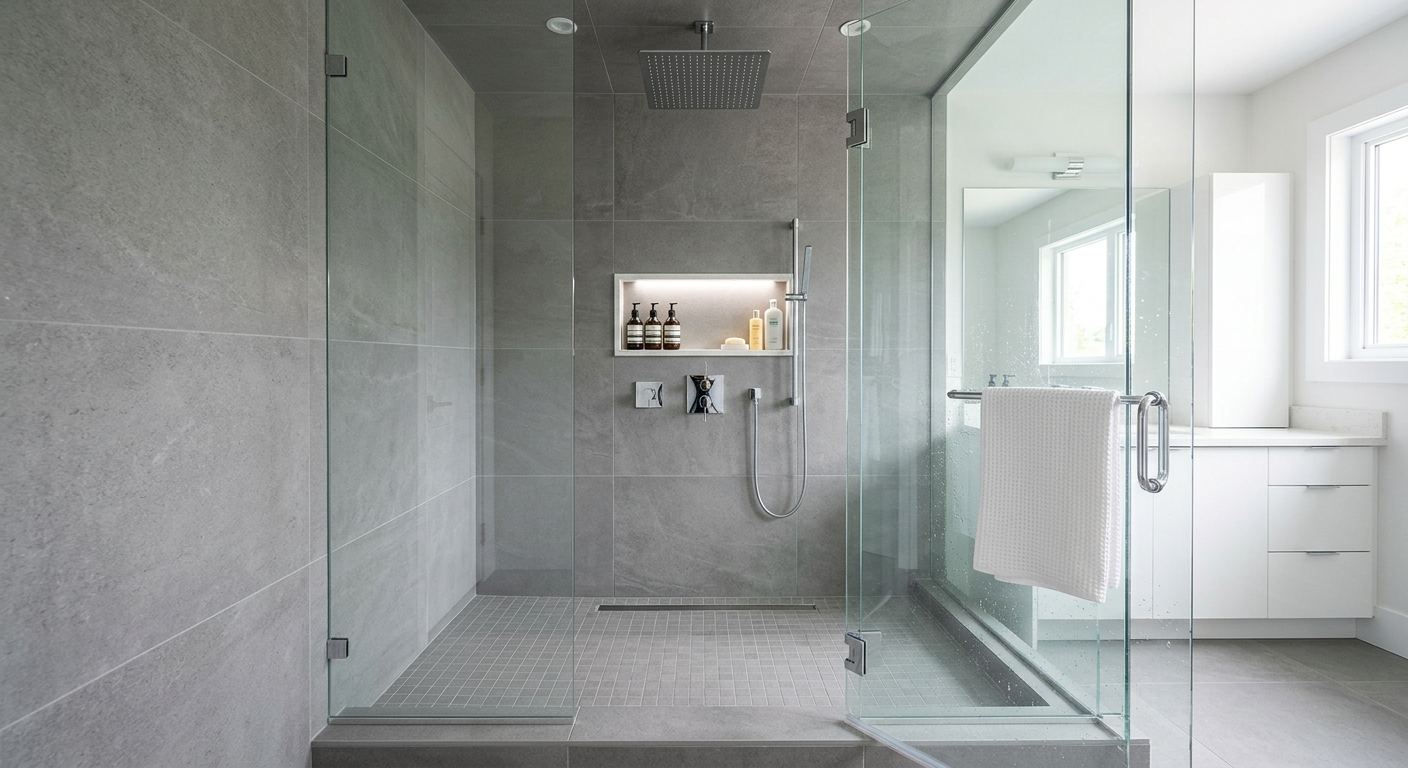
Bathroom renovation options and costs in Lincoln Park
In Lincoln Park, Alberta, bathroom renovation choices often start with what you can see—tile, fixtures, paint—but the final cost depends heavily on what’s behind the walls. Lincoln Park’s population is small (1,590 residents as of the 2021 Census), and many local properties are older, which means you can run into dated plumbing layouts, cast-iron drain sections, and occasional hazardous materials in floor finishes. In Calgary’s housing market, that “hidden scope” reality is common enough that homeowners should plan for it from day one—especially if your place is the kind of home that may have older floor tile materials. Asbestos discovery in pre-1985 floor tile or drywall compounds can trigger abatement and add significant time and expense.
Calgary-area pricing is also shaped by labour availability and trade scheduling. When plumbing, electrical, and waterproofing trades need coordinated sequencing, the job can cost more even if the bathroom surface area stays the same. Climate matters too, but in Calgary it tends to show up through ventilation and moisture control more than through direct freeze-thaw damage; proper exhaust fan sizing, air sealing, and waterproofing still drive durability. Contractors often see that “simple refresh” requests evolve once demolition exposes subfloor movement, venting deficiencies, or venting tied into older stacks.
In Lincoln Park, renovation work is especially in demand around established residential pockets near community amenities and frequent rental stock—areas where turnarounds matter for landlords and homeowners. If you’re comparing options and quotes, the easiest next step is to line up your goals against realistic price bands in the table below.
| Renovation Scope |
What's Included |
Typical Duration |
Price Range |
| Cosmetic refresh (paint, fixtures, accessories only) |
Paint/trim touch-ups, toilet swap, faucet replacement, vanity accessories, towel bars, caulking refresh (no layout changes), re-silicone tub/shower seams |
3–5 days |
$2,500–$6,500 |
| Mid-range full renovation (new tile, vanity, tub/shower, electrical) |
Demo and disposal, new vanity and toilet, new tub/shower unit, updated surround tile, exhaust fan upgrade, GFCI as needed, new waterproofing for wet areas, basic plumbing refinishing (no major relocations) |
2–3 weeks |
$15,000–$22,000 |
| High-end full renovation (custom tile, steam shower, heated floors) |
Custom layout planning, higher-end tile (porcelain/large format or specialty), steam-ready shower or enhanced shower system, heated floor circuit, upgraded lighting, premium fixtures, advanced waterproofing, niche shelving and premium glass |
4–6 weeks |
$22,000–$35,000 |
| Shower-only installation (convert tub to walk-in shower) |
Demo tub and surround, new shower pan and waterproofing, glass door/enclosure, new controls and shower head, updated exhaust strategy, tile floor and walls |
2–3 weeks |
$12,000–$18,000 |
| Bathtub replacement or tub-liner install |
Replace tub with similar footprint OR install tub liner system, new faucet trim where needed, recaulk and seal, minor drywall patching |
2–5 days |
$1,800–$3,500 |
| Tile-only installation (floor + surround, existing layout kept) |
Remove existing tile, waterproof prep, new tile floor and shower/tub surround, grout/caulk, sealants (no major plumbing relocation) |
5–10 days |
$4,500–$14,000 |
Prices are estimates only and vary by project scope, site access and material selection.
What affects the price of bathroom renovation in Lincoln Park
In Calgary and across Alberta, two homeowners can receive quotes for what sounds like the same bathroom renovation and still see differences of 30–50%. The reason is usually not “weather” so much as labour rates and the age/condition of the local housing stock. Even in a smaller community like Lincoln Park, the contractor pipeline is tied to Calgary schedules, so when demand spikes, trade coordination costs more. Older homes in the Calgary economic region often hide cast-iron or copper drain stacks that need upgrading, galvanized supply lines, and ventilation systems that aren’t adequate for a modern, fully tiled wet area. That hidden scope directly expands demo, rough-in, and inspection time.
Here are common examples of why scope changes: (1) A “like-for-like” shower replacement sometimes turns into a venting upgrade when the exhaust fan duct path can’t meet airflow needs. (2) Subfloor that’s been wet over the years can force a tear-out to stable, level framing before tile can be installed. (3) If asbestos is discovered in older floor tile or related drywall compound during demolition, abatement requirements can add labour and containment costs that push a mid-range project closer to high-end timelines.
Those risks are why many projects start near the low five figures for basic updates, but end higher once the walls open—often landing in the $15,000–$22,000 range for mid-range full renos and higher if you’re chasing premium materials or electrical/heated floor circuits. If your bathroom is roughly 50–80 sq ft, adding tile floor area or upgrading waterproofing method can shift the job by thousands. In short: in Lincoln Park, “what’s behind the tile” matters as much as what you pick at the showroom.
| Price Factor |
Why It Matters |
Cost Impact |
| Layout change — moving drain or supply lines requires rough-in work |
Re-routing plumbing means demolition, rough-in, patching, inspections, and longer labour sequencing |
Typically adds $3,000–$8,000 |
| Tile selection — large-format porcelain vs. mosaic vs. ceramic |
Harder materials and tighter tolerances increase cutting, setting time, and waste rate |
Often changes spend by $1,500–$6,000 |
| Fixture tier — builder-grade vs. mid-range vs. designer brands |
Valve controls, trim finish quality, and warranty terms affect both material and install complexity |
Usually $800–$4,000 difference |
| Subfloor condition — rot or unlevel concrete adds scope |
Water damage requires removal to sound material and additional underlayment/level floor prep |
Commonly $1,000–$5,000+ |
| Electrical — adding GFCI outlets, exhaust fan, heated floor circuit |
New circuits require rough-in, licensed electrician involvement, and safe connection planning |
Often adds $800–$3,500 |
| Waterproofing method — membrane type and extent |
Better systems cost more upfront but reduce call-backs and moisture failure risk |
Typically $600–$3,000 variation |
| Older-home surprises — asbestos tile, cast-iron drains, galvanized pipes |
Abatement, disposal, and plumbing upgrades expand time and labour coordination |
Often $1,500–$5,000+ |
| Bathroom size — sq ft drives tile and labour time directly |
More surface area means more setting hours, thinset/grout, and waterproofing footprint |
May shift overall spend by $2,000–$8,000 |
Permits & regulations in Alberta
In Alberta, most cosmetic bathroom updates in Lincoln Park rarely need a permit. Swapping fixtures (toilet, vanity, faucet trim), repainting, re-caulking, installing accessories, and replacing an existing vanity or tub within the same rough-in footprint are typically handled without a permit. However, the moment you change the plumbing or electrical layout, permitting becomes more likely.
Work that commonly does require a permit includes: relocating or adding plumbing rough-ins (moving a drain or supply lines, changing shower control locations), installing or modifying an exhaust fan that involves new wiring/circuit work, and any structural wall changes that open framing. Electrical changes that add or modify circuits (for example, adding GFCI protection, running power for a heated floor, or wiring a new fan/light combo) must meet provincial electrical code and must be completed or signed off by a licensed electrician.
Here’s a practical step-by-step checklist. First, ask the contractor for their Alberta trade licence details (and match the trade type to the work being done). Second, request a certificate of insurance showing liability coverage—make sure it’s current and includes your address as the job site. Third, verify worker coverage: ask whether they carry WCB and obtain the relevant clearance evidence (or proof of coverage and account number). Finally, confirm whether permits are included in their scope and who pulls them—your best bids clearly spell out “permit pull included” or “permit not included.”
Choosing tile, waterproofing and fixtures for your Lincoln Park bathroom
In Lincoln Park bathrooms, three material decisions usually control both the look and the long-term performance of the renovation: tile choice, waterproofing method, and fixture tier. Start with tile because it sets your install complexity. Ceramic tile can work well for entry-level projects, but it’s more forgiving on budgets where the substrate is stable and you’re keeping it simple. Porcelain tile is denser and more water-resistant, and it typically supports modern, minimal-grout looks—just expect higher material cost and tighter installation requirements. Natural stone can deliver luxury, but it often needs more careful selection, sealing considerations, and skilled setting to manage variables like variation and porosity.
Next is waterproofing—this is where Alberta’s moisture reality matters. In Calgary-area homes, the bathroom often gets used daily, and humidity builds quickly if ventilation is off. Paint-on membranes can be fine in the right system, but for full-tile showers you’ll usually get better peace of mind from bonded sheet membranes or proven schluter-style systems combined with proper corner detailing. The goal is preventing moisture migration behind tile, not just “water resistance.”
Finally, fixture tier affects both budget and resale. Builder-grade faucets and valves cost less, but mid-range or designer control valves can improve day-to-day feel and longevity. A practical example: upgrading from a basic shower valve and standard surround package to a mid-range valve set and higher-end porcelain tile might add roughly $1,500–$4,000, but it’s often justified if you’re doing full waterproofing anyway—because you’re paying the labour once and getting better components into a wall that won’t get opened again soon.
| Material / Option |
Pros |
Cons |
Price Range |
| Ceramic tile (floor + walls) |
Lower material cost, wide style selection, good for straightforward layouts |
Can be less robust than porcelain; requires careful substrate prep to avoid cracking |
$3,000–$7,500 |
| Porcelain tile (floor + walls) |
Higher density and durability, ideal for modern large-format looks, strong moisture resistance |
Higher material cost and heavier setting precision; more cutting may be needed with niches |
$6,000–$12,000 |
| Natural stone (marble, travertine, slate) |
High-end character, premium resale feel, unique veining and texture |
More expensive materials, sealing/maintenance expectations, installation complexity |
$10,000–$20,000 |
| Frameless glass shower enclosure |
Cleaner sightlines, upgrades the whole room quickly, good for resale appeal |
Costlier hardware, needs correct wall measurements and solid waterproofing |
$2,000–$6,500 |
| Prefab tub surround (acrylic) |
Fast install, fewer tile cuts, good value when you want minimal disruption |
Less custom look than tile; seams require good caulking and careful installation |
$500–$2,500 |
| Custom shower pan (tile or linear drain) |
Best integration with waterproofing, sleek linear drain option, strong design flexibility |
More labour-intensive; requires strict slope and membrane detailing |
$3,000–$9,000 |
How to choose a bathroom renovation contractor in Lincoln Park
Choosing the right contractor in Lincoln Park is mostly about verifying competence and reducing surprises. In Alberta, make sure the company can legally perform the work: ask for the correct trade licence for what they’re doing, obtain liability insurance, and confirm worker coverage through WCB/WSIB-style evidence used in Alberta (coverage confirmation and clearance documentation). Request certificates directly—don’t accept verbal reassurance. For WCB/worker coverage, ask for a current account clearance or proof of coverage for the period your project will run.
Next, get 2–3 itemised written quotes. A proper quote shows labour and materials separately (not a single “lump sum”), and it breaks out demolition/disposal, plumbing rough-in, waterproofing system, tile installation, electrical items, and finish hardware. Read the scope like a contract: what’s excluded? Is permit pull included? Is disposal included? If the quote doesn’t address asbestos discovery contingencies or demolition-based remediation, you should ask how they handle “concealed conditions.”
Warranty matters: confirm the workmanship warranty length and whether it’s tied to the company name and job address. Also check manufacturer warranties on tile, waterproofing, and plumbing fixtures—these may require proper installation to stay valid. For payment schedule, never agree to more than about 10–15% upfront, and hold back a portion until the job is fully complete and cleaned up. Finally, insist on a written start date and a completion estimate; even in Calgary’s busy trade market, dates should be specific enough to manage.
- Confirm the Alberta trade licence matches the scope (plumbing/electrical vs. general contractor responsibilities).
- Request a current certificate of liability insurance and verify it lists the jobsite.
- Ask for WCB/worker coverage clearance evidence (and check dates).
- Demand itemised labour/materials—not one lump-sum line.
- Ensure permit pull responsibilities are stated clearly (included vs. extra).
- Confirm disposal and landfill fees are included in the demo line items.
- Ask who handles concealed-condition discoveries (rotted subfloor, venting issues, asbestos procedures).
- Review waterproofing method and products used (membrane type, coverage areas, and detailing at corners).
- Verify the exhaust fan plan (duct route, fan rating, and electrical connection approach).
- Check tile installation scope (backer board/underlayment prep, thinset type, grout and caulking lines).
- Confirm warranty terms for workmanship and whether they transfer with the home.
- Agree on a payment schedule with a holdback until final inspection and punch-list completion.
Concrete red flags I see in Lincoln Park: quotes that don’t name waterproofing products or membrane type, “too-good-to-be-true” pricing that skips electrical/fire-safe exhaust work, vague timelines with no start/completion dates, refusal to provide insurance/licence documentation, and payment demands that ask for large upfront deposits with no holdback.
Frequently asked questions — bathroom renovation in Lincoln Park
How do I compare bathroom renovation quotes?
Start by comparing quotes on the same basis: scope, exclusions, and assumptions. Ask each contractor for an itemised breakdown (labour vs. materials) and verify what’s included for demo/disposal, waterproofing method, exhaust fan work, and electrical items like GFCI. In older Lincoln Park homes, compare how they handle concealed conditions such as subfloor repair, venting upgrades, or older drain stack changes—these are often where pricing diverges. A reasonable mid-range full renovation often lands around $15,000–$22,000, so if one quote is far below that without explaining why, it may be excluding key work. Also confirm whether permits are included and whether you’ll get written timelines and a warranty statement before signing.
Can I live at home during a bathroom renovation in Lincoln Park?
Often yes, but it depends on whether you can safely maintain a working half-bath or alternate shower. Many renovations in Lincoln Park run 2–3 weeks for mid-range projects, and living arrangements work best when the contractor can protect the bathroom area and keep dust contained. If it’s a full tear-out, there will be a period when plumbing fixtures are disconnected and the space is under demolition—most households plan to use a basement shower, another bathroom, or set up a temporary solution. Contractors should also manage ventilation during waterproofing and curing. If your project is close to $15,000–$22,000 and includes tile and waterproofing, expect at least a few days where access is limited, even if you can remain in the home.
What's the best bathtub material for a Lincoln Park home?
For Lincoln Park and the Calgary region, the “best” tub material balances durability, installation complexity, and the condition of your plumbing rough-in. If you’re keeping the same footprint, acrylic tubs are popular because they’re light, easier to install, and resist staining when installed properly. Cast iron is extremely durable but is heavier and can complicate logistics in older homes. Tub-liner systems can be a budget-friendly way to refresh, but they’re only a fit if the existing tub surface is well-prepared and stable. If you’re budgeting for a bathtub replacement or liner, a typical range is $1,800–$3,500. Your contractor should advise based on whether your substructure is sound and whether the tub surround will be rewaterproofed correctly.
Is it worth renovating a bathroom before selling in Lincoln Park?
Usually, yes—when the renovation addresses the things buyers notice first: a clean, functional layout, modern waterproofing, solid ventilation, and updated fixtures. In older housing stock, a dated bathroom can signal bigger hidden issues, especially around ventilation and moisture management. That said, you shouldn’t overspend on high-end features if your neighbourhood comparables don’t support it. A targeted upgrade—like moving from a cosmetic refresh to a mid-range full renovation—can be the sweet spot for recouping value without turning the project into a luxury build. If you’re considering a full remodel, many Lincoln Park homeowners start around $15,000–$22,000 for mid-range work. Prioritise dependable waterproofing and exhaust over expensive custom finishes if your goal is resale.
How do I plan a bathroom renovation on a tight budget in Lincoln Park?
Budget success in Lincoln Park comes from choosing the right scope and controlling the hidden-scope risk. If you’re trying to stay lean, consider a cosmetic refresh first—paint, fixture swaps, and accessory upgrades—before making tile and plumbing changes. But if your bathroom already has moisture problems or cracking grout, “cheap fixes” can fail faster. For tight budgets, keep the layout as-is so you avoid rough-in relocation costs; this is where renovation quotes can jump. A practical strategy is to pick one “anchor” area: either upgrade tile where it matters most or upgrade fixtures and ventilation first, rather than everything at once. For reference, a cosmetic refresh often sits around $2,500–$6,500, while any waterproofed tile and tub/shower work quickly moves into the low five figures and beyond. Also ask for a written contingency plan for subfloor repairs and any older-home surprises.
What's the difference between a cosmetic and a full bathroom renovation?
A cosmetic renovation updates finishes without changing plumbing or major structural elements. In Lincoln Park, that typically means paint, re-caulking, replacing fixtures within the existing footprint, vanity refresh, and adding accessories. It’s usually faster and avoids the largest scopes like tile demo and waterproofing system replacement. A full bathroom renovation involves demo down to the substrate, replacing or upgrading wet-area plumbing as needed, installing proper waterproofing, and rebuilding tile/tub/shower components—often with electrical upgrades like an exhaust fan and GFCI. That’s why a mid-range full renovation commonly lands around $15,000–$22,000, while a cosmetic refresh is usually in the $2,500–$6,500 band. The best way to decide is to assess whether waterproofing and ventilation are functioning; if they aren’t, cosmetic work won’t solve the core issue.