Bathroom renovation options and costs in Newton
In Newton, Alberta, bathroom renovations tend to follow a predictable set of options, but the final price depends heavily on what contractors uncover once walls and flooring come off. Newton’s population is small (2,914 residents reported in the 2021 Census), which means scheduling can be tight, and trade coordination matters. Just as importantly, Calgary-area housing stock is often older than homeowners expect—many homes were built long before today’s “modern” plumbing layouts—so dated drain stacks, galvanized supply lines, and older venting setups can turn a straightforward refresh into a fuller remodel. In some pre-1985 homes, materials can also raise asbestos risk (for example, certain vinyl floor tile or aged drywall products), which triggers proper testing and, if needed, abatement before construction continues.
Calgary’s costs are less about “weather destroying bathrooms” and more about year-round demand, local labour availability, and the hidden-scope realities of older homes. Even in cooler Alberta conditions, bathroom cost drivers are usually inside the wall: replacing plumbing rough-in parts, upgrading ventilation to reduce moisture-related failures, and correcting subfloor movement before waterproofing. That’s why contractors in Newton often see a “cosmetic” plan expand once demolition begins.
In the Newton area—especially around the more established residential pockets near New Brighton—we commonly see demand for full renovations where homeowners want a safer, quieter, better-ventilated bath. With that in mind, the table below compares typical project types and budgets so you can start planning and budgeting.
| Renovation Scope |
What's Included |
Typical Duration |
Price Range |
| Cosmetic refresh (paint, fixtures, accessories only) |
New paint, vanity accessories, toilet or faucet swap (if no plumbing move), light fixture refresh, re-caulk and minor wall touch-ups |
3–7 days |
$3,500–$8,000 |
| Mid-range full renovation (new tile, vanity, tub/shower, electrical) |
Demo, updated waterproofing, tile floor and surround, new vanity and toilet, tub-to-shower or tub/shower refresh, exhaust fan upgrade, basic electrical updates |
2–4 weeks |
$15,000–$22,000 |
| High-end full renovation (custom tile, steam shower, heated floors) |
Premium tile design, heated floor prep and install, custom shower with enhanced controls, higher-tier fixtures, improved venting, upgraded electrical and trim details |
4–6 weeks |
$22,000–$30,000 |
| Shower-only installation (convert tub to walk-in shower) |
Remove tub, build new shower base, tile walls and floor, new glass enclosure (if selected), updated waterproofing, plumbing tie-ins |
2–3 weeks |
$8,000–$15,000 |
| Bathtub replacement or tub-liner install |
Replace tub with new unit and finish, or apply a liner system where suitable; includes caulking, trim, and standard hookups |
2–5 days |
$500–$3,000 |
| Tile-only installation (floor + surround, existing layout kept) |
Demo to the extent needed for tile, install tile floor and wall surround, grout/seal, waterproofing as required by the system, disposal |
1–3 weeks |
$3,000–$12,000 |
Prices are estimates only and vary by project scope, site access and material selection.
What affects the price of bathroom renovation in Newton
In Newton, you’ll often see quote differences of 30–50% for “the same” bathroom plan across the Calgary economic region. The reason is usually not the weather—it’s the combination of regional labour rates and the age/condition of homes. In Calgary and surrounding communities, older bathrooms frequently hide plumbing and ventilation problems behind finishes. When walls open, the scope can expand to include drain-stack upgrades (sometimes cast-iron replacements), copper/galvanized supply line corrections, venting improvements, and subfloor fixes before any waterproofing is safe to install.
Hidden-scope surprises are a big reason budgets swing. For example, pre-1985 materials can require testing for asbestos before demolition. If asbestos abatement is needed (for example, some vinyl floor tile or aged drywall compounds), it typically adds roughly $1,500–$5,000+ to the budget depending on the affected area and containment requirements. That kind of add-on is one reason “tile-only” or “refresh” quotes can move toward mid-range full renovation pricing.
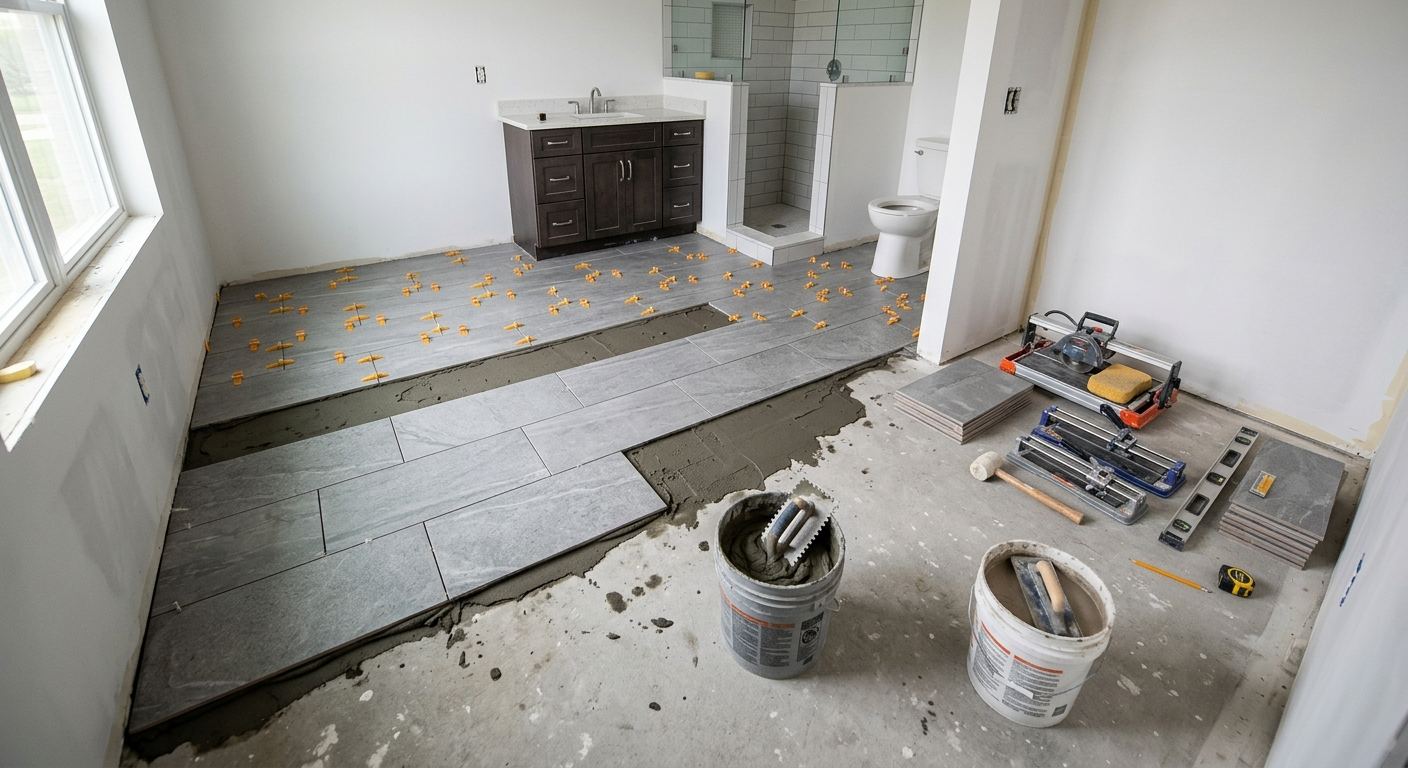
Concrete examples we see in Newton: (1) keeping the same layout can still require extra rough-in work if the supply shutoffs are corroded—sometimes that shifts you from a $15,000–$22,000 renovation toward the higher end of a mid-range build; (2) large-format porcelain tile can look simple on paper, but it increases labour time and demands extra substrate preparation, which can push tile installation toward the higher end of $3,000–$12,000; (3) adding a heated floor circuit is straightforward when the joists/basin access are good, but costs climb when re-routing is needed through tight cavities.
So while Alberta’s climate affects moisture management, the real driver for cost in Newton is whether your contractor has to correct older plumbing, ventilation, and substrate issues before the waterproofing goes in.
| Price Factor |
Why It Matters |
Cost Impact |
| Layout change — moving drain or supply lines requires rough-in work |
New locations require cutting and repairing subfloor, rerouting plumbing, and redoing waterproofing details |
Often $2,000–$7,000 depending on distance and access |
| Tile selection — large-format porcelain vs. mosaic vs. ceramic |
Harder tile can be slower to install and demands flatter, more prepared surfaces |
Can add $500–$4,000 to labour and prep |
| Fixture tier — builder-grade vs. mid-range vs. designer brands |
Higher-tier valves, trim, and smart controls cost more and may require specific rough-in parts |
Typically $1,000–$6,000+ |
| Subfloor condition — rot or unlevel concrete adds scope |
Waterproofing and tile require a stable, level substrate to prevent failures |
Commonly $1,000–$5,000+ |
| Electrical — adding GFCI outlets, exhaust fan, heated floor circuit |
More circuits and wiring time, plus proper connection to code requirements |
Often $800–$4,500 |
| Waterproofing method — membrane type and extent |
Better systems protect against leaks; full coverage and detailing take time |
Typically $600–$3,500 |
| Older-home surprises — asbestos tile, cast-iron drains, galvanized pipes |
Testing/abatement or component replacement can’t be skipped if discovered |
Testing/abatement or replacements can add $1,500–$10,000+ |
| Bathroom size — sq ft drives tile and labour time directly |
More wall and floor area increases time for demo, install, waterproofing, and grout |
Often shifts totals by $2,000–$8,000 between small and larger baths |
Permits & regulations in Alberta
In Alberta, whether you need permits depends more on what you change than on whether the bathroom looks “renovated.” Cosmetic updates—like swapping a vanity, changing a faucet, repainting, replacing accessories, or retiling without moving plumbing or altering structural walls—typically do not require the same level of permitting as major work. However, if you relocate plumbing (moving a drain or supply lines), add or relocate an exhaust fan that requires a new circuit, or make structural wall changes, permits and inspections are commonly required. Electrical work must meet provincial code requirements and be completed or signed off by a licensed electrician.
For homeowners in Newton, a practical way to keep the project smooth is to think in three steps: (1) confirm what’s “move vs. swap,” (2) require the contractor to state whether permits are needed before work begins, and (3) verify licensing and insurance before any demolition. Plumbing rough-in changes generally require permits and inspection because the safety and leak-protection details need to be verified. If you add heated floors or modify bathroom electrical, you also need code-compliant installation and proper GFCI protection.
To verify contractor credentials, ask for: the Alberta trade licence number (and company details), a current certificate of insurance (liability), and confirmation of worker protection coverage (commonly handled through WCB/WSIB clearance documentation depending on the contractor’s setup). You can check licence status via provincial online registries, and you should request insurance documentation in writing before starting. If anything is unclear, hold off until you have documentation you can keep for your records.
Choosing tile, waterproofing and fixtures for your Newton bathroom
In Newton bathrooms, three material decisions typically determine whether you land closer to a refresh budget or you’re into a full remodel: tile choice, waterproofing system, and fixture tier. First, tile choice—ceramic is the entry point and can be more forgiving, while porcelain is denser and better for floors, but it needs careful layout and substrate prep for a flat finish. Natural stone (marble, travertine, slate) looks premium, yet it increases installation complexity and requires sealing/maintenance planning.
Second is waterproofing. In Alberta’s climate, bathrooms still deal with humidity cycling—especially with showers and baths—so the waterproofing system and detailing matter more than the brand on the tile. A paint-on membrane can work in the right scope, but bonded sheet membranes or a well-detailed system (including proper corner and joint treatment) often deliver more reliable long-term performance when installed correctly. The goal is simple: prevent moisture migration behind tile and into framing.
Third is fixtures. Builder-grade parts keep initial costs down, but mid-range and designer fixtures can reduce maintenance hassles (better valves, smoother operation, better finish quality). The resale and comfort benefits can justify cost, especially if you’re already budgeting for a $15,000–$22,000 mid-range renovation.
Example: upgrading shower valves and adding a glass enclosure can shift you by roughly a few thousand dollars, but it’s often justified when you’re already paying for plumbing tie-ins and waterproofing. In contrast, choosing luxury tile upgrades for a small “refresh-only” job can be harder to justify if the rest of the bathroom is staying dated.
| Material / Option |
Pros |
Cons |
Price Range |
| Ceramic tile (floor + walls) |
Affordable, good variety of colours; easy to source; fine for wall applications |
Typically less durable for heavy traffic floors than porcelain; may chip if substrate is uneven |
$3,000–$7,000 |
| Porcelain tile (floor + walls) |
Denser and more moisture/abrasion resistant; wide range of styles including large-format looks |
Requires careful substrate preparation; larger formats can cost more to install |
$6,000–$12,000 |
| Natural stone (marble, travertine, slate) |
High-end look and feel; unique veining; strong curb appeal |
Needs sealing/maintenance; more sensitive to installation errors; can raise total labour costs |
$10,000–$22,000 |
| Frameless glass shower enclosure |
Brightens the bathroom; modern appearance; usually durable hardware |
More precise measurements needed; can cost more with custom sizes |
$2,000–$6,500 |
| Prefab tub surround (acrylic) |
Fast install; less tile labour; great for tight timelines |
Fewer design options; requires proper wall prep for a clean, lasting seal |
$500–$3,000 |
| Custom shower pan (tile or linear drain) |
Better drainage design (especially linear drains); modern spa look |
More waterproofing and slope work; higher install complexity |
$8,000–$15,000 |
How to choose a bathroom renovation contractor in Newton
Choosing the right contractor in Newton starts with verification: licensing, liability insurance, and worker protection coverage. First, ask for the contractor’s Alberta trade licence and confirm it matches the scope you’re hiring for. Next, request a current certificate of insurance for general liability (and make sure it’s not expired). For worker protection, ask how coverage is handled and request clearance documentation related to WCB/WSIB so you know the contractor’s workers are protected. Don’t rely on verbal assurances—ask for documents and keep copies.
Then get 2–3 written, itemised quotes with labour and material breakdowns rather than a lump sum. For bathrooms, itemisation matters because “tile” can mean different substrate prep, different waterproofing approaches, and different grout/sealing systems. Read exclusions carefully: is permit pulling included, is disposal included, and are demo and haul-away separate line items? Also confirm the warranty: workmanship warranty length, product/manufacturer warranty details, and whether warranty transfers if you sell your home.
Finally, insist on a payment schedule you can live with. In general, never pay more than 10–15% upfront. Use milestone payments tied to completed stages, and hold back a portion until punch-list completion.
- Request licence number and confirm it covers your specific trade scope.
- Obtain liability insurance certificate before work starts.
- Ask for worker protection (WCB/WSIB) clearance documentation.
- Get 2–3 itemised quotes with labour and material line items.
- Confirm permit pulling responsibility (and who pays fees if required).
- Verify disposal/haul-away is included in the quote.
- Require a written scope for demolition boundaries and substrate repairs.
- Ask what waterproofing system is included (membrane type and coverage).
- Confirm whether heated floors include circuit work or only rough/tile stages.
- Ask about the warranty: workmanship, product, and whether it transfers.
- Use a realistic schedule in writing: start date and completion estimate.
- Keep payment milestones staged; never front-load the majority of cost.
Red flags I commonly see with contractors in Newton include: quotes that omit waterproofing details, vague timelines (“soon” without dates), no proof of licence/insurance on request, unrealistic “lowest price” bids with no permit/disposal lines, and no clear warranty terms for labour or product.
Frequently asked questions — bathroom renovation in Newton
How do I choose the right contractor for my bathroom in Newton?
Start with documentation and itemisation. In Alberta, confirm the contractor’s Alberta trade licence for the scope you need, and request a current certificate of insurance. Ask how worker protection is handled and request clearance documentation so you know the workers are covered. Then compare quotes that break down labour and materials—especially tile prep, waterproofing method, and whether an exhaust fan and electrical tie-ins are included. If someone only gives a lump sum and won’t explain allowances, you’re taking on risk. For many Newton homes, hidden-scope work is common, so a contractor who budgets for substrate checks and rough-in coordination is usually more realistic. If your plan resembles a mid-range renovation, you’ll often see totals in the $15,000–$22,000 band depending on fixtures and whether plumbing moves.
What's the most common mistake homeowners make in bathroom renovations?
The most common mistake is budgeting for the visible parts and underestimating the hidden scope once walls come off. In older Calgary-area homes, bathrooms often have dated drain stacks, corroded supply lines, and ventilation that can’t handle today’s shower use. Homeowners pick tile and fixtures first, then discover the substrate needs correction or that waterproofing must be expanded—this can shift the project toward full-renovation pricing even if you planned a “refresh.” Another frequent issue is choosing a waterproofing approach without confirming wet-area coverage and detailing. Even if the tile looks perfect at installation, moisture migration behind grout lines or at corners can show up later. If your bathroom is older, carry contingency and ask for explicit assumptions in the quote so you’re not surprised mid-demo.
How long does tile installation take in a Newton bathroom?
Tile timelines vary mainly by surface prep, tile size, and layout complexity. For a bathroom where the layout stays the same and the substrate is stable, tile work can often be completed in about 1–2 weeks, with additional time for cure periods related to waterproofing and setting materials. If you need substantial prep—like fixing an unlevel subfloor or repairing drywall framing—the schedule stretches. In many Calgary economic-region projects, tile-only installs (floor plus surround, existing layout kept) are commonly budgeted in the $3,000–$12,000 band and can take roughly 1–3 weeks depending on coverage and design. Heated floors or custom shower pans add time because waterproofing and slope/prep steps must be done correctly before tile sets.
How much does a bathroom renovation cost in Newton?
In Newton, bathroom renovation costs typically fall into the standard Calgary-area price bands, but older-home conditions can push work upward. A cosmetic refresh is often on the low end (roughly $3,500–$8,000), while mid-range full renovations commonly land around $15,000–$22,000 depending on tile choice, fixtures, and electrical/exhaust upgrades. High-end full renovations with custom features and heated floors can reach the upper range (about $22,000–$30,000). Shower-only conversions often fall around $8,000–$15,000 because plumbing tie-ins and waterproofing details are still required. The best way to budget is to assume your home’s existing plumbing and ventilation will need review once demo starts, particularly in older housing where hidden cast-iron or galvanized components are common.
How long does a bathroom renovation take in Newton?
Most bathroom renovations in Newton take about 2–6 weeks total, depending on scope and how quickly hidden conditions are confirmed. Cosmetic refresh projects are usually fast—often around 3–7 days—because demolition is minimal and plumbing changes are limited. Mid-range full renovations are commonly completed in roughly 2–4 weeks when materials arrive on schedule and the substrate/waterproofing prep goes smoothly. High-end projects with custom tile layouts, glass enclosure ordering lead times, or heated floors often require 4–6 weeks. If surprises are discovered—like subfloor rot, major rough-in updates, or asbestos testing/abatement—timeline can extend. Because trade coordination matters in smaller pockets of the Newton area, getting a written start date and a realistic completion estimate is essential.
Do I need a permit for a bathroom renovation in Alberta?
Often, cosmetic updates don’t require permits—think fixture swaps, painting, and retiling if you’re not changing plumbing or structural elements. However, permits commonly apply when you relocate plumbing (moving drain or supply lines), add a new exhaust fan circuit, or do structural wall changes. Electrical work must meet provincial code and be completed or signed off by a licensed electrician, which may require inspections depending on the work. Plumbing rough-in changes typically require permits and inspection because waterproofing and leak-risk details must be verified. Before signing the contract, ask the contractor to list what work requires permits and confirm whether permit pulling is included. If the plan includes electrical additions, GFCI protection, or heated floors, expect more scrutiny and scheduling for inspections.