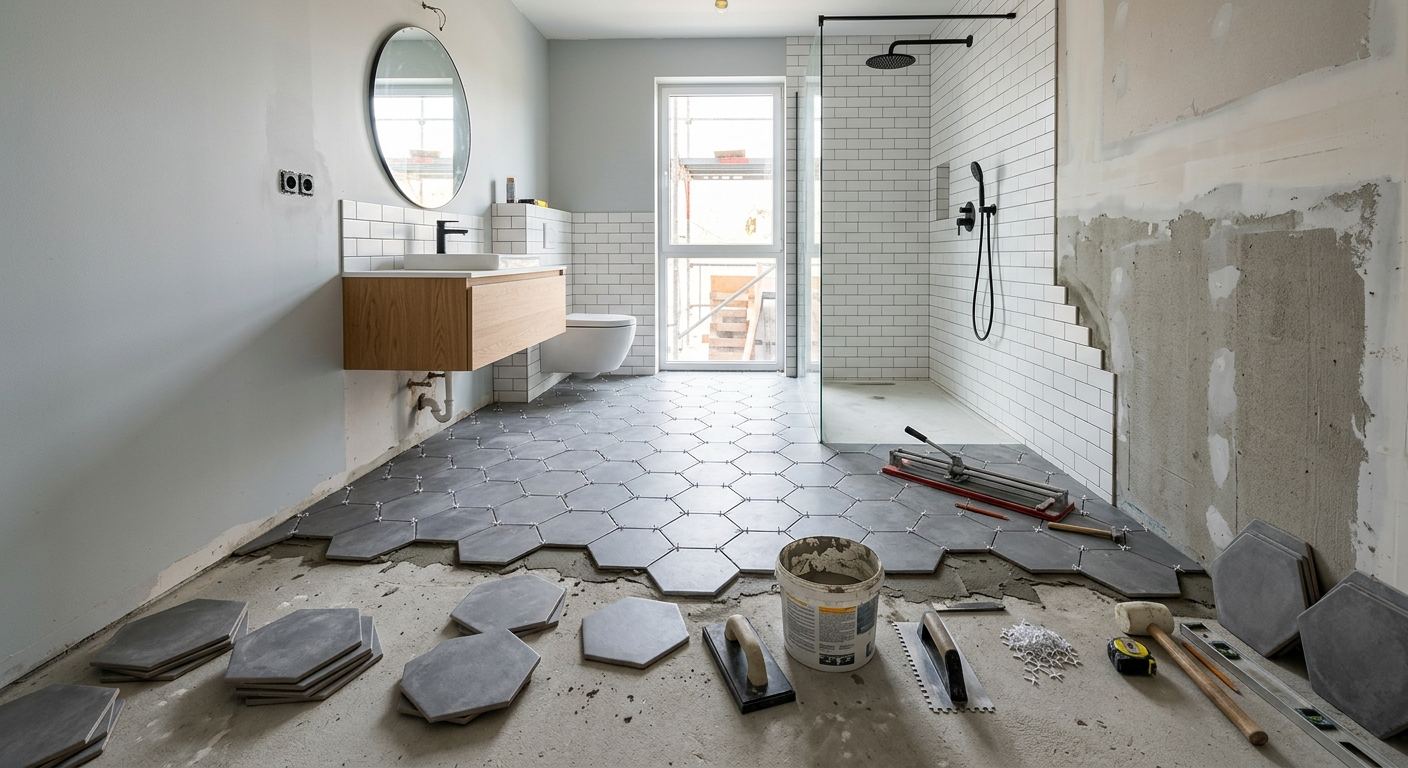
Bathroom renovation options and costs in Westlock
Westlock homeowners typically start by asking what a bathroom reno “should cost,” but the real answer depends on the scope you choose. In Westlock and the wider Edmonton economic region, many homes were built before 1981 (63.3%), and that matters because older layouts often hide dated drain configurations, patchy venting, and wiring that can’t be reused safely. That’s why a full renovation budget tends to land closer to the $12,000–$35,000 full-range band than most cosmetic-only guides suggest. Also, with 68.6% of households owning their homes, homeowners more often invest in upgrades that will hold up for years, not just fresh finishes (Statistics Canada, 2021 Census).
Cost pressure in this region is driven primarily by labour rates and the probability of “scope discovery” when walls open—not by Alberta climate in the day-to-day way people expect. Edmonton-area competition for skilled trades keeps installation labour strong, and once tile comes off, contractors frequently find galvanized supply lines, undersized exhaust ventilation, and sometimes legacy electrical that triggers upgrades. In some older homes, asbestos-containing materials or older wiring types can be discovered, which adds specialized time and contingency rather than being a quick fix. In Westlock, trade demand is especially noticeable in and around the downtown/central corridor, where steady turnover and owner-occupied renovations keep plumbers, electricians, and tile setters booking ahead.
Below are realistic starting points you can use to compare proposals before you get into the details.
| Renovation Scope |
What's Included |
Typical Duration |
Price Range |
| Cosmetic refresh (paint, fixtures, accessories only) |
New vanity (keep plumbing), toilet/LED mirror changes, paint, replace accessories (towel bar, hardware), caulking, deep clean |
3–7 days |
$3,000–$8,000 |
| Mid-range full renovation (new tile, vanity, tub/shower, electrical) |
Demo and re-build, tub-to-shower where needed, new vanity and exhaust fan, updated electrical for lighting/GFCI, tile floor + surround, proper waterproofing and sealing |
2–4 weeks |
$16,000–$26,000 |
| High-end full renovation (custom tile, steam shower, heated floors) |
Custom shower and tile package, steam-ready plumbing (as required), heated floor circuit, premium fixtures/valve trim, upgraded waterproofing system, designer glass, niche/bench details |
4–7 weeks |
$26,000–$45,000 |
| Shower-only installation (convert tub to walk-in shower) |
Remove tub, new walk-in shower pan and waterproofing, tile surround, new shower trim, updated exhaust as needed |
1.5–3 weeks |
$8,000–$18,000 |
| Bathtub replacement or tub-liner install |
Swap tub with new unit and re-set surround/trim, or install liner where suitable, re-caulk and seal, minor plumbing adjustments |
2–5 days |
$4,500–$12,000 |
| Tile-only installation (floor + surround, existing layout kept) |
Remove existing tile only, prep/leveling, install new tile floor and/or shower surround, waterproofing as specified, re-grout and finishing |
1–3 weeks |
$5,000–$14,000 |
Prices are estimates only and vary by project scope, site access and material selection.
What affects the price of bathroom renovation in Westlock
In the Edmonton economic region, two quotes for the same bathroom can differ by 30–50% because the “hidden work” is rarely identical. Labour is a major driver—oil-and-gas competition helps keep skilled trades wages higher than many other Canadian markets—so time spent on demo, setting tile correctly, and bringing electrical/mechanical systems up to current expectations adds up quickly. Housing age also plays a big role: many homes around Edmonton (and in Westlock) were built decades ago, and opening walls commonly reveals dated plumbing, inadequate exhaust ventilation, and electrical that may not meet modern bathroom requirements. When crews must upgrade rough-ins and re-route drains or supplies, you’re not just paying for finishes; you’re paying for the infrastructure underneath.
Older-home conditions can inflate scope in concrete ways. For example, cast-iron or poorly pitched drain lines may need replacement rather than patching, and galvanized supply lines sometimes can’t be safely extended without re-plumbing. Venting surprises are common too: if the exhaust fan ducting is undersized or vented incorrectly, contractors may need to open more wall space to correct it. In pre-1985 construction, asbestos-containing materials have been encountered in floor tile or related finishes; if abatement is required, it can add $1,500–$5,000+ to the project before you even pick your final tile.
In Westlock, cost can also drop when your layout and subfloor are solid. If your plumbing is staying put and the subfloor is level, you may stay closer to the $12,000–$35,000 full renovation band—whereas a mid-range full reno with electrical updates often lands around the $16,000–$26,000 range. Conversely, larger bathrooms or major valve/drain changes commonly push you toward the upper end.
| Price Factor |
Why It Matters |
Cost Impact |
| Layout change — moving drain or supply lines requires rough-in work |
Shifting fixtures means opening more wall, new rough-in plumbing, and often redoing subfloor prep |
Can add 20–40% to the plumbing/electrical portion |
| Tile selection — large-format porcelain vs. mosaic vs. ceramic |
Harder materials need better prep, more precise cuts, and sometimes more labour time per sq ft |
Typically shifts the tile package several thousand dollars |
| Fixture tier — builder-grade vs. mid-range vs. designer brands |
Trim, valves, and finish quality affect both material price and installation complexity |
Often changes total cost by 5–15% |
| Subfloor condition — rot or unlevel concrete adds scope |
Water damage or out-of-level substrates require replacement/leveling before waterproofing |
Can add $1,000–$6,000 depending on extent |
| Electrical — adding GFCI outlets, exhaust fan, heated floor circuit |
Bathrooms have tighter electrical safety expectations; new circuits require licensed work |
Commonly adds $800–$4,500 |
| Waterproofing method — membrane type and extent |
A proper system reduces failure risk; more coverage areas and higher-spec membranes cost more |
Often $500–$3,000 depending on system and size |
| Older-home surprises — asbestos tile, cast-iron drains, galvanized pipes |
Abatement, drain replacement, and legacy electrical upgrades increase time and specialized labour |
Can add $1,500–$10,000+ |
| Bathroom size — sq ft drives tile and labour time directly |
More surface area increases waterproofing, tile setting time, and material waste |
Costs scale roughly with square footage and complexity |
Permits & regulations in Alberta
In Alberta, the permit picture is mostly about whether you’re changing anything structural or “building system” related. Cosmetic updates—like swapping a vanity that uses the existing plumbing connections, replacing a toilet, changing faucets/fixtures in place, repainting, and retiling without moving plumbing—typically do not require a permit. However, permits are commonly required when you relocate plumbing (moving drain or supply lines), add or significantly alter ventilation (like installing a new exhaust fan that requires new wiring and ducting), or make structural changes that affect walls/ceilings. If you’re changing the layout, adding built-ins, or moving rough-ins, plan for permits and inspections.
Electrical work must meet Alberta electrical code requirements and must be performed by (or signed off by) a licensed electrician. That includes adding new bathroom circuits, upgrading to GFCI where required, and wiring heated floors or new fan/light combinations. Plumbing rough-in changes generally require a permit and inspection as well.
For a Westlock homeowner, the verification process should be straightforward. First, ask the contractor for their Alberta trade licence details (or licence number) and confirm it using the provincial online registry. Second, request a current certificate of insurance showing liability coverage and the correct business name. Third, ask about WSIB/WCB clearance—if they have workers on-site, there should be evidence of coverage or a clearance letter. Keep copies of all documents with your estimate and contract so you’re protected if conditions expand during demo.
Choosing tile, waterproofing and fixtures for your Westlock bathroom
In Westlock, your renovation budget is usually shaped by three material decisions: tile choice, waterproofing method, and fixture tier. Start with tile. Entry-level ceramic is usually the most forgiving and budget-friendly, but it can be more limited in format and hardness. Porcelain is a step up—often better for floors because it tends to be denser and more consistent—while natural stone (marble, travertine, slate) looks premium but adds cost through material pricing and more careful installation. In Edmonton-area projects, where older subfloors can be uneven, the installation complexity matters as much as the label on the box.
Next is waterproofing. A paint-on membrane can work for some scenarios, but in high-moisture shower zones, many contractors prefer bonded sheet membranes or a Schluter-style system to create a reliable barrier across the entire wet area and transitions. This isn’t just about “staying dry”—it’s about preventing mould risk where moisture lingers in grout lines and corners, which is common in Alberta homes once ventilation is less than perfect.
Finally, fixtures. Builder-grade fixtures keep upfront costs down, but mid-range and designer valves and trims often improve user experience and longevity—especially if you’re replacing the shower valve and trim sets during rough-in. With 63.3% of local housing built before 1981, the plumbing and valve experience you get can affect how smooth your shower feels long after the reno.
Here’s a practical dollar example: if you’re deciding between ceramic and porcelain tile, upgrading might add a few hundred to a couple thousand dollars in materials, but the real justification comes when your waterproofing and tile setting quality prevent costly rework. The same logic applies to heated floors—great comfort, but only worth it if your electrical scope and membrane system are done correctly from day one.
| Material / Option |
Pros |
Cons |
Price Range |
| Ceramic tile (floor + walls) |
Lower material cost, wide style selection, easier to source matching trim |
May be less durable for floors depending on grade; requires solid prep for crack resistance |
$2,000–$6,000 |
| Porcelain tile (floor + walls) |
More consistent hardness, better floor performance, handles heavier traffic |
Higher material cost; larger formats demand careful layout and subfloor flatness |
$4,000–$10,000 |
| Natural stone (marble, travertine, slate) |
High-end look, strong design impact, unique veining/texture |
Requires additional care; may need sealing/extra labour; more waste from trimming |
$8,000–$18,000 |
| Frameless glass shower enclosure |
Modern appearance, brightens the space, easier to clean than partial doors |
Custom sizing costs; installation depends on wall/plumb accuracy |
$2,500–$7,500 |
| Prefab tub surround (acrylic) |
Fast install, consistent fit, generally lower labour than tiled surrounds |
Less custom look; seam management matters; may not suit every layout |
$1,200–$4,000 |
| Custom shower pan (tile or linear drain) |
Clean, custom water management; linear drains improve modern layout and squeegee feel |
Higher labour due to slope, membrane integration, and drain detailing |
$3,000–$10,000 |
How to choose a bathroom renovation contractor in Westlock
Choosing the right contractor in Westlock comes down to proof: licensing, insurance, workmanship quality, and clarity in the quote. In Alberta, confirm the contractor’s Alberta trade licence using the provincial registry, and ask for documentation before work begins. Liability insurance matters—request a certificate of insurance showing the correct business name and coverage limits. If the contractor has employees working on-site, ensure they carry WSIB/WCB coverage (or provide a clearance letter). You should not have to “trust” this part; you should be able to see it.
Get 2–3 itemised written quotes, not lump sums. The best quotes break down labour and materials by major tasks (demo, plumbing rough-in, electrical, waterproofing, tile setting, trim, disposal). Read exclusions carefully: is permit pulling included, or is it an add-on? Is demolition disposal included (and where are they taking the debris)? If something is not listed, assume it’s not included until proven otherwise.
Warranty should be in writing. Ask for the workmanship warranty length (commonly 1–2 years, sometimes longer), plus the product/manufacturer warranties for tile, membranes, and fixtures. Confirm whether warranties are transferable if you sell your home. For payment schedule, never pay more than 10–15% upfront; hold back remaining payment until key milestones are complete and you’ve inspected the finished areas.
Finally, demand a start date and completion estimate in writing so you’re not guessing when trades are booked up.
- Verify Alberta trade licence number and match it to the contract name
- Confirm liability insurance via certificate of insurance (ask for the current date)
- Provide WSIB/WCB clearance letter or proof of coverage for workers on-site
- Use itemised quotes: labour vs materials, with quantities and unit pricing when possible
- Confirm permit pulling and inspection responsibility in the quote
- Ask what’s included in disposal/dump fees and how waste is handled
- Request a waterproofing detail plan (membrane type, coverage areas, how transitions are sealed)
- Confirm tile installation approach: substrate prep, leveling, crack isolation if required
- Get fixture and glass measurements verified before ordering (prevent costly rework)
- Review timeline with scheduled milestones (demo, rough-in, waterproofing, tile, trim)
- Set payment milestones tied to completion and inspections (don’t front-load)
- Ask for examples of similar Westlock/Edmonton-region bathrooms and references
Concrete red flags I’ve seen in Westlock bathroom renos: vague “turnkey” pricing with no line items, refusal to provide licence/insurance/WSIB/WCB proof, missing waterproofing specs in the scope, warranty language that’s only verbal, and change orders that don’t reference a documented cause (like discovered asbestos/old plumbing) or don’t list the cost impact.
Frequently asked questions — bathroom renovation in Westlock
What adds the most resale value in a bathroom reno?
In Westlock and the broader Edmonton area, buyers respond most to visible quality plus durability. A code-compliant shower with reliable waterproofing, modern exhaust ventilation, and updated electrical (including GFCI where required) tends to feel safer and look newer than simple cosmetic refreshes. High-impact upgrades also include a solid vanity installation, quality tile work with straight lines, and a clean frameless glass look. If you’re budgeting, a mid-range full renovation is often the sweet spot—many projects land around $16,000–$26,000—because it balances materials and the “behind-the-wall” improvements that get exposed in older homes (Statistics Canada, 2021 Census).
Can I keep my existing plumbing layout to save money?
Yes—keeping your plumbing layout usually saves the most, especially in Westlock homes built decades ago where supply and drain routes may be awkward once walls are opened. If the toilet, vanity drain, and shower/tub locations stay where they are, you typically avoid major rough-in work and the added permit/inspection scope that can come with moving drain or supply lines. That’s why many homeowners choose a shower-only or tile-focused plan when budgets are tighter. As a reference point, shower-only conversions commonly sit around $8,000–$18,000, while full renovations with layout and electrical updates often start higher—commonly in the $12,000–$35,000 band.
How much does a walk-in shower cost in Westlock?
A walk-in shower cost depends on whether you’re converting from a tub, how large the shower is, and what you choose for tile and enclosure. In the Edmonton economic region, a realistic starting point for a tub-to-walk-in conversion typically falls in the $8,000–$18,000 range. If you add premium porcelain tile, a linear drain, custom niches, and frameless glass, the high end becomes more likely. Also, because Westlock bathrooms often sit inside older home plumbing systems, some projects can include exhaust and electrical updates once walls open, which affects pricing. For a faster, lower-cost option, keeping existing drain positions and selecting a straightforward tile layout reduces labour and change order risk.
What's the ROI on a bathroom renovation?
ROI varies by condition, neighbourhood demand, and whether your reno fixes functional problems (ventilation, leaking caulking, outdated wiring) or only refreshes surfaces. In owner-occupied markets, like Westlock where 68.6% of households own, many homeowners treat ROI as “value in livability” as much as resale. Generally, durability wins: proper waterproofing, good lighting, and a well-ventilated shower protect the home and can prevent future damage that hurts resale. For budgeting, you’ll usually get the best return from a mid-range full renovation—often around $16,000–$26,000—because it modernizes both finishes and the systems that buyers inspect. If you go high-end (steam/heated floors), ROI may be slower unless it matches the home and overall market expectations.
Do I need waterproofing behind the tile?
For a shower, yes—waterproofing behind tile is essential in Alberta conditions, because bathroom humidity and repeated wetting create a constant moisture load if details fail. Waterproofing isn’t just a “nice-to-have”; it’s what prevents moisture from getting into wall cavities and subfloor. In renovations across the Edmonton region, contractors typically use a membrane system integrated with corners, niches, and transitions (including around the drain and any benches). If you’re retiling, ask your contractor what waterproofing method they’re using (paint-on membrane vs bonded sheet membrane vs a proven system) and whether it extends to the required wet areas. With older housing stock—63.3% built before 1981—there’s also a higher chance of hidden deterioration, so waterproofing scope should be assessed after demo.
How do I compare bathroom renovation quotes?
Start by comparing scope line-by-line. Ensure each quote includes the same key items: demo and disposal, waterproofing method, tile prep/leveling, exhaust fan work, electrical changes (including GFCI expectations), and whether permits/inspections are included. Quotes can differ substantially across Edmonton-area contractors, often by 30–50%, because labour time increases when older homes reveal issues like cast-iron drains, galvanized piping, or legacy wiring. Look for itemised costs rather than a single total—especially for tile, membrane materials, shower pan details, and glass. A fair comparison uses your target band: for example, if one quote claims a “full renovation” inside $12,000–$35,000 while another includes electrical and waterproofing upgrades as separate line items, the first may be missing scope. Ask questions, request clarifications in writing, and only sign when the scope is consistent.