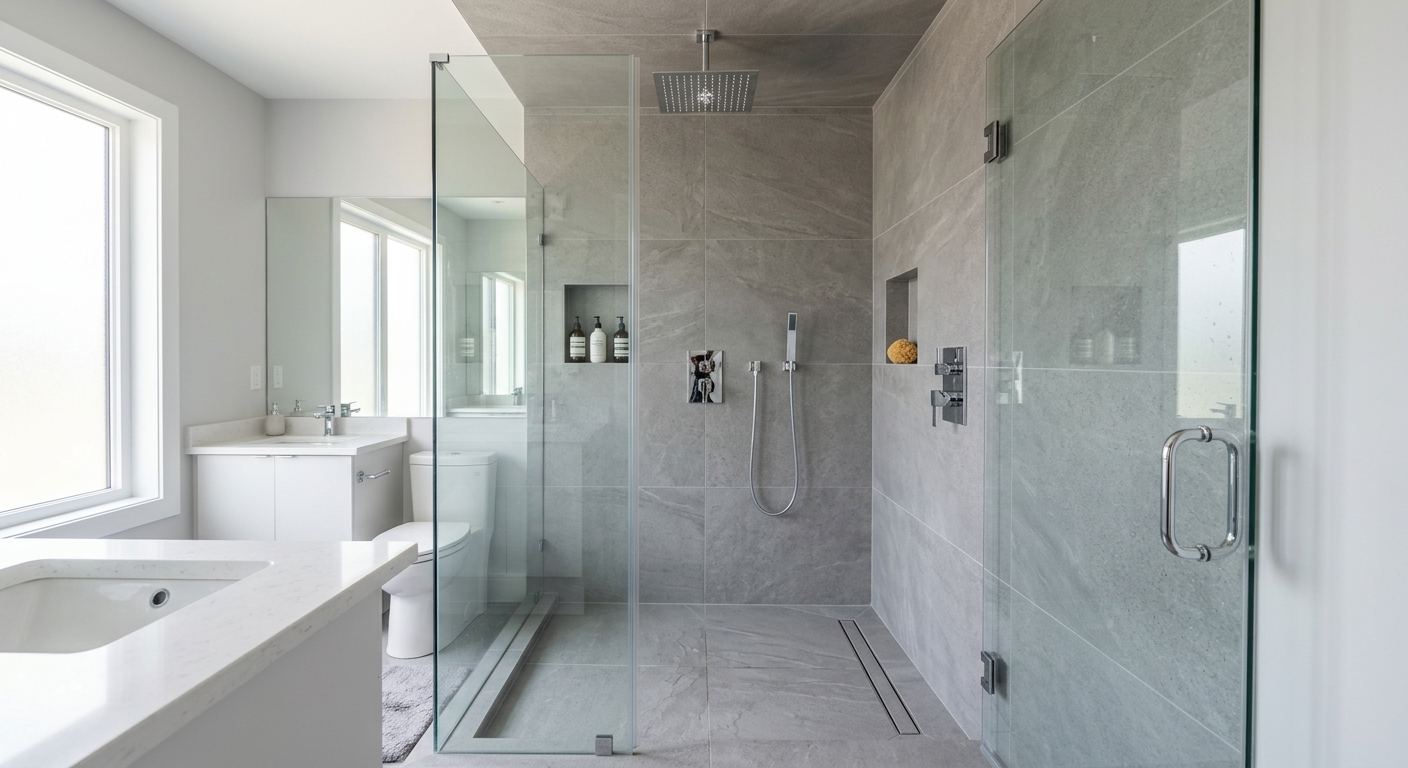
Bathroom renovation options and costs in Somerset
Somerset, Alberta homeowners generally approach bathroom renovations with a clear goal—better function and a cleaner look—but the cost can shift quickly once trades start opening walls. With Somerset’s population at 8,320 (Statistics Canada, 2021 Census), the local contractor pool is smaller than in larger centres, so scheduling and subcontractor availability can affect timelines and pricing. Just as important, much of the housing stock around the Calgary economic region includes older layouts; in practice, that often means dated plumbing runs, slower shutoff valves, and occasional legacy materials hiding behind finishes. In pre-1980 builds, you may also run into asbestos-containing floor tile or old drywall compounds, which can add discovery time and, if required, proper abatement.
Weather in Southern Alberta doesn’t drive bathroom costs the way extreme freeze-thaw does farther north, but it still matters: bathrooms see rapid humidity swings from showers, and poor ventilation can lead to recurring grout and caulk failures. That’s why Calgary-area contractors frequently prioritize exhaust fan performance and correct waterproofing details over superficial upgrades. The bigger price swings usually come from labour rates and hidden-scope work common to older homes—not from climate alone.
One neighbourhood where bathroom trade demand is steady is the Somerset East/Chapter-area pockets along the newer service corridors, where many owner-occupied homes are kept longer and renovated in phases. If you’re planning a “refresh,” it’s still wise to budget contingency, because a cosmetic job can become a mid-range remodel once we discover rough-in issues after demolition.
Below is a side-by-side comparison of common options in Somerset, Alberta, so you can align scope to budget before you request quotes.
| Renovation Scope |
What's Included |
Typical Duration |
Price Range |
| Cosmetic refresh (paint, fixtures, accessories only) |
New vanity or faucet/fixtures (no plumbing move), fresh paint, accessories (mirror, towel bars), re-caulk, lighting refresh with existing wiring |
3–7 days |
$3,000 – $7,500 |
| Mid-range full renovation (new tile, vanity, tub/shower, electrical) |
Demo and rebuild, ceramic tile floor + walls, vanity replacement, tub/shower surround, upgraded exhaust fan, GFCI protection as needed, basic waterproofing, new trim and fixtures |
2–4 weeks |
$15,000 – $22,500 |
| High-end full renovation (custom tile, steam shower, heated floors) |
Custom layout, premium tile (porcelain large-format and/or accent), heated floors, steam shower or upgraded shower system, higher-tier finishes, additional waterproofing detailing, upgraded electrical |
4–7 weeks |
$22,500 – $30,000 |
| Shower-only installation (convert tub to walk-in shower) |
Demo tub, new walk-in shower pan/drain strategy, tile walls + floor, new glass or curtain option, exhaust fan verification, plumbing modifications as required |
1.5–3 weeks |
$8,000 – $15,000 |
| Bathtub replacement or tub-liner install |
Remove and replace tub (or liner system), new wall surround/surface updates, caulking and resealing, fixture hookup verification |
5–10 days |
$500 – $3,000 |
| Tile-only installation (floor + surround, existing layout kept) |
Tile removal and install where needed, waterproofing prep, floor and/or shower surround tile only, grout/caulk refinishing; existing vanity and plumbing remain in place |
1–2.5 weeks |
$3,000 – $12,000 |
Prices are estimates only and vary by project scope, site access and material selection.
What affects the price of bathroom renovation in Somerset
Even when two homeowners in the Calgary economic region choose “similar” bathrooms, quotes can swing by 30–50% because bathroom pricing is driven more by labour rates and by the condition of the existing home than by weather. Alberta’s labour market rewards installers who can manage tile, waterproofing, plumbing coordination, and electrical safely; when schedules overlap, you pay for availability and sequencing. The other major driver is age of housing stock: older homes often hide cast-iron or copper drain stacks, older supply lines (including galvanized where applicable), and ventilation that isn’t up to today’s expectations. Those issues increase scope after demolition starts, which is why contractors commonly recommend treating a bathroom refresh as if it may need mid-range work once walls are opened.
Discovery of asbestos can also change the numbers. In pre-1985 homes, asbestos-containing vinyl floor tile or older drywall compound may trigger abatement protocols. When abatement is required, budgets often rise by $1,500 – $5,000+ depending on area affected and containment requirements.
Here are a few Somerset-specific examples of what raises or lowers cost:
- If you keep the existing tub-to-drain alignment, you avoid rough-in changes—your project is more likely to sit near the low end of the mid-range band (around $15,000–$22,500).
- If you switch to a linear drain or move the shower location, the plumbing rough-in and slope strategy usually push you toward the higher end of shower-only installation pricing (around $8,000–$15,000).
- If the subfloor is unlevel or has moisture damage around the perimeter, add-ons can expand tile work and fixing time, pulling you toward the full-reno band (up to $30,000 for high-end installs).
Climate plays a smaller role than many people expect in Somerset, but humidity control still affects durability. A correctly sized exhaust fan and proven waterproofing method reduce repeat repairs—especially important when older homes have ventilation that can’t handle peak shower moisture.
| Price Factor |
Why It Matters |
Cost Impact |
| Layout change — moving drain or supply lines requires rough-in work |
Demolition plus plumbing rerouting, new venting strategies, and patching/finishing |
Adds roughly $3,000 – $10,000 |
| Tile selection — large-format porcelain vs. mosaic vs. ceramic |
Material cost and labour intensity rise with complexity, cuts and pattern matching |
Varies about $1,000 – $6,000 |
| Fixture tier — builder-grade vs. mid-range vs. designer brands |
Higher-end trims, valves, and faucets cost more and can require more careful installation |
Typically $500 – $4,500 |
| Subfloor condition — rot or unlevel concrete adds scope |
Repairing framing, leveling, and additional prep steps before waterproofing |
Adds roughly $1,000 – $5,000 |
| Electrical — adding GFCI outlets, exhaust fan, heated floor circuit |
New circuit work, safe placement, and code-compliant wiring for wet areas |
Often $500 – $3,500 |
| Waterproofing method — membrane type and extent |
Better systems reduce failures; coverage quality is labour-heavy but prevents future leaks |
Adds about $800 – $3,000 |
| Older-home surprises — asbestos tile, cast-iron drains, galvanized pipes |
Testing/containment, disposal, and potential pipe replacement or venting changes |
Can add $1,500 – $10,000+ |
| Bathroom size — sq ft drives tile and labour time directly |
More surface area increases tile quantity, thinset/membrane usage, and installation hours |
Typically $1,000 – $7,000+ |
Permits & regulations in Alberta
In Alberta, many “like-for-like” cosmetic upgrades can be completed without a permit, but the moment you change plumbing locations or add new electrical circuits, you’re typically in permit territory. For Somerset homeowners, the practical rule is this: if the work can affect plumbing integrity, venting, structural elements, or introduce new wet-area electrical, plan for permits and inspections.
Work that typically DOES require a permit or inspection includes moving plumbing (rerouting a drain or supply line), adding or relocating a bathroom exhaust fan with new electrical work, installing heated floor electrical circuits, and making structural wall changes. Plumbing rough-in changes generally require permits and inspections, because valves, drains, venting strategy, and slope must meet code requirements. Electrical work must be performed and signed off by a licensed electrician; swapping a fixture off an existing circuit may be treated differently, but adding a new circuit or modifying the wet-area setup should always be handled through proper channels.
Work that typically DOES NOT require a permit is usually limited to cosmetic swaps—such as replacing a vanity, faucet, mirror, lighting within the existing box/circuit, re-caulk, painting, and retiling where you’re not changing plumbing locations or structural elements. Even when no permit is required, reputable contractors still follow code for waterproofing and electrical safety.
Step-by-step verification for Somerset: (1) ask for the contractor’s Alberta trade licence details (or company number) and confirm it through the applicable online registry; (2) request a current certificate of insurance showing liability coverage (and confirm it includes renovation/waterproofing scope); (3) confirm workers’ compensation coverage (WSIB/WCB equivalent). Before signing, ask for the proof documents and—if offered—an updated clearance letter, then keep copies for your records.
Choosing tile, waterproofing and fixtures for your Somerset bathroom
When you’re budgeting a bathroom renovation in Somerset, the biggest cost swings are usually driven by three choices: tile, waterproofing, and fixture tier. First, tile selection sets both the material price and the labour time. Entry-level ceramic often costs less per square foot, but it can be more brittle in complex layouts and may require more careful sub-prep for crisp edges. Mid-range porcelain is denser and typically performs better in wet, high-traffic bathrooms. Natural stone (marble, travertine, slate) looks premium but increases cost through material pricing, higher lippage/flatness expectations, and more intensive installation and sealing requirements.
Second is waterproofing method. In Southern Alberta humidity, the “right” system prevents mould and failed grout lines at the seams. A paint-on membrane can work for some applications, but bonded sheet membranes and engineered systems generally offer more robust protection—especially in tub/shower surrounds and steam-shower-type builds. Finally, fixture tier affects both budget and resale confidence. Builder-grade fixtures can look fine, but mid-range or designer options often bring better valves, smoother finishes, and parts availability.
Where the price difference is justified: if you’re choosing between tile-only and a full mid-range remodel, it’s usually smarter to spend on waterproofing quality and correct slope than to upgrade aesthetics alone. For example, a tile-only install may land around $3,000 – $12,000, but if the substrate is compromised or ventilation is inadequate, skipping proper waterproofing can make the later cost approach the $15,000 – $22,500 mid-range band anyway.
Match the combination to your situation: if you keep the layout and want a “clean, fresh” look, porcelain plus proven waterproofing can deliver strong results without jumping to the high-end renovation band.
| Material / Option |
Pros |
Cons |
Price Range |
| Ceramic tile (floor + walls) |
Budget-friendly, wide colour selection, good for simple layouts with proper prep |
May be less dense; can be harder to keep consistent in complex patterns; can chip if subfloor flex exists |
$3,000 – $7,500 |
| Porcelain tile (floor + walls) |
Better water resistance and durability, cleaner grout lines with larger formats, excellent long-term value |
More expensive than basic ceramic; requires careful layout and substrate flatness |
$6,000 – $12,000 |
| Natural stone (marble, travertine, slate) |
Luxury look and unique variation, strong curb appeal, premium feel |
Higher material and installation cost; needs sealing/maintenance; sensitive to improper products |
$10,000 – $18,000 |
| Frameless glass shower enclosure |
Modern appearance, easier cleaning, improves perceived space |
Higher cost; requires precise framing and glass handling; can show hard-water spotting |
$2,000 – $6,500 |
| Prefab tub surround (acrylic) |
Fast install, consistent surface, lower tile labour, good for tighter budgets |
Less “designer” than full tile; joints must be sealed correctly; limited style options |
$500 – $3,000 |
| Custom shower pan (tile or linear drain) |
Best performance with correct slope, cleaner look with linear drain options, highly custom |
More labour-intensive waterproofing and drain setup; substrate must be prepared perfectly |
$8,000 – $15,000 |
How to choose a bathroom renovation contractor in Somerset
Choosing the right contractor in Somerset comes down to proof: licensing, insurance, a clear scope, and a realistic schedule. Start with verification. Ask for the contractor’s Alberta trade licence details and confirm them through the applicable online registry. Next, request a certificate of liability insurance and check the coverage is current and appropriate for renovations. For workers, confirm workers’ compensation coverage (WSIB/WCB equivalent) by requesting proof; reputable firms can provide it without hesitation. For insured projects, request documentation before work starts—don’t wait until you have a problem.
Then get 2–3 itemised written quotes. You want a breakdown that separates labour and materials (tile, membrane, fixtures, disposal, electrical/plumbing allowances) rather than one lump sum. Make sure the scope clearly states what’s included and excluded: permit pull responsibility, whether old material disposal is included, and what happens if asbestos or concealed damage is discovered. In older Somerset/C as lgary-area homes, this is where “simple jobs” often change—so a quote should spell out how discovery is handled and how change orders are priced.
Warranty matters. Ask for the workmanship warranty period (how long they stand behind waterproofing, tile setting and caulking) and the manufacturer warranty for products. Clarify whether warranties are transferable if you sell the home. Finally, confirm payment terms: never pay more than 10–15% upfront; hold back a portion until the work is complete and final clean-up is done. Insist on a start date and an estimated completion date in writing.
- Verify Alberta trade licence details and the company name matches the quote.
- Ask for current liability insurance and confirm coverage limits and renovation scope.
- Confirm workers’ compensation (WSIB/WCB equivalent) coverage.
- Request 2–3 itemised quotes with labour and materials separated.
- Ensure waterproofing method and product type are named in writing.
- Confirm disposal is included (demo debris, tile waste, old fixtures).
- Ask who pulls permits and whether permit costs are included or extra.
- Get a written schedule with start date, milestones, and completion estimate.
- Review allowances for fixtures and tile (avoid “surprise upgrades”).
- Ask about change-order process for hidden issues.
- Confirm the warranty: workmanship length and product/manufacturer coverage details.
- Use a payment plan with 10–15% max upfront and holdback on completion.
Red flags to watch for in Somerset: (1) quotes that won’t list waterproofing products or installation steps; (2) unclear permit responsibility or “no permits needed” claims despite relocating plumbing/electrical; (3) asking for large upfront payments; (4) refusal to provide insurance/licence proof; and (5) vague timelines that don’t include key milestones like demo, rough-in, waterproofing inspection, and trim-out.
Frequently asked questions — bathroom renovation in Somerset
Can I keep my existing plumbing layout to save money?
Yes—keeping the existing plumbing layout is one of the best ways to control cost in Somerset and the Calgary economic region. When you avoid moving the drain and supply lines, you reduce rough-in labour, wall openings, and repair work to drywall/subfloor. That’s often the difference between landing closer to a refresh or a mid-range renovation, rather than being pushed into a bigger remodel. As a practical benchmark, some homeowners aim for the mid-range full renovation band (about $15,000 – $22,500) when they’re doing new tile and a new tub/shower but keeping the main plumbing locations. If your existing drain slope, venting, or supply lines are failing, though, “keeping layout” may still require hidden upgrades—especially in older homes.
How much does a walk-in shower cost in Somerset?
A walk-in shower typically costs in the shower installation range of $8,000 – $15,000 in Somerset when you’re converting from a tub and adding a tile surround with appropriate waterproofing. The variance comes from drain style (standard vs. linear), glass enclosure options, and how much plumbing relocation is needed. In older Somerset/C algary-area houses, concealed issues—like dated drains, supply line condition, or insufficient bathroom ventilation—can expand scope after demo. If you only replace the shower with a straightforward pan and keep the existing plumbing alignment, it can land nearer the lower side. If you’re also upgrading electrical (new exhaust fan circuit or heated options) and changing the shower footprint, budget closer to the top of the band.
What's the ROI on a bathroom renovation?
Bathroom ROI depends on your home’s starting condition, the quality of finishes, and whether the renovation solves functional issues (ventilation, waterproofing failures, dated fixtures). In Somerset, the most reliable “value” comes from durable upgrades that prevent recurring repairs—because buyers notice moisture damage and peeling trim. A cosmetic refresh can improve appeal, but it doesn’t address hidden leaks or ventilation problems. Mid-range full renovations (often $15,000 – $22,500) tend to balance cost with broad buyer acceptance when waterproofing and electrical safety are done properly. High-end features like heated floors and steam showers can be attractive but don’t always return dollar-for-dollar. The best ROI strategy is aligning your scope to your neighbourhood expectations and choosing waterproofing and tile methods that last, especially in a market where older homes frequently need hidden-scope work.
Do I need waterproofing behind the tile?
In almost all shower and tub-surround applications, yes—waterproofing behind tile is essential. In Alberta bathrooms, humidity swings are normal, and if water migrates behind tile through cracks or missed seams, you can get mould or substrate breakdown long before surface grout fails. A proper system usually includes waterproofing coverage on walls (and often on the entire wet-area floor) with the correct transitions at corners, niches, and around plumbing penetrations. Many failures come from doing “tile only” without the right membrane and detailing. Even if your quote sounds like a tile installation, reputable contractors will specify the waterproofing method and products. This is also why a seemingly small project can move from a refresh into mid-range spending when walls are opened and the substrate needs prep or membrane work.
How do I compare bathroom renovation quotes?
Compare quotes like-for-like. Ask each contractor to provide itemised labour and materials, and ensure the scope is explicit: tile type and layout, waterproofing method, ventilation upgrades, electrical allowance, and what’s included in disposal. Confirm who pulls permits and whether permit costs are included, especially if plumbing is moved or electrical circuits are added. In Somerset’s older housing stock, discovery risks matter—ask how asbestos testing/abatement and hidden subfloor repairs are handled, and how change orders are priced. Also compare warranty terms: workmanship duration for waterproofing and tile, plus manufacturer product warranties. Finally, look at payment schedules—if someone wants more than 10–15% upfront or won’t provide proof of licence and insurance, treat it as a major risk. You’ll get a more accurate comparison when quotes clearly separate the elements that usually drive costs into the $15,000 – $22,500 band versus the $3,000 – $12,000 tile-only band.
Can I live at home during a bathroom renovation in Somerset?
Often yes, but it depends on whether you’re doing a full bathroom renovation or a shower-only conversion. If you have a second bathroom, many homeowners can stay in the home with limited use by planning around the demo and dry-in phases. For a mid-range renovation (commonly $15,000 – $22,500), you may not have functional water access for short periods during rough-in and waterproofing work, so the schedule and site protection matter. If it’s your only bathroom, plan for temporary arrangements: using a portable shower/bath setup, restricting water shutoffs to short windows, and keeping paths clear for trades and debris. Reputable Somerset contractors coordinate daily protection (plastic barriers, dust control) to minimize disruption. Ask your contractor for a step-by-step timeline that shows when plumbing is shut off, when waterproofing is installed, and when the finish stage begins.