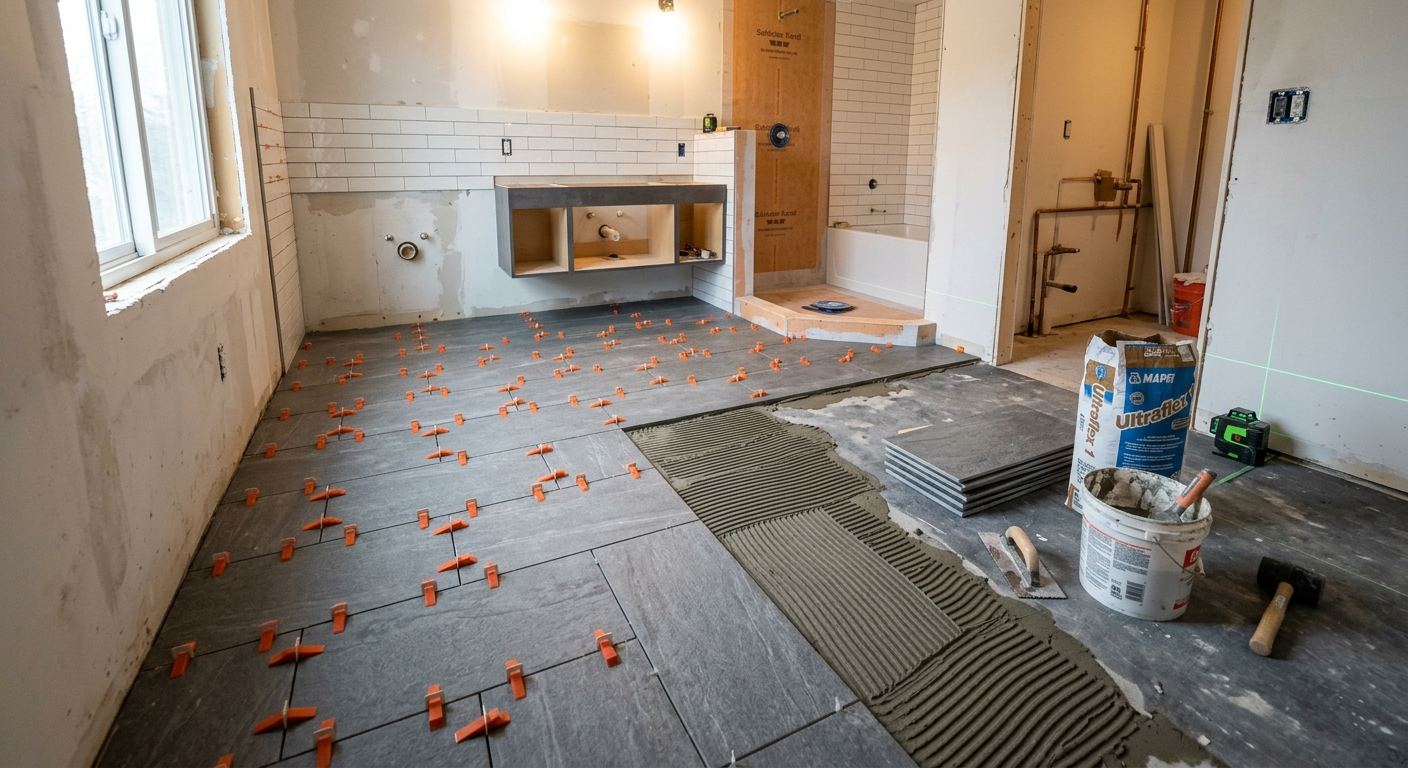
Bathroom renovation options and costs in Steinhauer
Steinhauer, Alberta is a small community (population 1,867 according to the Statistics Canada, 2021 Census) where bathroom renovations tend to follow a practical pattern: many homes are older and the “existing bathroom” isn’t a clean-slate. In the Calgary economic region, older housing often carries dated plumbing layouts, older venting, and drain assemblies that may not be obvious until walls and floors come up. That’s one reason a refresh can quietly turn into a remodel—especially in homes with older floor finishes where asbestos-containing materials are sometimes present in pre-1985 builds (Statistics Canada, 2021 Census). The upside is that you can usually plan for this; the downside is that early quotes have to allow for discovery.
Pricing in the Calgary market is driven more by local labour rates and the condition of the housing stock than by climate. Alberta winters don’t typically change what it costs to install tile or run exhaust ducting, but they do affect how quickly trades can come in consistently and how carefully waterproofing must be detailed to prevent moisture problems in a cold, dry-to-humid transition environment. In Steinhauer, contractor demand is especially high around established residential pockets where multiple homeowners renovate in the same window—meaning scheduling can affect total project duration and labour efficiency.
With that in mind, here’s how common bathroom options usually price out in Steinhauer so you can compare quotes apples-to-apples.
| Renovation Scope |
What's Included |
Typical Duration |
Price Range |
| Cosmetic refresh (paint, fixtures, accessories only) |
New taps/trim, vanity refresh or like-for-like vanity swap, toilet swap, paint, accessories; no plumbing relocation; existing tile retained |
3–7 days |
$4,000–$8,000 |
| Mid-range full renovation (new tile, vanity, tub/shower, electrical) |
Demo and rebuild; new tile floor/surround, vanity, tub/shower or tiled wall system, exhaust fan, GFCI circuit upgrades as needed, waterproofing upgrade |
2–4 weeks |
$15,000–$22,000 |
| High-end full renovation (custom tile, steam shower, heated floors) |
Premium tile layouts, custom shower/steam unit, heated floors, upgraded waterproofing, higher-tier fixtures, more extensive lighting/electrical work |
4–6 weeks |
$22,000–$30,000 |
| Shower-only installation (convert tub to walk-in shower) |
Remove tub, install walk-in shower pan/drain, new wall tile, new glass or surround, updated waterproofing, usually some plumbing rework for drain slope |
1.5–3 weeks |
$8,000–$15,000 |
| Bathtub replacement or tub-liner install |
Swap old tub for new; or liner system (where applicable), recaulk, test for leaks; limited tile work depending on fit and finish |
3–10 days |
$500–$3,000 |
| Tile-only installation (floor + surround, existing layout kept) |
Tile removal and re-install for floors and/or tub surround; new grout/finish; waterproofing system where needed; assumes plumbing stays put |
1.5–3 weeks |
$3,000–$12,000 |
Prices are estimates only and vary by project scope, site access and material selection.
What affects the price of bathroom renovation in Steinhauer
In Steinhauer and across the broader Calgary region, the same “bathroom remodel” can come in 30–50% apart because the real cost drivers are labour rates and concealed work—not the size of the room alone. In older housing, the bathroom walls and subfloors often look fine at first glance, but once demolition starts you may find plumbing rough-in that needs relocating, venting that doesn’t meet modern expectations, or drain assemblies that don’t connect cleanly without rework. That’s why quotes that seem similar on fixtures can diverge once a contractor prices the rough-in, waterproofing prep, and tile backer repairs.
For Alberta, climate isn’t the main driver of the renovation price, but moisture control details are. Proper waterproofing and ventilation are critical because bathrooms cycle between warm showers and cooler drying conditions; poor ventilation or incomplete membranes lead to call-backs and redo work. Many Calgary-area contractors also report that pre-renovation inspections reduce surprises, especially in homes with older floor finishes where asbestos-containing materials can be encountered and must be handled under abatement protocols. Discovery of asbestos in vinyl floor tile or related materials commonly adds about $1,500–$5,000+ to the budget, depending on testing results, area size, containment requirements and disposal.
Two concrete Steinhauer examples that change cost fast: (1) converting a tub to a walk-in shower usually increases labour because drain slope and pan installation must be done correctly—this is why shower-only projects commonly sit in the $8,000–$15,000 band; and (2) keeping the layout and doing tile-only work can stay closer to $3,000–$12,000 because it avoids many plumbing rough-in hours and inspection steps. If your home’s age suggests older supply lines or drain stacks, budgeting near the higher end for full renovations (often $15,000–$30,000) is usually the safer plan.
| Price Factor |
Why It Matters |
Cost Impact |
| Layout change — moving drain or supply lines requires rough-in work |
Plumbing relocation often means opening walls/floor, updating rough-in, and coordinating trades |
Often adds $2,000–$8,000 depending on distance and access |
| Tile selection — large-format porcelain vs. mosaic vs. ceramic |
Harder materials increase cutting complexity and time; large formats require flatter substrate |
Can swing $1,000–$6,000 for materials and labour |
| Fixture tier — builder-grade vs. mid-range vs. designer brands |
Premium valves, trims, and vanities cost more and may require different installation/spacing |
Usually $500–$4,000 difference |
| Subfloor condition — rot or unlevel concrete adds scope |
Rot and moisture damage require repairs before tile and waterproofing can be installed |
Commonly $1,000–$7,000 when framing/subfloor is rebuilt |
| Electrical — adding GFCI outlets, exhaust fan, heated floor circuit |
New circuits require licensed work, correct sizing, and code-compliant installation |
Often $600–$3,500 |
| Waterproofing method — membrane type and extent |
Higher-performance systems reduce failure risk; better prep prevents rework |
Typically $400–$2,500 depending on bath layout |
| Older-home surprises — asbestos tile, cast-iron drains, galvanized pipes |
Abatement, replacement and added disposal/containment expand timeline and labour |
Asbestos: $1,500–$5,000+; drain/supply upgrades vary widely |
| Bathroom size — sq ft drives tile and labour time directly |
More surface area means more materials, mortar, waterproofing coverage, and setting time |
Roughly $800–$6,000 swing based on size and finishes |
Permits & regulations in Alberta
In Alberta, the permit needs depend on what changes you’re making. As a rule of thumb, cosmetic updates—like swapping a vanity, replacing taps, changing a toilet, painting, or retiling without moving plumbing—often do not require a permit. However, work that changes the plumbing layout (moving a drain or supply lines), adding new ventilation (like an exhaust fan that requires electrical and ducting changes), or structural changes to walls typically does require permits and inspections. Electrical work must meet the Canadian Electrical Code and be completed or signed off by a licensed electrician.
For a Steinhauer homeowner, the best way to stay protected is to verify your contractor’s trades credentials and insurance before demolition starts. Step-by-step: (1) Ask for their Alberta trade licence details and check them through the appropriate provincial online registry for their trade category; (2) Request a current certificate of liability insurance showing coverage limits and effective dates; (3) Confirm Workers’ Compensation coverage (WCB/WSIB equivalent in Alberta) so you’re not left holding the risk if a worker is injured; (4) If the job includes plumbing rough-in changes, ask whether the contractor will pull the permit(s) and schedule inspections—don’t assume; (5) Request documentation of permit numbers and posted inspection sign-offs where applicable.
If a contractor can’t clearly explain what requires permits versus what doesn’t, or refuses to provide proof of licence and insurance, that’s a major red flag for both cost and compliance.
Choosing tile, waterproofing and fixtures for your Steinhauer bathroom
In Steinhauer, the “big three” material decisions that drive your bathroom budget are tile choice, waterproofing system, and fixture tier. First, tile: ceramic is typically the entry-level option and can work well where your design is straightforward and your substrate is solid. Porcelain usually costs more but handles moisture and wear better, and it’s often the go-to for floor tile and higher-traffic baths. Natural stone (marble, travertine, slate) can create a luxury look, but it demands more careful installation and ongoing sealing considerations.
Second, waterproofing: in Alberta’s temperature swings and bathroom humidity cycles, the waterproofing details matter as much as the tile. A paint-on membrane may be fine for certain surfaces and smaller scopes, but bonded sheet membranes or a proven tiling system (including correct thinset compatibility and detailing at corners/penetrations) are often the safer long-term approach for showers and wet areas. Third, fixtures: builder-grade fixtures keep costs down, mid-range fixtures balance performance and styling, and designer brands typically add dollars through advanced trims, valves, and finish quality—often improving resale appeal.
A practical budgeting example: upgrading from basic ceramic to porcelain tile can add roughly $1,000–$6,000 across material and labour depending on area and layout complexity. That difference is usually worth it when you’re doing a full shower surround and floor, because porcelain’s durability and the need for fewer future replacements can justify the added spend. Pair your chosen tile with waterproofing that matches your shower configuration, and your renovation is far more likely to stay dry and stable over Alberta seasons.
| Material / Option |
Pros |
Cons |
Price Range |
| Ceramic tile (floor + walls) |
Lower material cost; wide style selection; good for walls where stress is lower |
Can be less resilient than porcelain for floors; may show wear sooner in high-traffic homes |
$3,000–$7,000 |
| Porcelain tile (floor + walls) |
Denser and more durable; better for floors and wet areas; strong design consistency |
Higher material cost; large formats demand a flatter substrate and careful setting |
$7,000–$12,000 |
| Natural stone (marble, travertine, slate) |
Premium look; unique veining and texture; strong luxury resale appeal |
Requires careful sealing/maintenance; more labour-intensive cutting and layout |
$12,000–$20,000 |
| Frameless glass shower enclosure |
Modern appearance; visually opens the bathroom; helps with water containment when well installed |
More expensive hardware; requires precise measurements; increases labour for fitting |
$2,000–$6,000 |
| Prefab tub surround (acrylic) |
Fast install; good waterproofing when integrated correctly; reduces tile labour |
Design limitations vs. full tile; may show seams; less “custom” look |
$500–$3,000 |
| Custom shower pan (tile or linear drain) |
Better integration and slope control; linear drains create high-end appearance; improves drainage performance |
More detailed waterproofing and substrate work; higher labour time |
$8,000–$15,000 |
How to choose a bathroom renovation contractor in Steinhauer
Choosing the right contractor is where Steinhauer homeowners can avoid costly delays and redo work. Start with licensing and insurance: confirm the contractor’s Alberta trade licence (for the trades involved), ask for proof of current liability insurance, and verify they carry Workers’ Compensation coverage (WCB/WSIB equivalent in Alberta). How to check: request documents directly, verify certificate details (names, address, coverage dates), and if available, cross-check licence status using the provincial online registry for the trade category they claim to operate under. Don’t accept “we’re covered” without paperwork.
Next, get 2–3 itemised written quotes. You want a line-by-line labour and materials breakdown (demo, rough-in, waterproofing, tile labour, fixtures, disposal, electrical/plumbing scopes) rather than a single lump sum. Read the scope carefully: what’s excluded (subfloor repairs, drywall replacement, tile backer boards), is asbestos testing or abatement contingency included if surprises appear, and is permit pulling included or extra? Also confirm disposal: dumpster fees and haul-away costs can be a hidden variable in older homes.
Warranty should be specific: workmanship warranty length (and what triggers it), product/manufacturer warranty coverage, and whether warranties transfer if you sell. For payments, never pay more than 10–15% upfront. Hold back payment until critical stages are complete (waterproofing verification, final caulking/grouting, and a leak test). Finally, insist on a start date and completion estimate in writing so you can plan around labour availability.
- Provide Alberta licence proof matched to the exact work they’ll perform
- Show current liability insurance certificate
- Confirm Workers’ Compensation coverage (WCB/WSIB equivalent in Alberta)
- Deliver itemised quotes (labour + materials), not a single total
- List exclusions clearly (subfloor, drywall replacement, hidden plumbing repairs)
- State whether permit pulling is included and identify who pulls it
- Confirm whether disposal/dumpster and haul-away are included
- Specify waterproofing method and who applies it (not “we’ll waterproof”)
- Include a tile scope: prep level, substrate requirements, and grout/caulk type
- Give warranty terms in writing for both workmanship and products
- Set a payment schedule with a holdback until final inspection and cleanup
- Provide a realistic timeline with milestone dates (demo, rough-in, tile, final)
Concrete red flags for Steinhauer bathroom contractors: they refuse to provide licence/insurance paperwork, they won’t itemise labour versus materials, they leave waterproofing details vague, they demand large upfront payments (well beyond 10–15%), or they won’t clearly state whether concealed repairs and permit pulling are included or contingent.
Frequently asked questions — bathroom renovation in Steinhauer
What's the most common mistake homeowners make in bathroom renovations?
The most common mistake in Steinhauer is budgeting only for what’s visible—fixtures and tile—then being surprised when older-home conditions add scope. In Calgary’s older housing stock, it’s common to uncover ventilation issues, subfloor repairs, or plumbing/rough-in upgrades once demolition begins. That’s why homeowners sometimes think they’re doing a “mid-range” update, but the project drifts toward full remodel pricing when the contractor prices concealed work. Another frequent misstep is skipping proper waterproofing specifications in favour of the cheapest tile option. If you’re aiming for a bathroom refresh but your quote is closer to a full renovation range (often $15,000–$30,000), ask what changed: waterproofing, electrical, venting, or hidden plumbing repairs. (Statistics Canada, 2021 Census)
How long does tile installation take in a Steinhauer bathroom?
Tile installation time in Steinhauer usually depends on whether you’re doing floor only, floor plus tub/shower surround, and how much substrate prep is required. For many mid-range renovations, tile work typically takes about 1.5 to 3 weeks when you include prep, setting, grout, and curing considerations. If your project is “tile-only” with the layout staying the same, the schedule can still land in the same general window because waterproofing prep and proper membrane integration aren’t optional. If a bathroom needs extensive subfloor corrections or additional waterproofing detailing at corners/penetrations, plan for extra time. Your contractor should include tile prep and waterproofing cure times in the schedule—not just “we’ll set tile.”
How much does a bathroom renovation cost in Steinhauer?
For Steinhauer homeowners, bathroom renovation costs commonly land based on scope rather than climate. A cosmetic refresh typically starts in the lower range, while a mid-range full renovation often lands in the $15,000–$22,000 band for typical tile/vanity/tub-or-shower upgrades. If you’re adding higher-end finishes like heated floors, custom shower elements, or more extensive electrical, you may approach the upper end of the full renovation range at $22,000–$30,000. Shower-only conversions are often priced around $8,000–$15,000, especially when the drain slope and waterproofing details must be redone. In older homes, asbestos discovery or major plumbing upgrades can increase costs—so it’s wise to budget a contingency.
How long does a bathroom renovation take in Steinhauer?
Timelines vary with demolition complexity, trade scheduling, and how much hidden work is discovered in Steinhauer-area homes. A cosmetic refresh can be completed in roughly 3–7 days. Mid-range full renovations commonly take about 2–4 weeks, while high-end projects with custom shower systems and heated floors often run 4–6 weeks. Shower-only conversions are frequently in the 1.5–3 week range, assuming materials and glass scheduling line up. Delays usually come from subfloor repairs, waterproofing coordination, permitting/inspection timing (when needed), and material lead times for tile and fixtures. The best way to protect your timeline is to request a written start date, milestone schedule, and a list of what could change the duration.
Do I need a permit for a bathroom renovation in Alberta?
In Alberta, many cosmetic bathroom updates do not require permits—examples include swapping fixtures like taps and toilets, painting, and retiling where plumbing locations don’t change. Permits typically are needed when you relocate plumbing (moving drains or supply lines), change structural walls, or add/modify electrical circuits for items like exhaust fans or heated floors. Electrical work must be done or signed off by a licensed electrician. Plumbing rough-in changes generally require permits and inspection. To verify, ask your contractor what permits are required before work begins and whether they will pull them. Also confirm they can provide Alberta licence proof and current liability insurance, plus Workers’ Compensation coverage (WCB/WSIB equivalent in Alberta).
What's the best tile for a bathroom in Steinhauer?
For most Steinhauer bathrooms, porcelain tile is often the best balance of durability and long-term performance in a wet, frequently used space. Ceramic can work well in some wall applications, but for floors and areas near showers, porcelain usually holds up better under moisture and everyday wear. If you want a premium look, natural stone can be beautiful, but it demands careful installation and typically more maintenance planning. The “best” choice is also about what your installer can handle: large-format tiles require a flatter substrate, and your waterproofing details matter regardless of tile type. If you’re choosing between options, a realistic budget might be $3,000–$12,000 for tile-only installation when keeping the layout, but full wet-area upgrades can push higher once waterproofing prep and surround coverage are included.