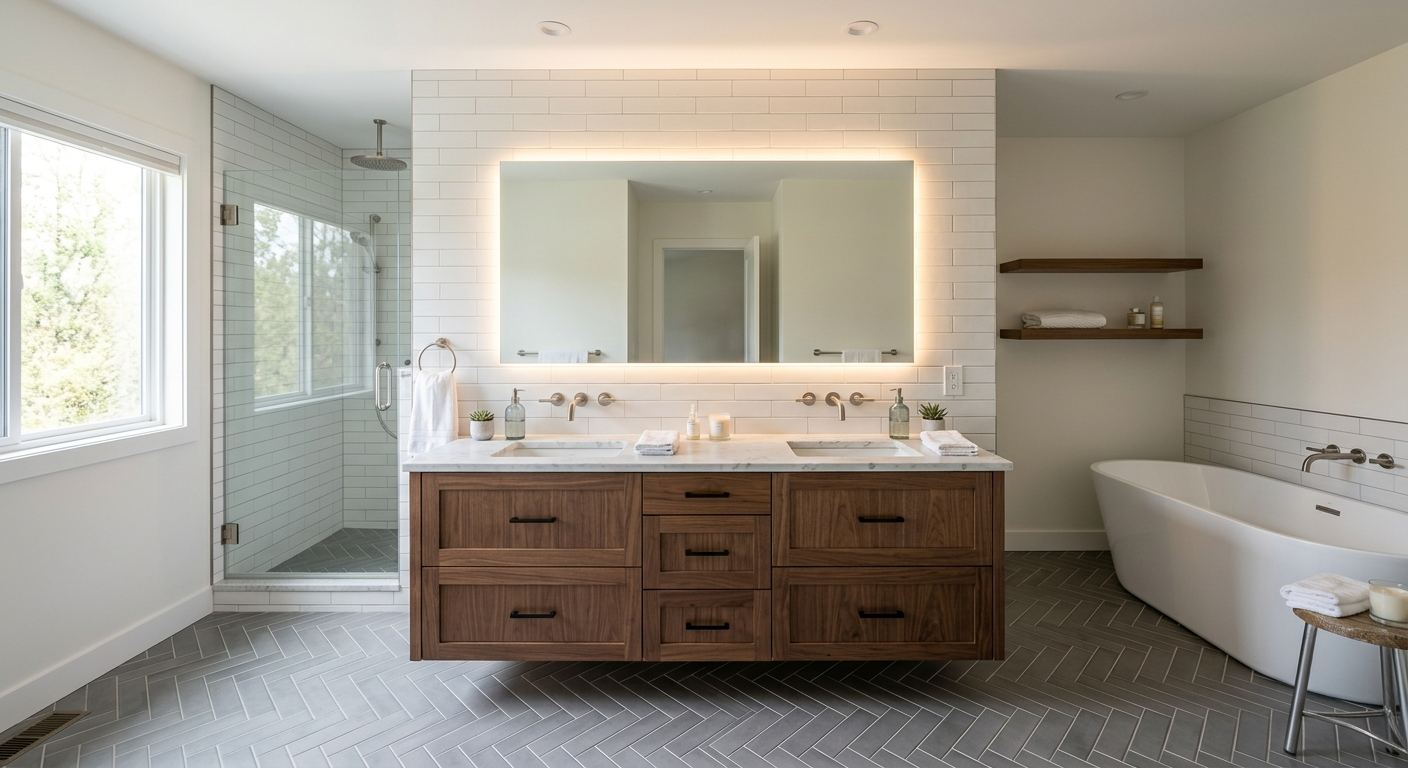
Bathroom renovation options and costs in Ambleside
Bathroom renovation in Ambleside is shaped by what you’re starting with. With a population of 6,173 (Statistics Canada, 2021 Census), Ambleside is a smaller community, but it still benefits from Calgary-area trade capacity—especially in demand around West LRT-adjacent corridors where trades see steady turnover of older homes and rentals. Most price swings come less from local weather than from the fact that many bathrooms in the Calgary economic region are in homes that were built decades ago; that’s when dated plumbing layouts, older venting, and potential hidden issues (like older flooring materials) are more common. Calgary’s seasonal freeze–thaw and indoor humidity can also magnify any weak waterproofing choice, which is why contractors often recommend budgeting for thorough membrane work rather than “patch and paint.”
In practice, Calgary-area renovation crews often get called into older housing where demolition reveals additional scope—subfloor repairs, venting upgrades, or discoveries that expand the project after walls are opened. A “simple” refresh can stay closer to the low five-figure range, while a mid-range full renovation commonly moves toward the mid-to-high end of the $15,000–$30,000 band depending on tile, electrical, and whether you change the plumbing footprint. For homeowners, it helps to decide early which level you’re aiming for, then carry contingency for the hidden work that tends to show up in older baths.
Below is a budgeting comparison you can use as a baseline for your Ambleside project—then we’ll break down what drives the final number.
| Renovation Scope |
What's Included |
Typical Duration |
Price Range |
| Cosmetic refresh (paint, fixtures, accessories only) |
Paint, replace vanity or tap/trim (no plumbing relocation), new mirror/accessories, deep clean and caulking refresh |
3–7 days |
$3,000–$7,500 |
| Mid-range full renovation (new tile, vanity, tub/shower, electrical) |
Remove old finishes, tub/shower replacement or reglaze, new vanity and toilet, tile floor + surround, basic electrical updates (lighting/GFCI as needed), new vent/fan where applicable |
2–4 weeks |
$15,000–$25,000 |
| High-end full renovation (custom tile, steam shower, heated floors) |
Full demolition, custom shower system or steam-ready layout, heated floors, premium tile/grout detailing, upgraded exhaust and ventilation routing, designer fixtures |
4–7 weeks |
$25,000–$45,000 |
| Shower-only installation (convert tub to walk-in shower) |
Remove tub, build walk-in shower (tile or pan), new valve trim, waterproofing, curb or barrier-free options, rework some plumbing rough-in |
2–3 weeks |
$8,000–$15,000 |
| Bathtub replacement or tub-liner install |
Replace tub with acrylic/steel (or liner where conditions allow), new surround detailing, re-seal and connect fixtures |
5–10 days |
$500–$3,000 |
| Tile-only installation (floor + surround, existing layout kept) |
Tile removal and reinstall (or overlay where acceptable), waterproofing upgrades as needed, matching grout/transition work, keep plumbing locations |
1–3 weeks |
$3,000–$12,000 |
Prices are estimates only and vary by project scope, site access and material selection.
What affects the price of bathroom renovation in Ambleside
It’s normal to see 30–50% differences in quotes for the “same” bathroom in the Calgary economic region. The big drivers are regional labour rates and the age/condition of the housing stock, not so much the weather pattern itself. In Alberta—especially around Calgary—renovations often start with a visible plan, then expand when the walls come off: older drain stacks (cast iron), older venting routes, and supply-line upgrades (galvanized or aging copper) can add rough-in work that isn’t obvious at the estimate stage. That’s why a refresh that sounds like a straightforward update can escalate quickly once demolition begins.
Asbestos is another cost swing factor. In pre-1985 homes, discovery of asbestos-containing materials (commonly in older vinyl flooring or certain drywall compounds) can trigger abatement protocols, containment, and additional inspection steps. Even when it’s “only” a small area, it can add about $1,500–$5,000+ to the budget depending on testing scope and how much removal is required. Likewise, inadequate ventilation can force a fan upgrade and sometimes duct rerouting, which pushes the project toward the mid-range $15,000–$25,000 band.
Two common Ambleside scenarios illustrate the range. First, if you keep the plumbing where it is, you usually protect your budget and can stay closer to a tile-only or mid-range full renovation outcome. Second, if you move the vanity or change the shower valve location, expect more labour for rough-in, patching, and re-waterproofing—often nudging totals toward the higher end of the bathroom full-reno pricing.
| Price Factor |
Why It Matters |
Cost Impact |
| Layout change — moving drain or supply lines |
Requires rough-in work, possible joist access, and new waterproofing transitions |
Often adds major scope; frequently pushes projects upward within the band |
| Tile selection — large-format porcelain vs. mosaic vs. ceramic |
Harder tiles need better prep, more precise cuts, and skill to keep grout lines consistent |
Can swing labour + waste; material tier can change the total meaningfully |
| Fixture tier — builder-grade vs. mid-range vs. designer brands |
Higher tiers cost more and may require specialized installation components |
Usually a predictable materials increase; affects total most in full renos |
| Subfloor condition — rot or unlevel concrete adds scope |
Unlevel surfaces mean more prep, shimming, or removal and rebuild of framing |
Can add days and material; common in older baths |
| Electrical — adding GFCI outlets, exhaust fan, heated floor circuit |
More wiring and code-compliant connection points increase labour and scheduling |
Often adds cost and coordination time with a licensed electrician |
| Waterproofing method — membrane type and extent |
The right system prevents mould and failures in Alberta humidity and temperature swings |
Improves long-term durability; sometimes increases upfront cost but reduces failures |
| Older-home surprises — asbestos tile, cast-iron drains, galvanized pipes |
Discovery changes demolition strategy and may require remediation and replacement |
Can add thousands and extend the timeline |
| Bathroom size — sq ft drives tile and labour time directly |
Larger spaces increase tile quantity, thinset/membrane use, and installation hours |
Direct proportional impact on labour and materials |
Permits & regulations in Alberta
In Alberta, many bathroom cosmetic updates typically don’t require a permit. Swapping fixtures (like taps, toilet, vanity, mirror), re-painting, replacing an existing vanity, or retiling while keeping plumbing and electrical locations the same are generally considered low-risk updates. However, if you’re relocating plumbing—moving a drain or supply line—or changing how a fixture ties into the existing rough-in, permits and inspections are commonly required.
Electrical is a clear line in the sand. Any new circuits, adding or relocating GFCI outlets, installing or wiring an exhaust fan with new power runs, or connecting heated flooring must be done by a licensed electrician (or at minimum signed off as required by electrical code). Structural changes also increase oversight. If you’re opening walls for venting changes, reframing, or other structural scope, expect permitting requirements and inspections as applicable.
For homeowners in Ambleside, the safest step-by-step verification is: (1) ask for the contractor’s Alberta trade licence details (and check the relevant provincial registry online), (2) request a current certificate of insurance showing liability coverage and verify dates, (3) confirm WSIB/WCB coverage (or the contractor’s applicable status), (4) ask for evidence before work starts, not after, and (5) keep copies of all documents with your contract. When contractors can’t provide this cleanly, that’s a practical red flag—especially in older homes where hidden scope can expand quickly.
Choosing tile, waterproofing and fixtures for your Ambleside bathroom
In an Ambleside bathroom reno, three material decisions shape both the budget and the long-term performance. First is tile choice. Ceramic tile is typically the entry-level option and can be a good fit if you’re keeping finishes simple. Porcelain tile is denser and often performs better in wet areas, but it requires accurate subfloor prep and more careful installation, especially with larger formats. Natural stone (marble, travertine, slate) can look premium, yet it tends to be higher maintenance and demands extra labour for layout, sealing, and finishing details.
Second is waterproofing method. In Alberta, moisture management matters because bathrooms see repeated humidity spikes and then drying. Paint-on membrane systems can work in specific assemblies, but bonded sheet membranes or systems like a schluter-style approach are often chosen when you want predictable thickness, better coverage at seams, and strong transitions around niches, corners, and curbs. The right system helps prevent mould and grout breakdown over time.
Third is fixture tier. Builder-grade fixtures can meet basic performance, while mid-range and designer brands often bring better valves, smoother finishes, and longevity that supports resale value. The budget match is the key: spending more on waterproofing and proper waterproofing detail can be a better investment than upgrading every visible surface.
For example, if you’re deciding between a standard tile-only plan versus a full shower conversion, that’s not just style—it’s scope. A walk-in shower conversion commonly lands around $8,000–$15,000; if you upgrade to premium porcelain and a higher-end waterproofing system, you’re paying for a calmer maintenance future, not just a nicer look.
| Material / Option |
Pros |
Cons |
Price Range |
| Ceramic tile (floor + walls) |
Lower material cost, wide style variety, solid for straightforward layouts |
More variation in water resistance depending on product; may be less durable than porcelain in some uses |
$3,000–$8,000 |
| Porcelain tile (floor + walls) |
Better durability and water performance; supports larger formats and cleaner lines |
More expensive materials; installation must be precise to avoid lippage and cracking |
$6,000–$12,000 |
| Natural stone (marble, travertine, slate) |
High-end visual impact and uniqueness; premium look for feature walls |
Needs sealing/maintenance; can be costlier to cut and finish around wet-area details |
$10,000–$20,000 |
| Frameless glass shower enclosure |
Modern appearance, visually enlarges space, easy wipe-down |
Costlier hardware; requires careful alignment and stable framing/waterproofing |
$3,000–$7,500 |
| Prefab tub surround (acrylic) |
Fast installation, reliable water performance, fewer grout lines |
Less “custom” look than tile; limited colour/texture selection depending on availability |
$500–$3,000 |
| Custom shower pan (tile or linear drain) |
Clean, premium drain look; improves slope control and water management when built correctly |
More labour and coordination; requires strong waterproofing detailing |
$2,500–$8,000 |
How to choose a bathroom renovation contractor in Ambleside
Choosing a bathroom contractor in Ambleside comes down to proof, not promises. Start by verifying Alberta licensing for the trades involved and request documentation for liability insurance and WSIB/WCB coverage. How to check: (1) ask for the licence number and confirm it using the relevant Alberta registry search online, (2) request a certificate of insurance (COI) and confirm it’s active for the policy term covering your project period, (3) ask for proof of WSIB/WCB coverage or applicable exemption status, and (4) confirm subcontractors are also insured and covered when they enter your home.
Next, insist on 2–3 itemised written quotes, ideally with labour and materials separated (tile, membrane system, fixtures, electrical, disposal). A lump-sum number can hide big differences in what’s excluded. Read the scope carefully for what’s not included: permit pull, demolition disposal, subfloor repairs, niche/shelf build-outs, fan ducting, and any contingency for hidden issues. A good contractor lists exclusions and assumptions clearly.
Warranty matters too. Ask for a workmanship warranty length, the manufacturer warranty on products, and whether the warranty is transferable to you as the homeowner. For payment schedules, never allow large deposits; keeping upfront payment around 10–15% is a practical guideline, with a holdback until key completion points are met. Finally, get the start date and a completion estimate in writing, including who coordinates scheduling for the electrician and any inspections.
- Ask for itemised quotes: labour vs materials vs permits vs disposal
- Confirm Alberta trade licence(s) for the trades doing the rough-in
- Verify liability insurance COI is current and project-specific coverage is noted
- Request proof of WSIB/WCB coverage (or documented exemption) before work begins
- Check whether permits/inspections are included or separately priced
- Confirm disposal/recycling is included in the quote scope
- Ask what happens if asbestos tile or hidden damage is discovered
- Confirm waterproofing system brand/type and what surfaces receive the membrane
- Review tile layout allowances (waste factor, premium cuts, threshold details)
- Ask about electrical scope: GFCI, fan, lighting, and heated floor circuits
- Get a written timeline with milestones (demo, rough-in, waterproofing, tile, trim)
- Ask for warranty terms in writing, including transferability
Red flags I commonly see with less-prepared bathroom contractors in Ambleside include: refusing to provide a COI or licence number, quoting only a vague “materials allowance” without itemization, starting work before permits are clear when plumbing/electrical changes are involved, offering no workmanship warranty details, and asking for a high upfront payment with no holdback tied to completion.
Frequently asked questions — bathroom renovation in Ambleside
What adds the most resale value in a bathroom reno?
In Ambleside and the wider Calgary area, the resale value usually comes from improvements buyers can feel and trust: a clean, modern layout; reliable ventilation; and bathroom finishes that won’t fail prematurely. The highest-impact upgrades are often a quality shower system (with correct waterproofing), updated fixtures, and fresh tile/finishes that look consistent. If your home’s bathroom is in an older housing stock, replacing outdated valves and upgrading venting can matter as much as visible updates. Budget-wise, many homeowners land in the $15,000–$30,000 full-renovation range for a mid-range bath that includes tile and electrical updates—this scope tends to photograph well and hold up in inspections. (Statistics Canada, 2021 Census)
Can I keep my existing plumbing layout to save money?
Yes—keeping the plumbing layout is one of the best ways to control cost in Alberta, including in Ambleside. When you don’t move the drain or supply lines, you typically reduce rough-in labour, patching, and waterproofing rebuild time. That’s why “tile-only” or “refresh + like-for-like fixture swaps” can stay more predictable than a complete layout change. If you want to change the look (new vanity, new tile surround, updated trim), you can often do that while leaving the valve/drain locations unchanged. It also reduces the odds of discovering hidden surprises in walls and floors because there’s less demolition. If you do need to change locations, plan contingency and expect the job to move toward mid-range full renovation pricing like $15,000–$25,000.
How much does a walk-in shower cost in Ambleside?
A walk-in shower conversion (turning a tub into a shower) in Ambleside commonly falls in the $8,000–$15,000 range, depending on whether you keep the valve location, the tile complexity, and the waterproofing system used. Costs rise when the drain/supply must be relocated, when you add a linear drain, or when subfloor repairs are needed after demolition. In Calgary-area older homes, concealed issues like venting constraints or older drain components can also expand scope. To keep it realistic, ask contractors to explain what’s included in the shower pan/waterproofing build and whether the quote includes the exhaust fan and electrical adjustments. If your plan is premium tile and a frameless enclosure, it often trends toward the upper end of the range.
What's the ROI on a bathroom renovation?
ROI varies by neighbourhood, finish quality, and whether the renovation corrects building issues versus purely cosmetic upgrades. In Ambleside, buyers tend to pay attention to shower condition, moisture control, and ventilation—especially in homes with older bathroom systems. A mid-range full renovation ($15,000–$25,000) that upgrades waterproofing, flooring, and lighting typically provides a better return than a basic cosmetic refresh when the existing bathroom has dated materials or ventilation concerns. High-end renovations can deliver strong buyer appeal, but they don’t always translate to dollar-for-dollar recouping in every market. The most reliable strategy is to choose a scope that matches the home’s current condition and focuses on durability (waterproofing and proper electrical/venting), because that reduces risk during inspections and improves buyer confidence.
Do I need waterproofing behind the tile?
In almost all tile wet-area installations, yes—proper waterproofing behind the tile is essential. Tile itself is not waterproof; grout and thinset are not designed to act as the waterproof barrier. For Alberta bathrooms, waterproofing details matter because humidity and temperature swings can accelerate failure if water gets behind assemblies. A good contractor should specify the waterproofing method (like a membrane system) and what surfaces it covers, including transitions at niches, corners, and the shower curb. If your contractor proposes “just tile” without a specified membrane system, that’s not a safe approach. Budget-wise, waterproofing is a key part of why tile-only and full renovations differ; it’s included in properly scoped projects and is one reason mid-range full renos land in the $15,000–$30,000 range.
How do I compare bathroom renovation quotes?
To compare quotes in Ambleside fairly, make sure you’re comparing apples to apples. Ask for 2–3 itemised quotes with labour and materials separated, and verify what’s included for permits (if plumbing/electrical changes are involved), disposal, demolition, and any subfloor repairs. Confirm the waterproofing system type and coverage area, and check whether the quote includes electrical work like GFCI outlets and exhaust fan connections. Look for clear allowances for tile and fixtures (and whether premium items are included or extra). Also compare timelines and warranty details: workmanship warranty length, manufacturer warranty, and whether warranties are transferable. Finally, watch the payment schedule: a contractor should not ask for more than about 10–15% upfront and should hold back until key completion points are verified.