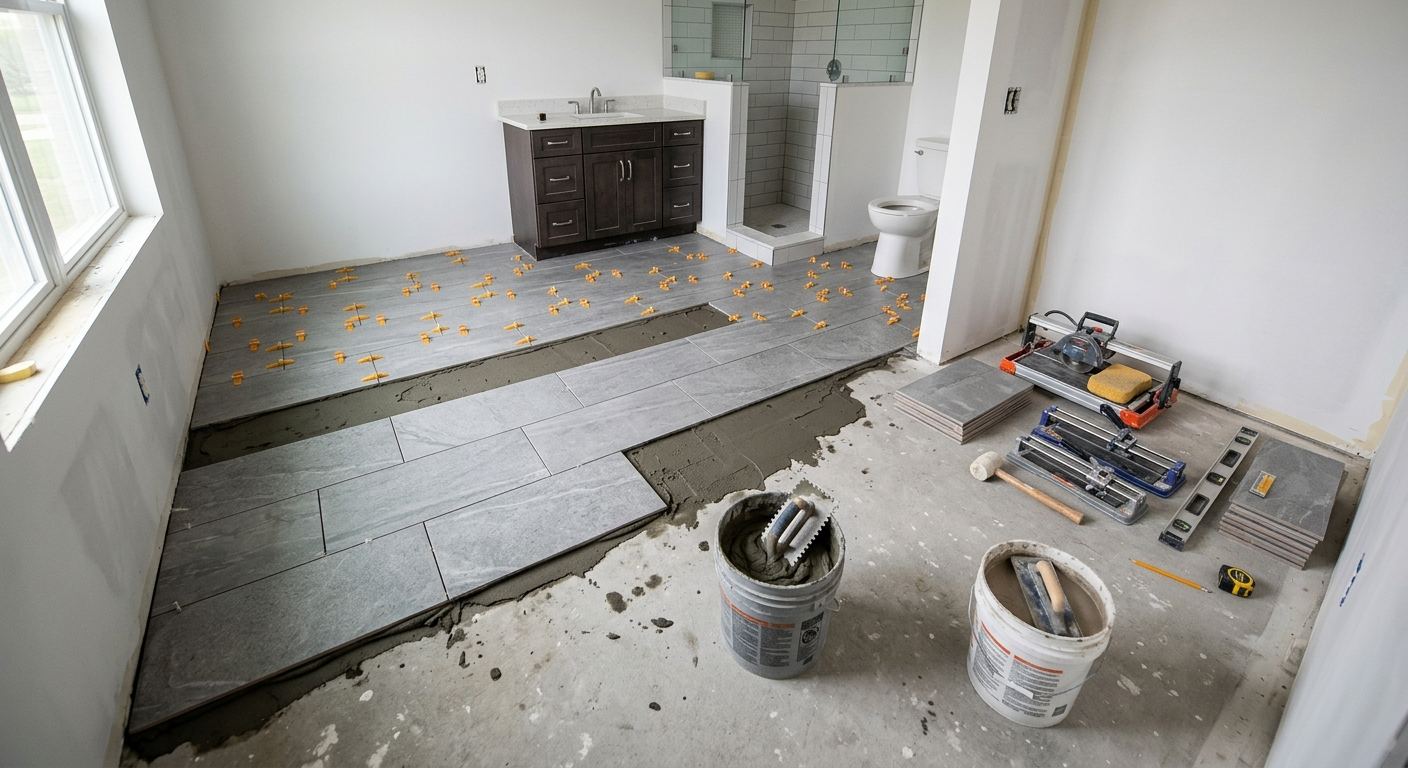
Bathroom renovation options and costs in Medicine Hat
Medicine Hat homeowners typically have a wide range of bathroom renovation options, from simple cosmetic upgrades to full rip-outs. One reason pricing can swing quickly is the age of many local homes: about 48.4% were built before 1981, and that older stock often includes dated plumbing layouts, older drain materials, and sometimes asbestos-containing materials in concealed finishes. At the same time, Medicine Hat has a large base of homeowners—70.9% of households own their homes—so demand is steady for contractors who can coordinate tile, plumbing, and electrical without delays.
In the Lethbridge–Medicine Hat region, bathroom costs are shaped more by local labour rates and what’s behind the walls than by climate alone. Southern Alberta trades availability is generally consistent across the region, but older bathrooms frequently need ventilation upgrades, re-routing drains, or electrical corrections to meet current safety expectations. Disruptions like old cast-iron or galvanized plumbing and hidden subfloor issues can turn a straightforward refresh into a bigger scope—especially when contractors uncover floor-level deterioration or cement board that no longer meets the waterproofing plan.
If you live in a neighbourhood like South Hill, where many homes were built mid-century, it’s common to see extra time allocated for rough-in checks, venting review, and code updates before tile gets installed. With that context, the table below gives typical project ranges so you can compare estimates apples-to-apples.
| Renovation Scope |
What's Included |
Typical Duration |
Price Range |
| Cosmetic refresh (paint, fixtures, accessories only) |
Paint, new vanity top or vanity (if same footprint), toilet replacement (no plumbing relocation), faucet, towel bars, mirror, light fixture swap, recaulk, basic deep clean |
3–5 days |
$3,000 – $7,000 |
| Mid-range full renovation (new tile, vanity, tub/shower, electrical) |
Demo and disposal, tile floor and surround, new vanity, tub/shower replacement or refinishing (if suitable), updated exhaust fan, GFCI-ready outlet upgrades, waterproofing system, plumbing refresh (typical allowances), new trim |
10–16 days |
$12,000 – $19,000 |
| High-end full renovation (custom tile, steam shower, heated floors) |
Full demo, custom shower layout (or steam shower), premium tile and setting materials, heated floor wiring/circuit plan, higher-tier waterproofing, glass enclosure, upgraded lighting and fan controls, expanded plumbing/venting upgrades if required |
18–28 days |
$19,500 – $25,000 |
| Shower-only installation (convert tub to walk-in shower) |
Remove tub, rough-in review, new shower pan/liner or membrane system, new tile walls and floor, glass door or curtain track, new exhaust fan tie-in if needed, updated trim and hardware |
8–14 days |
$4,500 – $10,000 |
| Bathtub replacement or tub-liner install |
New tub (or liner where appropriate), recaulk and seal, new tub surround panels/trim, faucet connection (as needed), basic waterproofing touch-ups at seams |
5–10 days |
$1,500 – $6,000 |
| Tile-only installation (floor + surround, existing layout kept) |
Remove old finishes to sound substrate, new tile floor and walls, waterproofing prep, grout/seal, reinstallation of accessories, allowance for underlayment and minor patching |
7–14 days |
$2,000 – $8,000 |
Prices are estimates only and vary by project scope, site access and material selection.
What affects the price of bathroom renovation in Medicine Hat
In Medicine Hat and across the Lethbridge–Medicine Hat region, the same “bathroom renovation” can land anywhere from a lean refresh to a much larger project—often creating a 30–50% gap between quotes. The difference usually isn’t the tile brand on its own; it’s labour rates, permit expectations, and the realities of older housing stock. In a market where about 48.4% of homes were built before 1981, hidden conditions matter: older bathrooms can include cast-iron or galvanized drain/supply components, inadequate ventilation, and structural framing that needs patching before waterproofing can be trusted.
Older homes also raise discovery risk. If asbestos-containing materials are present in floor tile, vinyl-backed finishes, or older drywall compounds (more common in pre-1985 eras), the project may require abatement protocols and waste handling. That’s one reason Southern Alberta contractors commonly recommend a 10–20% contingency—especially when you’re budgeting for work beyond a simple like-for-like refresh. In practical terms, asbestos-related discovery can add roughly $1,500–$5,000+ depending on extent and access.
Concrete examples help explain the spread. A tile-only job that keeps the same layout can stay closer to a $2,000–$8,000 band if the subfloor is solid. But if the same home needs drain re-routing and an exhaust fan rework to support current ventilation expectations, you’re more likely to be in the $12,000–$25,000 full-renovation range. Finally, the bathroom size is a labour multiplier: more square footage increases setting time, membrane coverage, thinset/framing adjustments, and grout detailing—meaning costs rise quickly as you move from a compact ensuite to a larger family bath.
| Price Factor |
Why It Matters |
Cost Impact |
| Layout change — moving drain or supply lines |
Requires rough-in work, possible joist/framing modifications, and longer plumbing labour plus inspections |
Often adds $2,000–$6,000 depending on distance and wall openings |
| Tile selection — large-format porcelain vs. mosaic vs. ceramic |
Harder materials and tighter tolerances take longer to install and require better substrate prep |
Can shift $1,000–$4,000 in materials and labour |
| Fixture tier — builder-grade vs. mid-range vs. designer brands |
Higher-tier fixtures cost more and sometimes need different rough-in allowances or specialty trims |
Typically adds $500–$3,000 |
| Subfloor condition — rot or unlevel concrete adds scope |
Water exposure and settling require removal, rebuild/leveling, and extra waterproofing prep time |
Often adds $1,000–$5,000 for repairs and rework |
| Electrical — adding GFCI outlets, exhaust fan, heated floor circuit |
New circuits and code-compliant installations require licensed electrician time and inspection readiness |
Commonly adds $800–$4,000 |
| Waterproofing method — membrane type and extent |
Better systems and full coverage reduce failure risk, but require proper prep and curing time |
Usually adds $500–$2,500 but protects the investment |
| Older-home surprises — asbestos tile, cast-iron drains, galvanized pipes |
May trigger remediation/extra labour, disposal complexities, and plumbing upgrades |
Often adds $1,500–$5,000+ (sometimes more) |
| Bathroom size — sq ft drives tile and labour time directly |
More wall/floor area increases demo, setting time, membrane coverage, and grout detailing |
Can move total cost by 10%–25% for larger changes |
Permits & regulations in Alberta
In Alberta, many bathroom upgrades are straightforward from a compliance standpoint, but the permit line is mainly driven by plumbing, electrical, and structural changes. In Medicine Hat, cosmetic updates—like swapping fixtures, retiling without moving plumbing, replacing a vanity in the same location, and painting—typically do not trigger a permit on their own. By contrast, you should expect permits and inspections when you relocate plumbing (moving a drain or supply lines), add or relocate wet-area exhaust/ventilation components that require new electrical work, or make structural wall changes that affect framing.
Electrical work is regulated: if an electrical circuit is added or changed (for example, wiring a new exhaust fan, adding heated floor power, or installing additional GFCI-protected outlets), the work must meet applicable code and be performed by a licensed electrician or handled under their sign-off. Plumbing rough-in changes—opening walls to move or replace drains and supply lines—typically require a permit and inspection before closing surfaces.
Here’s a practical step-by-step for homeowners. First, ask the contractor for their Alberta trade licence details (and the specific trade/discipline involved). Next, request a current certificate of insurance showing liability coverage. Then confirm how they handle WSIB/WCB coverage: ask for proof and keep the documentation for your records. Finally, if a permit is required, confirm who pulls it and whether they provide the inspection/clearance documentation after rough-in and final stages.
Choosing tile, waterproofing and fixtures for your Medicine Hat bathroom
In Medicine Hat, three material decisions determine most of your bathroom budget: tile choice, waterproofing system, and fixture tier. Start with tile because it influences both cost and installation complexity. Ceramic tile is a solid entry-level option for budget projects, but it generally requires more forgiving substrate conditions and can be less dense than porcelain when it comes to stain resistance. Porcelain is usually the better mid-range value: it handles heavy use well and often installs cleanly with proper leveling and underlayment. For luxury budgets, natural stone (marble, travertine, slate) can look exceptional, but it may add labour because of cutting tolerances, sealing requirements, and careful layout to reduce visible variation.
Next, waterproofing is what prevents mould and failure in Alberta’s wet-area conditions. A paint-on membrane can work for certain assemblies, but bonded sheet membranes or a full schluter-style system (with compatible corners and details) typically provide more robust protection when installed correctly. The key is complete coverage at transitions, corners, and penetrations—especially around shower valves and tub-to-wall junctions.
Finally, fixture tier affects both your up-front spend and long-term satisfaction. Builder-grade fixtures can be a good fit for a cosmetic refresh or a tight-scope renovation, while mid-range or designer brands pay off in better valves, finish quality, and smoother operation. For example, moving from an entry ceramic surround to porcelain in a full renovation can be justified when you’re already budgeting in the $12,000–$19,000 range and want durability. If your plan is strictly to keep costs near the $2,000–$8,000 tile-only band, choose a consistent porcelain line and invest your budget into waterproofing and proper substrate prep rather than multiple premium changes across the entire room.
| Material / Option |
Pros |
Cons |
Price Range |
| Ceramic tile (floor + walls) |
Generally affordable, many colour/style options, good for lighter renovation scopes |
More prone to chips, may stain more easily than porcelain, needs careful substrate prep |
$2,000 – $5,500 |
| Porcelain tile (floor + walls) |
Denser and more durable, better moisture resistance, wide range of modern looks |
Can cost more per tile, may require extra labour for large-format layout |
$4,000 – $8,000 |
| Natural stone (marble, travertine, slate) |
High-end appearance and unique veining, strong resale appeal when done right |
Requires sealing/maintenance, layout planning is critical, can increase installation time |
$7,000 – $14,000 |
| Frameless glass shower enclosure |
Modern look, visually brightens the bathroom, durable glass with clean lines |
More expensive, requires precise measurements and solid wall conditions |
$1,800 – $5,500 |
| Prefab tub surround (acrylic) |
Fast installation, good water resistance when properly sealed, often less labour than tile |
Limited design options, less “custom” appearance than full tile, may be harder to retrofit |
$900 – $3,500 |
| Custom shower pan (tile or linear drain) |
Best waterproofing control and tailored slope/drain detail; linear drains look sleek |
More labour and detailing time; requires strong substrate and careful slope planning |
$2,000 – $7,000 |
How to choose a bathroom renovation contractor in Medicine Hat
Choosing the right contractor in Medicine Hat comes down to proof, paper, and clarity. Start by verifying Alberta licensing for the trades involved—tile work, plumbing, and electrical should be under the correct disciplines. Next, confirm liability insurance: ask for a certificate of insurance and make sure the coverage is current and appropriate for renovation work. For WSIB/WCB, request evidence of coverage and ask how it applies to labour on your job site. If a contractor can’t provide documentation when you ask, treat that as a serious warning.
Then, collect 2–3 itemised written quotes. You want labour and materials broken out (demo, waterproofing prep, tile setting, plumbing rough-in allowances, fixtures, glass, electrical components) rather than a single lump sum. Read the scope carefully for what’s excluded: disposal, permit fees (if needed), drywall patching, subfloor repairs, and any allowances for hidden plumbing issues. Warranty matters too: ask for the workmanship warranty length and whether it’s tied to a specific scope (for example, waterproofing installation) and whether product warranties are provided by the manufacturer and are transferable. Finally, agree on payment scheduling—never accept an upfront payment beyond roughly 10–15%, and insist on a holdback until key completion milestones are met. Get the timeline and start/completion estimate in writing so you’re not negotiating day-by-day.
- Confirm the contractor’s licence and trade coverage for every required scope (plumbing/electrical where applicable)
- Request current liability insurance certificates before any work starts
- Verify WSIB/WCB coverage and ask how it’s handled for subcontractors
- Get 2–3 quotes with line-by-line labour and materials, not lump sums
- Ask if permits are included, and who pulls them (contractor vs homeowner responsibilities)
- Check what “disposal” covers (demo hauling, dumpster fees, landfill costs)
- Review exclusions: subfloor rebuild, plumbing replacement, vent upgrades, asbestos risk
- Make sure waterproofing is specified (membrane type, coverage, seams/penetations details)
- Confirm warranty terms for workmanship and whether it’s in writing
- Clarify the payment schedule and holdback amount for final sign-off
- Ask for a project timeline with start date, inspection steps, and completion target
- Require proof of previous similar bathroom projects in Medicine Hat or nearby
In Medicine Hat, common red flags include contractors who won’t show licence/insurance proof, quotes that omit waterproofing details, “too-good-to-be-true” timelines that ignore lead times for glass/tile, vague exclusions for plumbing/venting upgrades, and payment requests that ask for large upfront deposits without a signed scope and schedule.
Frequently asked questions — bathroom renovation in Medicine Hat
Is it worth renovating a bathroom before selling in Medicine Hat?
Often, yes—especially when your renovation improves safety, ventilation, and finishes that buyers can instantly see. In Medicine Hat, many homes are older (Statistics Canada, 2021 Census), and bathrooms may have dated tile, weak exhaust performance, or plumbing that doesn’t meet modern expectations. A targeted update can help you avoid buyer concerns while staying inside sensible budgets. For example, a mid-scope refresh or mid-range full renovation typically lands in the $12,000–$19,000 band when you’re replacing tile and upgrading key fixtures and electrical ventilation components. If you go too high without correcting functional issues (venting, waterproofing details, and electrical safety), the extra cost may not be recovered.
How do I plan a bathroom renovation on a tight budget in Medicine Hat?
Start by separating “must-do” from “nice-to-have.” If the layout is staying the same, you can keep costs closer to the $2,000–$8,000 tile-only range by focusing on flooring and the shower surround while using fixtures that fit your existing rough-in locations. Your best budget move in Medicine Hat’s older housing stock is to spend money on waterproofing and substrate readiness, because that’s what prevents costly repairs later. Set aside a contingency of roughly 10–20% as Southern Alberta contractors commonly advise; hidden issues like subfloor damage, ventilation deficiencies, or older plumbing connections can otherwise force expensive mid-project changes. Also, get itemised quotes so you can compare where savings are real (fixture tier, tile size) versus where they may become rework.
What's the difference between a cosmetic and a full bathroom renovation?
A cosmetic renovation focuses on surfaces and visible fixtures without moving plumbing or electrical circuits. Typically it includes paint, re-caulking, accessory upgrades, and swapping items like a vanity top, faucet, toilet, and light fixture—assuming the wiring/outlet situation doesn’t change. A full renovation usually includes demo, waterproofing work, tile floor and walls, and often electrical updates like an exhaust fan or GFCI-ready outlet improvements. If plumbing is adjusted (moving drains/supplies) or the ventilation plan changes, that’s no longer cosmetic. In the Lethbridge–Medicine Hat region, older homes may uncover surprises behind finishes, which is why full renovations can move into the $12,000–$25,000 band while cosmetic work is commonly far lower—depending on what’s truly being changed.
How do I choose the right contractor for my bathroom in Medicine Hat?
Choose a contractor by verifying documentation and reading the scope like a contract, not a brochure. In Alberta, confirm the trade licence and request liability insurance proof before work begins. Ask how WSIB/WCB coverage is handled (including for any subcontractors) and keep the certificate information with your records. Then request 2–3 itemised quotes where labour and materials are separated—especially for demo, waterproofing, tile installation, glass enclosure, and any electrical/plumbing allowances. Make sure the quote explains what’s included for disposal, permits (if needed), and patching/repairs for subfloor or framing. Finally, confirm warranty details: workmanship warranty length, product warranty coverage, and whether warranties are tied to your specific scope.
What's the most common mistake homeowners make in bathroom renovations?
The most common mistake is choosing finishes (tile, fixtures, glass) before locking down waterproofing and the condition of the underlying substrate and services. In older Medicine Hat homes, hidden issues like uneven subflooring, outdated drain configurations, inadequate ventilation, or older piping connections can turn a “simple” plan into major rework after you’ve already purchased premium materials. Another frequent error is under-budgeting for code-driven electrical or ventilation upgrades—especially when an exhaust fan needs new circuit work or when GFCI expectations aren’t clearly addressed. If asbestos-containing materials are discovered during demo in older areas, remediation can also change the timeline and cost. Use itemised quotes and plan a contingency (10–20% is common in this region) so your project stays predictable.
How long does tile installation take in a Medicine Hat bathroom?
Typical tile installation in Medicine Hat takes about 7–14 days, but the real duration depends on bathroom size, tile type, and how much substrate prep is needed. Tile-only projects often fit that window when the floor is flat, the walls are properly prepared, and the waterproofing prep is straightforward. In older homes built before 1981 (Statistics Canada, 2021 Census), more time is commonly needed for leveling, patching, and ensuring the surface is sound—especially if you find deterioration or moisture issues. Layout complexity matters too: large-format porcelain, niche detailing, and custom shower pans/linear drains require extra setting and curing coordination. If you’re budgeting around a tile-only range (like $2,000–$8,000), ask your contractor to show the expected prep and cure schedule in writing so you can plan around inspections and subsequent trades.