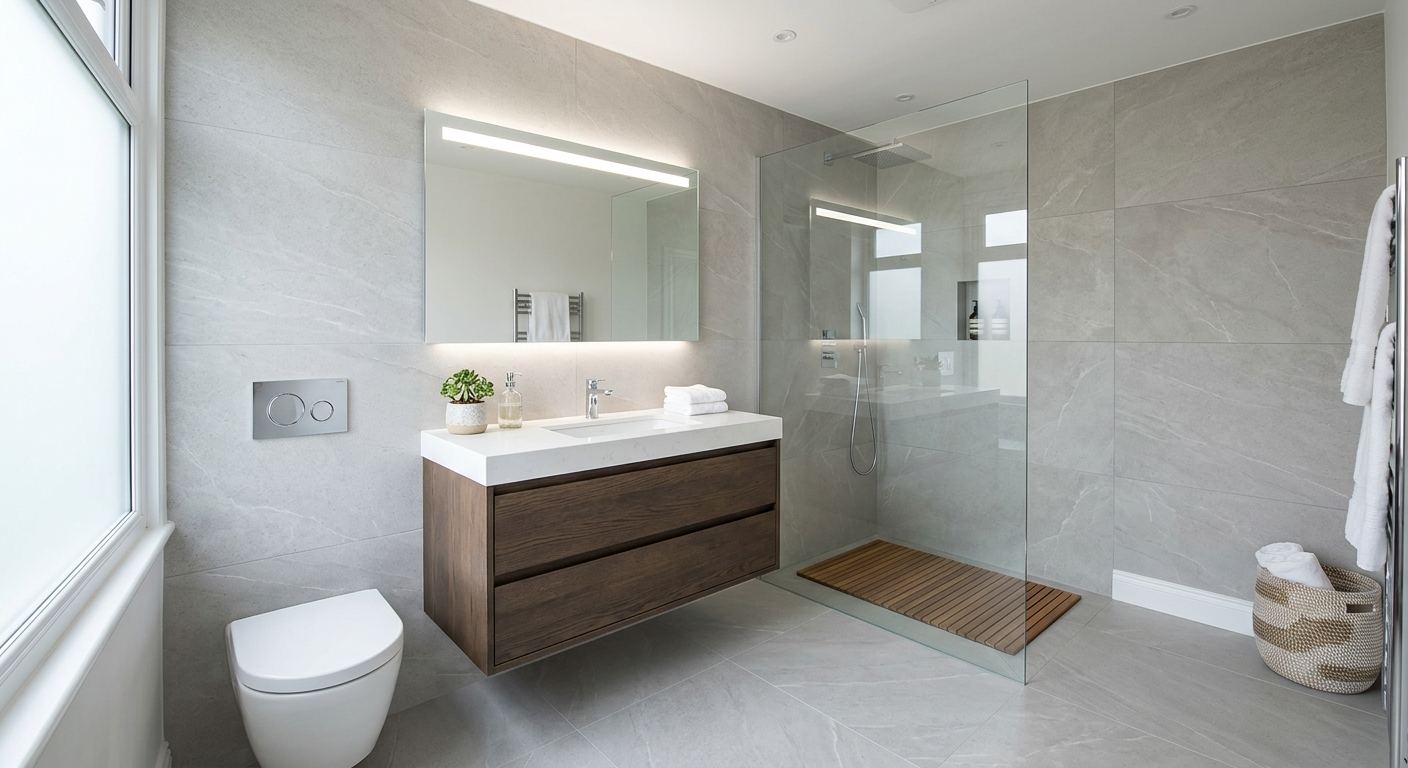
Bathroom renovation options and costs in Davie Village
Renovating a bathroom in Davie Village usually starts with a simple question—are you doing a quick refresh or a full rebuild? With 13,768 residents in the area (Statistics Canada, 2021 Census), you’ll see steady demand for skilled trades, and that demand shows up in pricing. In the Lower Mainland–Southwest, many homes were built mid-century and earlier, so the “same” bathroom on paper can unfold into different realities once walls and floors come up—dated plumbing layouts, older drain materials, and the occasional asbestos-containing floor or drywall compound are the kinds of discoveries that change scope. It’s also why labour rates and the age of the housing stock drive costs more than climate here; the region’s high demand for plumbers, tilers, and electricians means trades are busier than you’d expect in a smaller neighbourhood.
Even though Davie Village doesn’t have extreme bathroom climate demands like some colder provinces, British Columbia’s indoor humidity means waterproofing quality can’t be treated as an afterthought—mould risk rises fast if a system isn’t installed and detailed correctly. In practice, that’s why a mid-range full renovation often costs more than homeowners anticipate: once the room is open, upgrades to venting, supply lines, and waterproofing are common. Trades are especially in demand around the Davie Village core and along Davie Street, where many older condo and character-area buildings have older wet areas.
If you’re comparing options before you meet a contractor, use the table below to anchor expectations—then we’ll break down what moves those numbers up or down.
| Renovation Scope |
What's Included |
Typical Duration |
Price Range |
| Cosmetic refresh (paint, fixtures, accessories only) |
Paint, caulking, mirror/light changes, vanity refresh (swap-in), toilet swap (if replacing), accessories, minor hardware; no major plumbing relocation |
3–7 days |
$3,000–$8,000 |
| Mid-range full renovation (new tile, vanity, tub/shower, electrical) |
Demolition and disposal, tub-to-tile or tub/shower refresh, vanity and sink, updated fan venting strategy as required, new exhaust fan, GFCI where needed, floor + wall tile, waterproofing system, basic lighting and trim |
2–4 weeks |
$18,000–$30,000 |
| High-end full renovation (custom tile, steam shower, heated floors) |
High-end tile layout, custom shower features, heated floors circuit, premium fixtures, upgraded waterproofing detailing, steam or advanced shower package, design-level lighting and trim coordination |
4–7 weeks |
$30,000–$45,000 |
| Shower-only installation (convert tub to walk-in shower) |
Remove tub, build shower base, install tile walls or tile-ready system, new controls/valves (as needed), updated drain tie-in, waterproofing and glass door/trim allowances |
2–3 weeks |
$10,000–$25,000 |
| Bathtub replacement or tub-liner install |
Remove and set new tub or install a tub-liner system, re-caulk and seal, update surround surfaces as required, basic leak testing and seal detailing |
1–2 weeks |
$1,500–$6,000 |
| Tile-only installation (floor + surround, existing layout kept) |
Remove existing finishes where needed, prepare subfloor, install floor tile and tub/shower surround tile, waterproofing where required by the system, grout and seal, minimal plumbing touch-ups |
1–3 weeks |
$2,000–$8,000 |
Prices are estimates only and vary by project scope, site access and material selection.
What affects the price of bathroom renovation in Davie Village
In the Lower Mainland–Southwest, it’s common to see quotes for the “same” bathroom vary by 30–50% once you compare the real scope underneath the finish choices. The gap isn’t usually from tile colour—it’s from labour rates, schedule availability, and what the contractor finds after opening up the walls. British Columbia tends to price bathroom work differently than other provinces because trades here are busier and specialist labour (plumbers, tilers, electricians) is in higher demand, especially in older neighbourhood pockets like parts of Davie Village. Add mid‑century or older housing stock, and you get more frequent plumbing and venting upgrades to bring the bathroom up to current code expectations.
Older homes in this region often hide cast‑iron or galvanized drains, outdated copper supply lines, and insufficient ventilation. Those issues don’t show until demolition begins, and they inflate scope quickly—venting adjustments and drain upgrades can push a project toward the higher end of the $18,000–$45,000 full-renovation band. Another budget variable is asbestos discovery: if asbestos-containing materials are present (commonly in older floor tile, drywall compound, or insulation), remediation steps can add roughly $1,500–$5,000+ and require additional trades and procedures.
Two concrete Davie Village examples: (1) A “tile-only” quote can rise if the subfloor is uneven or shows old moisture damage—levelling and waterproof detailing often become necessary before tile goes down. (2) A “simple” shower change can expand if the existing drain tie-in is compromised or undersized, requiring plumbing rough-in adjustments and new fixtures. Climate matters indirectly: British Columbia humidity makes waterproofing and exhaust planning non-negotiable, which is why careful membrane selection and properly ducted fans often cost more up front—but prevent expensive call-backs later. That’s also why some jobs land near $18,000 rather than $30,000+—the difference is the hidden conditions uncovered during prep.
| Price Factor |
Why It Matters |
Cost Impact |
| Layout change — moving drain or supply lines requires rough-in work |
New rough-in work increases labour, may require permits/inspections, and can mean patching multiple wall sections |
Can add $3,000–$10,000 depending on distance and accessibility |
| Tile selection — large-format porcelain vs. mosaic vs. ceramic |
Harder tile needs better prep and more skilled installation time; mosaic is labour-intensive |
Typically shifts $2,000–$6,000 within the same bathroom scope |
| Fixture tier — builder-grade vs. mid-range vs. designer brands |
Higher tiers add material and sometimes more complex valve/trim setups |
Often $500–$4,000 difference in fixtures alone |
| Subfloor condition — rot or unlevel concrete adds scope |
Needs repair, additional backer/underlayment, and sometimes moisture mitigation |
Can add $1,000–$7,000 for repairs and extra labour |
| Electrical — adding GFCI outlets, exhaust fan, heated floor circuit |
Bathroom electrical must be code-compliant; heated floors require proper circuit planning |
Usually $500–$3,500 depending on how much is added |
| Waterproofing method — membrane type and extent |
Correct detailing around drains, niches, and transitions is what prevents mould and failures |
Often $500–$3,000 impact based on system and coverage |
| Older-home surprises — asbestos tile, cast-iron drains, galvanized pipes |
Triggers remediation protocols and additional plumbing replacement or venting upgrades |
Commonly adds $1,500–$5,000+; can be more if plumbing is widespread |
| Bathroom size — sq ft drives tile and labour time directly |
More area means more tile, more waterproofing, more thinset/grout and set time |
May shift total cost by $2,000–$12,000 depending on room size and finishes |
Permits & regulations in British Columbia
In British Columbia, cosmetic updates—like swapping a vanity, replacing a toilet, repainting, or retiling without moving plumbing—generally do not require a permit. However, the moment you change the bathroom’s functional systems, permits commonly enter the picture. If you relocate plumbing (moving a drain line or supply lines), add or relocate fixtures that require rough-in work, or modify venting strategy, that typically requires a permit and inspection. Similarly, installing a new exhaust fan often requires electrical work, and any new circuit or modifications must meet provincial electrical requirements and be completed or signed off by a licensed electrician.
Step-by-step for homeowners in Davie Village: first, ask your contractor for their British Columbia trade licence details (and confirm the number matches their legal business name). Next, request a current certificate of insurance showing liability coverage—make sure it’s valid for the project period and includes renovation work. For workers, confirm the contractor’s coverage documentation for workplace insurance (commonly WCB/WCB clearance letters as applicable) before work starts. Finally, if your scope includes plumbing rough-in changes or new electrical circuits, verify that the contractor is pulling the necessary permits and scheduling inspections—don’t assume “we’ll handle it” is the same as “we already applied.”
Bottom line: the permits aren’t about slowing you down; they’re about keeping wet-area work safe and inspectable, which matters most in older Lower Mainland homes where hidden conditions are common.
Choosing tile, waterproofing and fixtures for your Davie Village bathroom
In Davie Village, three material decisions usually decide whether your bathroom lands closer to the lower end or the higher end of the regional bands. First is tile choice. Ceramic is an entry-level option, but it can be more forgiving on cost while still looking sharp when installed well. Porcelain is a step up in durability and water resistance, and it often costs more, but it tends to hold up better in a high-use bathroom. Natural stone (marble, travertine, slate) looks luxury-level, but it’s also more variable and requires careful sealing and detailing—so the installation becomes more complex.
Second is waterproofing method. British Columbia humidity punishes shortcuts. A paint-on membrane can work for some assemblies, but a bonded sheet membrane or a properly detailed system (including correct overlap and transition treatment) often provides more reliable long-term performance when installed to manufacturer specs. The “right” waterproofing is the one that matches your shower construction, floor build-up, and drain details—especially around niches, corners, and tub-to-shower interfaces.
Third is fixture tier. Builder-grade fixtures can be a smart way to stay near a realistic renovation budget, while mid-range fixtures offer better valves, finishes, and smoother operation. Designer brands add cost, and sometimes that’s not where you get the best resale value—unless the trim and layout are meaningfully upgraded.
For a concrete example: if you’re comparing standard tub/shower finishes to a higher-end tile package, spending more on porcelain tile and a robust waterproofing system can be justified because it reduces failure risk and call-backs. If you jump to premium natural stone, you may spend significantly more than needed unless your layout includes features that truly benefit from that look.
| Material / Option |
Pros |
Cons |
Price Range |
| Ceramic tile (floor + walls) |
Entry-level cost, wide style selection, straightforward to source and match |
Can be less durable than porcelain in some conditions; requires good substrate prep |
$2,000–$4,500 |
| Porcelain tile (floor + walls) |
Better durability, strong moisture resistance, excellent for modern large-format looks |
Higher material cost; large-format requires skilled installation and flatness |
$3,500–$7,500 |
| Natural stone (marble, travertine, slate) |
Luxury appearance and unique variation; strong “high-end” finish |
Needs sealing/maintenance; more installation complexity and premium labour time |
$6,000–$12,000 |
| Frameless glass shower enclosure |
Brightens the bathroom, modern aesthetic, strong return-on-looks |
Higher material and installation cost; needs precise waterproofing and framing |
$1,800–$6,000 |
| Prefab tub surround (acrylic) |
Fast install, fewer tile cuts, good value for budget-focused renovations |
Less “custom” look; joints need careful sealing and proper fit |
$900–$2,800 |
| Custom shower pan (tile or linear drain) |
Best-for-custom look; linear drains improve aesthetics and drainage performance |
More labour and waterproofing detailing; requires precise slope and trim work |
$3,000–$10,000 |
How to choose a bathroom renovation contractor in Davie Village
Choosing a contractor in Davie Village should start with licensing and coverage verification—not the sales pitch. In British Columbia, confirm the contractor’s trade licence details for the scope you’re hiring them for (plumbing/electrical elements should be handled by properly licensed trades). Ask for a certificate of liability insurance and read the expiry date. Then verify workplace insurance coverage—request the appropriate WCB/WCB clearance documentation or proof before work begins, because it protects you if something goes wrong on site.
Next, get 2–3 itemised written quotes rather than lump sums. You want labour and materials broken out (tile, membrane system, waterproofing components, exhaust fan, fixtures, glass enclosure, disposal). Carefully read what’s excluded: is asbestos testing included if suspected, is permit pulling included, and is hauling/disposal accounted for? For warranty, ask for workmanship warranty length and whether the warranty is transferable if you sell your home. Also confirm the product/manufacturer warranties for major components like shower systems and heated floors.
Finally, align payment with progress. For most renovations, a responsible schedule keeps early payment to about 10–15% upfront, then ties remaining payments to milestones. Hold back until the job is complete and you’ve confirmed leak testing, caulking quality, and final trim. Get the timeline in writing with a start date and completion estimate so you can plan around plumbing access.
- Request BC trade licence details and verify they match the contractor’s legal name.
- Confirm liability insurance certificate is current for the project start and end dates.
- Verify WCB/WCB clearance documentation before any work starts.
- Get itemised quotes: labour, materials, and allowances separated.
- Ensure waterproofing and membrane system names/models are listed in the quote.
- Ask whether permits are included (and who pulls them) for plumbing/electrical changes.
- Confirm disposal/haul-away is included, including old tile and demolition waste.
- Clarify the payment schedule; never exceed 10–15% upfront.
- Ask for a written workmanship warranty and what it covers (leaks, tile failures, grout issues).
- Check whether manufacturer warranties apply to the installed product and are properly registered.
- Get start date, milestones, and an end date estimate in writing.
- Request references or photos of similar Davie Village–type bathroom builds (older wet-area conditions).
Red flags to watch for in Davie Village: vague scopes that don’t name the waterproofing system; quotes that don’t mention permits or inspections when plumbing is being moved; pressure to pay large deposits upfront; no written warranty terms for workmanship; and “too good to be true” pricing paired with missing licence/insurance documents.
Frequently asked questions — bathroom renovation in Davie Village
What's the best bathtub material for a Davie Village home?
In Davie Village and across British Columbia, the “best” tub material is the one that balances durability, installation safety, and your budget. Acrylic tubs are popular because they’re lighter, easier to fit, and typically cost less than heavy cast-iron options. Fibreglass and acrylic can be a good choice if your goal is a practical upgrade, especially when you’re trying to stay nearer the lower band for a tub replacement (often around $1,500–$6,000 for replacement or a tub-liner approach). If you’re doing a full bathroom renovation, a steel or cast-iron style can be long-lasting, but installation can be more labour-intensive. For older buildings, the bigger decision is usually subfloor condition and how well the tub is set and sealed—better waterproofing around the tub edge prevents moisture problems faster than switching tub brands.
Is it worth renovating a bathroom before selling in Davie Village?
Often, yes—if your bathroom is tired, dated, or has ongoing moisture concerns, a thoughtful upgrade can help buyers feel confident. But the “worth it” part depends on how much the project changes the layout and finishes. In older Lower Mainland homes, you may uncover plumbing or venting issues once walls open, which is why keeping a careful scope and contingency planning matters. If you’re aiming for value without major hidden surprises, consider a mid-range full renovation approach—commonly $18,000–$30,000—with durable tile, reliable waterproofing, and updated fixtures. If you go too luxury for the neighbourhood and budget, you might not recoup 100% of the extra materials. If the bathroom just needs brightness, a cosmetic refresh can be safer, but it won’t fix structural or moisture failures. A good contractor will help you choose improvements that buyers can “see” while still addressing waterproofing and ventilation fundamentals.
How do I plan a bathroom renovation on a tight budget in Davie Village?
Planning on a tight budget in Davie Village comes down to prioritizing the parts that prevent failure and avoiding scope creep until you’ve verified what’s behind the wall. Start by deciding whether you’re doing a cosmetic refresh or a more complete functional renovation. A cosmetic refresh can keep you in the $3,000–$8,000 range, but it doesn’t deal with hidden risks. If you need a real upgrade, prioritize waterproofing, ventilation, and the core plumbing/electrical updates (like properly installed exhaust and correct GFCI protection). You can often manage costs by keeping the layout the same and choosing mid-range porcelain tile rather than natural stone. Ask contractors to include an allowance for tile and fixtures and to state what changes would trigger an additional quote—especially for older-home surprises like cast-iron drains or asbestos-containing materials. Finally, keep a contingency so that if subfloor repairs are needed for flatness, you’re not forced into rushed decisions.
What's the difference between a cosmetic and a full bathroom renovation?
A cosmetic renovation focuses on finishes and visible upgrades without moving plumbing or doing major structural changes. Typical cosmetic work includes painting, swapping fixtures, replacing a vanity, updating lighting, and sometimes refreshing tile if it’s done as a surface-level replacement while keeping the same layout. Because there’s usually minimal change to plumbing rough-in or electrical circuits, permits may not be required. A full bathroom renovation typically includes demolition, replacement or reconfiguration of wet-area components, and new waterproofing details—plus often electrical and ventilation upgrades. In Davie Village, full renovations are where older housing conditions show up, like dated drain stacks or supply issues, which can increase scope. Budget-wise, cosmetic refreshes often fall around $3,000–$8,000, while full renovations commonly land in the $18,000–$45,000 range depending on tile complexity, shower features, and how much plumbing/electrical is updated. The key is aligning your scope with what you actually need to solve.
How do I choose the right contractor for my bathroom in Davie Village?
Start by verifying British Columbia licensing and coverage before you compare pricing. Ask for the contractor’s trade licence details that match your scope, and request a current certificate of liability insurance. Also confirm workplace insurance coverage (WCB/WCB clearance documentation) so you’re protected if something happens on site. Then get 2–3 itemised written quotes showing labour and materials, not one lump number. For a bathroom in Davie Village, you should see specific waterproofing and membrane system details, whether permits are included (especially if you’re moving plumbing or adding circuits), and whether disposal/haul-away is accounted for. Review warranty terms: workmanship warranty length and what it covers for leaks or tile failures, plus manufacturer warranties for major components. Finally, use a sensible payment schedule—keep upfront payment around 10–15% and hold back until final walkthrough. A contractor who won’t put scope and timelines in writing is a risk.
What's the most common mistake homeowners make in bathroom renovations?
The most common mistake is under-scoping and assuming “we’ll figure it out once it’s open.” In Davie Village and across the Lower Mainland–Southwest, the real problems often appear during demolition: out-of-date plumbing, compromised subfloor flatness, ventilation that won’t meet current expectations, or—less often but important—older materials that require remediation steps. When homeowners don’t plan for this, budgets get squeezed and decisions get rushed, which can lead to waterproofing compromises or unfinished trim detail. Another frequent mistake is picking tile style first and waterproofing system second; in British Columbia’s humidity, waterproofing quality and detailing are what prevent mould and costly failures. If you’re targeting a realistic full-renovation budget (commonly $18,000–$45,000), keep contingency and insist the quote clearly states what’s included and what triggers a change order. A careful pre-reno investigation and a well-written scope are the best insurance against surprises.