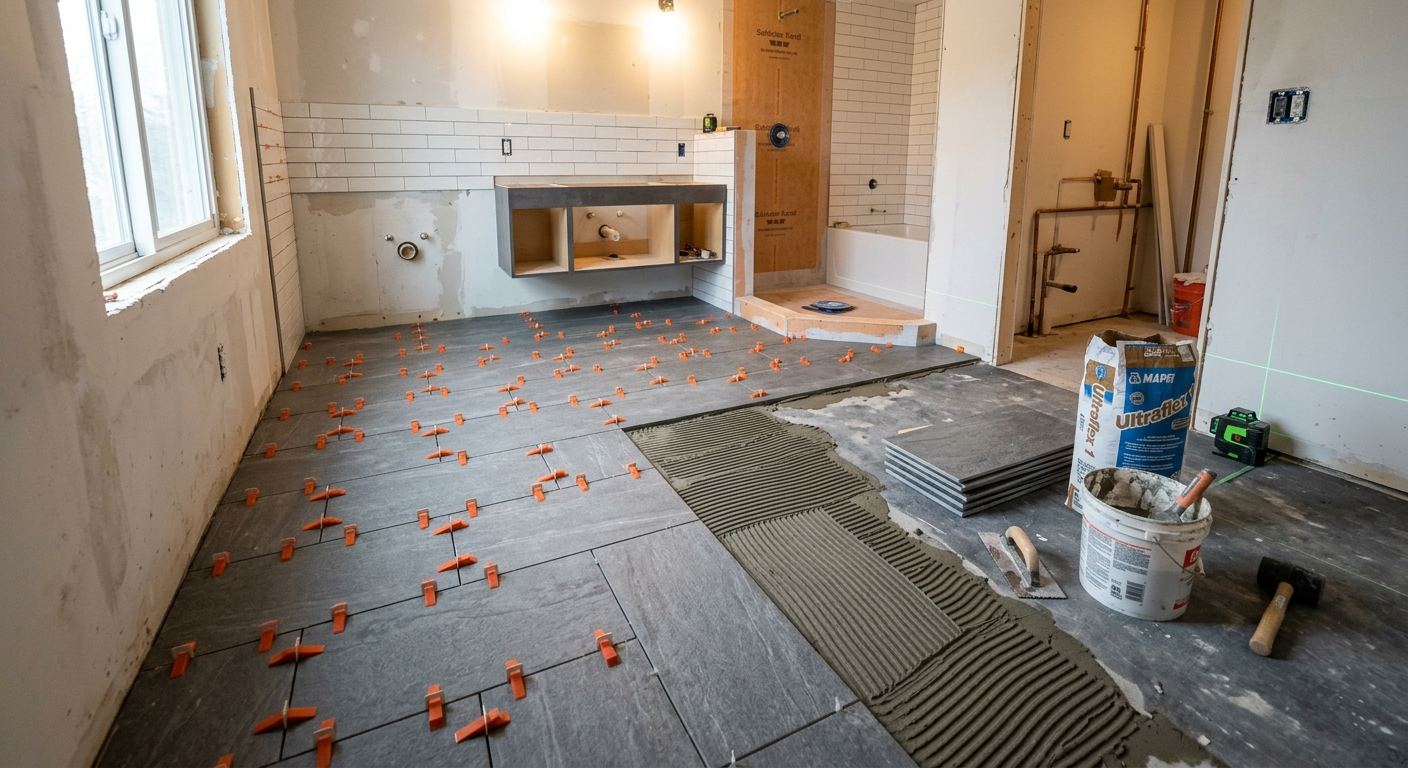
Bathroom renovation options and costs in Thompson
Renovating a bathroom in Thompson is usually less about climate swings and more about trade availability, labour rates, and what your existing walls and floors are hiding. With Thompson’s population at 14,955 (Statistics Canada, 2021 Census), contractors tend to plan carefully for scheduling and material runs, so timing and scope definition matter. Just as important: many homes in this region were built decades ago, and older layouts often include dated plumbing runs, drains that are nearing end-of-life, and finishes that may contain asbestos materials in pre-1985 construction—particularly in vinyl flooring, drywall compound, or insulation. Those hidden conditions can quickly change a “simple refresh” into a full scope with added plumbing and venting upgrades to bring everything up to current British Columbia code.
In the Lower Mainland–Southwest market, bathroom pricing is heavily driven by the age of the housing stock and regional labour costs. Even modest rooms carry a high per-square-foot cost because multiple trades work in a small, complex space: demolition, rough-in plumbing, electrical (often GFCI and new exhaust), waterproofing, tile setting, and then trim and inspection sequencing. If you’re near high-renewal areas in Thompson—where demand is especially noticeable around older residential pockets and recurring condo/strata-style re-roofing cycles—tile and plumbing subcontractors often book ahead, which can add pressure to your schedule and costs.
Below are realistic options and the typical ranges homeowners use as budgeting anchors, from cosmetic updates to full high-end renovations. Use the table to line up your priorities before you request itemised quotes.
| Renovation Scope |
What's Included |
Typical Duration |
Price Range |
| Cosmetic refresh (paint, fixtures, accessories only) |
Paint, swap vanity (no plumbing relocation), replace toilet/vanity top where plumbing stays put, new mirror, towel bars, updated lighting faceplates, caulking/touch-ups |
3–6 days |
$4,500–$9,500 |
| Mid-range full renovation (new tile, vanity, tub/shower, electrical) |
Demo and disposal, waterproofing prep, floor + wall tile, new vanity and toilet, tub/shower or shower surround replacement, new exhaust fan, GFCI protection where required, basic plumbing refresh if in good condition |
2–4 weeks |
$18,000–$32,500 |
| High-end full renovation (custom tile, steam shower, heated floors) |
Custom tile layouts, higher-end fixtures, heated floors circuit, steam shower (where planned), premium lighting, expanded waterproofing system, plumbing and venting upgrades as needed |
4–7 weeks |
$32,000–$45,000 |
| Shower-only installation (convert tub to walk-in shower) |
Remove tub, new linear or standard drain, shower waterproofing, tile surround, glass enclosure, new valve trim, exhaust fan tie-in if required |
2–4 weeks |
$8,000–$25,000 |
| Bathtub replacement or tub-liner install |
Remove existing tub and set new tub and trim, or install tub liner system, re-caulk and re-seal, test for leaks, minor surround repairs and paint |
5–10 days |
$1,500–$6,000 |
| Tile-only installation (floor + surround, existing layout kept) |
Tile removal and reset where needed, new waterproofing layer over prepared substrate, floor + wall tile, grout/finishes, silicone sealing at changes of plane |
1–3 weeks |
$2,000–$8,000 |
Prices are estimates only and vary by project scope, site access and material selection.
What affects the price of bathroom renovation in Thompson
It’s common to see quotes for the “same” bathroom renovation come back 30–50% apart in British Columbia—especially when comparing Thompson scheduling and trade rates against more flexible labour markets elsewhere in Canada. In the Lower Mainland–Southwest region, labour rates and the age of the housing stock are the main cost drivers for bathroom renovations. That means your biggest swings usually come from what’s uncovered once walls and floors are open, not from the outside temperature.
Older homes (common across the region) often hide issues that expand scope: cast-iron or galvanized drain stacks that need upgrading, outdated copper supply lines, and insufficient ventilation. Once you add venting and rough-in plumbing adjustments to meet current BC code, a project can move from a mid-range full renovation to something closer to the high-end band. For example, if asbestos-containing materials are discovered in pre-1985 finishes, abatement can add about $1,500–$5,000+ before tile and trim even start. That’s why even a “tile-only” quote can change quickly after inspection.
In Thompson, two concrete examples frequently push costs upward. First, replacing a tub with a walk-in shower requires additional drain considerations and waterproofing detailing, which is why shower-only installations often land in the $8,000–$25,000 range. Second, switching to heated floors increases labour sequencing and electrical scope, commonly nudging a bathroom renovation from the $18,000–$32,500 band toward $32,000–$45,000 when paired with premium tile and glass.
Keep budgets predictable by planning a contingency for “discovery work” and insisting on upfront investigation of plumbing, ventilation, and any older-material risks before final numbers are locked.
| Price Factor |
Why It Matters |
Cost Impact |
| Layout change — moving drain or supply lines requires rough-in work |
New locations require demolition, new rough-in plumbing, and re-routing waste/venting |
Often adds major scope; can push mid-range jobs toward high-end totals |
| Tile selection — large-format porcelain vs. mosaic vs. ceramic |
Harder materials and smaller mosaics increase cutting, setting time, and waste rate |
Higher-end tile can add significant labour and material cost |
| Fixture tier — builder-grade vs. mid-range vs. designer brands |
Better valves, shower trims, and vanities cost more and may require additional installation time |
Can move total by several thousand dollars even with similar layout |
| Subfloor condition — rot or unlevel concrete adds scope |
Soft spots, water damage, or uneven substrate require prep, board replacement, and level correction |
Unexpected repairs commonly increase demolition and labour days |
| Electrical — adding GFCI outlets, exhaust fan, heated floor circuit |
Electrical upgrades require licensed work and proper circuit planning |
Often adds material + labour and may extend schedule |
| Waterproofing method — membrane type and extent |
Proper membrane coverage and details around niches/curbs prevent moisture problems |
Better systems reduce risk but can raise material cost |
| Older-home surprises — asbestos tile, cast-iron drains, galvanized pipes |
Remediation and replacement add trades and coordination |
Discovery work can add about $1,500–$5,000+ and broaden scope |
| Bathroom size — sq ft drives tile and labour time directly |
Larger rooms require more tile, more waterproofing area, and longer installation |
Bigger tile area usually increases total labour and materials |
Permits & regulations in British Columbia
In British Columbia, cosmetic updates—like swapping fixtures, retiling without moving plumbing, or replacing a vanity where the plumbing stays in the same locations—often do not require a permit. However, bathroom work becomes permit-sensitive when you relocate plumbing (moving a drain or supply lines), add or upgrade exhaust ventilation tied to new circuits, or make structural changes that affect walls, framing, or load paths. Electrical work must meet provincial code and be completed or signed off by a licensed electrician.
In practice around Thompson and throughout BC, these are typical “does require a permit” examples: changing the location of a toilet, moving the shower valve or drain, adding new plumbing rough-ins, replacing or adding major venting elements, and any electrical circuit changes that include exhaust fan upgrades or heated floor circuit work. Conversely, “typically does not require a permit” includes: replacing a toilet or vanity in the same footprint, installing a new mirror/lighting faceplate using existing wiring, and retiling a shower surround without any plumbing relocation.
To verify a contractor’s British Columbia licence and coverage step-by-step, ask for: (1) their BC trade licence details (and confirm it matches the scope—plumbing/electrical where applicable), (2) a current certificate of insurance listing you as the interested party where offered, and (3) proof they have appropriate coverage for workers, such as WSBC/WCB clearance documents. In your due diligence, look for these documents in the quote package or by request before scheduling demolition, and keep copies for your records.
Choosing tile, waterproofing and fixtures for your Thompson bathroom
Your tile, waterproofing, and fixtures decisions are the three biggest budget levers in a Thompson bathroom renovation because they control both materials and the skill/time required to install them correctly in British Columbia’s damp indoor moisture environment. First is tile choice: entry-level ceramic is typically the most budget-friendly, while porcelain is denser, more consistent for wet areas, and often lasts better, but it can be slightly more demanding to cut and set. Natural stone (marble, travertine, slate) looks premium and can suit heritage finishes, but it requires careful sealing and more labour to keep edges and flats looking right. Second is waterproofing: paint-on membranes can work for simpler wall situations, but bathrooms—especially showers—perform best with a properly detailed bonded sheet membrane or a proven system (for example, a Schluter-type approach) that addresses corners, niches, and changes of plane. Third is fixture tier: builder-grade trims save money up front, mid-range balances value and durability, and designer brands can elevate resale but also affect the plumbing and trim install complexity.
In the Lower Mainland–Southwest market, labour costs and trade scheduling amplify the impact of choosing the “wrong” system twice—so it’s usually better to pay for the correct waterproofing the first time. A practical dollar example: if you’re choosing between ceramic and porcelain for a small floor and shower surround, spending an extra couple thousand dollars on tile and ensuring the correct membrane coverage is often justified because it reduces the risk of future moisture issues that would require opening walls again.
Match your budget to your priorities: if you’re trying to stay closer to the mid-range full renovation band ($18,000–$32,500), choose porcelain over stone and pair it with a robust waterproofing system; if you’re aiming for high-end finishes near $32,000–$45,000, allocate more to custom shower elements and heated floor-ready setups.
| Material / Option |
Pros |
Cons |
Price Range |
| Ceramic tile (floor + walls) |
Budget-friendly, wide colour and style options, easier to source, good for non-steam areas |
Can be less durable in harsh wet zones than porcelain; may chip if substrate movement exists |
$2,000–$5,500 |
| Porcelain tile (floor + walls) |
Denser and more moisture-resistant, better consistency for wet areas, good for larger formats |
More expensive tile; requires proper layout and thinset technique to avoid lippage |
$4,000–$8,000 |
| Natural stone (marble, travertine, slate) |
High-end look, unique veining and texture, strong curb appeal when sealed and installed well |
Sealing/maintenance; more waste and labour due to variation; must be handled carefully |
$6,000–$14,000 |
| Frameless glass shower enclosure |
Modern appearance, brightens the space, can be paired with custom tile layouts |
Can be pricier; requires precise installation alignment and strong framing/backing |
$3,000–$7,000 |
| Prefab tub surround (acrylic) |
Fast installation, less labour than full tile, easier to maintain |
Less “wow” factor than tile; may limit design options; depends on perfect fit and sealing |
$1,500–$4,500 |
| Custom shower pan (tile or linear drain) |
Superior custom feel, better accessibility options with linear drains, improved flow control |
More waterproofing and detailing labour; drain planning is critical |
$5,000–$16,000 |
How to choose a bathroom renovation contractor in Thompson
Choosing the right contractor in Thompson starts with verification. Ask who will do the plumbing and electrical work and confirm each trade’s British Columbia licensing (where applicable) matches the scope. Next, request liability insurance and proof of appropriate worker coverage—commonly provided via WSBC/WCB documentation or a clearance letter. Don’t rely on verbal assurances; request the certificate of insurance and coverage documents up front, and keep them in your project file.
Then get 2–3 itemised written quotes. You want a breakdown that separates labour from materials and lists line items like demolition/disposal, waterproofing system, tile supply allowances, fixture supply, electrical scope (exhaust fan/GFCI/heated floor), and any permit-related work. Avoid comparing lump sums only; in Thompson and across BC, scope gaps are where budgets go sideways.
Read the exclusions carefully: what’s not included (subfloor repair, venting changes, glass enclosure type, replacement of damaged drywall), whether permits are pulled by the contractor or handled by you, and if disposal/haul-away is included. For warranty, confirm the workmanship warranty length in writing and whether it’s transferable to future owners. For payment, a safe rule is never more than 10–15% upfront; hold back a portion until the job is complete and waterproofing/tile and final trim are verified. Finally, demand a start date and a completion estimate in writing so you can plan around work stoppages and inspection sequencing.
- Confirm BC trade licence(s) for the scope (plumbing/electrical where required) before signing.
- Request current liability insurance and verify coverage limits.
- Ask for WSBC/WCB clearance or equivalent proof of worker coverage.
- Get 2–3 itemised quotes (labour and materials separated), not just one number.
- Ensure the quote lists waterproofing method and coverage details, not “waterproofing included.”
- Verify what disposal/hauling is included and who loads/unloads materials.
- Clarify whether permits are pulled and who schedules inspections.
- Check exclusions: asbestos testing/abatement approach if older materials are present.
- Confirm fixture and tile allowances (with brand/model ranges) to avoid upgrade surprises.
- Confirm timeline milestones: demo, rough-in, waterproofing, tile set, final trim.
- Review warranty terms for workmanship and manufacturer products; ask if transferable.
- Keep payment to 10–15% upfront; set a holdback tied to completion and punch list.
Red flags we see with bathroom renovators in Thompson include: no written scope (only a sales proposal), missing insurance/coverage documents, vague waterproofing descriptions, “cash deal” payment requests with no holdback, and timelines that don’t account for inspections or product lead times.
Frequently asked questions — bathroom renovation in Thompson
How much does a bathroom renovation cost in Thompson?
In Thompson, a practical budget usually aligns with Lower Mainland–Southwest pricing drivers—labour rates and what’s uncovered in older housing. For a full bathroom renovation, most homeowners fall into about $18,000 – $45,000 depending on whether you’re doing a mid-range refresh (new tile, vanity, tub/shower, and electrical) or moving into higher-end finishes like heated floors and custom shower details. Cosmetic-only work is often much lower, but it’s important to note that once walls come off, plumbing and venting upgrades can expand scope to meet current BC code. If you discover asbestos-containing materials in pre-1985 finishes, abatement can add roughly $1,500–$5,000+ before tile and fixtures are finalized.
How long does a bathroom renovation take in Thompson?
Timelines in Thompson are typically measured in weeks because bathroom renovations need careful sequencing: demo, rough-in plumbing and electrical, waterproofing, tile setting, and then trim and final inspections. A cosmetic refresh is often completed in 3–6 days. A mid-range full renovation commonly takes about 2–4 weeks, while a high-end remodel with heated floors and custom tile layouts can run 4–7 weeks. If your contractor needs permits for plumbing relocation or new electrical circuits (like exhaust fan upgrades), inspections can add a few days depending on scheduling. Also, older-home surprises—like subfloor damage or drain issues—can extend timelines if replacements are required.
Do I need a permit for a bathroom renovation in British Columbia?
In British Columbia, many cosmetic updates typically do not require a permit—examples include swapping fixtures in the same location, retiling a shower surround without moving plumbing, or replacing a vanity where the plumbing footprint doesn’t change. Permits are more likely needed when you relocate plumbing (moving drain or supply lines), make structural wall changes, or add/upsize electrical scope such as exhaust fan wiring tied to new circuits or heated floor circuits. Electrical must be done or signed off by a licensed electrician. For plumbing rough-in changes, permits and inspections are typically required. When you’re budgeting, ask your contractor to list what permits they will pull (if any) and how inspections are scheduled.
What's the best tile for a bathroom in Thompson?
For most Thompson bathrooms, porcelain tile is the best balance of durability and long-term value in a wet environment. Compared with entry-level ceramic, porcelain is denser and handles moisture better, which matters in British Columbia’s humid bathroom conditions. Ceramic can work well on floors and walls, especially when paired with a strong waterproofing plan, but porcelain is usually the safer long-term choice for shower areas. Natural stone looks premium but requires sealing and careful installation to stay maintenance-friendly. For budgeting, homeowners often keep tile work within a “tile-only” band such as $2,000 – $8,000, then upgrade stone only when they can afford the added labour and finishing time.
Should I do a tub-to-shower conversion?
A tub-to-shower conversion is a good option if you want safer access, easier cleaning, and better daily usability. In renovations around Thompson, it also tends to align with modern waterproofing and glass enclosure details, especially if you’re upgrading the drain and shower valve at the same time. That said, it’s not always the cheapest change: converting requires plumbing planning, waterproofing detailing, and sometimes venting updates to meet code. Budget-wise, shower-only installations commonly land in the $8,000 – $25,000 range depending on tile complexity, drain type (standard vs linear), and whether you add a glass enclosure. If you’re staying in the mid-range renovation band ($18,000 – $32,500), prioritize waterproofing quality over expensive tile patterns.
How do I prevent mold in a Thompson bathroom?
Mold prevention in Thompson is mostly about controlling moisture at the source: ventilation, waterproofing, and correct sealing. Make sure the bathroom has a properly sized exhaust fan ducted correctly and that the fan is vented outside. Choose a waterproofing method appropriate to your shower design—paint-on products can be less reliable for complex shower details than bonded sheet membranes or well-detailed system approaches that cover corners and niches. Use the correct silicone caulking at changes of plane (where tile meets tub edges or fixtures) and ensure grout is installed over a properly prepared substrate. In older homes, also check for hidden moisture damage under subfloor or behind walls—if you’ve got aging drains or insufficient ventilation, moisture can persist even with new finishes. Planning these items during the renovation is far cheaper than fixing mold after the fact.