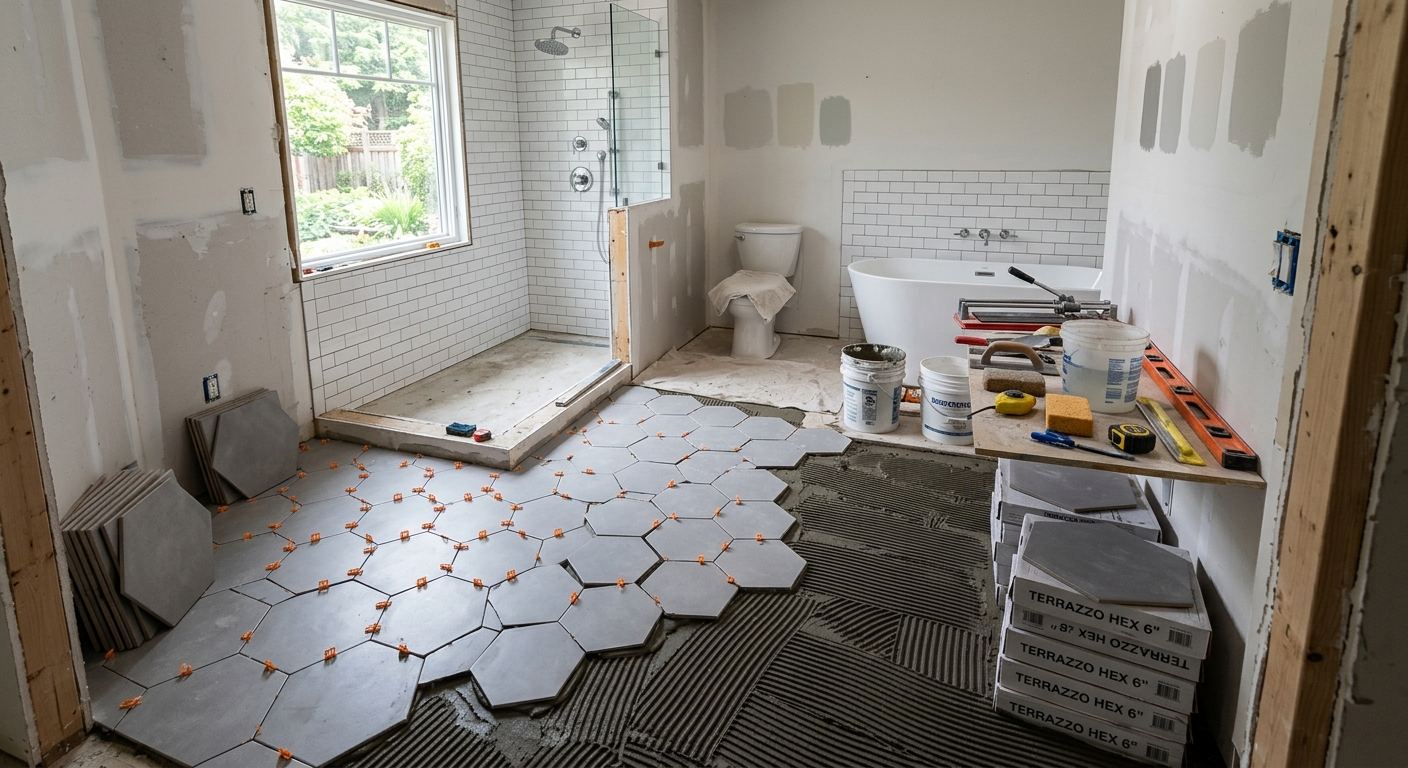
Bathroom renovation options and costs in Banbury-Don Mills
Bathroom renovation in Banbury-Don Mills is shaped by what’s behind the walls, not just what you can see. With a population of 27,695 (Statistics Canada, 2021 Census), the neighbourhood mix includes a lot of older post-war and 1960s–1980s homes where plumbing layouts and drain sizing were never built for today’s fixtures. In these properties, you can also run into dated materials—sometimes including asbestos-containing floor products—after floors and finishes come up. In the Toronto area, pricing is driven less by climate severity and more by GTA labour premiums and the likelihood of bringing rough plumbing and venting up to current Ontario code once walls are opened.
Because skilled trades are busy across the Toronto economic region, schedules can affect labour rates and project sequencing—especially for tiling, custom shower builds, and complex plumbing reroutes. Areas around Don Mills Road and the surrounding main corridors see steady demand, and crews often prioritise bath renovations in older pockets where discovery work can be extensive. That’s why homeowners can hear two very different budgets for “the same bathroom” after demolition and inspections begin.
To make comparisons easier, here are the most common renovation paths and what they typically include, so you can align your expectations before you request quotes. Use the table below as your starting point for a plan that fits your timeline and finish level.
| Renovation Scope |
What's Included |
Typical Duration |
Price Range |
| Cosmetic refresh (paint, fixtures, accessories only) |
Paint, vanity or tap/fixture swap, mirror, towel bar, toilet accessory updates; no plumbing relocation; re-seal and recaulk |
3–7 days |
$3,000–$7,500 |
| Mid-range full renovation (new tile, vanity, tub/shower, electrical) |
Demo and new surround tile, new vanity and lighting, tub refinishing or swap, exhaust fan + electrical upgrades, standard waterproofing, new trim and grouting |
2–4 weeks |
$12,000–$20,000 |
| High-end full renovation (custom tile, steam shower, heated floors) |
Custom shower or steam-ready layout, large-format tile layout, higher-end fixtures, heated floor circuit, premium waterproofing systems, niche/bench work, upgraded ventilation |
4–7 weeks |
$22,000–$30,000 |
| Shower-only installation (convert tub to walk-in shower) |
Remove tub, add walk-in shower framing, new pan and waterproofing, glass door/enclosure, plumbing adjustments as needed, tile surround and new valve trim |
2–3 weeks |
$8,000–$16,000 |
| Bathtub replacement or tub-liner install |
Tub swap (or liner system), new surround sealing and caulking, basic plumbing connections, access patching, re-install fixtures and trim |
5–10 days |
$1,200–$3,500 |
| Tile-only installation (floor + surround, existing layout kept) |
Tile floor and wall surround over existing layout, underlayment as required, new grout and sealant, waterproofing updates where needed, remove/reinstall fixtures only if required |
1–3 weeks |
$3,000–$10,000 |
Prices are estimates only and vary by project scope, site access and material selection.
What affects the price of bathroom renovation in Banbury-Don Mills
Across Toronto and the rest of Ontario, quotes for the same “bathroom renovation” can swing by 30–50% because the real work is hidden until demolition. Labour rates are a primary driver in the Toronto region: tiling, shower builds, and rough plumbing are labour-intensive, and the GTA market supports higher hourly premiums than many other parts of the province. The second driver is the age of the housing stock. In Banbury-Don Mills, older post-war and mid-century homes often have drain stacks, supply lines, and ventilation that don’t match today’s fixture flow and code expectations—so costs rise once you uncover what’s behind the walls.
For example, discovery can add budget quickly: undersized galvanized supply lines, cast-iron drains needing reconfiguration, or missing vent corrections often come with extra labour and licensed trade time. If a pre-1985 home shows asbestos-containing materials in floor tile, drywall compound, or old floor assemblies, abatement requirements can add $1,500–$5,000+ on top of labour and disposal. Even without asbestos, you may still face add-ons when waterproofing substrate is uneven or when subfloor repair is needed.
Cost can also go down depending on your starting point. If your existing vanity plumbing is straight, your venting is in good shape, and the layout doesn’t move, a tile-only plan can sit closer to the $3,000–$10,000 band. If you move plumbing, add an exhaust upgrade, and switch to a higher-end shower build, budgets often land in the $12,000–$30,000 full-renovation range for GTA projects.
| Price Factor |
Why It Matters |
Cost Impact |
| Layout change — moving drain or supply lines requires rough-in work |
New drain slopes, venting tie-ins, and water shutoffs increase demolition and licensed trade time |
Often adds $2,500–$8,000 |
| Tile selection — large-format porcelain vs. mosaic vs. ceramic |
Harder tiles need better preparation; mosaics demand more labour hours for installs and grout lines |
Typically adds $500–$4,000 |
| Fixture tier — builder-grade vs. mid-range vs. designer brands |
Higher tiers cost more and may require more precise trim/installation standards |
Typically adds $800–$5,000 |
| Subfloor condition — rot or unlevel concrete adds scope |
Repairs may include structural patching, underlayment upgrades, and additional waterproofing |
Often adds $500–$3,500 |
| Electrical — adding GFCI outlets, exhaust fan, heated floor circuit |
New circuits and code-compliant ventilation require electrician time and inspection |
Often adds $700–$4,500 |
| Waterproofing method — membrane type and extent |
Correct system selection protects against moisture intrusion and reduces failure risk |
Typically adds $600–$2,500 |
| Older-home surprises — asbestos tile, cast-iron drains, galvanized pipes |
Abatement, drain replacement, and pipe upgrades add licensed scope and disposal |
Often adds $1,500–$10,000+ |
| Bathroom size — sq ft drives tile and labour time directly |
More surface area means more mortar, tile cutting time, and longer waterproofing/curing cycles |
Varies widely; often $1,000–$6,000+ |
Permits & regulations in Ontario
In Ontario, not every bathroom update triggers a permit. Cosmetic work—like swapping a vanity, replacing faucets, repainting, or retiling without moving plumbing—typically does not require a permit. Where homeowners get caught is assuming that “same layout” means “no inspections.” If you relocate plumbing (moving drain or supply lines), add or modify wet-area electrical, or change ventilation, you should expect permits and inspections.
Work that commonly DOES require a permit includes: relocating drain/supply piping, changing the plumbing rough-in, adding structural wall changes, and introducing or modifying new exhaust fan wiring when it’s part of electrical scope. Electrical work must be completed to Ontario code standards by a licensed electrician (and in many cases signed off), especially when adding GFCI protection, new circuits for heated floors, or new ventilation controls. Any plumbing rough-in changes typically require a permit and inspection before finishes go back on.
How to verify a contractor in Banbury-Don Mills step-by-step: (1) confirm the Ontario trade licence number they provide and match it to their name on the relevant provincial online registry; (2) request a certificate of insurance and ensure it lists liability coverage and that it’s current; (3) ask for evidence of WSIB/WCB coverage if they have employees—look for an active status and coverage details on their proof document or clearance letter; (4) confirm the permit/inspection responsibility in writing, and make sure disposal and any mandated documentation are included.
Choosing tile, waterproofing and fixtures for your Banbury-Don Mills bathroom
Your material choices in Banbury-Don Mills determine more than just style—they control labour complexity, drying/curing time, and the long-term risk of moisture-related problems. Start with tile, then waterproofing, then fixtures, because that order usually aligns with how renovation crews build the job. Ontario winters don’t “cause” bathroom mould by themselves, but bathroom humidity and ventilation performance do. In a Toronto home, an exhaust fan that’s undersized or improperly connected, combined with weak waterproofing, is what turns a small leak into a long-term problem.
(1) Tile choice: ceramic is often the entry point, but it can be harder to keep perfectly aligned if you choose a more complex pattern. Porcelain is denser and works well for floors and high-traffic areas. Natural stone is the luxury play—beautiful, but it’s more expensive to install and requires additional prep and sealing.
(2) Waterproofing method: a paint-on membrane can be suitable for some assemblies, but bonded sheet membranes (or a full system approach) tend to offer more robust coverage when installed correctly. In practice, I see fewer failures when the waterproofing system is comprehensive and transitions are detailed—especially around corners, niches, and where the floor meets the walls. That’s how you prevent mould and substrate degradation in a humid bathroom environment.
(3) Fixture tier: builder-grade fixtures reduce upfront cost, but mid-range or better valves and shower trim often improve feel, reliability, and resale appeal. For budgeting, a common “worth it” example is choosing better porcelain tile and proper waterproofing rather than upgrading fixtures alone: spending more on the tile system can cost roughly $3,000–$10,000 for tile-only scopes, while a full bathroom can move into the $12,000–$30,000 range once plumbing and electrical changes are included. Make the waterproofing and tile foundation strong first—then upgrade fixtures where it matters most to you.
| Material / Option |
Pros |
Cons |
Price Range |
| Ceramic tile (floor + walls) |
Good value, wide design selection, straightforward installation for simpler layouts |
More porous than porcelain; can chip if subfloor isn’t level; requires careful substrate prep |
$3,000–$7,000 |
| Porcelain tile (floor + walls) |
Denser and more water-resistant; holds up well; great for larger-format looks |
Heavier tiles can increase substrate prep; premium tile often costs more per sq ft |
$5,000–$10,000 |
| Natural stone (marble, travertine, slate) |
High-end appearance; excellent long-term aesthetic if maintained |
Requires sealing/maintenance; more precise installation; can be pricier and less forgiving |
$8,000–$16,000 |
| Frameless glass shower enclosure |
Clean, modern look; visually opens small bathrooms |
Costs more than partial frames; needs accurate framing/leveling and good waterproofing |
$1,800–$6,000 |
| Prefab tub surround (acrylic) |
Fast install; fewer tile labour hours; easier to maintain |
Less custom look; joint detailing matters; may limit design flexibility |
$900–$2,800 |
| Custom shower pan (tile or linear drain) |
Modern threshold-free feel; linear drain looks high-end; better water management |
More labour and detailed waterproofing; small errors can create drainage or leak risks |
$4,000–$12,000 |
How to choose a bathroom renovation contractor in Banbury-Don Mills
Choosing the right contractor in Banbury-Don Mills means verifying paperwork and comparing quotes in a way that reflects the way bathroom work is actually built. First, confirm Ontario licensing and coverage. Ask for their Ontario trade licence details (and verify the number online against their business name), plus a current certificate of insurance for liability. If they have workers, require WSIB/WCB clearance—don’t accept “we’ll get it later.”
Next, get 2–3 itemised written quotes that separate labour and materials. For bathroom bids, insist on line items for demolition, plumbing changes (if any), waterproofing system, tile install (including backer/underlayment), electrical work (exhaust fan, GFCI, heated floors), and disposal. Make sure the scope clearly states what’s excluded: subfloor repairs, asbestos abatement if discovered, glass enclosure provision, permit handling, and any patching required after rough-in. A proper quote will explain how they’ll handle unknown conditions when walls come open.
Warranty matters too. Ask for: the workmanship warranty length and terms, manufacturer warranties on fixtures and shower systems, and whether warranties are transferable if you sell your home. For payments, avoid large upfront deposits—typically keep upfront to about 10–15% and request holdback until the job is complete and inspected to satisfaction. Finally, require a signed start date and a completion estimate in writing, because GTA scheduling can affect tile lead times and subcontractor availability.
- Provide Ontario trade licence number and company legal name that matches the quote
- Show current liability insurance certificate and coverage limits
- Provide WSIB/WCB clearance or proof of coverage for workers
- Include an itemised labour/material breakdown (no single lump sum only)
- State who pulls permits and whether permits/inspections are included in the price
- List disposal and dump fees explicitly
- Confirm the exact waterproofing system and installation steps (membrane type, coverage, details)
- Clarify whether asbestos abatement is included or treated as an unknown discovery allowance
- Detail tile prep: subfloor level requirements, backer/underlayment plan
- Specify plumbing rough-in changes, expected inspection milestones, and rough-in dates
- Require start date, daily work hours, and a realistic completion schedule
- Confirm warranty terms: workmanship duration and product warranty transferability
Red flags I see in Banbury-Don Mills: a quote with no waterproofing details, vague “allowances” for tile/fixtures that don’t match your selections, no proof of WSIB/WCB or licence verification, requesting large upfront payments (well above 10–15%), and refusing to put permit responsibility and warranty terms in writing.
Frequently asked questions — bathroom renovation in Banbury-Don Mills
How do I prevent mold in a Banbury-Don Mills bathroom?
Mould prevention in Banbury-Don Mills comes down to moisture management, not just “good ventilation.” Start with a proper waterproofing system behind tile and correct sealing at all wet-area transitions (corners, niches, tub/shower edges). Make sure the exhaust fan is ducted outdoors and sized for the bathroom—not just a fan that “moves air.” After showers, using the fan for 20–30 minutes helps dry humidity that otherwise lingers in Ontario homes during colder seasons. Also, address any plumbing leaks early; older GTA homes may have supply lines or drain connections that fail slowly. If your quote is for a full reno in the $12,000–$30,000 band, confirm the waterproofing steps are included because that’s where mould risk is won or lost.
What adds the most resale value in a bathroom reno?
In the Toronto market around Banbury-Don Mills, the highest resale impact usually comes from upgrades people experience every day: a modern, water-efficient toilet and fixtures, a clean and durable shower/tile finish, and good ventilation. Layout improvements—like converting an older tub setup to a walk-in shower—often help buyers who want accessibility, though the job can push cost into the shower conversion range. Heated floors and premium waterproofing are also strong value signals, but they’re most worthwhile when the foundation work is done correctly. If you’re budgeting, align spend with what’s visible and what reduces long-term repairs: investing in waterproofing and tile systems can be more valuable than chasing expensive fixtures alone. Many full renovations land in the $12,000–$20,000 mid-range or the $22,000–$30,000 higher-end band depending on plumbing/electrical changes.
Can I keep my existing plumbing layout to save money?
Yes—keeping the existing plumbing layout is one of the most reliable ways to control cost in Banbury-Don Mills, because moving drains and supplies requires additional rough-in labour and often permits/inspections. If your new vanity, toilet, and shower/tub will reuse the same approximate locations, contractors can avoid a lot of demolition and reduce the chance of encountering hidden problems in wall cavities. That said, you still may need plumbing corrections for code compliance, especially in older homes where venting or drain sizing is dated. A “layout kept” project can sometimes fit closer to the tile-only range of $3,000–$10,000 when you’re only replacing finishes. If you want to convert a tub to a shower, you may be able to keep parts of the layout, but drain slope and waterproofing details still drive the budget.
How much does a walk-in shower cost in Banbury-Don Mills?
A walk-in shower cost in Banbury-Don Mills depends on whether you’re converting from an existing tub, using a simple prefab approach, or building a fully custom tiled shower with a glass enclosure and niche/linear drain. For most GTA conversions, you’ll often see shower-only installations quoted around $8,000–$16,000, assuming the underlying plumbing can be adapted without major rerouting. If your home reveals older drain issues (like cast-iron segments needing correction) or requires ventilation/electrical upgrades for an exhaust fan, the project can climb toward the upper end of that range or blend into a larger full-renovation budget. Ask your contractor to itemize shower pan construction, waterproofing method, glass enclosure, and any plumbing rough-in/inspection steps so you’re comparing apples to apples.
What's the ROI on a bathroom renovation?
Bathroom renovation ROI in Ontario varies by buyer preferences and the condition of your home’s structure and plumbing. Generally, ROI is strongest when the renovation prevents future issues—especially moisture control, ventilation, and durable tile/waterproofing—because that reduces the likelihood of costly repairs buyers will worry about. In older Toronto-area homes, a bathroom refresh can add value by updating outdated finishes and bringing wet-area work closer to current code. If your renovation stays in the cosmetic-to-mid range, such as $3,000–$7,500 for a refresh or $12,000–$20,000 for a mid-range full reno, you’re often making changes that align with what buyers can quickly evaluate. High-end upgrades can be beautiful, but the payback is more sensitive to the rest of the home and whether plumbing/electrical are upgraded correctly.
Do I need waterproofing behind the tile?
In a properly built Ontario shower or tub surround, yes—waterproofing behind tile is essential. Waterproofing systems protect the substrate from moisture migration and reduce the risk of mould, grout breakdown, and deterioration behind finishes. The “right” system depends on the assembly, but a full waterproofing approach with correct thickness, detailing at seams, and proper curing is what matters most. In older Banbury-Don Mills homes, substrate issues (like uneven subfloor, older patchwork, or damaged backing) can increase failure risk if waterproofing isn’t done thoroughly. When comparing quotes, don’t just ask “is it waterproof?” Ask what membrane method they use, where it’s applied, how transitions are treated, and whether inspections and curing times are planned. For reference, waterproofing and shower/tile scopes are a key reason bathroom renovation budgets often sit in the $12,000–$30,000 full-renovation bands for GTA projects.