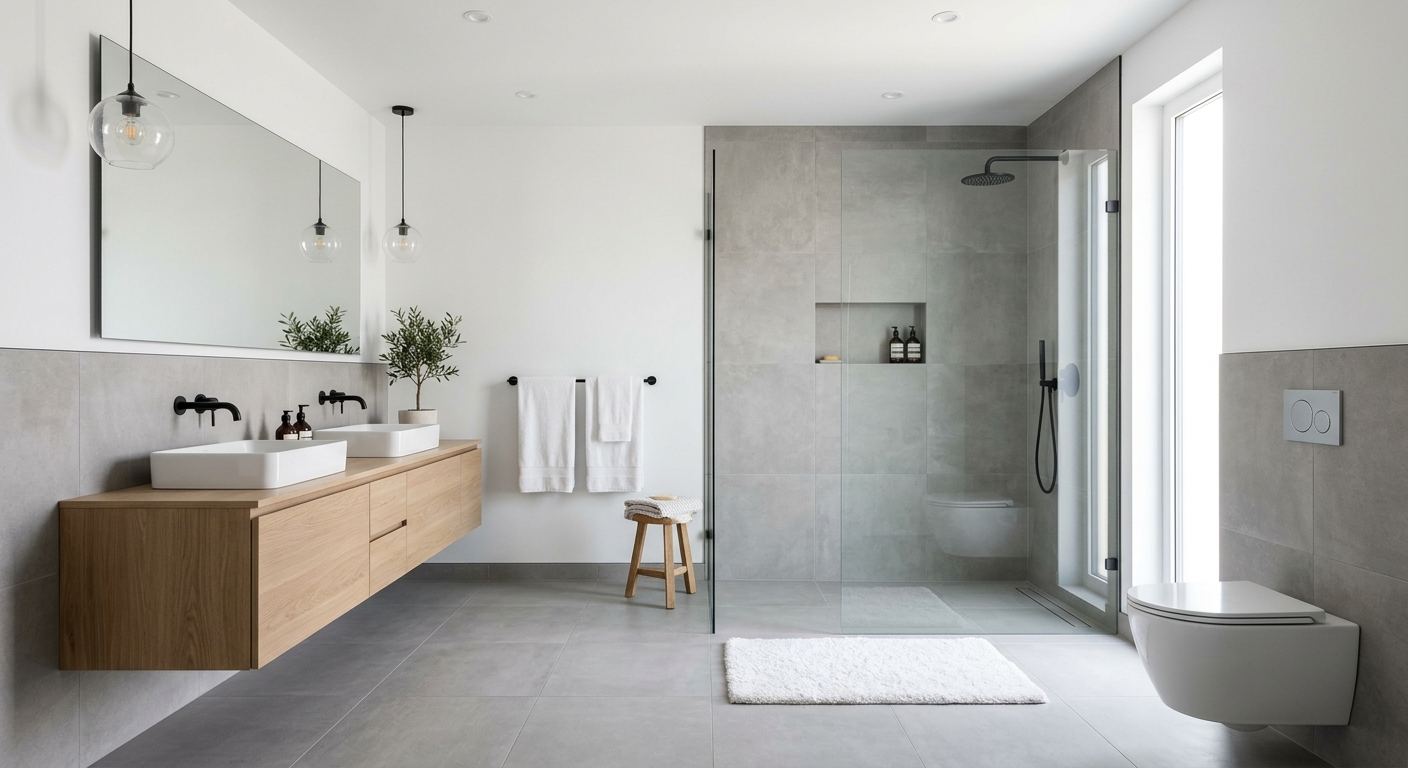
Bathroom renovation options and costs in Greenstone
Greenstone homeowners typically renovate bathrooms with a mix of comfort upgrades and code catch-up. Because many homes in the area are older—79.9% were built before 1981—renovations often start with cosmetic ideas, but quickly uncover dated plumbing layouts, aging venting, and occasional buried problems in floors or wall cavities. Greenstone also has a strong owner-occupant base (77.3% of households own), which usually means people invest in quality finishes and long-term waterproofing rather than quick surface repairs.
In Northwest Ontario, bathroom costs are shaped less by climate swings and more by the regional labour market and the age of the housing stock. Trade availability can affect scheduling, and older houses more often require rough-in corrections (drain slope, supply line condition), electrical upgrades, and ventilation improvements to satisfy current expectations. That’s why even “simple” refreshes can expand into plumbing reroutes or remediation once contractors open walls. You’ll often see this demand surge in neighbourhoods around the downtown core and the more established residential areas near the airport corridor, where renovation activity clusters as homeowners update older primary bathrooms.
Below are practical price bands you can use to compare quote options and decide where to spend and where to keep it simple.
| Renovation Scope |
What's Included |
Typical Duration |
Price Range |
| Cosmetic refresh (paint, fixtures, accessories only) |
New paint, replace vanity top or vanity, swap toilet/faucet/lighting (no plumbing moves), re-caulk, replace accessories (towel bars/holder), optional deep clean and caulking refresh |
2–4 days |
$2,500–$6,000 |
| Mid-range full renovation (new tile, vanity, tub/shower, electrical) |
Remove and reset finishes, new floor and wall tile, new vanity and mirror/lighting, replace tub and surround or alcove shower with tile, exhaust fan with ducting (as needed), basic electrical updates, waterproofing system, disposal |
2–3 weeks |
$12,000–$18,500 |
| High-end full renovation (custom tile, steam shower, heated floors) |
Custom shower layout, premium tile/grout, linear drain or curbless options, heated floor mat/circuit, upgraded exhaust/venting, steam-ready plumbing layout, designer vanity and lighting, expanded waterproofing coverage, more extensive electrical, disposal |
3–5 weeks |
$18,500–$26,000 |
| Shower-only installation (convert tub to walk-in shower) |
Demo and remove tub, build new shower receptor (tile or prefab system), replace shower valve/trim, tile floor and walls, new waterproofing, rework drain lines where required, exhaust fan check and upgrade if needed |
1–2 weeks |
$8,000–$14,500 |
| Bathtub replacement or tub-liner install |
Replace alcove tub and trim (or install liner system where applicable), new caulking and sealing, re-tile affected areas, verify drain/overflow connections, limited electrical check for existing fixture points |
4–8 days |
$3,000–$6,000 |
| Tile-only installation (floor + surround, existing layout kept) |
Tile removal and reinstallation (existing tub/valve retained), new floor tile and wall surround, waterproofing as required for the tiled area, re-grout or replace caulking lines, surface prep |
5–10 days |
$4,500–$10,000 |
Prices are estimates only and vary by project scope, site access and material selection.
What affects the price of bathroom renovation in Greenstone
Two bids for the same bathroom can differ by 30–50% in Northwest Ontario because the pricing is driven by labour sequencing (trade coordination), what gets discovered once walls are open, and how much rough-in work is needed—not by climate alone. In Greenstone and the wider Northwest, the biggest cost levers are regional labour rates and the age of the housing stock. Many homes were built before 1981, and that’s when you’re more likely to find galvanized supply lines, cast-iron or corroded drain stacks, undersized venting, and older electrical layouts that don’t match today’s expectations. Even if the finished plan looks similar, the “behind-the-wall” work changes the time and materials, pushing budgets up into full-renovation ranges like $12,000–$26,000.
Asbestos discovery is another driver. In pre-1985 homes, if contractors uncover asbestos-containing vinyl tile, old mastic, or deteriorated pipe wrap, abatement protocols can be triggered. That commonly adds $1,500–$5,000+ depending on the scope and containment needs. Ventilation is also practical here: older bathrooms often lack adequate exhaust or ducting, and adding a properly installed fan with correct discharge can prevent repeat work.
Concrete examples from Greenstone jobs: (1) If drain alignment requires reworking joists or correcting slope, a “tile-only” plan can quickly turn into a full mid-range job; (2) If you choose large-format porcelain, labour time rises due to layout and substrate prep, but it can reduce grout maintenance over years; (3) Upgrading to a new exhaust fan and adding GFCI protection often nudges electrical costs but reduces long-term nuisance trips and call-backs.
| Price Factor |
Why It Matters |
Cost Impact |
| Layout change — moving drain or supply lines |
Requires plumbing rough-in, wall/ceiling patching, and potential subfloor work |
$3,000–$9,000 |
| Tile selection — large-format porcelain vs. mosaic vs. ceramic |
Impacts material cost, cutting complexity, and substrate preparation |
$1,500–$6,000 |
| Fixture tier — builder-grade vs. mid-range vs. designer brands |
Higher tiers often include better hardware, finishes, and performance; may require compatible valves |
$500–$4,000 |
| Subfloor condition — rot or unlevel concrete adds scope |
Bad substrates need repair before waterproofing; otherwise tile fails |
$1,000–$5,500 |
| Electrical — adding GFCI outlets, exhaust fan, heated floor circuit |
Code-compliant wiring, proper protection, and sometimes added runs/boxes |
$800–$4,200 |
| Waterproofing method — membrane type and extent |
Better systems reduce leak risk; extent matters around niches, benches, and transitions |
$500–$2,500 |
| Older-home surprises — asbestos tile, cast-iron drains, galvanized pipes |
Discovery changes scope, adds containment/abatement or pipe replacement |
$1,500–$10,000+ |
| Bathroom size — sq ft drives tile and labour time directly |
More area means more waterproofing, thinset, labour hours, and materials handling |
$1,000–$6,000 |
Permits & regulations in Ontario
In Ontario, many “cosmetic” bathroom updates do not require a permit. Typically, swapping fixtures like a vanity top, toilet, faucet, or retiling within the same layout (without moving plumbing) is usually treated as a renovation of finishes rather than a code-altering change. Likewise, painting, accessory replacement, and replacing existing lighting where the circuit and fixture box stay the same are commonly handled without major permitting.
Where permits are usually required: if you relocate plumbing (moving a drain or supply line), add or relocate an exhaust fan that requires new wiring/circuit work, make structural wall changes, or perform electrical work beyond simple like-for-like replacement. Any new electrical circuits or modifications must meet the Ontario electrical code requirements and be done or signed off by a licensed electrician. Plumbing rough-in changes typically trigger a permit and inspection, too—especially when drains, vents, or supply piping are altered.
For Greenstone homeowners verifying a contractor’s credentials, do it in this order: (1) ask for their Ontario trade licence number and verify it via the applicable online registry search for contractors; (2) request a current certificate of liability insurance (make sure it lists the right insured name and dates); (3) confirm WSIB/WCB coverage—look for a clearance letter or evidence of coverage provided with the quote; (4) keep copies of the licence and insurance documents with your contract before work starts. If a contractor can’t provide documents promptly, that’s a red flag.
Choosing tile, waterproofing and fixtures for your Greenstone bathroom
In Greenstone, your bathroom budget usually comes down to three material decisions: tile choice, waterproofing system, and fixture tier. First, tile: entry-level ceramic can be the best value if you’re keeping a straightforward layout and want fewer premium materials costs. Mid-range porcelain gives better stain and wear resistance and is often worth it for floors that see daily use. Natural stone (marble, travertine, slate) looks high-end, but it adds cost in material selection and can require more careful installation and sealing plans.
Second, waterproofing: the right method is critical in Ontario bathrooms where humidity and temperature swings are common. A basic paint-on membrane can work for certain wall applications, but many full showers and steam-ready designs benefit from a bonded sheet membrane or a reputable tile-specific system (including properly integrated corners, seams, and transitions). Done correctly, the system reduces mould risk and protects the substrate; done poorly, it leads to callbacks.
Third, fixtures: builder-grade fixtures can keep initial costs lower, while mid-range or designer brands often justify their price through smoother valves, better finishes, and improved durability. Resale also benefits when finishes look cohesive and don’t require frequent replacement.
Example: If you’re choosing between standard and high-durability porcelain, spending an extra $1,500–$3,000 on the tile package and a higher-spec waterproofing approach can prevent rework later—often cheaper than re-tiling a failed shower in a pre-1981 home with hidden plumbing or subfloor issues.
| Material / Option |
Pros |
Cons |
Price Range |
| Ceramic tile (floor + walls) |
Budget-friendly, wide colour choices, suitable for floors with proper prep, easy to match with standard grout lines |
Less durable than porcelain for heavy traffic; some ceramics chip if subfloor movement isn’t addressed |
$1,500–$4,500 |
| Porcelain tile (floor + walls) |
High durability, better stain resistance, excellent for shower surrounds and floor finishes |
More expensive materials; larger formats require more precise layout and substrate flatness |
$2,500–$7,000 |
| Natural stone (marble, travertine, slate) |
Luxury look, unique veining, strong visual value in feature walls or premium floors |
Requires sealing/maintenance; can be more complex to install and match consistently |
$4,000–$10,000 |
| Frameless glass shower enclosure |
Modern appearance, easier cleaning than boxed-in systems, can visually enlarge a small bathroom |
Higher glass/hardware cost; needs precise measurements and stable framing |
$1,800–$5,500 |
| Prefab tub surround (acrylic) |
Faster install, fewer tile-joint leak points, often a good option when you want a quick refresh |
Less custom look than tiled systems; seams and finishing can date sooner |
$900–$3,200 |
| Custom shower pan (tile or linear drain) |
Premium watertight finish, great design flexibility, linear drain for a sleek look |
More labour-intensive waterproofing and detailing; requires careful slope planning |
$3,000–$9,000 |
How to choose a bathroom renovation contractor in Greenstone
Choosing a contractor well in Greenstone starts with proof, not promises. First, verify Ontario licensing for the trades involved (general coordination plus licensed electrical/plumbing where applicable). Next, request liability insurance documentation—confirm it’s current and covers the work being performed. For protection on labour matters, confirm WSIB/WCB coverage by asking for a clearance letter or other evidence of coverage. If a contractor can’t provide these documents right away, pause and reassess before you sign.
Get 2–3 itemised written quotes that break down labour and materials. Look for line items for demo/disposal, waterproofing, tile setting, subfloor repair, exhaust fan work, electrical scope, and any permit handling. Avoid “lump sum” estimates that don’t list what’s excluded. Ask directly whether permits are included, who pulls them, whether inspection fees are covered, and what happens if hidden issues are found (like older drain stacks or subfloor rot). Ensure the workmanship warranty is stated clearly—how long it lasts and what it covers—and confirm whether product warranties are manufacturer-backed and transferable to you.
Payment scheduling matters too: never pay more than 10–15% upfront. Hold back a portion until key milestones are complete and the final walkthrough is finished. Finally, insist on a written start date and a realistic completion timeline tied to inspection and material lead times.
- Licence and trade proof specific to the work being done (not just “we have a contractor”).
- Current liability insurance certificate and the correct legal company name.
- WSIB/WCB clearance letter or evidence of coverage before demo starts.
- Written scope with exclusions listed (what they won’t do, and what that means for cost).
- Permit responsibility stated (who pulls it, what it covers, and any inspection lead times).
- Disposal and dump fees included or clearly priced as an add-on.
- Waterproofing system and method named (membrane type, coverage areas, seam/corner details).
- Tile plan confirmed: substrate prep, flatness expectations, grout joints, and edge trims.
- Electrical scope clarified: exhaust fan wiring, GFCI requirements, heated floor circuit (if selected).
- Plumbing allowances spelled out: valve reuse vs replacement, drain repairs allowance, venting checks.
- Schedule in writing with start/finish dates and milestone dates for inspections.
- Warranty terms written in the contract (workmanship length and product warranty handling).
In Greenstone, common red flags include: quotes that omit waterproofing and just say “tile install,” contractors who won’t list disposal/permit responsibilities, vague warranty wording (“guaranteed work” without a term), asking for large deposits (over 15% upfront), and promises to “keep everything as-is” without checking rough-in behind walls in pre-1981 homes.
Frequently asked questions — bathroom renovation in Greenstone
How long does tile installation take in a Greenstone bathroom?
In Greenstone, tile installation time depends mostly on the bathroom size, tile type, and how flat the substrate is after demo. For a typical floor-and-tub-surround job, plan on about 5–10 working days for the tile itself, not counting demolition, waterproofing cure time, and grout sealing. If you’re using porcelain with larger format pieces, expect extra layout and cutting time for clean lines. In older homes built before 1981, delays are often caused by substrate prep—fixing unlevel subfloors or repairing small rot spots before waterproofing. If the scope becomes a full shower with custom pan work, total tile-related days can stretch closer to 2–3 weeks overall for the entire reno schedule.
How much does a bathroom renovation cost in Greenstone?
A bathroom renovation cost in Greenstone usually falls within Ontario Northwest price bands, with full bathroom renos commonly landing around $12,000–$26,000 depending on whether you’re doing a mid-range update or a higher-end custom build. If you’re converting a tub to a walk-in shower, a shower-only install is often in the range of about $3,000–$8,000 for straightforward work, but can increase when plumbing re-routing or new waterproofing details are needed in older housing. Cosmetic refreshes (paint/fixtures only) can be much lower, while high-end upgrades like heated floors and premium shower systems move budgets toward the upper end. Your age of housing stock is a big driver in Greenstone, because behind-wall issues are more common in older homes.
How long does a bathroom renovation take in Greenstone?
For Greenstone projects, timelines are usually governed by trade scheduling, material lead times, and inspection sequencing—not by climate. A mid-range full renovation commonly takes about 2–3 weeks, while higher-end custom showers and heated floors often run 3–5 weeks. The biggest schedule risks in older Northwest Ontario homes are hidden conditions: older drain stacks, galvanized supply lines, electrical panel limitations, or subfloor repairs once tile and wall finishes are opened. If permits and inspections are required due to plumbing or electrical changes, add time for approvals and inspection availability. Contractors who coordinate trades well and confirm waterproofing cure times generally keep schedules on track.
Do I need a permit for a bathroom renovation in Ontario?
In Ontario, you often don’t need a permit for purely cosmetic updates like replacing a vanity, swapping fixtures in place, repainting, or retiling without moving plumbing or making structural changes. However, permits are typically required when you relocate plumbing lines (moving drains or supply pipes), change structural walls, or add ventilation work that involves new wiring/circuit changes. Electrical work must meet the Ontario code and be performed or signed off by a licensed electrician. Plumbing rough-in changes generally require a permit and inspection. For Greenstone homeowners, the practical step is to ask your contractor up front: “What permits are required for my scope, who pulls them, and what’s included in your quote?”
What's the best tile for a bathroom in Greenstone?
For most Greenstone bathrooms, porcelain is the best balance of performance and long-term value. It’s durable under everyday use and resists staining better than basic ceramics, and it handles moisture environments well when paired with a proper waterproofing system. Ceramic can still work in budget-friendly upgrades—especially for walls and limited floor areas—if the substrate is prepped correctly. Natural stone can look stunning, but it typically requires more maintenance planning (sealing) and careful installation to keep surfaces consistent. The “best” choice also depends on your renovation plan: if you’re doing a shower with a custom pan or linear drain, your waterproofing detailing matters as much as the tile selection.
Should I do a tub-to-shower conversion?
A tub-to-shower conversion is often a smart choice in Greenstone if you want lower maintenance, easier accessibility, and more usable space. It’s especially worthwhile when your tub is old and you’re already planning to redo the surround and waterproofing. That said, in many pre-1981 homes, conversions can trigger added scope because the drain/venting and supply line configuration may need adjustments to meet current expectations. Budget-wise, shower-only installs commonly start around $8,000–$14,500 when you include new waterproofing and tile, and it can climb if plumbing re-routing is extensive. If you want a faster, lower-cost path, a prefab tub surround isn’t the same as a true walk-in shower, but it can be a compromise—ask your contractor what’s feasible for your layout and existing rough-in.