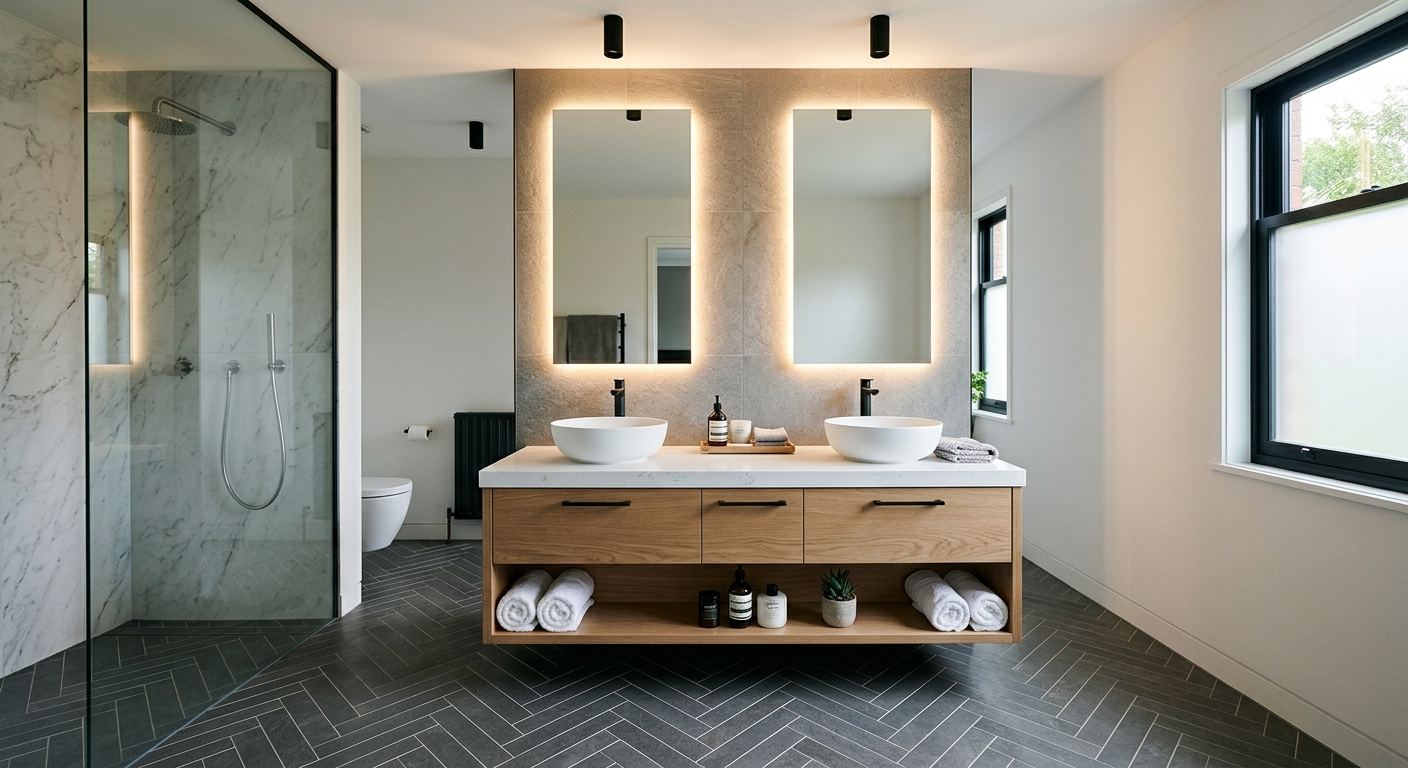
Bathroom renovation options and costs in Northwood
In Northwood, choosing the right bathroom renovation option starts with knowing what your home can reveal once walls are opened. With a population of 14,017 (Statistics Canada, 2021 Census), Northwood benefits from steady demand, but the Toronto-area labour market still puts bathroom work in a premium category—especially where older housing stock is common. In many Toronto-area neighbourhoods (including older post-war pockets near transit corridors), dated plumbing layouts and older drain assemblies can surface during demolition, and pre-1985 materials sometimes include asbestos-containing products in floor tile or drywall compounds.
Toronto-area bathroom costs are driven less by weather “climate swings” and more by the local building trades’ availability and hourly rates, plus how often older homes need code-upgrades. Once walls and floors are opened, it’s not unusual to discover cast-iron or undersized drains, galvanized supply lines, insufficient ventilation, or knob-and-tube remnants that require licensed corrections. That discovery phase is a major reason realistic GTA budgets often land above national averages, even for a “standard” 3-piece bathroom.
In Northwood, contractor availability and schedule pressure are especially strong for tile, plumbing, and waterproofing crews in and around the Lakeside/West End style residential pockets where many homeowners renovate older bathrooms at the same time. Below is a practical comparison of common scopes, typical timelines, and budget bands—then we’ll break down what drives the price the most for your specific situation.
| Renovation Scope |
What's Included |
Typical Duration |
Price Range |
| Cosmetic refresh (paint, fixtures, accessories only) |
New paint, vanity top or vanity swap (no plumbing move), toilet/trim replacement, accessories, caulking/silicone, minor touch-up tile (if any) |
2–5 days |
$4,000–$7,500 |
| Mid-range full renovation (new tile, vanity, tub/shower, electrical) |
Demolition, waterproofing, floor & wall tile, new vanity and toilet, bathtub or tub/shower surround, exhaust fan upgrade, GFCI allowance, basic plumbing refresh, disposal |
10–18 days |
$12,000–$20,000 |
| High-end full renovation (custom tile, steam shower, heated floors) |
Custom waterproofing and tile build, heated floor circuit, premium fixtures, frameless glass, steam system allowance, enhanced ventilation, plumbing/vent reconfiguration where required, upgraded finishes |
18–30 days |
$20,000–$30,000 |
| Shower-only installation (convert tub to walk-in shower) |
Remove tub, prep subfloor, install shower waterproofing system, tile shower walls, new walk-in shower door/enclosure allowance, drain adjustments as needed |
7–14 days |
$9,000–$16,000 |
| Bathtub replacement or tub-liner install |
Remove old tub (or liner prep), install new tub or liner system, reseal waterproof transitions, plumbing hookup refresh, caulking and trim |
3–7 days |
$1,200–$3,500 |
| Tile-only installation (floor + surround, existing layout kept) |
Tile removal and re-install for floor and selected wall areas, underlayment prep where needed, waterproofing in wet areas, matching trims and grout sealing |
6–12 days |
$7,000–$15,000 |
Prices are estimates only and vary by project scope, site access and material selection.
What affects the price of bathroom renovation in Northwood
Even when two homeowners in the Toronto economic region are renovating “the same” bathroom, quotes can vary by 30–50% because bathroom work is labour-intensive and the scope changes quickly once surfaces come off. Labour rates in the GTA are a primary driver, but the age of the housing stock is what makes the biggest difference in real-world budgets. Older homes often have plumbing and venting that doesn’t match current Ontario expectations, so drain reconfiguration, vent corrections, and new shut-offs can add thousands before you even choose a tile.
Toronto’s market also means skilled crews (tile setters, waterproofing specialists, plumbers) are booked tightly, so the scheduling and sequencing effort increases cost—particularly for complex showers and multi-trade jobs. In older post-war and 1960s–1980s areas, it’s common to uncover cast-iron drain stacks or galvanized supply lines that need upgrading. If asbestos-containing materials are present (for example, in vinyl floor tile or older drywall compound), abatement protocols can add roughly $1,500–$5,000+ depending on the extent of impacted materials.
Here are a few concrete Northwood examples of what pushes costs up or down: keeping your layout and avoiding drain moves can help keep you closer to mid-band pricing like $12,000–$20,000 for a mid-range full renovation, while adding a steam shower and heated floors usually pushes you toward the high end like $20,000–$30,000. A small bathroom with tight access often costs more per square foot due to labour time. And if the subfloor is out of level, you may pay extra for flattening and additional waterproofing preparation.
| Price Factor |
Why It Matters |
Cost Impact |
| Layout change — moving drain or supply lines |
Rough-in work, demo, and sometimes venting corrections |
Often +$3,000–$8,000 |
| Tile selection — large-format porcelain vs. mosaic vs. ceramic |
Material cost and complexity of cutting/setting increase labour |
Often +$1,000–$4,000 |
| Fixture tier — builder-grade vs. mid-range vs. designer brands |
Higher-end valves, trim, and accessories raise material budgets |
Often +$500–$3,500 |
| Subfloor condition — rot or unlevel concrete adds scope |
Extra prep, structural fixes, and underlayment corrections |
Often +$1,200–$5,000 |
| Electrical — adding GFCI outlets, exhaust fan, heated floor circuit |
Licensed work, new circuits, and proper waterproof-zone installation |
Often +$800–$4,500 |
| Waterproofing method — membrane type and extent |
Correct system coverage prevents leaks and mould growth |
Often +$700–$3,000 |
| Older-home surprises — asbestos tile, cast-iron drains, galvanized pipes |
Abatement, upgrades, and additional disposal and inspection |
Often +$1,500–$8,000+ |
| Bathroom size — sq ft drives tile and labour time directly |
More surface area = more setting time, backer prep, and curing time |
Often +10–30% for larger layouts |
Permits & regulations in Ontario
In Ontario, many bathroom cosmetic updates typically do not require permits. Swapping fixtures without relocating plumbing—like replacing a vanity, changing a toilet, updating a bathtub, or repainting and re-caulking—usually falls under maintenance or cosmetic work. Re-tiling over a properly prepared surface is also often handled without a separate permit, as long as there’s no structural change and the waterproofing is done correctly.
However, certain bathroom upgrades do trigger permits. If you relocate plumbing (moving a drain or supply lines), add or move an exhaust fan that requires new wiring/circuit work, or make structural wall changes, expect permits and inspections. Any electrical work must meet Ontario electrical code requirements and be performed or signed off by a licensed electrician. Plumbing rough-in changes typically require a permit and inspection before walls are closed.
For Northwood homeowners, verify your contractor in a clear sequence. First, request their Ontario trade licence details and confirm they match the work described on your estimate. Next, ask for a certificate of insurance (general liability and, where applicable, proof relevant to their work scope) and check expiry dates. Then confirm WSIB/WCB coverage—some contractors provide proof of clearance or account details. If you’re told “we handle it” but you can’t see paperwork, ask for it before demolition. Finally, ensure your contract states who pulls permits (and whether permit costs are included), and get the inspection plan in writing.
Choosing tile, waterproofing and fixtures for your Northwood bathroom
In a Northwood bathroom renovation, three material decisions usually determine both your budget and your long-term problem-free performance: tile choice, waterproofing method, and fixture tier. First, tile: ceramic is the entry level—fine for straight-forward layouts—but it’s typically less dense than porcelain and can be more sensitive to wear and water absorption. Porcelain (a better mid-range choice) is denser, handles moisture well, and is easier to maintain, especially in high-traffic family bathrooms. Natural stone (marble, travertine, slate) is beautiful but can require extra sealing and more careful installation to avoid staining or unevenness; the installation labour is often higher due to layout and material characteristics.
Second, waterproofing: for Ontario’s consistently humid indoor air conditions, the goal is to stop moisture migration behind the tile. A paint-on membrane can work in limited situations but a bonded sheet membrane or a well-installed schluter-type system is often chosen for reliability at shower transitions and corners. Third, fixtures: builder-grade faucets and toilets reduce upfront cost, while mid-range and designer brands can improve feel, reliability, and resale appeal—especially when paired with updated valves and correct exhaust ventilation.
Where the money is justified: spending extra on porcelain and a full shower waterproofing system is usually more valuable than upgrading to a single designer fixture. For example, converting your budget from a basic ceramic surround to porcelain plus better waterproofing can be a smart trade—often keeping you nearer the mid-range band around $12,000–$20,000—while adding heated floors and premium shower components is what typically pushes toward the high end around $20,000–$30,000.
| Material / Option |
Pros |
Cons |
Price Range |
| Ceramic tile (floor + walls) |
Good entry-level value, wide design selection, familiar installation methods |
Typically higher water absorption than porcelain, can be more prone to chipping on impact |
$3,000–$7,000 |
| Porcelain tile (floor + walls) |
Denser and more moisture-resistant, durable finish, often easier to maintain |
Material cost is higher; large-format requires careful substrate and layout |
$5,000–$10,500 |
| Natural stone (marble, travertine, slate) |
High-end look, unique veining and character, strong curb appeal |
Sealing/maintenance, potential staining, more complex installation and fitting |
$8,000–$16,000 |
| Frameless glass shower enclosure |
Modern appearance, makes small bathrooms feel larger, durable hardware when installed right |
More expensive than standard units; requires precise measurements and waterproof detailing |
$2,500–$6,500 |
| Prefab tub surround (acrylic) |
Faster install, consistent waterproofing system, lower labour cost than full tile builds |
Less custom look, can show wear sooner depending on product quality |
$900–$2,500 |
| Custom shower pan (tile or linear drain) |
Modern, spa-like design; linear drains help with sleek aesthetics and proper slope control |
More labour and prep time; drain placement and waterproofing must be exact |
$4,000–$12,000 |
How to choose a bathroom renovation contractor in Northwood
Choosing a bathroom contractor in Northwood comes down to proof: licensing, insurance, proper coverage, and a scope you can actually compare. In Ontario, first ask whether the contractor and any trades will hold the relevant Ontario licences for the work (especially electrical and plumbing). Then request proof of liability insurance (certificate of insurance with your project address listed where applicable) and confirm WSIB/WCB coverage. Where to check: use the provincial trade licence registry information that applies to their trade, and keep copies of the certificate of insurance and WSIB/WCB clearance/proof they provide. If they won’t share documents before you sign, that’s a risk red flag.
Next, get 2–3 itemised written quotes. You want labour and materials broken out (tile, backer board, membrane system, glass, valves, fixtures), not one “lump sum.” Read the scope carefully: what’s excluded (light fixtures, niche shelving, permit fees, disposal)? Is permit pull included if needed for plumbing/electrical changes? Also review the warranty: workmanship warranty length, product/manufacturer warranty terms, and whether it’s transferable if you sell your home.
For payment schedule, protect yourself: never pay more than 10–15% upfront. Hold back a meaningful final amount until the job is complete, cleaned, and any punch list items are finished. Finally, timeline should be written: ask for a start date and a completion estimate that accounts for curing time for waterproofing and tile.
- Use an itemised quote with labour + materials line items, not only a total.
- Confirm who pulls permits and whether permit fees are included.
- Verify the exhaust fan plan and confirm it’s vented correctly.
- Ask what waterproofing system is used and where it’s applied (tub/shower transitions, corners, seams).
- Get the disposal plan in writing (who removes demolition debris and where it goes).
- Require proof of liability insurance and confirm WSIB/WCB coverage.
- Confirm licensed trades for electrical and plumbing rough-in changes.
- Check if the estimate includes substrate assessment for subfloor flatness and rot repair.
- Review the warranty in writing (workmanship duration and exclusions).
- Agree on a realistic timeline that includes curing and grouting/drying time.
- Confirm payment schedule milestones (10–15% max upfront; holdback until close-out).
- Ask for a sample schedule of selections so materials don’t delay the build.
Red flags to watch in Northwood: (1) quotes that omit waterproofing details while claiming “tile-ready” walls, (2) refusing to provide insurance/WSIB/WCB proof, (3) no written scope of exclusions (often disposal, permits, or glass/enclosure), (4) asking for large deposits beyond 10–15% upfront, and (5) vague timelines without acknowledging tile and membrane cure periods.
Frequently asked questions — bathroom renovation in Northwood
How do I prevent mold in a Northwood bathroom?
To prevent mold in a Northwood (Ontario) bathroom, the biggest lever is controlling moisture where water actually goes: the shower walls, tub surround, and the joints where grout meets caulk. Use a proven waterproofing system, apply it fully to wet zones and corners, and confirm correct sealing at change-of-plane transitions. Upgrade (or install) a properly ducted exhaust fan—bathroom humidity should be vented outside, not recirculated. Also, confirm your contractor includes a correct slope to drains and uses proper grout/grout sealing where relevant. A bathroom that dries quickly after showers is the most effective mould prevention, especially in Ontario’s humid indoor periods.
What adds the most resale value in a bathroom reno?
In Northwood and the broader Toronto market, resale value typically comes from perceived quality upgrades and functional improvements. High-impact items include a modern vanity, an updated toilet, a clean and waterproofed shower/tub surround, and improved ventilation. If you can rework your layout without overcomplicating plumbing, a walk-in shower that’s well built often looks more current than an older tub-only setup. Heated floors and frameless glass are popular premium signals, but they’re best when the core waterproofing and finishes are done correctly first. If you’re budgeting, many owners aim for the mid-range full renovation band around $12,000–$20,000 for a balanced “looks + performance” upgrade.
Can I keep my existing plumbing layout to save money?
Yes—keeping your existing plumbing layout is one of the most reliable ways to control cost in Ontario. If you keep the toilet position and avoid moving the drain and supply lines, you reduce rough-in work and the chances of uncovering bigger venting or drain-stack corrections. That can help you stay in the mid-range budget more often, because labour and demolition are less complicated. However, you still may need plumbing refresh if valves are aged, if supply lines are galvanized, or if drains are undersized. A good contractor will inspect what’s behind the walls before finalising price, and they’ll itemise any necessary upgrades rather than burying them in a contingency.
How much does a walk-in shower cost in Northwood?
In Northwood, converting a tub to a walk-in shower typically costs more than people expect because waterproofing and drain details must be correct, and electrical ventilation updates are common. For many Toronto-area projects, shower conversions land roughly in the $4,000–$12,000 range for the shower installation portion, with total project cost higher when you add new tile scope, glass, and electrical upgrades. A realistic full “shower-only conversion” budget often falls around the low-to-mid teens depending on tile size, enclosure type, and whether there are older-home plumbing surprises. If your home has older venting or cast-iron drainage, expect potential additions once discovery happens.
What's the ROI on a bathroom renovation?
ROI varies by neighbourhood demand, finish level, and whether you solve functional issues (ventilation, leaks, worn drainage) versus only refreshing aesthetics. In Toronto-area markets like Northwood’s region, buyers pay attention to waterproofing quality, ventilation, and whether the bathroom feels “clean and modern.” That said, you usually don’t recover 100% of premium upgrades like custom stone or steam features; you recover more when upgrades are balanced and durable. A mid-range renovation typically supports resale better than very low-budget work that may still need repairs sooner. If you’re aiming for value, budgeting near the $12,000–$20,000 mid-range full renovation band often provides a strong blend of visible upgrades and core longevity. Always compare your finish selections to what similar homes in your area expect.
Do I need waterproofing behind the tile?
Yes—proper waterproofing behind tile in the shower and tub surround is non-negotiable in Ontario best practice. Waterproofing is what prevents moisture from travelling behind walls, and in a bathroom it’s the difference between a long-lasting finish and recurring issues like mould, cracked grout, or soft drywall. Your contractor should specify the waterproofing method (membrane type), where it stops/starts, and how it’s detailed at corners, seams, niches, and the tub/shower transitions. Ontario’s humidity and the way bathrooms are used make good waterproofing essential, even when the bathroom looks fine on the surface. If a quote claims “waterproofing optional,” that’s a major concern—ask for the exact system and coverage details.