Bathroom renovation options and costs in Bridgeport East
Bathroom renovations in Bridgeport East typically start with a clear choice: cosmetic refresh, a full mid-range redo, or a high-end upgrade. With Bridgeport East’s housing mix, many homes sit in the older end of the Toronto stock—an important factor because dated plumbing layouts can mean cast-iron or undersized drainage, plus the occasional asbestos-containing material in older floor tile or backing (Statistics Canada, 2021 Census). And with the Toronto economic region drawing skilled trades into high demand jobs, pricing is more sensitive to labour availability than to climate alone.
In Ontario, the bigger cost drivers are the amount of labour-intensive work once walls and floors are opened: tiling, custom shower builds, and any drain/vent corrections to meet current code. Toronto’s steady demand also means contractors often plan schedules weeks ahead, so “rush” timelines can add cost. Even though climate doesn’t “break” bathrooms the way freeze–thaw can in northern regions, Ontario humidity still punishes poor ventilation and weak waterproofing—so budgets that go too low on membranes and exhaust can lead to callbacks.
In Bridgeport East, trades are especially busy around the residential pockets closer to the Parkway and older streets where post-war homes are common and renovations frequently uncover plumbing changes. If you’re considering a full bathroom, it helps to start with realistic budget bands—then confirm what your inspector will likely find once demolition begins.
Below is a practical comparison of common renovation levels in Bridgeport East, based on Toronto-area market pricing and the scope homeowners typically request.
| Renovation Scope |
What's Included |
Typical Duration |
Price Range |
| Cosmetic refresh (paint, fixtures, accessories only) |
Paint, faucet/fixture swaps, toilet/vanity refresh (no plumbing relocation), re-caulk, replace accessories, minor caulk/grout touch-ups |
3–7 days |
$3,000–$7,000 |
| Mid-range full renovation (new tile, vanity, tub/shower, electrical) |
Demo; new vanity and mirror; tub and surround or tiled alcove; mid-range tile floor + walls; exhaust fan upgrade; new GFCI-protected circuit where needed; basic waterproofing; updated shut-offs |
2–4 weeks |
$12,000–$22,000 |
| High-end full renovation (custom tile, steam shower, heated floors) |
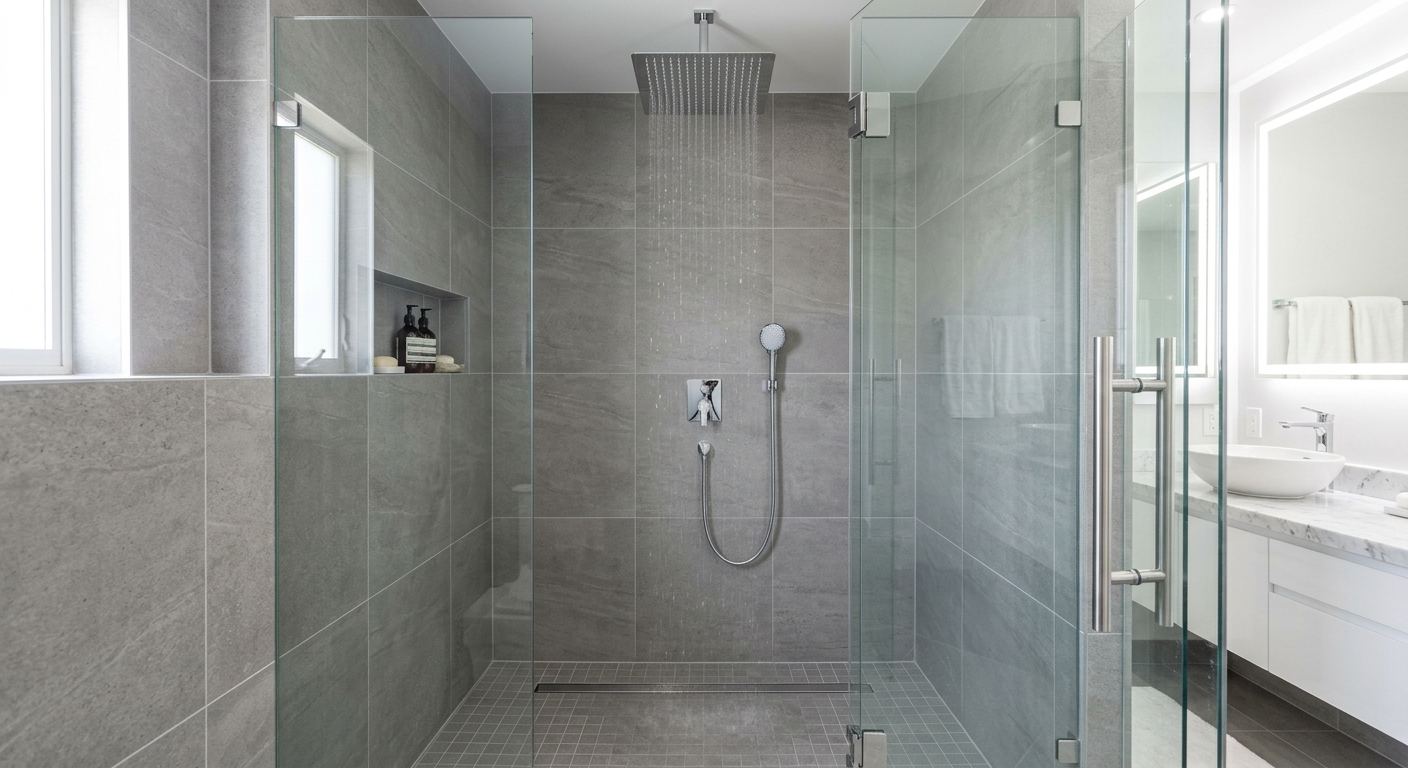
Custom shower/steam-ready layout; premium large-format tile; linear drain or custom pan; heated floor circuit; upgraded waterproofing system; designer fixtures; potential plumbing reconfiguration to current code |
4–7 weeks |
$22,000–$30,000 |
| Shower-only installation (convert tub to walk-in shower) |
Remove tub; rough-in adjustments; new walk-in shower pan/tiling; glass enclosure (or partial glass); exhaust and fan integration; waterproofing full-height to shower walls |
1–3 weeks |
$9,000–$16,000 |
| Bathtub replacement or tub-liner install |
Replace tub or install liner; new trim/fixtures; localized wall refinishing; re-caulk and reseal; optional updated faucet if needed |
3–10 days |
$1,200–$3,500 |
| Tile-only installation (floor + surround, existing layout kept) |
Tile floor and wall surround only; prep leveling/underlayment as required; new grout and caulk; waterproofing enhancements where the scope allows (typically around tub/shower) |
1–2 weeks |
$3,000–$10,000 |
Prices are estimates only and vary by project scope, site access and material selection.
What affects the price of bathroom renovation in Bridgeport East
In Bridgeport East and across the Toronto economic region, two contractors can price what looks like the “same” bathroom renovation and still be 30–50% apart. The reason isn’t climate; it’s labour rates, trade availability, and how often older homes force extra rough-in work once walls come off. Labour is the backbone of the GTA bathroom budget because tiling and custom shower work are time-heavy, and plumbers/electricians charge premium hourly rates compared to many other parts of Ontario.
Housing age is the other major lever. Older post-war and 1960s–1980s homes are common in the Toronto area, and they often hide plumbing and venting that must be corrected to current Ontario code. In practical terms, discovery can involve cast-iron or undersized drain stacks, galvanized supply lines, and ventilation that no longer meets performance expectations. If asbestos-containing materials are found in older floor tile or related compounds, abatement can add roughly $1,500–$5,000+ to the project budget depending on extent.
Here are a few realistic “scope changers” that come up in Bridgeport East: (1) keeping the same vanity location can limit plumbing disruption, while moving it can push you toward mid-range or higher full-reno bands (for example, the $12,000–$22,000 zone for a typical mid-range full renovation); (2) switching from standard ceramic to porcelain or large-format tile increases labour because layout, cuts and substrate prep get more demanding; (3) adding heated flooring often shifts a bathroom from a mid-range to upper local range (the $22,000–$30,000 band when it’s paired with custom shower and premium finishes). Size matters too: square footage directly drives tile quantities and the hours for waterproofing, setting and grouting.
| Price Factor |
Why It Matters |
Cost Impact |
| Layout change — moving drain or supply lines |
Requires rough-in work, possible venting updates, patching and re-waterproofing |
Can add $3,000–$8,000+ |
| Tile selection — large-format porcelain vs. mosaic vs. ceramic |
Harder to cut/align, more substrate prep, more labour for pattern work |
Typically +$1,500–$5,000 |
| Fixture tier — builder-grade vs. mid-range vs. designer brands |
Cost of the fixtures plus installation details (supports, trims, specialty valves) |
Typically +$800–$4,000 |
| Subfloor condition — rot or unlevel concrete adds scope |
May require framing, shimming, new underlayment and additional waterproofing prep |
Can add $1,000–$6,000 |
| Electrical — adding GFCI outlets, exhaust fan, heated floor circuit |
Licensed work, wire routing, new breakers and fan ducting |
Typically +$800–$3,500 |
| Waterproofing method — membrane type and extent |
Better systems reduce leak risk; incorrect methods lead to costly rework |
Typically +$500–$2,500 (for the right system) |
| Older-home surprises — asbestos tile, cast-iron drains, galvanized pipes |
Triggers abatement, drain replacement, shut-off upgrades and permit/inspection steps |
Can add $1,500–$10,000+ |
| Bathroom size — sq ft drives tile and labour time directly |
More surface area equals more waterproofing, setting, grouting and cleanup time |
Broadly affects total by several thousand dollars |
Permits & regulations in Ontario
In Ontario, many “cosmetic-only” bathroom updates do not require a permit. Swapping a vanity top, replacing a toilet or faucet, painting, replacing accessories, or retiling without changing plumbing routes typically falls into work that homeowners can coordinate with contractors without the same permitting pathway. However, permits often become necessary when you change the bathroom’s functional infrastructure—especially plumbing rough-ins, ventilation, and structural wall work.
In Bridgeport East, the following work typically DOES require permits and inspections: relocating plumbing (moving drain or supply lines), adding or changing a shower valve location, making significant changes to venting or drain routing, and altering structural walls (openings, removing/adding framing) that affect supports. Electrical work must meet Ontario electrical code and should be done or signed off by a licensed electrician—this often includes adding new circuits, adding a dedicated exhaust fan circuit, installing heated floor wiring, or upgrading outlets for wet locations.
To verify your contractor’s compliance step-by-step: (1) ask for their Ontario trade licence number (and confirm it’s current using the relevant online registry for their trade category); (2) request a Certificate of Insurance showing liability coverage—make sure it’s active for the dates of your project; (3) confirm they carry WSIB/WCB coverage appropriate for their trade activity; (4) ask for a written clearance letter if requested by your lender or building management; (5) match permits to the scope in writing so you know who pulls them. Your best protection is an itemised contract that clearly states who handles permits, inspections, disposal, and any required re-testing.
Choosing tile, waterproofing and fixtures for your Bridgeport East bathroom
For a Bridgeport East bathroom renovation, three material decisions usually decide both cost and long-term performance: tile choice, waterproofing system, and fixture tier. Because Ontario’s humidity punishes failures that aren’t truly waterproof, homeowners often get better value by spending smart on the “systems” (tile support, waterproofing, and correct membrane transitions) rather than only chasing visual luxury.
First, tile choice: ceramic is often the entry-level budget pick, while porcelain typically handles moisture and wear better and can justify the installation cost through durability. Natural stone (marble, travertine, slate) looks upscale, but it can require more labour for flatness and sealing, and replacement of cracked tiles can cost more over time.
Second, waterproofing method: paint-on membranes can be fine for certain light-duty uses, but showers usually call for stronger approaches like bonded sheet membranes or a properly detailed system (including correct overlaps at corners and around penetrations). This reduces mould risk by preventing moisture migration behind tile. Third, fixture tier: builder-grade trims cost less up front, mid-range balances style and function, and designer lines can raise both material costs and sometimes serviceability.
Budget example: if your bathroom is trending toward a mid-range full renovation ($12,000–$22,000), choosing porcelain tile and a robust bonded waterproofing layer can be a wiser spend than jumping straight to natural stone when the layout is small and grout lines are your dominant visual. In many Bridgeport East jobs, homeowners see the best outcome by keeping fixtures mid-range while upgrading waterproofing and the “wet wall” tile system; that’s how you avoid callbacks that can quickly erase savings and stall the schedule.
| Material / Option |
Pros |
Cons |
Price Range |
| Ceramic tile (floor + walls) |
Good entry-level look; wide colour selection; usually simpler layout tolerances |
Less robust than porcelain for heavy wear; can be more prone to chipping if substrate isn’t perfectly prepped |
$3,000–$7,000 |
| Porcelain tile (floor + walls) |
Denser and more moisture-resistant; holds up better in high-use bathrooms; strong for large-format installs |
More expensive material; requires careful cutting and substrate flatness |
$6,000–$10,000 |
| Natural stone (marble, travertine, slate) |
High-end appearance; unique veining; great resale appeal when installed well |
Needs sealing; higher labour for layout/leveling; grout/maintenance can be more involved |
$10,000–$18,000 |
| Frameless glass shower enclosure |
Modern look; keeps the room feeling brighter; good when paired with proper waterproof detailing |
More expensive hardware; installation is precise—walls must be true |
$4,000–$10,000 |
| Prefab tub surround (acrylic) |
Faster installation; consistent fit; easier cleaning |
Less “custom” look; can limit design options; edges must be sealed correctly |
$1,200–$3,500 |
| Custom shower pan (tile or linear drain) |
Best performance when detailed correctly; clean lines with linear drains; integrates with waterproofing |
More labour; requires accurate slope, drain placement, and substrate prep |
$8,000–$15,000 |
How to choose a bathroom renovation contractor in Bridgeport East
Choosing the right contractor in Bridgeport East is about verifying three things upfront: Ontario licensing, liability insurance, and WSIB/WCB coverage. Start by asking for their Ontario trade licence details for the scope they’ll perform (plumbing/electrical/tiling-related tasks where applicable) and confirm the status using the appropriate online registry. For insurance, request a Certificate of Insurance and confirm it covers general liability and is active during your renovation dates. Then ask for proof of WSIB/WCB coverage (clearance letter or equivalent documentation, depending on your contractor’s category).
Next, get 2–3 itemised written quotes, not a single lump sum. A good quote separates labour and materials line-by-line, lists who supplies tile, thinset, waterproofing membrane, grout, fixtures, glass, and labour rates for each trade step. Read exclusions carefully: demolition disposal included or not, subfloor leveling included or not, permit pulling included or not, and whether changes are billed as change orders. Warranty matters too: workmanship warranty length should be stated clearly, product/manufacturer warranties should match what you’re buying, and you should ask whether warranties are transferable to future owners.
For payment schedules, never pay more than 10–15% upfront. Hold back enough to protect completion—especially when waterproofing and tile are involved. Also get a written start date and completion estimate, along with how delays are handled (material lead times, inspection scheduling, and any conditions discovered after demolition).
- Confirm Ontario trade licence(s) that match the work they’re proposing (not just “general contracting”).
- Verify Certificate of Insurance is current and covers your address/job dates.
- Request WSIB/WCB clearance or proof of coverage before work starts.
- Demand itemised quotes (labour vs materials) with quantities for tile and waterproofing.
- Ask who supplies permits and whether inspections are included in the price.
- Clarify disposal: dumpster/haul-away included or billed separately.
- Get waterproofing details in writing (membrane type, coverage, how corners/penetrations are treated).
- Confirm electrical scope: exhaust fan wiring, GFCI outlets, and heated floor circuit requirements.
- Require a detailed demolition/rough-in schedule so rough plumbing doesn’t get delayed by tile lead times.
- Check their tile prep approach: leveling, backer/underlayment, and substrate moisture considerations.
- Set expectations on change orders: what triggers them and how pricing is calculated.
- Put warranty terms in writing (length, what’s covered, how to file a claim).
Red flags I’ve seen in Bridgeport East: contractors who won’t provide itemised quotes, “cash-only” requests or vague payment terms, no proof of insurance/WSIB/WCB, refusal to specify waterproofing/membrane details, and start dates that slip repeatedly without documentation. If a contractor can’t clearly answer permit and inspection questions, that’s often where cost overruns begin.
Frequently asked questions — bathroom renovation in Bridgeport East
How long does a bathroom renovation take in Bridgeport East?
Timelines in Bridgeport East usually depend on whether you’re doing a cosmetic refresh or opening walls for plumbing and waterproofing. A cosmetic refresh can be completed in about 3–7 days because it typically doesn’t involve rough-in changes. A mid-range full renovation often takes 2–4 weeks once demolition, rough plumbing/electrical, waterproofing, tile setting, and fixture installation are all sequenced properly. If you’re in the higher-end tier—custom shower details, linear drains, and heated floors—expect closer to 4–7 weeks, especially if materials or glass lead times run long. In older Toronto-area homes, hidden issues (like drain/vent updates) can add time quickly, even when the schedule starts as a straight 3-week project. (Statistics Canada, 2021 Census)
Do I need a permit for a bathroom renovation in Ontario?
In Ontario, it’s common that cosmetic work doesn’t require permits—things like changing fixtures, painting, or retiling without moving plumbing routes typically fall outside permit-heavy categories. However, permits are commonly required when you relocate plumbing (moving drain or supply lines), change the shower valve location, or make venting/drain corrections to meet current code. Electrical work is another key point: if you’re adding circuits for exhaust fans, heated floors, or upgrading wet-area outlets, a licensed electrician must do or sign off on that work. For Bridgeport East homeowners, the practical approach is to confirm the exact scope: if any part of the plan changes rough-in locations or involves new electrical circuits, assume a permit/inspection pathway and ask your contractor who will pull permits and schedule inspections. Don’t sign off on a “lump sum” with vague scope if you’re unsure—ask for it in writing.
What's the best tile for a bathroom in Bridgeport East?
For most Bridgeport East bathrooms, porcelain is often the best balance of durability and long-term value, especially in wet zones where moisture exposure is constant. Ceramic can work well for lower traffic or tighter budgets, but porcelain tends to be more forgiving for moisture resistance and wear in a busy family bathroom. Natural stone (like slate or travertine) can be stunning and can elevate resale appeal, but it comes with additional prep and maintenance expectations (sealing and more careful installation). The “best” option is usually the one that matches your waterproofing system and substrate quality—because even premium tile can fail if waterproofing is done incorrectly. If your budget is in the mid-range range of $12,000–$22,000, porcelain plus strong waterproofing is often a smarter choice than jumping straight to stone when the bathroom footprint is modest. (Statistics Canada, 2021 Census)
Should I do a tub-to-shower conversion?
A tub-to-shower conversion is a popular upgrade in Ontario because it improves day-to-day accessibility and modernizes the room. It also usually helps when homeowners want a more open feel and easier cleaning. Cost-wise, a shower-only installation that converts a tub to a walk-in often lands around $4,000–$12,000 for the shower work itself, but Bridgeport East projects commonly land higher when rough-in plumbing adjustments, exhaust fan upgrades, and custom waterproofing are included. In a typical GTA full-reno budget, homeowners often see tub-to-shower conversions as a “step up” from minor refresh work and closer to the $12,000–$22,000 mid-range band when you’re also updating tile and electrical. Consider it carefully if you regularly use the tub for bathing children or pets—some households still prefer a tub-liner or a partial update to keep functionality.
How do I prevent mold in a Bridgeport East bathroom?
Mold prevention in Bridgeport East is mostly about controlling moisture and sealing details, not about surface cleaning alone. Start with proper waterproofing behind tile and at all transition points—around the tub/shower perimeter, penetrations (valves, showerheads), and corners. Next, ensure the exhaust fan is correctly installed and vented so it actually removes humid air; many older bathrooms have fans that don’t perform well or are ducted incorrectly. Use good-quality caulking in the right locations and avoid gaps at grout/tile junctions. If your home is older, discovery of outdated assemblies can make a difference—older neighbourhood homes sometimes have drainage/venting issues that keep areas damp longer, which increases mould risk. A well-executed renovation typically includes updated waterproofing and ventilation, which is why costs for a full renovation can fall in the low-to-mid five figures rather than staying near a cosmetic refresh. (Statistics Canada, 2021 Census)
What adds the most resale value in a bathroom reno?
In Bridgeport East, the highest resale impact usually comes from improvements buyers can feel quickly: a clean, modern layout, durable tile and waterproofing, and updated fixtures that look current. Upgrading ventilation and addressing any plumbing/venting issues you find during demolition also protects the home from future damage, which is a selling point during inspections. High-value upgrades include a well-detailed shower (often with a proper pan or waterproof membrane system), quality vanity storage, and energy-conscious lighting. Heated floors can add comfort value, and premium finishes can help, but they deliver the best return when the underlying waterproofing and substrate preparation are done right. If you’re budgeting, many homeowners aim for the mid-range full renovation band—around $12,000–$22,000—because that’s where you get meaningful functional upgrades without paying for the most expensive custom features. For larger or custom projects, the high-end range up to $22,000–$30,000 typically supports steam-ready showers and premium tile selections. (Statistics Canada, 2021 Census)