Bathroom renovation options and costs in Binbrook
Binbrook bathroom renovations typically run the gamut from a quick cosmetic refresh to a full rework of plumbing, waterproofing, and finishes. In a town of 8,796 people (Statistics Canada, 2021 Census), you’ll see plenty of older housing stock across the Hamilton–Niagara Peninsula, and that matters: dated drain/vent layouts and retrofitted wiring behind walls can be hiding under “standard” bathrooms. In this region, even when the room looks fine, opening it can expose cast-iron or questionable supply plumbing, plus the possibility of asbestos-containing materials in older floor tile or drywall compounds (pre-1985 homes). The result is that pricing is often driven more by what’s behind the walls than by what you can see.
Ontario’s bathroom market also behaves differently than coastal regions: winter indoor humidity spikes mean waterproofing details and ventilation aren’t optional, and contractors prioritize jobs where waterproofing, exhaust performance, and drainage are planned up front. Labour availability in the Hamilton–Niagara Peninsula can tighten when multiple older-home projects hit at once, especially in popular pockets like Binbrook’s core residential areas where trades are commonly booked for both kitchen and bath work. For that reason, the most reliable way to compare options is to start with your scope—then price against the band that matches your finish level.
Below is a practical comparison of common renovation pathways in Binbrook, with typical durations and realistic price ranges to help you budget before you meet a contractor.
| Renovation Scope |
What's Included |
Typical Duration |
Price Range |
| Cosmetic refresh (paint, fixtures, accessories only) |
Paint, vanity refresh or replace (no move of plumbing), tap/trim swap, toilet swap (existing rough-in), towel bar/accessories, caulking + grout touch-ups |
2–4 days |
$4,500–$10,000 |
| Mid-range full renovation (new tile, vanity, tub/shower, electrical) |
Demo + disposal, updated vanity and finishes, new tile floor and surround (typ. 60–100 sq ft), waterproofing, new tub or shower conversion, exhaust fan, GFCI where needed, plumbing trims/valves, basic electrical upgrades |
8–14 days |
$12,000–$25,000 |
| High-end full renovation (custom tile, steam shower, heated floors) |
Custom layout planning, larger-format tile or mosaic accents, premium waterproofing system, steam/thermostatic shower components, heated floor circuit, higher-end fixtures/valves, upgraded ventilation, and more complex finish detailing |
3–5 weeks |
$25,000–$45,000 |
| Shower-only installation (convert tub to walk-in shower) |
Convert layout (typically includes shower base/pan, tile surround), waterproofing, new glass panel, new valve trim, exhaust fan check/upgrade, plumbing trims and drain adjustments as needed |
7–12 days |
$8,000–$18,000 |
| Bathtub replacement or tub-liner install |
Remove existing tub (or prep for liner), new tub set/level, valve trim and seals, re-caulk and water test, limited tile touch-up (if applicable) |
3–7 days |
$1,500–$6,000 |
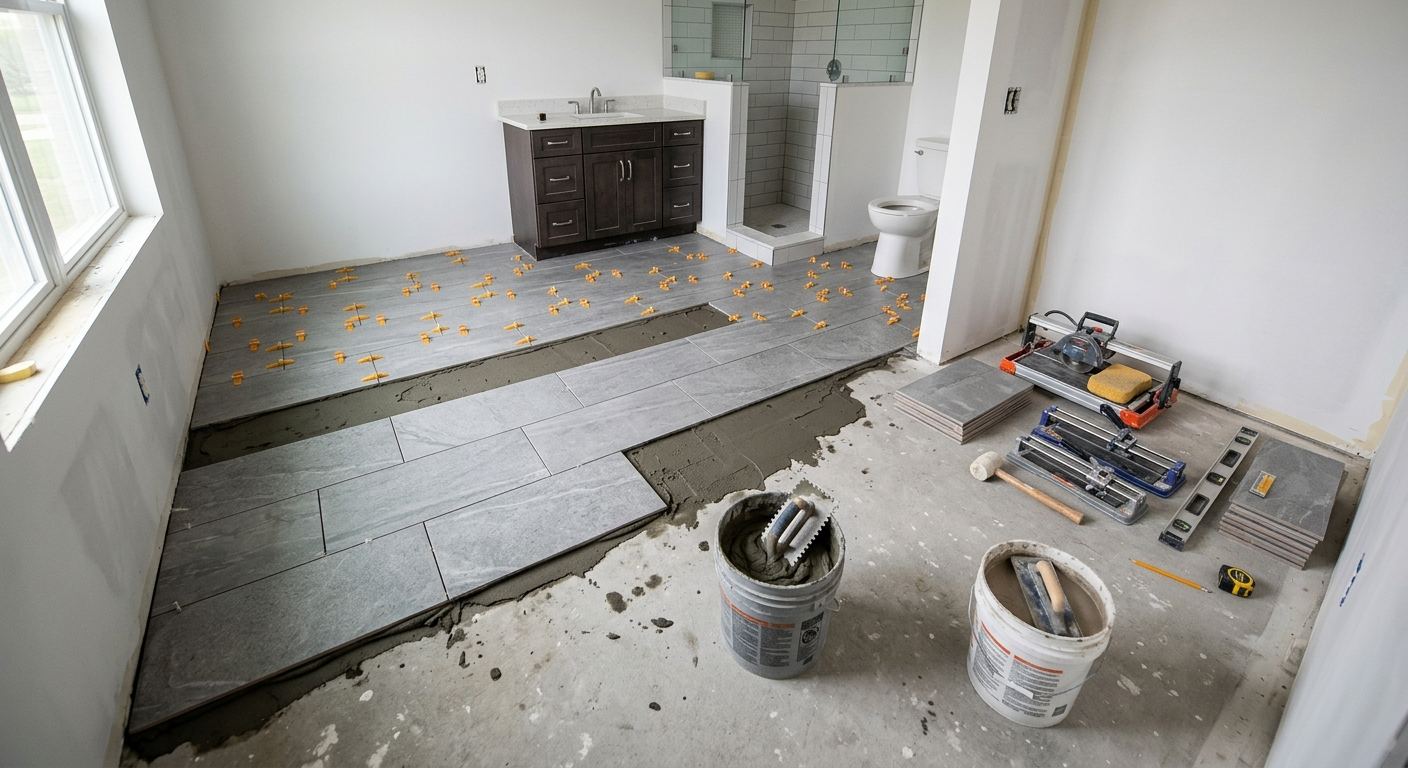
| Tile-only installation (floor + surround, existing layout kept) |
Tile demo (targeted), floor tile and/or tub surround, waterproofing upgrade where needed, grout/seal, trim work using existing fixtures/locations |
5–10 days |
$3,000–$10,000 |
Prices are estimates only and vary by project scope, site access and material selection.
What affects the price of bathroom renovation in Binbrook
In the Hamilton–Niagara Peninsula market, it’s common to see quotes for the “same” bathroom come in 30% to 50% apart once you factor in hidden scope. Across Ontario, contractors price based on how much risk they’re taking on: older homes often hide drainage/vent issues, shutoffs that don’t isolate properly, or electrical that needs bringing up to current expectations. This is why one company may quote closer to a $12,000–$25,000 mid-range full reno band, while another lands nearer the upper portion—or higher—after wall opening and testing.
Regionally, the biggest drivers are labour rates and the age of local housing stock, not weather extremes. In Binbrook and the surrounding region, older bathrooms frequently have cast-iron drain stacks or galvanized supply lines that don’t meet modern practical needs (or can’t be accessed without extra demolition). Ventilation is another big cost shaper: bathrooms that were designed before today’s exhaust-fan standards can require a duct route upgrade once demolition reveals joists, blocked chases, or long vent runs.
Here are a few concrete examples that move price up or down in Binbrook:
- If you change where the shower valve sits or move the vanity, rough-in work expands and so does labour—budget accordingly even if the finishes stay “mid-range.”
- If pre-1985 materials test positive for asbestos in vinyl floor tile or old drywall compound, abatement protocols can add $1,500–$5,000+ and delay start dates until it’s safely completed.
- If the subfloor is unlevel or shows rot around the tub/shower perimeter, flattening it can turn a “tile-only” job into a heavier prep scope.
- If you choose heated floors and larger-format tile, installation time increases; that’s where the upper $25,000–$45,000 high-end band becomes realistic.
On the supply side, trades cycle through older-home projects quickly; when multiple homeowners open walls at the same time, schedules tighten and labour premiums show up. The most accurate estimate comes after fixture locations, waterproofing plan, and what’s behind the drywall are confirmed.
| Price Factor |
Why It Matters |
Cost Impact |
| Layout change — moving drain or supply lines |
Triggers plumbing rough-in, possible joist/drain modifications, and extra waterproofing detailing |
+$2,000–$8,000 |
| Tile selection — large-format porcelain vs. mosaic vs. ceramic |
Large-format requires flatter substrates; mosaic needs more setting time and precision cuts |
+$500–$4,500 |
| Fixture tier — builder-grade vs. mid-range vs. designer brands |
Higher-tier trims/valves and specialty finishes cost more, plus install complexity |
+$1,000–$6,000 |
| Subfloor condition — rot or unlevel concrete adds scope |
May require rebuild/flattening, additional underlayment or moisture control measures |
+$800–$5,500 |
| Electrical — adding GFCI outlets, exhaust fan, heated floor circuit |
New circuits and fan ducting add labour and materials; work must meet code |
+$600–$4,000 |
| Waterproofing method — membrane type and extent |
Better systems cost more but reduce failure risk and mould-related callbacks |
+$500–$3,000 |
| Older-home surprises — asbestos tile, cast-iron drains, galvanized pipes |
Discovery changes demolition scope, may require abatement or additional plumbing upgrades |
+$1,500–$8,000+ |
| Bathroom size — sq ft drives tile and labour time directly |
More surface area increases tile setting, waterproofing, and finishing time |
Varies widely: +$1,000–$7,000+ |
Permits & regulations in Ontario
In Ontario, many cosmetic bathroom updates do not require permits. Swapping fixtures without changing locations—like replacing a vanity, toilet, or taps, re-caulking, repainting, and retiling without moving plumbing—typically falls under renovation work that doesn’t trigger permit requirements. However, permits (and inspections) usually apply when you relocate plumbing (moving a drain or supply line), make structural wall changes, or run new electrical circuits connected to the bathroom environment (including work that involves exhaust fan circuitry or heated-floor circuits).
For a Binbrook homeowner, think of it this way:
- Typically does NOT require a permit: paint, accessory swaps, vanity replacement in the same location, tub swap/trim-only changes where the plumbing rough-in stays the same, and tile work that doesn’t alter plumbing or major framing.
- Typically DOES require a permit: new/relocated plumbing rough-in, changing venting or drain routing, adding or replacing an exhaust fan with new ducting and new electrical connection, and any electrical work that adds circuits or changes the bathroom circuit setup.
Step-by-step verification: start by asking your contractor for their Ontario trade licence details (the relevant trade class for the work being done) and proof of liability insurance. Request a current certificate of insurance and confirm coverage limits match your project scope. For worker protection, ask whether their subcontractors (if any) are covered under WSIB/WCB; most reputable firms can provide a clearance letter or the documentation they use for site access. If a contractor won’t provide these items in writing before demolition, that’s a red flag—because hidden scope is exactly when paperwork matters most.
Choosing tile, waterproofing and fixtures for your Binbrook bathroom
In Binbrook, the three material decisions that most reliably shape your bathroom-reno budget are: (1) tile choice, (2) waterproofing method, and (3) fixture tier. Tile is where “looks similar” can still mean very different installation complexity. Entry-level ceramic is often straightforward on good substrates, while porcelain usually offers better water absorption characteristics and can handle daily wear better, but large-format porcelain demands a flatter floor and more careful layout. If you go natural stone (marble, travertine, slate), you’re paying for premium materials and extra labour for sealing, calibration and consistency checks.
Next is waterproofing—this is the part that protects you from Ontario bathroom humidity and the freeze-thaw cycles that can move moisture through building assemblies. A paint-on membrane may be fine for certain systems and areas, but many renovations in older homes benefit from a bonded sheet membrane or a well-detailed system (including proper corner treatment and compatible thinset). The right method is what prevents mould and grout breakdown, especially at tub-to-tile edges and behind shower valves.
Finally, fixture tier affects both budget and resale appeal. Builder-grade fixtures keep initial costs down; mid-range often brings smoother valve operation and better finishes; designer brands can justify their pricing if you’re matching trim style, maximizing storage, and improving longevity (like thermostatic valve choices and durable finishes).
Dollar reality check: upgrading waterproofing and membrane details may cost more than a basic tile-only plan, but it’s usually justified if you’re investing in a mid-range full renovation (commonly around the $12,000–$25,000 band). If your budget is closer to a shower-only conversion, staying within practical tile and waterproofing specs often gives the best value, unless you’re prepared for larger construction costs behind the walls.
| Material / Option |
Pros |
Cons |
Price Range |
| Ceramic tile (floor + walls) |
Lower material cost, good appearance variety, workable for standard layouts |
Can be less durable than porcelain in high-traffic areas; may be more sensitive to chipping |
$3,000–$7,000 |
| Porcelain tile (floor + walls) |
Denser, typically more water-resistant; great look with less wear; more style options |
Requires flatter substrate; larger formats increase labour if prep is needed |
$4,000–$10,000 |
| Natural stone (marble, travertine, slate) |
Premium look, unique veining and depth; strong high-end impression |
More expensive, heavier, needs sealing/maintenance, and demands careful selection |
$7,000–$18,000 |
| Frameless glass shower enclosure |
Modern appearance, easier visual cleanliness, can make a small bath feel larger |
Higher hardware cost; depends on wall straightness; custom sizing can extend lead times |
$2,000–$6,000 |
| Prefab tub surround (acrylic) |
Fast install, cost-controlled, consistent waterproofing system when installed correctly |
Less design flexibility; can look more “standard” vs. full tile; future replacement may be harder |
$800–$2,500 |
| Custom shower pan (tile or linear drain) |
Clean lines, better slope control, ideal for barrier-free entries; linear drains modernize the space |
More labour and waterproofing detail; requires precise framing and drainage setup |
$2,500–$8,000 |
How to choose a bathroom renovation contractor in Binbrook
Choosing the right contractor in Binbrook comes down to proof, process, and clarity. Start by verifying Ontario licensing for the trades doing the electrical and plumbing-related work. Ask for their liability insurance certificate and confirm coverage dates and scope. For worker protection, request confirmation of WSIB/WCB coverage (or a clearance letter) for their own crews and any subcontractors they bring onto your site. You want documentation before demo—not after a dispute starts.
Next, get 2–3 itemised written quotes, not “ballpark” totals. A strong quote breaks labour and materials down (demo/disposal, plumbing trims/rough-in changes, waterproofing system, tile setting, glass enclosure, electrical components, and ventilation). Read the scope line by line: what’s included for permits (pulling/handling the permit vs. you submitting), what’s included for waste disposal, and what’s excluded if asbestos or rot is discovered. Also check warranty terms—workmanship warranty length, product/manufacturer warranty coverage, and whether warranties are transferable if you sell your home.
Payment schedule matters: never pay more than 10%–15% upfront. The safest approach is a deposit plus scheduled progress payments tied to milestones, with a holdback until the job is complete and defects are corrected. Make sure you receive a written timeline with a start date and a completion estimate, plus how schedule changes are handled if hidden repairs are uncovered.
- Provide proof of Ontario trade licence for the relevant work (electrical/plumbing as applicable).
- Share a certificate of liability insurance before you sign.
- Confirm WSIB/WCB coverage (or clearance documentation) for crews and subcontractors.
- Use itemised quotes: labour vs. materials, not one lump sum.
- Specify waterproofing system type and coverage method (not just “we waterproof”).
- Clarify tile scope: floor size, surround height, niches/soap ledges if included.
- State whether permit pulling is included and who pays permit fees.
- Confirm waste disposal and jobsite protection (tarps, floor protection, debris removal frequency).
- List what’s included if hidden issues are found (asbestos abatement plan, subfloor repair allowance).
- Verify warranty: workmanship length and whether it covers leaks/failed waterproofing.
- Get the payment schedule in writing, including the final holdback amount.
- Ask for references from recent bathroom renovations in the Hamilton–Niagara Peninsula area.
Red flags to watch for in Binbrook: vague scopes (“allowances” with no numbers), quotes without waterproofing details, refusals to show insurance/licence/WSIB coverage, demanding large upfront payments, and no written timeline or change-order process.
Frequently asked questions — bathroom renovation in Binbrook
What's the ROI on a bathroom renovation?
In Ontario, a bathroom reno can be one of the higher-return upgrades because it improves both daily comfort and buyer confidence—especially if you fix leaks, refresh waterproofing, and update fixtures. In Binbrook, ROI is usually strongest when the reno is functional (good ventilation, solid tile and sealing, safer electrical like proper GFCI protection) rather than purely cosmetic. Many homeowners can recover a meaningful portion when the renovation aligns with neighborhood expectations and doesn’t over-customize at a cost far beyond comparable bathrooms. As a budgeting anchor, a mid-range full renovation often falls around $12,000–$25,000, and that’s the range where buyers commonly see the most “this is done right” value. High-end projects (like heated floors and steam systems) can be impressive, but they may not always translate to a full dollar-for-dollar return in the resale market.
Do I need waterproofing behind the tile?
Yes—proper waterproofing behind tile is strongly recommended for any tub/shower surround in a Binbrook bathroom, and it’s usually expected as part of a quality renovation in Ontario. Bathrooms experience frequent humidity, and the grout/tile surface alone isn’t a full waterproof barrier long-term. A good waterproofing system includes the right membrane type, correct overlap at joints and corners, and compatible thinset/fasteners. In practice, this is where “cheap tile” can become expensive if waterproofing is thin or skipped.
If you’re doing a shower-only conversion or a mid-range full renovation, budget waterproofing as a core scope item (often reflected in the mid-range full band such as $12,000–$25,000). If your contractor suggests skipping waterproofing to save money, ask what system they’ll use, how it’s detailed at corners, and whether they’ll water-test before closing walls.
How do I compare bathroom renovation quotes?
Start by comparing apples to apples. Ask each contractor for an itemised quote that separates labour and materials, and confirm exactly what’s included: demo, disposal, plumbing updates, waterproofing system, tile quantities, exhaust fan work, and whether permits are included. If one quote is lower, it often means fewer allowances, different tile grades, less detailed waterproofing, or more exclusions (for example: disposal not included, or “plumbing is existing only” with no allowance for surprises).
In Hamilton–Niagara Peninsula, hidden scope in older homes is common; older drains/vents, shutoffs that won’t isolate, and occasional asbestos discovery can change the job after walls open. Make sure each quote states how they handle discoveries—this is a key difference between a safe estimate and a quote that can balloon. Use price bands as a check: a full renovation should generally align with $12,000–$30,000, and shower installation is commonly higher than a simple refresh.
Can I live at home during a bathroom renovation in Binbrook?
Often yes, but it depends on the scope and which bathroom you’re renovating. If you have a second bathroom, you can usually stay home during parts of the work, but expect restricted access—especially during demolition, plumbing tie-ins, and waterproofing cure times. For a tub/shower or tile-heavy shower reno, the bathroom can be unusable for the duration of demo and waterproofing installation, plus grout curing and final finish checks.
If it’s your only bathroom, it’s safer to plan for a temporary arrangement (nearby family, short-term rental, or using a half-bath). Cosmetic refreshes (paint and fixture swaps) are the most livable, while a mid-range full renovation around $12,000–$25,000 can typically require a more disruptive schedule. Ask your contractor for a day-by-day plan, including when access to water is shut off and when the waterproofing and glass installation happen.
What's the best bathtub material for a Binbrook home?
The “best” material depends on how you’ll use it and whether you’re prioritizing durability, weight, or quick installation. Common options include acrylic tubs (lighter, fast to install, typically cost-effective) and cast iron (very durable and heat-retentive but heavier and more expensive to move/install). If you’re replacing a tub in an older Binbrook home, weight matters because older subfloors can be uneven and sometimes need reinforcement.
From a renovation-pricing perspective, bathtub replacement or tub-liner installs often fall around $1,500–$6,000, but the true cost changes with access and whether you need plumbing adjustments. In older homes, we often see the “best material” get chosen after checking what the existing rough-in can support and whether the floor is level. If you want easy maintenance and a predictable install, acrylic is frequently a smart choice; if you’re trying to maximize longevity and classic feel, cast iron can be worth it—just confirm structural readiness first.
Is it worth renovating a bathroom before selling in Binbrook?
Usually, yes—if the bathroom is holding buyers back due to visible wear, dated fixtures, or functional problems like poor ventilation or older finishes that signal neglect. In Binbrook and the wider Hamilton–Niagara Peninsula, buyers pay attention to whether water management is done properly: ventilation, grout condition, caulking integrity, and the feel of tile surfaces. Renovating before selling is most worthwhile when you upgrade the “must-have” fundamentals (waterproofing, safe electrical like correct GFCI protection, and modern fixture trims) rather than making purely stylistic changes.
If your bathroom only needs a refresh, you can get value without overspending—cosmetic projects often fit lower bands compared to full renovations. But if the room has hidden issues, delaying can cost more later. A mid-range full renovation in the approximate $12,000–$30,000 range can help buyers imagine themselves in the home, especially in older housing where scope behind walls may have already started to fail. If you suspect older materials, get a contractor to assess before you invest heavily in finishes.