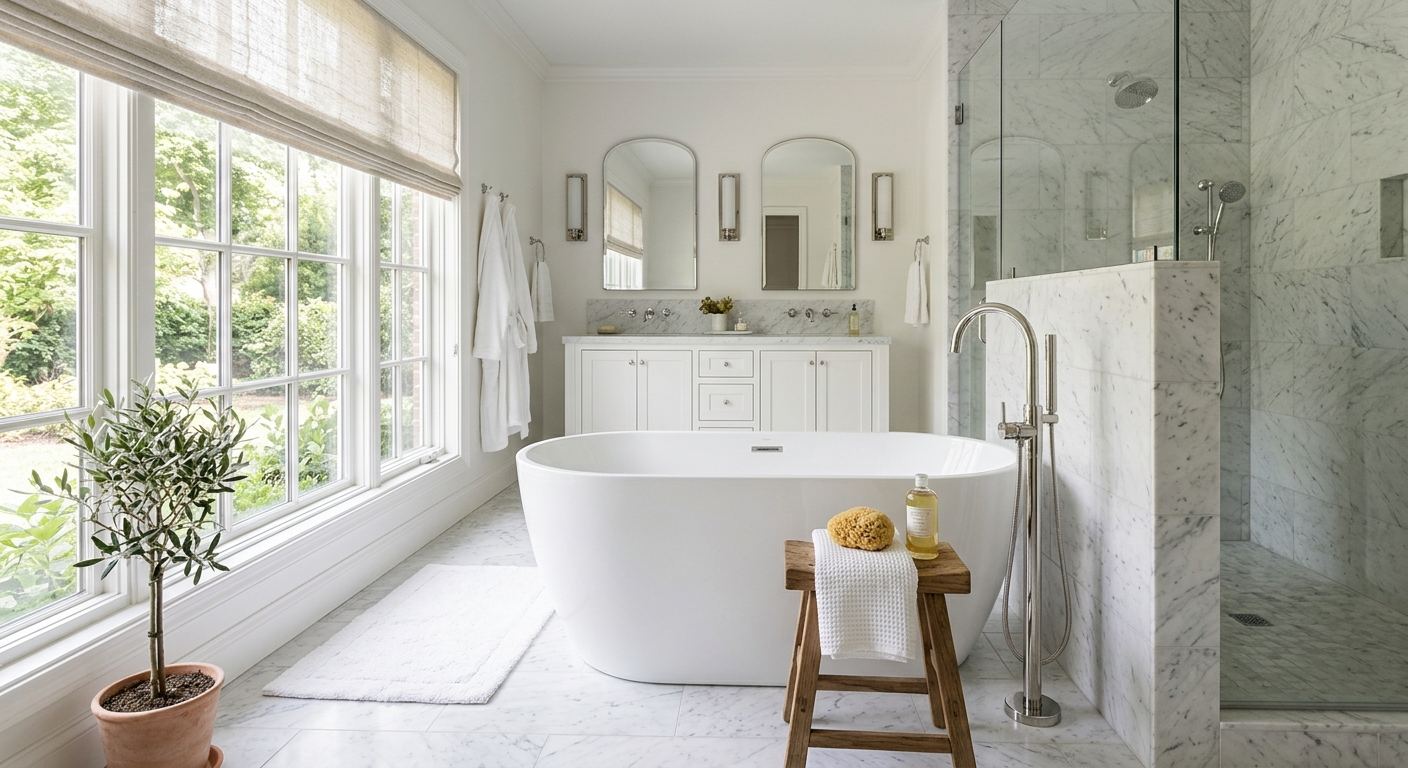
Bathroom renovation options and costs in Breslau
Breslau homeowners typically have a clear starting point: you can refresh a bathroom, do a partial upgrade, or go all-in. With a 2021 population of 5,053 (Statistics Canada, 2021 Census), Breslau is small enough that reputable crews often schedule around spring and summer demand from the wider Waterloo–GTA corridor. Just as important, many local residences sit in the post-war and later builds that were never designed for today’s ventilation expectations, leaving dated plumbing layouts and finishes that can be more labour-intensive once walls are open.
Even though Ontario’s weather doesn’t “cause” bathroom renos the way some coastal climates do, the Toronto economic region’s labour market and housing age still drive pricing. Skilled trades charge a premium in the GTA, and bathroom work is inherently labour-intensive—especially for tiling, custom showers, and any plumbing/vent rework. In many older homes, contractors must verify drains, supply lines, and venting against current Ontario code; that’s where budgets creep upward toward the low-to-mid five figures for a standard 3-piece full renovation.
In Breslau, you’ll notice extra trade demand in the areas around neighbourhood growth and ongoing infill—where homeowners are renovating sooner after purchase, often converting dated tubs into walk-in showers. If you want to compare apples to apples, the table below shows common scope options and what they usually cost in today’s Toronto-region pricing.
| Renovation Scope |
What's Included |
Typical Duration |
Price Range |
| Cosmetic refresh (paint, fixtures, accessories only) |
Paint, caulking refresh, toilet/vanity light swaps if plumbing stays put, new accessories, deep clean and grout touch-ups; existing fan kept |
2–4 days |
$3,000 – $6,500 |
| Mid-range full renovation (new tile, vanity, tub/shower, electrical) |
Remove and replace tile (floor + walls), new vanity and mirror, bathtub and surround or tub/shower, new exhaust fan, electrical upgrades (e.g., GFCI), basic waterproofing, disposal |
1–2 weeks |
$12,000 – $20,000 |
| High-end full renovation (custom tile, steam shower, heated floors) |
Custom shower/steam components, premium tile layout, heated flooring, upgraded waterproofing, upgraded plumbing trim, frameless glass (if applicable), enhanced electrical and ventilation |
2–3 weeks |
$20,000 – $30,000 |
| Shower-only installation (convert tub to walk-in shower) |
Demolition, waterproofing, new walk-in shower pan, tile surround, new drain/rough-in adjustments as required, new valve trim, glass (optional), ventilation check |
6–10 days |
$8,000 – $12,000 |
| Bathtub replacement or tub-liner install |
Remove and replace tub with matching deck details, new caulking/trim, plumbing connections, basic re-tile/edge finishes; liner option typically keeps original tub shell |
3–7 days |
$1,200 – $3,500 |
| Tile-only installation (floor + surround, existing layout kept) |
Tile removal and reinstallation, new backer and waterproofing where required, grouting/sealing, layout improvements without moving plumbing |
5–9 days |
$6,000 – $12,000 |
Prices are estimates only and vary by project scope, site access and material selection.
What affects the price of bathroom renovation in Breslau
In Breslau and across Ontario, it’s common to see quotes for the “same bathroom” vary by 30–50%. The reason is that the Toronto economic region pricing is driven more by labour rates and the age of the housing stock than by outdoor climate. When a bathroom is older, once contractors open walls and floors, they often have to rework drains/venting, confirm pipe sizing and slope, and correct ventilation—work that pushes a simple refresh into a full renovation budget.
For example, older homes in the Toronto region frequently hide cast-iron or undersized drain runs that need upgrading, galvanized or aged supply lines that may require replacement, and exhaust systems that aren’t sufficient for current moisture management expectations. Discovery of asbestos-containing materials in vinyl floor tile or older drywall compounds (more common in pre-1985 homes) can trigger licensed abatement and adds roughly $1,500 – $5,000+ to your overall scope depending on how much is impacted and how accessible it is.
Two concrete Breslau scenarios that change price fast: (1) keeping the toilet and tub in the same locations lowers cost because you avoid rough-in work and permit-related steps; (2) changing the drain path for a linear or tiled shower pan increases labour because the subfloor, waterproofing transitions, and slope must be rebuilt correctly. These are why many homeowners end up comparing mid-range full renos that fit in the $12,000 – $20,000 band versus higher-end scopes near $20,000 – $30,000 when plumbing, electrical, and finishing choices stack up.
| Price Factor |
Why It Matters |
Cost Impact |
| Layout change — moving drain or supply lines requires rough-in work |
New rough-in means demolition, recertifying slope/venting, and often patching joists/subfloor |
Often adds several thousand dollars; can move a job from “mid-range” toward “high-end” |
| Tile selection — large-format porcelain vs. mosaic vs. ceramic |
Large formats require flatter substrates and more careful cuts; mosaics increase labour at edges |
Can shift the tile portion of the budget by thousands (material + labour) |
| Fixture tier — builder-grade vs. mid-range vs. designer brands |
Trim valves, faucets, and shower hardware vary significantly in price and compatibility with rough-ins |
Typically a meaningful swing within the overall full-renovation range |
| Subfloor condition — rot or unlevel concrete adds scope |
Tile systems fail if substrates aren’t stable; repairs may include subfloor rebuilding or self-levelling |
May add time and materials before tile can even start |
| Electrical — adding GFCI outlets, exhaust fan, heated floor circuit |
Bathrooms demand code-compliant GFCI protection and properly installed ventilation |
Costs rise when wiring routes are longer or when adding new circuits |
| Waterproofing method — membrane type and extent |
Good waterproofing prevents mould and call-backs; coverage and system compatibility affect labour |
More robust systems typically cost more but reduce risk of failures |
| Older-home surprises — asbestos tile, cast-iron drains, galvanized pipes |
Requires abatement, disposal, testing, and replacement of materials that aren’t code-compliant |
Can add $1,500 – $5,000+ (or more) depending on findings |
| Bathroom size — sq ft drives tile and labour time directly |
Larger bathrooms require more demolition, backer/membrane, tile setting, and curing time |
Size increases almost every line item, especially tile labour |
Permits & regulations in Ontario
In Ontario, cosmetic updates in a bathroom—think swapping fixtures that don’t move plumbing, repainting, replacing a vanity, or retiling without changing any drain/supply locations—often don’t require permits. However, once you relocate plumbing (moving a drain or supply lines), add or change ventilation with new wiring, or alter walls structurally, permits and inspections are commonly required. Electrical work must be completed by a licensed electrician and meet provincial code; some permit/inspection steps flow from that electrical scope.
Plumbing rough-in changes—especially anything that alters how waste is routed, how vents are handled, or where shut-offs sit—typically triggers a permit pathway. The safest way for Breslau homeowners to stay compliant is to ask your contractor to list which specific tasks require permits for your exact layout before the work starts.
To verify licensing and coverage step-by-step, start with the contractor’s Ontario trade licence details (ask for the trade licence number and proof on request), then check their liability insurance certificate. Make sure their coverage specifically applies to renovations (not just general business). For worker protection, request proof of WSIB/WCB coverage and confirm the policy is current; if they’re handling plumbing/electrical scopes, ensure the relevant subcontractors also show their own documentation. Where provided, look for clearance letters or updated proof of account, and keep copies for your records. These checks protect you if something goes wrong during demolition, waterproofing, electrical tie-ins, or venting repairs.
Choosing tile, waterproofing and fixtures for your Breslau bathroom
In a Breslau bathroom renovation, three material decisions usually shape both the look and the total cost: (1) tile choice, (2) waterproofing method, and (3) fixture tier. Tile selection impacts installation complexity. Entry-level ceramic can be budget-friendly, but it still requires proper prep and careful sealing at wet areas. Porcelain is denser and often better suited for heavy moisture and day-to-day wear, but it may demand more labour if your layout has lots of cuts and transitions.
Next is waterproofing—this is where Ontario’s real-world moisture problem gets solved. While our winters are cold, the bathroom issue isn’t outdoor climate so much as indoor humidity and water exposure. A paint-on membrane is workable in some simpler scenarios, bonded sheet systems can be faster and more consistent where details are tricky, and a purpose-built system (e.g., compatible schluter-style assemblies) helps ensure the transitions around drains, corners, and niches are properly sealed. Getting this right prevents mould, grout failure, and costly tear-outs.
Finally, fixture tier affects budget and resale. Builder-grade toilets, valves, and shower trims look fine initially, but designer models often bring better finishes, smoother controls, and improved rough-in compatibility. If you’re choosing between options, spend where it reduces risk: for example, an upgraded waterproofing approach plus correct slope for a tiled shower pan is usually a better “value” use of funds than upgrading decorative tile patterns alone.
As a dollar example, moving from a basic mid-range full renovation of about $12,000 – $20,000 to a more premium scope near $20,000 – $30,000 is often justified when heated flooring and a higher-end tile layout are included—not just because the fixtures are shinier.
| Material / Option |
Pros |
Cons |
Price Range |
| Ceramic tile (floor + walls) |
Affordable, wide style selection, easier to match with existing trims, good for many standard installs |
Not as dense as porcelain; may be more prone to chipping depending on finish and substrate |
$3,000 – $8,000 |
| Porcelain tile (floor + walls) |
Durable in wet areas, consistent sizing, great for modern large-format looks, strong resale appeal |
More demanding prep for flatness; large formats can increase labour due to cutting and leveling needs |
$6,000 – $12,000 |
| Natural stone (marble, travertine, slate) |
Luxury appearance, unique veining, high-end feel that elevates the whole bathroom |
Requires sealing/maintenance; can be sensitive to water staining and improper cleaning |
$10,000 – $18,000 |
| Frameless glass shower enclosure |
Modern look, improves perceived space, easy to wipe compared with bulkier framing |
Higher hardware and installation precision; may cost more if your walls aren’t perfectly plumb |
$2,500 – $6,500 |
| Prefab tub surround (acrylic) |
Fast install, fewer tile cuts, smooth surface, often more budget-friendly than full tiling |
Less “designer” feel; edges and sealing quality matter for long-term water resistance |
$1,200 – $3,000 |
| Custom shower pan (tile or linear drain) |
Best long-term integration with waterproofing, clean modern drain lines, tailored to your layout |
Labour-intensive; needs correct slope and careful waterproofing transitions |
$4,000 – $12,000 |
How to choose a bathroom renovation contractor in Breslau
Choosing a contractor in Breslau starts with proving they’re properly covered and qualified for Ontario work. Ask for their Ontario trade licence information and verify it before signing anything. Request a current certificate of liability insurance and confirm the renovation activity is covered (demolition, plumbing tie-ins, waterproofing, tiling, and electrical tie-ins). For worker protection, ask for proof of WSIB/WCB coverage; a current clearance letter or policy proof is typically the cleanest way to show compliance. If they’re using subcontractors for plumbing or electrical, ask to see those subcontractors’ documentation as well.
Then get 2–3 itemised written quotes. You want labour and materials broken out by major tasks—demo/disposal, waterproofing, tile setting, electrical, plumbing rough-in, and fixtures—rather than a single lump sum. Carefully read what’s excluded: permit fees, disposal, floor/ceiling patching, subfloor repairs, and any asbestos abatement contingency should be clearly addressed. Confirm whether a permit pull is included and who is responsible for inspection scheduling.
Warranty matters too: ask for workmanship warranty length and whether it covers waterproofing failures or only general labour. Product warranties (valves, fans, tile, glass) are typically manufacturer-backed; ask if any warranty is transferable to you and what proof is required.
Finally, payment terms should protect you. Never pay more than 10–15% upfront. Use a holdback until key milestones are complete, like waterproofing inspection sign-off, final caulking, and walkthrough punch list closure. Get a start date and completion estimate in writing so you’re not guessing if the job drags into busy season.
- Ask for licence number and confirm it applies to the exact trade scope on your job.
- Request proof of current liability insurance and WSIB/WCB coverage (not just a past policy).
- Get itemised quotes with labour + materials, and a line for disposal and patch/finish carpentry.
- Confirm permit responsibility: permit pull included or separate? Who schedules inspection?
- Ask how hidden conditions are handled (subfloor rot, vent issues, drain slope problems).
- Verify waterproofing system details: product type, coverage areas, and sealing of transitions.
- Confirm tile prep method: leveling, backer board, curing time, and grout selection.
- Get a clear demolition plan (how they protect adjacent rooms, floors, and ventilation).
- Review warranty terms in writing, including what workmanship covers.
- Request a project schedule with estimated start and completion dates, plus milestone dates.
- Use staged payments tied to milestones; keep a holdback until punch list is finished.
- Ask for sample schedules and photos of bathrooms with similar layouts (tubs converted to showers, etc.).
In Breslau, red flags include: quotes that aren’t itemised (no labour/material breakdown), refusing to list exclusions like disposal or permits, vague waterproofing descriptions, payment schedules with large upfront deposits, and no proof of WSIB/WCB or liability insurance. Also watch for contractors who won’t discuss how they handle older-home surprises such as cast-iron drains or asbestos-containing materials.
Frequently asked questions — bathroom renovation in Breslau
Is it worth renovating a bathroom before selling in Breslau?
In most Breslau listings, a bathroom that looks clean, updated, and properly ventilated improves buyer confidence—even if you’re not building a luxury spa. If your current bathroom has failing caulking, outdated fixtures, or poor fan performance, a renovation can be worth it because it reduces visible risk for buyers. For resale-focused projects, many homeowners choose a mid-range full renovation approach or a targeted shower/tub update so the bathroom photographs well and functions reliably. If your goal is value, keep the layout where possible to avoid expensive drain/vent rework that can push budgets toward the higher bands (often $12,000 – $20,000 and beyond). If you suspect older materials behind tile (common in older housing stock across Ontario), factor discovery risk into your timeline and budget.
How do I plan a bathroom renovation on a tight budget in Breslau?
Start by separating “must-fix” from “nice-to-have.” On a tight budget in Breslau, the best savings usually come from keeping the layout—don’t move drains or supplies unless you truly need to—because rough-in work is labour-intensive and can require permits. Consider a cosmetic refresh if plumbing is sound: paint, vanity swap, lighting, and re-caulking can meaningfully change the look (often in the $3,000 – $6,500 range). If your bathroom is outdated or water-related issues are visible, a partial renovation like a shower-only upgrade can be a smarter compromise than redoing everything at once. Ask your contractor for an itemised quote so you can control costs: waterproofing and substrate prep should not be value-engineered. Also set aside a contingency for older-home surprises like subfloor unevenness or aged drains.
What's the difference between a cosmetic and a full bathroom renovation?
A cosmetic renovation focuses on surfaces and fixtures without changing plumbing or structural elements. Typically it includes paint, new accessories, fixture swaps that don’t move supply/drain locations, and sometimes re-grouting or re-caulking. A full bathroom renovation changes the bathroom system: demolition and re-build of finishes, often replacing tile (floor and walls), updating the vanity and toilet, improving ventilation, and in many cases replacing the tub or converting to a walk-in shower. Full renovations usually require more trades time for waterproofing, electrical and plumbing upgrades, and careful coordination for curing timelines. In the Toronto economic region, realistic full-renovation budgets often land in the low-to-mid five figures (for example, $12,000 – $20,000 for many mid-range projects), whereas cosmetic work can be far lower. If walls are opened, hidden conditions can expand scope quickly.
How do I choose the right contractor for my bathroom in Breslau?
Choose a contractor who can prove Ontario compliance and explain the process clearly. Ask for their Ontario trade licence details and current certificate of liability insurance, then request proof of WSIB/WCB coverage. Next, get 2–3 itemised written quotes with labour and materials separated—so you can compare waterproofing method, tile prep, electrical scope, and disposal. Review the scope line-by-line: confirm what’s included for permits, what’s excluded, and how they handle hidden conditions like uneven subfloor or older drain/vent issues. Warranty should be written and specific to workmanship. Finally, use a payment schedule that protects you: keep deposits low (generally 10–15% max), and hold back until the job is completed and punch-list items are addressed.
What's the most common mistake homeowners make in bathroom renovations?
The most common mistake is underestimating what happens once walls and floors open—especially in older homes. Homeowners sometimes budget for finishes only and don’t account for plumbing venting corrections, subfloor repairs, or moisture-system upgrades that become necessary after demolition. Another frequent mistake is choosing tile and fixtures first and waterproofing last; waterproofing and substrate prep are what prevent long-term mould and call-backs in Ontario bathrooms. In the Toronto economic region, contractors often uncover issues like aged drains, supply-line concerns, or even asbestos-containing materials in older floor tile or drywall compound, which can add time and cost. The fix is simple: plan for contingencies and make sure your contractor’s quote includes waterproofing and substrate preparation details—then confirm scope exclusions in writing.
How long does tile installation take in a Breslau bathroom?
Tile timelines depend on bathroom size, tile type, and how much prep is needed, but most Breslau bathrooms fall into predictable windows. For a tile-only project where the layout remains the same, installation commonly takes about 5–9 working days, not counting demolition and cleanup. If you’re doing a full renovation, tile work is usually only one part of the schedule; total time can extend to 1–2 weeks (mid-range) because you need demolition, waterproofing, electrical/plumbing coordination, and curing time between steps. Porcelain or large-format tile can take longer due to flatness requirements and careful cuts. If you go with a custom shower pan and linear drain, expect additional days for slope build and membrane integration. Your contractor should provide a milestone schedule, not just “a week or two,” so you can plan around your household needs.