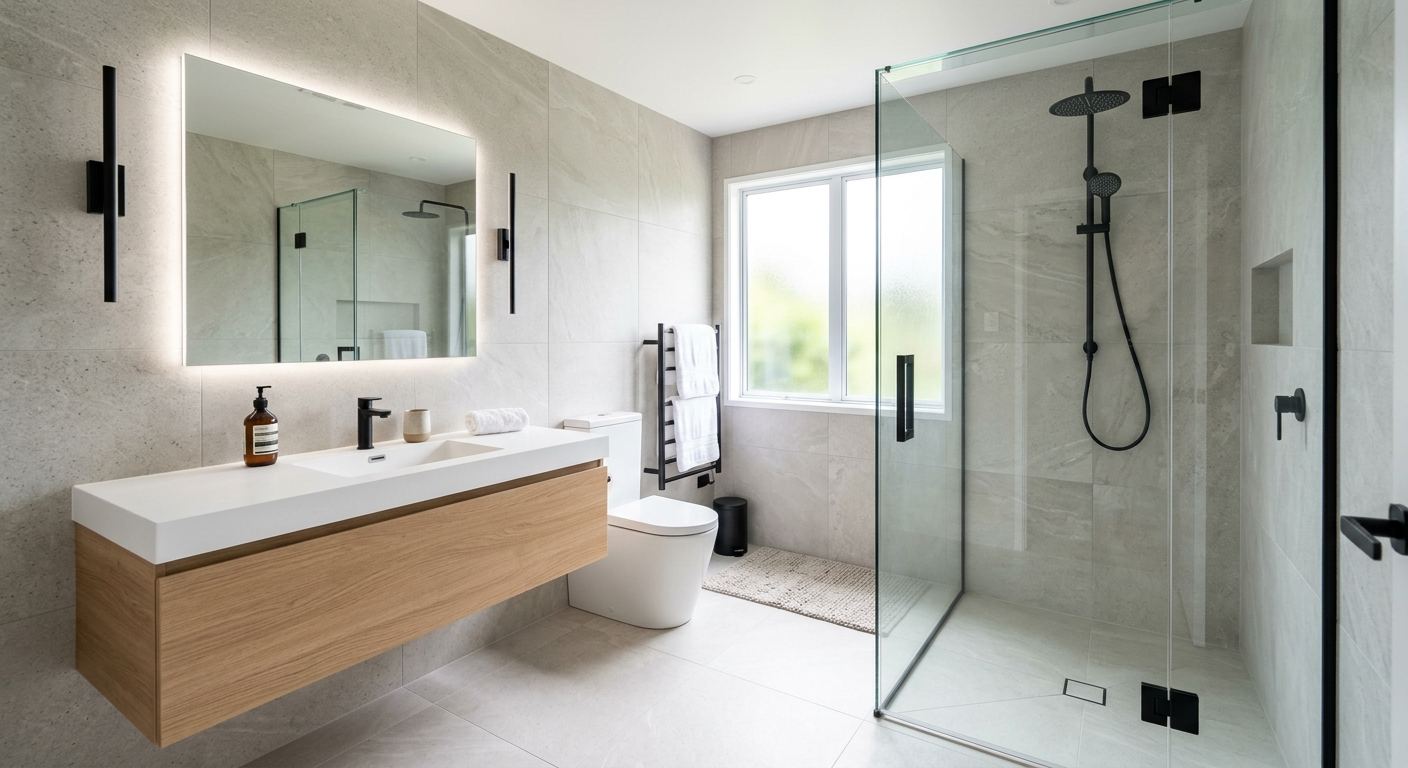
Bathroom renovation options and costs in Constance Bay
Constance Bay, Ontario is a small community (2,314 people as of the 2021 Census, Statistics Canada) where most bathroom renovations happen inside an established housing stock rather than new builds. In practice, that means many bathrooms are in homes dating back to the post-war and 1960s–1980s eras, when plumbing layouts and venting were often less robust than today’s Ontario code expectations. When walls come open, it’s not uncommon to find the kinds of “hidden” conditions that drive scope—everything from aged drain stacks to, in some pre-1985 renovations, asbestos-containing materials associated with older vinyl floor tile or older compounds.
In the Toronto economic region, renovation costs are shaped mainly by labour rates and the age of the homes, not the climate itself. Even though Ontario has humid summers and cold winters, the bigger cost swings typically come once a contractor has to do full rough-in upgrades, improve ventilation, correct improper waterproofing, or reroute plumbing for a modern vanity or walk-in shower. Trade availability in the broader Ottawa–Gatineau corridor and the GTA’s labour market can also affect lead times and pricing.
In Constance Bay, you’ll especially feel demand from homeowners along the more established residential pockets near the waterfront/parks area—those renos often lean toward updated showers and upgraded exhaust fans, and they require careful waterproofing detailing.
Below are practical options homeowners use to budget for a Constance Bay bathroom, followed by a realistic comparison of scope, duration, and typical pricing in this market.
| Renovation Scope |
What's Included |
Typical Duration |
Price Range |
| Cosmetic refresh (paint, fixtures, accessories only) |
New vanity top (if keeping plumbing location), toilet/ faucets replacement, paint, mirror, accessories; no tile floor or shower re-build |
3–7 days |
$2,500–$6,000 |
| Mid-range full renovation (new tile, vanity, tub/shower, electrical) |
Demo and re-build; tile floor + walls in tub surround; new vanity; tub or conversion to shower valve trim; exhaust fan upgrade; GFCI where required; straightforward plumbing refresh |
2–4 weeks |
$12,000–$20,000 |
| High-end full renovation (custom tile, steam shower, heated floors) |
Custom shower/tile detailing, premium fixtures, heated floors (electric), higher-end waterproofing, enhanced lighting/ventilation, potential drain/vent upgrades if required by conditions |
4–7 weeks |
$20,000–$30,000 |
| Shower-only installation (convert tub to walk-in shower) |
Demo tub; new shower pan and drain connection; tile work; new valve trim; glass enclosure options; ventilation upgrade; existing layout kept where possible |
1.5–3 weeks |
$8,000–$16,000 |
| Bathtub replacement or tub-liner install |
Remove and set new tub (or install liner if applicable); reseal and re-tile at common seams; refinish surround materials as needed; basic plumbing connection and leak testing |
3–10 days |
$1,200–$3,500 |
| Tile-only installation (floor + surround, existing layout kept) |
Remove existing tile; set new floor tile and surround; waterproofing and leak testing; re-use fixtures where possible; no major plumbing relocation |
1–2.5 weeks |
$5,000–$15,000 |
Prices are estimates only and vary by project scope, site access and material selection.
What affects the price of bathroom renovation in Constance Bay
In Constance Bay and across the Toronto economic region, two homeowners can receive very different quotes for the “same” bathroom because bathroom work is labour-intensive and scope is often discovered after the first day of demolition. In the GTA, skilled trades command premium hourly rates, and older housing stock frequently requires updates to drains, venting, shut-offs, and ventilation. That’s why realistic budgets commonly fall in the low-to-mid five figures for a full renovation, with higher-end choices pushing the upper end (for example, mid-range projects often sit near $12,000–$20,000).
It also isn’t usually the outdoor weather that drives cost here. Bathrooms in this region still need robust waterproofing and exhaust performance, but the biggest cost driver is what’s hiding behind walls and under floors—cast-iron or undersized drains, galvanized supply lines, and improper venting that conflicts with current Ontario code requirements. When contractors discover asbestos-containing materials (most often linked to older vinyl floor tile and some older compounds in pre-1985 homes), abatement can add meaningful cost—commonly in the $1,500–$5,000+ range depending on extent and containment needs.
Concrete examples I see frequently in Constance Bay: (1) converting a tub to a walk-in shower can jump budget if the drain sits at an awkward elevation or the subfloor needs correction; (2) switching from ceramic to large-format porcelain can add installation time because of layout planning and labour for trimming; and (3) adding an exhaust fan with a new circuit and properly sized duct route can be cheaper if the route is accessible, but more expensive if it requires rerouting. These same variables explain why a renovation can swing toward the $20,000–$30,000 band when waterproofing, electrical, and plumbing upgrades stack together.
| Price Factor |
Why It Matters |
Cost Impact |
| Layout change — moving drain or supply lines |
Requires rough-in work, additional demolition, and new tie-ins |
$2,000–$8,000 |
| Tile selection — large-format porcelain vs. mosaic vs. ceramic |
Higher material quality and more labour for cutting, patterning, and setting |
$1,500–$6,000 |
| Fixture tier — builder-grade vs. mid-range vs. designer brands |
Better valves, finishes, and warranty terms cost more up front |
$400–$3,500 |
| Subfloor condition — rot or unlevel concrete adds scope |
May require reconstruction, membrane adjustments, or additional self-levelling |
$800–$4,500 |
| Electrical — adding GFCI outlets, exhaust fan, heated floor circuit |
Licensed work, new wiring paths, and proper circuit protection |
$600–$5,000 |
| Waterproofing method — membrane type and extent |
Quality systems reduce future failures; more coverage increases labour |
$800–$4,000 |
| Older-home surprises — asbestos tile, cast-iron drains, galvanized pipes |
Abatement and re-piping/vent corrections expand both time and material costs |
$1,500–$10,000+ |
| Bathroom size — sq ft drives tile and labour time directly |
More surface area means longer tiling, setting, and waterproofing |
$1,000–$7,500 |
Permits & regulations in Ontario
In Ontario, not every bathroom update requires a permit. Cosmetic updates—like swapping a vanity top, replacing fixtures (faucets/shower trim/toilet), repainting, and retiling without moving plumbing—typically do not require a permit. However, permits are commonly required when you relocate plumbing (moving a drain or supply line), add or relocate electrical components (like new exhaust fans tied to new circuits or adding heated-floor electrical connections), or make structural changes to framing or walls.
Electrical work must meet Ontario electrical code requirements and must be done or signed off by a licensed electrician. Plumbing rough-in changes—new drain connections, vent corrections, or moving shut-offs—typically require a permit and inspection. The safest approach for homeowners is to ask the contractor what specifically triggers permits on your project and who pulls them (or whether you must approve permit applications).
Step-by-step for Constance Bay homeowners: (1) confirm the contractor’s Ontario trade licence status where applicable and ask for the licence details; (2) request a certificate of insurance showing liability coverage; (3) ask for evidence of WSIB/WCB clearance (or equivalent coverage documentation) before work begins; and (4) ask for the clearance letter and effective dates. You can verify licensing and status through the relevant online registry for your trade, and you should also review the insurer certificate for coverage limits and dates. Keep copies of all certificates for your records.
Choosing tile, waterproofing and fixtures for your Constance Bay bathroom
In Constance Bay bathrooms, your budget is won or lost on three material decisions: tile choice, waterproofing method, and fixture tier. First, tile selection: ceramic is a good entry option for floors and walls, while porcelain is denser, often more water-resistant for wet areas, and tends to look better over time with less chipping—though larger-format porcelain increases installation complexity because of layout planning and tile trimming. Natural stone (marble, travertine, slate) can be stunning, but it can require extra care and professional sealing strategy, and the installation tends to be more meticulous.
Second, waterproofing method: paint-on membranes can work in some scenarios, but many homeowners get better long-term results with a bonded sheet membrane or a respected system approach that includes proper corners, seams, and full shower coverage. Ontario’s bathroom humidity means waterproofing is not optional—it’s what protects the subfloor when moisture cycles repeatedly through seasons.
Third, fixture tier: builder-grade faucets and basic shower valves are easier on the budget, while mid-range and designer brands usually bring smoother valves, better finishing, and improved resale appeal.
Here’s a practical dollar example: if you’re converting to a walk-in shower, you might see shower installation in the $4,000–$12,000 band, but choosing higher-end tile and a more robust waterproofing system can add a few thousand dollars—often justified when the alternative is paying again for repairs after grout or membrane failures. Align the material combo to your tolerance for maintenance and your shower-use intensity.
| Material / Option |
Pros |
Cons |
Price Range |
| Ceramic tile (floor + walls) |
Affordable; wide styles; good for many wall applications; easy to maintain |
Can chip if not installed carefully; glazing quality varies; may be less suitable for some floors depending on grade |
$3,000–$7,000 |
| Porcelain tile (floor + walls) |
Dense and durable; better long-term wear in busy bathrooms; cleaner look with larger formats |
Heavier tile means more precise substrate prep; larger formats demand careful layout |
$6,000–$12,000 |
| Natural stone (marble, travertine, slate) |
Premium, unique look; excellent for feature walls and luxury finishes |
Higher labour and material variability; typically needs sealing and more careful cleaning routine |
$10,000–$20,000 |
| Frameless glass shower enclosure |
Modern appearance; easier to clean than many framed units; can increase perceived value |
Glass and hardware cost more; layout must match tile plan; requires careful installation |
$1,500–$4,500 |
| Prefab tub surround (acrylic) |
Fast install; smooth waterproof surface; consistent fit |
Limited design flexibility; seams need correct sealing and upkeep |
$800–$2,500 |
| Custom shower pan (tile or linear drain) |
Better drainage control; can create a true spa feel; linear drains streamline look |
More labour and waterproofing complexity; requires correct slope and detailing |
$4,000–$12,000 |
How to choose a bathroom renovation contractor in Constance Bay
Choosing the right contractor in Constance Bay comes down to documentation, clarity, and workmanship accountability. Start by verifying Ontario licensing applicable to the trades involved, then confirm liability insurance and WSIB/WCB coverage (or appropriate coverage evidence). Ask for proof up front, not after you sign. For each contractor, request their certificate of insurance and a clearance letter showing WSIB/WCB status, and check that dates and coverage limits are current.
Next, get 2–3 itemised written quotes. You want line items that separate labour from materials—especially for demolition, waterproofing, tile setting, electrical rough-in, plumbing rough-in, and disposal. A common pricing mistake is receiving a lump sum that hides how much “allowance” the contractor placed on tile, fixtures, or waterproofing; those allowances can expand quickly once the site is open.
Read the scope carefully: confirm what’s excluded (moving plumbing, glass enclosure, permits, subfloor repairs, asbestos abatement contingencies), and whether permit pulling and inspection fees are included. Ask about disposal (dumpsters, hauling, recycling where available) because demo debris can add unexpected cost if not specified.
Warranty matters. Look for a clear workmanship warranty length and confirm whether product/manufacturer warranties apply to installed parts and are transferable if you sell. Payment schedule is another key control: don’t pay more than 10–15% upfront, and negotiate a holdback until completion and final sign-off. Finally, insist on a written timeline with start date and completion estimate.
- Ask for proof of Ontario trade licensing (where applicable) and matching jobsite responsibilities
- Request liability insurance certificate (coverage limits and effective dates)
- Provide WSIB/WCB clearance documentation before work starts
- Get 2–3 itemised quotes with separate labour and materials lines (no “mystery allowances”)
- Confirm who pulls permits and whether permit fees are included
- Clarify electrical scope: exhaust fan circuit, GFCI requirements, and heated floor circuit (if applicable)
- Confirm plumbing scope: shut-off replacement, drain tie-ins, and any vent upgrades
- Demand written waterproofing method details (membrane type, coverage extent, test/verification)
- Specify tile scope: floor/surround coverage, grout type, and any niche/bench builds
- Agree on disposal/dumpster inclusions for demo materials
- Ask for a start date and a realistic completion timeline in writing
- Confirm warranty terms: workmanship duration, product warranty details, and transferability
Red flags to watch in Constance Bay: (1) quotes that don’t specify waterproofing approach or tile prep responsibilities; (2) no written warranty or a vague “we’ll fix it if needed” promise; (3) asking for large upfront deposits (well beyond 10–15%); (4) refusing to provide insurance/WSIB/WCB evidence; and (5) a scope that omits permits or doesn’t clarify whether electrical and plumbing work will be licensed/inspected.
Frequently asked questions — bathroom renovation in Constance Bay
What's the most common mistake homeowners make in bathroom renovations?
In Constance Bay and across Ontario, the most common mistake is underestimating what gets discovered after demolition—especially around waterproofing coverage, ventilation, and plumbing rough-in. Many homeowners start with a “looks-only” expectation and then realize that tile falls apart quickly if the substrate isn’t sound or if the shower isn’t waterproofed correctly. Another frequent issue is choosing materials (tile size, glass enclosure, valve style) without locking the plan for drainage and wall structure, which can cause change orders. Finally, people sometimes compare quotes that aren’t apples-to-apples: one contractor may price a basic refresh while another includes an electrical and waterproofing package. That’s why budgets can land anywhere from the low-to-mid five figures (for example $12,000–$20,000 for many mid-range full renos) to higher end when scope expands.
How long does tile installation take in a Constance Bay bathroom?
Tile installation timing depends on whether you’re doing floor only, full walls, niches/benches, or a full shower conversion. In Constance Bay projects that stay within an existing layout (no major plumbing relocation), typical tile-only work often takes about 5–10 working days. Full bathroom tiling (floor + tub/shower surround) commonly stretches longer because of demo prep, waterproofing curing time, setting time, grout/finishing, and careful dry-fit planning—especially with larger-format porcelain. If you’re building a custom shower pan with linear drain, allow extra time for slope preparation and membrane detailing. In the GTA-influenced market, crews often move quickly but still require verification steps; skipping those steps is a common cause of later leaks and rework.
How much does a bathroom renovation cost in Constance Bay?
For Constance Bay homeowners, bathroom renovation costs typically align with the Toronto economic region’s labour-driven reality. A mid-range full renovation is commonly quoted in the $12,000–$20,000 range, while higher-end projects with custom tile, heated floors, and upgraded details often land in the $20,000–$30,000 band. If you’re doing a smaller scope—like converting a tub to a walk-in shower—many quotes fall within the broader shower installation range of $4,000–$12,000, depending on drain adjustments and glass enclosure complexity. The price can rise when older homes need drain/vent corrections, electrical upgrades (GFCI, exhaust fan circuits), or when asbestos-containing materials are discovered and abatement is required. Always ask for an itemised quote so you can see what’s included in plumbing, waterproofing, and disposal.
How long does a bathroom renovation take in Constance Bay?
Typical timelines in Constance Bay depend on scope and what’s uncovered after walls come open. Cosmetic refresh work can be as quick as 3–7 days. A full mid-range renovation (demo, rebuild, tile, vanity, fixtures, and basic electrical) usually takes about 2–4 weeks. High-end renos with custom shower builds, heated floors, and premium finishes typically run 4–7 weeks because of extra prep and drying/curing steps. If you’re converting a tub to a walk-in shower, plan for roughly 1.5–3 weeks for most jobs—longer when drain or vent corrections require additional rough-in and inspection coordination. Renovation schedules can also shift if materials have lead times or if permit processes add time. A reputable contractor will give you a written start date and completion estimate with milestones.
Do I need a permit for a bathroom renovation in Ontario?
Often, no permit is required for purely cosmetic changes in Ontario, such as replacing fixtures, painting, and retiling without moving plumbing. However, permits are commonly required when you relocate plumbing (move a drain or supply line), add or modify electrical circuits (such as a new exhaust fan circuit or heated-floor circuit), or make structural changes to walls. Plumbing rough-in work typically triggers permit and inspection requirements, and electrical work must meet code and be performed or signed off by a licensed electrician. For Constance Bay homeowners, the practical step is to ask your contractor to list the exact tasks that require permits on your project and whether they will pull the permits or if you must. Confirm this in writing before work begins to avoid delays.
What's the best tile for a bathroom in Constance Bay?
The “best” tile for a Constance Bay bathroom usually comes down to where the tile goes and how busy the bathroom is, not just appearance. For most showers and floors, porcelain tile is a strong choice because it’s dense, durable, and generally performs better over time in wet environments. Ceramic tile can work well for more budget-friendly bathrooms, particularly for walls, but you’ll want correct substrate prep and appropriate setting materials for floors. Natural stone looks high-end, but it typically requires more careful sealing and maintenance. The most important factor—regardless of tile type—is pairing your tile with a proven waterproofing system and correct installation detailing (slope where needed, proper membrane transitions, and careful grout selection). With the Toronto-area pricing realities, porcelain in many mid-range renos often fits comfortably within the tile portions of budgets like $6,000–$12,000 depending on coverage.