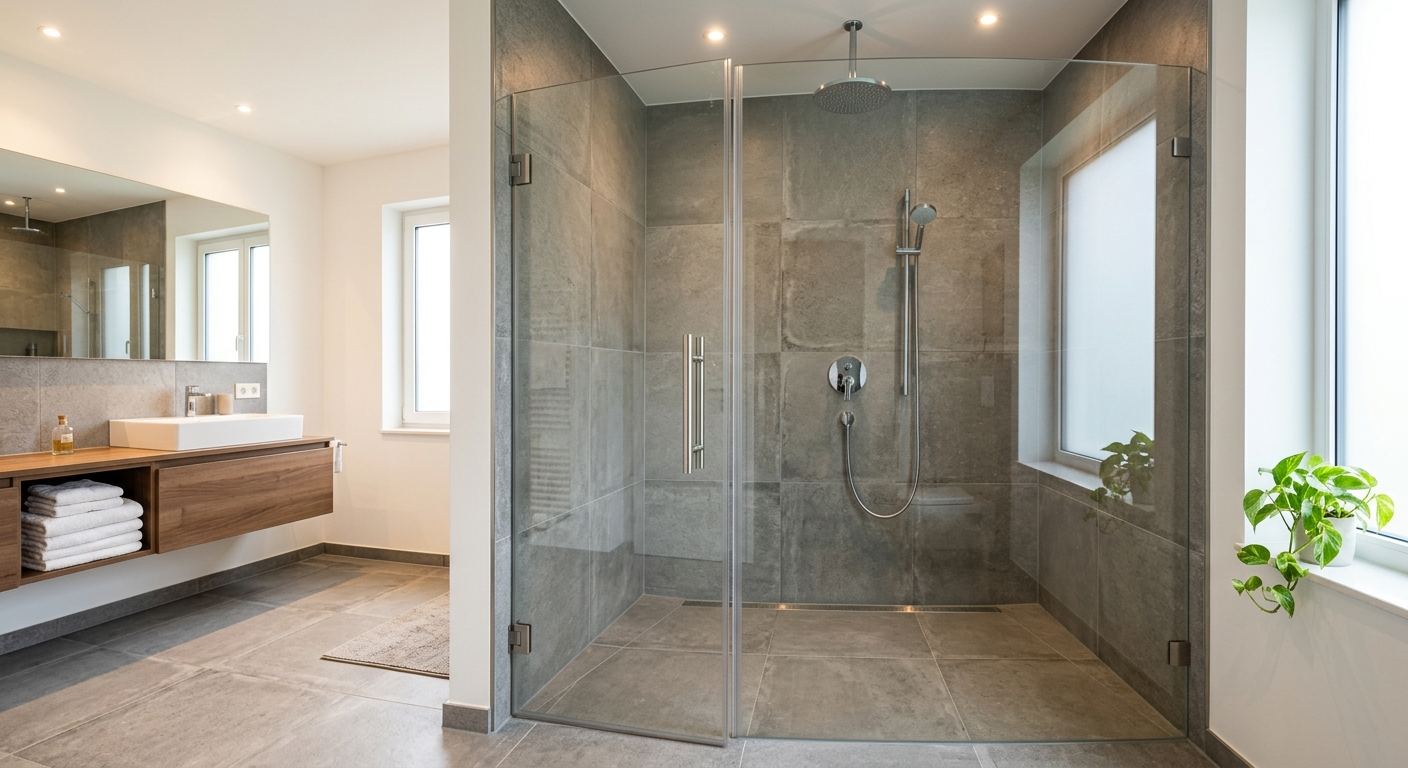
Bathroom renovation options and costs in Virgil
Virgil, Ontario homeowners usually choose a bathroom plan based on how much they want to change—cosmetic refresh versus a full rebuild. With Virgil’s place in the Toronto economic region and a local population of 2,937 (Statistics Canada, 2021 Census), the real cost driver is how often the renovation includes “behind-the-wall” upgrades. In this area, many homes trace back to post-war and later decades, so it’s common to encounter dated plumbing layouts and older floor finishes that can include asbestos-containing materials. That discovery can quickly shift a paint-and-tile job into a full renovation with abatement and added rough-in work.
Toronto-area labour premiums also matter. Bathroom work is labour-intensive—especially for tiling, custom shower builds, and detailed plumbing/venting adjustments—so quotes for the same outcome can spread widely even when materials look similar. While climate isn’t the same driver here as in harsher regions, Ontario’s humidity and temperature swings still make waterproofing and ventilation non-negotiable to prevent mould and premature grout failure. In Virgil, trade demand is especially high around the growth corridors serving commuters into the GTA, and that can tighten scheduling for tilers and licensed electricians.
To help you benchmark apples-to-apples budgets, use the options below as a starting point before you meet contractors and open walls for inspections. Then you can line your selected scope up with the range of local pricing in the comparison table.
| Renovation Scope |
What's Included |
Typical Duration |
Price Range |
| Cosmetic refresh (paint, fixtures, accessories only) |
Paint, replace vanity/lighting if existing plumbing is reused, new toilet or tap fixtures, accessories; no major tile removal |
2–5 days |
$2,000–$6,000 |
| Mid-range full renovation (new tile, vanity, tub/shower, electrical) |
Remove and replace tub/shower or update surround, new tile floor + walls, new vanity, exhaust fan and GFCI upgrades, rework waterproofing where needed |
2–3 weeks |
$12,000–$20,000 |
| High-end full renovation (custom tile, steam shower, heated floors) |
Custom shower (linear drain), premium tile layout, heated floors, designer vanity and hardware, enhanced ventilation, additional electrical for controls |
3–5 weeks |
$20,000–$30,000 |
| Shower-only installation (convert tub to walk-in shower) |
Demo tub, new shower pan prep, tile shower walls and floor, new valve trim, new glass door, updated waterproofing and drainage checks |
1.5–3 weeks |
$7,000–$15,000 |
| Bathtub replacement or tub-liner install |
Replace tub and recaulking, re-seal surround; optional tub-liner where structure is suitable; basic plumbing connections |
3–7 days |
$1,200–$3,500 |
| Tile-only installation (floor + surround, existing layout kept) |
Tile floor and wall surround, full waterproofing prep to manufacturer requirements, grout/caulk details, minimal plumbing changes |
1–2 weeks |
$3,000–$10,000 |
Prices are estimates only and vary by project scope, site access and material selection.
What affects the price of bathroom renovation in Virgil
In Virgil and across the Toronto region, you’ll often see quotes for the “same bathroom” vary by 30–50%. That’s less about the weather and more about labour rates, scheduling, and the realities of older housing stock. Skilled trades in the GTA command premium hourly rates, and bathrooms are detail-heavy: even small layout changes trigger rough-in work, removal and disposal, and additional waterproofing and testing time.
Age plays a bigger role than people expect. Older homes frequently hide cast-iron or undersized drains that need upgrading to meet current Ontario plumbing expectations, plus galvanized supply lines that may be sluggish or corroded. Venting issues can also emerge once ceilings or walls open. On top of that, ventilation and moisture management are crucial in an Ontario climate with humid indoor conditions, so contractors often include upgraded exhaust fan work (and the electrical tie-in) to protect the new tile assembly.
Discovery changes everything. For example, if asbestos-containing materials show up in vinyl floor tile or older drywall compound (commonly seen in pre-1985 construction), abatement protocols can add $1,500–$5,000+ before the project can continue. If the subfloor is soft, rotted, or unlevel, you may also add framing and underlayment prep that pushes tile labour higher.
Concrete examples in Virgil: converting a tub to a walk-in shower tends to land closer to the mid-to-upper shower installation band (often beyond $4,000–$12,000) because drainage and valve placement must be corrected. Keeping the layout and upgrading tile only can stay nearer the $3,000–$10,000 tile-only band, but only if the substrate is sound and the waterproofing system is installed correctly.
| Price Factor |
Why It Matters |
Cost Impact |
| Layout change — moving drain or supply lines requires rough-in work |
More demo, new rough-in plumbing, potential venting changes, extra labour and inspection steps |
Often adds several thousand dollars depending on distance and access |
| Tile selection — large-format porcelain vs. mosaic vs. ceramic |
Different cutting complexity, waste factor, and installation time |
Can shift a tile scope by roughly $1,000–$4,000+ |
| Fixture tier — builder-grade vs. mid-range vs. designer brands |
Higher-cost fixtures, plus more demanding installation details |
Typically changes total budget by $500–$5,000 |
| Subfloor condition — rot or unlevel concrete adds scope |
Needs repair, flattening, cementitious backer/underlayment, and cure time |
May add $500–$3,000+ for preparation |
| Electrical — adding GFCI outlets, exhaust fan, heated floor circuit |
Licensed work, new breakers, fan ducting considerations, and safe wiring routes |
Often adds $800–$3,500+ depending on complexity |
| Waterproofing method — membrane type and extent |
Correct system choice affects longevity; poor waterproofing leads to repeat repairs |
Usually adds $500–$2,500+ versus minimal protection |
| Older-home surprises — asbestos tile, cast-iron drains, galvanized pipes |
Abatement, pipe replacement, disposal, and additional diagnostic time |
Commonly adds $1,500–$5,000+ (and more if extensive) |
| Bathroom size — sq ft drives tile and labour time directly |
More surface area = more cutting, setting, waterproofing, and finishing |
Can move total cost several thousand dollars per size change |
Permits & regulations in Ontario
In Ontario, many bathroom updates are considered cosmetic and typically do not need a permit—swapping fixtures (like a vanity top or tap), repainting, replacing a toilet with like-for-like, and retiling areas without moving plumbing or making structural changes are generally in the “no permit” zone for most homeowners. However, permits become important when you relocate plumbing, modify electrical, or change the structure.
Examples of work that DOES typically require a permit and inspection include: moving a drain or supply line (rough-in plumbing changes), adding or relocating an exhaust fan where it requires ducting and a new circuit, and any structural wall modifications or changes that affect framing. Electrical work must meet Ontario code and must be performed by (or signed off by) a licensed electrician—this includes adding GFCI protection, new fan wiring, and heated floor circuits. Plumbing rough-in changes also generally trigger permit/inspection requirements before final fixtures are installed.
To verify your contractor in Virgil step-by-step, start with their Ontario licence details and insurance documents: (1) request their certificate of insurance and confirm it’s current and includes general liability; (2) verify WSIB/WCB coverage if they employ workers on-site; (3) ask for proof they’re properly licensed for electrical and/or plumbing scope (as applicable). Look for clearance letters and current policy dates, and keep copies in your project file. If they can’t provide these readily, treat it as a red flag before you sign.
Choosing tile, waterproofing and fixtures for your Virgil bathroom
In Virgil, three material decisions usually determine both how your budget lands and how long the renovation lasts: tile choice, waterproofing method, and fixture tier. First, tile: entry-level ceramic is often the most affordable, but it can be less forgiving for wet-area performance and finish durability. Porcelain typically offers better water resistance and durability at a mid-range price point, and natural stone (marble, travertine, slate) is a luxury option that demands higher labour for layout and sealing. Second, waterproofing: in Ontario humidity and temperature cycling, you want a system that matches your assembly—paint-on membranes are usually best for limited applications, while bonded sheet membranes or properly installed schluter-style systems provide more robust protection when walls and floors are prepped correctly. Third, fixtures: builder-grade can save money up front, but mid-range or designer brands can pay off in daily comfort (better flow, simpler maintenance) and sometimes in buyer appeal.
To match your budget to reality, consider a dollar example: if you’re comparing a standard tile install versus a fully protected custom shower build, the waterproofing and labour details often separate a basic shower from a long-lasting one. A custom shower install in the Toronto region commonly lands around the higher end of the $4,000–$12,000 shower installation band when you’re adding premium waterproofing and glass details—well worth it if you’re replacing valves, upgrading drainage, and using a proper system. This is where the “cheap now, pay later” trap usually happens.
| Material / Option |
Pros |
Cons |
Price Range |
| Ceramic tile (floor + walls) |
Lowest material cost, wide style variety, straightforward to source |
More limited in durability for heavy wet-use areas; requires careful selection of slip rating |
$3,000–$7,000 |
| Porcelain tile (floor + walls) |
Denser and more moisture-resistant, holds up well for years, good for large formats |
May cost more per tile and can increase cutting time |
$6,000–$12,000 |
| Natural stone (marble, travertine, slate) |
High-end look, unique veining, strong buyer appeal |
Requires sealing/maintenance, can be more labour-intensive for layout and finishing |
$10,000–$18,000 |
| Frameless glass shower enclosure |
Cleaner lines, makes small bathrooms feel larger, durable glazing |
Higher material cost; installation needs perfect measurements and support |
$2,000–$6,000 |
| Prefab tub surround (acrylic) |
Fast install, consistent surfaces, often lower labour than tile |
Less custom look; can limit design options and long-term refinishing flexibility |
$1,200–$3,500 |
| Custom shower pan (tile or linear drain) |
Best for curbless/modern layouts, improved water management, premium finish potential |
More labour and waterproofing detail; requires careful slope and drain integration |
$4,000–$12,000 |
How to choose a bathroom renovation contractor in Virgil
Choosing the right contractor in Virgil is about verifying credentials and comparing apples-to-apples scopes. First, confirm Ontario licensing and coverage: ask for proof of the contractor’s licence (for the trades involved), their certificate of insurance, and WSIB/WCB coverage if they employ workers on-site. If they subcontract, you still want evidence that the subcontractors are properly covered. Second, get 2–3 itemised written quotes—labour and materials separated (tile, waterproofing components, fixtures, glass, disposal). Avoid “lump sum” quotes without a breakdown, because bathroom pricing is labour-driven and the difference often sits in the details: waterproofing system type, substrate prep, and whether permit work is included.
Read the scope line-by-line. Does the quote include permit pulls (where required), inspections, demolition haul-away, and proper disposal? Ask where asbestos/abatement risk is handled if discovered behind finishes, and how change orders are priced. Warranty matters: request workmanship warranty length (commonly measured in years), product/manufacturer warranties, and whether warranties are transferable to the homeowner. Finally, payment schedules: never let the deposit exceed about 10–15% upfront, and keep a holdback until completion. Get the start date and an estimated completion timeline in writing so scheduling aligns with your household needs.
- Ask for Ontario trade licence numbers relevant to the job scope and confirm they match the work proposed.
- Request certificate of insurance and confirm coverage limits and effective dates.
- Verify WSIB/WCB coverage for workers on-site; don’t accept “we’re fine” without documents.
- Get 2–3 quotes that are itemised (labour vs materials), not just a single number.
- Confirm disposal/hauling is included for demo and packaging.
- Clarify what’s excluded: lighting fixtures, subfloor repairs, duct modifications, glass installation.
- Require waterproofing details: membrane type, coverage areas, and thickness/prep requirements.
- Ask about tile layout approach, grout type, and how transitions are handled.
- Confirm permit pull responsibility for plumbing/electrical relocations and inspections.
- Get a clear change-order process in writing (pricing method and approval steps).
- Review warranty documentation for both workmanship and products; ask if transferable.
- Use a payment schedule with a small deposit (10–15%) and holdback until punch-list completion.
Red flags I commonly see with less reliable bathroom contractors in Virgil include: quoting large renovation ranges without opening walls or discussing older-home plumbing/venting risk, refusing to provide licence/insurance/WSIB documents, offering cash-only or vague payment terms, “discounting” waterproofing materials or waterproofing steps, and starting work without confirming permit responsibilities when plumbing/electrical is changing.
Frequently asked questions — bathroom renovation in Virgil
What's the ROI on a bathroom renovation?
ROI depends on whether you refresh surfaces only or upgrade the wet-area system and layout. In Virgil and the broader Toronto economic region, buyers pay attention to waterproofing quality, ventilation, and whether mechanicals look modern and well-installed. A cosmetic refresh can feel high-impact, but it usually returns less than a full renovation that addresses drainage, venting, and moisture control. As a practical benchmark, a full bathroom renovation often lands in the $12,000 – $30,000 range locally; if you keep the layout and use durable tile and proper waterproofing, it’s more likely to support resale appeal than a “looks-only” upgrade. If you discover older-home surprises like asbestos-containing materials or dated drains, the project cost can rise, but fixing those issues typically improves buyer confidence and reduces future risk.
Do I need waterproofing behind the tile?
Yes—if the tile is in a shower or tub surround, waterproofing behind the tile is essential. Ontario bathrooms experience moisture exposure daily, and the humid conditions plus temperature cycling can lead to mould or substrate damage if the waterproofing is skipped or done incorrectly. In renovations in Virgil, I recommend waterproofing that matches the assembly: for a tiled shower, that usually means a full waterproofing system (membrane type and proper laps/transition details), not just paint-on spot protection. Contractors should also prep the substrate correctly—flattening, correcting cracks, and ensuring cementitious layers are installed to spec—because waterproofing can’t compensate for a failing or moving base. This is one reason the realistic GTA budgets often land above national averages: labour and material for correct waterproofing protect the investment.
How do I compare bathroom renovation quotes?
Compare quotes by scope and inclusions, not by the total number. Ask each contractor to provide an itemised breakdown: demolition/disposal, tile labour, waterproofing membrane type, electrical components (like exhaust fan + GFCI), plumbing changes, and whether permit pulls are included. For example, if one quote is closer to a mid-range full renovation budget around $12,000 – $20,000, confirm that it includes proper waterproofing, substrate prep, and electrical/venting updates. If you’re told “tile-only” around $3,000 – $10,000, verify what’s excluded—often it doesn’t include moving plumbing, addressing subfloor rot, or upgrading the exhaust fan. In older Virgil homes, request a plan for hidden conditions (asbestos-containing materials, cast-iron drains, galvanized supply lines) and how change orders are priced when discoveries occur.
Can I live at home during a bathroom renovation in Virgil?
Often yes, but it depends on your bathroom location and scope. For a cosmetic refresh, you can usually stay in the home because demo is limited and you may still have access to functional plumbing. For a mid-range full renovation (commonly $12,000 – $20,000), you may be without shower/toilet use during the demo-to-fixtures phase, typically over one to two weeks, and worksite dust is a factor. Many Virgil homeowners arrange an alternate bathroom setup: a temporary toilet in an adjacent space, or a plan to use a second washroom if you have one. If you choose a shower-only conversion, you may still be without a shower for about 1.5–3 weeks. The key is to ask for a written timeline, daily work hours, dust control approach, and what “partial completion” means for plumbing access.
What's the best bathtub material for a Virgil home?
The “best” tub material depends on how you use the space, your flooring and subfloor condition, and your budget. Acrylic tubs are common because they’re lighter, install quickly, and usually cost less—often fitting within the local bathtub replacement band of $1,200 – $3,500. Cast iron is extremely durable and retains heat longer, but it’s heavier and may require more structural checks and careful installation. Fibreglass composite can be a middle option, though thickness and reinforcement matter. In Virgil and the Toronto region, the bigger deciding factors are often around what’s under the tub: ensuring drains and supply lines are sound, waterproofing transitions are correct, and venting issues are addressed if the plumbing layout is updated. If you’re converting to a walk-in shower later, it may be more practical to budget for a custom shower pan instead of relying on a tub-liner solution.
Is it worth renovating a bathroom before selling in Virgil?
Usually, yes—when the renovation improves waterproofing, ventilation, and overall condition rather than only surface appearance. In Virgil, buyers are particularly sensitive to signs of moisture damage: cracked grout, soft floors, persistent odours, or tile that looks uneven or poorly sealed. If your current bathroom has outdated fixtures but the wet-area assembly is still solid, a refresh can be a smart pre-sale step. But if you’re seeing movement in the subfloor, recurring caulking failures, or older plumbing evidence (galvanized supply lines, slow drains), a deeper renovation can reduce buyer concerns during inspections. For many homeowners, a realistic “sweet spot” is aiming for mid-range full renovations typically starting around $12,000 – $20,000, or scaling up toward $20,000 – $30,000 when you’re doing high-end waterproofing upgrades, custom showers, or heated floors. The highest ROI comes from combining durable materials with correct installation.