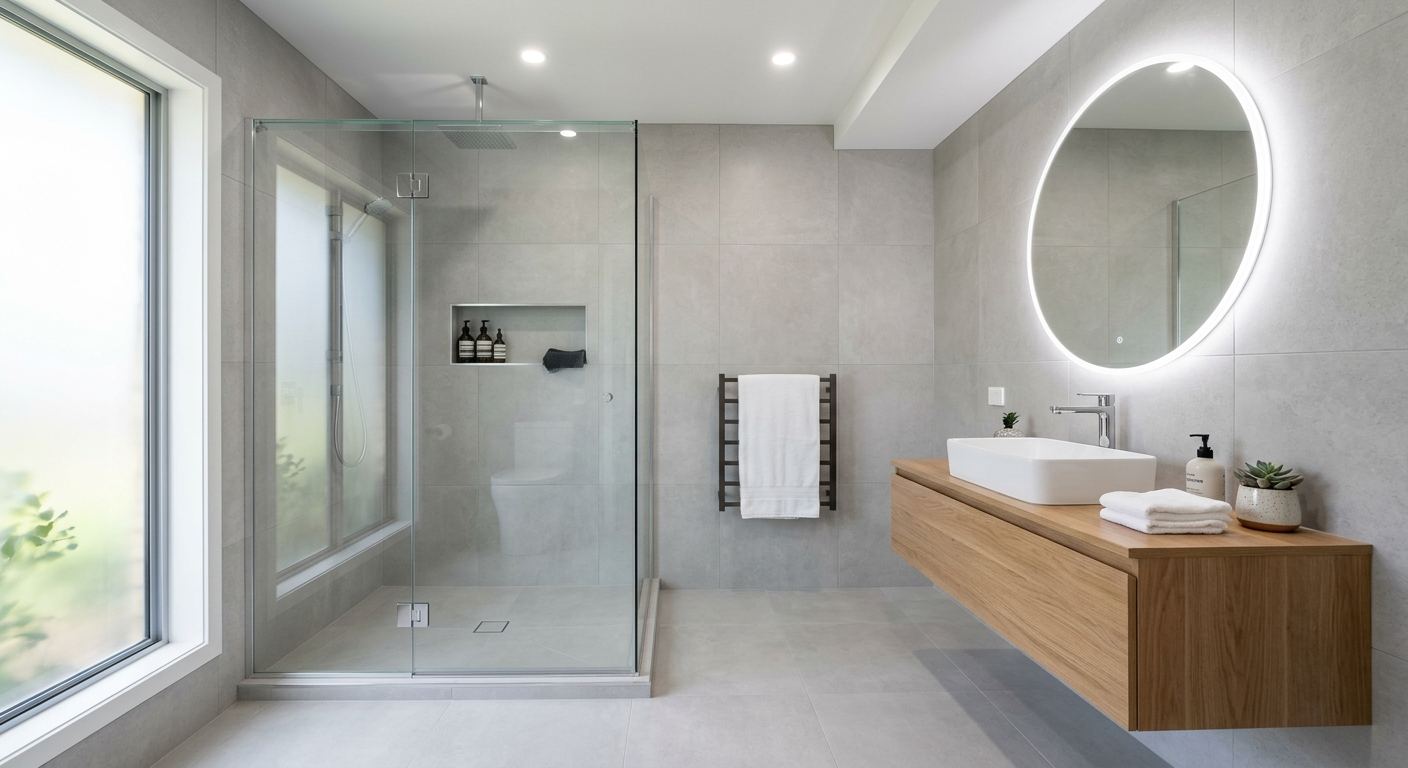
Bathroom renovation options and costs in Dearborn
Bathroom renovation in Dearborn typically starts with what you want to keep and what you’re willing to change—because the labour-heavy parts (demolition, plumbing tie-ins, venting corrections, and tile setting) dominate the budget. Dearborn is a small community in the Toronto economic region, and the housing stock there skews older; with many homes dating back decades, it’s common to find dated drain layouts and finishes that weren’t designed for today’s waterproofing expectations. In the local profile, Dearborn’s population is 1,605 (Statistics Canada, 2021 Census), which means fewer contractors serve more of the surrounding GTA demand—so scheduling and availability can affect pricing. It also means fewer “surprise-free” renovations: in post-war and 1960s–1980s homes across the Toronto region, you may uncover cast-iron or undersized drains, galvanized supply lines, and—when floor coverings or old compounds are disturbed—materials that trigger asbestos abatement protocols. Toronto’s market dynamics drive this more than climate: costs rise mainly from skilled-trade premiums and the age of housing rather than temperature swings. That said, Ontario moisture levels still punish weak waterproofing, especially in showers and tub surrounds.
In areas where bathroom work is most in demand—often around established neighbourhood pockets connected to the broader GTA trade flow—contractors see longer lead times, and higher labour rates are reflected in realistic budgets. If you’re aiming for a quick refresh, costs are far steadier than a full gut-and-rebuild. Use the table below to benchmark typical ranges before you request itemised quotes.
| Renovation Scope |
What's Included |
Typical Duration |
Price Range |
| Cosmetic refresh (paint, fixtures, accessories only) |
Paint, new vanity top or vanity swap, faucet, toilet refresh where applicable, mirror/light, accessories, caulking/trim touch-ups; existing tile left as-is |
3–7 days |
$2,000–$6,000 |
| Mid-range full renovation (new tile, vanity, tub/shower, electrical) |
Demo and disposal, replace vanity and toilet, re-tile floor and shower/tub surround, new exhaust fan and GFCI where needed, waterproofing upgrade, basic plumbing refresh (as required), premium caulking and trim |
2–4 weeks |
$12,000–$20,000 |
| High-end full renovation (custom tile, steam shower, heated floors) |
Full gut, custom layout refinishing, large-format porcelain, heated floor system, steam-ready shower package, upgraded valves/shut-offs, enhanced waterproofing, higher-end fixtures and glass if included |
4–7 weeks |
$20,000–$30,000 |
| Shower-only installation (convert tub to walk-in shower) |
Remove tub, install shower pan/liner and waterproofing, install drain relocation if needed, tile new shower walls and floor, new valve/trim, glass door (if supplied by contractor) |
2–3 weeks |
$10,000–$18,000 |
| Bathtub replacement or tub-liner install |
Replace tub and surround where needed or install tub liner system; new faucet/trim, re-caulk, re-seal, basic plumbing connections; limited tile touch-up |
5–10 days |
$1,200–$3,500 |
| Tile-only installation (floor + surround, existing layout kept) |
Remove old tile (where required), install waterproofing and tile only, grout/seal, new trim where needed, floor tile and shower/tub surround tiling without moving plumbing |
1–3 weeks |
$3,000–$10,000 |
Prices are estimates only and vary by project scope, site access and material selection.
What affects the price of bathroom renovation in Dearborn
In Toronto-area pricing, even “the same bathroom” can land 30–50% apart because quotes often vary in what’s included once walls and floors are opened. The biggest drivers are regional labour rates and the age of local housing stock—more than outside weather. In older Toronto-region homes common to the broader market around Dearborn, contractors frequently need to upgrade or correct plumbing components: cast-iron or galvanized lines, venting that doesn’t meet today’s expectations, and drain/fixture rough-ins that don’t match modern shower drainage. Those discoveries can push a project from a tile-and-fixtures plan into a full rough-in correction, shifting budgets well above a basic national average. That’s why a mid-range full renovation is often budgeted in the $12,000–$20,000 zone, while more complex work with heavier rerouting and premium finishes can move toward $20,000–$30,000.
As for Ontario moisture, the real cost impact shows up when waterproofing is underestimated. If waterproofing prep is skipped, you can be looking at early failures—mould, loose grout, and costly tear-outs later. Locally, two common examples raise costs in Dearborn: (1) moving a drain line for a walk-in shower often means additional labour for rough-in and sometimes new shut-offs, and (2) discovering asbestos-containing materials in older floor tile or drywall compound can trigger abatement work; allowances for that discovery commonly add $1,500–$5,000+ depending on extent and materials. Conversely, your price can lower if your plumbing layout is staying put and the subfloor is flat and sound, reducing time for prep and leveling.
| Price Factor |
Why It Matters |
Cost Impact |
| Layout change — moving drain or supply lines |
Requires rough-in work, potential vent adjustments, and added labour for tie-ins and testing |
Often adds $2,000–$8,000 |
| Tile selection — large-format porcelain vs. mosaic vs. ceramic |
Harder setting, more cuts, and more labour time for patterning and edges |
Typically $1,000–$6,000 swing |
| Fixture tier — builder-grade vs. mid-range vs. designer brands |
Higher-end valves, trims, and toilets cost more and may require more install precision |
Commonly $500–$4,000 |
| Subfloor condition — rot or unlevel concrete adds scope |
More prep, underlayment/patching, and possible structural fixes |
Often adds $1,000–$5,000 |
| Electrical — adding GFCI outlets, exhaust fan, heated floor circuit |
Requires licensed electrical work and extra wiring/conduit where needed |
Typically $800–$3,500 |
| Waterproofing method — membrane type and extent |
Better systems require correct detailing but reduce mould and failure risk |
Often $400–$2,500 |
| Older-home surprises — asbestos tile, cast-iron drains, galvanized pipes |
Abatement, plumbing swaps, and extra disposal/testing time |
Commonly $1,500–$10,000+ |
| Bathroom size — sq ft drives tile and labour time directly |
More square footage increases materials, setting time, and waterproofing coverage |
Can shift $2,000–$7,500 |
Permits & regulations in Ontario
In Ontario, the permit needs usually depend on whether you’re changing systems or only updating surfaces. Cosmetic updates—swapping a vanity or faucet, replacing a mirror and light, repainting, and retiling without moving plumbing—typically do not require a permit. Where permits most often come in is when you relocate plumbing or alter electrical capacity: moving a drain or supply line, adding new plumbing shut-offs, installing a new exhaust fan that requires wiring changes, or making structural wall changes. Any electrical work must comply with provincial code and be completed by a licensed electrician, or signed off appropriately.
For plumbing rough-in changes (for example, converting a tub to a walk-in shower and relocating the drain), plan on a permit and inspection. The practical homeowner step is to treat your contractor like a checklist: before work starts, ask for (1) their Ontario trade licence number, (2) certificate of insurance showing liability coverage, and (3) proof of worker coverage (WSIB/WCB) appropriate to the trade. Then verify in real time: check the Ontario licence registry listing for the trade number; review the insurance certificate for policy dates and coverage limits; and request a clearance letter or account proof relevant to WSIB/WCB coverage. If the contractor can’t provide these documents quickly, price differences are usually a red flag—because compliance work costs time and money, and missing it can become your risk later.
Choosing tile, waterproofing and fixtures for your Dearborn bathroom
In Dearborn, the three material decisions that most directly shape your bathroom reno budget are tile choice, waterproofing approach, and fixture tier. First, tile: entry-level ceramic can be budget-friendly, but it’s less durable in heavy wet zones and often demands more careful detailing around edges and niches. Porcelain is usually the best value for floors and walls because it handles abrasion and moisture better, and it typically installs cleaner with the right substrate. Natural stone (marble, travertine, slate) looks premium, but it can require extra sealing and careful selection for finishes and tolerance to Ontario’s recurring humidity and temperature swings.
Second, waterproofing: paint-on membranes can work for certain applications, but the safest system usually uses a correctly installed bonded sheet membrane or a proven shower system with proper overlaps, corners, and detailing around the drain. In an Ontario bathroom, weak waterproofing is what eventually leads to mould and grout breakdown, which then forces a costly tear-out.
Third, fixtures: builder-grade looks fine at first but may cost more over time via less efficient flow, weaker finishes, and fewer resale-appeal upgrades. For a dollar example, moving from basic tile installation to premium porcelain and a stronger waterproofing system can be justified when you’re already budgeting a mid-range full renovation in the $12,000–$20,000 band—because the incremental increase is often smaller than redoing the whole shower later.
| Material / Option |
Pros |
Cons |
Price Range |
| Ceramic tile (floor + walls) |
Lower material cost, broad style selection, good for budget renovations with correct waterproofing |
Can chip more easily; more care needed around grout joints and edges |
$3,000–$7,000 |
| Porcelain tile (floor + walls) |
Denser and more durable; better moisture performance; often ideal for modern large-format looks |
Heavier tiles can increase install complexity; may cost more in material and labour |
$5,000–$10,000 |
| Natural stone (marble, travertine, slate) |
High-end appearance; unique veining; strong curb appeal for resale |
Requires sealing and careful maintenance; cuts and installs can be more labour-intensive |
$8,000–$18,000 |
| Frameless glass shower enclosure |
Brightens the bathroom; modern look; easier to clean than framed options |
More expensive hardware; relies on correct framing/anchoring and precise tile detailing |
$2,500–$7,500 |
| Prefab tub surround (acrylic) |
Quicker installation; fewer tile labour hours; consistent surface finish |
Limited custom look; can be less “luxury” than tile for resale; requires correct sealing |
$1,200–$3,500 |
| Custom shower pan (tile or linear drain) |
Best durability when detailed correctly; luxury feel; improved access for walk-in designs |
More demanding prep and waterproofing; drain/leveling complexity can add cost |
$4,000–$12,000 |
How to choose a bathroom renovation contractor in Dearborn
Choosing the right contractor in Dearborn comes down to proof: Ontario licensing, liability coverage, and worker coverage (WSIB/WCB where applicable). Start by asking for their Ontario trade licence details and verify them using the online licence registry for their trade category. Request a certificate of insurance that lists them as insured and includes liability coverage; check the policy expiry date so you know it’s current. For WSIB/WCB, ask for proof of coverage or a clearance letter/account confirmation relevant to the workers performing the job—this is especially important when subcontractors are involved.
Next, demand 2–3 itemised written quotes. You want a breakdown separating labour and materials (demo, plumbing rough-in allowances, waterproofing, tile setting time, fixtures, electrical items, disposal and dump fees). Make sure the scope is aligned: ask whether the quote includes permit pulling, inspection coordination, and whether disposal is included. On warranty, look for a workmanship warranty length and clarity about what’s covered (waterproofing failures, movement cracks, caulking). Product/manufacturer warranty is helpful, but it doesn’t replace workmanship coverage.
On payment, never accept large upfront amounts; a safe practice is 10–15% upfront maximum, with a holdback until the job is complete and deficiencies are corrected. Finally, get a start date and a completion estimate in writing—bathroom timelines stretch when plumbing inspections or custom tile lead times are missed, and you want responsibility clearly stated.
- Verify Ontario trade licence before signing; match the licence category to bathroom-related trades.
- Confirm current liability insurance with coverage dates on the certificate.
- Request WSIB/WCB clearance or coverage proof for the workers on site.
- Get 2–3 itemised quotes (not lump sums) with line-by-line labour and material allowances.
- Ask what’s included for demolition and disposal/dump fees.
- Confirm whether permits and inspections are pulled by the contractor or you (and who pays fees).
- Review the waterproofing specification: membrane type, required thickness/coverage, and detailing.
- Ask how they handle asbestos/older materials discovery (plan and allowance if applicable).
- Check tile scope: does the quote include niche shelves, waterproof corners, and grout removal/patching?
- Confirm electrical scope: exhaust fan, GFCI, heated floor circuit, and which items are by a licensed electrician.
- Ask for a written schedule with milestones (rough-in, waterproofing, tile, fixtures, final caulk).
- Clarify warranty: workmanship duration, what voids it, and whether it’s transferable to future owners.
In Dearborn, common red flags include: contractors quoting a full bathroom renovation without allowing for plumbing upgrades in older homes, refusing to provide licence/insurance/WSIB/WCB documentation, giving only a single lump-sum number with no waterproofing or electrical breakdown, and asking for more than 10–15% upfront without a detailed contract and schedule. Another warning sign is vague timelines (“we’ll start soon”) without written completion estimates, especially when tile and glass lead times are involved.
Frequently asked questions — bathroom renovation in Dearborn
How much does a walk-in shower cost in Dearborn?
In Dearborn and the broader Toronto region, a walk-in shower cost is driven mostly by labour (demo, waterproofing detailing, drain and valve rough-ins) and the complexity of the layout. For a typical tub-to-shower conversion, many contractors fall into the $10,000–$18,000 range depending on whether the drain needs relocation and whether you’re adding glass and upgraded plumbing fixtures. If you choose a basic surround with limited tile, you can land closer to the lower end; if you want a custom shower pan with a linear drain and premium tile, budgets often push upward. Also, in older homes, cast-iron drains or venting corrections may add several thousand dollars even when the bathroom size looks unchanged. (Statistics Canada, 2021 Census)
What's the ROI on a bathroom renovation?
Bathroom renovations are one of the home upgrades buyers look for, but ROI in Dearborn depends on what you change and how well it’s executed—especially waterproofing quality and fixture reliability. A cosmetic refresh (new vanity, faucet, paint) can help appeal at relatively lower cost, but it won’t always feel “new” to buyers. Mid-range full renovations in the $12,000–$20,000 band tend to be a common target because they deliver visible upgrades while keeping scope manageable. Higher-end features (heated floors, steam-ready showers, premium finishes) can be great for comfort, but they don’t always guarantee a full dollar-for-dollar return. In older Toronto-region houses, spending on plumbing upgrades and proper ventilation often improves long-term performance, which can protect resale credibility. (Statistics Canada, 2021 Census)
Do I need waterproofing behind the tile?
Yes—if you want a shower/tub wall and tiled wet area to stay trouble-free in Ontario bathrooms, waterproofing behind the tile is essential. Tile alone is not a waterproof system; grout and caulk fail over time, and water can migrate if the wall assembly isn’t protected. A solid approach typically includes proper substrate prep, then a waterproofing membrane system installed with correct overlaps and corner detailing around niches and penetrations. This becomes even more important in Dearborn where moisture and humidity conditions repeatedly test bathroom assemblies. If you’re doing a tile-only installation and keeping the layout, ask the contractor exactly what waterproofing method they’re using and whether it covers the entire wet area up to the required height. Skimping here is the quickest route to mould or failed grout that forces expensive rework.
How do I compare bathroom renovation quotes?
Compare quotes the way a contractor estimates: line-by-line. Start by checking that each bid includes the same scope—demo and disposal, waterproofing method, electrical requirements (GFCI and exhaust fan), and whether permits are included. Confirm whether plumbing rough-in is included or treated as an allowance; in older Toronto-region homes, discovering cast-iron drains or galvanized piping can expand scope fast. Then look at materials: tile type, underlayment and membrane brand, fixture tier, and whether glass is included. A low price can be low because it excludes permit fees, waterproofing upgrades, or finishes that you expected—so the true “apples-to-apples” comparison matters. If one quote lands near a basic tile band (often $3,000–$10,000) and another includes a full shower conversion, the difference isn’t efficiency; it’s scope. Ask for clarification before you sign.
Can I live at home during a bathroom renovation in Dearborn?
Often you can stay in your home during part of the renovation, but it depends on how extensive the work is. For cosmetic refresh projects, you can typically remain comfortable with minimal disruption (usually a few days). For mid-range full renovations in the $12,000–$20,000 range or shower conversions, you may lose bathroom access for at least part of the schedule while walls are opened, plumbing is connected, waterproofing cures, and tile is set. Most contractors keep dust contained and protect floors, but you should plan for noise, limited water use in the bathroom area, and a temporary workaround (for example, using another sink or a nearby washroom). In older homes, surprises like asbestos-containing materials can also add time; those delays affect livability. The best approach is to ask for the detailed schedule, milestones, and how long you’ll be without a functional shower/tub.
What's the best bathtub material for a Dearborn home?
The “best” bathtub material depends on how you use the space and how much you’re willing to pay for longevity and refinishing. In many Dearborn-area homes, replacement or tub-liner style options are considered because they can reduce demo time. Budget-friendly bathtub replacement or liner installs often sit in the $1,200–$3,500 range, but the match to your existing drain and the condition of the surrounding wall assembly matters as much as the tub material itself. Acrylic tubs are common because they’re lightweight and install quickly. Cast iron tubs are durable and can feel premium, but they’re heavier and more labour-intensive to remove and set. For tiled surrounds, the key is waterproof detailing and proper sealing regardless of tub material. If you’re converting to a walk-in shower later, sometimes it’s better to invest in a shower waterproofing system now rather than over-upgrading a tub surround that won’t stay.