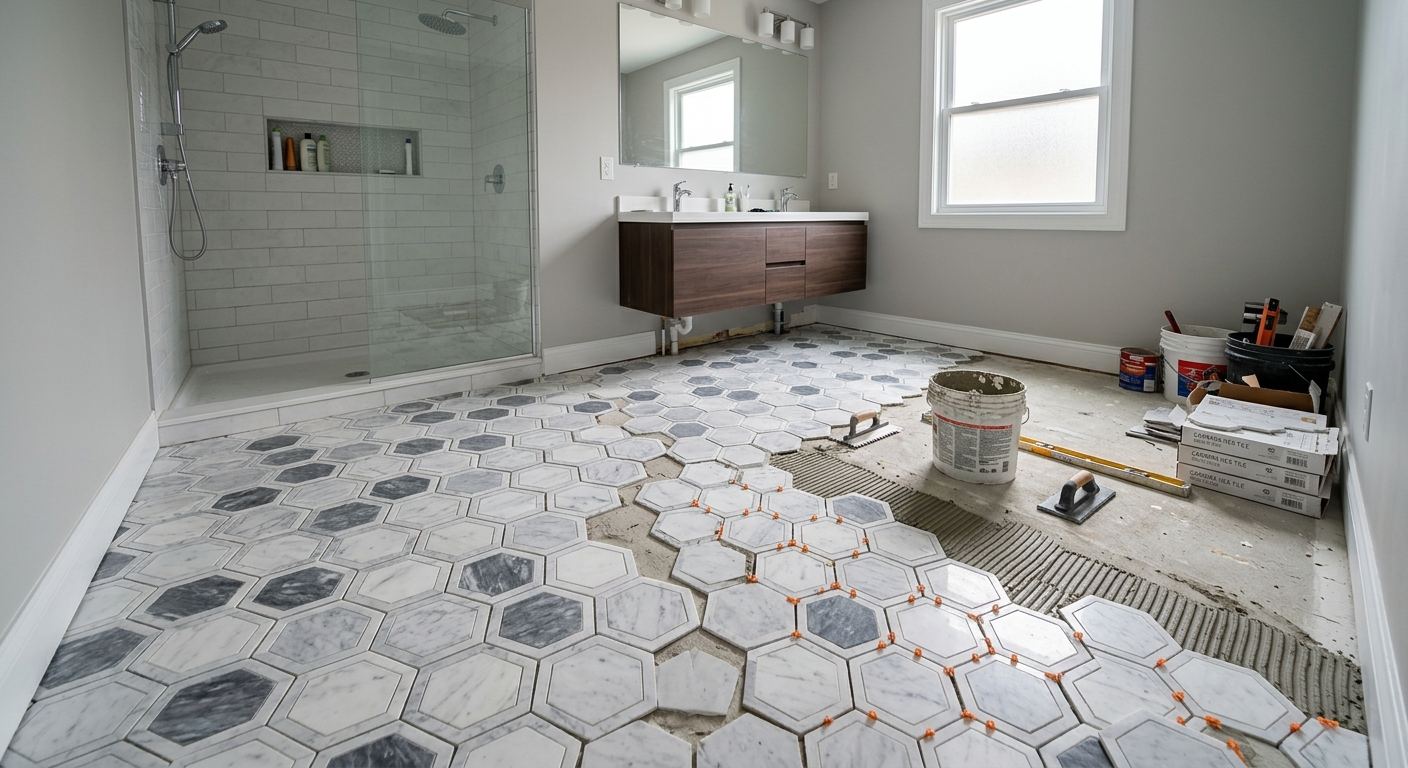
Bathroom renovation options and costs in Kirkland Lake
Kirkland Lake homeowners usually start with one simple question—how much will a bathroom reno cost? The answer depends a lot on the age of the homes in town: with 88.7% of dwellings built before 1981, many bathrooms sit on older drain and vent runs, dated pipe materials, and subfloors that may not be perfectly flat. That’s why even “standard” upgrades often uncover extra scope like rough-in adjustments or ventilation upgrades. And because 62.3% of households are homeowners, we see plenty of mid-project decisions focused on durability and resale value (Statistics Canada, 2021 Census).
In the Northeast economic region, bathroom renovation pricing is driven more by regional labour availability and trade rates than by weather inside the bathroom envelope. Once walls are opened, contractors typically bill for the time it takes to coordinate plumbing, electrical and tile work in an older housing stock—especially in tight job seasons. In Kirkland Lake, trade demand often spikes in the West End and around newer infill pockets where homeowners push for faster turnarounds, and that can affect scheduling and labour line items.
Below are realistic options you can use to compare quotes from local contractors. If you’re trying to decide between a tub swap and a full rebuild, the table will help you line up the scope and the typical duration before you ask for itemised pricing.
| Renovation Scope |
What's Included |
Typical Duration |
Price Range |
| Cosmetic refresh (paint, fixtures, accessories only) |
New vanity or faucet, toilet swap, fresh paint, re-caulk, basic lighting refresh, accessories; no plumbing relocation, no major tile demolition |
3–7 days |
$3,000–$7,000 |
| Mid-range full renovation (new tile, vanity, tub/shower, electrical) |
Demo + disposal, new vanity, tub/shower or surround tile, waterproofing and new tile floor, updated exhaust fan, GFCI where needed, finishing trims |
2–4 weeks |
$15,000–$25,000 |
| High-end full renovation (custom tile, steam shower, heated floors) |
Custom shower layout, higher-end tile, niche/bench work, upgraded waterproofing, heated floor circuit and controls, premium fixtures, upgraded venting |
4–7 weeks |
$25,000–$35,000 |
| Shower-only installation (convert tub to walk-in shower) |
Remove tub, new shower pan/substrate, waterproofing, tile surround, new valve/trim, new glass door or curtain rod, fan check/upgrade |
2–3 weeks |
$12,000–$20,000 |
| Bathtub replacement or tub-liner install |
Remove and install new tub with surround finishing (or liner where suitable), new caulking and trims, basic valve check; no full layout change |
5–12 days |
$2,500–$6,000 |
| Tile-only installation (floor + surround, existing layout kept) |
Tile floor and/or tub surround only, careful prep/flattening, grout and silicone, waterproofing as required; fixtures largely retained |
1–3 weeks |
$6,000–$16,000 |
Prices are estimates only and vary by project scope, site access and material selection.
What affects the price of bathroom renovation in Kirkland Lake
In Ontario, two quotes for the “same” bathroom can easily land 30–50% apart, even when homeowners pick similar fixtures. The main drivers are how much labour is needed (trade availability and hours on site) and how much hidden work is found once the walls are open. In Kirkland Lake and the broader Northeast context, older homes built before 1981 often hide issues that don’t show in photos—galvanized supply lines, cast-iron drain sections that need replacement, and ventilation that isn’t up to modern performance expectations. Those discoveries inflate scope fast, because every change touches multiple trades: plumber time, electrician time, and tile-setting time for the rework.
Climate matters less than you might expect inside the bathroom envelope—weather swings don’t directly drive costs the way labour and discovery do. That said, Ontario humidity makes good waterproofing non-negotiable; if the original wall assembly was never built for it, you may see substrate damage once moisture has been migrating.
There’s also a cost swing when asbestos is discovered. In older homes (especially pre-1985 material blends), vinyl floor tile or drywall compounds can contain asbestos, and abatement protocols add time, containment, and disposal. In practical budgeting terms, that can add roughly $1,500–$5,000+ depending on extent. For example, one homeowner may land near a mid-range full reno budget of about $15,000–$25,000, while a similar layout with re-plumbing and abatement can push toward the upper full-renovation band.
On the flip side, prices can come down when you keep the existing layout and focus on tile updates and a vanity refresh. In those “tile plus fixtures” scenarios, labour stays more predictable, and the project can land closer to lower-end totals instead of approaching $25,000–$35,000 high-end work.
| Price Factor |
Why It Matters |
Cost Impact |
| Layout change — moving drain or supply lines requires rough-in work |
Plumbing rough-in, patching, and re-tiling are labour-intensive; walls may need opening across multiple sections |
Often adds a major portion of total cost; can move a job from “mid-range” toward “high-end” pricing |
| Tile selection — large-format porcelain vs. mosaic vs. ceramic |
Harder materials need better prep and precision cuts; mosaics increase setting time and grout/finish work |
Can shift budgets by several thousand dollars depending on product and coverage |
| Fixture tier — builder-grade vs. mid-range vs. designer brands |
Premium trims, valves, and hardware add material costs and sometimes require different rough-in setups |
Commonly adds $1,000–$4,000+ across fixtures and accessories |
| Subfloor condition — rot or unlevel concrete adds scope |
Needs floor flattening, replacement, or additional underlayment before tile and waterproofing can be installed |
Repairs can add days and materials; totals rise quickly |
| Electrical — adding GFCI outlets, exhaust fan, heated floor circuit |
Requires licensed electrical work; adding circuits adds labour, parts and coordination |
Frequently adds $500–$3,000 depending on how much new wiring is needed |
| Waterproofing method — membrane type and extent |
Better systems improve failure resistance and longevity, especially in Ontario’s humid bathroom use |
May add material and time, but prevents costly rework later |
| Older-home surprises — asbestos tile, cast-iron drains, galvanized pipes |
Triggers abatement/extra demo/disposal and sometimes full drain replacement or pipe conversion |
Can add roughly $1,500–$5,000+ when abatement is required; drainage upgrades can add more |
| Bathroom size — sq ft drives tile and labour time directly |
More floor area means more tile, more thinset, more setting time, and longer curing and finishing |
Smaller baths may cost less, while larger installs often land in higher bands |
Permits & regulations in Ontario
In Ontario, many bathroom updates are considered “cosmetic” and typically don’t require a permit—things like swapping a vanity, replacing a toilet, updating faucets, repainting, re-caulking, or doing retiling without moving plumbing or changing structural elements. However, several common bathroom tasks do require permitting and inspection. If you’re relocating plumbing (moving the toilet, drain, or shower/supply locations), you should expect a permit. Adding or changing ventilation also often triggers permit needs when it involves new wiring and electrical work.
Electrical work must meet the provincial electrical code and be performed or signed off by a licensed electrician. That includes adding an exhaust fan that requires new wiring, installing heated floors, and adding or modifying circuits and receptacles (including GFCI requirements). Plumbing rough-in changes—opening walls to alter drains, supply lines, or venting—usually require a permit and inspection before walls are closed.
For a Kirkland Lake project, ask your contractor for the Ontario trade licence details and proof of insurance. Here’s the step-by-step homeowner check:
- Licence: confirm the contractor’s Ontario trade licence/registration for the relevant trade category.
- Liability coverage: request a certificate of insurance showing current dates and adequate coverage limits.
- WSIB/WCB: verify their workers’ compensation coverage (or WSIB account/clearance status) through the documentation they provide.
- Project-specific permits: confirm who pulls permits—your contractor should state this in writing if required.
Always keep copies of licence details and insurance documents with your signed quote and contract.
Choosing tile, waterproofing and fixtures for your Kirkland Lake bathroom
In Kirkland Lake, the budget usually comes down to three material decisions: tile choice, waterproofing method, and fixture tier. First, tile: ceramic is the entry point and works well when you’re keeping the layout simple and focusing on straight runs, but it may be less durable than porcelain for heavy daily traffic. Porcelain usually costs more, yet it’s typically the best balance for floors and surrounds because of its density and stain resistance—plus it holds up well to Ontario’s frequent bathroom moisture exposure. Natural stone (marble, travertine, slate) can look exceptional, but it adds cost and often requires more careful installation and sealing plans.
Second, waterproofing: paint-on membranes can be economical for some systems, while bonded sheet membranes or modern engineered systems (including compatible builds used by many installers) generally provide more robust protection when installed correctly. In Ontario, where baths can get humid and moisture can linger after showers, the right waterproofing choice is what reduces mould and costly failure down the road.
Third, fixtures: builder-grade valves, faucets, and trim can keep your reno closer to the lower end of the full-bath range. Mid-range and designer fixtures cost more upfront, but they often improve long-term reliability and resale appeal. If you’re trying to balance value, it’s often smarter to invest in waterproofing and a quality shower valve, then keep cabinetry/trim more modest.
One simple dollar example: upgrading to a porcelain tile installation can run several thousand dollars more than ceramic depending on coverage, but if you’re already in the wall-opening phase, the extra material and installation precision can be justified because it reduces the chance of future failure—while swapping a cheap valve later is usually much more disruptive.
| Material / Option |
Pros |
Cons |
Price Range |
| Ceramic tile (floor + walls) |
Lower material cost, easy to match colours, good for walls with moderate wear |
Can be less durable on floors; may chip more easily; grout maintenance still required |
$35–$60 per sq ft (installed varies by scope) |
| Porcelain tile (floor + walls) |
More durable, better stain resistance, often flatter for cleaner layouts |
Higher material price; needs correct thinset and good prep for flatness |
$50–$90 per sq ft (installed varies by scope) |
| Natural stone (marble, travertine, slate) |
Premium look and feel; unique veining; strong design impact |
Sealing and maintenance considerations; higher labour time for cutting and finishing |
$90–$140 per sq ft (installed varies by scope) |
| Frameless glass shower enclosure |
Modern appearance, easier to clean, usually improves perceived value |
More expensive glass/hardware; requires precise measurements and sturdy backer framing |
$2,000–$5,000 |
| Prefab tub surround (acrylic) |
Faster installation, fewer tile cuts, often lower labour |
Less “custom” look; can show seams depending on design; limited style options |
$800–$2,500 |
| Custom shower pan (tile or linear drain) |
Clean, accessible drainage; allows custom slopes and a sleek look |
More prep and waterproofing coordination; linear drains require precise layout |
$3,000–$7,500 |
How to choose a bathroom renovation contractor in Kirkland Lake
Choosing the right bathroom renovation contractor in Kirkland Lake starts with proof. First, verify Ontario licensing where applicable to the trades involved, and confirm liability insurance and WSIB/WCB coverage. You should be able to see a current certificate of insurance (with the contractor’s name, coverage limits and expiry date) and documentation showing their workers’ compensation coverage/clearance status. If a contractor won’t provide it, walk away—especially on an older home where demolition can uncover more scope than expected.
Next, demand 2–3 itemised written quotes. A good quote breaks labour and materials separately: demo, plumbing rough-in (if any), electrical work, waterproofing, tile setting, and finishing. It should also spell out what’s included in disposal and whether permits are included if changes trigger them. Avoid quotes that are only a lump sum with vague language.
Scope and warranty details matter just as much as price. Look for workmanship warranty length, product/manufacturer warranties for tile systems, shower components and any heated-floor controls, and whether warranties are transferable if you sell your home.
For payments, use a conservative schedule: never pay more than 10–15% upfront. Hold back a portion until the job is complete and you’ve confirmed waterproofing and final finishes are done to standard. Finally, ask for a start date and a completion estimate in writing, including key milestones like demo completion and rough-in inspections.
- Confirm Ontario trade licence details relevant to your project.
- Request liability insurance certificate with expiry date and coverage limits.
- Verify WSIB/WCB clearance or equivalent coverage documentation.
- Get 2–3 itemised quotes (labour + materials), not lump sums.
- Ensure the quote lists included permits (or states clearly who is responsible).
- Confirm disposal and waste hauling is included.
- Ask what waterproofing method is proposed and what products are named.
- Check whether tile layout changes are included (and who handles tile cutting/waste).
- Review exclusions: framing repairs, subfloor flattening, or asbestos abatement contingency.
- Ask for a workmanship warranty in writing (how long, what’s covered, claim process).
- Confirm payment schedule and retainage terms before signing.
- Get a written timeline with start date, inspection points and completion target.
Red flags I see too often in Kirkland Lake: (1) no proof of insurance/WSIB/WCB, (2) vague scope like “we’ll fix anything” without exclusions, (3) asking for large upfront deposits beyond 15%, (4) no named waterproofing/tile-setting system, and (5) unwillingness to put permits, timeline and warranty terms in writing.
Frequently asked questions — bathroom renovation in Kirkland Lake
Can I live at home during a bathroom renovation in Kirkland Lake?
Yes, many Kirkland Lake homeowners can remain in their home, but it depends on how disruptive the job is. If you’re doing a cosmetic refresh or a tile-only installation, you can usually keep a functional bathroom nearby and continue daily routines with minimal interruption. For a mid-range full renovation, expect periods where the bathroom is unusable while demo, waterproofing and rough-ins happen. In homes built before 1981—common in Kirkland Lake—wall opening can reveal cast-iron or galvanized supply issues, and that can extend downtime. Plan for an alternate sink/shower setup and protect floors/doorways with containment. Typically, a full reno that lands around $15,000–$25,000 can involve 1–2 “no-use” phases even with careful scheduling.
What's the best bathtub material for a Kirkland Lake home?
For most Kirkland Lake homes, the “best” bathtub material is the one that fits your existing rough-in and budget while staying durable. Acrylic tubs are common because they’re lighter and can be installed with less labour. Fibreglass/steel enamel options can also work, but they vary in noise and longevity. If you’re keeping the existing tub location and only replacing the tub, you can often stay within the bathtub replacement band—around $2,000–$6,000 depending on surround work and any needed valve adjustments. If your subfloor shows signs of softness or unlevel areas (more common in older homes), the tub material matters less than correct support, shimming, and proper waterproofing behind the surround.
Is it worth renovating a bathroom before selling in Kirkland Lake?
Often, yes—because bathrooms are a key “decision room” for buyers. With 2,350 homeowner households and an older housing stock (Statistics Canada, 2021 Census), many buyers look for visible upgrades: fresh tile, modern fixtures, and clean ventilation. The best return usually comes from work that improves function and removes dated issues, not just surface changes. If you can target a mid-range full renovation near $15,000–$25,000, focus on waterproofing, exhaust fan performance, and quality tile finish. Avoid overspending on ultra-custom features unless other homes on your street show similar levels of finish. If you uncover plumbing problems during the reno, that can be a selling advantage, because it reduces buyer uncertainty.
How do I plan a bathroom renovation on a tight budget in Kirkland Lake?
On a tight budget, prioritize the parts that prevent failure and the parts you’ll notice every day. A practical approach is to keep the layout, reuse good plumbing locations, and choose a durable tile category like porcelain while avoiding the most complex changes. Consider a cosmetic refresh plus targeted tile (instead of a full teardown) if your venting and rough-in are already in decent shape. If your tub is fine structurally, replacement or a tub-liner option can control costs; bathtub projects often fit within $2,000–$6,000, depending on scope. For a full reno, you’ll typically land in the lower portion of the band—around $15,000–$25,000—by simplifying the valve changes, limiting layout moves, and selecting mid-range fixtures with straightforward installation.
What's the difference between a cosmetic and a full bathroom renovation?
A cosmetic renovation changes finishes without disturbing the plumbing rough-in or major structure. Think paint, replacing a vanity, swapping faucets, updating lighting, and accessories, with re-caulking and possibly replacing fixtures. A full bathroom renovation is broader: it involves demolition, new waterproofing, new tile floors and surrounds, and often electrical updates like an exhaust fan or GFCI receptacles. In older Kirkland Lake homes built before 1981, a “cosmetic” plan can become a “full” plan once walls open and outdated drains, venting, or supply lines are discovered. That’s why a good contractor estimates scope based on inspection and includes a contingency plan for older-home surprises that might otherwise blow up a budget.
How do I choose the right contractor for my bathroom in Kirkland Lake?
Start by checking the contractor’s Ontario trade licence details where relevant, plus liability insurance and WSIB/WCB coverage. In Kirkland Lake, I strongly recommend you ask for certificate documents before signing, not after. Next, get 2–3 itemised quotes that break labour and materials, and verify what permits are included if plumbing relocation or electrical changes are part of the plan. Review the scope line-by-line: disposal, prep work for tile, waterproofing method, and exclusions for subfloor repairs. Choose a contractor who can explain their waterproofing system and provide a workmanship warranty length. Watch payment terms too—avoid paying more than 10–15% upfront. If your project is near $25,000–$35,000, ask specifically how timeline risks are managed around older-home discovery.