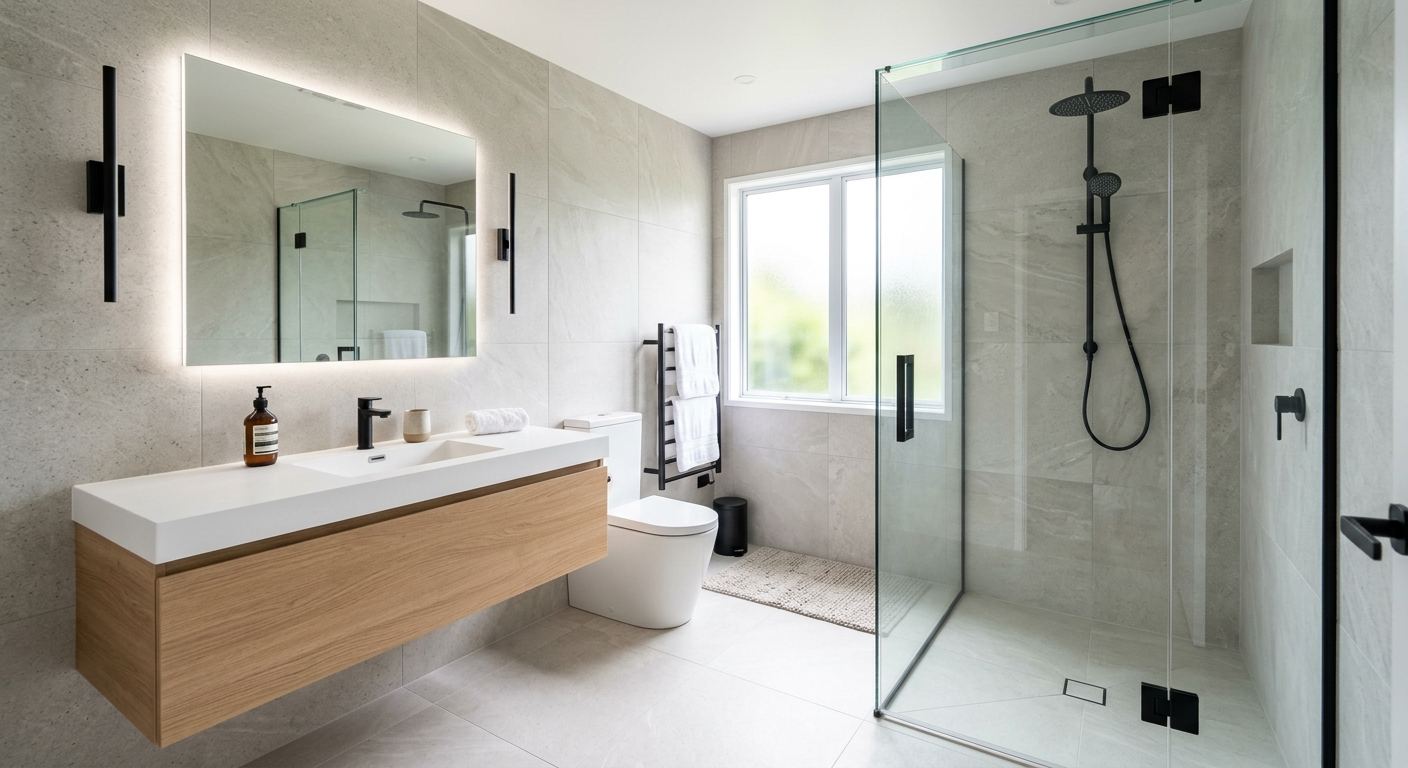
Bathroom renovation options and costs in Cambridge
Bathroom renovations in Cambridge, Ontario can range from simple upgrades to full gut projects, and the biggest cost swings usually come from the housing age and the amount of plumbing and electrical work involved. Cambridge has a sizable older housing base—48.4% of homes were built before 1981 (Statistics Canada, 2021 Census)—so it’s common to uncover dated plumbing layouts, cast-iron drain sections, or “hidden” issues behind walls and subfloors. In some of these older homes, asbestos-containing materials can also be present in floor tile or old wall finishes, which changes the work scope and adds remediation steps.
In the Kitchener–Waterloo–Barrie corridor, costs are shaped less by climate-driven wear and more by labour rates and availability of experienced trades. Skilled trades often bill in the $75–$120/hour range region-wide, and that labour intensity is why demolition, rough-in upgrades, and project management can represent a large share of your budget. Neighbourhoods with more mid-century housing—like Preston and west-end pockets closer to older Cambridge community growth—tend to see heavier demand for bathroom contractors because supply lines and venting upgrades are frequently needed.
To help you compare quotes at a glance, here are realistic options and typical budgets for Cambridge. Use these as a “decision baseline” and then dial in scope (layout changes, ventilation upgrades, and material selections) based on what your contractor finds during the first site review.
| Renovation Scope |
What's Included |
Typical Duration |
Price Range |
| Cosmetic refresh (paint, fixtures, accessories only) |
Paint, fan inspection (as-is), new vanity top or vanity swap, toilet/fixture replacements (no plumbing relocation), caulking, accessories (towel bars, mirrors) |
3–7 days |
$3,000–$8,000 |
| Mid-range full renovation (new tile, vanity, tub/shower, electrical) |
Demolition, new vanity, re-tile shower/tub surround and floor (typical 1–2 walls), new exhaust fan and GFCI outlet, updated waterproofing, plumbing trim replacements, basic upgrades to supply/valves as needed |
2–4 weeks |
$14,000–$25,000 |
| High-end full renovation (custom tile, steam shower, heated floors) |
Full gut, custom tile layout, upgraded waterproofing system, heated floor mat (electrical circuit), frameless glass, steam-ready shower build, premium fixtures, ventilation upgrade to higher capacity, possible venting and drain improvements where required |
4–7 weeks |
$28,000–$40,000 |
| Shower-only installation (convert tub to walk-in shower) |
Remove existing tub, rough-in adjustments to fit shower drain and valve location, shower pan/waterproofing, tile surround, new glass or curtain-ready solution, exhaust fan check/upgrade if needed |
1.5–3.5 weeks |
$7,000–$18,000 |
| Bathtub replacement or tub-liner install |
Replace tub and re-tile limited areas OR install tub liner kit (where system is compatible), new faucet trim, recaulk, leak checks, silicone/grout detailing |
1–2.5 weeks |
$2,500–$9,000 |
| Tile-only installation (floor + surround, existing layout kept) |
Remove old tile, prep/flatten surfaces, waterproofing as required, install new floor and shower/tub surround, grout/seal, limited plumbing trim adjustments if needed (no major re-route) |
1.5–3 weeks |
$7,000–$18,000 |
Prices are estimates only and vary by project scope, site access and material selection.
What affects the price of bathroom renovation in Cambridge
When you request quotes in Cambridge, Ontario, it’s normal to see the same bathroom project land 30–50% apart. In the Kitchener–Waterloo–Barrie corridor, quote differences often come down to labour rates, how much hidden work is anticipated, and how aggressively the contractor prices allowances for rough-in upgrades. Cosmetic refreshes typically stay near the lower end, while full renovations can climb into the mid‑five‑figure range quickly—especially once trades discover older plumbing, older ventilation, or out-of-date electrical.
The biggest driver in this region is the age of the housing stock, not “climate damage” in the usual sense. Many Cambridge homes were built mid‑century or earlier (48.4% pre‑1981; Statistics Canada, 2021 Census), so it’s common to find cast-iron or older drain stacks that need upgrading, galvanized supply lines that should be replaced at the fixture connections, and bathrooms with insufficient exhaust venting. Those findings add rough-in labour, parts, and inspection time.
Older-home surprises can also add thousands. For example, if asbestos-containing materials are discovered in flooring or older wall finishes, remediating or replacing those materials can add roughly $1,500–$5,000+ before you even get to the “pretty” work. That same project might still start with a mid-range full renovation budget in the $14,000–$25,000 band, but it can push toward the $28,000–$40,000 range if it becomes a true gut with re-routing, waterproofing expansion, and higher ventilation/electrical scope.
In Cambridge specifically, two common cost raisers are: (1) converting a tub to a walk-in shower, where the drain and valve placement must be revised, and (2) replacing old subflooring or correcting an unlevel base before tile can be safely installed. If your bathroom is newer, already flat and drywalled correctly, labour can be more predictable and you’ll usually see pricing sit closer to the tile-only or shower-only bands.
| Price Factor |
Why It Matters |
Cost Impact |
| Layout change — moving drain or supply lines |
Requires plumbing rough-in, wall opening, and potential venting/drain adjustments |
Often adds $3,000–$10,000+ depending on re-routing distance |
| Tile selection — large-format porcelain vs. mosaic vs. ceramic |
Harder materials and more intricate patterns increase cutting, setting time, and waste |
Typically adds $500–$4,000+ across a full surround and floor |
| Fixture tier — builder-grade vs. mid-range vs. designer brands |
Higher tiers cost more and can require more precise installation details |
Often varies $800–$5,000+ before labour differences |
| Subfloor condition — rot or unlevel concrete adds scope |
Waterproofing relies on a stable, flat surface; repair and underlayment drive time |
Commonly adds $500–$3,500+ |
| Electrical — adding GFCI outlets, exhaust fan, heated floor circuit |
Code-compliant bathroom circuits and vent fan wiring add licensed electrician time |
$600–$4,000+ depending on what’s new |
| Waterproofing method — membrane type and extent |
Proper coverage reduces moisture intrusion and mould risk behind walls |
$400–$2,500+ based on system choice and surface prep |
| Older-home surprises — asbestos tile, cast-iron drains, galvanized pipes |
Triggers remediation, disposal, and replacement of compromised components |
Often adds $1,500–$5,000+ (sometimes more) |
| Bathroom size — sq ft drives tile and labour time directly |
More area means more setting time, more materials, more waterproofing surface |
Can shift total costs by $2,000–$8,000+ from small to large baths |
Permits & regulations in Ontario
In Ontario, many cosmetic bathroom updates typically do not require a permit—for example, swapping fixtures like toilets, faucets, vanity units, mirrors, or re-painting. Re-tiling an existing shower/tub surround and floor is also often handled without a separate permit as long as there’s no structural change and no plumbing/electrical relocation.
Permits and inspections usually are required when you change the “services” or the structure. That means relocating plumbing (moving a drain or supply line), adding or upgrading an exhaust fan that involves new wiring or circuits, and any structural wall changes. Electrical work must be performed by, or signed off by, a licensed electrician to meet Ontario electrical code requirements. If the project includes plumbing rough-in modifications (new drain positioning, valve changes, supply line re-routing), a permit and inspection are commonly required before walls close.
For homeowners in Cambridge, Ontario, verify credentials in a simple order:
- Ask for the contractor’s Ontario trade licence documentation and confirm it matches the scope.
- Request a current certificate of insurance (liability) naming the correct legal business entity.
- Confirm WSIB/WCB coverage for the workers (or that subcontractors provide their own coverage).
- Request the permit plan in writing: who pulls it, what inspections are included, and when they’ll happen.
- Save copies of certificates and clearance letters for your records.
Choosing tile, waterproofing and fixtures for your Cambridge bathroom
In Cambridge, choosing the right tile, waterproofing, and fixtures is where budgets either stay controlled or drift upward. First, tile: ceramic is usually the most affordable option and works well for straightforward installs, but it can be less expensive on paper than it is once you account for extra preparation or if you want a premium look. Porcelain typically offers better durability and lower water absorption, and it’s a common “best value” choice for floors and tub/shower surrounds. Natural stone (marble, travertine, slate) looks exceptional, but it adds finishing and sealing considerations and can increase installation complexity.
Second is waterproofing—this is where Ontario bathrooms win or lose long-term. Proper waterproofing prevents mould behind tile, especially around corners, benches, niches, and transitions. A paint-on membrane can work for specific systems, but bonded sheet membranes and systems like Schluter-style approaches often provide stronger coverage and more reliable detailing when installed carefully over correct substrates.
Third is fixtures. Builder-grade valves, showerheads, and toilets reduce upfront cost, but mid-range or designer brands can improve longevity, water efficiency, and how smooth the daily experience feels—plus they sometimes reduce service calls later.
Here’s a concrete way to think about dollars: if you’re in the mid-range full renovation band around $14,000–$25,000, upgrading from basic ceramic to porcelain may add a few hundred to a couple thousand dollars, which is often justified if you’re using a larger-format tile and want a cleaner final look. However, stepping to natural stone for every surface can push you toward the high-end band—closer to $28,000–$40,000—and the “extra look” may be better achieved by using stone as an accent rather than as the entire bathroom finish.
| Material / Option |
Pros |
Cons |
Price Range |
| Ceramic tile (floor + walls) |
Lower material cost, wide range of colours/patterns, good for straightforward installs |
Can chip more easily; may be less durable for heavy floor traffic than porcelain |
$1,500–$7,000 |
| Porcelain tile (floor + walls) |
Higher durability, better water resistance, cleaner modern looks (larger formats) |
More expensive tile; heavier pieces can increase labour time if layout is complex |
$2,500–$9,000 |
| Natural stone (marble, travertine, slate) |
Premium appearance, unique veining and texture, strong resale appeal |
Requires sealing/maintenance; can be more labour-intensive to install and finish |
$4,500–$14,000 |
| Frameless glass shower enclosure |
Brightens the space, modern look, easier to clean than many curtain systems |
Glass and hardware cost more; needs precise framing and waterproofing detailing |
$2,000–$6,500 |
| Prefab tub surround (acrylic) |
Fast installation, consistent finish, often lower labour than tile in tight schedules |
Fewer design options; edges and seams still require careful sealing |
$900–$3,000 |
| Custom shower pan (tile or linear drain) |
Higher-end waterproofing solution, modern drain look, improves cleanability |
Higher labour and material cost; correct slope and detailing are critical |
$3,000–$10,000 |
How to choose a bathroom renovation contractor in Cambridge
Choosing the right contractor in Cambridge, Ontario comes down to documentation, clarity in the quote, and how safely they manage risk in older homes. Start with licensing and coverage. For Ontario, verify the contractor’s trade licence (for the work they’re doing), request a certificate of liability insurance, and confirm WSIB/WCB coverage for workers. Then ask whether they use insured subcontractors for electrician/plumbing tasks—if not, get their proof of coverage. You want to see paperwork before work begins, not after.
Next, request 2–3 itemised written quotes. A good bathroom quote breaks out labour and materials so you can compare apples to apples: demolition, rough-in changes, waterproofing method, tile supply, disposal, and the number of trades days required. Look for allowances that match your selection range (for example, the difference between ceramic and porcelain) rather than vague “supplies included” language. Confirm what’s excluded: old vent removal, permit pulling, patching drywall above the finished ceiling line, or subfloor repairs if rot is found.
Warranty should be written and specific—workmanship warranty length, product/manufacturer warranty details, and whether it transfers if you sell your home. Payment schedules matter too: never pay more than about 10–15% upfront; keep a holdback until the work is complete and inspected. Finally, get the timeline in writing with a start date and a completion estimate tied to procurement and inspections.
- Confirm Ontario trade licence for the scope listed (not a general website claim).
- Request proof of liability insurance and confirm limits are appropriate for renovation work.
- Verify WSIB/WCB coverage (or that subcontractors provide their own clearance).
- Ask who pulls permits and which inspections are included in the price.
- Ensure the quote itemises demolition, disposal, and patch/paint scope (as applicable).
- Confirm waterproofing method and what surfaces are included (walls, niches, benches, transitions).
- Get clear tile and grout selections (brand, model, finish, and approximate coverage area).
- Check that ventilation upgrades include a new fan/exhaust duct plan, not just “fan install.”
- Review electrical scope: GFCI, lighting, heated floor circuits (if planned), and wiring changes.
- Ask how they handle older-home surprises (asbestos risk, cast-iron drainage, subfloor repairs).
- Confirm start date, duration, and trade scheduling assumptions in writing.
- Set payment milestones tied to inspections and completion—not just “progress.”
Common red flags in Cambridge include: (1) a quote with no line-by-line labour/material breakdown, (2) “we don’t need permits” language when plumbing/electrical is being relocated, (3) vague waterproofing details or no mention of membrane type and coverage, (4) refusal to provide insurance/WSIB/WCB documentation, and (5) taking large deposits early without a written contract and schedule.
Frequently asked questions — bathroom renovation in Cambridge
Do I need waterproofing behind the tile?
In most Cambridge, Ontario bathroom installs, you should assume waterproofing is required behind tile in wet zones (shower and tub surrounds, and often floor areas that can get splash). Waterproofing is what helps prevent moisture migration behind the wall system—an issue that can lead to mould, loosening grout, and concealed substrate damage over time. The exact method depends on the build-up and waterproofing system your contractor uses, but reputable installs include membrane application and proper detailing at corners, niches, and transitions. If your contractor is only planning “better grout” without a tested waterproofing approach, that’s a warning sign. For a bathroom renovation, waterproofing scope is one of the differences between budgets that land in the mid-range full renovation band around $14,000–$25,000 versus higher-end full builds closer to $28,000–$40,000.
How do I compare bathroom renovation quotes?
To compare quotes fairly in Cambridge and across the Kitchener–Waterloo–Barrie corridor, focus on scope, not just the total price. Ask for itemised line items for labour and materials: demolition, disposal, waterproofing method, tile (type and coverage), ventilation and exhaust changes, and electrical work (including GFCI outlets). Confirm whether permits are included—especially if plumbing is being relocated (moving drains or supply lines) or if circuits/fan wiring are added. Also compare allowances: a quote that assumes basic ceramic but another uses porcelain or stone will naturally diverge. Finally, ask what’s excluded (subfloor repairs, patching drywall, re-grouting, and whether older-home surprises are priced as contingencies). When quotes differ by 30–50%, it’s usually because one includes more rough-in upgrades or a more robust waterproofing/electrical scope.
Can I live at home during a bathroom renovation in Cambridge?
Often, yes—but it depends on how disruptive your project is. In Cambridge homes, especially those built before 1981 (Statistics Canada, 2021 Census), hidden plumbing or drainage issues can extend timelines, and that affects whether you can keep using a bathroom normally. If you’re doing a cosmetic refresh or tile-only install with minimal plumbing changes, many homeowners can manage with a temporary setup. For mid-range or full renovations, living at home is still possible if the contractor schedules demolition and rough-in in phases and you set up an alternate washing plan (for example, a temporary sink or using another bathroom). For conversions like tub-to-shower, you may need limited access to the bathroom for days to weeks. The best approach is to agree on “access days” in writing and ensure the ventilation/exhaust and dust control plan is clear before work begins.
What's the best bathtub material for a Cambridge home?
The “best” bathtub material depends on your budget and how you use the space, but the most practical choices in Cambridge bathrooms usually come down to acrylic tub replacement versus liners or, in some cases, switching to a shower system. Acrylic tubs are common because they install cleanly, are relatively lightweight, and provide good surface comfort and easy cleaning. Tub-liner installs can be cost-effective when the existing tub is in good condition and the surround is compatible; however, liners can be less ideal if the original tub is damaged or the base has issues. For families in older Cambridge homes where subfloor condition varies, the real differentiator is whether the install is stable and leak-free—not just the material. If you’re targeting a bathtub swap within the $2,500–$9,000 range, ask the contractor to explain how they’ll verify fit, sealing, and the waterproofing details around the tub edge before tiling.
Is it worth renovating a bathroom before selling in Cambridge?
Usually, a bathroom renovation is worth it if it addresses visible wear and improves functionality, but the “worth it” factor depends on how dated the bathroom is compared to what buyers expect in Cambridge. Since many local homes are older (48.4% built before 1981; Statistics Canada, 2021 Census), buyers often look for modern ventilation, updated fixtures, and a clean, leak-free tile finish. A cosmetic refresh can improve appearance quickly, but it may not fix underlying issues like weak exhaust, aging plumbing connections, or poor waterproofing—problems that can reduce buyer confidence and complicate inspections. A mid-range full renovation in the $14,000–$25,000 band often offers the best balance of impact and cost when layout doesn’t need major re-routing. If you’re planning to sell, ask your contractor for a “resale-focused” scope: durable tile, a dependable fan upgrade, and safe electrical/plumbing upgrades that reduce inspection risk.
How do I plan a bathroom renovation on a tight budget in Cambridge?
For a tight budget in Cambridge, Ontario, plan by prioritising the three items that most protect the finished work: waterproofing, ventilation, and safe plumbing/electrical connections. Start by choosing a scope that limits re-routing—keeping the layout where possible usually helps avoid expensive rough-in changes. Consider a tile-only approach (floor + surround) rather than a full gut if your tub/shower footprint works and the subfloor is sound. Selecting ceramic instead of natural stone can reduce material cost, and a simpler shower enclosure can keep glass spending under control. Use itemised quotes and ask for value options: for example, porcelain where you’ll see it most and ceramic in secondary areas. Budget for contingencies because older homes may reveal subfloor issues or drainage upgrades. As a realistic anchor, a cosmetic refresh can fall around the lower range, while many Cambridge homeowners aim for mid-range full work around $14,000–$25,000 to get a true “new bathroom” look without going into high-end custom territory.