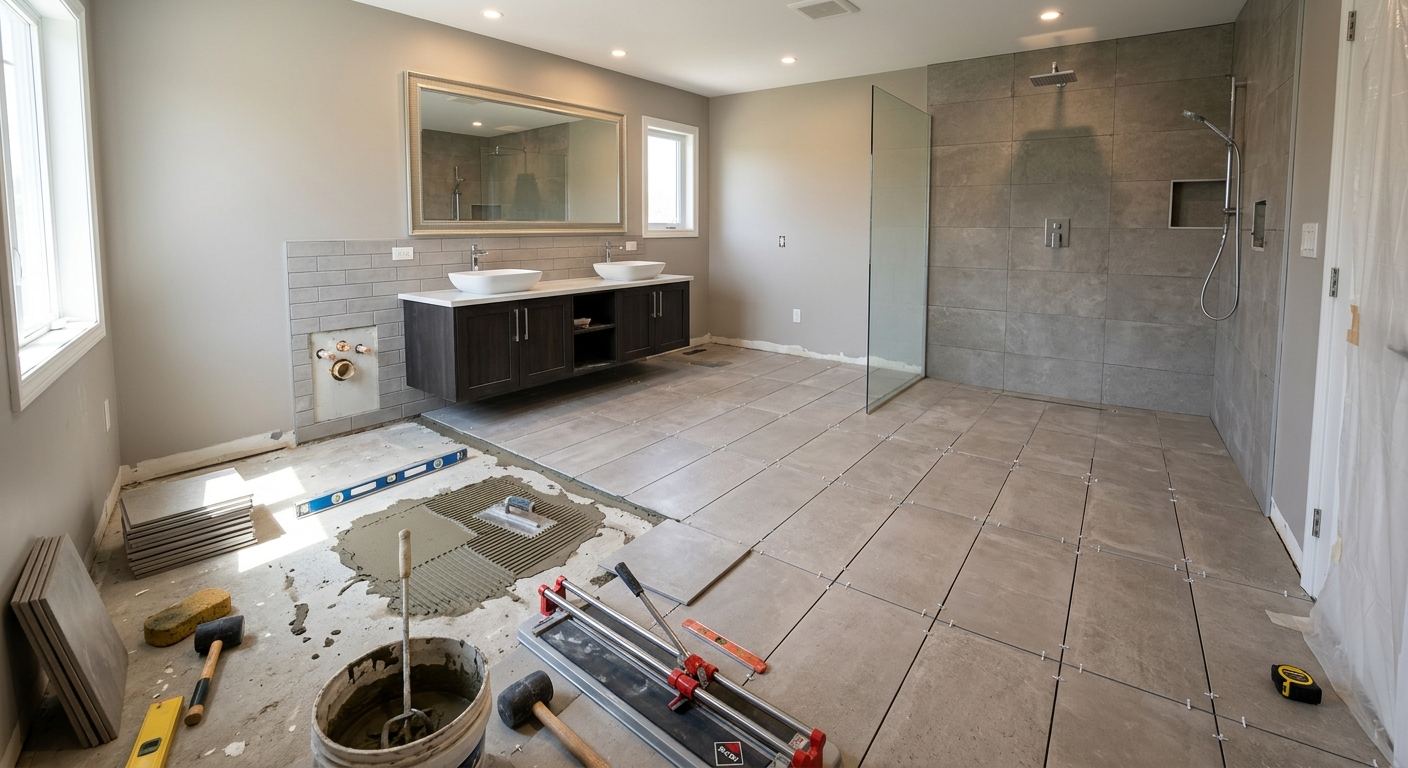
Bathroom renovation options and costs in Little Portugal
Renovating a bathroom in Little Portugal can feel overwhelming because the scope can swing from a quick facelift to a full rebuild. Little Portugal sits within the Toronto economic region, where older housing stock is common; with 15,559 residents in the area (Statistics Canada, 2021 Census), you’ll often find tight rowhouse-style layouts and condos that push contractors to plan around limited access. In many Toronto neighbourhoods with post-war and 1960s–1980s homes, dated plumbing layouts, older venting, and flooring assemblies can also mean the contractor must budget for hidden conditions—sometimes even asbestos-containing materials in older tile or floor coverings.
Toronto’s market also shapes costs. The bathroom trade here is labour-intensive, and GTA labour rates typically run higher than the national average, so two projects with the “same” finish can differ by 30–50% once tiling, custom shower work, and plumbing reconfiguration are counted. Even though the region’s climate is not the main cost driver like it is for exterior work, moisture management is still crucial year-round: bathrooms need robust waterproofing and ventilation to handle Ontario humidity and daily temperature swings.
Contractors are especially busy in the core blocks around College Street and Dundas Street West, where smaller lots and higher turnover keep demand strong. Once you’re ready to compare options, the table below shows realistic price bands for common scopes in Little Portugal so you can anchor your conversations with contractors.
| Renovation Scope |
What's Included |
Typical Duration |
Price Range |
| Cosmetic refresh (paint, fixtures, accessories only) |
Paint, caulking refresh, vanity swap or refacing, toilet and faucet replacement, towel bar/rails, basic lighting changes (no re-routing) |
3–5 days |
$4,000–$8,000 |
| Mid-range full renovation (new tile, vanity, tub/shower, electrical) |
Demo and disposal, new shower/tub surround tile, new vanity and mirror, exhaust fan + updated lighting, waterproofing and membrane, GFCI where required, subfloor patching |
2–3 weeks |
$18,000–$26,000 |
| High-end full renovation (custom tile, steam shower, heated floors) |
Custom waterproofed shower/steam-ready layout, large-format tile layout, heated floor wiring and finishes, premium fixtures and hardware, upgraded venting, niche/bench built-ins |
3–5 weeks |
$26,000–$45,000 |
| Shower-only installation (convert tub to walk-in shower) |
Convert tub to walk-in, new drain and slope corrections, waterproofing system, glass enclosure, tile floor and surround, exhaust fan check |
1.5–3 weeks |
$8,000–$16,000 |
| Bathtub replacement or tub-liner install |
Remove and replace tub and surround (or liner where suitable), new trim, refinished/updated wall finishes, new caulk and sealing, basic fixture swap |
3–7 days |
$2,200–$5,500 |
| Tile-only installation (floor + surround, existing layout kept) |
Tile removal to prep, new floor and wall tile, waterproofing/membrane where needed, grouting, sealing, matching trims and transitions |
1.5–2.5 weeks |
$6,500–$15,000 |
Prices are estimates only and vary by project scope, site access and material selection.
What affects the price of bathroom renovation in Little Portugal
Even when two homeowners request the “same” bathroom style in Little Portugal, Toronto-area quotes can differ by 30–50% because labour rates and the housing age drive most of the risk. Toronto trades typically charge a premium for skilled work, and bathroom renovations are labour-intensive—especially when tiling, waterproofing, and plumbing details need precision. Climate matters less to pricing than it does to performance, but humidity makes waterproofing and ventilation non-negotiable, which still adds scope when contractors discover gaps or outdated exhaust setups.
In the Toronto economic region, older homes often hide cast-iron or undersized drain stacks, galvanized supply lines, and venting that doesn’t meet current Ontario expectations. Once walls are opened, those issues can expand the project beyond the original allowance. As a practical example, what starts as a $18,000–$26,000 mid-range full renovation can jump when drain reconfiguration and vent corrections are required. Likewise, a “tile-focused” plan that you expect to stay in the $3,000–$10,000 tile band can move upward if the subfloor is uneven or rotten and needs replacement, or if abatement becomes necessary.
Another major variable is asbestos discovery: in many pre-1985 interiors, vinyl floor tile or older drywall compound may trigger licensed abatement. That’s often an additional $1,500–$5,000+ depending on area affected and containment requirements. In Little Portugal specifically, you also see cost swings based on bathroom size and accessibility—walk-ups, narrow stairwells, and tight staging around active streets can add labour for protection and waste removal. In short: the same finish can cost more if the plumbing and substrate are older.
| Price Factor |
Why It Matters |
Cost Impact |
| Layout change — moving drain or supply lines requires rough-in work |
New rough-in means opening walls, adding framing support, and reworking slope/venting |
$3,000–$10,000+ |
| Tile selection — large-format porcelain vs. mosaic vs. ceramic |
Harder materials and bigger slabs demand more prep, cutting skill, and time |
$1,500–$6,000 |
| Fixture tier — builder-grade vs. mid-range vs. designer brands |
Premium faucets, valves, and toilets often include different rough-in dimensions |
$800–$4,500 |
| Subfloor condition — rot or unlevel concrete adds scope |
Repairs delay tiling and require additional waterproofing and underlayment |
$1,000–$7,000+ |
| Electrical — adding GFCI outlets, exhaust fan, heated floor circuit |
New circuits need proper load planning, wiring, and licensed electrical work |
$600–$4,000 |
| Waterproofing method — membrane type and extent |
Better systems cost more materials but reduce failure risk in wet zones |
$900–$3,500 |
| Older-home surprises — asbestos tile, cast-iron drains, galvanized pipes |
Abatement and plumbing upgrades expand labour and inspections |
$1,500–$12,000+ |
| Bathroom size — sq ft drives tile and labour time directly |
More surface area increases setting time, waterproofing, and waste |
$2,000–$8,000 |
Permits & regulations in Ontario
In Ontario, the permit picture is usually straightforward for bathrooms, but it depends on whether you’re moving anything or changing building services. Cosmetic updates—swapping a vanity, replacing a toilet or faucet, retiling to the same layout, and repainting—typically do not require a permit. Where people get surprised is when the work involves plumbing relocation, electrical additions, or structural changes.
Work that typically does require a permit includes: relocating plumbing (moving drains or supply lines), adding or changing ventilation ducting/exhaust fan locations, and any electrical work that extends beyond simple like-for-like swaps (for example, new circuits, adding a heated floor circuit, or adding new GFCI-protected receptacles). Structural or framing changes also commonly trigger permitting. If your contractor plans to do plumbing rough-in changes, plan for permits and inspections as part of the process.
For a homeowner in Little Portugal, verify the contractor before work starts. Step one: check Ontario trade licence/credentials through the appropriate provincial online registry and confirm the exact scope they’re permitted to perform. Step two: request a Certificate of Insurance and confirm liability coverage limits are current and include construction activities; don’t accept expired certificates. Step three: ask for WSIB/WCB clearance documentation (or equivalent coverage proof where applicable) so you’re not stuck with liability if a worker is injured on site. Finally, ensure any permit pull is clearly stated in the written quote—who pulls it, who pays the fee, and what inspections are scheduled.
Choosing tile, waterproofing and fixtures for your Little Portugal bathroom
In Little Portugal, the smartest way to control bathroom renovation cost is to choose the right combination of tile, waterproofing, and fixtures for your usage and your budget level. First, tile choice changes both material price and installation complexity. Ceramic is often the most budget-friendly route for entry-level bathrooms, while porcelain typically handles better under frequent wetting because it’s denser and more uniform. Natural stone (marble, travertine, slate) can look premium, but it demands more careful selection, sealing, and layout time—especially when you want straight lines and consistent veining.
Second, waterproofing is what protects your reno in Ontario’s real-life conditions—daily showers, steam, and seasonal humidity. A paint-on membrane can work for certain setups, but a bonded sheet membrane or a well-specified system (including compatible thinset and details at corners, niches, and linear drains) is often the better long-term strategy for wet zones. The goal is consistent coverage behind the tile where water can migrate.
Third, fixture tier affects not just upfront cost but also installation details and resale perception. Builder-grade fixtures can be fine for cost control; mid-range brands often offer better valves, smoother finishes, and more consistent parts. Designer fixtures can look great, but if you spend heavily on fixtures while skimping on waterproofing or subfloor prep, you’ll pay later.
Here’s a concrete budget example: upgrading from a basic acrylic surround to a properly waterproofed custom tile shower pan can add a meaningful premium, and it’s justified when your current tub conversion requires new slope/drain work. If you’re staying with a standard tub/shower and keeping the layout, you may get more value by investing in waterproofing and nicer tile rather than changing every fixture.
| Material / Option |
Pros |
Cons |
Price Range |
| Ceramic tile (floor + walls) |
Budget-friendly; wide variety of looks; easy to source |
More variation in wear/porosity; requires careful selection for wet areas |
$3,000–$8,500 |
| Porcelain tile (floor + walls) |
Durable and moisture-resistant; better for heavy-traffic bathrooms |
Heavier slabs can be harder to cut and set; often costs more per sq ft |
$5,000–$12,000 |
| Natural stone (marble, travertine, slate) |
High-end appearance; unique character; strong resale appeal |
More labour for selection/layout; sealing/maintenance required; pricing swings |
$8,000–$22,000 |
| Frameless glass shower enclosure |
Brightens the space; modern look; easier to clean than some framed units |
Requires accurate framing and waterproofing edges; cost rises with custom sizes |
$2,500–$7,500 |
| Prefab tub surround (acrylic) |
Fast installation; consistent surfaces; often lower labour than tile |
Less custom look; seams require good sealing and may limit design changes |
$1,200–$4,000 |
| Custom shower pan (tile or linear drain) |
Best integration with your layout; ideal for accessibility and modern lines |
More waterproofing and slope-building labour; drain rough-in complexity |
$4,000–$12,000 |
How to choose a bathroom renovation contractor in Little Portugal
Choosing the right contractor is the difference between a bathroom that looks great and one that stays dry and functional. Start by verifying Ontario licensing and coverage: request proof of licence for the work they’ll perform, and ask for liability insurance with active policy dates. Then confirm WSIB/WCB coverage (or the appropriate clearance proof) so you’re protected if a worker is injured on site. For itemised quoting, get 2–3 written quotes that break out labour and materials—don’t accept a single lump-sum number without line items for demo, plumbing rough-in, waterproofing, tile setting, electrical, and disposal. This makes comparisons fair and helps prevent scope creep.
When you read the quote, look for what’s excluded. Is permit pulling included, and who pays the fee? Is old material disposal included in the base price? Are you getting allowances for tile, fixtures, glass, and grout (and are those allowances realistic for Little Portugal market pricing)? Ask about workmanship warranty length and whether the product/manufacturer warranties are included and transferable to you. Finally, lock the payment schedule: avoid paying more than 10–15% upfront, and request a holdback until the job is complete and defect-free. Get the start date and completion estimate in writing, with a clear plan for change orders if hidden issues appear (common in older housing).
- Licence and coverage documents provided before you sign
- Liability insurance certificate shows active coverage and construction activity
- WSIB/WCB clearance or equivalent proof included
- Quote is itemised: labour, materials, demo, waterproofing, tile setting, electrical, and disposal
- Clear scope for waterproofing (membrane type, coverage at corners/niches)
- Permit responsibility stated (included or separate)
- Start date, duration, and key milestones written down
- Change-order process described (what triggers it and how pricing is approved)
- Warranty in writing: workmanship duration and what it covers
- Payment schedule capped with a holdback until punch list completion
- Protective covering plan for floors/doorways and dust control for active homes
- Reasonable allowance levels for tile, glass, and fixtures (no “bait” numbers)
In Little Portugal, four common red flags include: quotes that skip waterproofing details, no proof of WSIB/WCB or unclear insurance, “all-in” lump sums without demo/disposal and rough-in allowances, and contractors who ask for large deposits (over 15%) before any materials or scheduling are confirmed.
Frequently asked questions — bathroom renovation in Little Portugal
What adds the most resale value in a bathroom reno?
In Little Portugal and the broader Toronto market, the resale bump usually comes from visible quality upgrades plus reliability. Buyers tend to pay attention to a modern vanity, updated lighting, clean tile work, and a shower/tub that looks properly finished—not just patched. The biggest value lever is ensuring the “wet areas” are done right: strong waterproofing, properly planned ventilation, and correct slopes/drain lines for showers. When plumbing is older, upgrading drains/valves and bringing venting into a safe, functional configuration can also prevent future headaches. Budget-wise, a full renovation that lands in the $12,000–$30,000 range often shows more impact than a cosmetic-only approach because it addresses both aesthetics and function. (Statistics Canada, 2021 Census)
Can I keep my existing plumbing layout to save money?
Yes—keeping the plumbing layout is one of the most reliable ways to control cost in Little Portugal. If you’re not moving drain or supply lines, you typically avoid a lot of rough-in labour and the additional carpentry needed to open walls and reconfigure venting. That can keep you closer to the mid-range full renovation band rather than pushing into higher allowances tied to layout changes. For example, a bathroom staying in the same general tub/shower position often fits better into the $18,000–$26,000 mid-range band, while layout moves commonly add several thousand dollars once the contractor includes re-routing, new shut-offs, and possible subfloor repairs. If you need a walk-in shower, some layout savings are still possible, but drain/slope details must be done correctly.
How much does a walk-in shower cost in Little Portugal?
A walk-in shower conversion is usually priced as a shower-only installation and can vary based on glass, tile complexity, and how much plumbing is reworked. In the Toronto economic region, many reputable contractors land in the $8,000–$16,000 range for a typical tub-to-walk-in conversion, assuming waterproofing, proper slope, and a standard glass option. Costs climb when you’re adding linear drains, custom niches/benches, heated floors, or when older drain stacks/venting require upgrades after walls open. Even if climate isn’t the main driver, Ontario humidity makes ventilation and waterproofing decisions matter, so don’t cut corners there. If your quote seems much lower, ask what’s excluded—often it’s the shower pan, waterproofing system, or disposal.
What's the ROI on a bathroom renovation?
ROI depends on the type of market, your neighbourhood, and whether you improve “livability” (function and reliability) versus just appearance. In Little Portugal, the strongest ROI tends to come from addressing moisture management, upgrading dated fixtures, and ensuring the shower/tub is installed with correct waterproofing and finishes that will look good years later. Bathrooms are also scrutinized in home showings, so a well-executed reno can help your home compete—even if you don’t fully recoup every dollar. Realistically, many homeowners think of ROI as “sale-ready confidence,” not a guaranteed return. If you’re choosing between a cosmetic refresh and a full renovation, a move from a cosmetic-only plan to a full reno in the $12,000–$30,000 range typically offers more meaningful buyer perception because the wet areas are rebuilt, not only repainted.
Do I need waterproofing behind the tile?
Yes, in a bathroom with shower/tub walls and wet floors, waterproofing behind tile is effectively mandatory from a performance standpoint. Ontario moisture exposure isn’t extreme like some climates, but bathrooms still see recurring steam, splashes, and humidity; the failure mode is slow water migration in grout/caulk joints or at corners and penetrations. A proper waterproofing system includes correct membrane coverage (method and thickness as specified), sealed transitions at niches and corners, and correct integration around the drain and curb/bench. If you’re doing tile-only work, ask whether the contractor is removing to proper substrate and installing the waterproofing system—some “cheap tile” quotes skip preparation or rely on paint-on products where a bonded sheet membrane is more appropriate. This is one reason realistic GTA budgets remain higher: waterproofing is labour-intensive, but it prevents costly repairs later.
How do I compare bathroom renovation quotes?
Compare quotes the way an estimator would: by scope, not just totals. In Little Portugal, I recommend you request itemised quotes showing labour and materials separately—demo/disposal, waterproofing method, tile setting, electrical work, plumbing rough-in changes (if any), and glass enclosures. Make sure each quote includes whether permits are pulled and who pays permit fees, and confirm the timeline terms. Watch for hidden exclusions like subfloor repairs, allowance pricing for tile/fixtures, or disposal costs. Also compare warranties: workmanship warranty length, product/manufacturer warranty coverage, and whether warranties transfer to you. A fair comparison often explains why two bids land in different bands—cosmetic-only scopes will sit lower, while full renovations in the $12,000–$30,000 range reflect higher labour and risk in older Toronto-area housing stock.