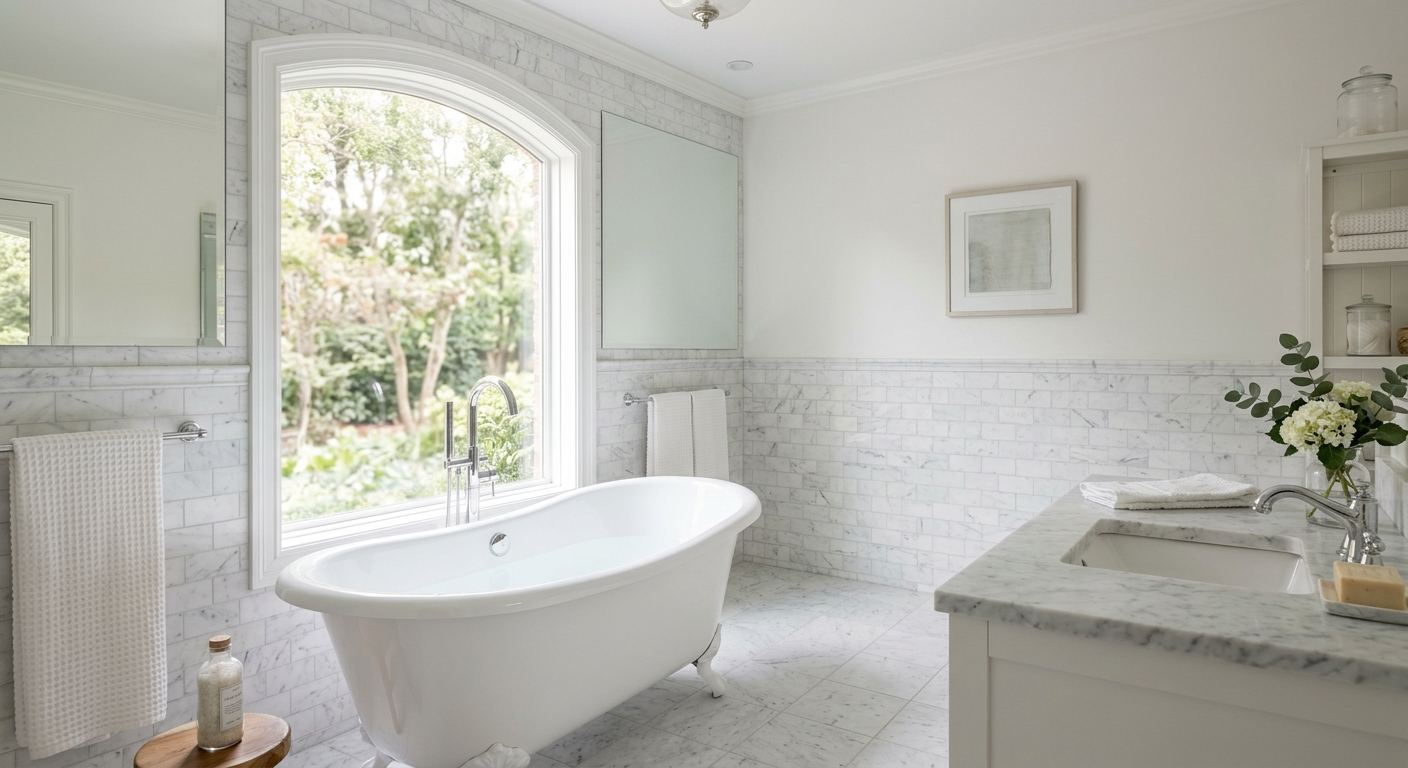
Bathroom renovation options and costs in Greater Sudbury
Renovating a bathroom in Greater Sudbury usually comes down to choosing the right level of change—cosmetic, mid-range, or full rebuild—and then matching that scope to your home’s age. With a city population of 166,004 (Statistics Canada, 2021 Census), there’s steady demand for trades across neighbourhoods like New Sudbury and the West End, so scheduling and travel can affect turnaround times. Sudbury’s housing stock also leans older in many pockets, and that matters: pre-1980 plumbing layouts and drain paths can be dated, and hidden materials such as older flooring tile or drywall compounds may raise the odds of asbestos abatement when walls or floors are opened.
In the Northeast economic region, bathroom costs are shaped more by labour availability and regional trade rates than by direct climate inside the bathroom envelope. That said, Sudbury’s indoor humidity still makes good ventilation and waterproofing non-negotiable—poor exhaust performance or rushed waterproofing shows up quickly as grout discolouration and recurring caulking failures. Once demolition starts, older rough-ins often need upgrading: cast-iron or corroded drain sections, galvanized supply lines, and ventilation that no longer meets how modern bathrooms function. Those “small” discoveries turn a straightforward scope into a multi-trade job and are why two homeowners can receive quotes that differ by 30–50% for what looks like the same bathroom.
Use the table below to anchor your expectations, then we’ll break down the biggest price drivers and what to verify before you sign.
| Renovation Scope |
What's Included |
Typical Duration |
Price Range |
| Cosmetic refresh (paint, fixtures, accessories only) |
New paint, vanity accessory swaps, tap/handle replacement, toilet or sink swaps (if existing plumbing is reused), mirror + lighting updates, recaulk, basic deep clean |
3–7 days |
$3,000–$8,000 |
| Mid-range full renovation (new tile, vanity, tub/shower, electrical) |
Demolition and disposal, new floor + shower wall tile, new vanity + top, new tub/shower or surround, updated exhaust fan, new GFCI receptacle(s), improved waterproofing system, new trim and fixtures |
2–4 weeks |
$15,000–$28,000 |
| High-end full renovation (custom tile, steam shower, heated floors) |
Full gut, custom layout changes, premium tile system, heated floors wiring/controls, steam shower package, upgraded lighting, higher-end fixtures, detailed waterproofing and curb/linear-drain integration where needed |
4–7 weeks |
$28,000–$35,000 |
| Shower-only installation (convert tub to walk-in shower) |
Remove tub, build shower receptor, tile shower surround and floor, new glass enclosure, plumbing modifications for drain/supply changes, updated exhaust fan, waterproofing + curb/threshold detailing |
2–3 weeks |
$6,000–$16,000 |
| Bathtub replacement or tub-liner install |
Tub removal and replacement OR liner install, new seals and recaulk, basic plumbing connections if same footprint, surface prep, finishing trim |
3–10 days |
$2,000–$6,000 |
| Tile-only installation (floor + surround, existing layout kept) |
Tile removal and replacement where required, new floor tile + shower surround tile, waterproofing as applicable, new grout/caulking, reinstallation of existing fixtures if compatible |
1–2 weeks |
$3,500–$9,500 |
Prices are estimates only and vary by project scope, site access and material selection.
What affects the price of bathroom renovation in Greater Sudbury
If you’re comparing quotes for the same bathroom in Greater Sudbury, it can feel like contractors are “pricing the same work differently.” In reality, the final number can swing by 30–50% across the Northeast/Ontario market because labour rates, trade availability, and the age of the housing stock drive the complexity—more than climate alone. The Northeast market context means plumbers, electricians, and tile setters can be booked quickly and often price toward the higher end when schedules are tight, so labour becomes a major part of any budget. Once walls are opened, older Sudbury homes frequently hide plumbing and ventilation that don’t match today’s expectations: cast-iron or copper drain stacks that need re-routing, galvanized supply lines that must be replaced, and exhaust that’s undersized or not ducted properly.
Older materials can also change the rules. If asbestos-containing flooring tile or drywall compound is discovered in pre-1985 construction, abatement protocols apply and typically add about $1,500–$5,000+ depending on how much is disturbed and how containment is handled. On top of that, if your project shifts into a full renovation band (often $15,000–$28,000 for mid-range) instead of a cosmetic refresh, the labour hours and multi-trade coordination go up fast.
Two common local examples: (1) converting a tub to a walk-in shower may seem like a simple demo, but relocating a drain and reworking waterproofing can push it toward the $6,000–$16,000 shower installation range; (2) tile-only scopes can get more expensive when the subfloor is uneven—because “leveling” becomes extra labour before any porcelain installation. In short, Sudbury’s real cost drivers are what you uncover after the first wallboard is removed, and how many trades must return for rough-in, waterproofing, electrical, and finishing.
| Price Factor |
Why It Matters |
Cost Impact |
| Layout change — moving drain or supply lines requires rough-in work |
New rough-in means cutting, framing checks, pipe reroutes, patching, and re-testing before tile goes on |
$2,000–$8,000 |
| Tile selection — large-format porcelain vs. mosaic vs. ceramic |
Harder materials and larger slabs demand better substrate prep, more careful setting, and more waste/handling |
$500–$6,000 |
| Fixture tier — builder-grade vs. mid-range vs. designer brands |
Higher tiers cost more and can require different mounting heights, trim kits, and lead times |
$300–$4,000 |
| Subfloor condition — rot or unlevel concrete adds scope |
Rot or uneven surfaces require structural repairs and underlayment/leveling before waterproofing |
$800–$5,000 |
| Electrical — adding GFCI outlets, exhaust fan, heated floor circuit |
Additional circuits and compliant venting require licensed electrical work and sometimes panel capacity checks |
$500–$3,500 |
| Waterproofing method — membrane type and extent |
Different systems (membrane vs. sheet systems) affect labour, materials, and failure risk under moisture |
$600–$3,000 |
| Older-home surprises — asbestos tile, cast-iron drains, galvanized pipes |
Abatement, pipe replacements, and extra inspections add time, containment, and disposal costs |
$1,500–$10,000+ |
| Bathroom size — sq ft drives tile and labour time directly |
More surface area means more materials, more curing time, and additional labour for layout and finishing |
$1,000–$7,000 |
Permits & regulations in Ontario
In Ontario, the rule of thumb for bathroom renovations is that cosmetic updates usually don’t need permits, while anything that changes systems behind the walls often does. Swapping a vanity, replacing a toilet, repainting, upgrading accessories (towel bars, mirrors), and even straightforward retiling where plumbing locations remain the same are typically considered cosmetic work and often proceed without a permit. However, you should expect permits and inspections when you: relocate plumbing (moving a drain or supply line), add or modify mechanical ventilation (for example, installing a new exhaust fan or changing ducting), or make structural changes that alter walls or framing.
Electrical work also has clear boundaries. If your renovation adds new circuits, installs a new exhaust fan requiring electrical work, adds a GFCI outlet, or includes heated flooring wiring, it must be completed by a licensed electrician and meet provincial code. Plumbing rough-in changes generally require a permit and inspection before walls are closed.
To verify your contractor in Greater Sudbury, follow these steps: (1) Ask for their Ontario trade licence information and confirm it via the appropriate online registry for their trade; (2) Request a current certificate of insurance showing liability coverage; (3) Ask whether they have WSIB/WCB coverage (or provide the applicable proof/clearance letter); and (4) Get the permit responsibility in writing—who pulls it, who schedules inspections, and whether it’s included in the quote.
Choosing tile, waterproofing and fixtures for your Greater Sudbury bathroom
Your biggest material decisions in a Greater Sudbury bathroom reno usually come from three buckets: tile choice, waterproofing method, and fixture tier. First, tile: ceramic is the entry option and can be cost-effective, but it’s typically best for simpler layouts where you’re not pushing premium grout lines or complex transitions. Porcelain offers better moisture performance and durability for floors and shower walls, and it generally installs cleanly when your substrate is properly prepared. Natural stone (marble, travertine, slate) looks luxurious, but it’s slower to set and may need sealing and careful selection for slip resistance.
Second, waterproofing. Because Ontario bathrooms see frequent steam and high humidity, the system matters more than brand names. A paint-on membrane can work on certain surfaces when detailed correctly, but many homeowners are happier long-term with a bonded sheet membrane or a proven system that integrates corners, seams, and the shower pan correctly. Third, fixtures: builder-grade options can keep your budget in the $15,000–$28,000 mid-range zone, while designer brands, steam shower trim, and premium glass can push you toward the high-end band around $28,000–$35,000.
A practical dollar example: upgrading from a basic shower surround to a custom shower pan with linear drain can add roughly $2,000–$5,000 in materials and labour, but it’s often justified when you want a true “flush” look and better water management. If your budget is tight, you can still get excellent results by pairing mid-range porcelain tile with a robust waterproofing system and an exhaust fan sized and ducted properly.
| Material / Option |
Pros |
Cons |
Price Range |
| Ceramic tile (floor + walls) |
Affordable, easy to match colours, suitable for many bathroom finishes when installed correctly |
Can be less durable for floors than porcelain; selection and substrate prep still matter for long life |
$35–$70 per sq ft |
| Porcelain tile (floor + walls) |
Low water absorption, strong durability, consistent sizing for cleaner lines |
Higher material cost; larger formats require careful substrate and alignment |
$60–$90 per sq ft |
| Natural stone (marble, travertine, slate) |
Premium look, unique veining/texture, excellent design impact |
Often needs sealing/maintenance; can vary lot-to-lot; slip resistance selection is critical |
$90–$140 per sq ft |
| Frameless glass shower enclosure |
Modern look, easier visual cleaning, good durability when properly installed |
Installation requires precise measurements; hardware cost can add up |
$1,000–$3,500 |
| Prefab tub surround (acrylic) |
Fast install, consistent finish, usually less labour than full tile surrounds |
Design options are limited; seams can be less “premium” visually than tile |
$800–$2,500 |
| Custom shower pan (tile or linear drain) |
Best water control, integrated look, supports modern accessibility designs |
More skilled labour; requires correct slope, waterproofing, and drain detailing |
$1,500–$6,000 |
How to choose a bathroom renovation contractor in Greater Sudbury
Start by verifying licensing, insurance, and coverage before you talk numbers. In Ontario, ask the contractor for their Ontario trade licence for the work they’ll perform, and confirm it via the online registry for their trade. Next, request a current certificate of liability insurance (you want to see active coverage and correct project address/limits where possible). For coverage protection on site, confirm WSIB/WCB status—either through proof of coverage or the appropriate clearance letter—so you’re not left holding the risk if a worker is injured.
Then get 2–3 itemised written quotes. A good bathroom quote should separate labour and materials and specify allowances (tile, fixtures, glass, backer boards, membrane). Avoid quotes that only show a single lump sum without describing exclusions. Read the scope carefully: is demolition included? Is disposal included? Who schedules and pays for permits if required? If waterproofing is part of the scope, make sure the method (and whether it’s a full shower system) is described.
Warranty matters for both workmanship and products. Ask for workmanship warranty length and what triggers service; confirm product/manufacturer warranties and whether they’re transferable if you sell your home. Finally, protect cash flow: never pay more than 10–15% upfront, and hold back a portion until punch-list items are complete. Get the start date and a completion estimate in writing so you can plan around the disruption.
- Confirm Ontario trade licence for each trade they sub-contract (or that they are licensed for the full scope).
- Verify liability insurance and ask for the certificate before work begins.
- Confirm WSIB/WCB coverage or clearance letter for the contractor’s workers.
- Get 2–3 itemised quotes with labour and materials breakdowns, not one lump-sum number.
- Check what’s included in demolition, disposal, and drywall/tile removal.
- Ensure permit pulling and inspection scheduling are clearly assigned (included or at cost).
- Ask what waterproofing system is used and how corners and seams are treated.
- Confirm the exhaust fan scope: ducting, fan size, and whether electrical changes are included.
- Verify electrical/GFCI changes are completed by a licensed electrician and included in scope.
- Ask about subfloor prep and whether levelling/repairs are included if surfaces are uneven.
- Review warranty terms in writing (workmanship + product) and whether warranties transfer to new owners.
- Clarify payment schedule: no more than 10–15% upfront; holdback until complete and inspected.
Four to five red flags I see in Greater Sudbury: quotes that omit waterproofing details, vague scopes that don’t mention disposal or permit responsibilities, contractors asking for large upfront payments beyond 10–15%, no proof of liability insurance or WSIB/WCB coverage, and “all-in” pricing without itemised allowances (especially for tile and fixtures).
Frequently asked questions — bathroom renovation in Greater Sudbury
How long does a bathroom renovation take in Greater Sudbury?
In Greater Sudbury, a cosmetic refresh can take about 3–7 days because you’re typically keeping existing plumbing locations and limiting demolition. A mid-range full renovation usually runs around 2–4 weeks, assuming materials are available and rough-ins pass inspection without surprises. Shower-only conversions (like moving from a tub to a walk-in) often fall around 2–3 weeks, mainly due to drain/supply modifications and the waterproofing cure schedule. Full high-end builds can stretch to 4–7 weeks when you’re doing custom tile details, heated floors, or steam shower components. Timeline is heavily impacted by “older-home” discoveries—like cast-iron drains needing replacement or subfloor repairs—so a thorough pre-demo inspection helps.
Do I need a permit for a bathroom renovation in Ontario?
Often, cosmetic-only work in Ontario doesn’t require a permit—think painting, accessory upgrades, replacing a vanity, or retiling without moving plumbing. You typically need a permit when you change plumbing layout (moving drain or supply lines), add or modify mechanical ventilation (like installing a new exhaust fan or changing ducting), or make structural wall changes. Electrical changes such as adding GFCI outlets, new fan circuits, or heated floor wiring must be done or signed off by a licensed electrician and can require inspections. For Greater Sudbury homeowners, the easiest verification step is to ask your contractor who pulls permits, what inspections are required, and to provide the permit/inspection references in writing. That clarity prevents delays once walls are closed.
What's the best tile for a bathroom in Greater Sudbury?
The “best” tile depends on where it’s installed and how much moisture exposure it gets, but in a Greater Sudbury bathroom, porcelain is usually the safest all-around choice for floors and shower walls. Porcelain’s low water absorption holds up better in wet areas than entry-level ceramic, especially when paired with correct waterproofing and grout selection. If you want a high-design look, natural stone can be beautiful, but it needs the right sealing and slip-resistance planning. For homeowners trying to stay within typical ranges, you can often build a strong mid-range bathroom in the $15,000–$28,000 band by using porcelain tile and spending your savings on better waterproofing and ventilation rather than premium stone everywhere. Tile quality is only half the story—installation accuracy is what prevents long-term failure.
Should I do a tub-to-shower conversion?
A tub-to-shower conversion is often worth it in Greater Sudbury when your goals are easier access, faster daily use, and lower future maintenance. Converting to a walk-in shower can also modernize the bathroom and improve day-to-day usability—especially if you’re planning for mobility changes. Cost-wise, these projects typically land in the shower installation range of $6,000–$16,000, but the final number depends on whether the drain/supply must be moved and how much plumbing needs to be updated. In older homes, cast-iron or corroded components may require replacement once walls are opened. If the tub is already in good shape but you simply want an easier shower, some homeowners choose a tub-liner or a more limited surround upgrade instead.
How do I prevent mold in a Greater Sudbury bathroom?
Mold prevention in Greater Sudbury comes from controlling moisture at three points: ventilation, waterproofing, and good drying. First, choose a properly sized exhaust fan and ensure it vents out effectively—weak airflow is one of the most common causes of recurring grout discolouration. Second, use a shower waterproofing system installed with careful detailing at corners, seams, and the drain area; skipping steps or relying on poor prep can lead to leaks behind tile. Third, maintain drying habits: use the fan during and after showers, keep bathroom air moving, and wipe standing water when practical. If your home is older, be alert to outdated ventilation or plumbing that can contribute to hidden moisture. When renovations include a full system—membrane plus correct sealing—you reduce the risk significantly.
What adds the most resale value in a bathroom reno?
Resale value typically comes from upgrades that are both visible and problem-solving. In most Greater Sudbury homes, buyers notice modern vanities, upgraded lighting, and a clean, consistent tile finish. High-impact functionality—like better exhaust ventilation, updated plumbing rough-ins where needed, and a safer layout (especially a walk-in shower for accessibility)—often adds more value than “luxury” details alone. If you’re budgeting, a mid-range full renovation ($15,000–$28,000) tends to deliver the best balance of perceived quality and risk reduction, particularly when waterproofing is done correctly and the electrical work includes compliant GFCI protection. Heated floors and steam-style shower features can boost desirability, but they’re usually best when your budget fits a higher-end full renovation ($28,000–$35,000) and the rest of the installation is already strong.